When: 7:30 p.m. Saturday Where: Allianz Field Stream: Apple TV Season Pass Radio: KSTP-AM 1500 ESPN Weather: 59 degrees, cloudy, 8 mph south wind Betting line: MNUFC plus-100; draw plus-250; SKC plus-250
Series history: While nicknamed the “nicest rivalry,” Kansas City has dominated it with 11 wins or four draws in all 20 MLS matchups since 2017, including a plus-16 goal differential. Sporting won all three games last season by a combined 7-1 scoreline.
Form: MNUFC (4-2-2, 14 points) ended a three-game winless spell with an emphatic 3-0 road win at Charlotte FC on Sunday, which hadn’t lost at Bank of America Stadium in 13 straight matches since May 2023. Kansas City (2-2-5, 11 points) has been leaky defensively, conceding three goals apiece in four of the last five games. Sporting has also scored three goals three times and two goals twice in that span.
Storyline: Head coach Eric Ramsay significantly changed the Loons’ formation and its starting XI at Charlotte. Will he stick with three center backs, instead of the regular two, for a home match against a Western Conference rival?
Stat: With a goal against Charlotte, Tani Oluwaseyi is averaging 1.2 goals per 90 minutes. He replaced Teemu Pukki in the starting lineup last weekend and is likely to keep his pace. Pukki is averaging 0.36 goals per 90 so far this season.
Breakdown: Sunday in North Carolina, the Loons scored their first goal off a corner kick this season and it wouldn’t have been possible without center back Devin Padelford clearing space in Charlotte’s zonal marking system for Hassani Dotson’s header.
Quote: “What often goes unnoticed in a situation like that is the work around the player that ends up getting free to score,” Ramsay said. “… Devin (has) a strong argument in creating space that (Dotson) eventually arrived in. I think it was a really well executed team goal.”
Observation: The Loons’ training fields in Blaine now have additional dotted lines on top of the standard lines. They denote the attacking, middle and defensive thirds as well as the wings, half spaces and central channel. Ramsay did it to more quickly advance his teaching of players on the pitch.
View: Ramsay, who will coach his sixth match Saturday, is proving tough to quote. It’s not because he doesn’t say interesting things, but rather he shares so much detail in most answers that it’s hard to boil it down in print. A good problem to have.
Absences: Emanuel Reynoso (unexcused absence) and Sang Bin Jeong (international duty) are out. Hassani Dotson was the only regular not participating in Tuesday’s training session; his omission was not considered serious, Ramsay said Tuesday.
Check-in: Despite not scoring in 572 MLS minutes this season, Jeong notched a second-half goal to send the South Korean Under-23 team to added extra time in an Asian Cup match against Indonesia on Thursday. Jeong then scored a penalty kick in the shootout, but Indonesia won 11-10 in PKs to knock South Korea out of qualifying for the Summer Olympics in Paris.
Projected XI: In a 5-2-3 formation, LW Franco Fragapane, CF Tani Oluwaseyi, RW Robin Lod; CM Hassani Dotson, CM Wil Trapp; LB Joseph Rosales, CB Micky Tapias, CB Michael Boxall, CB Kervin Arriaga; RB DJ Taylor; GK Dayne St. Clair.
Taking that much needed vacation while on a debt payoff journey may seem impossible, but it doesn’t have to be. By planning a vacation that suits your budget and keeps goals on track, you can transport yourself somewhere new and recharge.
5 questions to ask when helping an older parent with money
It’s an approach Jasmine Gillians, a leave of absence specialist and YouTuber at the channel Jazzie RayShaune, is taking with her husband. On their second debt payoff journey, the Kansas City, Missouri-based couple is working on eliminating around $64,000 in remaining debt. Previously, they took the stricter path of staying home all the time and avoiding spending on extras. She sums it up as “miserable.”
“We both work full time and we want to be able to get a breath of fresh air, but we also wanted to be mindful that we still have debt to pay off,” she says. “We like to get out, we like to enjoy ourselves, but we just realized that we can still do that on a good budget.”
Time isn’t promised, especially when it comes to vacationing with elderly family members or if starting a new job that won’t accrue paid time off for a while. When deciding whether to travel, consider the emotional and monetary cost. Choose the option of no regrets that allows you to stay true to your debt payoff plan.
Here are some ways to balance prioritizing debt while still taking that vacation.
Review the budget
Revisit debit and credit card statements to know where money is going. Know your numbers, including income, expenses and debt, suggests Tiffany Grant, a North Carolina-based accredited financial counselor. Understand how much to contribute monthly to pay off debts by your deadline, and prevent setbacks by building an emergency fund.
Use this information to see if it’s also possible to start a vacation fund. If money is tight, consider whether focusing only on debt makes more sense.
“If you are not able to make your payments — and like not even the minimum payments — and you’re running in the negative every month, then you probably shouldn’t be traveling,” says Grant. “Or if you do, something that’s super low cost.”
Also consider if it’s possible to cut back in certain areas to accelerate savings. Instead of taking the strict approach from the previous debt payoff journey, Gillians found ways to trim expenses to allow for more flexibility with spending.
“Things like a date night may not be dinner and a movie, it may be movie night at home,” she says. “We were already the majority of the time working out at home, so we canceled our gym memberships.”
For added savings, Gillians says she also switched to cheaper providers for things like streaming services. With these adjustments, Gillians was able to plan a vacation to Destin, Florida, to celebrate her husband’s 50th birthday.
Make a plan
Brainstorm destinations and research potential costs for transportation, accommodations, activities, food and possibly foreign transaction fees. Also leave a cushion in that vacation budget for unforeseen expenses.
Consider these options to find savings:
Redeeming rewards. On a debt payoff journey, it’s not ideal to chase credit card rewards, but using those already earned may help defray the costs of a vacation. Rewards earned through a loyalty program may also chip away at costs. Gillians says she was able to save $40 on her trip with rewards earned through Vrbo.
Exploring free or low-cost activities at your destination. Think about ways to experience a destination on a budget. For instance, consider going on a free walking tour (many cities offer these), exploring a national park on a free day or taking in some culture with free museum admission. If your budget permits, you may also get the resort experience without the high price tag. Companies like ResortPass allow you to pay for use of a hotel’s spa, pool or gym for the day. If you’re with a large group, though, these costs can add up.
Cooking your meals. By buying groceries outside of populated tourist areas and making your own meals, whether at a hotel or vacation rental, you’ll save money versus eating at restaurants. If that’s not for you, build dining expenses into the vacation fund.
Being flexible with accommodations. Where you stay depends on your preferences and needs. Weigh a variety of options, including camp sites, hostels, vacation rentals that you can split with a group, and last-minute hotel deals. A “mystery” hotel deal through a service like Priceline or Hotwire can save on costs, but the key details of the hotel are secret until you book it. You’ll see only the price, number of stars, guest rating, limited photos, a general overview of the location and a list of amenities.
Compromising on transportation. Make travel more affordable by staying local or traveling during the off season. Websites like Going, Fare Deal Alert and The Flight Deal can alert you to cheap flights. In addition to the cost of flying or driving to your destination, factor in the price of transportation once you arrive. If it’s safe to take, public transit may provide lower costs than rideshares, taxis, rental cars or other options.
Also, consider other ways to save. “I save gift cards that I get for Christmas and birthdays,” says Gillians. For her upcoming trip, she says she used three airline gift cards to save $300 on flights.
Checking for discounts. You might qualify for discounts based on employment, a credit card or another option. If you have a AAA or warehouse club membership, for example, you may be eligible for discounts on rental cars, hotels, or tickets to sporting events and theme parks. Some credit cards also provide discounts when you use them to shop with specific merchants. If you can pay off the purchase in full and avoid derailing your debt payoff journey, this option could allow you to save on dining, hotels and more.
In its first issue, on December 13, 1954, the Texas Observer ran a political cartoon by Don Bartlett taking a swipe at the Republican-leaning tendencies of Democratic Governor Allan Shivers. Beside it ran Observer founding editor Ronnie Dugger’s ambitious, if eccentric, manifesto. “We will twit the self-important and honor the truly important,” he wrote. “We will lay the bark to the dignity of any public man any time we see fit.”
It was the beginning of a long Observer tradition—skewering those who needed it, using both printed words and the sharp sword of cartooning. “The cartoons arrived this morning … precise and timely,” Dugger wrote to Bartlett. “I believe I shall put [one of them] on Page One for maximum effect.”
Elsewhere, the tradition of editorial cartooning is waning fast. The membership of the Association of American Editorial Cartoonists has dropped from a high of more than 200 in the 1980s to less than 20 in recent years. Last July, three Pulitzer Prize-winners were fired in one day, when McClatchy, owner of the Fort Worth Star-Telegram, dropped staff cartoonists from its papers.
Ben Sargent
Ben Sargent
Ben Sargent
At the Observer, another Pulitzer Prize winner, Ben Sargent, has been drawing the “Loon Star State” cartoons for 15 years. Before that, he worked as staff cartoonist for the Austin American-Statesman. And before that, as a college student in Amarillo, he was already reading the Observer—and carrying the magazine around “to show what a radical I was.”
Losing political cartoonists is like losing “a lot of watchdogs barking at night,” Sargent said. “At times like these, that’s really kind of scary.” Some have found work online, but it’s not the same as working for a local publication. “You knew who you were talking to. It was the community campfire. Now it’s a sandstorm of information.”
Sargent said cartoons reach readers’ subconscious. Jack Ohman, president of the cartoonists group, agrees. “They do hit you viscerally,” he said.
Mark Stinson’s caricatures of political figures are fascinating, whether they are tying on their running shoes or whacking lobbyists with a club. After drawing for the Observer in college, he worked for daily papers in Houston, San Antonio, and Amarillo, turning out topical cartoons on a daily deadline. Mark Stinson
Mark Stinson’s caricatures of political figures are fascinating, whether they are tying on their running shoes or whacking lobbyists with a club. After drawing for the Observer in college, he worked for daily papers in Houston, San Antonio, and Amarillo, turning out topical cartoons on a daily deadline. Mark Stinson
Mark Stinson’s caricatures of political figures are fascinating, whether they are tying on their running shoes or whacking lobbyists with a club. After drawing for the Observer in college, he worked for daily papers in Houston, San Antonio, and Amarillo, turning out topical cartoons on a daily deadline. Mark Stinson
It’s hard to say how many cartoonists’ work has appeared in the Observer in the last 70 years. But at the Briscoe Center for American History, the Observer archives include broad, flat boxes with stacks of original artwork from Bartlett and others dating from 1954 up until cartoons, like so much else, went digital and began arriving in editors’ email.
Sargent said he was pleasantly surprised, when he looked through that archive recently, to see how many top-notch cartoonists have done work for the Observer, including a Pulitzer finalist, two Pulitzer Prize winners (including Sargent), at least two elected officials, and a handful of the state’s best-known poster artists.
Some signed their work with just an initial or two, a last name, or a symbol. Kaye Northcott, co-editor of the Observer from the late ’60s to 1976, could decode some of those. One set of clever cartoons, including one showing former Governor John Connally dressed like a mobster and holding a violin case, were signed only with a “G.”
“That was Gerry Doyle,” Northcott said. “He started sending me things in the mail. They were spot-on drawings of political people.” Doyle was from the Beaumont area, she said, but “I never met him. I never asked him for anything. He would just send them.”
The help was greatly appreciated since, for the first couple of years Northcott was there, the Observer lacked an art director. “God, I didn’t know what I was doing” in terms of layout and art, and her co-editor Molly Ivins was worse, she said.
Kevin Kreneck drew for the Observer’s first full-color issue. “The kind of freedom they let me have—those were the best times,” he said. Now, he said, “With all the tribalism on the rise, no one wants to think too much about democracy and the rise of oligarchs.” Kevin Kreneck
Kevin Kreneck drew for the Observer’s first full-color issue. “The kind of freedom they let me have—those were the best times,” he said. Now, he said, “With all the tribalism on the rise, no one wants to think too much about democracy and the rise of oligarchs.” Kevin Kreneck
Kevin Kreneck drew for the Observer’s first full-color issue. “The kind of freedom they let me have—those were the best times,” he said. Now, he said, “With all the tribalism on the rise, no one wants to think too much about democracy and the rise of oligarchs.” Kevin Kreneck
But Northcott had a close relationship with Austin’s famous Armadillo World Headquarters music venue and got to know the poster artists who did work there. Northcott commissioned many pieces of art from Jim Franklin, Michael Priest, and Danny Garrett. “Danny Garrett signed his with a palm tree,” she said.
Aha! At least one of his palm tree-signed sketches was in the archives.
Northcott also used cartoons by two people who were probably drawing them at their desks in Austin and Washington D.C.: Neil Caldwell, a Texas state representative and later a judge, and Bob Eckhardt, who also served in the Texas House and then won six terms in Congress.
Berke Breathed drew for the Observer “before it became madly clear that I was not born to work as a legitimate journalist,” he said. He turned to comic strips and children’s books, several of which were made into animated movies. “I gave up political cartooning when I discovered that newsrooms were always going to find me allergic to their sensibilities.” Berke Breathed
Berke Breathed drew for the Observer “before it became madly clear that I was not born to work as a legitimate journalist,” he said. He turned to comic strips and children’s books, several of which were made into animated movies. “I gave up political cartooning when I discovered that newsrooms were always going to find me allergic to their sensibilities.” Berke Breathed
Berke Breathed drew for the Observer “before it became madly clear that I was not born to work as a legitimate journalist,” he said. He turned to comic strips and children’s books, several of which were made into animated movies. “I gave up political cartooning when I discovered that newsrooms were always going to find me allergic to their sensibilities.” Berke Breathed
Current political cartoonists may be even more cynical than their predecessors, given the state of their profession. But their signature sense of humor is mostly intact.
Jeff Danziger, twice a finalist for the Pulitzer Prize in editorial cartooning, drew for the Observer in the late ’70s, after the U.S. Army introduced him to Texas. “I’m 80. I never made much money in cartoons,” he said. These days, “Americans don’t know much, and they don’t want to know,” he said.
Fortunately, the situation for cartooning in other parts of the world is better. “The French love it. The Brits are the best,” Danziger said.
Jeff Danziger
Jeff Danziger
Jeff Danziger
Kevin Kreneck of Dallas loved drawing for the Observer in the ’80s and ’90s. When he became syndicated, that provided enough money to live on. He also taught, to get out of the house than for the income. “Now, classes are a main source of revenue,” he said. “Cartooning—I do it because I love it.”
Berke Breathed drew for the Observer around 1980—the only journalism job he didn’t get fired from, he said. His vastly popular Bloom County strip won the 1987 Pulitzer for editorial cartooning. He called such cartooning “the adding of funny drawings to the words … the magic dust that all of us discovered and refuse to let go.” The problem now, he said, is the decline of people’s interest in the words.
Mark Stinson mostly drew for the business side of the Observer while a college student in the early ’70s. He went on to work for two decades as an editorial cartoonist, including at the Houston Post. Now retired, Stinson said he misses the excitement of a newsroom. One day he walked into the office and the editorial writers started clapping for him. Why? “You got two death threats!” one of them told him.
Cinematic memoir can be a complex creative endeavor. Film is a collaborative medium, and memoir requires a certain acknowledgement of the author’s creation. Without that self-reflection, memoir can slip into murky, confusing territory. This space is where the new film “Unsung Hero” exists, which is billed as “A For King + Country Film.”
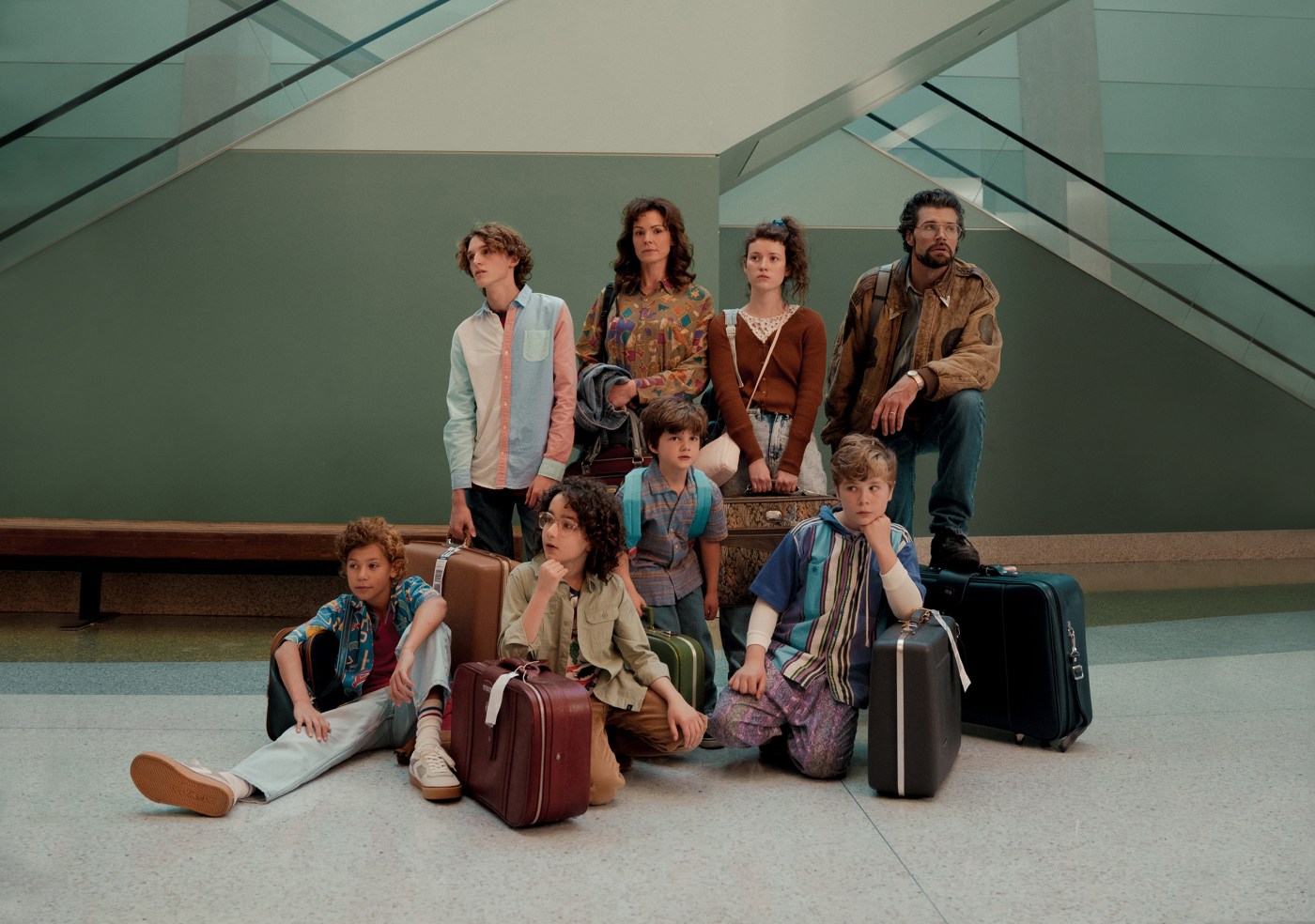
If you’re not yet aware of the Grammy winning Christian pop duo For King + Country, comprised of brothers Joel and Luke Smallbone, “Unsung Hero” will introduce you to their folksy family lore, if not their musical successes. The film is a biographical drama about the Smallbone family, a large brood from Australia who emigrated to Nashville, Tennessee, in the early 1990s, following father David’s dreams of working as a promoter in the music industry.
“Unsung Hero” is co-written and co-directed by Joel Smallbone (with Richard L. Ramsey), and he also stars in the film playing his own father, David, who eventually managed the music careers of For King + Country, and Joel’s sister Rebecca St. James. Their siblings work in the family business as managers, lighting directors and documentarians (they all make cameos in the film), and there’s a sense of can-do collaboration among the tight-knit Smallbone family. This theme runs throughout the film, and so it makes sense that Joel would undertake the telling of his family’s own story in such an intimate way.
Therefore, “Unsung Hero” is like a much more expensive extension of the camcorder home movies that serve as a running motif throughout. This isn’t just a music biopic or a family drama, it’s a presentation of a family narrative as told, and embodied, by the family themselves. A valid endeavor, to be sure, but important context when considering the work as a cultural product.
Joel Smallbone is an appealing actor, even if it is a bit distracting that he’s portraying his own father (he has described the experience as a “therapy session”). Joel is also a character in the film, as a child (Diesel La Torraca), while Daisy Betts plays Helen, the Smallbone matriarch and Joel’s mother. Helen is, of course, the unsung hero of this story, the heart and spine of the family who insists on keeping them together while David makes one last-ditch attempt to make it in the music industry in Nashville. Helen is the emotional center of the family and Betts is the emotional center of this film, her character unflagging in her determination, keeping spirits up as David’s dreams are slowly crushed.
The family of attractive Aussies arrive in the United States without a stick of furniture awaiting in their rental home, and they nest in beds of clothes while they get on their feet, with the help of a couple from their church (Lucas Black and Candace Cameron Bure). They clean houses and landscape yards, clip coupons and accept the charity that comes their way, reluctantly, on David’s part.
While David struggles with the dampening of his dreams, his daughter Rebecca (Kirrilee Berger) is just starting to embrace her musical aspirations. But she can’t chase them until her father gets over his own emotional obstacles and deep hurt at being rejected by the industry. It takes him some time to understand the advice given to him by his own father James (Terry O’Quinn) back in Australia, that his family isn’t in the way of what he wants, they are the way.
“Unsung Hero” follows a predictable narrative path of struggles and salvation, but it’s not a traditional music biopic — it doesn’t start with a record deal, it ends with one. The focus is on their hardships to get to that record deal, which is clearly what matters to filmmaker Joel Smallbone. It’s not the success, the Grammys, the stadium concerts, but the ways they stuck together, eked it out, allowed themselves to dream while sleeping on beds of clothing, thanks to their mother, who never let David’s challenges get in the way of her kids’ imaginations.
It’s a humble story, and it has the capacity to inspire in its simple message of perseverance, but the film itself, as an artistic product, feels limited in its observational scope, because the filmmaker doesn’t have any distance from the material. Smallbone is a fine actor, but alongside Ramsey, he’s a limited filmmaker. Their visual style is drab at best, and the storytelling lacks the kind of self-reflection that might elevate this project. As it is, “Unsung Hero” feels more like band merch than an insightful family portrait.