Timberwolves coach Chris Finch to have knee surgery Wednesday

posted in: Politics | 0

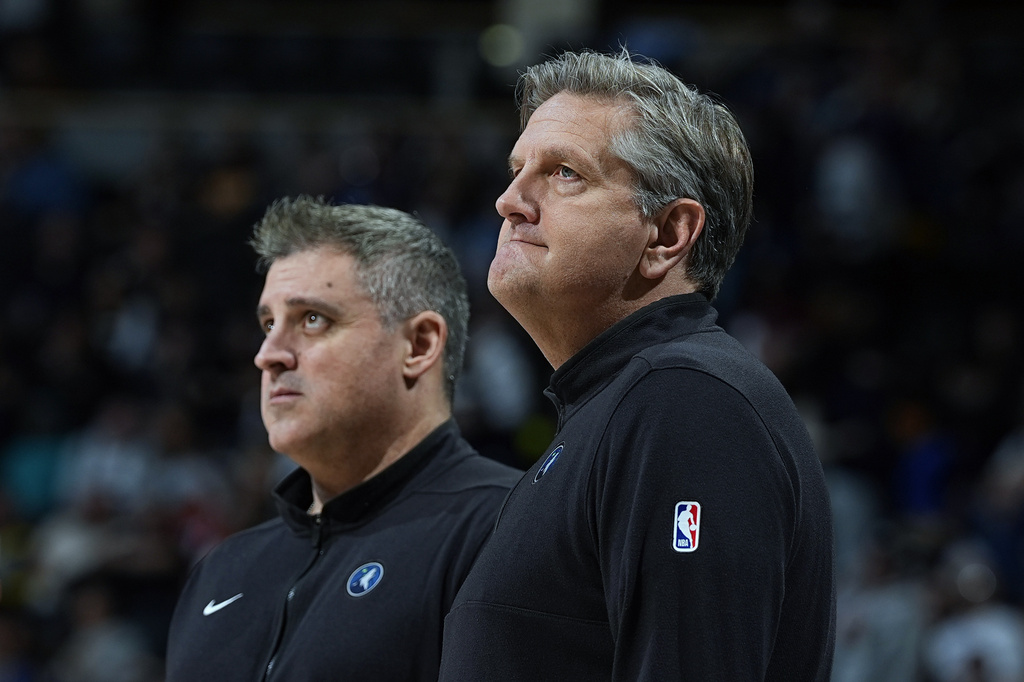
Timberwolves coach Chris Finch will have surgery Wednesday to repair the the ruptured patellar tendon in his right knee, a source told the Pioneer Press.

ESPN first reported the surgery date.

Finch suffered the injury late in Minnesota’s series-clinching victory over Phoenix on Sunday. He was hurt when Mike Conley was hip-checked off the court by Suns guard Devin Booker, which sent the Wolves’ guard into Finch, who was standing on the sidelines. Finch immediately went down in pain and had to be helped off the floor.

The Timberwolves are expected to practice the next couple of days in Minneapolis in preparation for their second-round series against the Denver Nuggets, which is scheduled to start Saturday at Ball Arena. Finch’s chances in those practices figures to be slim to none, though he did have Monday and Tuesday to put together the plan for the week with his staff.

The Wolves flew back from Phoenix on Monday afternoon, and ESPN reported that Finch should be able to fly with the team to Denver on Friday. Whether he will be able to coach from the sidelines is another question.

Post-patellar tendon surgery patients must keep their leg immobilized, usually for a number of weeks. That likely rules Finch out for front-of-bench seating for awhile. That’s a position assistant Micah Nori likely will fill for the time being.

Minnesota could potentially create a setup where Finch sits in the second row behind Nori, and Nori hinted at that possibility during an interview with KFXN-FM 100.3 on Monday.

“A worst-case scenario that I need to be prepared for is that he would have to sit maybe behind the bench with his leg, crutches or whatever,” Nori said. “Essentially, he would be the maestro pulling the puppet strings, and I would be Pinocchio — the front man. But he would tell me what to do and what to say.”

But whether Finch will be that close to the floor in Game 1 of Minnesota’s second round series in Denver on Saturday — just three days removed from major surgery — remains to be seen. The first few days following this surgery are the most painful.

ESPN reported if Finch isn’t able to “park” on the sidelines to start the series, he is “likely communicating to the bench from the locker room.”

Game 2 will be played Monday in Denver, with a full three days off following that contest prior to Game 3 next Friday in Minnesota.

Related Articles

Minnesota Timberwolves |


Timberwolves will meet defending-champion Denver in the West semifinals. Here’s the series schedule

Minnesota Timberwolves |


Timberwolves know winning a series was a big step, but a title remains the ultimate goal

Minnesota Timberwolves |


Anatomy of a sweep: Why the Timberwolves were too much for Phoenix

Minnesota Timberwolves |


After collision with Mike Conley, Timberwolves coach Chris Finch suffers ruptured tendon

Minnesota Timberwolves |


Anthony Edwards out-duels Suns’ superstars as Wolves sweep Phoenix

US drug control agency will move to reclassify marijuana in a historic shift, AP sources say

posted in: News | 0

By ZEKE MILLER, JOSHUA GOODMAN, JIM MUSTIAN and LINDSAY WHITEHURST (Associated Press)

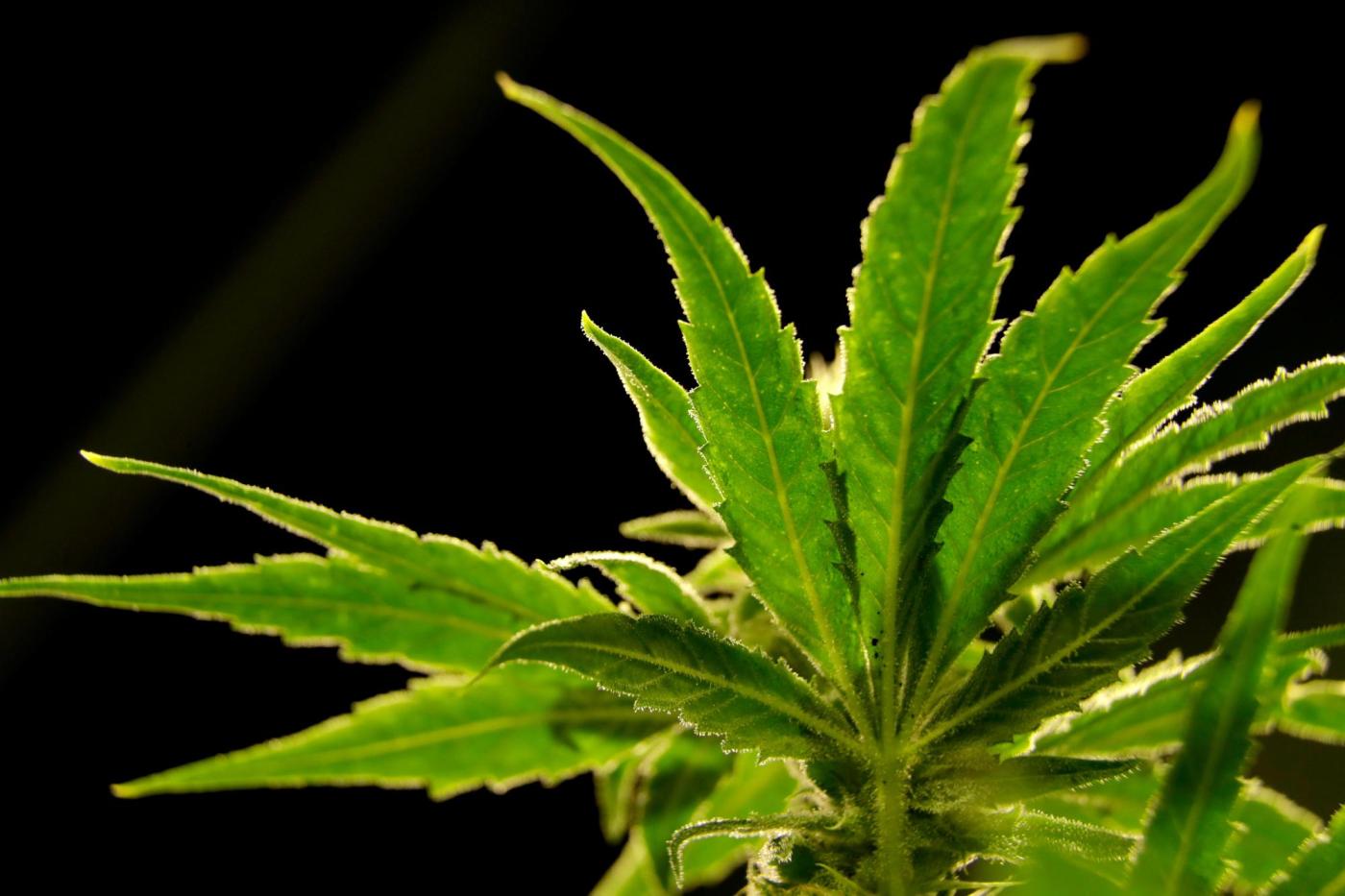
WASHINGTON (AP) — The U.S. Drug Enforcement Administration will move to reclassify marijuana as a less dangerous drug, The Associated Press has learned, a historic shift to generations of American drug policy that could have wide ripple effects across the country.

The DEA’s proposal, which still must be reviewed by the White House Office of Management and Budget, would recognize the medical uses of cannabis and acknowledge it has less potential for abuse than some of the nation’s most dangerous drugs. However, it would not legalize marijuana outright for recreational use.

The agency’s move, confirmed to the AP on Tuesday by five people familiar with the matter who spoke on the condition of anonymity to discuss the sensitive regulatory review, clears the last significant regulatory hurdle before the agency’s biggest policy change in more than 50 years can take effect.

Once OMB signs off, the DEA will take public comment on the plan to move marijuana from its current classification as a Schedule I drug, alongside heroin and LSD. It moves pot to Schedule III, alongside ketamine and some anabolic steroids, following a recommendation from the federal Health and Human Services Department. After the public comment period and a review by an administrative judge, the agency would eventually publish the final rule.

It comes after President Joe Biden called for a review of federal marijuana law in October 2022 and moved to pardon thousands of Americans convicted federally of simple possession of the drug. He has also called on governors and local leaders to take similar steps to erase marijuana convictions.

“Criminal records for marijuana use and possession have imposed needless barriers to employment, housing, and educational opportunities,” Biden said in December. “Too many lives have been upended because of our failed approach to marijuana. It’s time that we right these wrongs.”

The election year announcement could help Biden, a Democrat, boost flagging support, particularly among younger voters.

Biden and a growing number of lawmakers from both major political parties have been pushing for the DEA decision as marijuana has become increasingly decriminalized and accepted, particularly by younger people. A Gallup poll last fall found 70% of adults support legalization, the highest level yet recorded by the polling firm and more than double the roughly 30% who backed it in 2000.

The DEA didn’t respond to repeated requests for comment.

Schedule III drugs are still controlled substances and subject to rules and regulations, and people who traffic in them without permission could still face federal criminal prosecution.

Some critics argue the DEA shouldn’t change course on marijuana, saying rescheduling isn’t necessary and could lead to harmful side effects.

Jack Riley, a former deputy administrator of the DEA, said he had concerns about the proposed change because he thinks marijuana remains a possible “gateway drug,” one that may lead to the use of other drugs.

“But in terms of us getting clear to use our resources to combat other major drugs, that’s a positive,” Riley said, noting that fentanyl alone accounts for more than 100,000 deaths in the U.S. a year.

On the other end of the spectrum, others argue marijuana should be treated the way alcohol is.

Last week, 21 Democrats led by Senate Majority Leader Sen. Chuck Schumer of New York sent a letter to DEA Administrator Anne Milgram and Attorney General Merrick Garland arguing marijuana should be dropped from the controlled-substances list and instead regulated like alcohol.

“It is time for the DEA to act,” the lawmakers wrote. “Right now, the Administration has the opportunity to resolve more than 50 years of failed, racially discriminatory marijuana policy.”

Federal drug policy has lagged behind many states in recent years, with 38 having already legalized medical marijuana and 24 legalizing its recreational use.

That’s helped fuel fast growth in the marijuana industry, with an estimated worth of nearly $30 billion. Easing federal regulations could reduce the tax burden that can be 70% or more for businesses, according to industry groups. It could also make it easier to research marijuana, since it’s very difficult to conduct authorized clinical studies on Schedule I substances.

The immediate effect of rescheduling on the nation’s criminal justice system would likely be more muted, since federal prosecutions for simple possession have been fairly rare in recent years.

But loosening restrictions could carry a host of unintended consequences in the drug war and beyond.

Critics point out that as a Schedule III drug, marijuana would remain regulated by the DEA. That means the roughly 15,000 cannabis dispensaries in the U.S. would have to register with the DEA like regular pharmacies and fulfill strict reporting requirements, something that they are loath to do and that the DEA is ill equipped to handle

Then there’s the United States’ international treaty obligations, chief among them the 1961 Single Convention on Narcotic Drugs, which requires the criminalization of cannabis. In 2016, during the Obama administration, the DEA cited the U.S.’ international obligations and the findings of a federal court of appeals in Washington in denying a similar request to reschedule marijuana.

___

Goodman reported from Miami, Mustian from New Orleans. AP writer Colleen Long contributed.

Gov. Tim Walz names Elizabeth Bentley to MN Court of Appeals

posted in: News | 0

Gov. Tim Walz announced the appointment of Elizabeth Bentley to an at-large seat on the Minnesota Court of Appeals on April 30, 2024. (Courtesy of the Office of Gov. Tim Walz and Lt. Gov. Peggy Flanagan)

Gov. Tim Walz named Elizabeth Bentley to an at-large seat on the Minnesota Court of Appeals in an announcement Tuesday.

Bentley fills a vacancy that will occur when Theodora Gaïtas takes a seat on the Minnesota Supreme Court.

“It is my honor to appoint Elizabeth Bentley to the Minnesota Court of Appeals,” said Walz in a statement. “Her appellate experience at all levels of our state and federal courts will make her a valuable asset to the judiciary. Her work in advancing and promoting Minnesotans’ civil rights through appellate advocacy demonstrates her deep understanding of the law and commitment to improving the common good.”

Bentley is the founder and director of the Civil Rights Appellate Clinic and a visiting assistant professor at the University of Minnesota Law School. She previously served as special counsel to U.S. Sen. Amy Klobuchar during the confirmation of Justice Ketanji Brown Jackson and as an attorney in the appellate practice group at Jones Day.

Bentley also served as law clerk to Sonia Sotomayor on the U.S. Supreme Court, the Honorable Robert A. Katzmann on the U.S. Court of Appeals for the Second Circuit, and the Honorable Jed S. Rakoff on the U.S. District Court for the Southern District of New York.

Bentley received her B.A. from Northwestern University and her J.D. from Harvard Law School.

Related Articles

News |


Pioneer Press, other newspapers sue OpenAI, Microsoft

News |


Woman gets probation for setting off firework that destroyed St. Paul apartment building

News |


7 Minnesotans accused in scheme to defraud pandemic food program go on trial

News |


Man sentenced to 16 years in prison for fatal punch near downtown St. Paul light-rail station

News |


Stephen L. Carter: Should Donald Trump’s jury really remain anonymous?

5 takeaways from the global negotiations on a treaty to end plastic pollution

posted in: News | 0

By JENNIFER McDERMOTT (Associated Press)

OTTAWA, Ontario (AP) — The world’s nations finished a round of negotiations early Tuesday on a treaty to end plastic pollution and made more progress than they have in three prior meetings.

Coming into Ottawa, many feared the effort would stall to craft the first legally binding treaty on plastics pollution, including in the oceans. The last meeting was marred by disagreements and there was much left to do.

But instead, there has been a “monumental change in the tone and in the energy,” said Julie Dabrusin, a Canadian parliamentary secretary.

It was the fourth Intergovernmental Negotiating Committee on Plastic Pollution session. For the first time, the nations began negotiating over the text of what is supposed to become a global treaty. They agreed to keep working between now and the next and final committee meeting this fall in South Korea.

“We are working toward a world where we won’t have plastic litter everywhere in our ecosystems,” Jyoti Mathur-Filipp, the executive secretary of the committee, said in an interview. “The energy is there, the will is there and I know we will get an instrument by the end of the year.”

Here are some of the biggest takeaways from the meeting:

NATIONS ARE NEGOTIATING

The talk shifted in Ottawa from sharing ideas to negotiating treaty language. Finally, said Santos Virgílio, Angola’s chief negotiator. Time was wasted in previous meetings, Virgílio said, but this time many arguments had been exhausted and it was time to find solutions.

“It’s big, because we have been going round and round during these sessions without showing direction,” he said in an interview. “But at least now, people are showing, OK, they have goodwill.”

LIMITING HOW MUCH PLASTIC IS MADE IS ON THE TABLE

Most contentious is the idea of limiting how much plastic is manufactured globally. Currently, that remains in the text over the strong objections of plastic-producing countries and companies and oil and gas exporters. Most plastic is made from fossil fuels and chemicals.

Graham Forbes, head of the Greenpeace delegation in Ottawa, said massively reducing plastic production is the most important thing the treaty can do because it’s impossible to end plastic pollution otherwise.

Plastic production continues to ramp up globally and is projected to double or triple by 2050 if nothing changes. Plastic producers and chemical companies want a treaty that focuses on recycling plastic and reuse, sometimes referred to as “circularity.”

TREATY WORK WILL CONTINUE UNTIL THE NEXT MEETING

The negotiators agreed to keep working on the treaty in the coming months. Expert working groups will collect information and expertise to inform the negotiations at the final meeting in South Korea in the fall.

Without this preparation work between meetings, it would’ve been daunting to complete the negotiations this year.

The topics they’ll work on in between sessions are one indication of their priorities for the final round of talks. Plastic production won’t be a focus for the working groups. Instead they will focus on how to finance the implementation of the treaty, assess the chemicals of concern in plastic products and look at how products are designed.

Environmental groups were frustrated that production cuts won’t be part of the work between now and the fall meeting.

MANY BORE WITNESS TO PLASTIC POLLUTION

Waste pickers have been on the frontlines of trying to solve plastic pollution for decades, said John Chweya, a 33-year-old waste picker representing Kenyan waste pickers.

They collect, sort, recycle and sell plastics that would otherwise pile up or be burned. They’re exposed to hazardous materials and can suffer from respiratory illnesses, skin infections and other diseases. They want a treaty that recognizes the role they play and helps waste pickers transition to safer jobs.

“We’ve given this problem that this treaty is trying to solve our lives,” Chweya said.

In Malawi, Tiwonge Mzumara-Gawa sees plastic bags littering the lands where goats and cows graze and people burning waste behind their homes because there is no waste collection. She believes it’ll take a global agreement for the national government to do more to address plastic pollution. Mzumara-Gawa is a campaigner for the Christian charity Tearfund.

Frankie Orona told negotiators their decisions affect peoples’ lives and health. Indigenous land, water and air are being contaminated as fossil fuels are extracted and plastic is manufactured using hazardous chemicals, said Orona, executive director of the Texas-based Society of Native Nations.

“We’re here to make sure our voices are being heard,” he said. “Our communities have been disproportionately impacted for decades, Indigenous and black and brown communities.”

NEGOTIATORS AIM TO FINALIZE TREATY THIS FALL

They plan to finish negotiating in South Korea so the treaty can be adopted next year at a diplomatic conference. It’s an extremely short timeline for negotiations, meant to match the urgency of the problem.

Dabrusin, of Canada, said she’s more hopeful than ever that an ambitious treaty to end plastic pollution will be adopted on schedule. Over the past week, she said she has heard from so many people that this is what they want — from businesses and environmental advocates to waste pickers and residents of communities littered with plastic.

“We’re hearing many voices coming together,” she said. “That’s a beautiful moment when you can see that synergy, that it’s economic, it’s environmental, it’s for health reasons. And there is that momentum right now.”

The Associated Press’ climate and environmental coverage receives financial support from multiple private foundations. AP is solely responsible for all content. Find AP’s standards for working with philanthropies, a list of supporters and funded coverage areas at AP.org.