MNUFC forward Tani Oluwaseyi on Canadian national team’s radar

posted in: News | 0

Tani Oluwaseyi’s hot start has come with perks.

With a team-high four goals in only 290 minutes this season, the Minnesota United striker has been the subject of national articles and mentioned in conversations for the Canadian men’s national team.

Oluwaseyi had one goal and two assists in mid-March when Loons goalkeeper Dayne St. Clair joined the Canadian team for the Concacaf Nations League. That’s when interim head coach Mauro Biello inquired about Oluwaseyi.

“(Biello) asked me slightly about it, just early-on conversations,” St. Clair said. “Obviously, he’s just the interim. Who knows what is going to be going on with that? I think if (Oluwaseyi) keeps performing like that, I think he’s definitely catching the eyes of those around.”

Oluwaseyi, who was born in Nigeria and moved to Ontario in 2010, said it’s flattering to be talked about in that context.

“It means you are doing something right,” he said. “I always welcome my name in conversations like that. Again, I don’t want to get too ahead of myself. I think whatever is meant to be will be. I just leave that in God’s hands. Whatever his purpose for me will kind of come true. I can only do my part on this side, just keep performing with the team.”

Oluwaseyi, who also has a team-high 2.9 expected goals this season, is enjoying the ride but said any talk about him being a potential MLS all-star is premature.

“Way too early,” he said. “I think right now I’m just taking it game-by-game, whatever comes. There are going to be games I don’t score, but as long as I can help the team out in other ways, I will do that, too.”

It would be quite a jump for Oluwaseyi, 23, to join Canada’s senior team for the Copa America tournament in June. Another possible option would have been the Under-23 team, but the Canadians failed to qualify for the Summer Olympics in Paris.

Dotson sidelined

Midfielder Hassani Dotson missed his first game of the season Saturday and is unlikely to return in the short term.

“It’s a bit of an ambiguous injury,” head coach Eric Ramsay said Tuesday. “It could be anywhere between a couple weeks and slightly longer. We are still trying to get to the bottom of it. He’s having ups and downs. (It’s) day to day on how he feels.”

Dotson has started seven games in central midfield for the Loons this season, with 629 total MLS minutes played in eight matches.

Briefly

Kervin Arriaga’s wife is due give birth to the couple’s first child Tuesday, and the Honduran midfielder/center back was granted personal time away from the team in Blaine this week. “Fingers crossed, if it’s sort of early on in the week, then that would make life easier for the rest of the group,” Ramsay said.

— MNUFC2 lost 4-1 to Sporting Kansas City II on Sunday. Center back Victor Eriksson had another rough outing, giving up a second-minute foul that led to a free-kick goal. The new Swedish player was booked with a yellow card later in the first half and had approximately a half-dozen total fouls in the match. Meanwhile, Loons’ Under-17 goalkeeper Kai Zeruhn made his professional debut in the defeat. He had five saves.

Related Articles

Minnesota United FC |


For cute! Young son of coach Eric Ramsay joins MNUFC tradition of scoring post-game goals
Republican states challenge new Title IX rules protecting LGBTQ+ students

posted in: Politics | 0

By COLLIN BINKLEY (AP Education Writer)

WASHINGTON (AP) — Republican states are filing a barrage of legal challenges against the Biden administration’s new expanded campus sexual assault rules, saying they overstep the president’s authority and undermine the Title IX anti-discrimination law.

At least three federal lawsuits were filed on Monday seeking to have the new rules overturned. Cases were filed in Alabama, Louisiana and Texas, with backing from a combined nine Republican-led states. Tennessee and West Virginia also promised a “multi-state response” on Tuesday.

The lawsuits are the first to challenge Biden’s new Title IX rules, which expand protections to LGBTQ+ students and add new safeguards for victims of sexual assault. The policy was finalized in April and takes effect in August.

The Education Department did not immediately respond to the lawsuits.

Central to the dispute is a provision expanding Title IX to LGBTQ+ students. The 1972 law forbids discrimination based on sex in education. Under the new rules, Title IX will also protect against discrimination based on sexual orientation or gender identity.

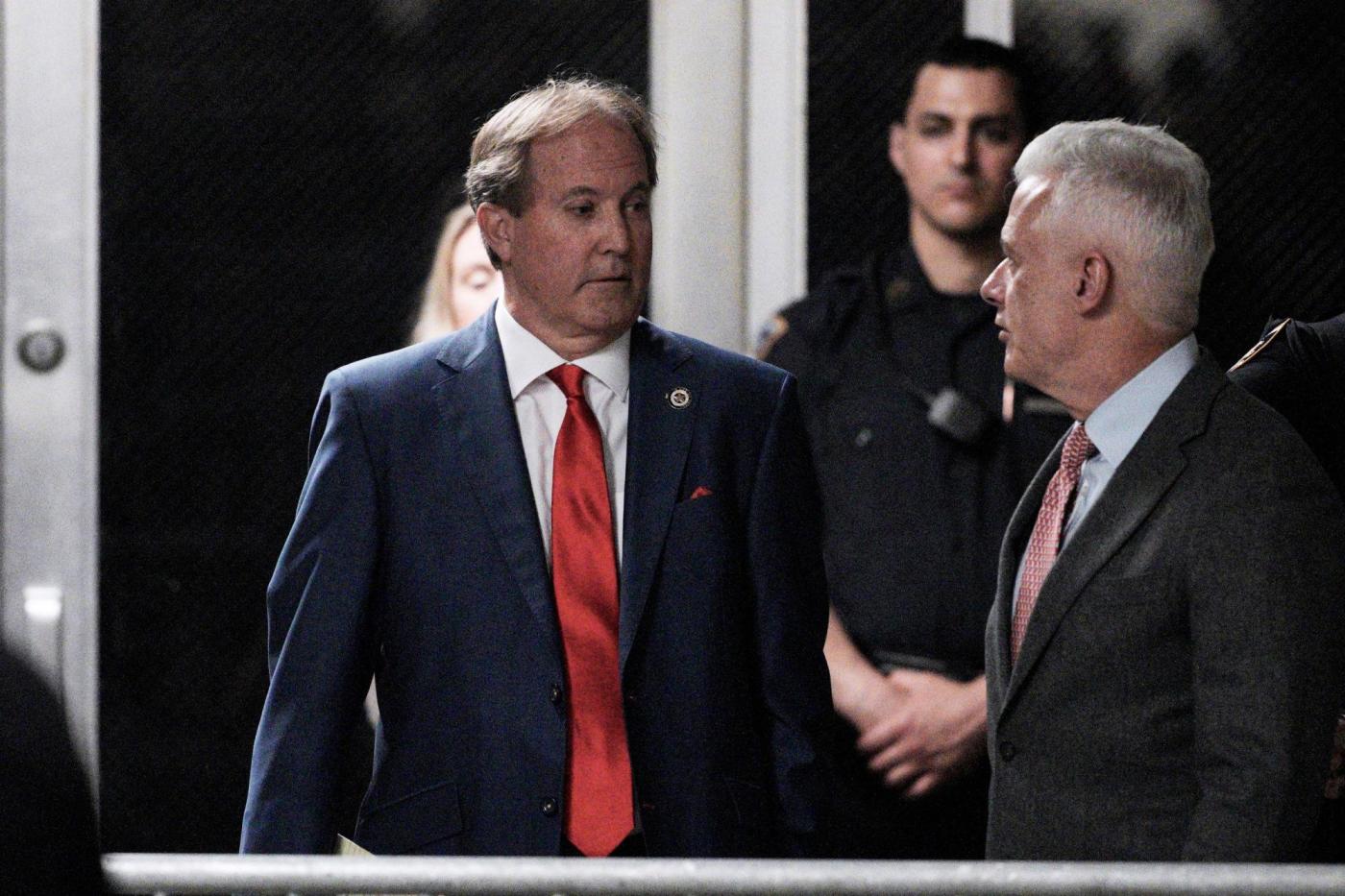
Texas’ lawsuit called it a federal overreach that attempts to bring “radical social change” to the nation’s schools. Attorney General Ken Paxton argued the 1972 law was meant to forbid discrimination based on “biological sex” only.

“This Final Rule tells States and other regulated parties that they must ignore biological sex or face enforcement actions and the loss of federal education funding,” the suit said.

The states involved argue that the updated rules clash with their own laws, including those restricting which bathrooms and locker rooms transgender students can use, banning them from using facilities that align with their new gender identity.

A lawsuit filed in Alabama says the expansion conflicts with state laws around “harassment, bathrooms, sports, parental rights, and more,” calling it a violation of “sovereign authority.” Florida, Georgia and South Carolina also backed the suit.

The Biden administration’s new rules broadly protect against discrimination based on sex, but they don’t offer guidance around transgender athletes. The Education Department has promised a separate rule on that issue later.

Yet in their suits, Republican states argue that the latest update could be interpreted to apply to athletics.

A suit filed in Louisiana said the policy “cannot help but sound the death knell for female sports.” Joining that suit were Mississippi, Montana and Idaho.

As legal basis for the new rules, the Education Department cited a 2020 Supreme Court case protecting gay, lesbian and transgender people from discrimination in employment.

The lawsuits challenge that justification, saying the Supreme Court decision focused on employment law, not Title IX. The decision “involved an unrelated statute that was enacted nearly a decade earlier, pursuant to a different constitutional power,” with no mention of “sex segregated bathrooms, locker rooms and dress codes,” the Texas suit said.

Among other things, the suits also take exception with the new policy changes dictating how schools and colleges must handle complaints of sexual assault.

States say the new rules erode the due process rights of accused students and turn campus disciplinary boards into “kangaroo courts.” They ask courts to immediately halt the rules and overturn them.

The Biden administration’s new rules were proposed nearly two years ago, with a public comment period that drew 240,000 responses, a record for the Education Department.

The policy rolls back many of the changes implemented during the Trump administration, which added more protections for students accused of sexual misconduct.

__

The Associated Press’ education coverage receives financial support from multiple private foundations. AP is solely responsible for all content. Find AP’s standards for working with philanthropies, a list of supporters and funded coverage areas are at AP.org.

More student loan forgiveness available, but April 30 deadline looms

posted in: Politics | 0

Jon Healey | Los Angeles Times (TNS)

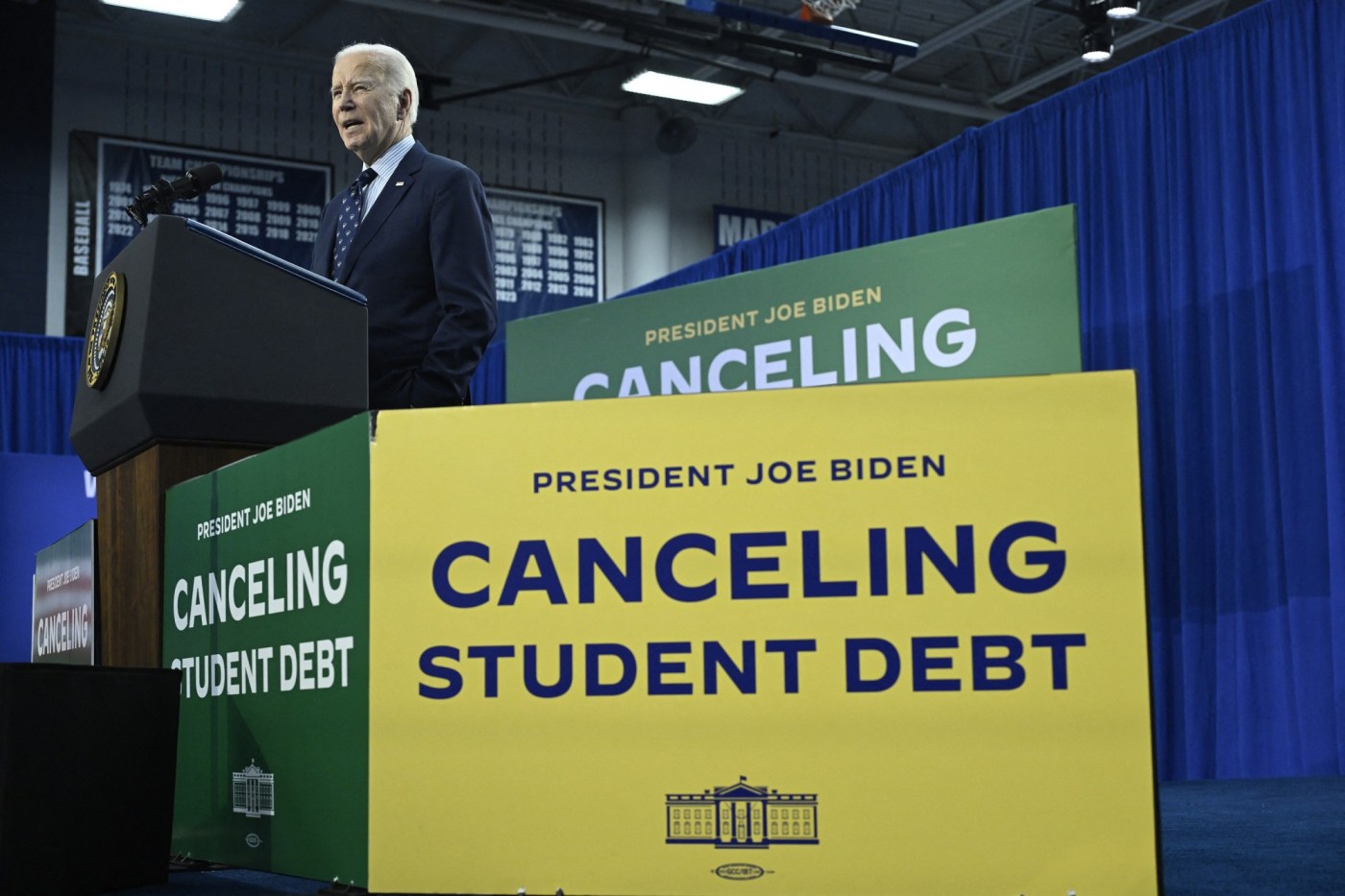
LOS ANGELES — Those who obtained federally backed student loans from private banks can have some or all of their remaining debt forgiven by the Biden administration, but they need to act fast: The deadline for qualifying is Tuesday.

The relief is available for students enrolled in income-driven repayment plans or the Public Service Loan Forgiveness program. It’s also available for some parents who borrowed through the Federal Family Education Loan program.

This is not a new initiative, however — instead, it’s the last chance to participate in one of the administration’s first and most successful efforts to reduce the mountain of student debt.

The Education Department launched the Income Driven Repayment One-Time Adjustment initiative in 2022 to address complaints about loan servicing companies losing track of payments, not giving borrowers proper credit for their work in public-service jobs, and steering struggling borrowers into costly forbearance or deferment programs instead of payment plans based on their income.

After completing its review of payment records last year, the department granted all or partial forgiveness automatically to the borrowers who qualified — no application was required. The Education Department estimated that 3.6 million borrowers would receive credit for at least three additional years of payments, moving them that much closer to having their remaining debt wiped out.

Related Articles

Business |


Pioneer Press, other newspapers sue OpenAI, Microsoft

Business |


Aer Lingus resumes direct flights between MSP and Dublin, marking return of last COVID-disrupted service

Business |


U.S. Bank to leave U.S. Bank Center in downtown St. Paul while keeping skyway branch open

Business |


2024 high school grads could face nearly $37K in college debt

Business |


Business People: Sean Dols moves up the ranks at Knutson Construction

Under income-driven repayment plans, borrowers pay a monthly amount that’s a percentage of their income, regardless of the size of their debt. Those who stay current on their payments have all the remaining debt canceled after 10 years if they’re in the Public Service Loan Forgiveness program; otherwise, those in income-based plans would have their debt canceled after 20 to 25 years of payments.

The recalculation applied only to loans issued directly by the federal government, however. That left out borrowers with federally backed loans issued by banks through the Perkins Loan, Federal Family Education Loan and Health Education Assistance Loan programs.

Those borrowers have one last chance to qualify. for a one-time adjustment. If they combine their federally backed loans into a federal direct consolidation loan before Wednesday, their previous payments on those loans will automatically be eligible for review.

Borrowers can apply online to consolidate their loans at the studentaid.gov website. To meet the deadline, the application just has to be submitted by the end of the day Tuesday — the approval can come later, said Celina Damian, the student loan servicing ombudsperson for the California Department of Financial Protection & Innovation.

As part of the one-time adjustment, the Education Department gives borrowers credit for the entire period when repayments were paused because of the pandemic. That’s a little more than three years’ worth of credits.

In addition, the department is giving credits for payments made under any other type of repayment plan that the borrower was in before opting for an income-based plan. And it credits borrowers for months they spent in deferment or in lengthy periods of forbearance.

Borrowers whose adjusted payment counts push them over the 20-year (for most undergraduate loans) or 25-year (for graduate loans) thresholds will automatically have their remaining debt forgiven.

Although the Supreme Court rejected President Joe Biden’s bid to provide debt relief to roughly 40 million borrowers in 2023, the administration has two other major efforts available or in the works. It has proposed a set of rules that would shrink the debt owed by about 30 million borrowers, and it has rolled out a new income-based repayment plan that has lower monthly payments and accrues less interest.

©2024 Los Angeles Times. Visit at latimes.com. Distributed by Tribune Content Agency, LLC.

FDA finalizes rule to increase oversight of lab tests

posted in: News | 0

By Lauren Clason, CQ-Roll Call

WASHINGTON — The Food and Drug Administration on Monday finalized a rule to regulate most tests developed in a lab, in a move that observers expect will face legal challenges and prompt intervention from Congress.

The rule effectively reclassifies tests developed and performed in a lab as medical devices for the purposes of FDA regulation. It’s a controversial strategy, but in the wake of the testing debacle during the COVID-19 pandemic, the FDA is clearly done waiting for Congress to act.

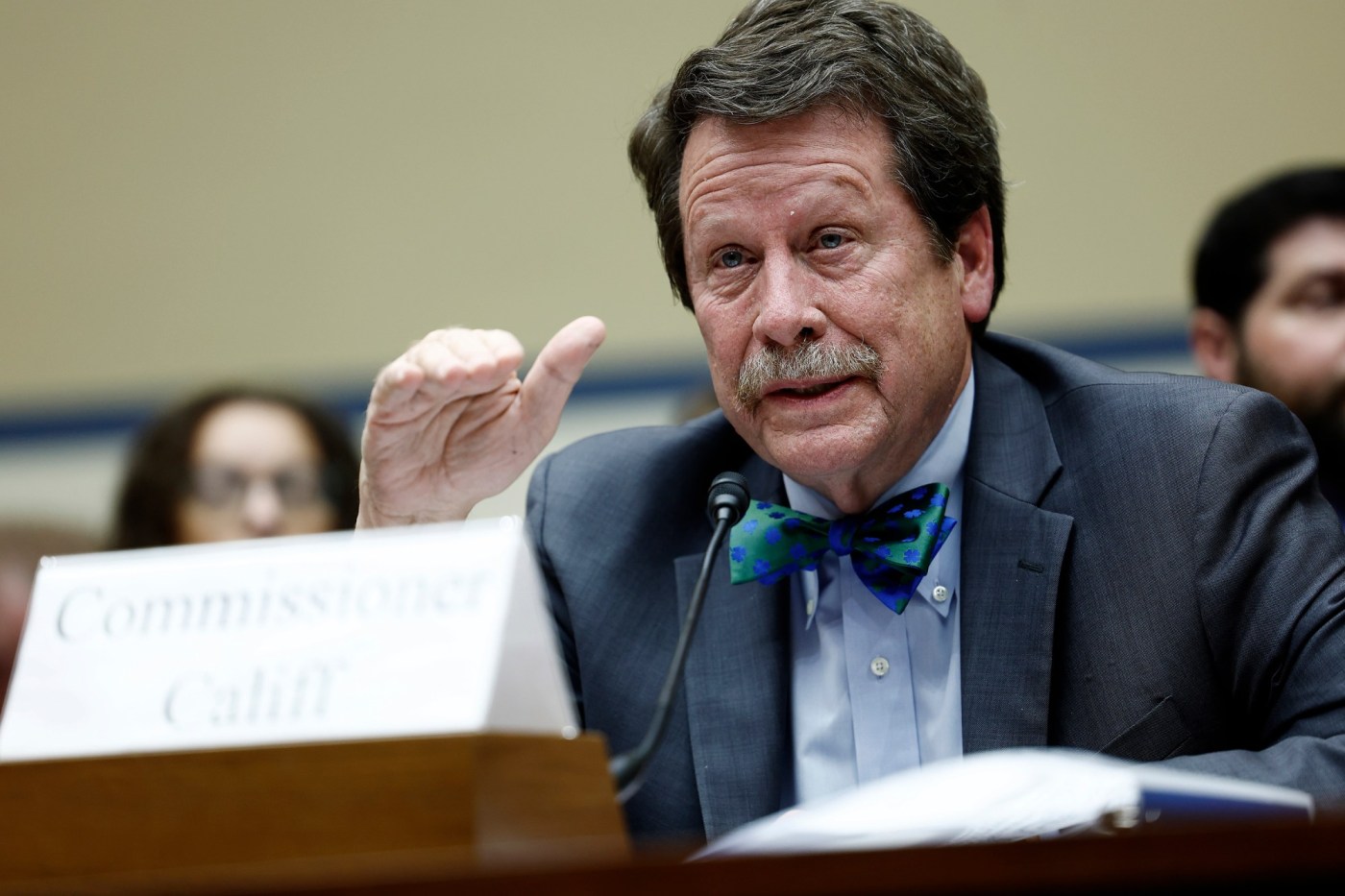
FDA Commissioner Robert Califf has repeatedly made comments to that effect, saying in February, “I wish Congress had, I don’t know how to say it, done its job, whatever.”

“Rulemaking is — I’m sure you know — is limited in what we can do,” he said. “But it’s a start.”

Related Articles

Health |


What Florida’s new 6-week abortion ban means for the South, and traveling patients

Health |


Hastings public meeting on PFAS contamination set

Health |


The path to a better tuberculosis vaccine runs through Montana

Health |


Unsheltered people are losing Medicaid in redetermination mix-ups

Health |


Despite overall drop in sexually transmitted infections in Minnesota, officials say rising HIV cases are ‘troubling’

The rule aims to help verify the accuracy of various clinical tests that doctors develop and use in labs. Califf pointed to the variations he saw while helping relatives with cancer.

“It just really disturbs me that you can go to different cancer centers and get entirely different answers based on which version of the test they happened to use,” he said.

Under the rule, lab test developers would be required to apply for FDA approval, beginning with higher-risk tests and phasing in over four years.

Some types of tests would be exempt, and the agency opted to roll back the initial proposal in several ways. Tests currently on the market would be grandfathered in, for example, and tests used within an integrated health system, the Department of Veterans Affairs or the Department of Defense would also be exempt. The FDA would also exempt tests verified through New York’s validation program.

The agency noted that it could revisit the exemptions in the future.

Currently, lab procedures are mostly regulated by the Centers for Medicare and Medicaid Services, but CMS does not validate the accuracy of the tests themselves. The FDA typically regulates testing devices like those used at home for pregnancy or COVID-19.

The agency issued the final rule seven months after releasing the proposal in September.

Industry observers expect the rule to spur Congress to finally act. Capital Alpha Partners managing director Rob Smith wrote in a client note that the FDA’s wager “isn’t a bad bet.” Key lawmakers, such as House Energy and Commerce Chair Cathy McMorris Rodgers, R-Wash., and Senate Health, Education, Labor and Pensions Committee ranking member Bill Cassidy, R-La., indicated as much after the FDA made its proposal in September, releasing statements condemning the FDA’s move.

But the congressional outlook is increasingly uncertain as lawmakers who championed a legislative solution continue to retire. Richard M. Burr of North Carolina, the former top Republican on the Senate HELP Committee, who led a Senate bill that would have created a tailored, risk-based regulatory framework, retired from the Senate at the end of 2022.

And Rep. Larry Bucshon, R-Ind., who leads the current House version, is retiring at the end of this year, along with Rodgers.

The influx of tests is also certain to strain the FDA’s resources, though grandfathering in existing tests will help relieve that burden. The agency is receiving around $70 million less in appropriations for fiscal 2024 than fiscal 2023 amid record inflation. The agency initially expected to receive around 40,000 applications under the proposed rule, which some think is a low estimate.

Perhaps in preparation for the influx in applications, the FDA recently reclassified most tests previously considered to be high-risk, which would enable those developers to go through the 510(k) premarket notification pathway rather than the more stringent premarket approval pathway.

With all those changes, the FDA now expects to receive fewer than 3,000 test applications per year.

The FDA is also certain to face legal challenges from industry groups like the American Clinical Laboratory Association, which has been vocal in its belief that the agency lacks the authority to regulate them.

“FDA’s claim that it has authority to regulate laboratories in this way rests on an implausible assumption that the entire laboratory industry has been operating in violation of the FDCA [Federal Food, Drug and Cosmetic Act] for decades,” ACLA president Susan Van Meter said in written testimony to the Energy and Commerce Health Subcommittee in March, “and only now has FDA decided to act.”

©2024 CQ-Roll Call, Inc., All Rights Reserved. Visit cqrollcall.com. Distributed by Tribune Content Agency, LLC.