News organizations have trust issues as they gear up to cover another election, a poll finds

posted in: News | 0

By DAVID BAUDER (AP Media Writer)

NEW YORK (AP) — Even as many Americans say they learn about the 2024 election campaign from national news outlets, a disquieting poll reveals some serious trust issues.

About half of Americans, 53%, say they are extremely or very concerned that news organizations will report inaccuracies or misinformation during the election. Some 42% express worry that news outlets will use generative artificial intelligence to create stories, according to a poll from the American Press Institute and The Associated Press-NORC Center for Public Affairs Research.

The poll found 47% of Americans also expressing serious concern that news outlets would report information that has not been confirmed or verified, and 44% worry that accurate information will be presented in a way that favors one side or another.

Half of Americans say they get election news always or frequently from national news outlets, a percentage that is higher among older respondents, the poll found.

“The level of engagement is good,” said Michael Bolden, CEO of the American Press Institute. “The thing that’s most concerning is that they’re not sure they can actually trust the information.”

Years of suspicion about journalists, much of it sown by politicians, is partly responsible, he said. People are also less familiar with how journalism works. The poll found about half of respondents say they have at least a moderate amount of confidence in the information they receive from either national or local news outlets when it comes to the 2024 elections, though only about 1 in 10 say they have a great deal of confidence.

“There may have been a time when people knew a journalist because one lived on their block,” Bolden said. “The way the industry has been decimated, that’s much less likely.”

Simply putting out the news often isn’t good enough anymore, he said. There’s a growing disconnect between news organizations and communities that the outlets need to address, by helping to let people know what journalists do and how people reporting news are their friends and neighbors, he said.

Outlets should lean into a convenor role, bringing people together for newsworthy events, he said.

About half of U.S. adults say they follow the news about presidential elections closely, with older adults being more engaged. About two-thirds of Americans age 60 or older say they keep a close eye on presidential election news, compared wth roughly one-third of those under age 30.

The same trend is seen with local and state election news. While the poll found that 46% of Americans age 60 or older say they follow news about local and state elections closely, only 16% of people age 18 to 29 said the same thing.

“As they transition to becoming older people, will they begin to care?” Bolden asked. “If they don’t begin to care, what will that mean for local and state communities?”

Young people, those under age 30, are about as likely to get election news from social media or friends or family as they are to get it from national or local news outlets, the poll found. Black and Latino adults are somewhat more likely to express “a great deal” of confidence in the reliability of social media as a source of election news than white Americans are.

That’s both a warning sign, since there is a lot more misinformation to be found on social media, and an opportunity for traditional outlets to make more of their work available this way, Bolden said.

Related Articles

National Politics |


Takeaways from the start of week 2 of testimony in Trump’s hush money trial

National Politics |


Police clear pro-Palestinian protesters from Columbia University’s Hamilton Hall after occupation

National Politics |


They staffed the Jan. 6 committee. Threats still follow them

National Politics |


Supreme Court ruling on Trump immunity could alter impeachment

National Politics |


More Republican states challenge new Title IX rules protecting LGBTQ+ students

About 6 in 10 Democrats say they get election news from national outlets at least frequently. That’s more than the 48% of Republicans or 34% of independents, according to the poll. Republicans are more likely than Democrats and independents to express concern about inaccurate information or misinformation in news coverage during the upcoming elections. About 6 in 10 Republicans are concerned about this, compared with about half of Democrats.

Besides inaccuracies, many also expressed serious concern about election news that focuses too much on division or controversies or concentrates on who may win or lose — the horserace aspect of political coverage — rather than issues or the character of candidates.

Most Americans say that for them to make informed decisions about the 2024 state and local elections, they want national and local news outlets to highlight candidates’ values or their different positions on key social issues. In each case, about three-quarters of U.S. adults say they would like “a lot” or “some” coverage of these topics.

The poll of 2,468 adults was conducted March 21-25, 2024, using a sample drawn from NORC’s probability-based AmeriSpeak Panel, which is designed to be representative of the U.S. population. The margin of error is plus or minus 2.9 percentage points.

David Bauder writes about media for The Associated Press. Follow him at http://twitter.com/dbauder.
Pedestrian struck and killed in Bloomington

posted in: Society | 0

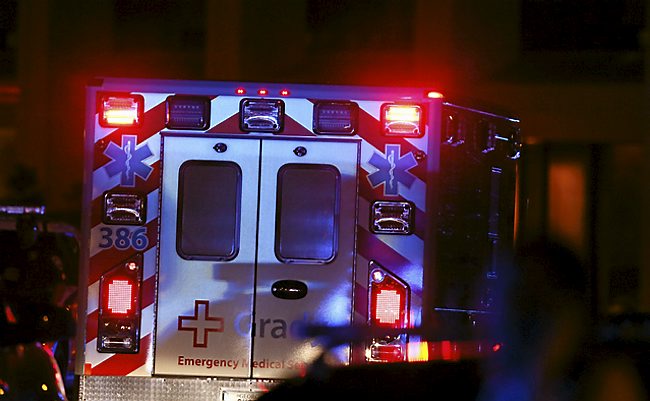
A driver fatally struck a man who was walking in a Bloomington road late Tuesday, police said.

The driver was headed east on Old Shakopee Road and hit the 58-year-old man as he was walking in the curbside lane near 96th Street around 10:45 p.m., police said. The driver and another witness stopped at the scene.

The man was taken to Hennepin County Medical Center, where he was pronounced dead. His identity was not released Wednesday.

Related Articles

Crime & Public Safety |


Driver, 84, struck and critically injured two Forest Lake track athletes crossing U.S. 61, State Patrol says

Crime & Public Safety |


St. Paul boy, 3, dies in U.S. 52 collision in southern Dakota County

Crime & Public Safety |


Blaine man gets 8 months for high-speed St. Anthony crash that injured two

Crime & Public Safety |


Lakeville eyes new public safety training facility as it gets closer to funding goal

Crime & Public Safety |


Death of woman at Hugo assisted-living center investigated as homicide

Forest Lake students hit by car during track practice remain hospitalized

posted in: News | 0

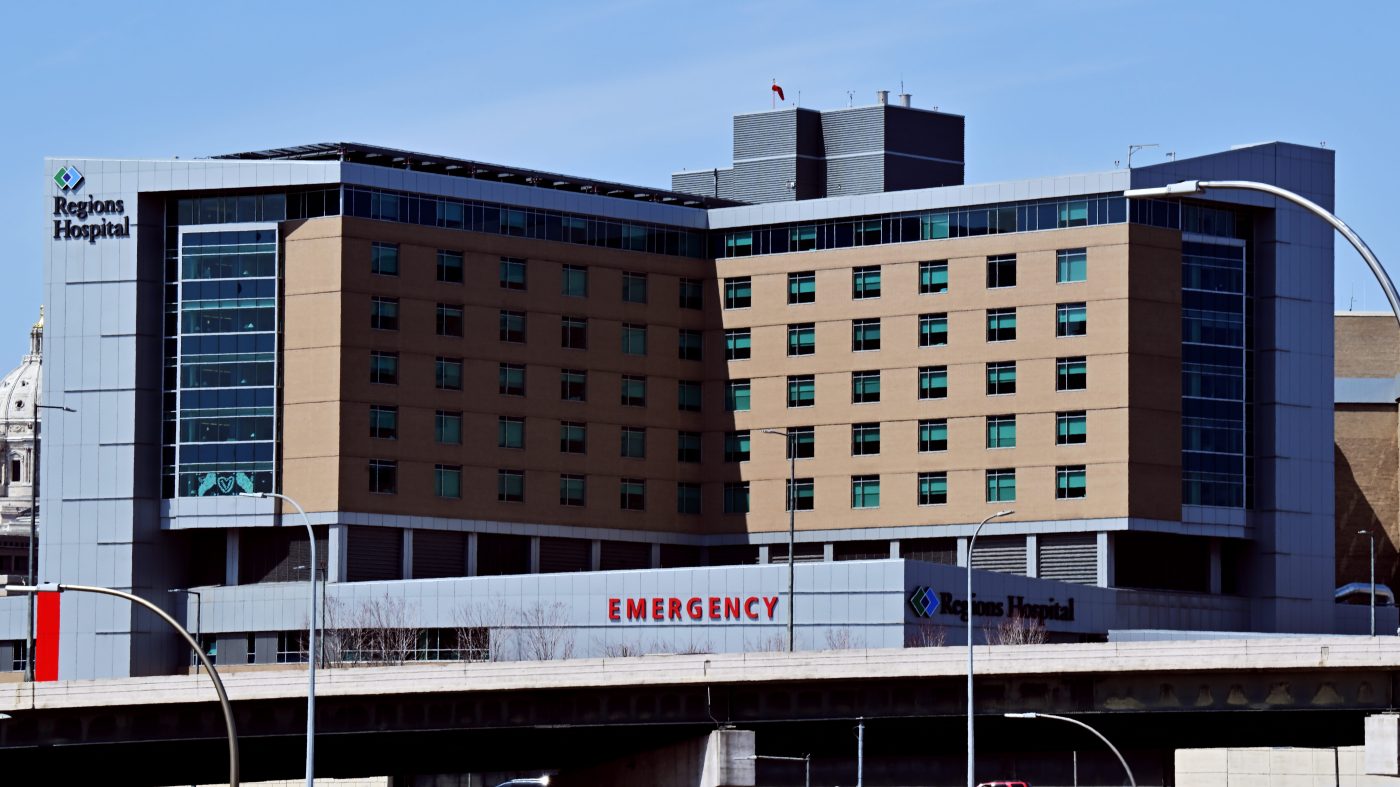
Forest Lake Area High School officials said Wednesday morning that the two boys injured Tuesday afternoon when they were struck by a car as they crossed U.S. Highway 61 near the high school are “receiving the best care possible” at Regions Hospital in St. Paul.

“The families are in good spirits and continue to appreciate the prayers and positive thoughts from our Forest Lake Area Schools community,” Principal Jim Caldwell and Superintendent Steve Massey wrote in an email sent to families and staff.

The boys, both 15, are track athletes at Forest Lake Area High School. They were crossing U.S. 61 in the crosswalk at 202nd Street North with other members of the track team about 3:30 p.m. when they were struck by an 84-year-old Lindstrom man driving a 2001 Cadillac DeVille southbound on Highway 61, according to the Minnesota State Patrol.

The injured boys, both of Forest Lake, were flown to Regions Hospital, said Lt. Jill Frankfurth of the State Patrol.

School officials said they would have extra student support available on Wednesday for students who may need assistance in dealing with the situation.

“We continue to hold these students and their families in our thoughts and our hearts as they begin the process of recovery,” Caldwell and Massey wrote.

The State Patrol, which is continuing to investigate, said it expects to release the names of the boys at 6 p.m. Thursday.

The name of the driver is expected to be released at noon.

Related Articles

Crime & Public Safety |


Lakeview Hospital is planning a new $400M Stillwater campus and wants your input

Crime & Public Safety |


Driver, 84, struck and critically injured two Forest Lake track athletes crossing U.S. 61, State Patrol says

Crime & Public Safety |


Man accused of 2023 Forest Lake hit-and-run death pleads not guilty

Crime & Public Safety |


Washington County Parks gets unexpected conservation land donation from Scandia estate

Crime & Public Safety |


Overnight closure of I-694 in Oakdale on Friday night was rescheduled due to weather

United Methodists repeal longstanding ban on LGBTQ clergy

posted in: News | 0

By PETER SMITH (Associated Press)

CHARLOTTE, N.C. (AP) — United Methodist delegates repealed their church’s longstanding ban on LGBTQ clergy with no debate on Wednesday, removing a rule forbidding “self-avowed practicing homosexuals” from being ordained or appointed as ministers.

Delegates voted 692-51 at their General Conference — the first such legislative gathering in five years. That overwhelming margin contrasts sharply with the decades of controversy around the issue. Past General Conferences of the United Methodist Church had steadily reinforced the ban and related penalties amid debate and protests, but many of the conservatives who had previously upheld the ban have left the denomination in recent years, and this General Conference has moved in a solidly progressive direction.

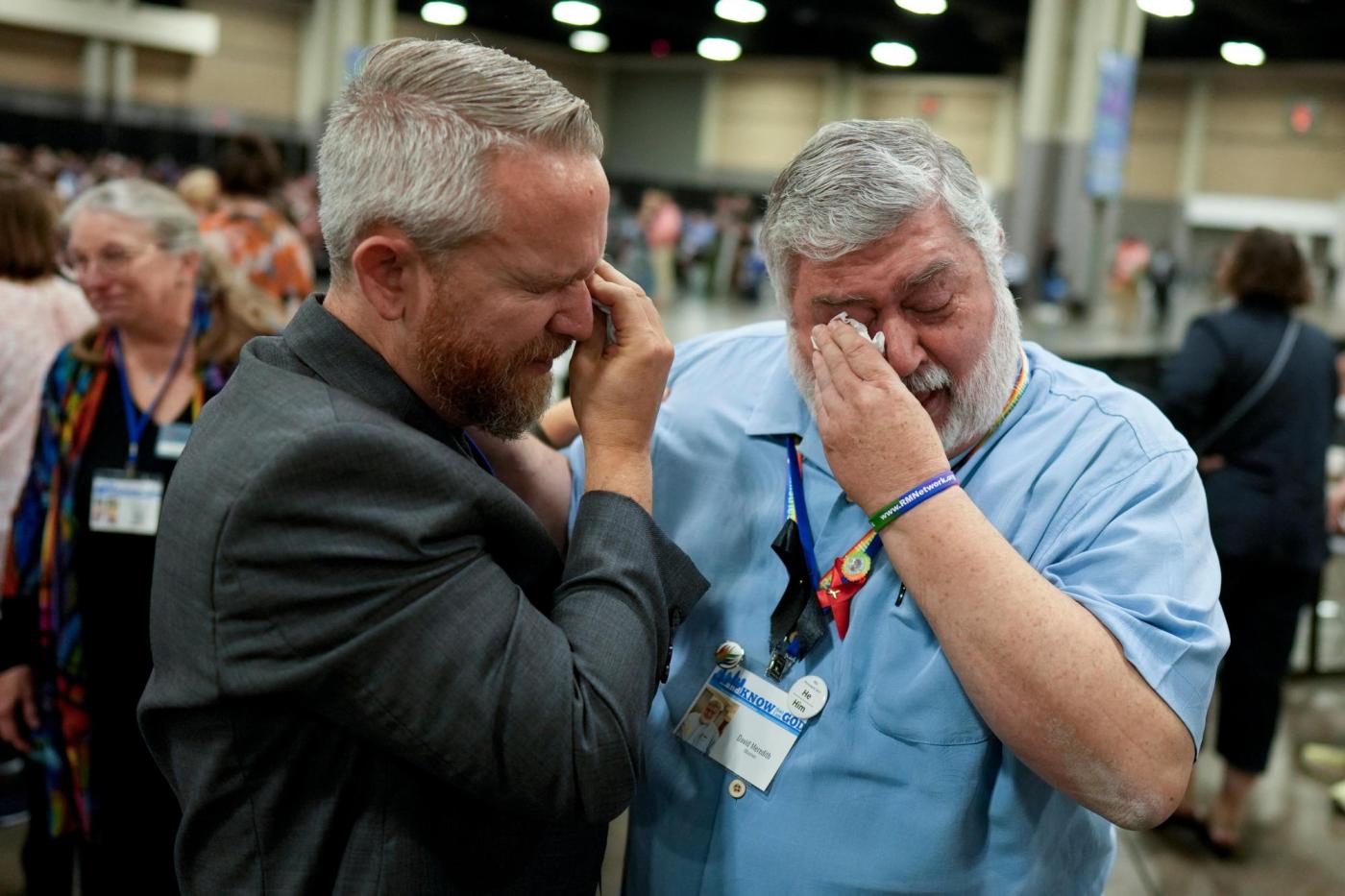
Applause broke out in parts of the convention hall Wednesday after the vote. A group of observers from LGBTQ advocacy groups embraced, some in tears. “Thanks be to God,” said one.

The change doesn’t mandate or even explicitly affirm LGBTQ clergy, but it means the church no longer forbids them. It’s possible that the change will mainly apply to U.S. churches, since United Methodist bodies in other countries, such as in Africa, have the right to impose the rules for their own regions. The measure takes effect immediately upon the conclusion of General Conference, scheduled for Friday.

The consensus was so overwhelmingly that it was rolled into a “consent calendar,” a package of normally non-controversial measures that are bundled into a single vote to save time.

Also approved was a measure that forbids district superintendents — a regional administrator — from penalizing clergy for either performing a same-sex wedding or for refraining from performing one. It also forbids superintendents from forbidding or requiring a church from hosting a same-sex wedding.

That measure further removes scaffolding around the various LGBTQ bans that have been embedded various parts of official church law and policy. On Tuesday, delegates had begun taking steps to dismantle such policies.

Delegates are also expected to vote as soon as today on whether to replace their existing official Social Principles with a new document that no longer calls the “practice of homosexuality … incompatible with Christian teaching” and that now defines marriage as between “two people of faith” rather than between a man and a woman.

The changes are historic in a denomination that has debated LGBTQ issues for more than half a century at its General Conferences, which typically meet every four years. On Tuesday, delegates voted to remove mandatory penalties for conducting same-sex marriages and to remove their denomination’s bans on considering LGBTQ candidates for ministry and on funding for gay-friendly ministries.

At the same time, it comes following the departure of one-quarter of the U.S. churches within the UMC. And it could also prompt departures of some international churches, particularly in Africa, where more conservative sexual values prevail and where same-sex activity is criminalized in some countries.

Last week, the conference endorsed a regionalization plan that essentially would allow the churches of the United States the same autonomy as other regions of the global church. That change — which still requires local ratification — could create a scenario where LGBTQ clergy and same-sex marriage are allowed in the United States but not in other regions.

More than 7,600 mostly conservative congregations in the United States disaffiliated between 2019 and 2023 reflecting dismay over the denomination not enforcing its bans on same-sex marriage and LGBTQ ordination.

The conference last week also approved the departure of a small group of conservative churches in the former Soviet Union.

The denomination had until recently been the third largest in the United States, present in almost every county. But its 5.4 million U.S. membership in 2022 is expected to drop once the 2023 departures are factored in.

The denomination also counts 4.6 million members in other countries, mainly in Africa, though earlier estimates have been higher.

___

Associated Press religion coverage receives support through the AP’s collaboration with The Conversation US, with funding from Lilly Endowment Inc. The AP is solely responsible for this content.