ICC prosecutor seeks arrest warrants for Israeli and Hamas leaders, including Netanyahu

posted in: News | 0

By JOSEF FEDERMAN (Associated Press)

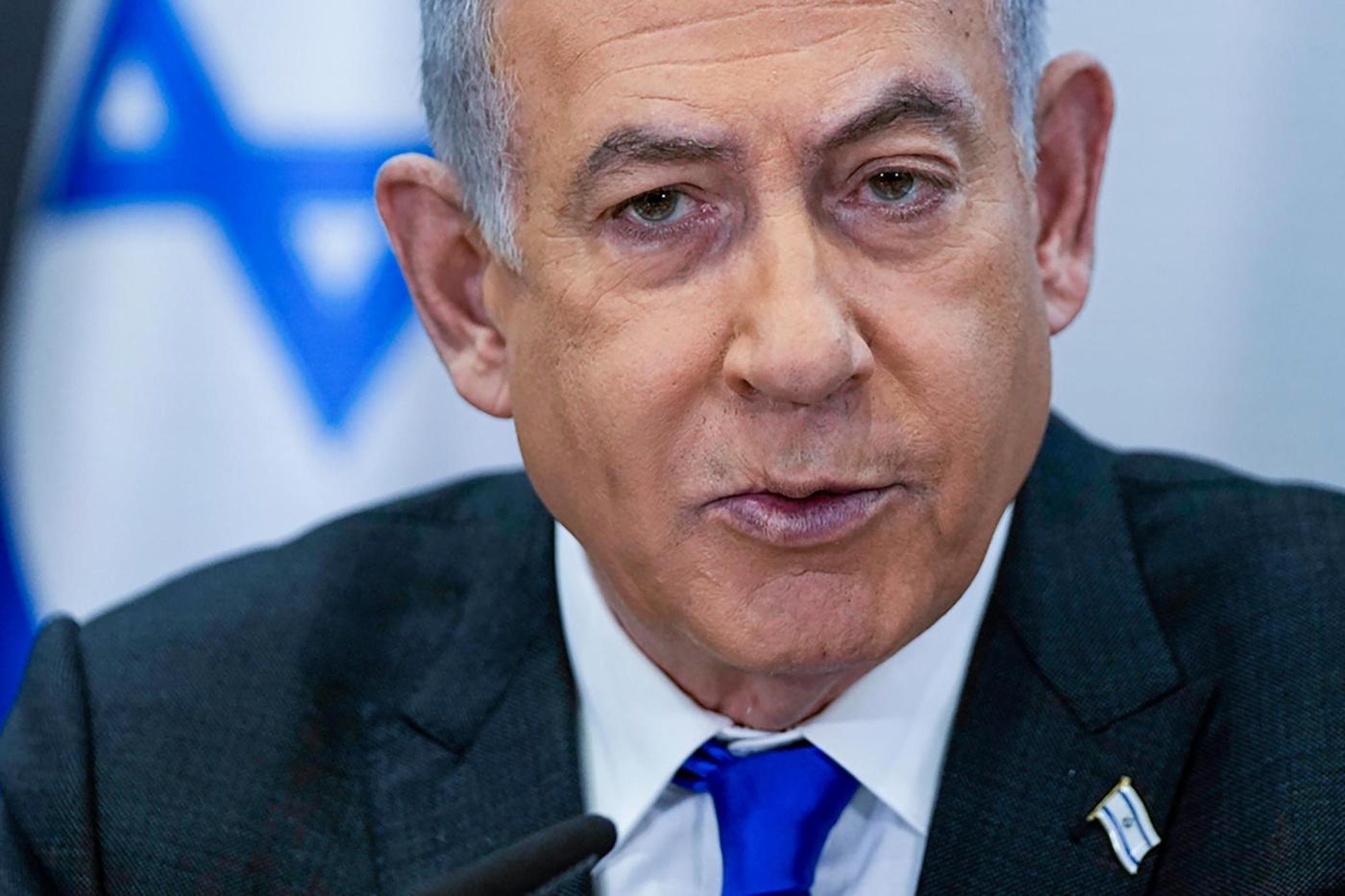
JERUSALEM (AP) — The chief prosecutor of the International Criminal Court said Monday he is seeking arrest warrants for leaders of Israel and Hamas, including Israeli Prime Minister Benjamin Netanyahu, over actions taken during their seven-month war.

While Netanyahu and his defense minister, Yoav Gallant, do not face imminent arrest, the announcement by ICC Chief Prosecutor Karim Khan was a symbolic blow that deepened Israel’s isolation over the war in Gaza.

Khan accused Netanyahu, Gallant, and three Hamas leaders — Yehia Sinwar, Mohammed Deif and Ismail Haniyeh — of war crimes and crimes against humanity in the Gaza Strip and Israel. Hamas has been designated as a terrorist organization by the United States, Canada and the European Union.

A panel of three judges will consider the prosecutor’s evidence and determine whether to issue the arrest warrants and allow a case to proceed. The judges typically take two months to make such decisions.

Israel is not a member of the court, so even if the arrest warrants are issued, Netanyahu and Gallant do not face any immediate risk of prosecution. But Khan’s announcement deepens Israel’s isolation as it presses ahead in Gaza, and the threat of arrest could make it difficult for the Israeli leaders to travel abroad.

Israeli Foreign Minister Israel Katz said the chief prosecutor’s decision against its leaders is “a historic disgrace that will be remembered forever.” He said he would work with world leaders to ensure that any such warrants are not enforced on Israel’s leaders.

Hamas, which is considered a terrorist group by the West, also denounced the ICC prosecutor’s request to arrests its leaders.

Benny Gantz, a former military chief and member of Israel’s War Cabinet with Netanyahu and Gallant, harshly criticized Khan’s announcement, saying Israel fights with “one of the strictest” moral codes, respects international law and has a robust judiciary capable of investigating itself.

“The State of Israel is waging one of the just wars fought in modern history following a reprehensible massacre perpetrated by terrorist Hamas on the 7th of October,” he said.

Still, Netanyahu has come under heavy pressure at home to end the war sooner than later. Thousands of Israelis have joined weekly demonstrations calling on the government to reach a deal to bring home Israeli hostages in Hamas captivity.

In recent days, the two other members of his war Cabinet, Gallant and Benny Gantz, have threatened to resign if Netanyahu does not spell out a clear postwar vision for Gaza.

But on Monday, Netanyahu received wall-to-wall support as politicians across the spectrum condemned the ICC prosecutor’s move, including opposition leader Yair Lapid.

In a statement, Hamas accused the prosecutor of trying to “equate the victim with the executioner.” It said it has the right to resist Israeli occupation, including “armed resistance.”

It also criticized the court for seeking the arrests of only two Israeli leaders and said it should seek warrants for other Israeli leaders.

Both Sinwar and Deif are believed to be hiding in Gaza as Israel tries to hunt them down. But Haniyeh, the supreme leader of the Islamic group, is based in Qatar and frequently travels across the region.

The latest war between Israel and Hamas began on Oct. 7, when terrorists from Gaza crossed into Israel and killed some 1,200 people, mostly civilians, and took 250 others hostage.

Since then, Israel has waged a brutal campaign to dismantle Hamas in Gaza. More than 35,000 Palestinians have been killed in the fighting, at least half of them women and children, according to the latest estimates by Gaza health officials.

The war has triggered a humanitarian crisis in Gaza, displacing roughly 80% of the population and leaving hundreds of thousands of people on the brink of starvation, according to U.N. officials.

Speaking of the Israeli actions, Khan said in a statement that “the effects of the use of starvation as a method of warfare, together with other attacks and collective punishment against the civilian population of Gaza are acute, visible and widely known. … They include malnutrition, dehydration, profound suffering and an increasing number of deaths among the Palestinian population, including babies, other children, and women.”

The United Nations and other aid agencies have repeatedly accused Israel of hindering aid deliveries throughout the war. Israel denies this, saying there are no restrictions on aid entering Gaza and accusing the U.N. of failing to distribute aid.

The U.N. says aid workers have repeatedly come under Israeli fire, and also says ongoing fighting and a security vacuum have impeded deliveries.

Related Articles


Biden tells Morehouse graduates that scenes in Gaza from the Israel-Hamas war break his heart, too


David Brooks: The authoritarians have momentum, and here’s partly why


Israeli army finds bodies of 3 hostages in Gaza killed at Oct. 7 music festival


Trucks are rolling across a new US pier into Gaza. But challenges remain to getting enough aid in


Hamline University’s protest encampment ends with 10 students facing discipline

Of the Hamas actions on Oct. 7, Khan, who visited the region in December, said that he saw for himself “the devastating scenes of these attacks and the profound impact of the unconscionable crimes charged in the applications filed today. Speaking with survivors, I heard how the love within a family, the deepest bonds between a parent and a child, were contorted to inflict unfathomable pain through calculated cruelty and extreme callousness. These acts demand accountability.”

After a brief period of international support, Israel has faced increasing criticism as the war has dragged on and the death toll has climbed.

Israel is also facing a South African case in the International Court of Justice, the U.N.’s top court, accusing Israel of genocide. Israel denies those charges.

The ICC was established in 2002 as the permanent court of last resort to prosecute individuals responsible for the world’s most heinous atrocities — war crimes, crimes against humanity, genocide and the crime of aggression.

The U.N. General Assembly endorsed the ICC, but the court is independent.

Dozens of countries don’t accept the court’s jurisdiction over war crimes, genocide and other crimes. They include Israel, the United States, Russia and China.

The ICC becomes involved when nations are unable or unwilling to prosecute crimes on their territory. Israel argues it has a functioning court system.

The ICC accepted “The State of Palestine” as a member in 2015, a year after the Palestinians accepted the court’s jurisdiction.

The court’s chief prosecutor at the time announced in 2021 she was opening an investigation into possible crimes on Palestinian territory. Israel often levies accusations of bias at U.N. and international bodies, and Netanyahu condemned the decision as hypocritical and antisemitic.

In 2020, then U.S. President Donald Trump authorized economic and travel sanctions on the ICC prosecutor and another senior prosecutor. The ICC staff were looking into U.S. and allies’ troops for possible war crimes in Afghanistan.

U.S. President Joe Biden lifted the sanctions in 2021.

Last year, the court issued a warrant for Russian President Vladimir Putin on charges of responsibility for the abductions of children from Ukraine. Russia responded by issuing its own arrest warrants for Khan and ICC judges.

Other high-profile leaders charged by the court include ousted Sudanese strongman Omar al-Bashir on allegations that include genocide in his country’s Darfur region. Former Libyan leader Moammar Gadhafi was captured and killed by rebels shortly after the ICC issued a warrant for his arrest on charges linked to the brutal suppression of anti-government protests in 2011.

Molly Quell in Delft, Netherlands, and Mike Corder in Ede, Netherlands, contributed.

Part of BWCAW closed as search continues for 2 missing canoeists

posted in: Society | 0

BOUNDARY WATERS CANOE AREA WILDERNESS — The St. Louis County Rescue Squad is searching for two missing canoeists Sunday after two canoes went over Curtain Falls on Saturday evening.

The water emergency began around 7:21 p.m., according to a St. Louis County Sheriff’s Office report. Two canoes containing four people went over the falls, leaving one injured, one uninjured and two missing.

Two of the party were extracted from near Iron Lake around 12:30 a.m. Sunday. The injured person was flown to Essentia Health-St. Mary’s Medical Center in Duluth with serious but not life-threatening injuries.

Search efforts for the two missing individuals resumed Sunday, led by the St. Louis County Rescue Squad with assistance from the Virginia Fire Department, Minnesota Department of Natural Resources and North Air Care.

The U.S. Forest Service on Sunday evening closed all trails, campsites, portages, rivers and lakes “including but not limited to Iron Lake, including the LaCroix-Bottle portage and LaCroix-Iron portage, and Crooked Lake west of Sunday Bay.” The closure was set to take effect at 12:01 a.m. Monday through 12:01 a.m. Wednesday.

This is the second incident to take place in the BWCAW this month. Canoeists on May 10 found the body of Mark Ham, 62, of Duluth, near a capsized canoe on Lake Ages.

Related Articles

News |


‘Not Afraid to Look’ sculpture arrives in Park Rapids to be a part of this summer’s sculpture trail

News |


Troy Renck: With everything on line, Nuggets choke away 20-point lead in Game 7 loss

News |


Minneapolis-born Dolores Rosedale, sidekick on ‘Beat the Clock,’ dies at 95

News |


Danish artist Thomas Dambo kicks off largest-yet giant troll art series in Detroit Lakes

News |


National Park Service tweaks plan to limit vehicles on frozen Voyageurs Park lakes

Two Years Later, I’ll Never Stop Fighting for Lexi

posted in: News | 0

Twice, my daughters have confronted the stark reality of guns in Uvalde schools. 

First, my youngest daughter, Lexi, faced a deranged 18-year-old armed with an AR-15-style rifle as he murdered 19 students and two teachers while police lingered in the school’s hallway. Lexi, forever 10 years old, was one of those fourth graders who never came home from Robb Elementary on May 24, 2022. Two years later, in February of this year, my middle daughter, Jahleela, who is 13, was unknowingly in a classroom with a student who had brought a handgun to Morales Junior High. The student had plans to sell the weapon to a peer. In this case, other students reported his actions, and everyone left campus unharmed.

This is Uvalde, post-May 24.

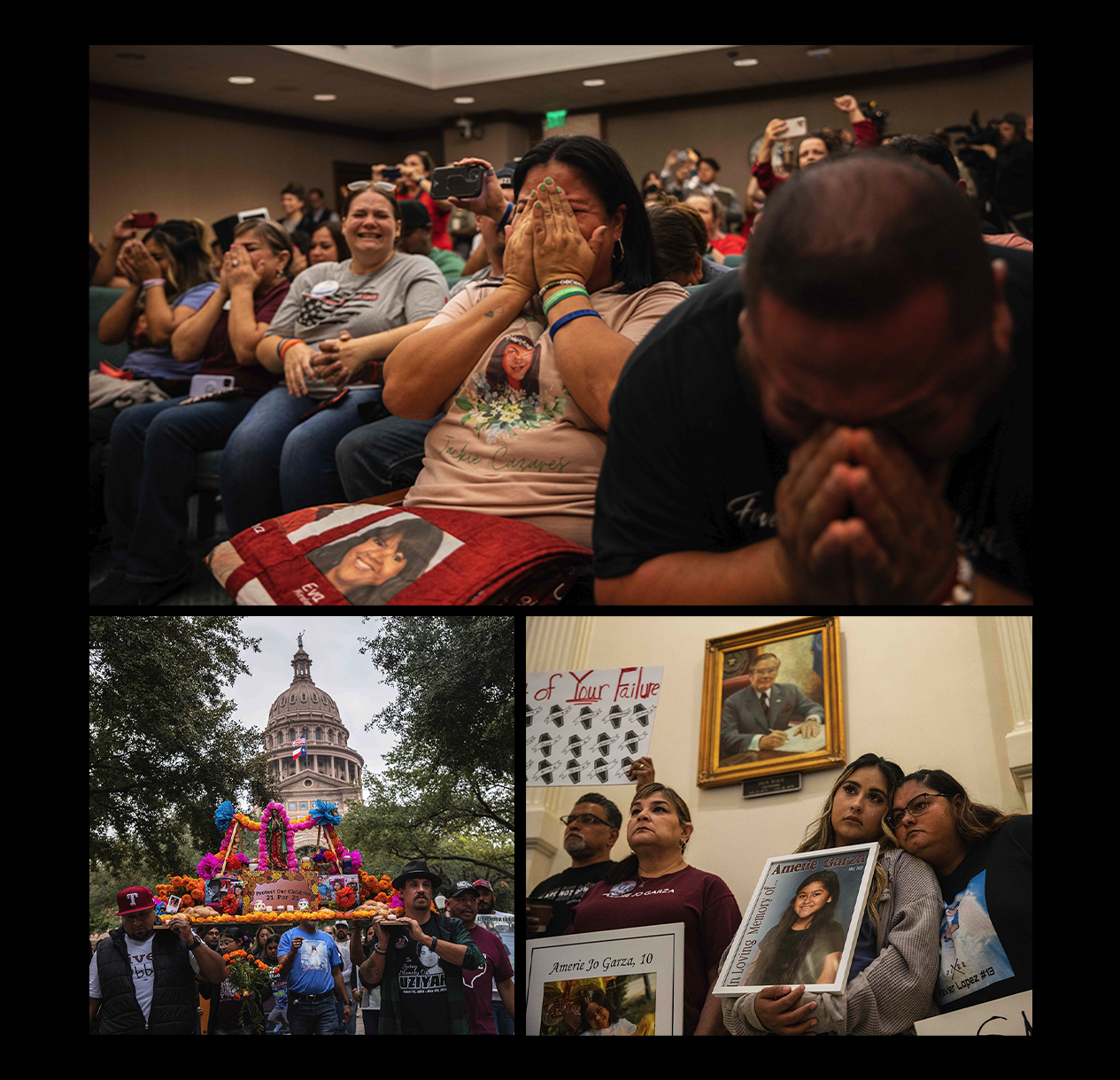
Top: Gloria Cazares and her husband Javier, who lost their daughter Jackie, weep in celebration with other Uvalde families after a Texas House committee passes the “raise-the-age” bill, which later failed to become law. Bottom Left: Uvalde families led by Brett Cross (R), uncle and guardian of Uziyah Garcia, and Mack Segovia, stepfather of Eliahna Torres, carry a Day of the Dead altar in 2022. Bottom Right: (Left to right) Manuel Rizo, Berlinda Arreola, Kimberly Garcia, and Felicha Martinez—who respectively lost their niece, granddaughter, daughter, and son—stand together last May in the Texas Capitol.

I am the mother of a mass-shooting victim. That concept, which still looks foreign to me as I read it back to myself, reminds me of my time as a reporter in Uvalde—before 2022. It was May 2019 when Uvalde Memorial Hospital secured Sue Klebold, mother of Columbine High School shooter Dylan Klebold, to be the keynote speaker at its “Healthy Minds Matter” event. The hospital asked that I interview her in my capacity as a journalist for the Uvalde Leader-News to publicize the event. During our conversation, in which she advocated for mental health resources, Sue said, “I am the mother of a killer.” Those words had such a chilling effect on me that I used them as the headline for the story, which appeared on the front page. Five years later, I describe myself as the mother of a mass-shooting victim, and I advocate daily for stronger gun control.

Two weeks after I lost Lexi, and three days before her funeral, I agreed to testify before Congress about the effects of gun violence. I don’t recall making a conscious decision to actively join the gun violence prevention movement, but, looking back, I’ve always been a member. I have always prioritized children over some civilians’ desire to own high-powered weapons of war. On the heels of other mass shootings, some of which I wrote about for the Uvalde paper, I vocalized my beliefs with friends, local law enforcement members, and other officials. Now I am a passionate, deliberate advocate for preventing gun violence. As we’ve seen in Uvalde, gun violence is an epidemic. It is spreading across our country at a rate we are unable to contain. 

Kimberly and Felix share a quiet moment in between meetings with state lawmakers in Austin last February.

Just this April, my youngest child, 10-year-old Julian—a fourth grader just like Lexi was before that gun-wielding Uvalde High School dropout shattered our family—saw bullets in his elementary school classroom. That day, I was on my lunch break from the newspaper, where I now work in advertising, when I received a call from Uvalde Elementary, the temporary campus for students who would have been at Robb Elementary if not for May 24, 2022. The administrator sounded hesitant before she informed me that Julian’s classmate brought bullets to school. He showed them to Julian and two other classmates, who told their teacher. The school district released yet another notice to parents, promising appropriate repercussions for the child who brought ammunition to school for a private show-and-tell.

This is Uvalde, post-May 24. 

Left: Javier Cazares remembers his daughter, Jackie, in her bedroom one month after the school shooting that took her life. Right: Ana Rodriguez kisses the urn containing her daughter Maite’s ashes.

After hanging up the phone, I sobbed at my kitchen table. My oldest child, 19-year-old Kalisa, tried to comfort me. Now, as I write this, sitting alone in a hotel room after yet another gun violence prevention conference, I wonder how to keep going. What more do I have to offer when I feel so empty? I think about the conversation I had with Julian when he came home that day. “My friend shouldn’t have brought bullets to school, but it’s also his parents’ fault,” he said. “They should have them put away.”

What if that child had found a gun, instead? How close did I come to losing my son in the same manner, at the same age, as his sister? We are all one “What if?” away from devastation by gun violence. Those of us who have already lost so much are not immune to losing more. So I keep fighting. For Lexi, for my other children, for all children. 

Ten-year-old Uziyah Garcia’s math notebook was struck by a bullet during the shooting. He was among the 19 children killed.

As we’ve seen in Uvalde—along with Columbine, Parkland, and so many other places in America—you cannot leave the protection of children in the hands of law enforcement. Uvalde’s response was delayed by a minimum of 77 minutes and perhaps even years: In 2018, two Morales Junior High School students, who may have been loosely connected to the Robb Elementary shooter, planned a mass casualty event for April 20, 2022. That was the year they would graduate from high school, and April 20 had been the date of the 1999 Columbine massacre. The two students then changed plans, moving the date up to 2018, but one got cold feet and told an adult. As a reporter then, I remember writing that story, pushing aside my own what-ifs. At the time, Kalisa was in their eighth-grade class. 

Top Left: Friends and family of Eliahna Torres celebrate what would have been her 11th birthday last January. Bottom Left: The Rubios spend time at Lexi’s grave last April after what would have been Makenna Elrod Seiler’s 11th birthday. Right: Veronica Silguero closes her eyes at a celebration of what would have been her daughter Jailah’s 12th birthday last September.

People often talk about how a mother is born when she gives birth, but no one discusses the death of that mother when she buries her child. One day, Lexi was here, and I was whole. The next, I was completely broken. 

I marched, rallied, met with U.S. and state politicians. I flew to D.C., Florida, California, Chicago, and Massachusetts. Last year, my husband Felix and I, along with other families affected by mass shootings, spent months advocating at the Texas Capitol for House Bill 2744, which would have raised the minimum age to purchase semi-automatic guns from 18 to 21. Had this bill been law in 2022, the gunman would not have been able to legally purchase the AR-15-style weapon he used to murder my daughter. The state House Select Committee on Community Safety passed the bill 8-5, but it ultimately died without a vote from the full House.

Caitlyne Gonzalez, who survived the Robb shooting, dances to Taylor Swift at her best friend Jackie’s grave.

Now, as we prepare for next year’s legislative session, people ask me where I find the strength. It’s not strength but determination. As it was in those muddled days after May 24 when I agreed to testify before Congress, it’s not a choice but an expression of my love for Lexi. She is not physically here to hold, to kiss, to raise. I can only honor her by working to save lives and prevent more heartache.

Top Left: Lexi’s younger brother, Julian, picks sunflowers. Top Right: Ana Rodriguez kisses her son Darnell as she drops him off at school a little over a year after the shooting. Bottom Left: Jerry Mata, who lost his daughter Tess, watches this year’s solar eclipse near Tess’ grave. Bottom Right: Last September, Kimberly Mata-Rubio announces her run for Uvalde mayor, which was ultimately unsuccessful.

In post-May 24 Uvalde, two of my surviving children have had to deal with peers callously bringing weapons and ammunition to class despite the recent loss of 21 lives, including Lexi’s. Every time there is a lockdown, do my kids wonder if they’ll make it home? Do they wonder if they’ll get home to find they’ve lost another sibling?

This April, Kimberly Mata-Rubio reads a bedtime story to her son Julian, now 10.

A 30-Year-Old Wrongful Conviction Is Shaping the El Paso DA Race

posted in: News | 0

Daniel Villegas stood shakily behind the defendant’s table, held up by his attorneys. He was already in tears as the bailiff handed the judge the jury’s written decision, trying to catch his breath with heaving gulps. When the judge read the words, “not guilty,” Villegas dropped like a stone. 

It was October 2018, and Villegas had just been acquitted by an El Paso jury after spending nearly two decades in prison for a double murder he was convicted of when he was a teenager. 

It was the third time he’d stood trial for the killings. His first trial in 1994 resulted in a hung jury, but a second jury convicted him in 1995 and sentenced him to life in prison. Villegas’ original conviction was overturned in 2013, after the Texas Court of Criminal Appeals upheld a lower court’s ruling, but then-El Paso District Attorney Jaime Esparza decided to try the case again. This was despite a judge’s determination that the confession Villegas signed when he was 16 years old was coerced and inadmissible.

One of the attorneys in the DA’s office tapped to prosecute Villegas in the 2018 trial was James Montoya, who maintains that, despite the acquittal that October, the prosecution had the right guy. 

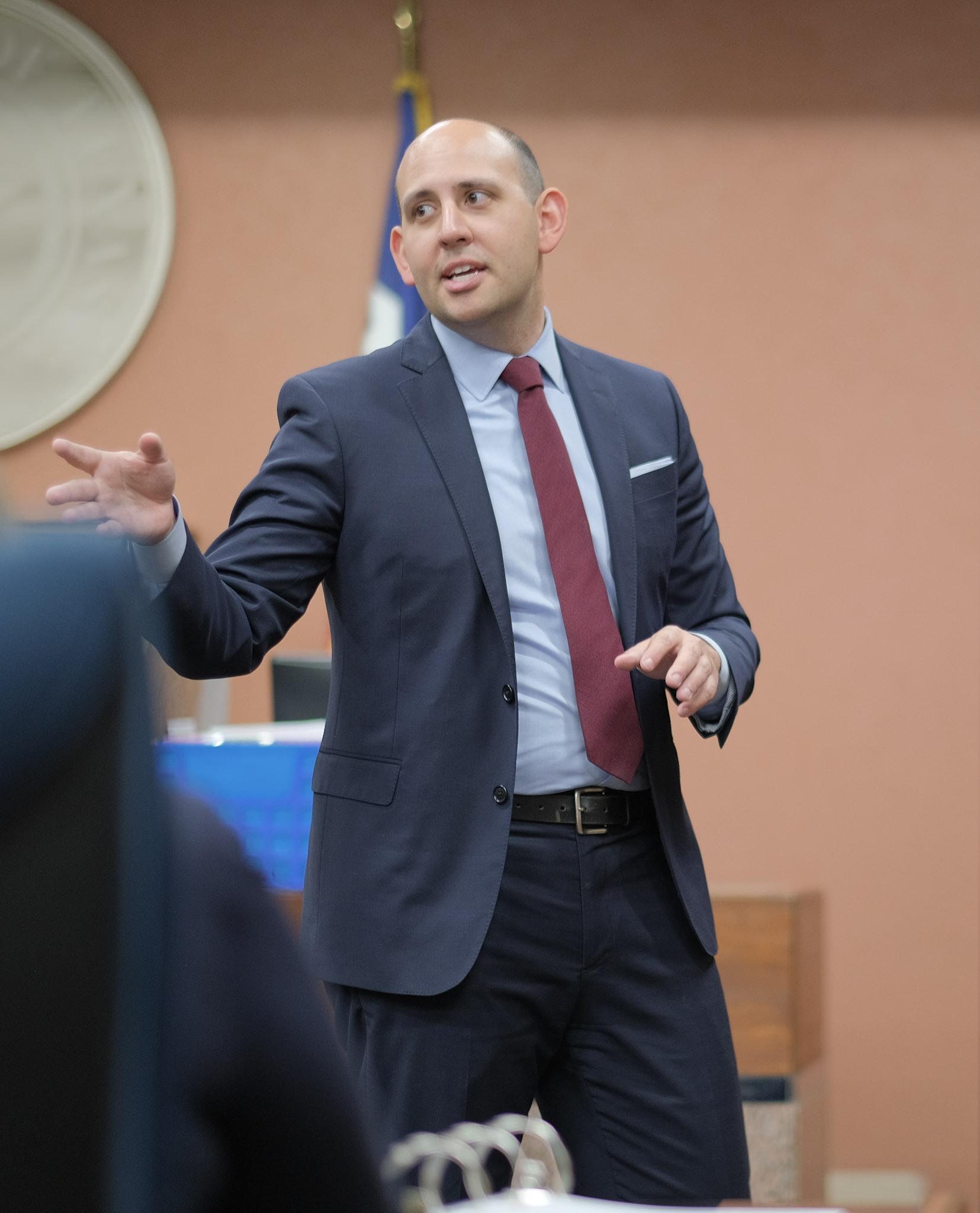
James Montoya is vying for the El Paso DA seat. (Courtesy/James Montoya Campaign Website)

“There were multiple prosecutors who worked on that case. … Our motivation throughout the entirety of that process was figuring out who murdered [the victims],” Montoya told the Texas Observer this month. “Our collective review of the case … [supports] that Mr. Villegas is the one who killed them.”

Now Montoya, a Democrat, is running for district attorney in El Paso, a position that oversees criminal prosecutions in El Paso County and two adjacent counties. He’s facing another Democrat, Alma Trejo, in a May 28 runoff election to determine who will go up against Republican incumbent—and Governor Greg Abbott-appointee—Bill Hicks in November. 

Montoya’s stance regarding Villegas’ trial has raised alarm bells for some prominent El Pasoans. Democratic state Representative Joe Moody, who is supporting Trejo, told the Observer he’s extremely invested in who takes the DA seat, given the office’s discretion and policymaking ability. He said the office has been “decimated” in recent years by staff turnover and leadership changes. Although he supported Montoya’s unsuccessful 2020 primary bid for the same office, Moody has reservations about Montoya’s judgment, in large part because of the latter’s stance on Villegas’ case. 

Villegas’ defense attorney in the 2018 trial, Joe Spencer, told the Observer he was “disappointed that [Montoya] did not see what everybody else saw. … I question his judgment because of that,” he said. “This evidence was so overwhelming.”

Villegas, one of eight people exonerated after being convicted of felonies in El Paso County since 1990, is also speaking out against Montoya’s run this year and highlighting the need for a critical eye on past cases. 

On April 10, 1993, 17-year-old Armando Lazo and 18-year-old Bobby England were shot and killed while walking home from a house party in northeast El Paso. The murders outraged the community, and police were eager to get someone in custody. Based on a tip from Daniel Villegas’ cousin—who later said police threatened to charge him with the crime—Villegas was arrested 11 days after the murders. That same night, detective Alfonso Marquez got him to confess.

Later, Villegas testified that Detective Marquez had threatened him into confessing, allegedly telling him if he didn’t, he’d be sent to county jail to be sexually assaulted. The same detective also allegedly threatened to “take him to the desert and beat him if he did not admit to the shooting,” according to Villegas’ testimony. 

Shortly after signing his confession in April 1993, Villegas told a social worker it wasn’t true. But the state relied heavily on it during his first and second trial. A recently elected Jaime Esparza, who held the DA’s office from 1993 until 2020, turned the case into a valuable bit of political theater.

After he was convicted in 1995, Villegas’ appeal was denied. He sat in prison, with no hope until local El Paso businessman John Mimbela, who married the mother of Villegas’ nieces in 2005, got involved in the case. Between 2007 and 2018, Mimbela told the Observer he spent “well over $500,000” on attorneys, investigators, expert witnesses, court documents, and promotional materials and events—all in an attempt to get Villegas out of prison.  

“It shouldn’t take this amount of money to get justice,” Mimbela said. “It never would have, had [prosecutors] not fought so hard with taxpayers’ money to keep an innocent person behind bars.” 

In 2007, Villegas filed a writ of habeas corpus, asking for a new trial. El Paso District Judge Sam Medrano Jr. took up the case and held a hearing in 2011. The next year, Medrano recommended Villegas get a new trial, saying his original lawyers erred in failing to try to get the coerced confession thrown out. The conservative Texas Court of Criminal Appeals upheld Medrano’s decision after the state appealed, granting that Villegas’ defense counsel had been ineffective. Villegas was let out of prison in 2014, and he and his legal team waited to see if Esparza would take him to trial a third time. In the meantime, Medrano ruled that the confession would be invalid for any future trial. 

In 2018, ahead of the long-awaited third trial, the DA’s office offered Villegas an “Alford Plea,” which would have guaranteed he wouldn’t get any more prison time but wouldn’t have allowed him to clear his name. Villegas rejected the offer. 

In the third trial, prosecutors weren’t permitted to bring up Villegas’ coerced confession. Spencer, Villegas’ defense attorney, said that without it, the state had nothing to pin on Villegas—no physical evidence. Spencer said when the state rested its case, he looked at the jury box. “Every one of those jurors looked at [them] with disbelief and shock.” 

Since his 2018 acquittal, Villegas has kept a close eye on the local court system. Villegas hasn’t thrown his support behind a DA candidate yet, but he urges El Paso residents to cast their vote and have a say in who holds the powerful office in the next term. “Once you vote this person in, we’re going to be stuck with them for four years,” Villegas told the Observer. “And it may be you who gets the wrongful conviction next time. ”

Ideologically, the two Democratic candidates on the ballot this month have many overlapping views: They both want to focus resources on violent crimes, beef up staffing in the ailing DA’s office, and divert mental health-related crimes from the court system. But the gaps between their platforms show on the issue of past convictions.

Alma Trejo is running as a Democrat for El Paso County District Attorney. (Courtesy/Alma Trejo Campaign Website)

Both candidates worked at one point under former DA Esparza, and both highlight their courtroom experience in their campaigns. Trejo spent time as a prosecutor before becoming a judge, and she says she tried around 80 felonies in her career. Montoya, who has worked as both a prosecutor and a defense attorney in his ten years as a lawyer, highlights some of his past cases by name on his campaign website. Villegas’ case isn’t listed. 

Montoya told the Observer that he’s in favor of conviction integrity units, but that wrongful convictions aren’t a big problem in El Paso. He said the county doesn’t have the history of prosecutorial misconduct some other large counties have. He said he doesn’t believe there are many El Pasoans serving time in Texas on wrongful convictions. 

When asked about Villegas’ case, Montoya emphasized that prior to 2014 multiple appeals courts failed to rule Villegas’ adolescent confession invalid. He also pointed out that there have never been findings of prosecutorial misconduct in the case. 

Trejo told the Observer that Villegas’ case—which she was never involved with—proves the need for a “strong” conviction integrity unit in El Paso. She said she’d welcome review of past cases she’s tried, especially given major improvements in forensic technology in recent decades. 

“I would encourage it because, at the end of the day, it’s our duty to make sure justice is served,” Trejo said. “And you know what? The public doesn’t benefit by having the wrong person in custody, because all that means is the person who committed the offense is walking the street. It doesn’t benefit anybody.”

Villegas filed suit against several El Paso officials in 2015, seeking damages for his wrongful conviction, but the process has been slow-moving. The civil trial was supposed to take place last October, but it was postponed until May 28—the day of the runoff in the DA election. It’s since been further pushed to an undetermined date.