Top U.S. drug agency a notable holdout in Biden’s push to loosen federal marijuana restrictions

posted in: Politics | 0

By JOSHUA G0ODMAN and JIM MUSTIAN (Associated Press)

In an isolated part of the U.S. Drug Enforcement Administration headquarters known as the 12th-floor “bubble,” chief Anne Milgram made an unusual request of top deputies summoned in March for what she called the “Marijuana Meeting”: Nobody could take notes.

Over the next half hour, she broke the news that the Biden administration would soon be issuing a long-awaited order reclassifying pot as a less-dangerous drug, a major hurdle toward federal legalization that DEA has long resisted. And Milgram went on to reveal another twist, according to two people familiar with the private meeting who spoke to The Associated Press on condition of anonymity, that the process normally steered by the DEA had been taken over by the U.S. Justice Department and the action would not be signed by her but by Attorney General Merrick Garland.

Milgram didn’t give aides a reason for the unprecedented omission and neither she nor the DEA has explained since. But it unfolded this past week exactly as laid out in that meeting two months ago, with the most significant drug policy change in 50 years launched without the support of the nation’s premier narcotics agency.

“DEA has not yet made a determination as to its views of the appropriate schedule for marijuana,” reads a sentence tucked 13 pages into Garland’s 92-page order last Thursday outlining the Biden administration proposal to shift pot from its current Schedule I alongside heroin and LSD to the less tightly regulated Schedule III with such drugs as ketamine and some anabolic steroids.

Internal records accompanying the order indicate the DEA sent a memo to the Justice Department in late January seeking additional scientific input to determine whether marijuana has an accepted medical use, a key requirement for reclassification. But those concerns were overruled by Justice Department attorneys, who deemed the DEA’s criteria “impermissibly narrow.”

Several current and former DEA officials told the AP they believe politics may be at play, contending the Justice Department is moving forward with the marijuana reclassification because President Joe Biden wants to use the issue to woo voters in his re-election campaign and wasn’t willing to give the DEA time for more studies that likely would have dragged beyond Election Day.

Those officials also noted that while the Controlled Substances Act grants the attorney general responsibility for regulating the sale of dangerous drugs, federal law still delegates the authority to classify drugs to the DEA administrator.

“It’s crystal clear to me that the Justice Department hijacked the rescheduling process, placing politics above public safety,” said Derek Maltz, a retired agent who once headed the DEA’s Special Operations Division. “If there’s scientific evidence to support this decision, then so be it. But you’ve got to let the scientists evaluate it.”

Former DEA Administrator Tim Shea said the striking absence of Milgram’s sign-off suggests she was backing “the DEA professionals.”

“If she had supported it she would have signed it and sent it in,” said Shea, who served in the Trump administration. “DEA was opposed to this and the politics entered and overruled them. It’s demoralizing. Everybody from the agents in the streets to the leadership in DEA knows the dangers this brings.”

The White House did not respond to a request for comment but Press Secretary Karine Jean-Pierre previously said Biden was committed to fulfilling a 2020 campaign promise. “He said no person, no American who possesses marijuana should go to jail. It is affecting communities across the country, including communities of color.”

Justice Department attorneys defended Garland’s decision to proceed without Milgram’s backing, saying in a separate memo that the action was prompted by “sharply different views” between DEA and the Department of Health and Human Services. The HHS last year recommended reclassifying marijuana, deeming it less risky to public health than cocaine, heroin and oxycodone, and effective in treating anorexia, pain and other ailments.

HHS concluded in part that “although abuse of marijuana produces clear evidence of a risk to public health, that risk is relatively lower than” that posed by other drugs.

The DEA balked at those findings and Garland’s order cites at least 10 times when the drug agency requested additional information before blessing HHS’ medical findings. It did not respond to AP questions seeking further comment.

The Justice Department didn’t comment on internal differences but in a statement said that the proposal was “consistent with the scientific and medical determinations of HHS.”

The dissonance within the federal government underscores the continuing debate over the risks posed by cannabis, even as 38 states have legalized medical marijuana and 24 have legalized its recreational use. All the while, more voters — 70% of adults, according to a Gallup poll last fall — support legalization, the highest level yet recorded by the polling firm.

“The argument that marijuana is as dangerous as fentanyl, cocaine and meth is laughable,” said Matthew C. Zorn, a Houston-based attorney who writes a newsletter on cannabis regulation. “The DEA isn’t where most Americans are. They’re standing on the wrong side of history.”

But even HHS’ National Institute on Drug Abuse has come out with statements in apparent conflict with HHS’ recommendation to reclassify pot, saying the potency of marijuana has been steadily increasing over the years, resulting in higher numbers of emergency room visits to treat a wide range of physical and mental effects, from breathing problems and mental impairment to hallucinations and paranoia.

“Whether smoking or otherwise consuming marijuana has therapeutic benefits that outweigh its health risks is still an open question that science has not resolved,” Nora Volkow, a neuroscientist who leads NIDA, is currently quoted as saying on the institute’s website. She did not immediately respond to the AP’s request for comment.

The NIDA last performed a medical evaluation of marijuana in 2015 — a year before the Obama administration’s DEA rejected a similar request to reschedule the drug.

This time, after Biden ordered a review of the drug’s status in 2022, HHS adopted new criteria to reach its rescheduling conclusion, taking into account the states that have already legalized medical marijuana.

The rescheduling move, first reported by the AP last month, faces a potentially lengthy process. The DEA, which is not bound by HHS’ medical determinations at this point, will take public comment on the rescheduling plan before a review by an administrative judge and the publishing of a final rule. Federal prosecutions involving marijuana are already exceedingly rare but a Schedule III classification would still make pot a controlled substance subject to rules and regulations

For her part, Milgram has said little about her stance on marijuana and was not asked about it during her confirmation. When she took the helm of the agency in 2021, she privately told colleagues she considered the legalization debate a distraction from the far more serious fentanyl crisis, according to one of the people who spoke to the AP.

Milgram is known for a progressive, data-driven approach to law enforcement dating to her days as the Democratic attorney general of New Jersey. When the state’s governor, a close ally, signed a bill in 2010 making the state the 14th to make marijuana legal for medical purposes, she said only that the legislation was “workable.”

This past week, she was similarly opaque in a three-sentence announcement to DEA employees obtained by the AP.

“As required,” she wrote, “the DEA will post this notice and all attachments on our website.”

_____

Goodman reported from Miami, Mustian from New York.

_____

Contact AP’s global investigative team at Investigative@ap.org or https://www.ap.org/tips/
6 do’s and don’ts when using CDs for retirement

posted in: News | 0

The investing information provided on this page is for educational purposes only. NerdWallet, Inc. does not offer advisory or brokerage services, nor does it recommend or advise investors to buy or sell particular stocks, securities or other investments.

By Spencer Tierney | NerdWallet

Certificates of deposit work as a short-term savings vehicle for goals such as upcoming home or car purchases. If you’re near or in retirement, you might wonder if CDs fit there too.

For risk-averse folks, CDs can be appealing. Safety is central to them: CDs offer predictable returns, federal deposit insurance and no volatility in value such as in the stock market.

“CDs are like that big, comfortable hug in the investing world,” says Noah Damsky, chartered financial analyst and founder of Marina Wealth Advisors in Los Angeles.

But CDs aren’t the most flexible among low-risk savings options. Here are some quick tips for what to do and not do when using CDs for retirement.

Do: Focus on short-term excess funds for CDs

Whether you’re near retirement or not, an emergency fund is a primary goal for short-term savings. Having three to six months’ worth of living expenses, or more, in a regular savings account tends to be a common recommendation.

CDs aren’t best for emergency cash because they require locking up a fixed sum for a period, typically ranging from three months to five years. But preserving extra cash reserves, beyond savings for emergencies, in CDs can make sense, especially since their yields are traditionally higher than in other bank accounts.

“CDs play an important role as an emergency fund supplement in retirement,” says Daniel Masuda Lehrman, certified financial planner and founder of Masuda Lehrman Wealth in Honolulu.

Do: Consider a CD ladder

Having a CD’s fixed rate during a high-rate environment can mean steady, solid returns for years. But in exchange, you lose access to funds for the term.

One workaround to preserve some access is a CD ladder. Instead of one CD, you divide an investment into equal amounts and put them into CDs of staggered term lengths, such as one year, two years and three years. Shorter terms work, too: three months, six months and nine months. The idea is that you can access some cash each time a CD matures, while letting the rest of an investment grow.

Do: Compare rates at banks or a brokerage

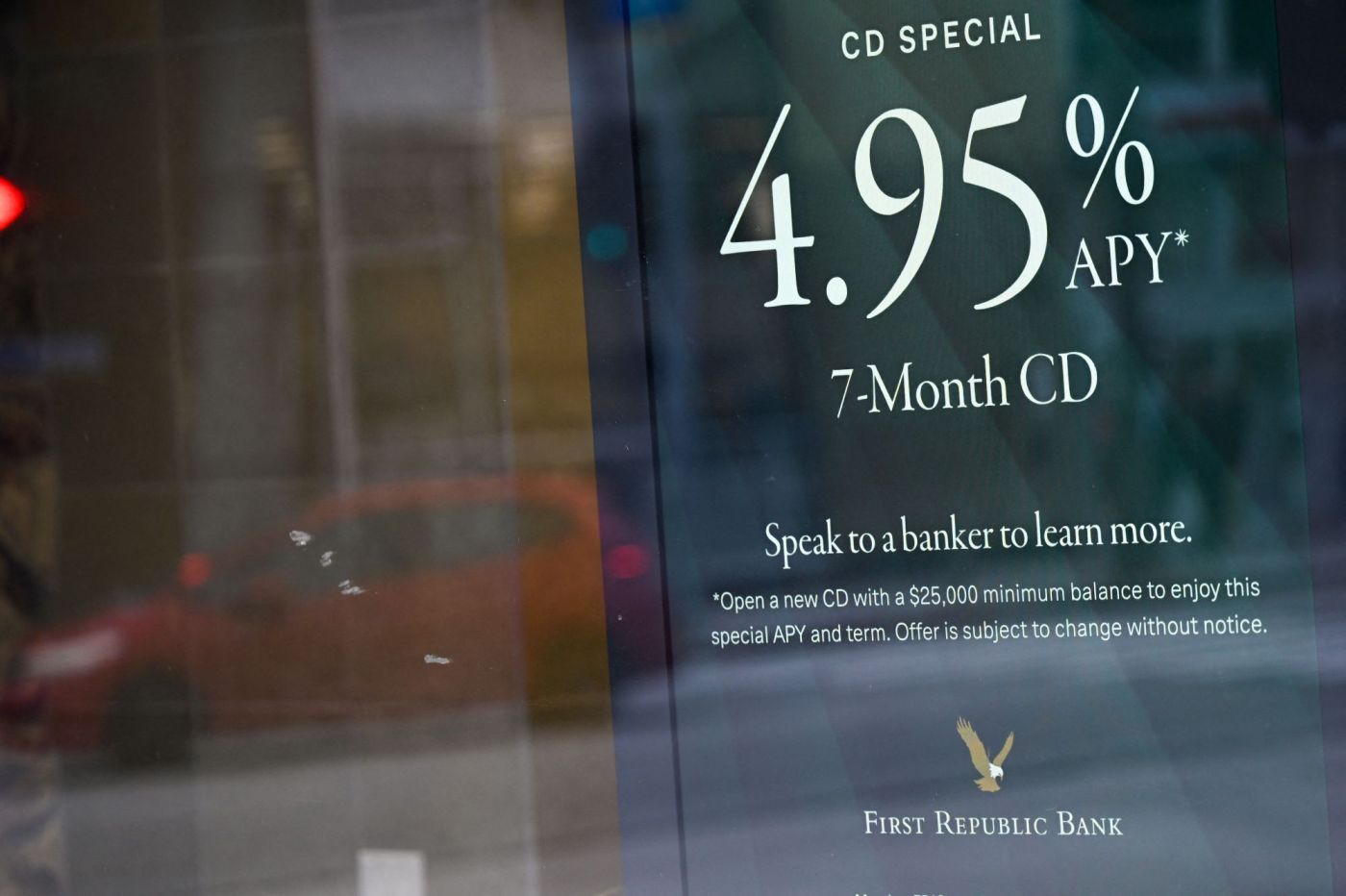
Your bank’s CDs might be convenient but not always the best deal. Online banks and credit unions tend to have some of the best CD rates, and their opening minimum deposits are often low, such as $1,000 or less. Current high-yield rates remain near or above 5% annual percentage yield for six-month and one-year terms, while longer-term rates such as for three and five years are closer to 4%, according to NerdWallet analysis in April.

You can also find competitive yields with brokered CDs, which are issued by banks and available at a brokerage. You need a brokerage account and some understanding of how these CDs work, though.

“A brokered CD is going to be most valuable to somebody who has a substantial amount of assets,” says David John, senior strategic policy advisor at the AARP Public Policy Institute. John cites a brokerage’s ability to spread funds across multiple financial institutions to ensure customers don’t hit the $250,000 cap for federal deposit insurance, which protects your money if a bank fails.

Don’t: Withdraw early

You generally can’t redeem CDs early without hassle or cost. At banks, CDs’ early withdrawals often come with a penalty, such as months to years’ worth of interest earned. A bank may let you withdraw interest early from a CD, but you’d lose out on the full amount a CD can earn from compounding interest.

At brokerages, you can leave a CD early by selling, but you risk losing some of the original value if current rates are higher than your CD’s rate.

Once a CD ends, there’s a grace period, typically seven to 10 days long, when you can withdraw the full amount without a penalty. Alternatively, you can consider a no-penalty CD, though rates tend to be lower than high-yield CDs at the same bank.

Don’t: Forget to pay taxes on interest

For most of the last decade or so, CD rates were at rock-bottom lows and the tax burden for CD interest was minimal. But that’s changed with higher rates in recent years.

“Sometimes folks forget that you can have a meaningful tax impact having this money in a CD,” Damsky says.

CD interest gets taxed at the same rate as regular income for the year you earned that interest. Having $10,000 in a one-year CD at 5% APY, for example, means you’re taxed on that $500 in interest. However, you can reduce your tax burden with IRA CDs, which are tax-advantaged accounts invested in CDs.

Don’t: Put too much money in CDs

One of the biggest mistakes Damsky sees for retirees is getting too averse to risk when investing, especially by overusing CDs. Sometimes the pitfalls with CDs, such as the lack of flexibility and access to funds compared with other low-risk alternatives, can outweigh the pros, he says.

Low-risk investment alternatives to CDs, such as money market funds, can have comparable returns with easier access to cash for brokerage customers. And within an investment portfolio, stocks and bonds play bigger roles than cash investments such as CDs do over time. Stocks historically have provided the greatest likelihood for strong returns while bonds balance out stocks’ volatility with more stability. As John points out, CDs often can’t completely protect against inflation the way other investments can.

Don’t rule out CDs for retirement savings — just know when to use them.

Spencer Tierney writes for NerdWallet. Email: spencer.tierney@nerdwallet.com.

Woodbury to hold open house on new $400M water treatment plant

posted in: News | 0

Woodbury residents are invited to an open house on Wednesday to learn more about the largest infrastructure project in the city’s history: the construction of a new $400 million water treatment plant to permanently treat PFAS contamination and the installation of 17 new miles of water main pipe.

A project map shows the locations of Woodbury’s new water treatment plant and new water main pipes. To treat the water supply for PFAS, the city will need to connect existing city wells to the new treatment plant using approximately 17 miles of water main pipe. (Courtesy of the City of Woodbury)

The open house will be 5:30-7:30 p.m. Wednesday at Woodbury City Hall, 8301 Valley Creek Road.

Most of the money for the plant, which will be located on approximately 22 acres of land in the south-central part of the city, is coming from the $850 million settlement reached in 2018 between the state of Minnesota and 3M Co. for the contamination of groundwater in the east metro. The city is expected to contribute between $32 million and $40 million; final cost will be determined by public bids and the market, city officials said.

To treat the water supply, the city will need to connect the existing wells spread across the city to the new plant. This will require approximately 17 miles of water main pipe to be installed through existing roadway corridors over the next four years.

Pipeline construction is expected to begin this fall; construction of the water treatment plant will begin in 2025. The plant is expected to be operational in 2028.

There is no formal presentation planned at the open house; participants can arrive and leave as their schedules allow.

For more information, call the project information line at 651-448-7127, email watertreatment@woodburymn.gov or go to woodburymn.gov/watertreatment.

Related Articles

Local News |


Obituary: For Denny Seefeldt, Scandia’s first mayor, civic duty was a way of life

Local News |


Stillwater: Sunday’s historic homes tour features property designed by Frank Lloyd Wright

Local News |


McDonald’s MVP Alice Kane marks 35 years at Stillwater restaurant

Local News |


Have a great idea for Stillwater? You could win $10,000 to make it happen.

Local News |


Bison return to Afton’s Belwin Conservancy this weekend

Nikki Haley faces a murky path forward and a key decision on whether or not to endorse Trump

posted in: News | 0

By STEVE PEOPLES, MEG KINNARD and THOMAS BEAUMONT (Associated Press)

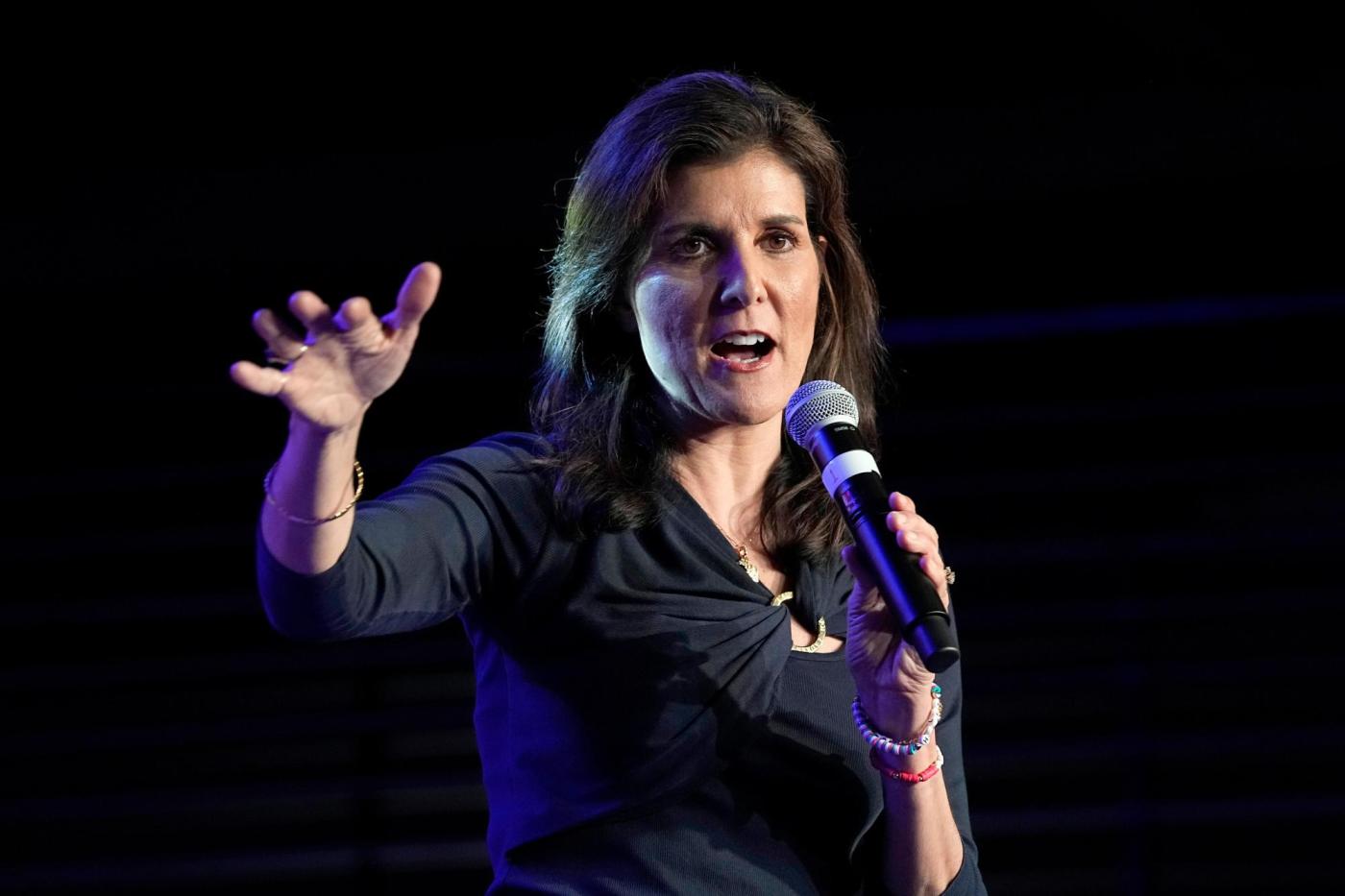
COLUMBIA, S.C. (AP) — Nikki Haley is perhaps the highest-profile Republican in the nation who has refused to fall in line and endorse Donald Trump’s presidential bid.

It’s unclear how long that might last.

Some allies believe she may be forced to endorse him before the November election to avoid permanently alienating the Republican Party base. Some even suspect that Haley will re-emerge on Trump’s short list of vice presidential contenders in the coming months, despite Trump’s recent statement to the contrary.

But if Haley submits to Trump, as so many of his GOP critics have done, she also risks destroying her own coalition of independents, moderates and anti-Trump Republicans, who are still showing up to support her in low-profile primary contests from deep-red Indiana to deep-blue Maryland. On Tuesday, she gets another chance to demonstrate her sustained strength in Kentucky’s presidential primary contest, which comes more than two months after she suspended her campaign.

Haley’s decision on Trump in the coming months will be closely watched not just by her supporters, but by allies of Trump and President Joe Biden. What she decides to do — and whether her coalition follows — could have a profound impact on this year’s general election and her future as a top-tier Republican whose brand appeals to many people outside her party.

“Nikki Haley could be the person that unites us,” said Thalia Floras, a 62-year-old retail manager from Nashua, New Hampshire, who was a lifelong Democrat before casting a ballot for Haley in her state’s January primary.

But Floras also has a warning: “Nikki Haley has a good place with me now. But if she goes with Trump, I’m done.”

Those close to Haley, a 52-year-old former governor and U.N. ambassador, say it’s unclear what she’ll do.

HALEY VOTERS UP FOR GRABS, BUT ONLY BIDEN TRYING

Haley and Trump haven’t spoken in months. That includes the period after she bowed out of the GOP primary campaign in early March, according to a person with direct knowledge of Haley’s private conversations who was not authorized to speak about them publicly.

And while some Republicans who supported Haley will certainly drift back to Trump organically, the Biden campaign is working to win over her supporters, whom they view as true swing voters.

Biden’s team is quietly organizing a Republicans for Biden group, which will eventually include dedicated staff and focus on the hundreds of thousands of Haley voters in each battleground state, according to people familiar with the plans but not authorized to discuss them publicly.

The Democratic president hasn’t kept his intentions a secret.

Biden issued a statement thanking Haley for her courage to challenge Trump just minutes after she bowed out of the primary race in March.

“Donald Trump made it clear he doesn’t want Nikki Haley’s supporters. I want to be clear: There is a place for them in my campaign,” Biden said at the time.

Related Articles

National Politics |


Jesus is their savior, Trump is their candidate. Ex-president’s backers say he shares faith, values

National Politics |


Noncitizen voting, already illegal in federal elections, becomes a centerpiece of 2024 GOP messaging

National Politics |


Here’s how Robert F. Kennedy Jr. could make the first debate stage under stringent Biden-Trump rules

National Politics |


Michael Cohen says he stole from Trump’s company as defense presses key hush money trial witness

National Politics |


Biden tells Morehouse graduates that scenes in Gaza from the Israel-Hamas war break his heart, too

Trump, meanwhile, said in late January that Haley donors would be permanently banned from his “Make America Great Again” camp. While he has refrained from attacking her since she left the race, Trump hasn’t offered public statements of goodwill either as he has for other vanquished rivals like Florida Gov. Ron DeSantis.

As part of Biden’s sustained outreach to Haley’s coalition, his campaign released a digital ad late last month highlighting Trump’s often-personal attacks against Haley, including his primary nickname of her as “birdbrain” and suggestion that “she’s not presidential timber.”

Asked about Trump’s lack of outreach to Haley and her supporters, senior adviser Jason Miller avoided any mention of her and instead cast doubt on the strength of Biden’s coalition of Black Americans, Latinos and young voters.

“The reality is the Republican Party is united behind President Trump while the Democrat Party has shattered to pieces because of Joe Biden’s disastrous policies on issues like inflation and the border,” Miller said.

Few expect Haley to endorse the Democratic president outright. Such a decision would make it difficult, if not impossible, for her to win a future GOP presidential primary if she decides to run again.

Instead, Biden’s allies are hopeful that Haley, among other high-profile Republican Trump critics, may either stay silent or offer an endorsement focusing on the stakes of the election for democracy rather than direct praise for Biden.

If and when Biden’s team does secure high-profile Republican supporters, it’s likely to wait several more weeks to unveil them to help maximize their impact when voters are paying closing attention to the November election.

A PRO-BIDEN REPUBLICAN SPEAKS

Former Georgia Lt. Gov. Geoff Duncan, a Republican who had backed Haley in the GOP primary, formally endorsed Biden earlier in the month. In an interview, he said he made the decision before talking to Biden’s campaign, although Biden personally called to thank him after Duncan announced his decision.

Duncan didn’t rule out playing a prominent role in the Republicans for Biden group or even speaking at the Democratic National Convention this summer, just as former Ohio Gov. John Kasich did four years ago.

Duncan hopes Haley doesn’t ultimately endorse Trump as so many of Trump’s high-profile Republican critics have done.

“I feel like that would be a short-term sugar high to just gain favor inside the Republican Party,” Duncan said of a potential Haley endorsement of Trump. “She has the right to do what she wants to do. Obviously everybody’s playing the political calculus. But at some point, where do we draw the line?”

The list of high-profile Republicans willing to stand up to Trump in 2024 is extraordinarily small.

Even those who described Trump as a dangerous threat to democracy, like New Hampshire Gov. Chris Sununu, have ultimately endorsed him. Sununu, who was among Haley’s top national surrogates during the campaign, declined repeated requests to comment on her political future. And DeSantis, once Trump’s chief primary rival and another early 2028 prospect, now plans to raise money for Trump’s general election campaign.

HALEY STEPS BACK INTO PUBLIC SPOTLIGHT

Haley has only just begun to emerge from a period of post-campaign seclusion, where she took time to reconnect with family, especially her husband, a military serviceman who recently returned from a nearly yearlong tour overseas.

She plans to deliver a speech on foreign policy later this week — her first public address since ending her 2024 campaign — at the Hudson Institute, a Washington-based conservative think tank where she’s agreed to serve as the Walter P. Stern Chair.

And last week, Haley huddled with dozens of donors and allies behind closed doors in South Carolina, where she thanked her coalition, while largely ignoring Trump. She did not encourage attendees to support his campaign.

Simone Levinson, a Haley bundler who attended the private gathering, said there remains an appetite among Republicans for a next-generation figure who can communicate well and build consensus.

“There is a very strong indication that she has struck a chord that is still continuing to resonate with millions of Americans,” said Levinson, who is based in Florida.

HER COALITION SENDS A MESSAGE

Indeed, without any formal organization, advertising or even private encouragement, the Haley voters continue to show up in low-profile presidential primaries, which will run through the end of June even though Trump is the only candidate still in the running.

Haley earned more than 21% of the vote in Maryland’s presidential primary last week. That’s after hitting similar marks the week before in Indiana and Arizona just weeks after leaving the race.

“She’s articulate and intelligent, which are things that Trump isn’t,” said retired school psychologist Kathy Showen, an independent voter from Cross Lanes, West Virginia, who cast a primary ballot for Haley last week.

Meanwhile, in New Hampshire, Floras said she’ll begrudgingly vote for Biden this fall because she can’t stomach Trump. But she’s hopeful that Haley will run again in 2028.

Her feelings might change, however, if Haley gives in and endorses Trump before the fall election.

“It would really disappoint me if she doesn’t stand up to him,” Floras said. “That would do her in.”

Peoples reported from New York. Beaumont reported from Des Moines, Iowa. Associated Press writer John Raby in Charleston, West Virginia, contributed to this report.