MNDOT to host virtual meeting on U.S. Hwy. 52/Lafayette Bridge on Tuesday

posted in: News | 0

The public is invited to a virtual public meeting to provide feedback and learn about road designs for the future of northbound U.S. Highway 52/Lafayette Bridge at Interstate 94 in St. Paul.

The meeting will be from 4 to 5 p.m. on Tuesday. Those interested can join the Zoom meeting by phone or computer at srfconsulting.zoom.us/j/93805218658?pwd=bDYvbm1SVjEyZ2ZkNkFhMGRMSjh1Zz09

The meeting ID is 938 0521 8658 and the passcode is 264371. The phone number is 312-626-6799.

The Minnesota Department of Transportation is looking at potential short and long-term changes to improve safety, traffic flow as well as reducing congestion and capacity at the interchange of northbound U.S. Highway 52 and its exit ramps to I-94 and West Seventh St. as well as the westbound I-94 exit ramp to northbound I-35E near downtown St. Paul.

For more information, visit the study website at mndot.gov/metro/projects/lafayettebridge/index.html.

For those who need this information in an alternative format or language, contact: Si necesita esta información en un formato o idioma alternativo, póngase en contacto con: 651-366-4720 or ADArequest.dot@state.mn.us.

For traffic and travel information in Minnesota, visit 511mn.org or get the free smartphone app at Google Play or the App Store.

Related Articles

Local News |


St. Paul: Luther Seminary cancels Safe Space shelter deal with Ramsey County

Local News |


Q&A: New Flint Hills festival leader talks highlights of this year’s Ordway family fun weekend

Local News |


University of St. Thomas neighbors rebuffed in efforts against D1 hockey/basketball arena

Local News |


Cheese curds, beer and … houseplants? A mobile plant shop’s debut at Kickoff to Summer at the Fair

Local News |


Man fatally shot at Green Line station in St. Paul

Here’s how Robert F. Kennedy Jr. could make the first debate stage under stringent Biden-Trump rules

posted in: Politics | 0

By JONATHAN J. COOPER (Associated Press)

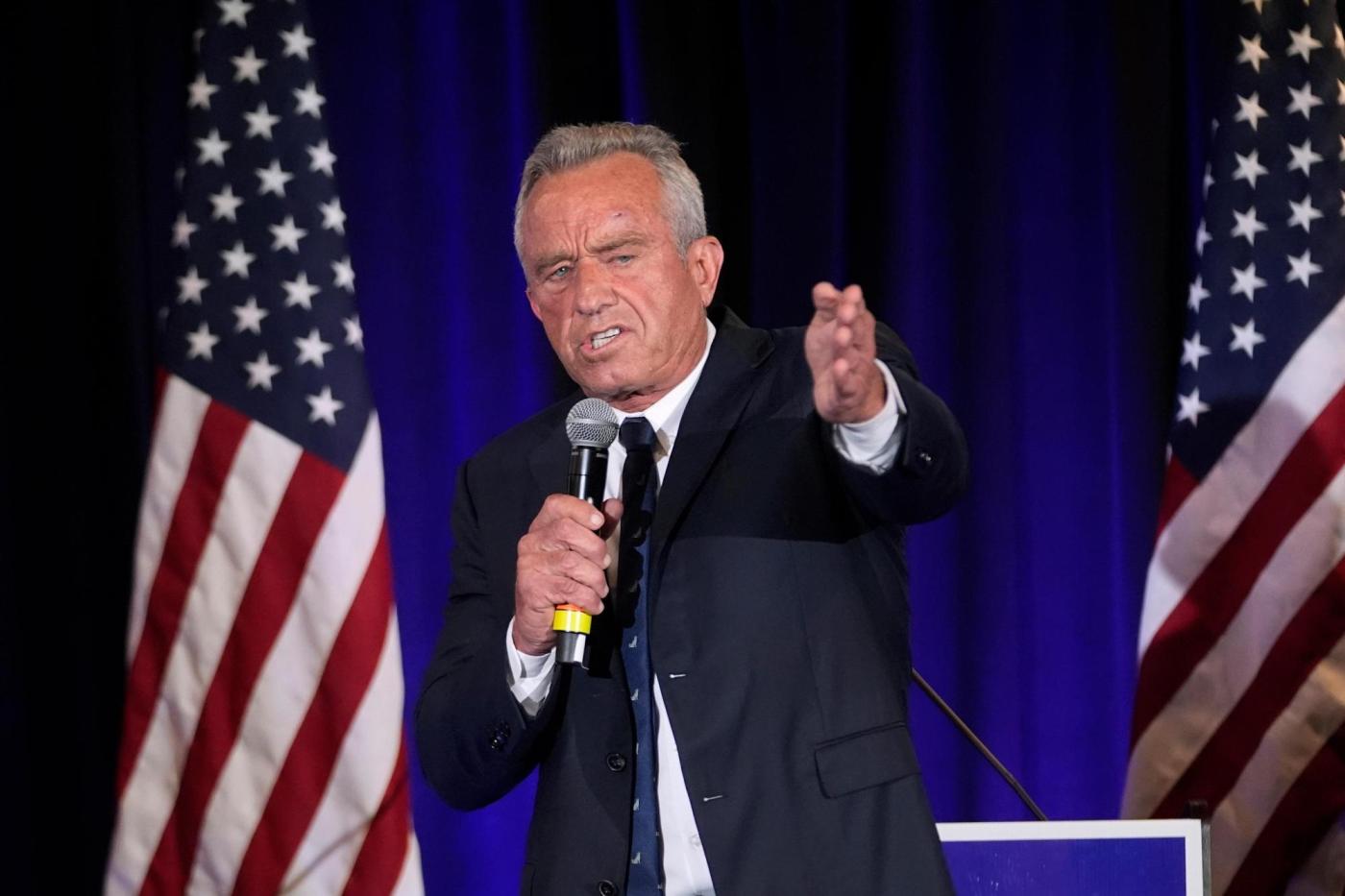
PHOENIX (AP) — Robert F. Kennedy Jr. has long argued that the biggest hurdle of his presidential campaign is the perception that independent candidates can’t win. He has looked to the debates as a singular opportunity to stand alongside Joe Biden and Donald Trump in front of a massive audience.

But to make the first debate stage, he’ll have to secure a place on the ballot in at least a dozen more states and improve his showing in national polls in one month.

With a famous name and a loyal base, Kennedy has the potential to do better than any third-party presidential candidate since Ross Perot in the 1990s. Both the Biden and Trump campaigns, who fear he could play spoiler, bypassed the nonpartisan debate commission and agreed to a schedule that leaves Kennedy very little time to qualify for the first debate.

Publicly, Kennedy is expressing confidence that he will make the stage.

“I look forward to holding Presidents Biden and Trump accountable for their records in Atlanta on June 27 to give Americans the debate they deserve,” he posted on the X platform.

CNN has said candidates will be invited if they’ve secured a place on the ballot in states with at least 270 votes in the Electoral College, the minimum needed to win the presidency, and have hit 15% in four reliable polls published since March 13. The criteria mirror those used by the Commission on Presidential Debates, the nonpartisan group that has organized debates since 1988, except the commission’s first debate would have been in September, giving Kennedy more time.

Kennedy doesn’t appear to have met the polling criteria yet, although he has reached 15% or higher in at least two polls meeting CNN’s standards.

The ballot access hurdle is even tougher.

State officials have confirmed Kennedy’s place on the ballot in Delaware, Oklahoma and Utah, which have just 16 electoral votes between them. In California, Hawaii and Michigan, minor parties have selected Kennedy as their nominee, in effect offering up existing ballot lines, though the states have not formally affirmed Kennedy’s position. Adding them would bring Kennedy’s total to 89 electoral votes, though it’s not clear that his position in those states would meet CNN’s criteria.

Kennedy’s campaign says he has collected enough signatures in Idaho, Iowa, Nebraska, Nevada, New Hampshire, New Jersey, North Carolina, Ohio and Texas, states with 112 electoral votes in total. But he has either not submitted the signatures or they have not yet been affirmed by state election officials.

Those states still only add up to 201 electoral votes.

Independent candidates like Kennedy face a labyrinth of laws that vary wildly from state to state but generally require hundreds or thousands of signatures and compliance with strict deadlines.

The patchwork of laws is littered with pitfalls. And the Democratic National Committee has pledged to scrutinize Kennedy’s submissions for mistakes that could keep him off the ballot or at least tie up his campaign’s time and money.

Related Articles

National Politics |


Michael Cohen says he stole from Trump’s company as defense presses key hush money trial witness

National Politics |


Biden tells Morehouse graduates that scenes in Gaza from the Israel-Hamas war break his heart, too

National Politics |


Doctors saw younger men seeking vasectomies after Roe v. Wade was overturned

National Politics |


Upside-down flag at Justice Alito’s home another blow for Supreme Court under fire

National Politics |


Will Biden’s Morehouse speech address campus protests? History suggests so

Kennedy, in turn, has resorted to secrecy and creative tactics in a sort of cat-and-mouse game to get on the ballot before his critics can thwart him. In California, Delaware and Michigan, Kennedy allied with little-known existing parties and received their nominations. In Hawaii, he formed his own political party to nominate him, and he’s pursued a similar strategy in Mississippi and North Carolina.

Elsewhere, he’s waiting to turn in signatures until the deadline to limit the time for critics to pore over them in search of errors. Getting on the debate stage next month would almost certainly require him to change his strategy and submit the petitions he’s sitting on as soon as possible.

Signatures are due in New York by May 28, which would get Kennedy 28 votes closer if they’re affirmed in time. He could then try to make an all-out push in a bunch of states with relatively easy requirements — many require 5,000 or fewer signatures, but they generally don’t bring many electoral votes — or focus on bigger states, such as Illinois with 19 electoral votes or Florida with 30.

Further complicating matters, some states aren’t yet accepting filings from potential independent candidates and won’t before the first debate.

Kennedy’s vice presidential nominee, Nicole Shanahan, who is divorced from Google co-founder Sergei Brin, committed $8 million from her personal fortune for ballot access, the campaign announced Thursday, declaring their $15 million effort “fully funded.”

Associated Press writer Amelia Thomson DeVeaux in Washington contributed to this report.

St. Paul: Luther Seminary cancels Safe Space shelter deal with Ramsey County

posted in: News | 0

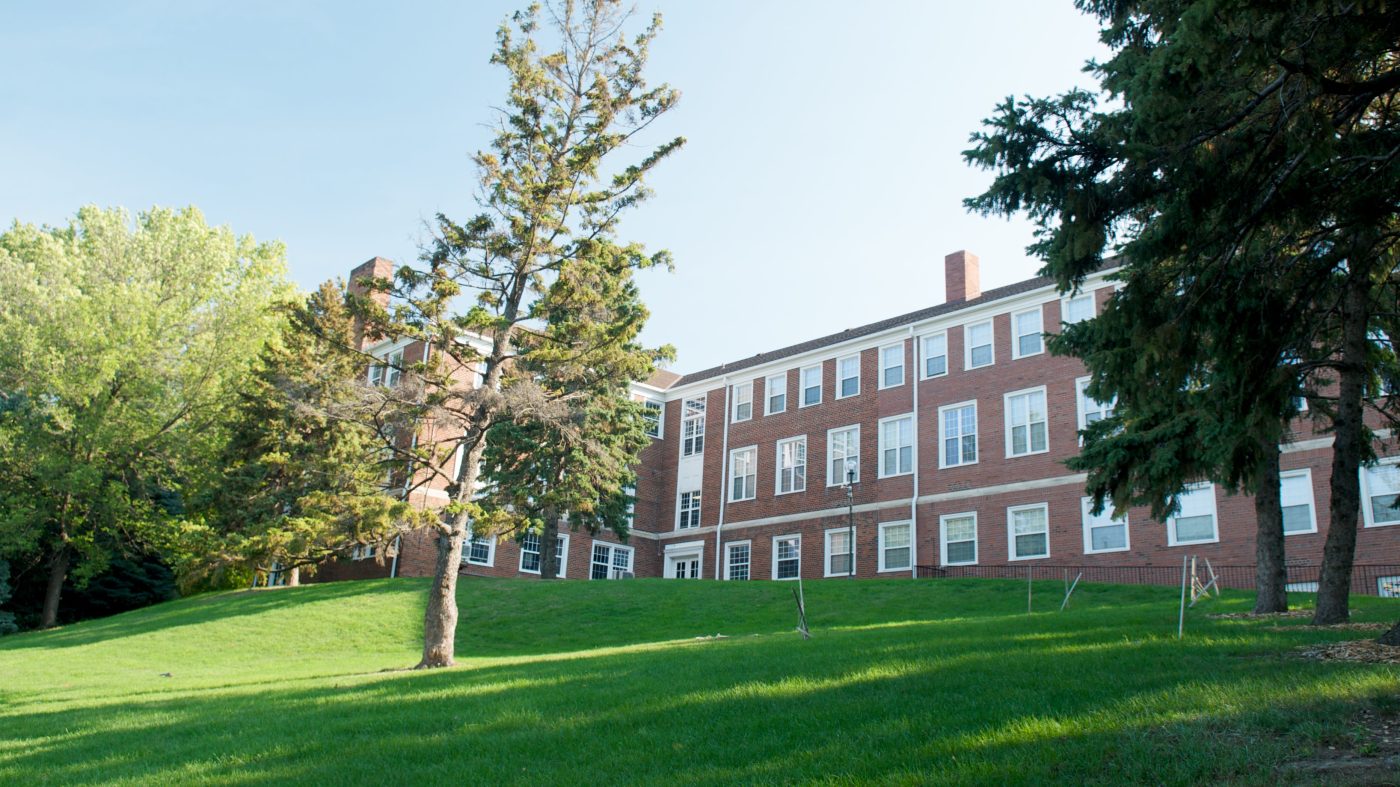
In light of heavy community opposition, Luther Seminary announced Monday it canceled plans to relocate Ramsey County’s 64-bed overnight emergency shelter from downtown St. Paul to its Stub Hall dormitory in St. Anthony Park.

“After receiving feedback from its neighbors, Luther Seminary has decided to cease its negotiations with Ramsey County,” read an announcement issued by the seminary. “Stub Hall will remain vacant as the Seminary continues its plans to sell the property.”

City and county officials, as well as shelter managers with nonprofit Model Cities, had planned a community outreach meeting at Luther Seminary on Tuesday evening. That meeting has been canceled, as has the county’s three-year lease, which was poised to take effect as soon as July 1.

The county, with the blessing of the city mayor’s office and other officials, had planned 64 beds to be used as their new emergency “Safe Space” shelter for homeless people removed from Metro Transit cars and other spaces late at night, with the expectation they would leave the premises each morning, likely through a shuttle arrangement. The county has operated Safe Space in a downtown government building on Kellogg Boulevard in various capacities since 2017, and with Model Cities as a partner since 2019.

From 2022: After working her regular overnight shift at a convenience store off Interstate 94, Sonya Apple sat down in a downtown St. Paul stairwell and cried.

Through a previous lease with Ramsey County, Stub Hall’s Hendon Avenue dormitory had housed homeless women and couples from December 2020 to June 2022, at a time the numbers of unsheltered homeless were soaring downtown, in part because shelters were limiting occupancy and many coach-hoppers were no longer welcome to stay with friends and family.

Some neighbors who had initially been supportive of the 2020-2022 leasing arrangement said that the situation deteriorated with time, as loitering men came to check on their girlfriends and other signs of vagrancy, littering and drug use escalated. Stub Hall has been vacant since June 30, 2022.

St. Anthony Park residents opposed to the new three-year lease, including a land use attorney, questioned why more outreach had not taken place before finalizing the new shelter arrangement, which was poised to take effect this summer. Officials with the St. Anthony Park Community Council told residents they had been unaware of the county’s plans until they were presented to them as final. Residents also questioned the lack of services available for the homeless on the western edges of the city, so far from downtown.

Land-use rules questioned

Attorneys and others familiar with the city’s efforts to allow homeless shelters and other public-facing services at churches and religious institutions questioned whether the county was abiding by the city’s religious accessory use zoning codes, which since 2022 have limited overnight shelters on church grounds to 25 people without a conditional use permit.

While part of Luther Seminary, the Stub Hall dormitory sits on a separate lot from the chapel, raising a potential legal question as to whether it qualifies as church grounds.

“The county approached Luther Seminary earlier this year about the possibility of leasing Stub Hall a second time due to the closure of the Government Center East building at 160 E. Kellogg Blvd,” reads the seminary’s announcement. “The City of St. Paul and Ramsey County determined such an emergency overnight shelter was an allowable use for Stub Hall based on federal law pertaining to land owned by religious organizations.”

City officials had said federal law — the Religious Land Use And Institutionalized Persons Act, or RLUIPA — was on the county’s side, as it awards wide latitude to churches and other religious establishments to operate free from discrimination in zoning and other municipal land-use laws.

In an interview last week, St. Paul Deputy Mayor Jaime Tincher recalled the drawn-out legal battle with the First Lutheran Church in Dayton’s Bluff, which hosted the Listening House day shelter and sued the city to protect the shelter’s right to operate under the conditions, capacity and hours it saw fit. A federal lawsuit ended with a legal settlement in 2019, after some two years of costly court action.

In the case of Luther Seminary, “the city’s position is RLUIPA applies,” Tincher said. “The settlement with First Lutheran provided a lot of direction for the city in how to approach these situations.”

“We’ve been really intentional about figuring out how to provide for that need in a way that is good for our community as a whole,” she added. “We’ve added a lot of (homeless) response teams. We’ve added a lot of staff that has experience in this space, because we want to meet that need in our community in a way that is really responsible.”

Tuesday meeting canceled

As Tuesday’s now-canceled community town hall approached, it became clear the public notification process would come under as much scrutiny as the shelter itself.

“As a gospel-centered community, we felt this opportunity to meet a need in our region aligned with our values,” said Heidi Droegemueller, vice president for seminary relations, quoted in the announcement. “At the same time, our primary mission is theological education. While we are grateful for the welcome extended by our St. Anthony Park neighbors to shelter residents during the pandemic, it has become clear in recent days that moving forward with Safe Space Shelter is not a constructive path for the seminary or the neighborhood at this time. We remain grateful for the commitment and dedication of Ramsey County’s Department of Housing Instability and Model Cities as they work diligently to solve our community’s housing crisis.”

Related Articles

Local News |


MNDOT to host virtual meeting on U.S. Hwy. 52/Lafayette Bridge on Tuesday

Local News |


Q&A: New Flint Hills festival leader talks highlights of this year’s Ordway family fun weekend

Local News |


University of St. Thomas neighbors rebuffed in efforts against D1 hockey/basketball arena

Local News |


Cheese curds, beer and … houseplants? A mobile plant shop’s debut at Kickoff to Summer at the Fair

Local News |


Man fatally shot at Green Line station in St. Paul

NYC Housing Calendar, May 21-27

posted in: News | 0

City Limits rounds up the latest housing and land use-related events, public hearings and affordable housing lotteries that are ending soon.

Adi Talwar

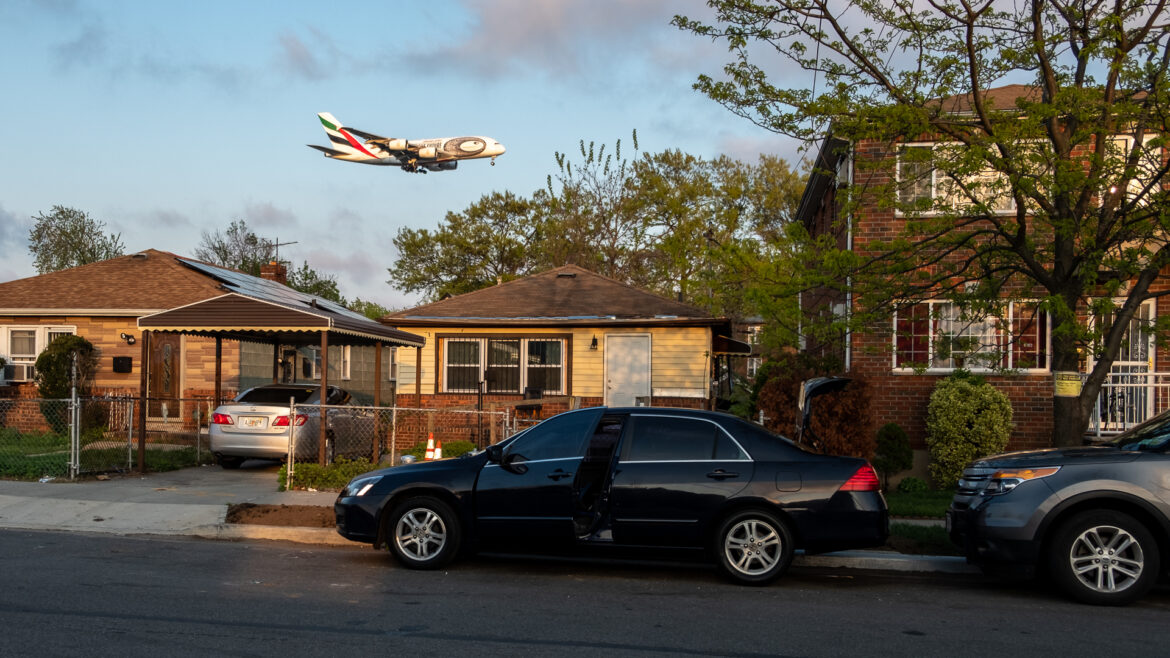
A City Council committee will vote Thursday on a bill requiring the city to publish an annual report on the redevelopment of JFK Airport and impact on nearby communities.

Welcome to City Limits’ NYC Housing Calendar, a weekly feature where we round up the latest housing and land use-related events and hearings, as well as upcoming affordable housing lotteries that are ending soon.

Know of an event we should include in next week’s calendar? Email us.

Upcoming Housing and Land Use-Related Events:

Tuesday, May 21 at 8:15 a.m.: NYU’s Furman Center hosts “By the Numbers: The Use of Housing Choice Vouchers in NYC,” featuring a panel discussing and networking session. More here.

Tuesday, May 21 at 11 a.m.: The NYC Council’s Subcommittee on Landmarks, Public Sitings and Dispositions will meet on several landmarks applications, including the Tremont Branch of the NYPL in the Bronx. More here.

Tuesday, May 21 at 12 p.m.: The New York State Senate’s Cities 1 committee will meet on several bills related to building owners, including one to establish free legal services for certain small property owners and another to establish a property tax amnesty program. More here.

Tuesday, May 21 at 12 p.m.: The New York State Assembly’s housing committee will meet on several bills. More here.

Wednesday, May 22 at 11 a.m.: The NYC Council’s Subcommittee on Zoning and Franchises will meet. More here.

Wednesday, May 22 at 12 p.m.: The NYC Council’s Land Use Committee will vote on the mayor’s proposed City of Yes for Economic Opportunity, which affects zoning rules related to storefronts and commercial spaces. More here.

Thursday, May 23 at 9:30 a.m.: The NYC Rent Guidelines Board will meet. More here.

Thursday, May 23 at 6 p.m.: Tenants & Neighbors will hold an information session on rent freeze programs for older New Yorkers and those with disabilities. More here.

Thursday, May 23 at 10 a.m.: The NYC Council’s Committee on Housing and Buildings will vote on several bills related to requirements for inspecting and regulating parking garages. More here.

Thursday, May 23 at 10:30 a.m.: The NYC Council’s Committee on Economic Development will vote on a bill requiring the city’s Economic Development Corp. to publish an annual report on the redevelopment of JFK Airport and impact on nearby communities. More here.

NYC Affordable Housing Lotteries Ending Soon: The New York City Department of Housing Preservation and Development (HPD) are closing lotteries on the following subsidized buildings over the next week.

3633 Kingsbridge Avenue Apartments, Bronx, for households earning between $109,715 – $181,740

69 Adams Street Apartments, Brooklyn, for households earning between $105,223 – $218,010

3745 Riverdale Ave Apartments, Bronx, for households earning between $92,572 – $218,010