Life without Mike Conley is awfully difficult for Timberwolves, who may have to save their season without their point guard

posted in: News | 0

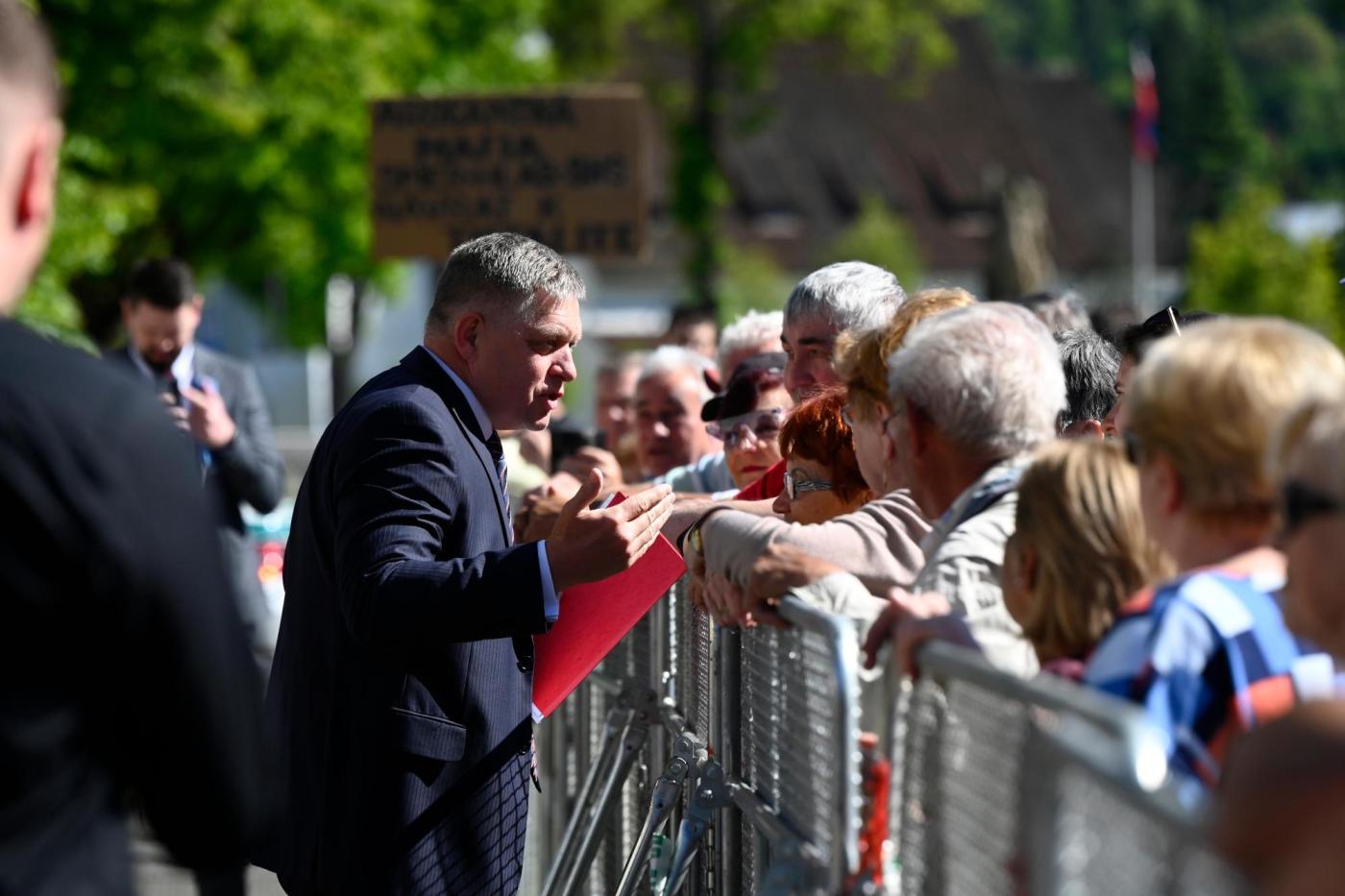
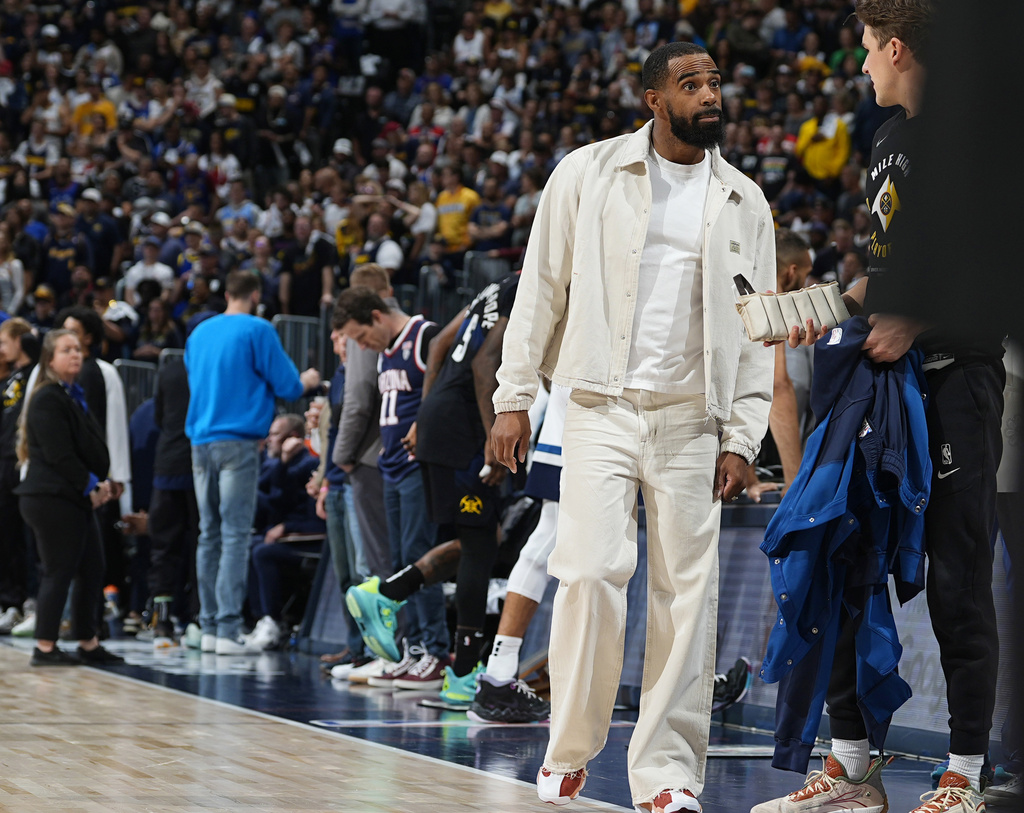
DENVER — The Timberwolves may have been doomed for Game 5 on Tuesday 45 minutes before it even started. That’s when the team officially ruled out veteran starting point guard Mike Conley for the night due to Achilles soreness.

The Timberwolves are a deep team with multiple quality options backing up the starters at numerous positions — except point guard.

That’s not a knock on Jordan McLaughlin or Monte Morris. But even at 36 years old, Conley is one of the NBA’s premier floor generals. He can direct traffic and get Minnesota into its necessary actions while also generating quality shots for himself and others with the ball in his hands.

He is the requisite secondary playmaker the Timberwolves need in the lineup alongside Anthony Edwards. He is also a 44 percent shooter from deep this season, giving the Timberwolves the outside shooting they desperately need to achieve proper spacing.

And, perhaps most importantly, when things get dicey, Conley is Minnesota’s steadying hand. That much was evident in Tuesday’s Game 5 loss in Denver.

“His shooting ability, him attacking Jokic,” Edwards said, talking about what they missed after the game. “He was definitely missed a lot tonight.”

The offense simply never found its footing in defeat. There was no one to orchestrate easy touches for Edwards as the Nuggets did everything in their power to get the ball out of the all-star guard’s hands. There was no one to make the Nuggets pay for committing so many resources to Edwards, either with his ability to play off the catch or run a second-side pick-and-roll with center Rudy Gobert.

Conley had six or more assists in each of the first four games of this Western Conference semifinal series. He had 15 points and nine assists in Game 4, when he injured his Achilles on a jumper with 25 seconds to play/ That followed up his 14-point, 10-assist showing in Game 1.

“When the ball comes to him, he attacks the closeout, gets into the heart of the defense and makes the next play,” Timberwolves coach Chris Finch said. “He gives Ant a breather from having the ball in his hands the whole time. Ant can play in space off of him, too. They’ve been a great combination all year.”

The Timberwolves managed to go 3-3 during the regular season in the six games Conley did not play.

But two of those wins came against cellar dwellers in Washington and a severely depleted Toronto. And two of the losses were against San Antonio and Charlotte.

To compete consistently at a high level, the Timberwolves need their point guard. There’s an argument to be made that Conley is the team’s second-least replaceable player behind Edwards.

Which is why it was so unfortunate for the Timberwolves that Conley was unable to play in Game 5. It’s the second straight time an injury has sidelined Conley in the midst of a playoff run with a true championship contender. A hamstring injury robbed him of the majority of Utah’s conference semifinal series against the Clippers in 2001. Conley returned in Game 6 of that series, but played at significantly less than 100 percent as the Jazz were eliminated from the playoffs.

The worst-case scenario for the Timberwolves is that a similar situation plays out Thursday. Finch said the team is are “hopeful” Conley can play in Game 6 — the Timberwolves’ first elimination game of the playoffs.

“That was one of the reasons to be cautious with him right here, didn’t feel like he could go. But maybe in a couple of more days, he could go,” Finch said. “Nickeil (Alexander-Walker) did a great job of filling in there in the starting role. It would have been great to have Mike out there and Nickeil off the bench, but we didn’t have that.”

And it’s at least a realistic possibility they won’t have it again with their season on the line Thursday. If that’s the case, the Timberwolves will simply have to find a way to survive without their floor general, a task that has proven awfully difficult to achieve this season.

“Leader of our team. Has the most experience. Been in these situations more than all of us. It hurts,” Timberwolves forward Karl-Anthony Towns said. “But we’ve always had a next-man-up mentality in this team, and even when I got hurt or people missed games, Ant missed games, we’ve always had a next-man-up mentality and we’ve been great at being ready for the opportunity.

“Keill (Alexander-Walker) has been amazing all year. He’s more than ready for the opportunity. Did a great job of defending and hitting shots, executing our offense. We all together have to execute better, and that doesn’t fall anywhere on Keil. As a team, we win as a team, lose as a team. Doesn’t matter about the stats. It’s about putting one in the left (win) column. We haven’t done that in the last three games. We got to find a way in Game 6 to do that.”

Related Articles

Minnesota Timberwolves |


Nikola Jokic masterclass leads Denver to Game 5 win, 3-2 series lead over Timberwolves

Minnesota Timberwolves |


Timberwolves’ Mike Conley misses Game 5 against Denver with sore Achilles

Minnesota Timberwolves |


Timberwolves center Rudy Gobert again fined for flashing the ‘money’ symbol after foul call

Minnesota Timberwolves |


Even after dropping a pair of home games, Timberwolves remain confident heading into Game 5

Minnesota Timberwolves |


Timberwolves have one day to adjust after consecutive home losses. Here’s what they might do
Fewer US overdose deaths were reported last year, but experts say it’s too soon to celebrate

posted in: News | 0

By MIKE STOBBE (AP Medical Writer)

NEW YORK (AP) — The number of U.S. fatal overdoses fell last year, according to Centers for Disease Control and Prevention data posted Wednesday.

Agency officials noted the data is provisional and could change after more analysis, but that they still expect a drop when the final counts are in. It would be only the second annual decline since the current national drug death epidemic began more than three decades ago.

Experts reacted cautiously. One described the decline as relatively small, and said it should be thought more as part of a leveling off than a decrease. Another noted that the last time a decline occurred — in 2018 — drug deaths shot up in the years that followed.

“Any decline is encouraging,” said Brandon Marshall, a Brown University researcher who studies overdose trends. “But I think it’s certainly premature to celebrate or to draw any large-scale conclusions about where we may be headed long-term with this crisis.”

It’s also too soon to know what spurred the decline, Marshall and other experts said. Explanations could include shifts in the drug supply, expansion of overdose prevention and addiction treatment, and the grim possibility that the epidemic has killed so many that now there are basically fewer people to kill.

CDC Chief Medical Officer Dr. Deb Houry called the dip “heartening news” and praised efforts to reduce the tally, but she noted “there are still families and friends losing their loved ones to drug overdoses at staggering numbers.”

About 107,500 people died of overdoses in the U.S. last year, including both American citizens and non-citizens who were in the country at the time they died, the CDC estimated. That’s down 3% from 2022, when there were an estimated 111,000 such deaths, the agency said.

The drug overdose epidemic, which has killed more than 1 million people since 1999, has had many ripple effects. For example, a study published last week in JAMA Psychiatry estimated that more than 321,000 U.S. children lost a parent to a fatal drug overdose from 2011 to 2021.

“These children need support,” and are at a higher risk of mental health and drug use disorders themselves, said Dr. Nora Volkow, director of the National Institute on Drug Abuse, which helped lead the study. “It’s not just a loss of a person. It’s also the implications that loss has for the family left behind.”

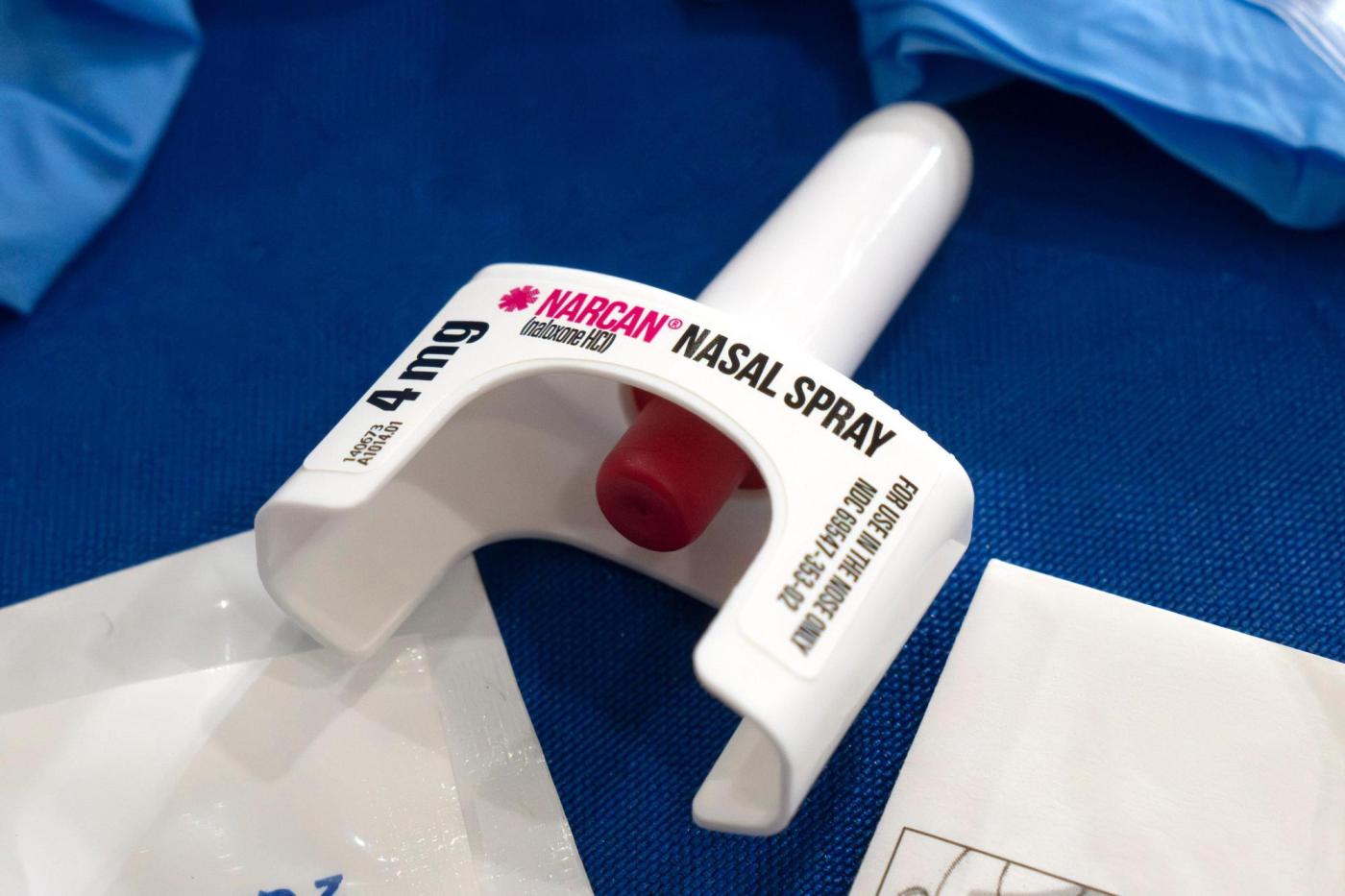
Prescription painkillers once drove the nation’s overdose epidemic, but they were supplanted years ago by heroin and more recently by illegal fentanyl. The dangerously powerful opioid was developed to treat intense pain from ailments like cancer but has increasingly been mixed with other drugs in the illicit drug supply.

For years, fentanyl was frequently injected, but increasingly it’s being smoked or mixed into counterfeit pills.

A study published last week found that law enforcement seizures of pills containing fentanyl are rising dramatically, jumping from 44 million in 2022 to more than 115 million last year.

It’s possible that the seizures indicate that the overall supply of fentanyl-laced pills is growing fast, not necessarily that police are whittling down the illicit drug supply, said one of the paper’s authors, Dr. Daniel Ciccarone of the University of California, San Francisco.

He noted that the decline in overdoses was not uniform. All but two of the states in the eastern half of the U.S. saw declines, but most western states saw increases. Alaska, Washington, and Oregon each saw 27% increases.

The reason? Many eastern states have been dealing with fentanyl for about a decade, while it’s reached western states more recently, Ciccarone said.

Nevertheless, some researchers say there are reasons to be optimistic. It’s possible that smoking fentanyl is not as lethal as injecting it, but scientists are still exploring that question.

Meanwhile, more money is becoming available to treat addiction and prevent overdoses, through government funding and also through legal settlements with drugmakers, wholesalers and pharmacies, Ciccarone noted.

“My hope is 2023 is the beginning of a turning point,” he said.

___

AP medical writer Carla K. Johnson contributed to this report.

___

The Associated Press Health and Science Department receives support from the Howard Hughes Medical Institute’s Science and Educational Media Group. The AP is solely responsible for all content.

Slovakian prime minister in life-threatening condition after being shot, his Facebook profile says

posted in: Politics | 0

By KAREL JANICEK (Associated Press)

PRAGUE (AP) — Slovakian Prime Minister Robert Fico is in life-threatening condition after being wounded in a shooting after a political event Wednesday afternoon, according to his Facebook profile.

The populist, pro-Russian leader, 59, was hit in the stomach after four shots were fired outside the House of Culture in the town of Handlova, some 150 kilometers (93 miles) northeast of the capital where the leader was meeting with supporters, according to reports on TA3, a Slovakian TV station.

A suspect has been detained, it said.

A message posted to Fico’s Facebook account said that the leader “has been shot multiple times and is currently in life-threatening condition.”

It said he was being transported by helicopter to the Banská Bystrica, 29 kilometers (63 miles) away from Handlova because it would take too long to get to Bratislava due to the necessity of an acute procedure.

“The next few hours will decide,” it said.

President-elect Peter Pellegrini, an ally of Fico, called the assassination “an unprecedented threat to Slovak democracy. If we express other political opinions with pistols in squares, and not in polling stations, we are jeopardizing everything that we have built together over 31 years of Slovak sovereignty.”

There were reactions of shock from across Europe, and some were calling it an attempted assassination of the leader in the NATO state, although no motive for the shooting was immediately apparent.

NATO Secretary-General Jens Stoltenberg posted on the social media platform X that he was “shocked and appalled by the shooting.”

The shooting in Slovakia comes three weeks ahead of crucial European Parliament elections, in which populist and hard-right parties in the 27-nation bloc appear poised to make gains.

Deputy speaker of parliament Lubos Blaha confirmed the incident during a session of Slovakia’s Parliament and adjourned it until further notice, the Slovak TASR news agency said.

Slovakia’s major opposition parties, Progressive Slovakia and Freedom and Solidarity, canceled a planned protest against a controversial government plan to overhaul public broadcasting that they say would give the government full control of public radio and television.

“We absolutely and strongly condemn violence and today’s shooting of Premier Robert Fico,” said Progressive Slovakia leader Michal Simecka. “At the same time we call on all politicians to refrain from any expressions and steps which could contribute to further increasing the tension.”

President Zuzana Caputova condemned “a brutal and ruthless” attack on the premier.

“I’m shocked,” Caputova said. “I wish Robert Fico a lot of strength in this critical moment and a quick recovery from this attack.”

Fico, a third-time premier, and his leftist Smer, or Direction, party, won Slovakia’s Sept. 30 parliamentary elections, staging a political comeback after campaigning on a pro-Russian and anti-American message.

Critics worried Slovakia under Fico would abandon the country’s pro-Western course and follow the direction of Hungary under populist Prime Minister Viktor Orbán.

Thousands have repeatedly rallied in the capital and across Slovakia to protest Fico’s policies.

Condemnations of political violence quickly came from leaders across Europe.

European Commission President Ursula von der Leyen condemned what she described as a “vile attack.”

“Such acts of violence have no place in our society and undermine democracy, our most precious common good,” von der Leyen said in a post on X.

Czech Prime Minister Petr Fiala called the incident “shocking,” adding “I wish the premier to get well soon. We cannot tolerate violence, there’s no place for it in society.” The Czech Republic and Slovakia formed Czechoslovakia till 1992.

Polish Prime Minister Donald Tusk wrote on the social media network X: “Shocking news from Slovakia. Robert, my thoughts are with you in this very difficult moment.”

Comptroller to Probe Legal Organization’s Housing Court Performance During Strike

posted in: News | 0

Mobilization for Justice has been operating for more than 12 weeks without the workers who typically execute its mission to combat economic injustice—its more than 100 unionized staff. 

Adi Talwar

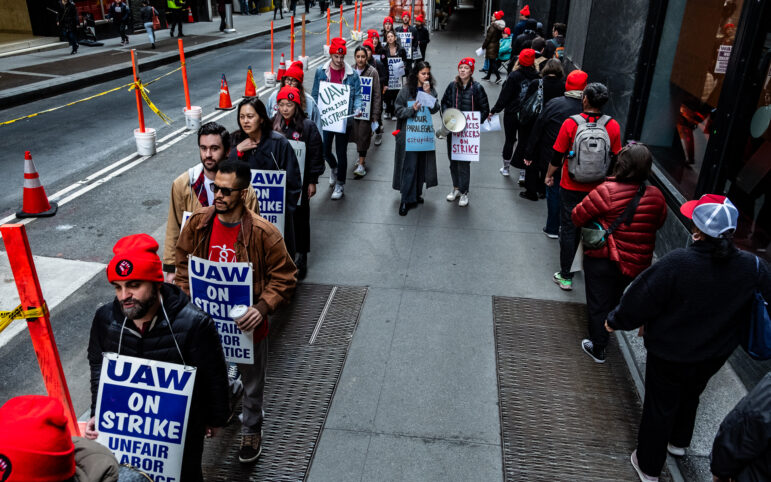
Unionized employees of Mobilization for Justice, Inc. (MFJ) picketing outside MFJ’s Manhattan office on Feb. 27th, 2024.

For more than 12 weeks running, the legal services provider Mobilization for Justice (MFJ) has been operating without the workers who typically execute its mission to combat economic injustice—its more than 100 unionized staff. 

Now, New York City Comptroller Brad Lander is investigating the impact of this short-handedness. Specifically in city housing courts, where, prior to February’s strike announcement, over 40 staff attorneys helped tenants fight eviction and sue their landlords to win building repairs.

MFJ workers deserve a fair contract, Lander said in a statement, as they are “on the front lines to protect people from losing the roof over their heads” yet “also struggle to make ends meet.” 

In a letter sent Wednesday to Department of Social Services (DSS) Commissioner Molly Park, Lander requested reports for February through May detailing eviction casework that MFJ has performed during the strike under city contracts. Non-union supervisors and directors are currently handling tenant representation, the organization confirmed. 

DSS administers the city’s novel Right to Counsel program through its Office of Civil Justice (OCJ). Passed into law in 2017, Right to Counsel is intended to provide low-income tenants with free lawyers from organizations including MFJ. 

The effort has been hailed a success—last fiscal year, 84 percent of represented tenants were able to stay in their homes—but it has yet to be funded to meet demand, despite a $20 million increase baselined in last year’s budget.  

Lander’s office tracks the city’s representation rate for eviction cases, which hit a low of 24 percent for cases filed in December, and has since rebounded to 53 percent for February cases. (The tool does not filter for income eligibility.) 

“We would like to better understand the impact that MFJ management’s failure to reach a resolution with their employees has had on the city’s ability to implement one of its cornerstone programs to prevent eviction and homelessness,” Lander’s letter states. 

It goes on to request anonymized reports including the number of new eviction cases opened each day; the outcomes of each court appearance; breakdowns of service outcomes like rental assistance and negotiated buyouts; and all attorney activities, including trials, hearings, motions and appeals. 

Reached by email prior to the letter’s release, MFJ Chief Development Officer Eric Alterman told City Limits that the organization would not comment on issues related to a potential investigation. “Brad Lander’s office has not reached out to MFJ regarding an investigation, though our counsel has inquired to no avail,” he wrote. 

MFJ workers, including attorneys, paralegals and support staff, are members of the Legal Services Staff Association (LSSA) Local 2320, part of the United Auto Workers. They went on strike in mid-February, after rejecting a contract offer they said fell short of their needs, including fair pay and remote work flexibility. 

In addition to housing, members specialize in foreclosure, bankruptcy, immigration, government benefits and disability rights.

One of the union’s primary demands is a $60,000 salary floor for non-attorneys. Support staff salaries under the last contract started at about $51,000, while paralegals started around $53,000. 

MFJ has now agreed to meet this demand, Alterman told City Limits by email. The latest offer also includes a larger cost-of-living adjustment (COLA): at least 4 percent in the first year, 2 percent in the second year and 3 percent in the third year, up from 2 percent annually in the offer that set off the strike. 

“The $60,000, finally engaging with us on that is very welcome,” said Brenden Ross, a member of the union’s bargaining team and senior staff attorney with MFJ’s Mental Health Law Project. “We’re at a place where I think we can say we’re hopeful we’re moving toward each other.” 

But the bargaining team is not yet satisfied with the COLA, pointing to Mayor Eric Adams’ March announcement of a roughly 9 percent cost-of-living boost for human services workers. “To see them not even hitting 3 in that second year, it feels like it’s not reorienting to developments in funding,” Ross said. 

Another major sticking point is the union’s demand that MFJ rehire a temporary worker who they say was terminated after filing a labor grievance seeking permanent employee status. Alterman called this a mischaracterization, saying MFJ asked the staffing agency to “reassign the individual to a different job” in light of the grievance. 

“Our members feel strongly about rehiring to fight back against retaliation,” said Ella Abeo, a bargaining committee member and housing paralegal in the Bronx. “Reinstating their job would bring the union and management close enough to end the strike.” 

Meanwhile, MFJ attorneys have been visiting housing courts in Manhattan and the Bronx to observe how their managers and supervisors are getting by in their absence. 

“It’s important for the other stakeholders in this to be reminded—such as judges, clients, opposing counsel—that we’re not picketing a few times a week and that’s that,” said staff attorney Payton Fisher, who has helped organize the effort. 

Sean Davis is a staff attorney with the Mental Health Law Project, and has made a handful of visits to Manhattan Housing Court during the strike. He told City Limits Tuesday that he has observed numerous case adjournments. 

Adi Talwar

Tara Joy, housing intake specialist at Mobilization for Justice, picketing with her colleagues outside MFJ’s Manhattan office in February.

“I can say with certainty that our clients are not receiving the same level of representation as they were,” he said. “What I’ve seen is a lot of adjournments. Sometimes that’s strategic, sometimes that’s a good thing for our clients, but in this case it seems to be a tactic to buy time.” 

Courts only offer so many adjournments before a case must be settled or go to trial, Davis continued. “I anticipate unionized staff coming back to cases that look substantively different, deviating from strategy,” he said. 

Alterman of MFJ pushed back on the inadequate representation claims, calling them false. Managers are meeting daily with clients, he said, filing motions and going to trial. MFJ has 12 housing-focused supervisors, he added, who have resolved over 150 cases during the strike, and made over 100 appearances monthly. 

“MFJ supervisors and directors—the experienced housing attorneys who supervise union staff, who they learn from every day—are continuing to provide our clients with the highest level of representation and expertise, despite incredibly high caseloads,” Alterman wrote.  

In a statement to City Limits prior to Lander’s data request, a DSS spokesperson said the city’s mandate to provide legal services supersedes the contractual obligations of any given contractor. 

“We are aware of the issues our provider-partner MFJ is facing which impact their entire scope of services, including the city’s Right to Counsel program, and we’re responding with urgency to address any immediate impact by diverting relevant cases to other providers,” the statement read. 

But the union has criticized these diversion efforts, accusing the Human Resources Administration (HRA), part of DSS, of helping the organization perform work despite the strike, and has urged the City Council to withhold funding from MFJ as long as the strike continues. MFJ received $6.8 million for its Right to Counsel efforts in the year ending June 30, according to DSS. 

“Please inform MFJ that the Council will not fund the organization while this strike continues, and specifically as MFJ’s management needlessly prolongs it,” said staff attorney Lisa Meehan at a recent city budget hearing. “We’re concerned that continuing to fund MFJ while the strike goes on may lead to many people continuing to receive inadequate representation.” 

Bronx Councilmember Carmen De La Rosa, who chairs the Committee on Civil Service and Labor, supports the demand, her office confirmed Tuesday. 

“New York’s cost of living is increasing—a fact MFJ knows well through their clientele’s stories,” De La Rosa said in a written statement. “MFJ must commit to bargaining in good faith and meet the basic demands of their workers. We continue to show solidarity with those on strike until a fair contract is presented.” 

As the strike continues, it is already superlative in length. On April 30, the union announced that they are now in the city’s longest legal services strike since a 15-week Legal Services for New York walk-out settled in 1991

It will go on until management presents the union with a strong enough offer to discourage burnout and attrition, according to Davis. “We are doing this for our clients,” he said. The next bargaining session is scheduled for Thursday. 

Comptroller Lander to DSS Commissioner Park, 5.14.2024 by City Limits (New York) on Scribd

To reach the reporter behind this story, contact Emma@citylimits.org. To reach the editor, contact Jeanmarie@citylimits.org

Want to republish this story? Find City Limits’ reprint policy here.