All eyes are on Milwaukee this summer. Here’s what to do beyond the Republican National Convention

posted in: Adventure | 0

You might say Wisconsin’s largest city is having a moment. But that’s probably not accurate as it’s surely more than just a moment.

Milwaukee, with a population of about 560,000, is a big enough city to have world-class attractions but small enough to make it easy to get around. It’s currently in the spotlight for a host of reasons.

The big news is the Republican National Convention, which will be held in Milwaukee July 15-18, bringing an estimated 50,000 visitors, including international journalists for the four-day event.

Shortly before the RNC, the city’s annual three-weekend music extravaganza, Summerfest, is likely to draw more than 600,000 to the Lake Michigan shore. And the week after the convention, 80,000 people are expected for Harley-Davidson’s annual Homecoming festival, July 25-28, with big-name entertainers.

And then there’s the television show. Bravo’s reality series “Top Chef” was filmed in Milwaukee and other Wisconsin spots last year and began airing its 14 weekly episodes on March 20. Viewers get a big dose of Wisconsin landscapes, history and culture along with the food porn.

Yes, this city on the shores of Lake Michigan is getting a lot of attention. Here are some of the reasons why, and ideas that might draw you to visit before, during or after these big events.

Beer

Long known as Brew City (that German influence), 27 breweries operate in Milwaukee. That compares with more than 40 breweries tapping kegs back in the 1860s. Of those 40, four are still around: Blatz, Pabst, Miller and Schlitz, once the largest beer producer in the U.S. and known as “the beer that made Milwaukee famous.”

Hanging out at Lakefront Brewery, especially after a stroll along the Milwaukee RiverWalk, is a great way to spend some time. Sample the gold-medal winning RiverWest Stein, an amber lager, alongside some tasty fried cheese curds.

Head to 3rd Street Market Hall to check out City Fountain, a self-serve indoor beer garden where you can sample as much or as little as you like of some of Wisconsin’s best beer. You’re charged by the ounce.

The gold-medal-winning Riverwest Stein, an amber lager, at Lakefront Brewery. (Visit Milwaukee)

There are all kinds of beer tours available in Milwaukee and its surrounding areas. Find the one that’s right for you at visitmilwaukee.org.

And if visiting breweries and taverns isn’t enough to get your beer fix, consider this: the Brewhouse Inn and Suites is a 90-room boutique hotel constructed on the site of the historic Pabst brewery. The rooms are arranged around a central courtyard housing huge copper brewing kettles.

Milwaukee’s Third Ward. (Nate Vomhof)

History

Milwaukee’s history is alive and on full display in so many ways. When European immigrants began arriving in the United States in large numbers after 1850, Milwaukee was the destination for Germans. Today, the city’s brewing industry, its tradition of ethnic festivals and a few Gilded Age mansions are part of that German tradition that visitors can explore.

It was in the 1890s that teenager William Harley met Arthur Davidson in a Milwaukee neighborhood. Shortly after the turn of the century, they produced the first Harley-Davidson motorcycles. Today, that history is examined at one of the city’s biggest tourist destinations, the Harley-Davidson Museum. It’s a 20-acre complex with retail stores, restaurants and two floors of memorabilia.

Harley-Davidson’s annual Homecoming festival is expected to draw 80,000 people. (Harley-Davidson)

A more traditional history tour is at the Pabst Mansion, where programs help tell the history of brewing, art and architecture of the time with the impressive Gilded Age mansion from which Frederick Pabst ran the brewery.

Food

For so long, Milwaukee has been famous for brats, cheese and frozen custard. That’s still true, and make sure to sample some of those stomach pleasers. (Leon’s is my favorite for custard.) But there’s much more to the Milwaukee food scene, which is getting lots of attention thanks in part to “Top Chef.”

Do your own research to find what tempts you most, but here are a few restaurants I recommend for can’t-miss dining experiences.

DanDan, described as American-Chinese cuisine, is helmed by “Top Chef” contestant Dan Jacobs. His Happy Chicken is a dish to remember, spicy, crispy and flavorful. I would go back just for that.

City Fountain is a self-serve indoor beer garden. (Terri Colby)

At Birch, the farm-to-table menu from chef Kyle Knall drew the attention of the New York Times, ranking it one of the Top 50 restaurants in the U.S. in 2023. The ember-roasted walleye, wood-roasted pork chop and ricotta-filled pasta are standouts.

The Diplomat, a cozy neighborhood spot where chef Dane Baldwin claimed a James Beard Award in 2022, offers approachable, shareable plates. Outstanding ingredients and interesting combinations elevate simple dishes. The Knife & Fork Chicken and the Diplomac prime beef burger are popular choices.

Art

Milwaukee is not shy in the outdoor mural category, but what might make it different from other cities is that many pieces focus on beer and sports.

For architecture fans, a visit to Frank Lloyd Wright’s Burnham Block is a must. It’s the renowned architect’s collection of affordable housing units and is open to the public on most Saturdays. Tours often sell out, so plan in advance.

The Milwaukee Art Museum was designed by famed Spanish architect Santiago Calatrava. (Visit Milwaukee)

But the indisputable star in this category is the Milwaukee Art Museum, known as much for its collections and exhibits as for its architecture. Designed by famed Spanish architect Santiago Calatrava, the main building perches next to Lake Michigan like a bird, or a boat, or a sail, and has become a city landmark.

Four floors with more than 40 galleries display a broad collection with pieces ranging from ancient decorative arts to Renaissance paintings and documentary photography. There’s also a large collection of works from German artists.

Outdoor recreation

Though Milwaukee has the amenities of a big city, outdoor recreation is also plentiful.

During summer, Bradford Beach is a popular destination. It’s a wide, sandy expanse along Lake Michigan where volleyball leagues share the sand with sunbathers. It’s just a short drive from downtown.

Summerfest is Milwaukee’s annual three-weekend music extravaganza along the lakefront. (Visit Milwaukee)

There’s 135 miles of paved trails looping around Milwaukee County. Check out the 2-mile Seven Bridges Trail in nearby South Milwaukee. It crosses bridges and stairways built by the Works Progress Administration almost 100 years ago through ravines along Lannon stone paths.

Veterans Park, also along the lakefront, is a destination for kite flyers, kayakers and standup paddle boarders. There’s a kite store on site and a company that rents kayaks and standup paddle boards. Those water activities are also available on the city’s rivers.

Sports and festivals

Milwaukee is a huge sports town and in summer a trip to American Family Field to watch the Brewers play baseball is a must. New this year at the field is an annex of the 3rd Street Market Hall. So along with your brats and beer, you can nosh on empanadas and crab Rangoon while watching the game and the sausage mascot races at the bottom of the sixth inning.

At American Family Field, the Brewers’ sausage mascot race is held at the bottom of the sixth inning. (Milwaukee Brewers)

Milwaukee is known as the city of festivals with nearly 100 on the calendar for events in and around the city. Many celebrate the cultures of the immigrants who shaped the city. Others celebrate food and art. There’s even the Weird Fest, which seems to be mostly about beer, so that’s not really too weird for Milwaukee.

Terri Colby is a freelancer.

Best cities for freelancers and self-employed workers 2024

posted in: Adventure | 0

By Rosalie Murphy | NerdWallet

The National Association for the Self-Employed’s membership has grown dramatically over the last few years, says Keith Hall, the group’s president and CEO. And while that growth has slowed since its COVID-era peak in 2022, he thinks flexible work is here to stay.

The boom in self-employment started when “a lot of people had to do it because of COVID. They didn’t choose to do it; they had to do it,” Hall says. “Many others saw and learned and read that you can do this. You don’t need to be tied to the desk in corporate America.”

Below is NerdWallet’s 2024 list of the 10 best U.S. metro areas for freelancers and the self-employed. Our analysis used recent metro-area data from the U.S. Census Bureau and state-level data from the Tax Foundation. The top metro areas are those where a significant percentage of the workforce is self-employed already, rent is relatively affordable, unemployment is low, worker mobility is high and state income taxes are relatively low.

Top 10 metro areas for freelancers and the self-employed

Nashville-Davidson-Murfreesboro-Franklin, Tennessee.
North Port-Bradenton-Sarasota, Florida.
Chattanooga, Tennessee.
Knoxville, Tennessee.
Austin-Round Rock-San Marcos, Texas.
Lancaster, Pennsylvania.
Boise City, Idaho.
Columbus, Ohio
Bridgeport-Stamford-Danbury, Connecticut.
Portland-South Portland, Maine

Key findings

Of our top 10 cities, Bridgeport-Stamford-Danbury, Connecticut, and North Port-Bradenton-Sarasota, Florida, have the largest percentages of the workforce that are already self-employed (8.5% and 8.2%, respectively). The median of all metro areas in our dataset is 5.3%.
Housing affordability continues to benefit communities like Chattanooga and Knoxville, Tennessee; Lancaster, Pennsylvania; and Portland, Maine — all places in which more than half of renters spend less than 30% of their income on rent.
Tennessee, Florida and Texas all have no state income tax, which can keep a portion of income in self-employed workers’ pockets. That said, “It’s rare when I personally hear an individual relocating states just because of the tax code,” Hall says.
Columbus, Ohio, was boosted by a significant increase in the number of people moving to the city for work between the end of 2022 and the beginning of 2023. While those people weren’t necessarily freelancers, we use this data point to better understand economic vibrancy.

Identify your self-employment goals when considering a move

What might self-employment look like for you? That depends on what you hope to get out of it.

1. Desired industry

Though some industries have shifted broadly toward remote work, others still benefit from proximity.

Brian Rood, a certified financial planner and owner of Artisan Financial Planning, knows that firsthand: He spent 27 years playing trumpet in the Kansas City Symphony before shifting to financial planning and now works primarily with artists.

In highly specialized fields like the performing arts, “you really do go where the work is,” Rood says. That might mean an industry-specific location, like New York or Los Angeles, or a small city where you landed an orchestra job and then built a network of students and professional contacts.

Seth Hodes, co-founder and managing partner at Able Wealth Management, also works primarily with artists and creatives. He says his clients often move from creative agencies to tech companies to freelance portfolios and then back again based on what opportunities arise. Living in regions that have active job markets and lots of opportunities in their industries helps facilitate such mobility.

“The artist freelancer has always been adaptable,” Hodes says. “It’s a grind out there — you’re going to have to survive and work up a certain kind of cultural capital.”

2. Financial goals

Self-employed workers typically need to set aside 25% to 30% of their income for tax payments.

Next, Rood adapts the 50/30/20 budget to each client; the budget is a framework that recommends spending 50% of your income on expenses, 30% on “wants” and 20% on savings. “It’s a little high on the first parts and a little low on the savings,” he says, but it’s a useful jumping-off point.

Rood encourages self-employed clients to have a larger-than-average emergency fund. For some performing artists, he recommends six to 12 months of living expenses.

That math can get difficult when the cost of living is high, and it can tempt people to move, especially if they can take work with them or are scaling back on hours.

When his clients leave a high-cost-of-living city, Rood says, “it’s because they either are going to retire, and so they want to go somewhere cheaper and they don’t need the work, or the rat race is too much and they want to do something else.”

Hall says he’s seen lots of older Americans strike out on their own, too. If your freelance work is a transition step out of full-time work, you may lean toward the place where you want to spend your retirement.

3. Identity, safety and values

Self-employment can afford you the freedom to live in a place for personal reasons, not just professional or financial ones.

For some, self-employment may support a move that lets them live more safely. According to a 2022 survey from the National Center for Transgender Equality, 5% of trans people had moved out of state due to laws targeting their community and 47% of respondents had thought about it.

And Hall says family ties and hometown memories are common reasons for relocation.

“We do hear a lot from NASE members and from small-business owners moving to a different community,” Hall says. “Maybe they grew up in a small city when they were younger and they had the need to go to the big city, because that’s where the jobs were. Now they’re going back home.”

Hodes says he works with his clients to find harmony between their financial goals and how they want to live their lives more broadly.

“You have to plan for the future, but it has to be a balance,” Hodes says. “Don’t sacrifice too much in the present.”

Methodology

To create the Best Cities for Freelancers and Self-Employed Workers 2024 list, NerdWallet pulled data for major U.S. metropolitan areas from the U.S. Census Bureau. We also pulled state tax rates from the Tax Foundation and calculated the tax rate for a household earning the median U.S. household income. We weighted the impact of each factor depending on how important we felt that factor would be in the potential financial success of a freelancer. We excluded metro areas for which there was negative or no Job-to-Job Flows Census data.

NerdWallet’s analysis includes data from the following sources:

U.S. Census 2022 American Community Survey data for the unemployment rate, percentage of people in Census-designated metro areas who identified as self-employed in non-incorporated businesses, and percentage of renters in a Census-designated metro area who spend less than 30% of their household income on rent.
U.S. Census Q4 2022 and Q4 2023 Job-to-Job Explorer data.
The 2024 state tax rate for the median U.S. household (which earned $74,580 in 2023, according to Census data), according to the Tax Foundation.

Rosalie Murphy writes for NerdWallet. Email: rmurphy@nerdwallet.com.

Saints drop last of series to Bison

posted in: News | 0

The Buffalo Bison stopped the Saints cold in their last game of the series, taking an 8-3 victory Sunday at Sahlen Field.

Royce Lewis finished his second rehab game 2-5 with a double and run, and DaShawn Keirsey Jr. added a two-run homer in the third inning, giving the Saints a 2-1 lead. The Bisons took the lead back in the bottom of the inning.

Buffalo’s three-run sixth ended the contest, despite the Saints scoring a final run in the ninth inning.

St. Paul’s next series begins Tuesday with a doubleheader against the Rochester Red Wings.

Related Articles

Sports |


Festa cruises as Saints shut out Bisons 7-0

Sports |


Saints walk their way to a win in Game 1 in Buffalo before loss in second game

Sports |


Holland, Martin homer as Saints start road trip with 3-1 win in Buffalo

Sports |


Saints split a pair of 4-2 games with Omaha after Friday postponement

Sports |


Saints fall to Storm Chasers in 11 after late collapse

Timberwolves’ season-long late-game woes coming back to bite them in West Finals

posted in: News | 0

DALLAS – Minnesota’s biggest flaw heading into the postseason was quite obvious to anyone who paid attention throughout the course of the regular season – the Timberwolves couldn’t close games.

Minnesota was quite literally one of the worst in clutch-time situations over the back-half of the campaign.

Clutch time is defined as the time in the final five minutes of a contest in which the margin is within five points. In those situations post-Christmas, the Wolves were out-scored by 26.5 points per 100 possessions. Their defense was bad in clutch time, and their offense was worse. Ball holding, indecision and a lack of player movement left Minnesota’s late-game offense often stuck in the muck. Misses and turnovers prevented Minnesota from getting back and setting its defense up to its optimal setup, which makes getting stops a chore.

That figured to bite the Timberwolves in the playoffs.

But it didn’t – not through the first two rounds, anyway. Anthony Edwards obliterated Phoenix down the stretch of Game 4 to close out Minnesota’s first-round sweep in the only competitive contest between the two teams.

Against Denver, Game 1 and Game 7 were both in doubt in the closing minutes, only to have Minnesota’s offense prove largely unstoppable to secure the first and last victories of the series.

The problems appeared to be solved – until they weren’t.

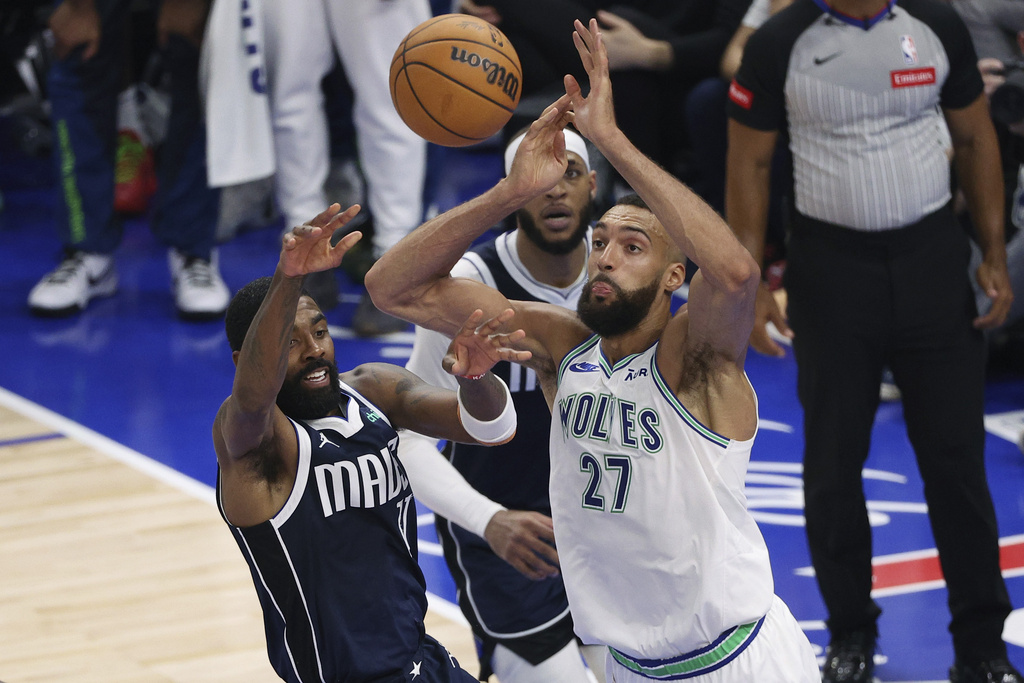
The late-game issues have reared their ugly heads in the Western Conference semifinals. Minnesota led the bulk of the first two games of the series, only to squander advantages late. The Wolves rallied in the second half of Game 3 on Sunday and held a two-point lead with five minutes to play after Kyle Anderson’s toss at the hoop dropped to beat the shot clock with 5 minutes, 5 seconds to play.

That was the last bucket of consequence the Wolves would score. Minnesota tallied just one point between Anderson’s miraculous shot and Anthony Edwards’ irrelevant layup with 15 seconds to play – a Naz Reid free-throw. In between those buckets were seven missed shots and turnover.

Edwards said the ball was sticking too much in the Wolves’ hands, particularly his.

“I thought it was our offense that broke down, more than anything. You’ve got to try to score alongside of them,” Timberwolves coach Chris Finch said. “We just didn’t execute very well, didn’t find the open guy very well down the stretch. And when we had open looks, they were nowhere near going in.”

It is tough to win that way.

As it is when you commit two turnovers in the final minute of regulation, like Minnesota did in Game 2 en route to blowing a five-point advantage in the final 90 seconds.

Then there’s Game 1, which Minnesota led by four with 3 minutes, 37 seconds to play, only to then go scoreless until Reid scored with 10 seconds to play. That fatal scoring drought featured four missed shots and three turnovers.

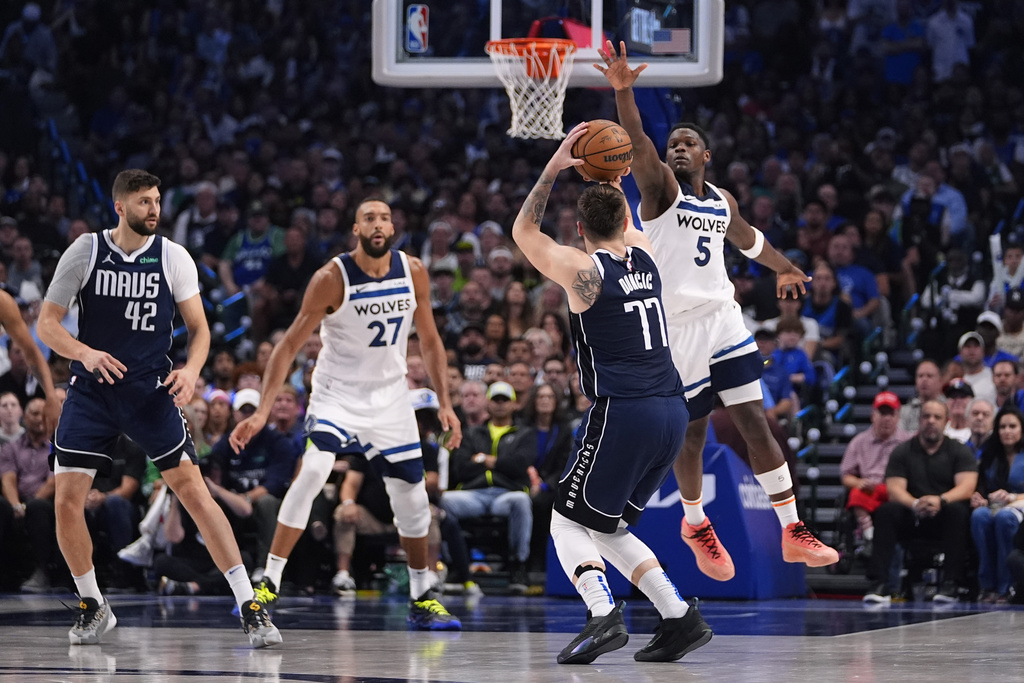
And Dallas is doing the complete opposite on the other end of the floor. The Mavericks – who sported the NBA’s fourth-best clutch-time net rating post Christmas, outscoring opponents by 23.8 points per 100 possessions – are routinely carving Minnesota’s top-ranked defense up with the game on the line.

Oftentimes it’s via Luka Doncic sizing up an opponent 1 on 1 before either getting to the mid range to knock down a jumper, or hitting a stepback triple. At other points, he’s catching the Wolves napping, like he did late Sunday, when he saw Edwards’ back turned to the play and made a quick pass that led to a hockey assist on a P.J. Washington triple to put Dallas up 107-104. Minnesota never recovered.

“It starts with kind of a mental breakdown on a left-corner 3 from Washington when the game is tied,” Finch said, “and that gives them just enough breathing room.”

Dallas is out-scoring Minnesota by 39.2 points per 100 possessions in the clutch in this series. It’s the difference between the Mavericks being up 3-0 – the current state of the situation – and Minnesota potentially even leading the series.

“The whole series, we’ve struggled to close games. These three minute games that we’re playing, we’re losing,” Finch said. “That’s been the story of the series.”

It’s easy to look at that and think how easily things could be flipped. But the reality is the playoffs reveal who you are – both your strengths and warts. And this has been a major wart for Minnesota all season that was left unresolved, and now has the Wolves on the brink of elimination.

“If we were winning these games, you would feel confident when you look up and see four minutes left and you’re winning the game, you’re going to think positive thoughts,” Wolves guard Mike Conley said. “I can’t speak for every person but I’m sure we’re looking up and saying ‘How are we going to win this one? How are we going to figure it out?’

“That’s a moment of the game where we have to be tight, together and figure it out. Obviously, (the struggles are) on our minds. For the majority of the series, we were giving ourselves a chance, giving ourselves leads, giving ourselves opportunity. We know what part of the game we need to be better at. The part that’s gonna win us the game is that fourth quarter.”

Many basketball games are won in the final five minutes. Or, in the Wolves’ case, they’re lost.

Related Articles

Minnesota Timberwolves |


No NBA team has ever rallied from a 3-0 series deficit, but Wolves believe ‘if (there’s) a team that can do it, I think it’s us.’

Minnesota Timberwolves |


Karl-Anthony Towns’ shooting woes coming at worst possible time for Timberwolves

Minnesota Timberwolves |


Doncic, Irving outplay Timberwolves late again as Minnesota goes down 3-0
Minnesota Timberwolves |


Dane Mizutani: Why give Draymond Green a voice during the Timberwolves playoff run?

Minnesota Timberwolves |


Charley Walters: Wolves’ offseason hinges on playoff outcome