Zeynep Tufekci: Scarlett Johansson’s voice isn’t the only thing AI companies want

posted in: News | 0

When OpenAI introduced its virtual assistant, Sky, last week, many gasped. It sounded just like Scarlett Johansson, who had famously played an artificial intelligence voice assistant in the movie “Her.”

On the surface, the choice made sense: last year, Sam Altman, CEO of OpenAI, had named it his favorite science fiction movie, even posting the single word “her” around the assistant’s debut.

OpenAI approached Johansson to be the voice for its virtual assistant, and she turned it down. The company approached her again two days before the launch of Sky, but this time, she said in a blistering statement, it didn’t even wait for her official “no” before releasing a voice that sounds so similar to hers that it even fooled her friends and family.

In response to Johansson’s scathing letter, OpenAI claimed that the voice was someone else and “was never intended to resemble hers,” but it took Sky down anyway.

The AI industry is built on grabbing our data — the output that humanity has collectively produced: books, art, music, blog posts, social media, videos — and using it to train AI firms’ models, from which they then make money or use as they wish. For the most part, AI companies haven’t asked or paid the people who created the data they grab and whose actual employment and future are threatened by the models trained on it.

Politicians haven’t stepped in to ask why humanity’s collective output should be usurped and monopolized by a handful of companies. They’ve practically let the industry do what it wants for decades.

I am someone who believes in the true upside of technology, including AI. But amid all the lofty talk about its transformational power, these companies are perpetuating an information grab, a money grab and a “break the rules and see what we can get away with” mentality that’s worked very well for them for the past few decades.

Altman, it seems, liked Johansson’s voice, so the company made a simulacrum of it. Why not?

When you’re a tech industry star, they let you do anything.

Zeynep Tufekci writes a column for the New York Times.

Related Articles

Opinion |


The IRS gets back on its feet. Time to crack down on wealthy cheaters

Opinion |


Jesse Wegman: There’s no sense of shame at the Supreme Court

Opinion |


Thomas Friedman: Bibi is choosing Stefanik and Trump. Don’t be fooled, President Biden

Opinion |


Robin Abcarian: Israel’s Gaza war is horrific, but that doesn’t mean Hamas is innocent of sexual violence

Opinion |


Mark Gongloff: U.S. wildfire season is now everywhere, all at once

The IRS gets back on its feet. Time to crack down on wealthy cheaters

posted in: News | 0

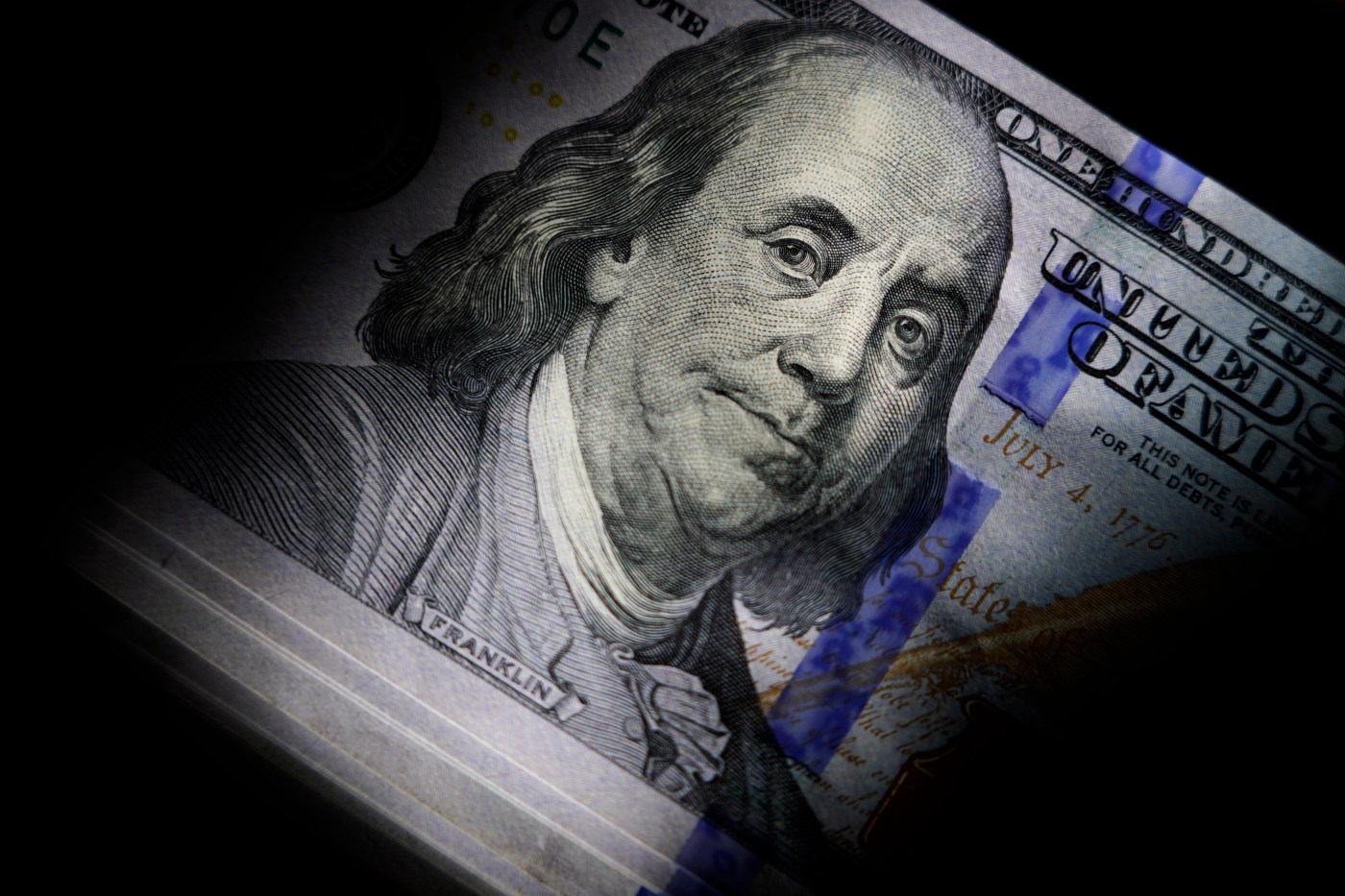
Abraham Kiswani headed a thriving security firm in the Chicago suburbs when he had the bright idea to stop issuing himself payroll checks and instead issue checks that were falsely labeled “subcontracted services.” He then proceeded to underreport nearly $10 million in income, shortchanging Uncle Sam and the state by about $3.7 million in tax revenues.

The tax police finally caught up with him, and the 54-year-old Burbank resident is preparing to serve a two-year prison sentence after pleading guilty to criminal charges. But many other tax cheats just like him have gotten away with their misconduct, mainly because the Internal Revenue Service has lacked the resources to enforce the tax code. In 2021, the most recent data available, Americans failed to pay some $688 billion in taxes they owed.

Now, finally, the IRS is starting to get its act together, to the dismay of tax criminals and their misguided enablers in Congress who never miss a chance to bash an agency that everyone loves to hate.

The IRS is preparing to increase audits by more than 50% on taxpayers with incomes of more than $10 million and to triple audit rates on corporations with assets of more than $250 million. Partnerships with iffy balance sheets will finally start to get some overdue scrutiny, too.

After more than a decade of budget cuts that gutted the agency, its funding got a boost in the Inflation Reduction Act, and the rebuilding now underway promises to sharply increase tax revenues.

The return on investment should be enormous. The new law initially gave the agency nearly $80 billion in supplemental funding through 2031. A recent Treasury Department analysis shows that extra money translates into increased collection of overdue and unpaid taxes of $561 billion. That’s a sevenfold return in a decade.

At the same time, states also stand to get a good return on the IRS investment, as stronger federal enforcement almost always leads to increased collection of taxes owed to states as well.

Bear in mind we’re not talking about new taxes, but rather requiring people to pay what they owe. It’s mind-boggling to hear that the IRS is just getting around to sending 125,000 letters to people making more than $400,000 a year who haven’t filed their income taxes since at least 2017.

We understand that no one likes paying taxes. But the tax system today provides large-scale opportunities for tax evasion to the highest-income individuals, big corporations and complex partnerships, while many everyday wage earners, including wealthy ones, are much more readily tracked. Giving the IRS its teeth again will help to restore fairness.

Opposition is intensifying. Some Republicans in Congress have made re-gutting the agency a top priority. About $1.4 billion of Inflation Reduction Act funding was rescinded as part of the debt ceiling negotiations last summer. Another $20 billion will be cut or repurposed as part of the agreement last June between the White House and then-House Speaker Kevin McCarthy to suspend the debt limit and cap federal spending. In January, while threatening a government shutdown, Republicans insisted on speeding up those cuts.

Whether intentionally or not, those opposed to meaningful tax enforcement are promoting corruption.

IRS opponents in the GOP claim they want to protect small businesses and the middle class from being targeted by agency auditors. In fact, the IRS has pledged again and again that it is committed to shielding households earning less than $400,000 a year from an increase in audit rates.

Let’s face it. Some wealthy people who benefit financially from a weak IRS want it to stay that way. To some, cheating on taxes is a sophisticated, high-stakes game, and, as the hundreds of millions in uncollected taxes every year indicates, the cheaters have been getting away with it. That is grossly unfair to the many law-abiding citizens who pay their taxes.

Cutting IRS funding is counterproductive for other reasons too. In fact, most of the agency’s additional spending to date has been aimed at replacing antiquated technology and improving abysmal service levels. For years, the agency was so poorly staffed that it couldn’t even pick up its phones during tax time to answer basic questions from the public. This year, it did much better, but that could change if its funding is slashed again in the future.

Both major political parties evidently have concluded that responsible fiscal policy does not pay off at the ballot box. Since the early 2000s, profligacy has ruled. Despite an economy that by most measures is strong, the federal government still is spending roughly $2 trillion more per year than it is raising in revenue, while keeping the federal tax burden far lower than in other rich countries. That’s unsustainable.

Collecting the tax revenue that our government is owed won’t close that gap, and it’s no substitute for a return to fiscal sanity, but surely, it’s the least that can be done.

The alternative is to allow the Abraham Kiswanis of the world to blow off their obligations and scoff at upstanding, hardworking Americans who pay their taxes, as patriotic duty and the law requires.

— The Chicago Tribune

Related Articles

Opinion Columnists |


Zeynep Tufekci: Scarlett Johansson’s voice isn’t the only thing AI companies want

Opinion Columnists |


Jesse Wegman: There’s no sense of shame at the Supreme Court

Opinion Columnists |


Thomas Friedman: Bibi is choosing Stefanik and Trump. Don’t be fooled, President Biden

Opinion Columnists |


Robin Abcarian: Israel’s Gaza war is horrific, but that doesn’t mean Hamas is innocent of sexual violence

Opinion Columnists |


Mark Gongloff: U.S. wildfire season is now everywhere, all at once

Jesse Wegman: There’s no sense of shame at the Supreme Court

posted in: News | 0

An earlier generation of Supreme Court justices seemed to possess the capacity for shame.

In 1969, Justice Abe Fortas resigned his seat for accepting a $20,000 consulting fee (which he returned) from a foundation led by a man who was convicted of securities fraud.

Whatever Fortas believed about his honor and morality, he understood that the Supreme Court is an inherently fragile institution and that its nine justices cannot afford the slightest whiff of bias or corruption. As The New York Times editorial board wrote then, “A judge not only has to be innocent of any wrongdoing but he also has to be above reproach.” Placing the court’s and the country’s interests above his own, Fortas stepped down.

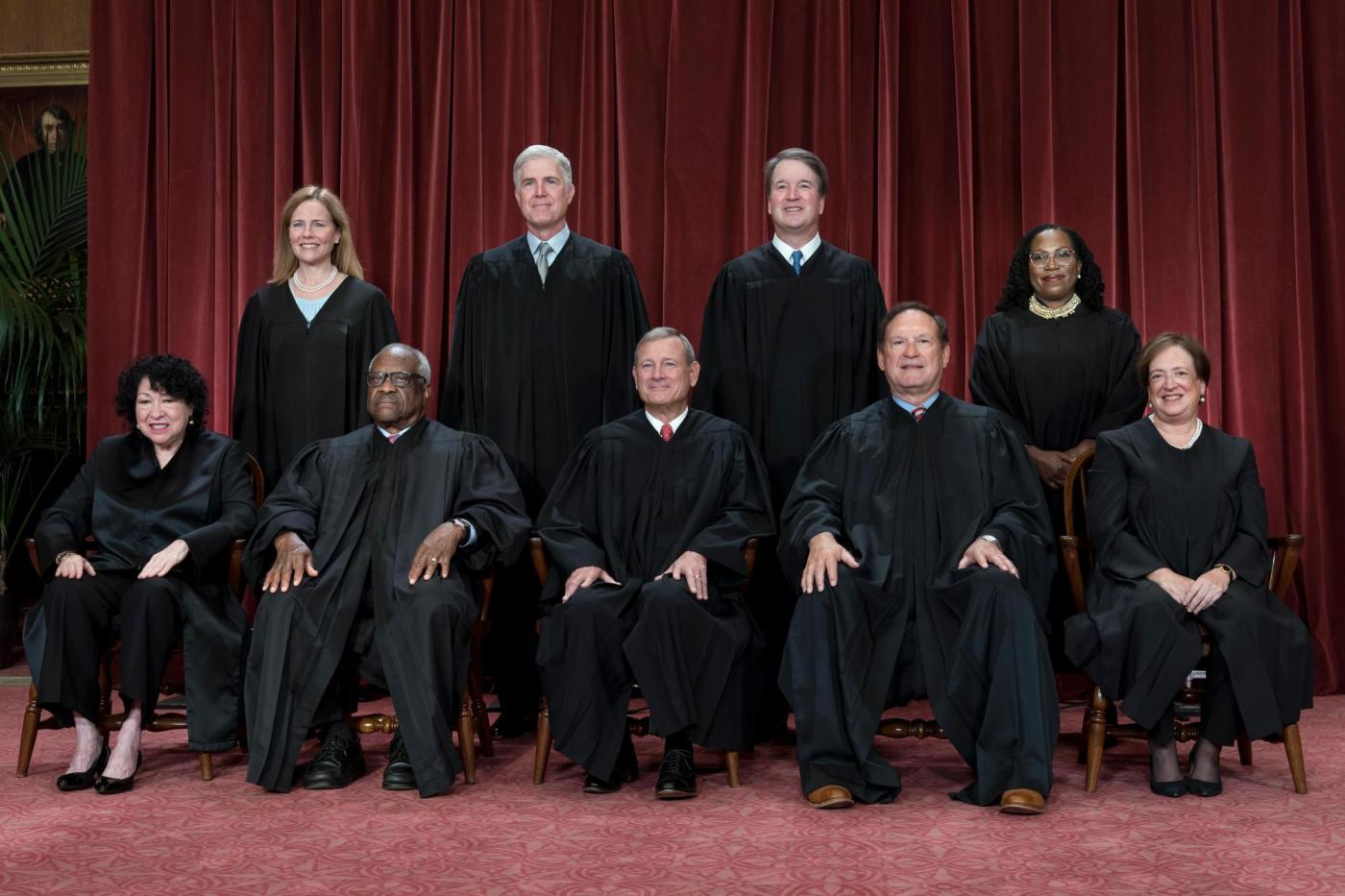
That sort of humility is nowhere in evidence on today’s court, which is finding new ways to embarrass itself, thanks largely to the brazen behavior of two of its most senior members, Justices Samuel Alito and Clarence Thomas, who are making a mockery of their obligation to at least appear neutral and independent. They fail to report large gifts, luxury vacations and payments to their family members by wealthy donors, at least one of whom had business before the court, and they express nakedly partisan opinions or fail to adequately distance themselves when their spouses express such views.

They are saying, in effect, that they don’t care if any of this bothers you. To go by recent polls showing that this court’s public approval has approached record lows, it bothers many millions of Americans. And yet no one in Washington seems willing to act.

It can’t go on. The court’s refusal to police itself — willingly allowing a few justices to trample on its reputation — demands that Congress step up and take far stronger action to enforce judicial ethics and to require justices to recuse themselves when they have or appear to have clear conflicts of interest.

The latest in a long list of examples became public last week, when the Times reported that an upside-down American flag flew over the front lawn of the Alito family home in the immediate aftermath of the Jan. 6 insurrection incited by then-President Donald Trump. The flag, a clear pro-Trump statement widely flown by those who believed the 2020 election was stolen, apparently stayed up for days, even as the court was weighing whether to hear a case challenging the outcome of the election. (The court voted not to hear the case. Alito, like Trump, was on the losing side.)

In a statement to the Times, Alito placed the blame for the hoisting of the flag on his wife, Martha-Ann Alito, in response to a dispute with some neighbors. He said nothing about any attempt to remove it nor did he apologize for the glaring ethical violation. To the contrary, he has failed to recuse himself from any of the several Jan. 6-related cases currently before the court, including Trump’s claim that he is absolutely immune from prosecution for his role in the Capitol assault.

Thomas may be even more compromised when it comes to Jan. 6. His wife, Ginni Thomas, participated in the legal effort to subvert the election and keep Trump in power. And yet with one minor exception, he has also refused to recuse himself from any of the Jan. 6 cases.

Other justices revealed political biases in the recent past. In 2016 the Times editorial board criticized Justice Ruth Bader Ginsburg for referring to Trump as a “faker,” comments for which she quickly expressed regret. That was the right response, but it couldn’t unring the bell.

As all justices are aware, federal recusal law is clear: “Any justice, judge or magistrate judge of the United States shall disqualify himself in any proceeding in which his impartiality might reasonably be questioned.”

In the Jan. 6 cases, recusal should not be a close call. At the least, reasonable people are justified in questioning Alito’s impartiality based on his failure to take down the inverted flag, especially during a period of intense national conflict over an issue that was at that very moment before the justices.

Thomas’ extreme closeness with his wife (he has described them as being melded “into one being”) raises similar doubts about his ability to be impartial. He is further implicated by a separate provision of the law, which requires a judge to recuse when his or her spouse is “to the judge’s knowledge likely to be a material witness in the proceeding.” That sure sounds like Ginni Thomas, who testified, under threat of a subpoena, before the House Jan. 6 committee.

In short, Alito and Thomas appear to be breaking federal law, tanking what remains of the court’s legitimacy in the process. The challenge is whether anyone is willing to do anything about it.

“If there’s no recusal in this situation, if a justice is flying a banner to support a violent insurrection while he is sitting on a case that implicates the scheme to steal the election, is the recusal statute a dead letter?” Alex Aronson, executive director of Court Accountability, a judicial reform organization, asked me.

It’s a fair question. The Ethics in Government Act requires the Judicial Conference, which is chaired by Chief Justice John Roberts, to refer to the Justice Department any case in which there is reason to believe a judge willfully broke the law. The attorney general does not have to wait for a referral, but based on how Attorney General Merrick Garland’s Justice Department handled the Trump investigations, I’m not holding my breath.

The Supreme Court’s recently adopted ethics code isn’t much help, either. If anything, it makes matters worse, undercutting the authority of existing law and giving the justices even more space to act with impunity.

Mark L. Wolf, a senior federal district judge in Massachusetts who worked in President Gerald Ford’s Justice Department, said in a lecture this year that in adopting the code, “the Supreme Court has essentially asserted the power, if not the right, to disobey laws enacted by Congress and the president. Thus, the code undermines the system of checks and balances that safeguard our constitutional democracy, threatens the impartiality of the Supreme Court and jeopardizes crucial public confidence in the federal judiciary.”

Roberts may not have the power to force any of his colleagues to do the right thing, but he does have moral and institutional authority. And yet it appears the new code of ethics is no match for the old code of omertà that has bound justices for generations. As the Times reported, the Alito flag incident soon became known to the court (where, by the way, regular staff members are barred from any political activity, down to displaying bumper stickers), and yet it was suppressed for more than three years.

We are faced with flatly unacceptable behavior from the most powerful judges in the land. If nothing else, Congress has the power to call that to light, to name and shame the wrongdoers. This would be a truth-seeking mission as well as a public service, showing the American people just how corrupt some justices are.

So what is Congress afraid of? Committees can and should hold hearings and subpoena witnesses to answer questions before the nation. They can subpoena Alito himself. If he declines to show, subpoena his wife. He implicated her, after all, and she certainly has no separation-of-powers claim. Then subpoena Roberts, who declined to testify last year when he was asked politely. If he still doesn’t show up, Congress should remember it has the power of the purse and can reduce the court’s nonsecurity budget.

As right-wing activists have understood about an institution with lifetime tenure, it’s all part of the long game. Alito and Thomas may be in their mid-70s, but a new generation of even more extreme, more partisan activists is coming up through the judicial ranks. Many of them were appointed to the federal bench in Trump’s first term, and many more would surely be in a second term. These men and women will take the absence of meaningful congressional action as carte blanche to run roughshod over ethical norms.

This is about the future as much as the past. Young Americans who are voting for the first time this year were born after Bush v. Gore; some were not even in high school when Sen. Mitch McConnell stole a Supreme Court seat from President Barack Obama. For all they know, this is how the court has always been and always will be.

That’s why now is the time to show future generations that the nation needs a court that can be trusted to be fair, a court whose justices have the capacity for shame. The Supreme Court is an institution that we depend on as much as it depends on us.

Jesse Wegman writes for the New York Times.

Related Articles

Opinion |


Thomas Friedman: Bibi is choosing Stefanik and Trump. Don’t be fooled, President Biden

Opinion |


Robin Abcarian: Israel’s Gaza war is horrific, but that doesn’t mean Hamas is innocent of sexual violence

Opinion |


Mark Gongloff: U.S. wildfire season is now everywhere, all at once

Opinion |


Daniel Bral: No, the Israeli-Palestinian divide is not unbridgeable. Here’s how I know

Opinion |


Jennifer Huddleston: AI and privacy rules meant for Big Tech could hurt small businesses most

Lynx suffer first loss in overtime battle with undefeated Sun

posted in: News | 0

For the second straight game, the Minnesota Lynx played free basketball.

This time it only took one extra session. And the result went the wrong way.

DeWanna Bonner made two free throws with 7.4 seconds left, Kayla McBride missed a game-winning jumper with 1.4 ticks to go, and the Lynx fell 83-82 to the Sun on Thursday in Uncasville, Connecticut.

“We battled. We did enough to win the game. It just didn’t happen,” said coach Cheryl Reeve.

Minnesota beat Seattle 102-93 in double overtime in its home opener last Friday.

The Lynx had five days between games after that victory. This one comes in the first of three games in four days in three cities. The Lynx (2-1) are home to New York on Saturday at noon and in Atlanta on Sunday.

Napheesa Collier led Minnesota with 31 points and 11 rebounds.

But it’s the points she left on the court that eat at her. Collier made five of nine free-throw attempts. Two misses came in the extra five minutes.

”I would have made my free throws we wouldn’t have gone to overtime; when we went to overtime we could have won the game,” she said. “… When you miss free easy baskets like that that cost you the game I just take a lot of that responsibility.”

Courtney Williams, who finished with 19 points, seven rebounds and six assists, quickly pointed out it’s a team game. “There’s so many plays that transpired where we could have went on a run and it wouldn’t have come down a free throw. That’s all our responsibility. We got to make those plays, not just all fall on Phee.”

McBride drained one from the right elbow with 13.6 seconds left for an 82-81 Lynx lead, but Bonner, who led the Sun (4-0) — the WNBA’s last unbeaten team — with 20 points, was fouled and made both.

For the Lynx, protecting the paint was a defensive focus because Connecticut thrives inside where its 40 points per game were third-best in the WNBA entering the contest. The Lynx have allowed an average of 44 inside points in their first three games.

“It’s what we expected when we came here. The 46 points in the paint is just really difficult when you know that’s a team’s identity,” Reeve said. “It is hard to stop them from getting there, but that’s what we’re going to point to, that we’ve got to do better there.”

Brionna Jones had 19 points for Connecticut, and Alyssa Thomas added 18.

“They’re strong. Their entire game is in the paint. … Almost all of their players want to be in there so it makes it a pretty tough assignment,” Collier said.

Williams scored on a drive for a five-point lead with 1:41 left in overtime, but a putback by Thomas got the Sun within three. A fadeaway from Collier got stuck between the rim and backboard, Connecticut won the subsequent jump ball, and Rachel Banham made a 3-pointer for the Sun.

Banham, the former Gophers star who played the past four seasons for the Lynx, finished with six points and five rebounds.

“They made tough shots. I thought our defense was really good. Rachel came off a contested three, AT contested turnaround midrange,” Collier said.

Collier had four points in a 12-2 run that included triples from Bridget Carleton and McBride and a Williams jumper for a four-point lead at 67-63 midway through the fourth quarter.

Lynx starting forward Diamond Miller missed the second half with a right knee issue. Reeve had no postgame update. Miller had offseason surgery to repair the meniscus in her left knee.

Related Articles

Minnesota Lynx |


Lynx’s Collier earns WNBA Western Conference Player of the Week

Minnesota Lynx |


Lynx pull away in second overtime to beat Storm 102-93 and remain unbeaten

Minnesota Lynx |


Lynx outscore Chicago in WNBA preseason opener

Minnesota Lynx |


Reeve ready to see new-look Lynx in preseason opener

Minnesota Lynx |


Post surgery, Miller ready to go full speed for Lynx