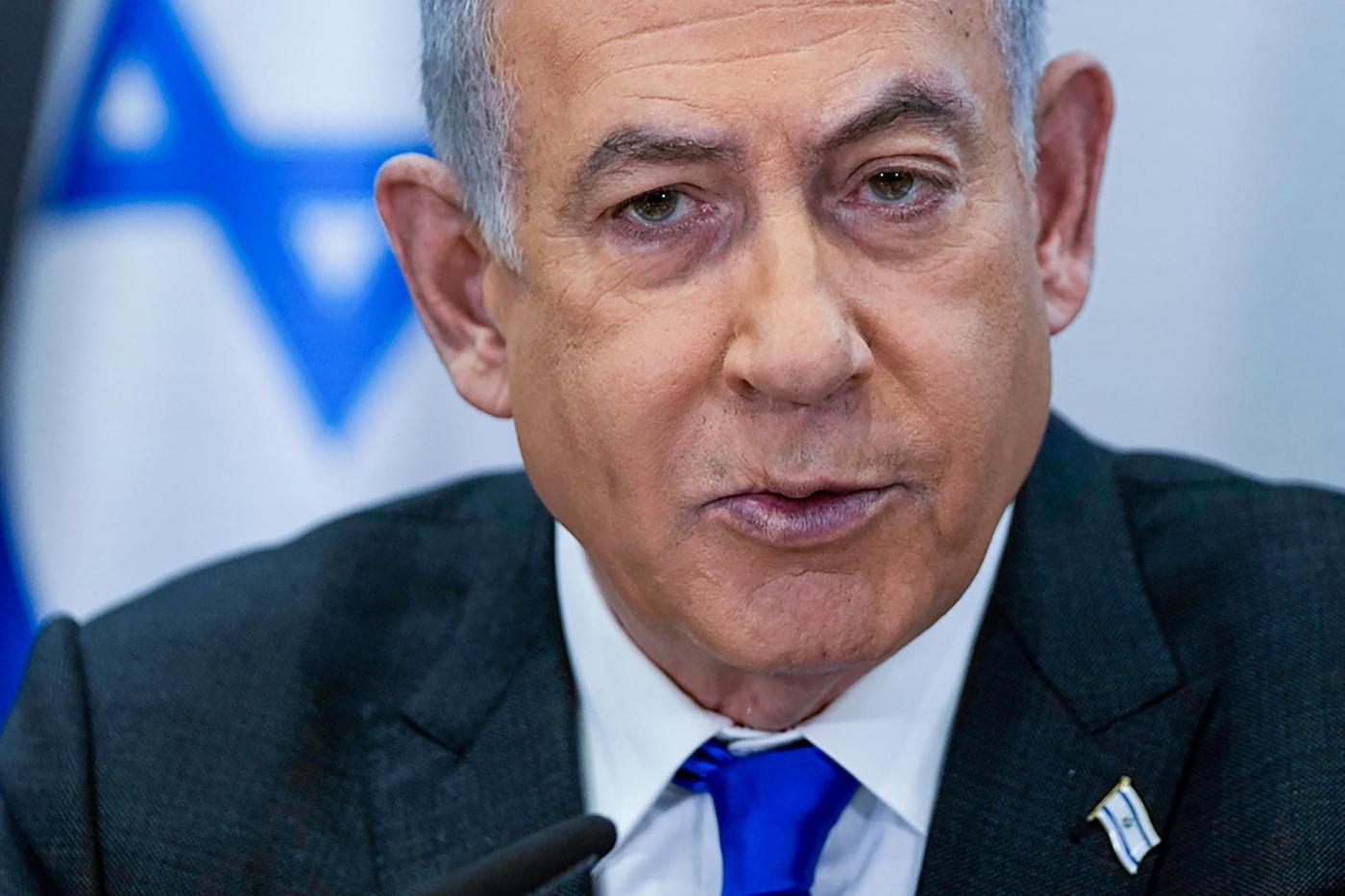
Netanyahu frequently makes claims of antisemitism. Critics say he’s deflecting from his own problems

posted in: News | 0

By TIA GOLDENBERG (Associated Press)

TEL AVIV, Israel (AP) — After the International Criminal Court’s top prosecutor sought arrest warrants for Israeli Prime Minister Benjamin Netanyahu, his defense minister and top Hamas officials, the Israeli leader accused him of being one of “the great antisemites in modern times.”

As protests roiled college campuses across the United States over the Gaza war, Netanyahu said they were awash with “antisemitic mobs.”

These are just two of the many instances during the war in which Netanyahu has accused critics of Israel or his policies of antisemitism, using fiery rhetoric to compare them to the Jewish people’s worst persecutors. But his detractors say he is overusing the label to further his political agenda and try to stifle even legitimate criticism, and that doing so risks diluting the term’s meaning at a time when antisemitism is surging worldwide.

“Not every criticism against Israel is antisemitic,” said Tom Segev, an Israeli historian. “The moment you say it is antisemitic hate … you take away all legitimacy from the criticism and try to crush the debate.”

There has been a spike in antisemitic incidents since Hamas attacked Israel on Oct. 7, according to researchers. And many Jews in North America and Europe have said they feel unsafe, citing threats to Jewish schools and synagogues and the pro-Palestinian campus demonstrations in the U.S., although organizers deny that antisemitism drives the protests.

Hamas has been designated as a terrorist organization by the United States, Canada and the European Union.

The war has reignited the long debate about the definition of antisemitism and whether any criticism of Israel — from its military’s killing of thousands of Palestinian children to questions over Israel’s very right to exist — amounts to anti-Jewish hate speech.

Netanyahu, the son of a scholar of medieval Jewish persecution, has long used the travails of the Jewish people to color his political rhetoric. And he certainly isn’t the first world leader accused of using national trauma to advance political goals.

Netanyahu’s supporters say he is honestly worried for the safety of Jews around the world.

But his accusations of antisemitism come as he has repeatedly sidestepped accountability for not preventing Hamas’ Oct. 7 attack. Hamas killed roughly 1,200 people and took 250 hostage, which many in Israel’s defense establishment acknowledge they shoulder the blame for.

Related Articles


‘We have nothing.’ As Israel attacks Rafah, Palestinians are living in tents and searching for food


Netanyahu says deadly Israeli strike in Rafah was the result of a ‘tragic mishap’


Top UN court orders Israel to halt military offensive in Rafah, though Israel is unlikely to comply


How does this end? With Hamas holding firm and fighting back in Gaza, Israel faces only bad options


Thomas Friedman: Bibi is choosing Stefanik and Trump. Don’t be fooled, President Biden

Netanyahu has continued to face criticism at home and abroad throughout the war, which has killed 35,000 Palestinians, according to the Gaza Health Ministry, which doesn’t distinguish between fighters and noncombatants. The fighting has sparked a humanitarian catastrophe, and ICC Prosecutor Karim Khan has accused Netanyahu and his defense minister of using starvation as a “method of warfare,” among other crimes.

Segev, the historian, acknowledged there is a rise in “violent hate” toward Israel and, speaking from Vienna, said he wasn’t sure if speaking Hebrew in public was safe. But he said Netanyahu has long used Jewish crises to his political benefit, including invoking the Jewish people’s deepest trauma, the Holocaust, to further his goals.

At the height of the campus protests, Netanyahu released a video statement condemning their “unconscionable” antisemitism and comparing the mushrooming encampments on college greens to Nazi Germany of the 1930s.

“What’s happening in America’s college campuses is horrific,” he said.

In response to Khan seeking the arrest warrants, he said the ICC prosecutor was “callously pouring gasoline on the fires of antisemitism that are raging across the world,” comparing him to German judges who approved of the Nazis’ race laws against Jews.

Those comments drew a rebuke from the European Union’s foreign policy chief, Josep Borrell. “The prosecutor of the court has been strongly intimidated and accused of antisemitism — as always when anybody, anyone does something that Netanyahu’s government does not like,” Borrell said. “The word antisemitic, it’s too heavy. It’s too important.”

Netanyahu has compared accusations that Israel’s war is causing starvation in Gaza or that the war is genocidal to blood libels — unfounded centuries-old accusations that Jews sacrificed Christian children and used their blood to make unleavened bread for Passover.

“These false accusations are not levelled against us because of the things we do, but because of the simple fact that we exist,” he said at a ceremony marking Israel’s Holocaust Remembrance Day earlier this month.

Netanyahu previously made repeated allusions to the Holocaust while trying to galvanize the world against Iran’s nuclear program.

Israeli leaders and the country’s media also made such comparisons about Oct. 7, describing the Hamas attackers as Nazis, comparing their rampage to the historic violence inflicted on Eastern European Jews, and referring to the images of Jewish victims’ burned bodies as a Shoah — the Hebrew word for Holocaust.

Israelis have been jarred by the global rise in antisemitism, and many view the swell of criticism against Israel as part of the rise. They see hypocrisy in the world’s intense focus on Israel’s war with Hamas while other conflicts get much less attention.

Moshe Klughaft, a former advisor to Netanyahu, said he believes the Israeli leader is genuinely concerned over rising antisemitism.

“It is his duty to condemn antisemitism as prime minister of Israel and as head of a country that sees itself as responsible for world Jewry,” he said.

Many Israelis view the war in Gaza as a just act of self-defense and are befuddled by what many think should be criticism directed at Hamas — blaming the group for starting the war, using Palestinian civilians as human shields and refusing to free the hostages. The ICC warrant requests have likely bolstered such feelings.

When Netanyahu leans on accusations of antisemitism, he is doing so with the Israeli public in mind, said Reuven Hazan, a political scientist at Jerusalem’s Hebrew University.

Hazan said Netanyahu has leveraged the campus protests, for example, to get Israelis to rally around him at a time when his public support has plummeted and Israelis are growing impatient with the war. He said Netanyahu has also used the protests as a scapegoat for his failure so far to achieve the war’s two goals: destroying Hamas and freeing the hostages.

“He deflects blame from himself, attributing any shortcomings not to his foreign policies or policies in the (Palestinian) territories, but rather to antisemitism. This narrative benefits him greatly, absolving him of responsibility,” Hazan said.

Shmuel Rosner, a senior fellow at the Jewish People Policy Institute, a Jerusalem think thank, rejects the notion that Netanyahu stifles criticism by calling it antisemitic, pointing to just how much criticism the country receives. But he said using the antisemitic label to achieve political ends could cheapen it.

“I’d be more selective than the government of Israel in choosing the people and bodies they tag ‘antisemitic,’” he said.

US pledges $135 million in aid to Western-leaning Moldova to counter Russian influence

posted in: Politics | 0

By MATTHEW LEE and VADIM GHIRDA (Associated Press)

CHISINAU, Moldova (AP) — U.S. Secretary of State Antony Blinken on Wednesday pledged $135 million in aid to Moldova for energy security and to counter Russian disinformation as the Western-leaning nation struggles to blunt Moscow’s push for influence that’s been buoyed by recent successes in its war in neighboring Ukraine.

Blinken opened a short visit to Eastern Europe with a stop in Chisinau, Moldova’s capital, where he announced the assistance at a news conference with President Maia Sandu. America’s top diplomat said $85 million would go to bolster energy infrastructure and $50 million was aimed at overhauling the energy and farming industries and deterring disinformation.

“That in turn will bolster the ability of Moldovans to resist Russian interference, to hold free and fair elections, to continue down the path to the European Union and Western integration, to create more economic opportunity,” Blinken said. He planned to travel to the Czech Republic later.

Before Wednesday, the U.S. had provided Moldova with $774 million in financial aid since the Ukraine war began in February 2022. Some $300 million of that was earmarked for energy security.

Blinken’s trip, organized around a NATO foreign ministers meeting in Prague, the Czech capital, comes amid concerns that Moldova and Georgia, another former Soviet republic, are facing renewed threats from Russia.

Blinken visited Ukraine two weeks ago to reassure Kyiv of Washington’s support in the face of increased Russian attacks in its north.

There are also signs Russia may be considering new actions in Moldova, where it has 1,500 troops stationed in the disputed territory of Transnistria, and is behind anti-Western moves in Georgia that the U.S. believes run counter to Moldovan and Georgian aspirations to join the European Union.

Both countries have candidate status to eventually join the 27-nation EU bloc.

“There’s not a direct military threat that we see at this time, but there’s ongoing Russian influence operations, and that is of concern,” the top U.S. diplomat for Europe, James O’Brien, said last week.

Moldova has repeatedly accused Russia of conducting a “hybrid war” against the country, meddling in local elections and running vast disinformation campaigns to try to topple the government and derail its path toward joining the EU.

Russia has denied the accusations, but the Moldovan government is wary of Moscow’s intentions, particularly after Transnistrian authorities appealed to Moscow in February for “protection” due to what they said was increased pressure from Chisinau.

In Georgia, those fears intensified on Tuesday when the country’s parliament overrode a presidential veto of a “foreign agents” bill that has prompted weeks of massive protests by critics who say it will restrict media freedom and obstruct Georgia’s chances of joining the European Union.

The bill that was approved by the parliament earlier this month requires media, nongovernmental organizations and other nonprofit groups to register as “pursuing the interests of a foreign power” if they receive more than 20% of their funding from abroad.

The legislature, controlled by the ruling Georgian Dream party, dismissed the veto of President Salome Zourabichvili, an independent. The president now has five days to endorse the bill. If she doesn’t do so, the parliament speaker will sign it into law.

Zourabichvili, who is increasingly at odds with the governing party, vetoed the bill on May 18. She has accused the governing party of jeopardizing the country’s future and “hindering the path toward becoming a full member of the free and democratic world.”

Blinken last week announced that the U.S. would impose travel bans on Georgian officials “who are responsible for or complicit in undermining democracy in Georgia, as well as their family members.”

Blinken’s announcement did not identify anyone who has already been targeted, but it said the U.S. would also undertake a comprehensive review of U.S.-Georgia cooperation.

“It remains our hope that Georgia’s leaders will reconsider the draft law and take steps to move forward with their nation’s democratic and Euro-Atlantic aspirations,” he said. “As we review the relationship between our two countries, we will take into account Georgia’s actions in deciding our own.”

The situations in Georgia, Moldova and Ukraine will all be on the agenda at the NATO ministerial meeting in Prague on Thursday and Friday that will be the alliance’s last major diplomatic get-together before leaders meet at a summit to celebrate NATO’s 80th anniversary in Washington in July.

___

Lee reported from Prague. Associated Press writer Stephen McGrath contributed from Sighisoara, Romania.

Building explosion kills bank employee and injures 7 others in Youngstown, Ohio

posted in: News | 0

YOUNGSTOWN, Ohio (AP) — A massive explosion blew out much of the ground floor of an apartment building, killing a bank employee and injuring several other people. Police and emergency officials initially blamed natural gas, but the fire chief later said the cause is under investigation.

The blast happened around 2:45 p.m. Tuesday, collapsing part of the ground floor of Realty Tower into its basement and sending the façade across a street where both sides had been blocked off by orange construction fencing. The 13-story building has a Chase Bank branch at street level and apartments in upper floors.

The bank employee was a 27-year-old man who had been seen inside the building right before the blast, the Youngstown Police Department announced early Wednesday. Youngstown Fire Chief Barry Finley said in a news conference Tuesday that firefighters rescued several people and cleared the building to ensure no one else was hurt.

JPMorgan Chase mourned the loss of a colleague and said it would work with local officials. “Our hearts go out to their family as well as our injured employees, their families and others affected by this tragedy,” a company statement read.

Police and the Mahoning County Emergency Management Agency said there was a natural gas explosion, but the fire chief later said it was too early to say.

“We have no idea what caused the explosion. We know that there was an explosion and it did a lot of damage to the bottom of the building,” Finley said Tuesday. He said none of the apartments in the building are habitable.

Seven injured people were taken to Mercy Health Hospital in Youngstown. A hospital spokesperson said one was in critical condition.

The blast shook downtown Youngstown, a city of about 60,000 residents. Bricks, glass and other debris littered the sidewalk.

Source: Vikings agree to terms with veteran guard Dalton Risner

posted in: News | 0

After flirting for the past few months, the Vikings and veteran guard Dalton Risner have finally committed to each other.

A source confirmed to the Pioneer Press on Wednesday morning that the Vikings have agreed to terms with Risner, paving the way for him to start once again on the offensive line. It will be a 1-year deal for Risner, according to ESPN insider Adam Schefter, with a chance for him to make additional money with incentives.

After signing with the Vikings last season, Risner eventually carved out a niche for himself. He ended up starting 11 games for the Vikings at left guard proving himself as a very reliable option in pass protection.

The news of Risner’s return likely means fellow guard Blake Brandel will transition back into a depth role. He had been getting all the reps with the starters during organized team activities and drew praise from offensive coordinator Wes Phillips last week.

Related Articles

Minnesota Vikings |


Vikings safety Harrison Smith living in the moment, not thinking about the future

Minnesota Vikings |


Veteran Sam Darnold arrives at OTAs in line to be Vikings starting quarterback

Minnesota Vikings |


Vikings sign veteran tight end Robert Tonyan

Minnesota Vikings |


Here’s a look at the Vikings schedule with a breakdown of each game

Minnesota Vikings |


Vikings quarterback J.J. McCarthy has been preparing for this moment