Nonprofit defense attorney named to Dakota County bench

posted in: News | 0

Luis Rangel Morales of the Neighborhood Justice Center will fill a judicial vacancy in the south metro.

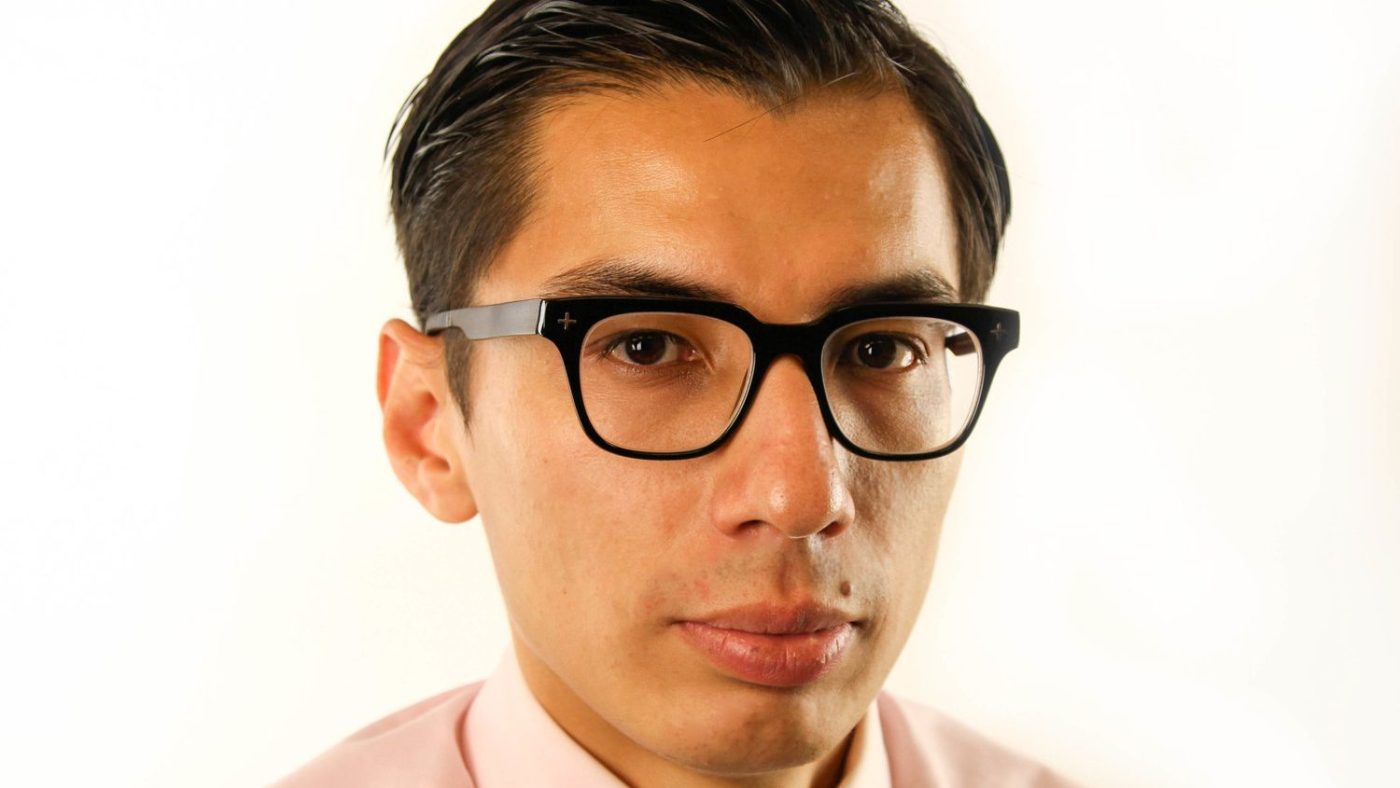
Rangel Morales has been appointed district judge in Minnesota’s 1st Judicial District, which serves Dakota, Carver, Goodhue, Le Sueur, McLeod, Scott and Sibley counties. He will replace Shawn Moynihan, who retired May 3 after 17 years on the bench, and be chambered in Hastings.

Luis Rangel Morales (Courtesy photo)

Rangel Morales is a staff attorney and director of community engagement for St. Paul-based Neighborhood Justice Center, where he represents low-income community members facing criminal charges in Dakota, Ramsey and Washington counties.

He also has served as defense counsel for the Ramsey County Veterans Treatment Court and the county’s DUI Court.

His community involvement includes serving as chair of the St. Paul Planning Commission and vice chair of the city’s Board of Zoning Appeals.

He received his B.A. from the University of St. Thomas and his J.D. from the University of Minnesota Law School.

Related Articles

Local News |


Eagan opens environmental comment period on Thomson Reuters site slated for redevelopment

Local News |


Lakeville man charged with killing pregnant sister, dismembering body

Local News |


Woman killed in Lakeville home; suspect arrested in Rosemount, police say

Local News |


Pioneer Press 2024 patio guide has something for everyone

Local News |


Here are readers’ picks for 2024’s best patios

Supreme Court clears the way for the NRA’s free speech lawsuit against an ex-New York official

posted in: News | 0

By LINDSAY WHITEHURST (Associated Press)

WASHINGTON (AP) — The Supreme Court on Thursday cleared the way for a National Rifle Association lawsuit against a former New York state official over claims she violated its free-speech rights.

The unanimous opinion reverses a lower-court decision tossing out the gun rights group’s lawsuit against ex-New York state Department of Financial Services Superintendent Maria Vullo. It does not, however, shield the NRA and other advocacy groups from regulation, Justice Sonia Sotomayor said.

“Ultimately, the critical takeaway is that the First Amendment prohibits government officials from wielding their power selectively to punish or suppress speech, directly or (as alleged here) through private intermediaries,” she wrote.

The NRA said Vullo pressured banks and insurance companies to blacklist it after the school shooting in Parkland, Florida, that left 17 people dead in 2018. The group was represented by the American Civil Liberties Union, and the Biden administration argued some of its claims should go forward.

Vullo argued she rightly investigated NRA-endorsed insurance policies sometimes referred to as “murder insurance.” She said she did speak out about the risks of doing business with gun groups but didn’t exert any improper pressure on companies, many of which were distancing themselves from the NRA on their own at the time.

The NRA said Vullo leveraged a state investigation into the legality of NRA-endorsed insurance products to pressure insurance companies, saying she would go easier on them if they cut ties with the group. The NRA had been working with insurance companies to offer its members policies that covered losses caused by firearms, even when the insured person intentionally killed or hurt somebody.

The products clearly violated state law, Vullo said, including by covering intentional acts and criminal defense costs. The probe started before the Parkland massacre, and the insurance providers ultimately paid multimillion-dollar fines.

Vullo also sent out guidance letters to banks and insurance companies warning about the “reputational risks” of working with the NRA. The NRA said her words had significant sway because of her position and several companies cut ties with the group, costing it millions of dollars in revenue.

Vullo said the letters were evenhanded, and her attorney argued that letting the lawsuit go forward would improperly muzzle public officials.

___

Associated Press writer Mark Sherman contributed to this story.

___

Jurors in Trump’s hush money trial zero in on testimony of key witnesses as deliberations resume

posted in: Politics | 0

By MICHAEL R. SISAK, JENNIFER PELTZ, ERIC TUCKER and MICHELLE L. PRICE (Associated Press)

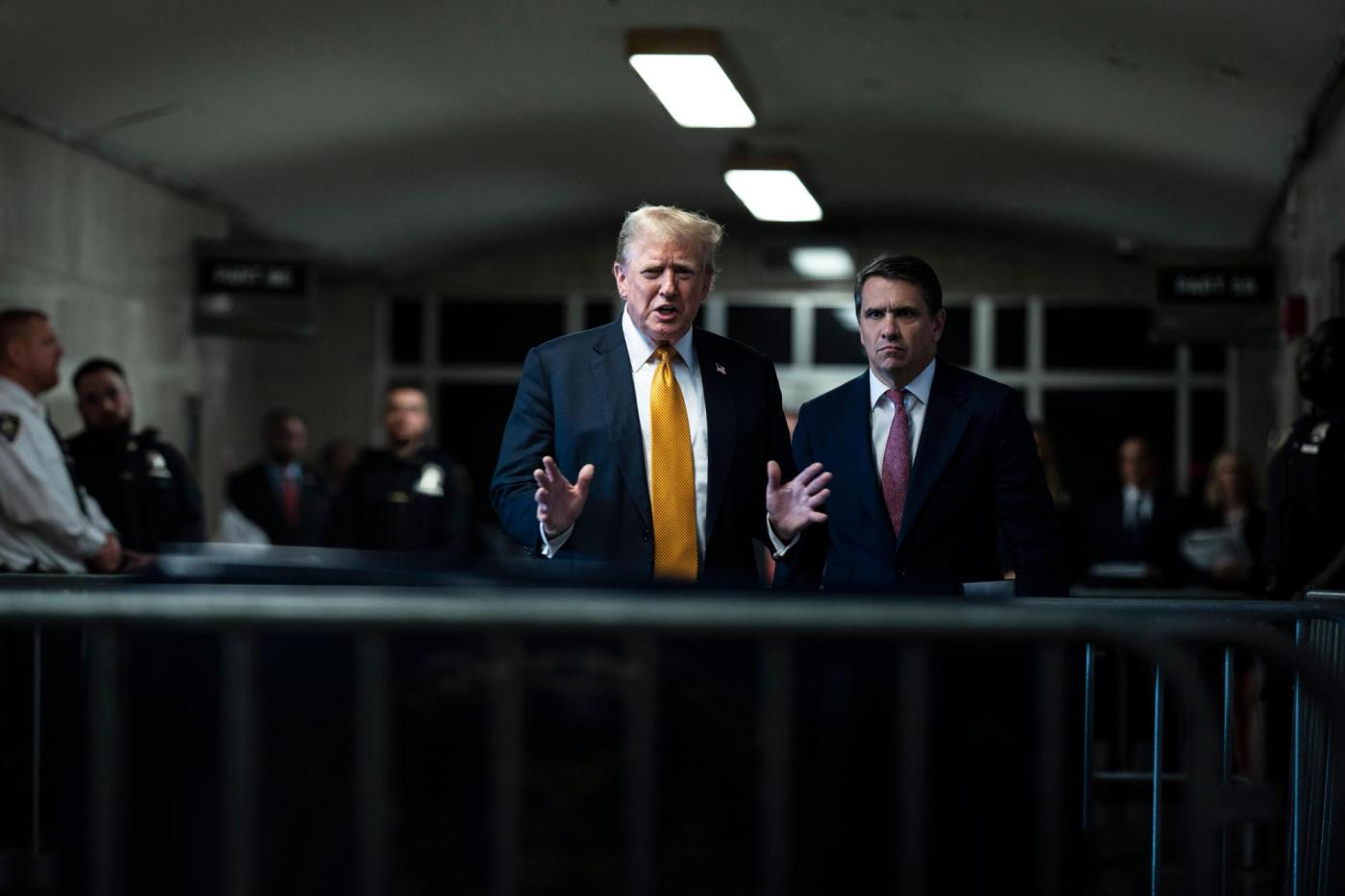
NEW YORK (AP) — The jury in former President Donald Trump’s hush money trial is to resume deliberations Thursday after asking to rehear testimony from multiple key witnesses about the alleged scheme at the heart of the history-making case.

The 12-person jury deliberated for about 4 1/2 hours Wednesday without reaching a verdict. Besides asking to rehear testimony from a tabloid publisher and Trump’s former lawyer and personal fixer, the jurors also requested to revisit at least part of the judge’s hourlong instructions that were meant to guide them on the law.

It’s unclear how long the deliberations will last. A guilty verdict would deliver a stunning legal reckoning for the presumptive Republican presidential nominee as he seeks to reclaim the White House while an acquittal would represent a major win for him and embolden him on the campaign trail. Since verdicts must be unanimous, it’s also possible the case ends in a mistrial if the jury can’t reach a consensus after days of deliberations.

Trump struck a pessimistic tone after leaving the courtroom following the reading of jury instructions Wednesday, saying “Mother Teresa could not beat these charges.” When he returned to court Thursday, he called it a “sad day for America.”

In a memo Wednesday evening, Trump campaign senior advisers Chris LaCivita and Susie Wiles blasted the proceedings as a “kangaroo court” and argued the case would not matter in November.

“The bottom line is this case doesn’t have an impact on voters,” they wrote.

Trump is charged with 34 counts of falsifying business records at his company in connection with an alleged scheme to hide potentially embarrassing stories about him during his 2016 presidential election campaign.

The charge, a felony, arises from reimbursements paid to then-Trump lawyer Michael Cohen after he made a $130,000 hush money payment to porn actor Stormy Daniels to silence her claims that she and Trump had sex in 2006. Trump is accused of misrepresenting Cohen’s reimbursements as legal expenses to hide that they were tied to a hush money payment.

Trump has pleaded not guilty and contends the Cohen payments were for legitimate legal services. He has also denied the alleged extramarital sexual encounter with Daniels.

To convict Trump, the jury would have to find unanimously that he created a fraudulent entry in his company’s records or caused someone else to do so and that he acted with the intent of committing or concealing another crime.

The crime prosecutors say Trump committed or hid is a violation of a New York election law making it illegal for two or more conspirators “to promote or prevent the election of any person to a public office by unlawful means.”

Related Articles

National News |


Massachusetts fugitive dubbed the ‘bad breath rapist’ captured in California after 16 years at large

National News |


Alito rejects calls to quit Supreme Court cases on Trump and Jan. 6 because of flag controversies

National News |


Jurors in Trump hush money trial end 1st day of deliberations after asking to rehear testimony

National News |


Who is getting part of Melinda French Gates’ $1 billion in donations to support women and girls?

National News |


Melinda French Gates to donate $1 billion over next 2 years in support of women’s rights

While the jurors must unanimously agree that something unlawful was done to promote Trump’s election campaign, they don’t have to be unanimous on what that unlawful thing was.

The jurors — a diverse cross section of Manhattan residents and professional backgrounds — often appeared riveted by testimony in the trial, including from Cohen and Daniels. Many took notes and watched intently as witnesses answered questions from prosecutors and Trump’s lawyers.

Jurors started deliberating after a marathon day of closing arguments in which a prosecutor spoke for more than five hours, underscoring the burden the district attorney’s office faces in needing to establish Trump’s guilt beyond a reasonable doubt.

The Trump team need not establish his innocence to avoid a conviction but must instead bank on at least one juror finding that prosecutors have not sufficiently proved their case.

In their first burst of communication with the court, jurors asked to rehear testimony from Cohen and former National Enquirer publisher David Pecker about an August 2015 meeting with Trump at Trump Tower, where the tabloid boss agreed to be the “eyes and ears” of his fledgling presidential campaign.

Pecker testified that the plan included identifying potentially damaging stories about Trump so they could be squashed before being published. That, prosecutors say, was the beginning of the catch-and-kill scheme at the heart of the case.

Jurors also want to hear Pecker’s account of a phone call he said he received from Trump in which they discussed a rumor that another outlet had offered to buy former Playboy model Karen McDougal’s story that she had a yearlong affair with Trump in the mid-2000s. Trump has denied the affair.

Pecker testified that Trump told him, “Karen is a nice girl,” and asked, “What do you think I should do?” Pecker said he replied: “I think you should buy the story and take it off the market.” He added that Trump told him that he doesn’t buy stories because they always get out and that Cohen would be in touch.

The publisher said he came away from the conversation thinking Trump was aware of the specifics of McDougal’s claims. Pecker said he believed the story was true and would have been embarrassing to Trump and his campaign if it were made public.

The National Enquirer’s parent company, American Media Inc., eventually paid McDougal $150,000 for the rights to her story in an agreement that also included writing and other opportunities with its fitness magazine and other publications.

The fourth item jurors requested is Pecker’s testimony about his decision in October 2016 to back out of an agreement to sell the rights to McDougal’s story to Trump through a company Cohen had established for the transaction, known as an “assignment of rights.”

“I called Michael Cohen, and I said to him that the agreement, the assignment deal, is off. I am not going forward. It is a bad idea, and I want you to rip up the agreement,” Pecker testified. “He was very, very, angry. Very upset. Screaming, basically, at me.”

Pecker testified that he reiterated to Cohen that he wasn’t going forward with the agreement.

He said that Cohen told him: “The boss is going to be very angry at you.”

Associated Press writer Jill Colvin in New York contributed to this report.

Related Articles

National News |


Trump’s hush money trial verdict could come this week. Here’s what each outcome could mean for the election

National News |


Jurors in Trump hush money trial end 1st day of deliberations after asking to rehear testimony

National News |


Prosecutor says Trump tried ‘to hoodwink voters’ while defense attacks key witness in last arguments

National News |


Other voices: Trumponomics 2.0? Think ‘inflation’

National News |


Man insults judge who sentenced him to 12 years in prison for attacking police during Capitol riot

Shaping the Narrative: Nate Blakeslee Discusses a Pivotal Moment in Observer History

posted in: News | 0

Award-winning journalist and author Nate Blakeslee grew up in Arlington and devoured every book he could find. He majored in political science and joined the University of Texas at Austin’s American Studies graduate program, but then took a detour. In 2000, Blakeslee wrote a story for the Observer about a drug bust in Tulia that reverberated nationwide. His coverage led to more than a dozen criminal exonerations and changed lives and drug task forces. After three years co-editing the Observer, Blakeslee resigned to write a book about Tulia. 

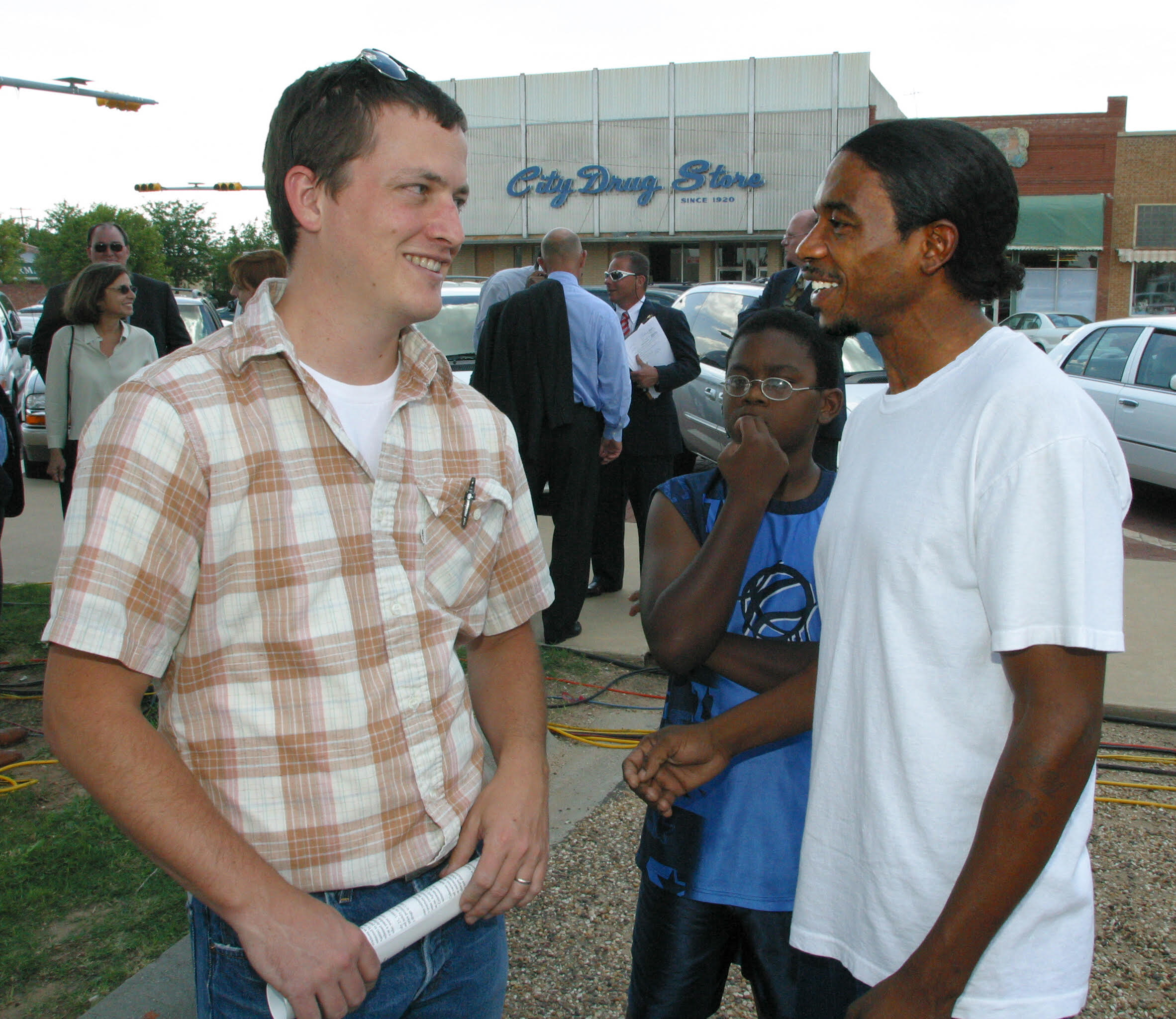
Nate Blakeslee (left) covers the release of the Tulia defendants in 2003. Donnie Smith (right) was one of the defendants featured in Blakeslee’s reporting. (Courtesy/Nate Blakeslee)

TO: You dropped out of grad school to try to write for the Observer. That has to be a first…

I had this idea that grad school was where all the radicals were. I never really quite found them, but I did find the Texas Observer and I found this community of leftists in Austin, which was very vibrant in the ‘80s and ‘90s.

How did you convince them to hire you? 

In those days, the staff was very small, it was like four or five people, and there wasn’t much money. They hired me to do a couple of freelance stories. I was very used to being broke as a graduate student, but now I was even broker. So I tried to convince them that there must be some way to bring me on at least part-time. And they did, as a circulation manager. I had administrative duties and I would also report, on a part-time basis. 

The first big story I did was about this nuclear waste dump that they wanted to build in Sierra Blanca, east of El Paso. My girlfriend at the time was leading the opposition to it, which at most magazines would be a disqualification for you to get that assignment. But at the Observer, at that time, they were like, “Who knows more about it than you?”

They were part of a long tradition of crusading journalism. It wasn’t new and they wore it on their sleeve, even back to Ronnie Dugger days. Ronnie would say, “You see an injustice, it’s one thing to be objective. It doesn’t necessarily mean you need to be impartial.” That was his perspective, and that very much carried forward and still was the perspective when I came to the magazine. 

As you reported, a man once recognized as Texas’ “Outstanding Lawman of the Year” turned out to be quite the fraud. How did the Tulia story unfold? 

Several dozen African Americans had been arrested for allegedly selling cocaine to an undercover police officer. Some locals decided that the bust was unfair and had sort of despaired of getting the Amarillo or Lubbock papers to cover it and started writing to other publications. I had done a couple of drug war stories and so I got the letter, I read it. 

The thing that jumped out at me was that all of the defendants were African American in a town that had a very small African American community. And then the sentences given out were really long for very small amounts of cocaine. Like a couple of hundred dollars’ worth of cocaine sold was resulting in sentences as if they had murdered someone, you know, 50-60 years.

So that’s why I went. But when I got out there, it became evident that it was a very different story. There was no evidence against them other than the word of this one undercover narcotics officer who never wore a wire, never had a second officer to corroborate, no drugs recovered during the roundup of these suspects. And so then the question became, “Were these cases even legitimate to begin with?”

I didn’t realize what a head-slapping story it was until I got out there. And then, I called [my editors] and said, “I don’t think these people actually committed these crimes.” It’s not about their race, and it’s not about their sentences. It’s about the narc and the utter lack of supervision of the narc. 

He was a piece of work. But his dad was a famous Texas Ranger, and he had been living off of that for years and years, getting jobs based on it, trying to live up to his dad’s reputation and utterly failing until apparently he had become the greatest narcotics officer in the state of Texas. But it was all a lie. 

What was the reaction to that first story? 

An amazing amount of bounce. The New York Times and the LA Timesboth re-reported the story for Page 1 on the same day, neither mentioning that they had read it in the Texas Observer. Fortunately, our board chair was Molly Ivins, who knew the editor of the New York Times. She called and said, “What the hell?” And that same reporter was, I assume, made to come down and profile myself and Karen Olsson, who was my co-editor—the young editors of the Texas Observer making a splash with their reporting.

And then once the Times did it, everybody followed, it just became this huge national story. 

How did you leave your imprint as co-editor?

Karen and I found a new layout person,  Julia Austin, who was very creative. There had not been a lot of emphasis on how the magazine looked, it was more about just conveying information. And that was also true for the website, it was really rudimentary. So we redesigned the website too. We wanted to be New Yorker writers. That’s what we’ve read, and we wanted to write that kind of stuff. 

Tell me about y’all’s notorious happy hours. 

When you work at a magazine, you get a lot of advance copies of books if you do book reviews, which we very occasionally did. You’re probably used to selling your books for $0.50 a piece at Half Price [Books]. But if you have a brand-new hardcover book, you could actually get some money. We would take big boxes of books over there and sell them and buy a keg with them and have these happy hours like once a week. 

We read them, we reviewed some of them, we sold them and we drank them with other people that we knew. A lot of really interesting people were coming around. I won’t say it was glamorous, but it was good company, stimulating company. 

What is the Observer’s legacy? 

For a long time, it was a voice in the wilderness for progressives in Texas when there weren’t that many different places you could turn to for progressive thought and opinion.

The Observer has been willing, in terms of reporting, to tackle subjects that other papers weren’t willing to or simply had overlooked. 

I think it’s a place with really solid reporting, a place that focuses on issues that other newspapers and magazines might miss. And now, alt-weeklies that we used to compete with have died off, and staffs are much smaller now, sadly, at the dailies.

It has become a time when you need a source for good reporting again, maybe as much as we ever have. It still has a wonderful fresh voice, the reporting is really incisive and just as useful and necessary as it as it ever was. 

This interview, which is part of the Observer’s 70th anniversary coverage, has been edited for length and clarity. Support for our 70th anniversary interview series has been provided by KOOP Radio in Austin, which permitted its studios to be used for recordings.