Nathaniel Rateliff and the Night Sweats to headline first local arena show in November

posted in: News | 0

Nathaniel Rateliff and the Night Sweats will headline their first local arena when they play St. Paul’s Xcel Energy Center on Nov. 2.

Tickets go on sale at 10 a.m. June 7 through Ticketmaster. Citi cardholders have access to a presale that runs from 10 a.m. June 4 through 10 p.m. June 6. Neither the venue nor the promoter announced ticket prices. Gregory Alan Isakov opens.

A native of rural Missouri, Nathaniel Rateliff spent the early days of his career as a solo act, recording a pair of well-received folk albums, including 2010’s “In Memory of Loss.”

In 2015, he returned to action with a new band and and a retro soul sound and album, “Nathaniel Rateliff and the Night Sweats.” The first single, “S.O.B.,” turned into a surprise breakthrough hit that got even more attention after Jimmy Fallon heard it, fell in love and booked Rateliff and his band on “The Tonight Show.”

Rateliff and the band went on to release two more acclaimed albums and, in 2020, Rateliff issued his third solo album, “And It’s Still Alright.” His fourth record with the Night Sweats, “South of Here,” is due out June 28.

“This album is a look into my own struggle with anxiety, insecurity and stories of my life,” Rateliff said in a news release. “(Producer Brad Cook) encouraged me to take responsibility for my own narrative in the songs and to write about what’s happening in my own life. These recordings were done together in a room with my closest friends. I hope these songs and stories give you an opportunity to better understand your own struggles whatever they may be.”

Nathaniel Rateliff and the Night Sweats have a long history of performing live in the metro, including Rock the Garden in 2016 and 2022, three shows at Surly Brewing Festival Field and a 2020 campaign rally for Bernie Sanders in St. Paul.

Related Articles

Music and Concerts |


The Black Keys cancel upcoming tour, including Target Center show, without explanation

Music and Concerts |


Contemporary Christian star Brandon Lake to play Xcel Energy Center in October

Music and Concerts |


After leaving Twin Cities off initial tour schedule, Justin Timberlake adds St. Paul Halloween show

Music and Concerts |


Concert review: Megan Thee Stallion opened hot at Target Center on the first show of her first-ever tour

Music and Concerts |


Semisonic and one of the Ramones to play State Fair’s largest free stage

Recipe: Alexandra Stafford’s Peach Pizza with Jalapeno, Prosciutto and Crème Fraiche

posted in: Adventure | 0

This pizza was inspired by Vermont’s Open Hearth Pizza, where cookbook author and food blogger Alexandra Stafford and her aunt, Marcy, received a tutorial from owner Chris Jones.

Aunt Marcy, Stafford explains in her new cookbook, “Pizza Night: Deliciously Doable Recipes for Pizza and Salad” (Clarkson Potter, $30), is known for not just befriending but best-friending everyone she meets. Marcy met Jones at a graduation party, after she sampled this pizza and “beelined it to the outdoor pizza oven.”

Jones uses freshly milled flour, sourdough starter and an outdoor wood-burning oven for his pizzas, but Stafford makes the recipe more accessible for home cooks with a “Neapolitanish” dough  and regular oven. The highlight of this white pizza is its topping — peaches, jalapeños and prosciutto, “a combination that hits all of those sweet, spicy, salty notes, making it completely irresistible,” she says.

Peach Pizza with Jalapeno, Prosciutto and Crème Fraiche

Makes one 12-inch pizza

INGREDIENTS

1 ball Neapolitanish pizza dough

Semolina flour, rice flour or all-purpose flour, for dusting

2 tablespoons crème fraîche, at room temperature

1/4 cup thinly sliced jalapeños

1 cup thinly sliced peaches (about 3 ounces)

3 ounces low-moisture whole-milk mozzarella cheese, pulled into 1/2-inch pieces (about 3/4 cup)

5 slices prosciutto

Extra-virgin olive oil

“Pizza Night: Deliciously Doable Recipes for Pizza and Salad” by Alexandra Stafford (Clarkson Potter, $30) was published April 16. (Courtesy Clarkson Potter)

DIRECTIONS

Prepare the dough: Transfer the dough from its storage container to a roomier, lightly floured, covered container and allow it to proof at room temperature for 1½ to 2 hours.

Prepare the oven and pizza peel: About 1 hour before you want to bake the pizza, place a baking steel in the top third of the oven and preheat itto 550 degrees convection roast (or as high as it will go). Dust a pizza peel lightly with flour or top with parchment paper.

Stretch the dough: Lightly dust a work surface with flour. Using lightly floured hands, pat the dough gently to flatten it, then stretch it into a 10- to 11-inch round by laying it on the back of your hands and gently rotating it, taking care not to depress the beautiful air pockets in the dough. If the dough begins resisting, set it down on the work surface to rest for 5 to 10 minutes, then continue stretching. Transfer the stretched dough to the prepared peel and give it a shake to ensure it’s not sticking.

Top the pizza: Spread the crème fraîche over the dough, leaving a 1/2-inch border. Top with the jalapeño and peach slices, spacing them evenly. Scatter the mozzarella evenly over the top. Lay the prosciutto slices over the top, spacing evenly. Drizzle lightly with olive oil. Stretch the dough one last time by pulling outward on the edges. Redistribute the toppings as needed, then give the peel one last shake to ensure the dough is not sticking.

Related Articles


Recipe: Baked Custard with Strawberries is a perfect early summer treat


Gretchen’s table: Teriyaki chicken tray bake feeds a family in a flash


Cooking for one can be fun, easy and delicious. Here’s how.


Bhutanese momo are easy to make and steam in your home kitchen


Quick Fix: Chicken Milanese with Spaghetti Pomodoro

Bake the pizza: Shimmy the pizza (still on the parchment if using) onto the steel and bake until the cheese is melted and the edges are beginning to char, 5 to 6 minutes. (This may take 8 to 10 minutes, depending on your oven.) Use tongs to transfer the pizza to a cutting board (discard the parchment paper). Cut and serve.

— Courtesy Alexandra Stafford ,“Pizza Night: Deliciously Doable Recipes for Pizza and Salad,” (Clarkson Potter, $30)

Biden is said to be finalizing plans for migrant limits as part of a US-Mexico border clampdown

posted in: Politics | 0

By COLLEEN LONG and SEUNG MIN KIM (Associated Press)

WASHINGTON (AP) — The White House is finalizing plans for a U.S.-Mexico border clampdown that would shut off asylum requests and automatically deny entrance to migrants once the number of people encountered by American border officials exceeded a new daily threshold, with President Joe Biden expected to sign an executive order as early as Tuesday, according to four people familiar with the matter.

The president has been weighing additional executive action since the collapse of a bipartisan border bill earlier this year. The number of illegal crossings at the U.S.-Mexico border has declined for months, partly because of a stepped-up effort by Mexico. Still, immigration remains a top concern heading into the U.S. presidential election in November and Republicans are eager to hammer Biden on the issue.

The Democratic administration’s effort would aim to head off any potential spike in crossings that could occur later in the year, as the fall election draws closer, when the weather cools and numbers tend to rise, two of the people. They were not authorized to speak publicly about the ongoing discussions and spoke to The Associated Press on condition of anonymity.

The move would allow Biden, whose administration has taken smaller steps in recent weeks to discourage migration and speed up asylum processing, to say he has done all he can do to control the border numbers without help from Congress.

The talks were still fluid and the people stressed that no final decisions had been made.

The restrictions being considered are an aggressive attempt to ease the nation’s overwhelmed asylum system, along with a new effort to speed up the cases of migrants already in America and another meant to quicken processing for migrants with criminal records or those who would otherwise be eventually deemed ineligible for asylum in the United States.

The people told the AP that the administration was weighing some of the policies directly from a stalled bipartisan Senate border deal, including capping the number of encounters at an average of 4,000 per day over a week and whether that limit would include asylum-seekers coming to the border with appointments through U.S. Customs and Border Protection’s CBP One app. Right now, there are roughly 1,450 such appointments per day.

Two of the people said one option is that migrants who arrive after the border reaches a certain threshold could be removed automatically in a process similar to deportation and would not be able to return easily. Migrants were able to more easily return to the border if they were expelled under the pandemic-era policy known as Title 42. Under that arrangement, Mexico agreed to take back some non-Mexican nationalities, including migrants from Guatemala, Honduras and El Salvador.

Migrants, especially families, claiming asylum at the southern border are generally released into the U.S. to wait out their cases. But there are more than 2 million pending immigration court cases, and some people wait years for a court date while they live in limbo in the U.S.

Anyone can ask for asylum regardless of whether they arrive illegally at the border, but U.S. officials are increasingly pushing migrants to make appointments, use a legal pathway that avoids the costly and dangerous journey, or stay where they are and apply through outposts in Colombia, Guatemala and Costa Rica.

The Biden administration has grown ever more conservative on border issues as the president faces ceaseless criticism from Republicans and there are large numbers of migrants crossing into the U.S. from Mexico who are not easily returned, especially as global displacement grows from war, climate change and more.

The immigration authority that the administration has been looking to use is outlined in Section 212(f) of the Immigration and Nationality Act. It gives a president broad leeway to block entry of certain immigrants into the U.S. if it would be “detrimental” to the U.S. national interest.

Senate Republicans last week again blocked a bill that would have enshrined some of the same efforts into law. The vote was meant to underscore GOP resistance to the proposal even as Republicans have clamored for more restrictions and argued that Biden has not done enough to stem the flow of migrants entering into the U.S.

The bipartisan bill had been negotiated for months and appeared, for a moment anyway, to be heading toward passage. It was even endorsed by the National Border Patrol Council and its president Brandon Judd, an avowed supporter of Donald Trump, the presumptive Republican presidential nominee. But Trump, concerned about handing Democrats an election-year win, called on Republicans to tank it, and they did.

White House officials did not confirm the expected executive order.

White House spokesman Angelo Fernández Hernández said the administration “continues to explore a series of policy options and we remain committed to taking action to address our broken immigration system.”

“While congressional Republicans chose to stand in the way of additional border enforcement, President Biden will not stop fighting to deliver the resources that border and immigration personnel need to secure our border,” he said.

Congress this year approved funding for a total of 41,500 detention beds and increased money for immigration enforcement and removal operations by $1.2 billion over what the White House had initially requested. That included $106 million in more funding for programs that monitor immigrants in the asylum system through phone apps and ankle bracelets, rather than through detention.

Those increases, negotiated after the collapse of the bipartisan deal, could pave the way for the administration to ratchet up immigration enforcement.

Yet unlike legislative action that is binding, anything Biden does through executive action can be challenged in the courts, and will almost certainly be, so it not clear whether — or if — the clampdown on asylum would begin. The administration was weighing other actions too, including faster and tougher enforcement of the asylum process.

The administration has generally paired proposed crackdowns with an expansion of legal paths elsewhere and was also planning to do so in the future, but not at the same time the new restrictions were announced, the people said.

___

Associated Press writer Stephen Groves contributed to this report.

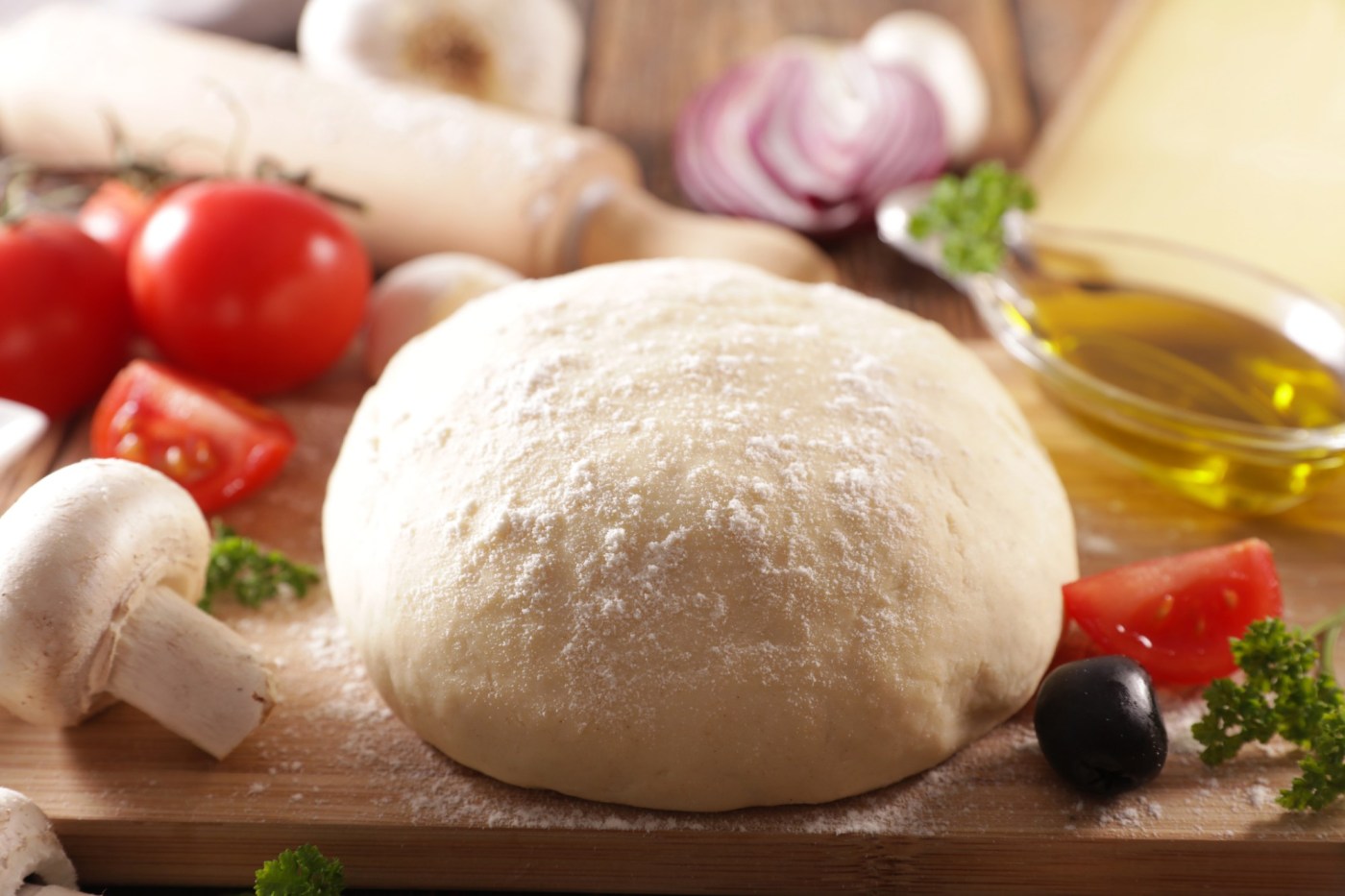
Recipe: Alexandra Stafford’s Neapolitanish Pizza Dough

posted in: Adventure | 0

When it comes to pizza crusts, there are rules around what can be called a “Neapolitan” crust, according to Alexandra Stafford, author of the new “Pizza Night: Deliciously Doable Recipes for Pizza and Salad” (Clarkson Potter, $30).

“True Neapolitan pizza is made with only flour, water, salt and yeast in specified ratios to produce a dough that measures 55% to 62% hydration. Moreover, it must be baked in a wood-burning oven at 900 degrees for 60 to 90 seconds,” she writes.

So her pizza crust, while “Neapolitan in spirit” is, rather, Neapolitanish. It comes out “thin but not paper thin with a slightly ballooned rim” and has a higher hydration, at 77%, since being cooked in a home oven means the dough cooks at a much lower temperature for a longer period of time.

Neapolitanish Pizza Dough

“Pizza Night: Deliciously Doable Recipes for Pizza and Salad” by Alexandra Stafford (Clarkson Potter, $30) was published April 16. (Courtesy Clarkson Potter)

Timeline: 2½ to 3 daysMakes four 245- to 250-gram balls

INGREDIENTS

550 grams (about 4¼ cups) bread flour or all-purpose flour, plus more for dusting

15 grams salt

2 grams (about 1/2 teaspoon) instant yeast

425 to 450 grams (1¾ to 2 cups) cold water (about 60 degrees)

Extra-virgin olive oil

DIRECTIONS

Note: If you live in a humid environment or are new to pizza making, start with 425 grams of water. The dough may feel dry immediately after mixing, but as the dough rises, the flour will continue to hydrate, and when you turn out the dough to portion it, it will feel much wetter and stickier. If you are an experienced pizza maker and don’t mind working with a higher hydration dough, you can use 450 grams of water to start.

Mix the dough: In a large bowl, whisk together the flour, salt and yeast. Add the water and use a spatula to mix until the dough comes together, forming a sticky dough ball. If the dough is dry, use your hands to gently knead it in the bowl until it comes together. Cover the bowl with a towel and let rest for at least 15 minutes and up to 30 minutes.

Stretch and fold: Fill a small bowl with water. Dip one hand into the bowl of water, then use the dry hand to stabilize the bowl while you grab an edge of the dough with your wet hand, pull up and fold it toward the center. Repeat this stretching and folding motion 8 to 10 times, turning the bowl 90 degrees after each set. By the end, the dough should transform from shaggy in texture to smooth and cohesive. Pour about 1 teaspoon of olive oil over the dough and use your hands to rub it all over. Cover the bowl tightly and let the dough rise at room temperature until it has nearly doubled in volume, 6 to 10 hours. The time will varydepending on the time of year and the temperature of your kitchen.

Related Articles


Recipe: Baked Custard with Strawberries is a perfect early summer treat


Gretchen’s table: Teriyaki chicken tray bake feeds a family in a flash


Cooking for one can be fun, easy and delicious. Here’s how.


Bhutanese momo are easy to make and steam in your home kitchen


Quick Fix: Chicken Milanese with Spaghetti Pomodoro

Portion the dough: Turn the dough out onto a lightly floured work surface and use a bench scraper to divide the dough into 4 equal portions, roughly 245 to 250 grams each. Using flour as needed, form each portion into a ball by grabbing the edges of the dough and pulling them toward the center to create a rough ball. Then flip the ball over, cup both your hands around the dough and drag it toward you, creating tension as you pull. Repeat this cupping and dragging until you have a tight ball.

Store the dough: Place the dough balls in individual airtight containers and transfer to the fridge for 2 to 3 days.

— Courtesy Alexandra Stafford, “Pizza Night: Deliciously Doable Recipes for Pizza and Salad,” (Clarkson Potter, $30).