Albert Ruddy, Oscar-winning producer of ‘The Godfather’ and ‘Million Dollar Baby,’ dies at 94

posted in: News | 0

BY HILLEL ITALIE (AP National Writer)

NEW YORK (AP) — Albert S. Ruddy, a colorful, Canadian-born producer and writer who won Oscars for “The Godfather” and “Million Dollar Baby,” developed the raucous prison-sports comedy “The Longest Yard” and helped create the hit sitcom “Hogan’s Heroes,” has died at age 94.

Ruddy died “peacefully” Saturday at the UCLA Medical Center, according to a spokesperson, who added that among his final words were, “The game is over, but we won the game.”

Tall and muscular, with a raspy voice and a city kid’s swagger, Ruddy produced more than 30 movies and was on hand for the very top and very bottom, from the “Godfather” and “Million Dollar Baby” to “Cannonball Run II” and “Megaforce,” nominees for Golden Raspberry awards for worst movie of the year.

Otherwise, he had a mix of successes such as “The Longest Yard,” which he produced and created the story for, and such flops as the Arnold Schwarzenegger thriller “Sabotage.” He worked often with Burt Reynolds, starting with “The Longest Yard” and continuing with two “Cannonball Run” comedies and “Cloud Nine.” Besides “Hogan’s Heroes,” his television credits include the movies “Married to a Stranger” and “Running Mates.”

Nothing looks better on your resume than “The Godfather,” but producing it endangered Ruddy’s job, reputation and his very life. Frank Sinatra and other Italian Americans were infuriated by the project, which they feared would harden stereotypes of Italians as criminals, and real-life mobsters let Ruddy know he was being watched. One night he heard gunfire outside his home and the sound of his car’s windows being shot out.

On his dashboard was a warning that he should close the production, immediately.

Ruddy saved himself, and the film, through diplomacy; he met with crime boss Joseph Colombo and a couple of henchmen to discuss the script.

“Joe sits opposite me, one guy’s on the couch, and one guy’s sitting in the window,” Ruddy told Vanity Fair in 2009. “He puts on his little Ben Franklin glasses, looks at it (the script) for about two minutes. What does this mean “fade in?” he asked.’”

Ruddy agreed to remove a single, gratuitous mention of the word “mafia” and to make a donation to the Italian American Civil Rights League. Colombo was so pleased that he urged Ruddy to appear with him at a press conference announcing his approval of the movie, a gathering that led to Ruddy’s being photographed alongside members of organized crime.

With the stock of parent company Gulf & Western dropping fast, Paramount fired Ruddy, only to have director Francis Coppola object and get him rehired. In the end, mobsters were cast as extras and openly consulted with cast members. Ruddy himself made a cameo as a Hollywood studio guard.

“It was like one happy family,” Ruddy told Vanity Fair. “All these guys loved the underworld characters, and obviously the underworld guys loved Hollywood.”

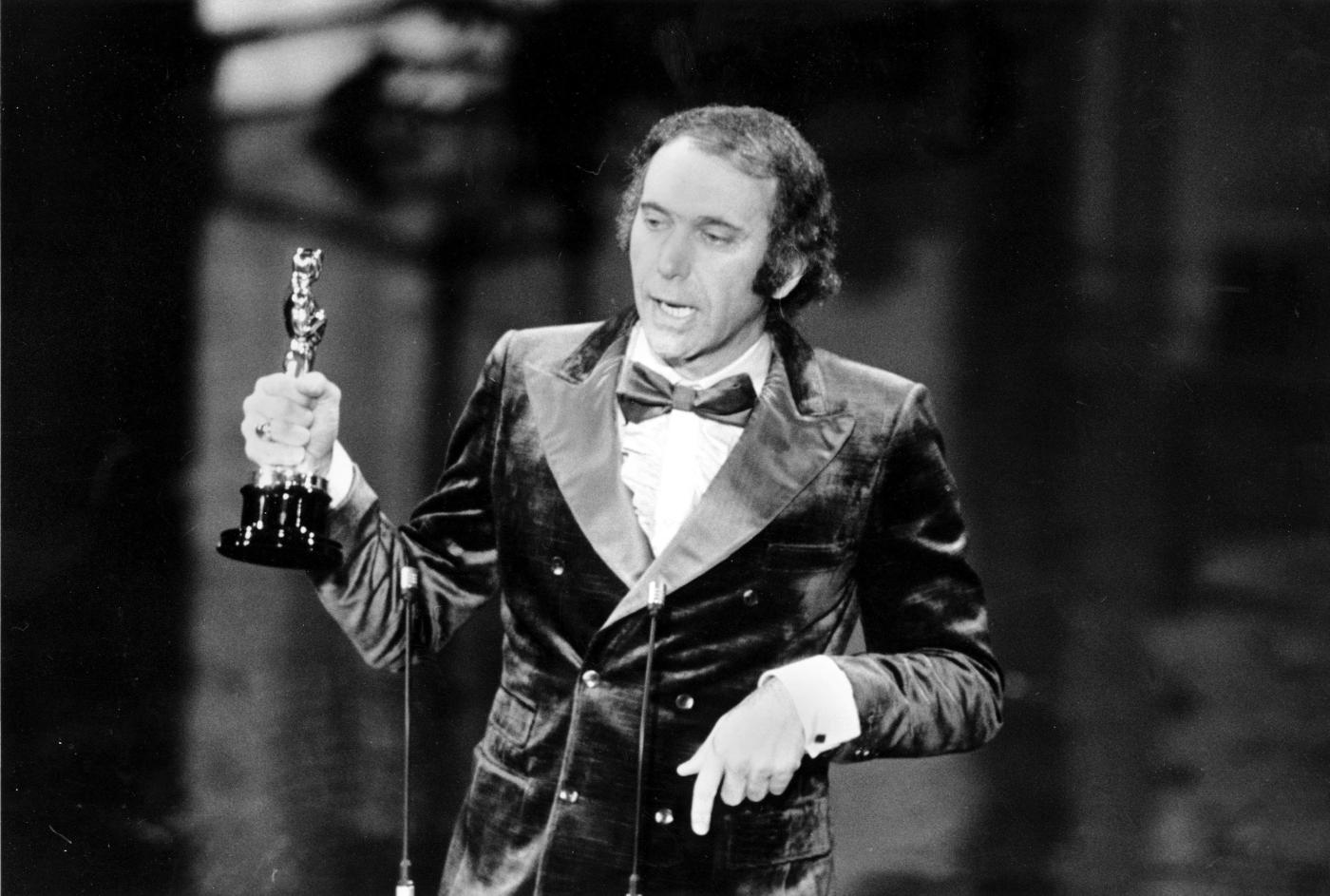
With a cast including Marlon Brando, Al Pacino and Robert Duvall, “The Godfather” was a critical and commercial sensation and remains among the most beloved and quoted movies in history. When Ruddy was named winner of the best picture Oscar at the 1973 ceremony, the presenter was Clint Eastwood, with whom he would produce “Million Dollar Baby,” the best picture winner in 2005. Upon the 50th anniversary of “The Godfather,” in 2022, Ruddy himself became a character. Miles Teller played him in “The Offer,” a Paramount+ miniseries about the making of the movie, based on Ruddy’s experiences.

“Al Ruddy was absolutely beautiful to me the whole time on ‘The Godfather’; even when they didn’t want me, he wanted me,” Pacino said in a statement. “He gave me the gift of encouragement when I needed it most and I’ll never forget it.”

Ruddy was married to Wanda McDaniel, a sales executive and liaison for Giorgio Armani who helped make the brand omnipresent in Hollywood, whether in movies or at promotional events. They had two children.

Born in Montreal in 1930, Albert Stotland Ruddy moved to the U.S. as a child and was raised in New York City. After graduating from the University of Southern California, he was working as an architect when he met TV actor Bernard Fein in the early 1960s. Ruddy had tired of his career, and he and Fein decided to develop a TV series, even though neither had done any writing.

Their original idea was a comedy set in an American prison, but they soon changed their minds.

“We read in the paper that … (a) network was doing a sitcom set in an Italian prisoner of war camp and we thought, ‘Perfect,’” Ruddy later explained. “We rewrote our script and set it in a German POW camp in about two days.”

Starring Bob Crane as the wily Col. Hogan, “Hogan’s Heroes” ran from 1965-71 on CBS but was criticized for trivializing World War II and turning the Nazis into lovable cartoons. Ruddy remembered network head William Paley calling the show’s concept “reprehensible,” but softening after Ruddy “literally acted out an episode,” complete with barking dogs and other sound effects.

While Fein continued with “Hogan’s Heroes,” Ruddy turned to film, overseeing the low-budget “Wild Seed” for Brando’s production company. His reputation for managing costs proved most useful when Paramount Pictures head Robert Evans acquired rights to Mario Puzo’s bestselling novel “The Godfather” and sought a producer for what was supposed to be a minor, profit-taking gangster film.

“I got a call on a Sunday. ‘Do you want to do The Godfather?’” Ruddy told Vanity Fair. “I thought they were kidding me, right? I said, ‘Yes, of course, I love that book’ — which I had never read.”

Voter outreach groups targeted by new laws in several GOP-led states are struggling to do their work

posted in: News | 0

By AYANNA ALEXANDER (Associated Press)

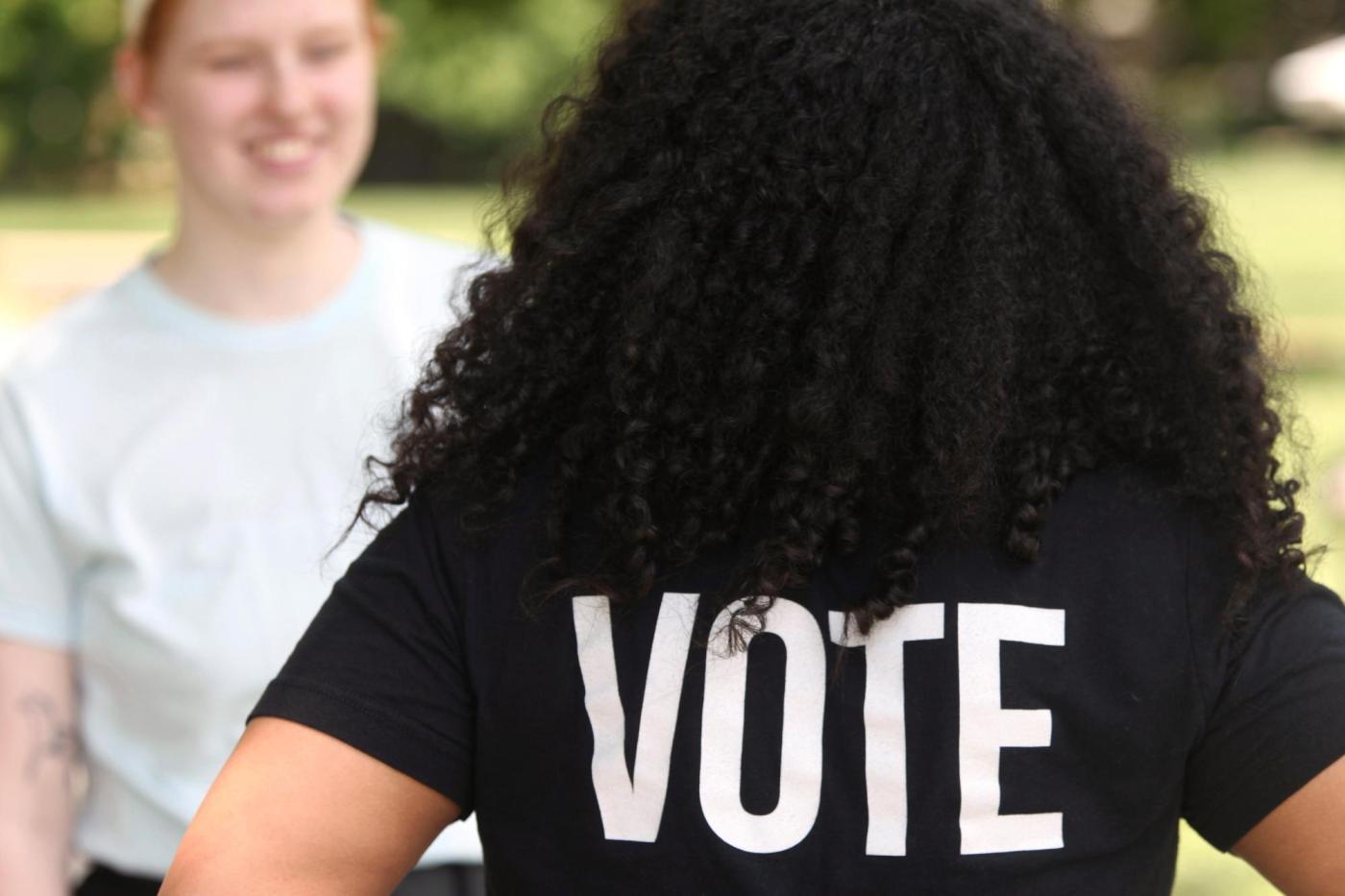
WASHINGTON (AP) — During the presidential election four years ago, the Equal Ground Education Fund hired over 100 people to go door-to-door and attend festivals, college homecomings and other events to help register voters across Florida. Their efforts for this year’s elections look much different.

A state law passed last year forced them to stop in-person voter registration, cut staff and led to a significant drop in funding. Organizers aren’t sure how robust their operations will be in the fall.

Genesis Robinson, the group’s interim executive director, said the law has had a “tremendous impact” on its ability to host events and get into communities to engage directly with potential voters.

“Prior to all of these changes, we were able to operate in a space where we were taking action and prepare our communities and make sure they were registered to vote — and help if they weren’t,” he said.

Florida is one of several states, including Kansas, Missouri and Texas, where Republicans have enacted voting restrictions since 2021 that created or enhanced criminal penalties and fines for those who assist voters. The laws have forced some voter outreach groups to cease operations, while others have greatly altered or reduced their activities.

The Florida law, signed by Republican Gov. Ron DeSantis last May, imposed a $50,000 fine on third-party voter registration organizations if the staff or volunteers who handle or collect the forms have been convicted of a felony or are not U.S. citizens. It also raised the fines the groups could face, from $1,000 to $250,000, and reduced the amount of time they are able to return registration applications from 14 days to 10 days.

A federal judge blocked portions of the law earlier this month, including the one targeting felons and those who are not citizens. Even so, the law had a direct effect on the operations of Equal Ground and other voter advocacy organizations in the state before the ruling.

The League of Women Voters in Florida, one of the plaintiffs, shifted away from in-person voter registration to digital outreach. Cecile Scoon, the league’s co-president, said the law stripped the personal connection between its workers and communities. Digital tools aren’t easy to use when registering voters and can be expensive, she said.

These organizations are needed because local election officials don’t always provide adequate support and information, said Derby Johnson, a voter in Ormond Beach who attended a recent community event in Daytona Beach organized by Equal Ground. He said it appeared the Florida Legislature was just trying to make it harder for certain communities to register and cast ballots.

“There are parties actively working to suppress the vote, particularly in Black and brown communities, and these groups help educate and register voters to mitigate that,” she said.

MOVE Texas, a voting rights group that focuses on voters who are 30 or younger, adjusted to that state’s 2021 election overhaul with additional training for their staff and volunteers. Among the provisions drawing concern was one that increased criminal penalties for anyone who receives compensation for assisting a voter, which especially affected the ability to recruit high school and college students for voter registration drives.

“The law contributed to this culture of fear in our elections and being a person who registers voters,” said Stephanie Gomez, the group’s political director.

Republicans in Kansas overrode a veto by Democratic Gov. Laura Kelly to pass a bill that made it a felony if anyone registering voters impersonated or was assumed to impersonate an election official.

That forced Loud Light Kansas, a voter outreach group that focuses on minority communities, to stop its registration efforts. Would-be voters typically perceived their staff and volunteers as election workers even when told otherwise, said Anita Alexander, the organization’s vice president.

“We’re trying to engage impacted people, but we weren’t willing to risk anyone getting charged by doing voter engagement work,” she said.

Loud Light and other local voter registration groups sued the Legislature. The Democratic governor said there has been no evidence in the state of widespread voter fraud or instances of individuals impersonating election officials.

In Missouri, the state chapter of the League of Women Voters and the Missouri State Conference of the NAACP sued after the state enacted wide-ranging election legislation in 2022.

Related Articles

National Politics |


Key witness lied on stand, Trump lawyer tells jurors during closing arguments in hush money trial

National Politics |


Biden says each generation has to ‘earn’ freedom, in solemn Memorial Day remarks

National Politics |


As states loosen childhood vaccine requirements, public health experts’ worries grow

National Politics |


As the election nears, Biden pushes a slew of rules on the environment and other priorities

National Politics |


Trump swaps bluster for silence, and possibly sleep, in his hush money trial

Among other things, the new law bans compensation for those who register voters and requires that anyone who helps more than 10 people register must also register with the secretary of state’s office and be a voter themselves. Violators can face criminal penalties.

The completed secretary of state’s forms are public, which presents a privacy concern for many people who might otherwise want to help with voter registration efforts, said Denise Lieberman, director and general counsel of the Missouri Voter Protection Coalition.

“Historically, when those membership lists have been obtained, they’ve been used to intimidate. So, there’s a lot of trepidation, especially in groups that are targeting low-income or communities of color,” she said. “If you just want to volunteer for one hour on a Saturday morning to help out on your college campus or on an Earth Day or anything, you have to go through this whole process.”

The Missouri law is on hold while the legal challenge plays out, with a trial set for August.

Voting rights experts expect to see continued attempts to restrict voting and the activities of voter outreach groups in Republican-controlled states, said Megan Bellamy, vice president of law and policy at the Voting Rights Lab.

“The effort to target third-party voter registration groups is just, unfortunately, one of many policy areas that state legislatures are moving to address,” she said.

The Associated Press receives support from several private foundations to enhance its explanatory coverage of elections and democracy. See more about AP’s democracy initiative here. The AP is solely responsible for all content.

Judge nixes bid to restrict Trump statements that could endanger officers in classified records case

posted in: Politics | 0

By ALANNA DURKIN RICHER (Associated Press)

WASHINGTON (AP) — The judge overseeing Donald Trump’s classified documents case in Florida on Tuesday denied prosecutors’ request to bar the former president from making public statements that could endanger law enforcement agents participating in the prosecution.

U.S. District Judge Aileen Cannon said in her order that prosecutors on special counsel Jack Smith’s team didn’t give defense lawyers adequate time to discuss the request before it was filed Friday evening. She denied the request without prejudice, meaning prosecutors could file it again.

The request followed a distorted claim by Trump last week that the FBI agents who searched his Mar-a-Lago estate in August 2022 were “authorized to shoot me” and were “locked & loaded ready to take me out & put my family in danger.”

The presumptive Republican presidential nominee was referring to the disclosure in a court document that the FBI, during the search in Palm Beach, Florida, followed a standard use-of-force policy that prohibits the use of deadly force except when the officer conducting the search has a reasonable belief that the “subject of such force poses an imminent danger of death or serious physical injury to the officer or to another person.”

Prosecutors said in court papers late Friday that Trump’s statements falsely suggesting that federal agents “were complicit in a plot to assassinate him” expose law enforcement officers — some of whom prosecutors noted will be called as witnesses at his trial — “to the risk of threats, violence, and harassment.”

Trump faces dozens of felony counts accusing him of illegally hoarding at his Mar-a-Lago estate classified documents that he took with him after he left the White House in 2021 and then obstructing the FBI’s efforts to get them back. He has pleaded not guilty and denied wrongdoing.

It’s among four criminal cases Trump is confronting as he seeks to reclaim the White House, but outside of the ongoing New York hush money prosecution, it’s unclear that any of the other three will reach trial before the November election.

Trump has already had restrictions placed on his speech in two of the other cases over incendiary comments officials say threaten the integrity of the prosecutions.

In the New York case, Trump has been fined and threatened with jail time for repeatedly violating a gag order that bars him from making public statements about witnesses, jurors and some others connected to the matter.

‘We have nothing.’ As Israel attacks Rafah, Palestinians are living in tents and searching for food

posted in: News | 0

By WAFAA SHURAFA, SAMY MAGDY and LEE KEATH (Associated Press)

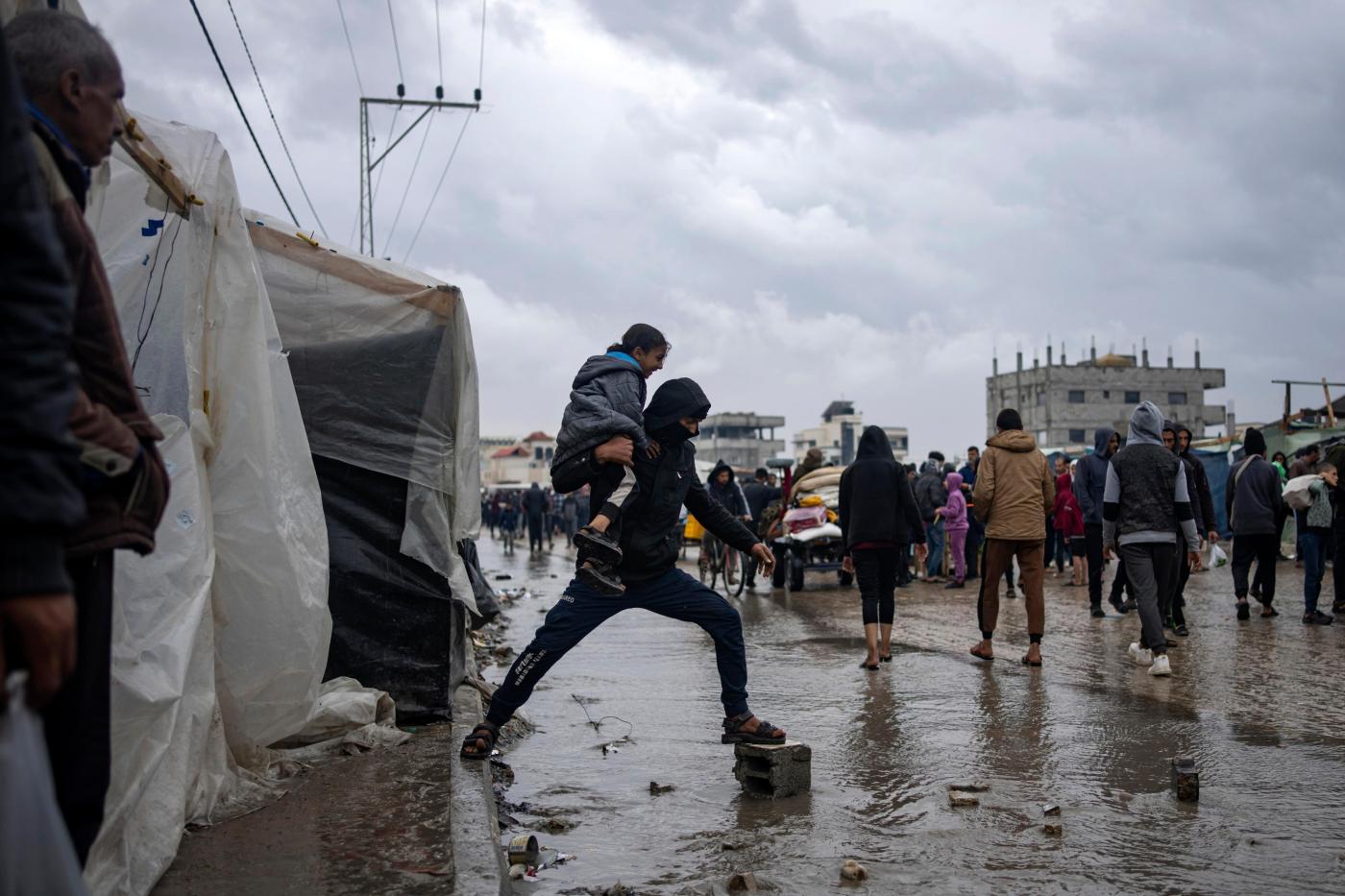
DEIR AL-BALAH, Gaza Strip (AP) — The tent camps stretch for more than 16 kilometers (10 miles) along Gaza’s coast, filling the beach and sprawling into empty lots, fields and town streets. Families dig trenches to use as toilets. Fathers search for food and water, while children dig through garbage and wrecked buildings for scraps of wood or cardboard for their mothers to burn for cooking.

Over the past three weeks, Israel’s offensive in Rafah has sent nearly a million Palestinians fleeing the southern Gaza city and scattering across a wide area. Most have already been displaced multiple times during Israel’s nearly 8-month-old war in Gaza, which is aimed at destroying Hamas but has devastated the territory and caused what the United Nations says is a near-famine. Hamas has been designated as a terrorist organization by the United States, Canada and the European Union.

The situation has been worsened by a dramatic plunge in the amount of food, fuel and other supplies reaching the U.N. and other aid groups to distribute to the population. Palestinians have largely been on their own to resettle their families and find the basics for survival.

“The situation is tragic. You have 20 people in the tent, with no clean water, no electricity. We have nothing,” said Mohammad Abu Radwan, a schoolteacher in a tent with his wife, six children, and other extended family.

“I can’t explain what it feels like living through constant displacement, losing your loved ones,” he said. “All of this destroys us mentally.”

Abu Radwan fled Rafah soon after the Israeli assault on the city began on May 6 as bombardment neared the house where he was sheltering. He and three other families paid $1,000 for donkey carts to take them to the outskirts of Khan Younis, about 6 kilometers (3.6 miles) away, where it took a day living outside before they could assemble the materials for a makeshift tent. Next to the tent, they dug a toilet trench, hanging blankets and old clothes around it for privacy.

Families usually have to buy the wood and tarps for their tents, which can run up to $500, not counting ropes, nails and the cost of transporting the material, the humanitarian group Mercy Corps said.

Israeli authorities controlling all entry points into Gaza have been letting greater numbers of private commercial trucks into the territory, the U.N. and aid workers say. More fruits and vegetables are found in markets now, and prices on some have fallen, Palestinians say.

Still, most homeless Palestinians can’t afford them. Many in Gaza have not received salaries for months and their savings are depleting. Even those who have money in the bank often can’t withdraw it because there is so little physical cash in the territory. Many turn to black market exchanges that charge up to 20% to give cash for transfers from bank accounts.

Meanwhile, humanitarian convoys with supplies for the U.N. and other aid groups to distribute for free have fallen to nearly their lowest levels in the war, the U.N. says.

Previously, the U.N. was receiving several hundred trucks a day. That rate has dropped to an average of 53 trucks a day since May 6, according to the latest figures from the U.N. humanitarian office OCHA on Friday. Some 600 trucks a day are needed to stave off starvation, according to USAID.

In the past three weeks, most of the incoming aid has entered through two crossings from Israel in northern Gaza and via a U.S.-built floating pier taking deliveries by sea. The two main crossings in the south, Rafah from Egypt and Kerem Shalom from Israel, are either not operating or are largely inaccessible for the U.N. because of fighting nearby. Israel says it has been letting hundreds of trucks through Kerem Shalom, but the U.N. has only been able to collect about 170 of them on the Gaza side over the past three weeks because it can’t reach the crossing.

Entry of fuel has fallen to about a third of what it was before the Rafah offensive, according to OCHA. That reduced amount has to be stretched between keeping hospitals, bakeries, water pumps and aid trucks working.

The American humanitarian group Anera “is having difficulty distributing what we are able to bring in to the people who need it because there’s so little fuel for trucks,” its spokesperson Steve Fake said.

Most of those fleeing Rafah have poured into a humanitarian zone declared by Israel that is centered on Muwasi, a largely barren strip of coastal land. The zone was expanded north and east to reach the edges of Khan Younis and the central town of Deir al-Balah, both of which have also filled with people.

“As we can see, there is nothing ‘humanitarian’ about these areas,” said Suze van Meegen, head of operations in Gaza for the Norwegian Refugee Council, which has staff operating in Muwasi.

Related Articles


Netanyahu says deadly Israeli strike in Rafah was the result of a ‘tragic mishap’


Top UN court orders Israel to halt military offensive in Rafah, though Israel is unlikely to comply


How does this end? With Hamas holding firm and fighting back in Gaza, Israel faces only bad options


Thomas Friedman: Bibi is choosing Stefanik and Trump. Don’t be fooled, President Biden


Other voices: Will Iran ever change? The terror regime continues

Much of the humanitarian zone has no charity kitchens or food market, no hospitals operating, only a few field hospitals and even smaller medical tents that can’t handle emergencies, only pass out painkillers and antibiotics if they have them, according to testimony from Mercy Corps. “It’s just a matter of time before people begin to suffer greatly from food insecurity,” the group said.

The Muwasi area is mostly coastal dunes with no water resources or sewage systems. With human waste deposited near the tents and garbage piling up, many people suffer from gastrointestinal diseases such as hepatitis and diarrhea, as well as skin allergies and lice, Mercy Corps said.

One aid worker who fled Rafah said he was lucky and could afford to rent a house in Deir al-Balah. “You can’t walk” in the town from all the tents that have arisen, he said, speaking on condition of anonymity because his agency had not authorized him to speak.

Many people he sees in the street are yellow with jaundice or hepatitis, and “the stench is disgusting” from the sewage and piles of garbage.

Israel says its offensive in Rafah is vital to its war aim of destroying Hamas in Gaza after the group’s Oct. 7 attack, in which terrorists killed some 1,200 people and abducted around 250 others from southern Israel. Israel’s campaign in Gaza triggered by the attack has killed some 36,000 people, according to Gaza’s Health Ministry.

Aid groups have warned for months that an attack on Rafah will worsen Gaza’s humanitarian disaster. So far, Israel’s operations have been short of its planned all-out invasion, though fighting has expanded over the past three weeks from the eastern parts of Rafah to the central districts of the city. A strike Sunday hit a tent camp in a western part of Rafah, causing a large fire and killing at least 45 people, according to health officials. Prime Minister Benjamin Netanyahu acknowledged a “tragic mistake” had occurred.

From the exodus the assault has caused, satellite photos shot by Planet Labs PBC on May 24 show dense new tent camps running the length of the coast from just north of Rafah to outside Deir al-Balah. The ramshackle tents and shelters are densely packed in mazes of corrugated metal and plastic sheets, blankets and bedsheets draped over wooden sticks for privacy.

Tamer Saeed Abu’l Kheir said he goes out at 6 a.m. every day to find water, usually returning around noon to the tent outside Khan Younis where he and nearly two dozen relatives live. His three children, aged 4 to 10, are always sick, but he said he has to send them out to collect wood for the cooking fire, though he worries they’ll come across unexploded bombs in the wrecked houses.

His aging father has trouble moving so has to use the bathroom in a bucket, and Abu’l Kheir has to regularly pay to transport him to the nearest hospital for kidney dialysis.

“Wood costs money, water costs money, everything costs money,” said his wife, Leena Abu’l Kheir. She broke down in sobs. “I’m afraid I’ll wake up one day and I’ve lost my children, my mother, my husband, my family.”

Magdy and Keath reported from Cairo. Associated Press correspondents Sarah El Deeb in Beirut, Fatma Khaled in Cairo and Mohammed Jahjouh in Muwasi, Gaza Strip, contributed to this report.