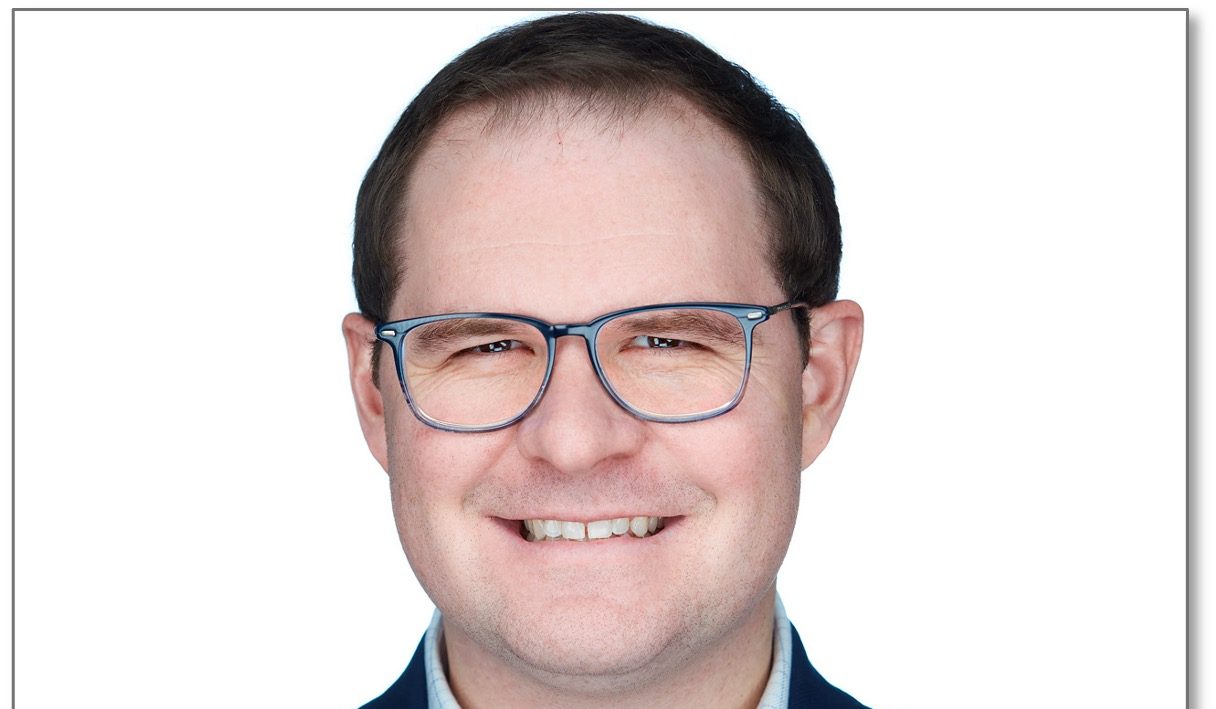
Mike Conley reaggravated his calf injury in Game 4 against Dallas, and the Timberwolves had no where else to turn

posted in: News | 0

Mike Conley was in peak offensive rhythm in the first half of Game 4 of the Western Conference Finals.

While many of Minnesota’s other stars were limited by foul trouble, Conley was carrying the offensive load. He scored 11 points in the second quarter alone. The Mavericks’ added attention placed on slowing Anthony Edwards allowed Conley to attack in the pick and roll against a defense featuring no weak-side help.

This is how Minnesota was largely built this season. It featured just two perimeter playmakers – Conley and Edwards. And, when opponents stacked the deck to stop Edwards, it was on Conley to initiate and sometimes finish possessions.

The 36-year-old proved still capable of doing as much, particularly post Karl-Anthony Towns’ meniscus injury, when he upped his usage for the sake of improving the team’s offense. Conley went north of 20 points four times in an eight-game span after Towns went down.

With the offense struggling to establish a rhythm early in the West Finals, Conley understood he may again have to carry a heavy load. And, through two quarters of Game 4, the plan was working.

But on the final play of the half, Conley got to the middle of the paint for a floater and, as he came down, the pain came back.

The calf injury he suffered in the final minute of Minnesota’s Game 4 loss to Denver in the Western Conference semifinals – which caused the guard to miss Game 5 of that series – was reaggravated, the guard told the Pioneer Press. Conley pushed through the injury to finish Game 4, a Wolves’ win.

Immediately upon landing back in Minnesota the next day, the guard went to the team’s practice facility for treatment.

Still, on Thursday morning, he was barely able to walk. He received treatment throughout the day to get him to the point where he could give it a go, but was clearly severely limited in Minnesota’s season-ending Game 5 defeat. Conley’s exit from Target Center on Thursday night was a slow, labored walk, though he still stopped to recognize nearly every team and arena employee on his way out.

As a result of his injury, Minnesota struggled.

The same was true when he missed Game 5 against Denver. The same was true during the regular season, when the Wolves lost to teams like San Antonio and Charlotte in Conley’s absence.

The Timberwolves needed their floor general all season. The task moving forward should be to need him a little less.

Conley will be 37 years old at the start of the 2024-25 regular season. His age has in no way diminished his play. He’s a lights out 3-point shooter and decision maker who is still adept at running the pick and roll and can handle most defensive matchups.

There were two players this season Minnesota couldn’t really survive without – Edwards and Conley. But that was also the problem.

The playoffs are a marathon. They’re two months of grueling, physical games against tough opponents completed within a condensed schedule.

So it’d be best if you entered the postseason at full health and with as close to a full tank as humanly possible.

Conley was healthy entering the playoffs, and was performing at a high level. That had a lot to do with Minnesota’s fast start to the postseason. Conley logged the third-most regular season minutes for the Wolves – behind only Edwards and Rudy Gobert – after playing in 76 of 82 regular season bouts, but Minnesota did a good job managing Conley’s minutes in those games whenever feasible.

But as soon as Conley got hurt in the playoffs, it was difficult to ever work back into form. There simply isn’t time in the schedule to do so. Just a week after suffering the initial calf strain, Conley was logging 39 minutes in Game 7 of the West semis.

In a must-win game, the Wolves didn’t have much other choice. It was clear as the playoffs unfolded that the coaching staff didn’t prefer to play Jordan McLaughlin nor Monte Morris in the tightened rotation. Morris was acquired at the trade deadline to give the Wolves another option behind Conley, but his impact never really came to fruition.

“Monte was struggling with a couple injuries. Certainly I have no doubt in what Monte can do,” Connelly said. “When you start to make a run, the benches become more and more condensed, so it’s tough to make a midseason trade and instantly integrate that guy.”

If the Wolves don’t have Conley to create on the ball, that responsibility then too often falls solely on the shoulders of Edwards. And if teams are loading up to stop Edwards, Minnesota ends up in the kinds of offensive funk fans saw Thursday.

Frankly, you need more than two players capable of filling that role. How can Minnesota address the need? Timberwolves coach Chris Finch noted the ball will be in the hands of Edwards more. On top of that, he pointed to Kyle Anderson, who returned to form over the latter stages of the season. Finch said the Wolves can run more offense through the point forward.

Wolves’ basketball boss Tim Connelly said Minnesota is open to enhancing its perimeter playmaking options through an outside edition or internal development.

Nickeil Alexander-Walker could represent the latter. He showed flashes of the ability to run pick and rolls and generate looks for himself and others off the bounce this season, though that went to the wayside over the final two rounds of the playoffs.

“I think there’s more I could’ve brought to the team. Could’ve helped Mike with playmaking,” Alexander-Walker said. “Being able to make plays and not just rely so much on Ant to do things or relying on KAT to get me open shots or Mike, and vice versa. Helping them get open shots, helping them get easy looks. Just becoming a more complete player.”

The other options are somewhat limited by Minnesota’s salary cap crunch. But Connelly also noted Minnesota possesses the No. 27 and No. 37 picks in this summer’s NBA Draft.

“We have a bunch of young guys on the roster who haven’t gotten a big opportunity who are getting better and better every day, and certainly draft and free agency,” Connelly said. “So we all wish Mike was ageless, and he certainly appeared as though he was ageless much of this year, but we understand there has to be some succession plan moving forward.”

And, in the nearer future, a plan to get him a little more help. Ideally, Minnesota’s offense can still function at a high level with Conley more so picking his spots to be aggressive in the regular season — and adding more maintenance days to the schedule next season — all with the idea that one of the team’s most important players, and still one of the best floor generals in basketball, can be full-go come next year’s postseason.

And, if something unfortunate did arise again at an inopportune time, an actual Plan B could exist.

“We’ve got to kind of clean (our offense without Conley) up,” Finch said. “And then, of course, look to have another ballhandler that could play out there alongside of anybody.”

Related Articles

Minnesota Timberwolves |


Dane Mizutani: Luka Doncic’s dominance of Timberwolves proves how far Anthony Edwards has to go

Minnesota Timberwolves |


Timberwolves blown out by Dallas in Game 5 to end historic season

Minnesota Timberwolves |


This is how every seat gets a shirt and towel for Timberwolves playoff games

Minnesota Timberwolves |


Fate of the Western Conference Finals may hinge on the health of Dereck Lively II

Minnesota Timberwolves |


John Shipley: No matter what happens Thursday, Timberwolves’ Game 2 conference semifinal victory remains an all-timer

Gophers wrestling great Gable Steveson signs with NFL’s Buffalo Bills

posted in: News | 0

Former Gophers wrestling great Gable Steveson has signed with the Buffalo Bills, the NFL team announced Friday.

On the mat, Steveson won an Olympic gold medal for the U.S. in 2021 and two NCAA championships at Minnesota in 2021-22. While at the U, he and head coach P.J. Fleck discussed Steveson joining the football team on a few occasions, but it never panned out.

At 6 foot 1 and 275 pounds, Steveson will attempt to play defensive tackle for the first time at the highest level. Given his raw skills but high level of athleticism, he appears to be a candidate for the practice squad. He signed a standard three-year rookie contract, per ESPN.

“I have been fortunate to compete at the highest level of competition in my sport but am looking forward to the challenge of seeing how my wrestling skills may translate to football,” Steveson was quoted by ESPN. “I am grateful to Coach [Sean] McDermott, [GM] Brandon Beane and the Buffalo Bills organization for giving me this opportunity.”

McDermott has a wrestling background, but the Bills were not the only NFL team Steveson visited this spring.

The Apple Valley native decided against returning to NCAA competition to win another wrestling national title nor go for another Olympic gold in Paris this summer. He signed with WWE, but was released in May.

Bicyclist struck and killed by Green Line train identified as St. Paul man

posted in: Adventure | 0

Authorities have identified a bicyclist hit and killed by a Green Line train Wednesday as a 54-year-old St. Paul man.

The Ramsey County medical examiner’s office said he was Brian Keith Moore.

The collision happened about 4:15 p.m. at the Capitol/Rice Street Station on the 100 block of University Avenue West. Moore was pronounced dead at the scene.

The Metro Transit Police Department continues to investigate the collision.

Related Articles

Crime & Public Safety |


Columbia Heights duplex fire kills man

Crime & Public Safety |


Minneapolis officer killed in ambush joined law enforcement to ‘save lives’

Crime & Public Safety |


Washington County officials cancel alert for missing, vulnerable woman

Crime & Public Safety |


Ramsey County prosecutors: St. Paul officer legally justified in shooting man in exchange of gunfire

Crime & Public Safety |


Bicyclist dies in crash with Green Line train near Capitol in St. Paul

A 2-year quest for Swiss citizenship culminates in a springtime sojourn amid snow-topped Alps

posted in: News | 0

Marlise Kast-Myers | Tribune News Service

It was a check-the-box trip, one intended to fill our quota to earn my husband possible Swiss citizenship. With dual nationality, I’m fortunate enough to hold the coveted red passport due to my family bloodline.

Having spent my mid-20s in the Alps, I tucked the notion in my mind, that perhaps one day, my husband could also carry one of the world’s most powerful passports.

Easier said than done. After 12 years of marriage, we started with the initial paperwork, followed by an essay (in German) as to why he wanted to become a Swiss citizen. During the process, we delivered a library’s worth of documents, ranging from financial reports to letters of recommendation. Next were in-person interviews at the nearest Swiss consulate, which happened to be in San Francisco. Thus, we flew from our home in San Diego for verbal tests — again, in German. After hours of studying, plus spending thousands in application fees, there was no turning back.

The good news was we passed almost every phase; the bad news was that we hadn’t visited Switzerland enough to prove our allegiance. The fact that the pandemic had closed travel didn’t matter. We still had to make three trips over five years. This meant we were one trip short of hopefully waving the white-cross flag.

And so, we packed our bags, adopting the mindset that this trip would double as a spring-skiing getaway during our qualifying trial. Seven days would introduce us to the French municipality of Crans-Montana in Valais, and reconnect us with our familiar friend, Zermatt in the German-speaking district of Visp.

The French municipality of Crans-Montana in Valais. (Benjamin Myers/TNS)

Swiss Air Lines landed us in Zurich, where we caught a train to our first destination at Crans-Montana. The Swiss Travel System (STS) left little need to rent a car since a Swiss Travel Pass granted us unlimited travel by train, bus and boat.

I had once lived just two hours away in the village of Gstaad, yet there wasn’t too much I knew about Crans-Montana. Now some 20 years later, I returned as the prodigal child, clinging to my roots so I could build new ones.

Although my family tree had branched from Swiss heritage, there still was something purely impartial about the culture. Locals had a deep love for nature, family and order. There was rarely conflict because, frankly, there was nothing to argue about.

Switzerland was a harmonious nation, clichéd for chocolate, cowbells and cheese. Those lures aside, there was a respect for the land and one’s neighbor. We felt it in Crans-Montana, where four municipalities joined forces to unveil a twin-town nirvana in 2017. As recent as it was, the verdant magic started back in 1893 with two besties, Louis Antille and Michel Zufferey.

Together, they climbed from the valley to the mountaintop to open the area’s first hotel, Hôtel du Parc. The region soon gained notoriety from doctors who prescribed patients the area’s air quality and, later, from the world’s best golfers during the 1983 European Masters.

While it was the sunshine and sky that lured these pioneers, it was the 1987 World Ski Championships that officially put the destination on the map. And now, we were on that map, tracking it with apps wide open for everything it had to offer . . . starting with Hostellerie du Pas de l’Ours.

This Relais & Châteaux property had me at sheepskin rugs. I’m a sucker for refined coziness, and this boutique hotel nailed it with in-room fireplaces, heated floors, private Jacuzzis, stone walls and timber-beamed ceilings. Sinking my jet-lagged feet into plush slippers, I exhaled and asked my husband the inevitable question.

“I wonder what property costs here?”

Hostellerie du Pas de l’Ours, a Relais & Chateaux in the heart of Crans-Montana. (Benjamin Myers/TNS)

We often do that — escape to a land void of troubles, tasks and to-dos, and wonder if it’s “the place.” Without answering, my husband pulled back the curtains to unveil the moon-lit peaks.

He nodded. “I think our dogs would love it here.”

What was not to love?

Within walking distance of our chalet, the ski resort boasted 87 miles of trails, a 10,000-foot summit and $50 lift tickets. From the top, a chain of peaks pierced through a duvet of clouds, revealing the Valais Alps from the Matterhorn to Mont Blanc.

To get a lay of the land, we hired a ski guide who took us on wide, carving pistes, down untouched bowls, and along 7-mile runs that made our thighs burn. In rudimentary French, I asked him why there were no people on the mountain. He explained that lift lines and swarmed slopes were basically nonexistent, especially come spring when locals traded skis for hiking boots and snowboards for bikes.

With nearly the whole mountain to ourselves, we pushed pause for lunch at La Cabane des Violettes. This stone mountain hut takes gourmet cuisine to the next level, literally. At 7,000 feet, the restaurant serves traditional temptations like croûte au fromage (bubbling cheese toast) and rösti (grated potato cake) with sausage and white asparagus.

Between breakfast croissants and a hearty lunch, you’d think we’d have had our fill of food for the day, but lo and behold, we were in wine country. For an introduction to the blends of Valais, we went straight to the source, Cave le Tambourin Winery.

Run by second-generation wine makers, Ishmaël and Madeleine Bonvin, the winery popped the cork in 1987. Today it’s producing over 30,000 bottles of 20 award-winning wines. From the cellar, Madeleine dusted off six bottles, pairing them with platters of local cheeses, cured meats, and artisan chocolate to boot.

She credited the Rhône Valley’s Mediterranean climate for part of their success, in this sun-drenched region of 300 wineries producing robust reds, aromatic whites, and fruity rosés.

Believe it or not, we had fondue that night, but the fact we had to work for it justified the glutenous consumption. At full moon, hiking from the neighboring village of Aminona to Colombire Hamlet is a must. It was our guide, Marlène Galletti, who greeted us with snowshoes, hiking poles, headlamps and a Blue Healer ready to rumble.

A former thriving ski town, Aminona seemed frozen in time, a ghostly relic of its bustling past dating to 1968. Development plans have wavered, and it currently serves as a gateway for hiking, cross country skiing and mountain biking.

Plenty of powder for the taking near the Matterhorn. (Benjamin Myers/TNS)

From the muddy trailhead, we learned of Marlène’s background as a cheese maker and herbologist. She had traveled the world, sharing homesteading secrets with communities seeking to live off the land. Naturally, I asked her about everything from homemade sunscreen to longevity tinctures, that is, until she pointed toward the horizon.

That single moment silenced us all. A full moon overshadowed the mountains, so pink you’d swear they were blushing. We continued to climb, the quiet only broken by the sound of the snow crunching beneath our crampons.

And then, there it was, Colombire le Hameau — a “Hamlet” of clustered mayens. These traditional stone-and-wooden chalets function as summer homes for farmers who reside upstairs and keep livestock below.

With keys to the kingdom, Marlène opened the door to a mayen and put us to work. Together, the three of us cooked cheese fondue with boiled potatoes, pearl onions and cornichons. After a meal like that, we wished we had selected the “return sledding” option. Instead, we hiked under the moonlight, stopping only once to admire a yellow coltsfoot flower pushing through the snow in determination.

Puncturing the surrounding crust with her pole, Marlène scraped away a layer of snow as if giving the flower space to breath. There was something remarkable about that moment, a hint of spring beckoning the sprouting seeds to burst forth in a mighty super bloom.

As much as I’d like to talk about the shopping, it was only while walking along Rue du Prado that I noticed boutiques selling luxury brands like Hermès, Montblanc, and Chopard. There are nearly 200 shops rounding out the local attractions of 200+ miles of hiking/biking trails, seven lakes, four golf courses, three museums, 130 restaurants, 12 historical villages, and four waterfalls. But who’s counting numbers — or calories — when you can eat at mountain huts and Michelin-starred restaurants?

Alas, we indulged again, this time at Le Bistrot des Ours in the “cellar” of our hotel. With a mountain-inspired menu courtesy of Franck Reynaud, the Michelin-starred chef uses only Swiss ingredients in his French-Mediterranean cuisine.

If time allowed, we would have dined there again — with a smattering of paragliding, dog sledding, chocolate tasting, yak hiking and maybe even heliskiing. Needless to say, we weren’t ready to leave Crans-Montana, but Zermatt (and budget) had us locked in for Part 2 of the trip.

From our hotel, we caught a morning bus to Sion, followed by a train to Visp. Peppering a patchwork of fields and vineyards were darling chalets, as perfect as if God had sprinkled cuckoo clocks from heaven.

Going from French to German required some brain activation. Suddenly with that first greeting of “Grüezi,” I felt like I was home. It was my fourth trip to Zermatt, but still, the fact that village travel was by foot, bike or electric taxi was remarkable. Until the 1980s, the vehicle-free village of Zermatt relied on horse-drawn carriages. Despite these changes, the sound of clopping on cobblestone could still be heard echoing through the narrow streets of “Hinterdorf.”

An indoor-outdoor pool round out the amenities at Hostellerie du Pas de l’Ours. (Benjamin Myers/TNS)

Dating to the 16th century, this historic zone has barns and stables constructed from larch trees in the traditional style, balancing on stilts with slate roofs, rickety stepladders, and timber-cornered notching. At its center is a memorial fountain paying tribute to Ulrich Inderbinen who climbed the Matterhorn 370 times.

We too would be approaching that mountain, or rather, its base via the comfort of a chairlift.

Getting there was easy, with direct access to the slopes from Hotel CERVO. What Pas de l’Ours was to elegance, CERVO was to design.

Remodeled in 2020, the stylish property has just 54 rooms housed within seven chalets. With tweed, wool, and leather textiles, our room teased hipster-huntsman-meets-polished-mountaineer.

Private ski lockers, an “honesty bar,” live DJ and a climbing wall checked all the boxes.

Beauty was in the details, with medicine bottles filled with dried flowers below deer mounts reminding us where we were. Oh, and the ice bath helped solidify that fact — a chilly awakening after the sauna, steam bath and relaxation yurt. This mountain ashram was the main draw for my husband, while its proximity to the slopes had me on speed dial.

From our hotel, an elevator took us through the mountain to the starting point of Europe’s highest ski resort. Rails, escalators, gondolas and chairlifts revealed a mind-blowing feat of engineering and infrastructure that covered 324 miles across two countries. As we skied our way toward Italy, I asked my husband if we needed our passports.

Century-old Chez Vrony came from humble beginnings as a family farmhouse. (Benjamin Myers/TNS)

With that question, it became obvious I had fallen madly in love with Switzerland. Our romance blossomed that afternoon as we zipped through Alpine villages toward Chez Vrony — a restaurant we now consider among our “Top Five.”

With a front row seat to the Matterhorn, Chez Vrony came from humble beginnings as a family farmhouse. Over the past century, traditional recipes have been passed down for generations.

Each dish is prepared with organic products including the dried meats, house sausage, and Alpine cheese. Withstanding the test of time, the family eventually turned their farmhouse into one of the area’s best restaurants, one so beautiful I almost cried.

For me, these were life-giving moments, where I would smile at no one in particular, but rather at the fact Switzerland had my heart. Actually, it had the heart of many with its 110 hotels, 365 days of snow, 100 restaurants, 50 bars, and unlimited winter and summer activities. It had me with 300+ days of sunshine, a constant wink from the Matterhorn and ski-in-ski-out everything.

Unclicking our bindings, we sauna-fied our bodies and ate local with back-to-back dinners at CERVO. With five dining options, our hotel hooked us with the Middle Eastern menu at Bazaar, and later with homemade pasta at Madre Nostre.

Walking back to our room, I turned toward my husband and asked if he noticed we had spoken four languages with the staff in two hours. He hadn’t, because that’s just the way things are in Switzerland — in a country that leaves me longing to be more. Where pyramid-shaped mountains are so magnificent, I feel I can reach out and touch them.

Where loving my neighbor holds true meaning, because I know they would toil with me when the soil is dry; where I can take pride in my name because it has Swiss significance; where an army of citizens could rise up, but instead choose peace; where eating is an experience and nature is a habit; where the air literally has the power to heal.

This was my country — a place where I can bloom, regardless of the cold and bareness. Where clouds live in the valley and sunshine rises on the mountaintop. Where traditions are held close and family is held closer.

Looking back on my husband’s two-year citizenship process, one might ask if the journey was really worth the destination? Considering I’m now officially married to a Swiss man, I’d say so.

_______

©2024 Tribune Content Agency, LLC.