Rinsing raw chicken? 7 food debates guaranteed to start an argument

posted in: News | 0

Sara Nelson (Associated Press)

Is that day-old rice safe to eat? Can your three-year-old clean up the cookie dough mixing bowl? And do you really need to keep butter in the fridge?

When the topic of food preparation is on the table, it seems like everyone has an opinion. If you’ve ever gotten into an argument about these controversial food practices, then keep reading for the science-based answers that will put the debates to a halt once and for all.

Does cooking really burn off all the alcohol?

Many recipes call for a splash of wine or a dash of liquor, but how much of that alcohol actually remains after cooking? The answer depends on the cooking method and time.

According to a study by the USDA, cooking can reduce the alcohol content, but it doesn’t eliminate it entirely. For instance, simmering a dish for 30 minutes can remove about 35% of the alcohol, while cooking for an hour can reduce it by around 25%.

Longer cooking times lead to further reduction, but trace amounts can still remain. Therefore, while the alcohol content significantly decreases, it’s not entirely cooked out, so be sure to consider this if serving to individuals who avoid alcohol.

How to safely enjoy leftover rice

Meal preppers rejoice: As long as you follow proper guidelines when preparing, storing and reheating, leftover rice is safe to eat the next day. Plus, picking the proper recipe will help you avoid your rice drying out overnight. Making fried rice is a great option, as is this creamy and filling wild rice mushroom soup.

The great raw cookie dough-bate

Baking cookies with your little one is a sweet way to help them foster a love of cooking at a young age. But when they beg you for a taste of raw cookie dough, do you have to say no?

Related Articles


How long does rice last in the fridge? And other rice questions


Get your prix fixe: Three excellent tasting menus for those special occasions


New cruise line dining experiences make you forget you’re on a cruise


Here’s how to make that ‘Chicken Crust Caesar Salad Pizza’ that’s gone viral on social media


A program funded by soda tax helps low-income residents buy fruits and vegetables

According to the United States Center for Disease Control and Prevention, or CDC, eating raw cookie dough is never safe. Raw cookie dough usually contains raw flour and eggs, which can, in turn, contain germs that make people sick. To be on the safe side, you should never eat raw cookie dough and should follow the CDC’s guidelines for baking cookies safely.

Then again, in 2016, public health faculty member and expert in health risk communication Brian Zikmund-Fisher published a CNN article stating that he and his family eat raw cookie dough regularly. Zikmund-Fisher minimizes risk by using only pasteurized eggs and ensuring that his flour is not subject to any recall notices.

“Our goal is not to minimize all risk, no matter the cost,” Zikmund-Fisher wrote. “Our goal is to maximize life…Sometimes maximizing life means letting [people] enjoy some (carefully prepared) cookie dough without shame.”

Still not comfortable digging into raw dough? An edible cookie dough recipe without any flour or eggs might be your best bet.

Should tomatoes be kept in the refrigerator or on the counter?

Experts say storing whole tomatoes at room temperature is the best way to preserve their flavor and texture. But if you’re worried about tomatoes going bad, consider keeping them in the fridge for at least a few days.

Shruthi Baskaran-Makanju of Urban Farmie says, “During late summer, when I get a bountiful harvest of fresh tomatoes, I like to store them in the fridge, especially if they’re starting to look a bit past their peak!”

While tomatoes stored at room temperature are most flavorful when eaten fresh, refrigerated tomatoes are still excellent for cooking. “They do get mushy, but I’d rather have mushy tomatoes than spoiled ones,” Baskaran-Makanju confirms. A baked tomato dish, like these baked tomatoes with parmesan, is a great way to make use of a fridge overflowing with tomatoes.

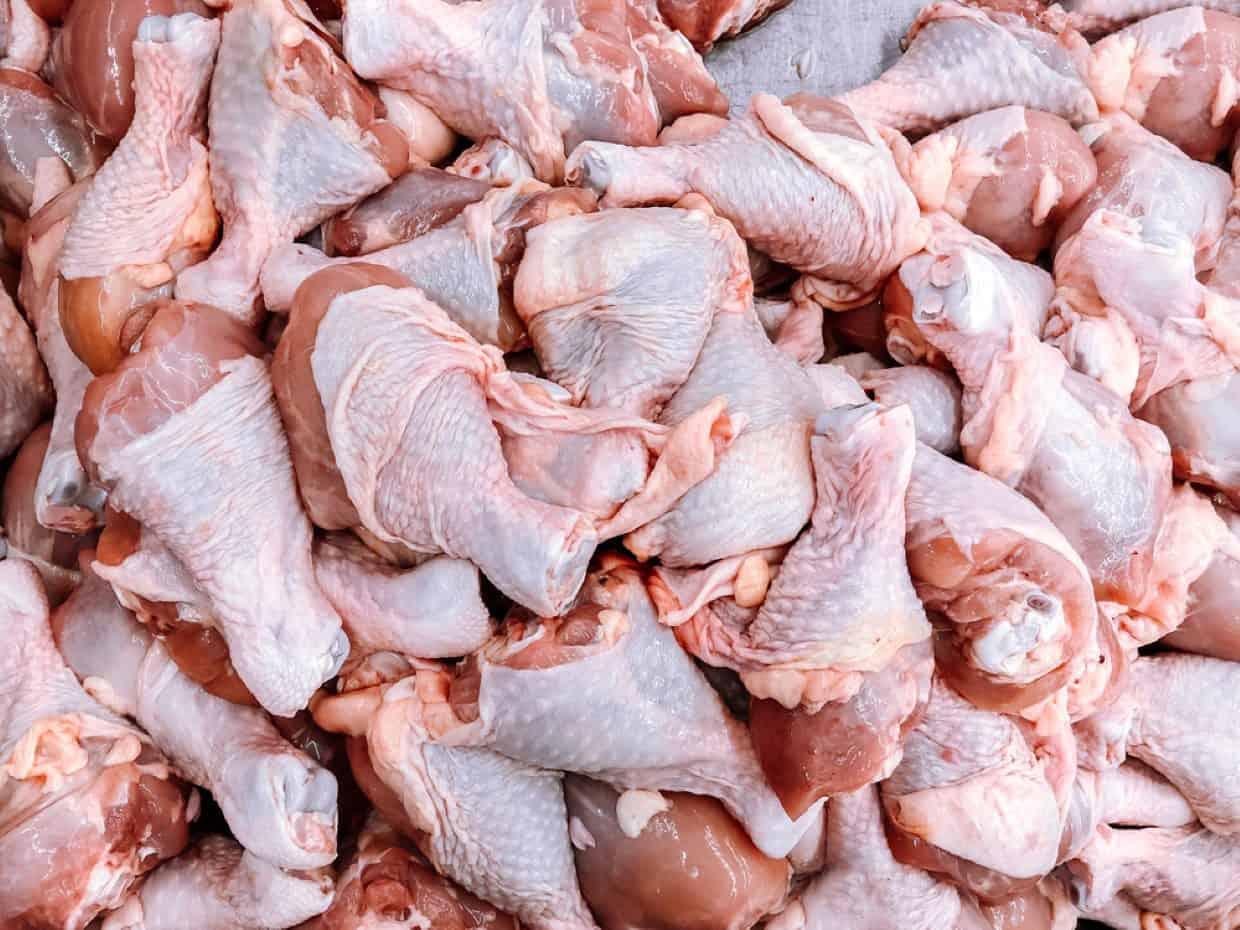
Raw chicken: to rinse or not to rinse

Chicken sashimi may be taking the internet by storm, but the average home cook still needs to follow food safety principles when handling raw chicken. So, should you wash raw chicken before cooking it?

“While washing meat and poultry to remove dirt, slime, fat or blood may have been appropriate decades ago when many slaughtered and prepared their own food, the modern food safety system doesn’t require it,” the Food Safety and Inspection Service, or FSIS, of the United States Department of Agriculture, or USDA, explains.

In fact, according to the FSIS, washing raw meat and poultry can cause bacteria to spread onto other kitchen surfaces, utensils and foods through the process known as cross-contamination. So there you have it: rinsing raw chicken is unnecessary at best and unsafe at worst. Instead, follow the FSIS’ advice on properly handling raw meat and poultry.

Has your cheese got the blues?

For many cheeses, mold is a key part of the cheese-making process: French Roquefort, Camembert, Italian Gorgonzola and many others rely on molds to help them mature. But not all mold is your friend. If your previously yellow cheese is now sporting some new green or white developments, do you have to throw it away?

Leah Ingram of Bagels and Lasagna recalls, “A long time ago, a food expert I interviewed said that it is perfectly safe to cut mold off a hard cheese and continue to eat the rest. However, they said the same is not true with soft cheese, so that’s where we draw the line.”

The USDA confirms: “Discard any soft cheese showing mold. For hard cheese, such as cheddar, cut off at least 1 inch around and below the mold spot (keep the knife out of the mold itself). After trimming off the mold, the remaining cheese should be safe to eat. Re-cover the cheese in fresh wrap and keep refrigerated.”

Can you keep butter on the countertop?

Butter was invented long before the refrigerator, so it must be safe to store at room temperature, right? According to the USDA, butter is indeed safe at room temperature, but should not be left out for more than a day or two to avoid rancid flavors. Butter bells, a 16th-century invention, can help keep butter soft.

Looking for a way to use up extra butter in a hurry? These garlic butter chicken bites make for a speedy and irresistible dinner.

Don’t leave safety up to debate

Once upon a time, tomatoes were considered deadly poison and frogs were placed in milk containers to keep milk fresh. Today’s food practices may have changed slightly, but there’s still a lot of confusion out there when it comes to food safety.

And changing cooking habits isn’t easy. You might have a hard time convincing your grandma not to thaw meat on the countertop, for example. But, as anyone who’s experienced food poisoning knows, it’s better to be safe than sorry.

So next time you’re deep in a food debate, look to government organizations like the USDA and CDC for guidance. Then, once you’ve settled things, you can move on to debating the really important questions. Pineapple on pizza , anyone?

Sara Nelson is the creator of Real Balanced, a food blog that showcases easy and balanced recipes. Since 2017, she has shared these recipes with thousands of readers and social media followers. Sara lives in Wisconsin with her family.


Joe Soucheray: Fraud after fraud, precious millions flushed, and precious little accountability in Minnesota

posted in: All news | 0

Does Minnesota have a functioning state government?

The question cannot be unreasonable. Frauds appear and flourish like spring hostas. Food fraud. Frontline worker pay fraud. Medicaid fraud. Potential fraud in the sudden explosion of autism service providers.

The Feeding Our Future food fraud grows more spectacular with each new astonishment revealed in either court or in the legislative auditor’s report on the scandal. According to the legislative auditor’s findings, the food fraud in the fiscal year 2020-21 saw the Minnesota Department of Education’s payments to Feeding Our Future grow by 2,800 percent.

Warren Buffett couldn’t grow anything by 2,800 percent.

In dollars? From $69.6 million to $335.7 million.

That $335.7 million was for all Child and Adult Care Food Program sites across Minnesota. CACFP sites grew by 54 percent in the 2021 CACFP program year.

Ah, but Feeding Our Future CACFP sites more than tripled during the same time. The scam must have been the talk of the street. Vacant storefronts were suddenly said to be the base of operations for feeding thousands and thousands of kids, more kids supposedly fed than exist in Minnesota.

Payments didn’t cool off much in 2022, $320.4 million.

Legislative Auditor Judy Randall was not at all shy in her 121-page report. Inadequate oversight led to continuing opportunities for fraud. The scammers probably couldn’t believe their good luck. Nobody was questioning them! Off to the BMW dealership they went.

People were in charge, but apparently not functioning.

Heather Mueller was Gov. Tim Walz’s pick for education commissioner. Like Walz, Mueller began her career as a social studies teacher in Mankato. Walz appointed her in April 2021. By November 2022, when food fraud money was pouring out of the building and the scandal gaining traction, she resigned. She refused interviews.

Dr. Heather Mueller is listed as a senior consultant at Teamworks Education Leadership Solutions where she is a “skilled leader and strategic thinker.”

OK.

Mueller has been succeeded by Willie Jett, who quickly understood the lay of the land. When Jett was questioned about the legislative auditor’s report, he said, “you’re not gonna hear me place the blame.” He would not say if any Department of Education employees had been disciplined.

“To say we need to come here and place blame or highlight who misstepped,” Jett said, “that’s not right.”

To which the taxpayers of Minnesota say, “Why not?”

Neither Walz nor his people have exhibited any accountability or responsibility for the disappearance of so much money on their watch, with more yet to come as new scandals unfold. Walz did say he “accepts some responsibility for oversight,” but then quickly shifted to meaningless boilerplate babble … “We can always do better … I appreciate the points being made … context matters.”

All meaningless and deflecting.

Nothing suggests Walz and other high-ranking officials should be impeached, as the state constitution allows. They probably did not line their own pockets.

But they certainly have answered the question. Minnesota does not have a functioning state government.

Joe Soucheray can be reached at jsoucheray@pioneerpress.com. Soucheray’s “Garage Logic” podcast can be heard at garagelogic.com.

Related Articles

Opinion |


Raihala: Lori and Julia made magic together on radio and they will be missed

Opinion |


Real World Economics: The social Darwinism of climate change

Opinion |


Swenson, Shah: The mental health of new dads needs attention, too

Opinion |


John Demma: ‘Is there, in all republics, this inherent and fatal weakness?’

Opinion |


Skywatch: Happy summer solstice

Minnesota loses 8,600 net jobs in May, unemployment rises to 2.8%

posted in: All news | 0

After several months of job growth, Minnesota employers pulled back in May, with the state losing 8,600 jobs on a seasonally adjusted basis, the state’s Department of Employment and Economic Development said in a release Friday. The state’s unemployment rate ticked up one-tenth of a percentage point to 2.8%.

Minnesota has gained jobs nine out of the past 12 months.

DEED also noted the state labor force participation rate remained at 68% in May. This measures the portion of the population either working or actively seeking work and is used to calculate the headline unemployment rate.

“We’ll be keeping a close eye on job and labor force growth. We continue to believe that job growth, particularly in certain sectors, is constrained by a lack of available workers with necessary skills,” said DEED Commissioner Matt Varilek in the release. “DEED and our agency partners continue to reach out to Minnesotans looking for work to help them prepare for in-demand employment.”

Nationally, the unemployment rate ticked up one-tenth of a percentage point to 4% in May.

Minnesota’s private sector lost 9,800 jobs, down 0.4% over the month. Sectors in Minnesota that gained jobs on a seasonally adjusted basis included Education & Health Services, up 2,800 jobs, and Government up 1,200 jobs. Four sectors in Minnesota lost jobs over the month, including Professional & Business Services, down 9,300 jobs, and Manufacturing down 3,700 jobs.

Minnesota wage growth is outpacing inflation as well as national wage growth, DEED said. Average hourly wages for all private sector workers in Minnesota increased 14 cents, to $37.12, in May. Over the year average hourly earnings increased $1.92, up 5.5%. The Consumer Price Index, a common measure of inflation, rose 3.3% over the year in May.

So far year, Minnesota has gained 34,950 payroll jobs, up 1.2%. Minnesota’s private sector gained 12,079 jobs, up 0.5%. Overall U.S. employment grew 1.8% over the year with the private sector up 1.6%.

By race, the unemployment rate for Black Minnesotans in May was 3.9%; for Hispanics 3.6%; white Minnesotans 2.5%; Asians 1.9%, and Native American Minnesotans 8.3%.

A broader measure of joblessness, called the U-6, was 5.4% in May, unchanged from April. This measure factors in people who have voluntarily left the labor force, are not actively seeking work, are underemployed, marginally employed or working part-time while seeking full-time employment.

Related Articles

Business |


The hidden cost of helping friends earn more credit card rewards

Business |


Existing home sales reach 30 year lows despite strong demand from Millennial buyers

Business |


For child care workers, state aid for their own kids’ care is ‘life-changing’

Business |


Graduate borrowers, consider this student loan plan before July 1

Business |


As American wineries struggle, is ‘Buy American’ the solution?

From globe trotting to globe tripping: Why psychedelic vacations are on trend

posted in: News | 0

By Ksenia Prints, Food Drink Life

More people are opting to leave 5-star resorts and cruises behind and take a different kind of vacation, one that comes with a side of mind-altering drugs. But the legal and physical implications of this sort of travel can be murky.

For a moment, consider taking a slightly different kind of trip on your next vacation. You and your fellow travelers will explore unimaginable distances without moving much at all. You can’t take any luggage with you – unless your emotional baggage counts – or bring back souvenirs. In fact, you may not even be able to describe the journey to the folks at home.

Despite this strangeness, or perhaps because of it, many of the travelers who have turned to psychedelic vacations consider them to be life-changing experiences that are well worth the money. Others, however, point out that these retreats have an uneasy relationship with Indigenous communities – and they worry about the possible dangers of consuming mind-altering substances without proper guidance.

Why are so many tourists turning to psychedelic tourism, and what are some of the most popular substances offered at these wellness retreats? Should travelers be concerned about the safety, ethics or legality of these experiences? Keep reading to find out.

What does a typical psychedelic vacation involve?

Sia-Luna Estrella, a healer and Shamanic practitioner, knows exactly how she found her way into running psychedelic retreats. “It was a higher calling from the sacred mountain here in Cuzco,” she remembers. She felt called to move to Peru and later invited others to join her on retreats to South America, South Africa and other locations.

Estrella said goodbye to her car, job and ocean-view apartment, and embraced a fresh start. “It brought me back to the truth of who I was and what is my greatest purpose here on Earth.”

Over the years, Estrella has seen over a hundred retreat participants come and go. She doesn’t always weave psychedelics into her retreats – sometimes, she just works with cacao ceremonies and the energy of the land – but she’s quick to note the importance of treating these powerful substances properly.

Plant medicines

“We don’t think of these as psychedelics, we think of them as plant teachers and plant medicine. They have their own consciousness,” explains Estrella. She primarily works with the San Pedro cactus, a plant that contains the psychoactive substance locally known as wachuma, or mescaline.

Related Articles

Travel |


Solo travel is only getting more popular

Travel |


Travel: I climbed the ‘stairway to heaven’ next to a Star Wars film set in Ireland

Travel |


Pacific Northwest travel: Summer fun in Oregon’s Hood River Valley

Travel |


Oregon getaway: Shakespeare and foodie adventures await in Ashland

Travel |


New cruise line dining experiences make you forget you’re on a cruise

Mescaline is just one of several psychedelic substances that can be experienced during retreats. Peyote, another cactus that also contains mescaline, is a popular choice, as is ayahuasca, a psychoactive tea. Medicines gathered from toads can also be used, such as 5-MeO-DMT, which can also be derived from plants, and Kambo, a poisonous toad secretion that is applied to the skin through small burn wounds.

But perhaps the most familiar substance used in psychedelic retreats is psilocybin, also known as ‘shrooms – not to be confused with regular mushrooms. According to Thrillist, psilocybin can be experienced in vacations across the globe, from beachside ceremonies in Jamaica – where psilocybin is unregulated – to collaborative research projects in The Netherlands.

The recent emergence of wellness tourism is a brand-new phenomenon, but psychedelics have been used by Indigenous communities for thousands of years. Robyn Landau, writing for Trippin, noted that the growing demand for psychedelics can quickly become unsustainable, threatening to destroy traditional Indigenous practices.

Landau explains that in Mexico peyote has become scarce due to tourism, agriculture and mining. In light of the fact that the plant takes 15 years to grow, this is cause for concern. Landau suggests that travelers hoping to benefit from Indigenous medicines should take time to learn about the communities that are stewards of these remedies and how to respectfully engage with traditional practices.

Who will your fellow travelers be?

Why might someone be drawn to a psychedelic retreat? Some travelers are simply looking to try new experiences; others attend in hopes of working through bigger problems such as depression, anxiety, trauma or addiction.

In an interview with Travel Weekly, Justin Townsend, CEO and Head Facilitator at MycoMeditations, highlighted the diversity of attendees at their retreats. “A typical retreat normally consists of about 50% female, 50% male, and we get everything from blue-collar workers to white-collar workers from all kinds of professions, people from their mid-30s through to their 60s,” Townsend told Travel Weekly.

Psychedelics and mental health

In recent years, there’s been a growing conversation about the way in which psychedelics can address mental illness, as demonstrated by Michael Pollan’s 2018 book “How to Change Your Mind” exploring the subject. On the other hand, critics have also noted the risks associated with psychedelic use.

The New York Times warned that psychedelics “can cause psychosis or long-term mental health issues, particularly in patients with a predisposition to mental illness.” The same article also discusses the robberies, sexual assaults and even deaths that have occurred at psychedelic retreats.

Estrella is well aware of the dangers of misusing traditional medicines. “You see a lot of people in Western society go to the jungle for three weeks and say they’re a shaman who is qualified to work with the medicine, and that is incredibly dangerous,” she says firmly. But she also believes in the power of psychedelics to help people heal. “The medicine will help you work through trauma, limited beliefs and conditioning. If there are answers, the medicine will help you find those answers within yourself.”

Wait, is any of this legal?

Before grabbing your passport, should you call your lawyer? To give a classic lawyerly answer: well, it depends.

“In some countries, particularly in South America, psychedelic retreats can be legal or legal-ish, per my understanding,” says Marc Z. Goldgrub, a lawyer at Green Economy Law Professional Corporation. The firm focuses on psychedelics, green business and housing. Goldgrub also runs the website PsychedelicLaw.ca. Estrella confirms this answer.

“But in the US and Canada, psychedelic retreats are generally simply illegal,” says Goldrub. In these parts of North America, “there is no such thing as a 100% legal psilocybin, MDMA or ayahuasca retreat that’s totally open to the public. Though some retreats are marketed with an impressive veneer of professionalism which wrongly would suggest otherwise to those who don’t know better.”

On top of how the psychedelic substances themselves are regulated, Goldgrub explains, there may be civil liability concerns to be aware of as well. “If something bad happens to someone, practitioners can be sued under tort law.”

Final thoughts

So, is a psychedelic retreat your next vacation? Some travelers will undoubtedly be eager to experience these medicines for themselves. Others will be content to curl up with a copy of Aldous Huxley’s “The Doors of Perception” and a mug of regular tea.

One thing is for certain: as the demand for wellness continues to grow, it’s likely that psychedelic retreats will become ever more popular. Will this cause them to lose their cool factor, though? Only time will tell.

For her part, despite the sometimes challenging aspects of running psychedelic retreats, Estrella maintains a characteristic sense of calm and optimism about introducing new travelers to medicine ceremonies.

“It’s quite normal for people to feel a sense of excitement and nervousness,” she says. “But as long as they come with an open heart, then it’s an incredible experience.”

Ksenia Prints is a writer, blogger, photographer and recipe developer from Montreal, Canada. She blogs over At the Immigrant’s Table, a food blog showcasing healthy, beautiful international recipes for adventurous home cooks. She loves to highlight ethnic cuisines and immigrant cultures and adapt those recipes to gluten-free, vegan, vegetarian, sugar-free and other dietary restrictions.