It’s Jan. 20. Do you know where your New Year’s resolutions are? If you’re still eating more bulgur and going to sleep at 9 p.m., I salute you.
Here are some quick and cozy weeknight meals to help you stick to (or revive) your healthy eating goals.
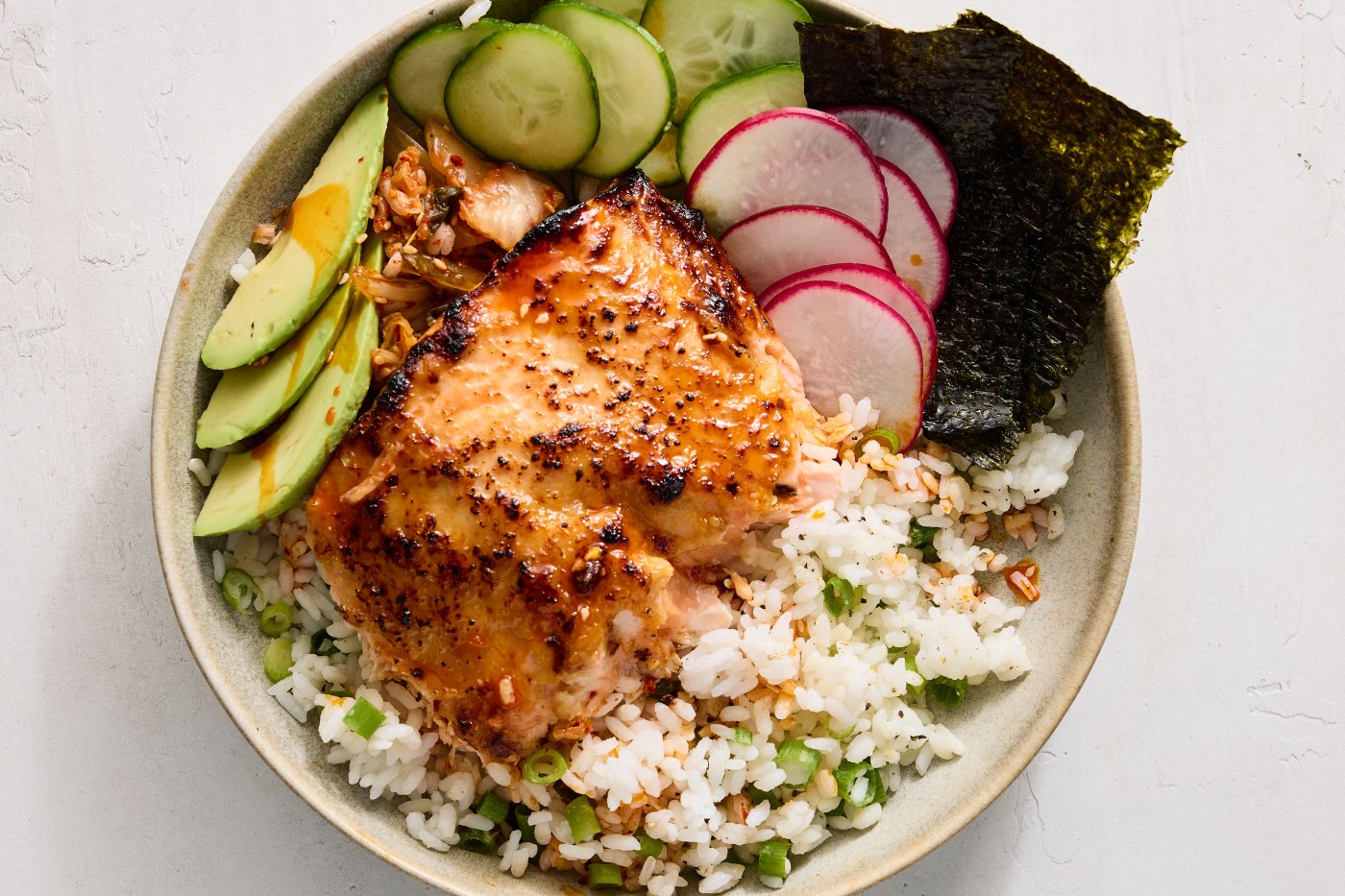
1. Sticky Miso Salmon Bowl
Miso salmon is an easy meal for any night of the week, but it gets taken to a whole other level here with the additions of grapefruit and honey. Combining the zest and juice from the grapefruit with honey, miso and a bit of ginger gives the fish a sticky-tangy finish when broiled. The sushi rice is mixed with a humble pat of butter and some sliced scallions, making it a comforting counterpart to this simple fish for an elegant weeknight dinner.
By Andy Baraghani
Yield: 4 servings
Total time: 35 minutes
INGREDIENTS
2 cups sushi rice
3 tablespoons white miso
2 tablespoons honey
1 tablespoon vegetable oil
1 tablespoon freshly grated ginger
2 teaspoons fresh grapefruit zest plus 1 tablespoon juice
4 (6- to 8-ounce) skinless salmon fillets, patted dry
Salt and pepper
4 scallions, thinly sliced
1 tablespoon unsalted butter, cubed
Any combination of kimchi, chile crisp, toasted nori sheets, and sliced cucumber, avocado or radish, for serving
DIRECTIONS
1. Put the rice in a medium bowl and fill with cool tap water. Run your fingers through the rice, gently swooshing the grains around to loosen the starch. Dump out as much water as you can and repeat until the water runs slightly more clear, another two to three rinses.
2. Drain the rice and transfer to a small or medium saucepan that has a tight-fitting lid. Pour in 2 1/4 cups cool water and bring to a boil over medium-high. Give the rice a stir to help keep it from sticking to the bottom of the pot, then cover and decrease heat to low. Cook without lifting the lid for 18 minutes. (Set your timer!)
3. While the rice is cooking, place a rack about 5 inches from the broiler heat source and set the broiler to high. Whisk the miso, honey, oil, ginger and grapefruit zest and juice in a large bowl. Season the salmon lightly with salt and add to the bowl. Gently toss to coat. Marinate at room temperature until the timer for the rice goes off.
4. Remove the pot of rice from the heat and let steam, covered, for 10 minutes while you cook the salmon.
5. Using tongs, arrange the salmon on a foil-lined rimmed sheet tray. Make sure to leave the marinade on and spread any excess on top of the fillets. (This step will make for better browning.) Broil the salmon until glossy and charred in most spots, about 5 minutes for medium-rare or 7 minutes for medium. Your timing will also depend on whether or not you’d like a little char on top.
6. Uncover the rice and add the scallions and butter. Season with salt and several grinds of pepper. Fluff the rice with a rubber spatula until each grain is coated. Serve the salmon over the rice and add any of the toppings you desire.
2. Soy Sauce and Brown Butter Brussels Sprouts Pasta
Soy sauce and brown butter brussels sprouts pasta. Quick and cozy weeknight meals to help you stick to (or revive) your healthy eating goals. Food Stylist: Kaitlin Wayne. (Nico Schinco/The New York Times)
With cues from wafu pasta, the Japanese-style style of cooking that brings together global and Japanese flavors, this indulgent weeknight dish delivers a powerful umami kick, thanks to the combination of butter and soy sauce. Maximize the potential of butter by browning it to produce a headier sauce with nutty notes; adding soy sauce produces a caramel-like richness. A stainless steel skillet, or one with a light-colored cooking surface, is preferred so you have a visual cue of the milk solids darkening. Slicing the Brussels sprouts helps them cook quickly while also giving more surface area and edges for browning. This is an adaptable recipe, so it is possible to add other or more vegetables to balance the richness of the buttery soy sauce; mushrooms, spinach, kale and broccoli are all good options.
By Hetty Lui McKinnon
Yield: 4 servings
Total time: 30 minutes
INGREDIENTS
Salt and pepper
1 tablespoon extra-virgin olive oil
1 pound Brussels sprouts, trimmed and thinly sliced
2 garlic cloves, thinly sliced
1 pound long pasta, such as spaghetti or bucatini
8 tablespoons unsalted butter, cut into 1-inch chunks
3 tablespoons soy sauce
2 scallions, white and green parts separated, thinly sliced
Grated Parmesan, for serving
DIRECTIONS
1. Bring a large pot of salted water to a boil over high.
2. Heat a 12-inch skillet (preferably stainless steel, or one with a light-colored cooking surface so you can monitor the butter as it browns) on medium-high. When hot, drizzle with olive oil and then add the Brussels sprouts and garlic. Season with salt and pepper and cook, stirring frequently, until the Brussels sprouts are tender and caramelized around the edges, 6 to 7 minutes.
3. Scrape the Brussels sprouts into a bowl, ensuring that the skillet is as clean as possible. (You may need to rinse or wipe it out, but take care, as the pan will be very hot.)
4. Add the pasta to the boiling water and cook according to the package instructions until al dente. Drain and reserve 1/2 cup of pasta cooking water.
5. Place the skillet back on medium-high heat. Add the butter, swirling the pan to encourage it to melt. Once it has melted, continue swirling gently until the milk solids turn a deep golden brown and smell nutty; this should only take 4 to 6 minutes. Remove immediately from the heat and allow it to cool for 1 minute. Very carefully drizzle in the soy sauce (it may sizzle) and add the white parts of the scallions. Stir to lift any burnt bits stuck to the pan.
6. Add the pasta and the Brussels sprouts to the soy sauce brown butter, along with 2 to 3 tablespoons of pasta cooking water, and place on medium heat, tossing until the strands are well coated, about 2 minutes.
7. To serve, place the pasta into serving bowls and season generously with pepper. Top with grated Parmesan and the green parts of the scallions.
3. Braised Chicken With Cabbage and Lemon
Braised chicken with cabbage and lemon. Quick and cozy weeknight meals to help you stick to (or revive) your healthy eating goals. Food Stylist: Monica Pierini. (Mark Weinberg/The New York Times.)
Cabbage is the vegetable that keeps on giving: Cheap, accessible and available year-round, it can be roasted; fermented; stuffed; and turned into salads, soups and more. This one-pot recipe is all about keeping things simple and letting the schmaltzy cabbage shine as it gets tender and sweet in this bright lemon and white wine sauce. First, you’ll sear chicken thighs, then add a tumble of cabbage, white wine and sliced lemon to the pot and gently simmer the mixture. To complement those tangy notes, the dish is drizzled with honey and broiled until the chicken browns, crisps and caramelizes. To soak up all those flavorful juices, pair the dish with crusty bread or egg noodles.
By Carolina Gelen
Yield: 4 servings
Total time: 40 minutes
INGREDIENTS
2 pounds skin-on, bone-in chicken thighs (4 to 6 thighs)
Salt
2 small lemons, preferably smooth (not very porous) ones that feel juicy when squeezed
1 tablespoon neutral oil, such as avocado or vegetable oil
1 medium cabbage head (about 2 1/3 pounds), quartered, cored and coarsely chopped into 1 1/2-inch pieces
1 cup pinot grigio
1/4 cup honey
DIRECTIONS
1. Pat the chicken dry using a paper towel and season with salt on all sides.
2. Slice 1 lemon as thinly as possible (ideally about 1/8-inch thick) and remove the seeds.
3. In a large (12-inch) skillet with high sides or a standard large pot, heat the oil over medium-high. Place the chicken in the pan, skin-side down, and sear for 7 to 9 minutes, until the chicken skin is deeply golden and easily releases from the bottom of the pan. Flip the chicken and cook for 4 minutes; transfer to a plate.
4. Carefully add the sliced lemon to the pan in an even layer. Adjust heat to medium and cook, undisturbed, for 1 to 2 minutes, until some dark caramelized spots start developing on the bottom of the pan. Add the cabbage, a generous pinch of salt and toss everything to combine. Pour in the wine and scrape the brown bits off the bottom of the pan.
5. Bring the liquid to a simmer, tuck the chicken in between cabbage leaves, skin side up. Zest the whole remaining lemon over the top and squeeze the juice all over the cabbage (about 3 tablespoons juice). Partly cover the pan with a lid and simmer over medium heat for 8 minutes.
6. Remove the lid and drizzle the honey all over the cabbage and chicken. Continue simmering, uncovered, for 2 minutes.
7. Meanwhile, place an oven rack as close to the broiler as possible and set the oven to broil.
8. Place the skillet under the broiler for 2 to 3 minutes, until the chicken skin is slightly charred in places and crispy. Serve right away.
4. Sheet-Pan Shrimp Tikka
Sheet-pan shrimp tikka. Quick and cozy weeknight meals to help you stick to (or revive) your healthy eating goals. Food Stylist: Barrett Washburne. (David Malosh/The New York Times)
This quick, flavor-packed meal brings the smoky, tangy essence of tandoori-style cooking into the kitchen with minimal effort. The shrimp are marinated in spiced yogurt to infuse them with bold flavor before being roasted over a bed of vegetables in just minutes. Bell peppers and onions add sweetness and a bit of crunch, while a final blast under the broiler gives everything a slight char. Serve with warm naan, roti or fluffy basmati rice and a cooling raita for a complete meal.
By Zainab Shah
Yield: 4 servings
Total time: 45 minutes
INGREDIENTS
2 tablespoons Greek yogurt
1 tablespoon ginger paste or finely grated ginger (from a 1-inch piece)
1 tablespoon garlic paste or freshly grated garlic (3 to 6 cloves)
2 1/2 teaspoons ground cumin
2 1/2 teaspoons garam masala
1 1/2 teaspoons Kashmiri chile powder or other mild red chile powder
1 teaspoon ground coriander
1/2 teaspoon ground turmeric
2 tablespoons vegetable oil or other neutral oil, divided
Salt
1 1/2 pounds large peeled and deveined shrimp
1 red bell pepper, cut into 1-inch pieces
1 yellow bell pepper, cut into 1-inch pieces
1 green bell pepper, cut into 1-inch pieces
1 small red onion, cut into 1-inch wedges
1 1/2 teaspoons cumin seeds
Lemon wedges, for serving
Naan, roti or basmati rice, for serving
DIRECTIONS
1. Arrange one oven rack closest to the broiler and another on the middle position. Heat the oven to 450 degrees.
2. Marinate the shrimp: In a large bowl, whisk together the yogurt, ginger paste, garlic paste, ground cumin, garam masala, chile powder, coriander, turmeric, 1 tablespoon of oil and 1 teaspoon of salt. Add the shrimp and toss to coat. Set aside to marinate.
3. On a large sheet pan, toss all the bell peppers with the onion, the remaining 1 tablespoon of oil, the cumin seeds and 1/2 teaspoon salt. Roast the vegetables until tender and lightly browned, 20 minutes. Remove the sheet pan from the oven and flip over any especially browned vegetables. Arrange a rack 6 inches from the broiler and set the oven to broil on high.
4. Place the marinated shrimp in a single layer on top of the roasted vegetables. Broil until the shrimp start to char, 3 to 5 minutes. Carefully remove the sheet pan, flip the shrimp and broil for another 3 minutes.
5. Serve with naan, roti or rice, along with lemon wedges.
5. Brothy Thai Curry With Silken Tofu and Herbs
Brothy Thai curry with silken tofu and herbs. Quick and cozy weeknight meals to help you stick to (or revive) your healthy eating goals. Food Stylist: Roscoe Betsill. Prop Stylist: Maeve Sheridan. (Kelly Marshall/The New York Times)
A jarred red curry paste is the central flavor of this wonderfully restorative and nourishing broth. Coconut milk lends a subtle creaminess, and the cherry tomatoes become bright little jammy bursts. You can use fresh tomatoes when in season, but canned tomatoes do just as well. Ladle the piping-hot broth over seasoned tofu pieces and fresh herbs: The delicate silken tofu used here will absorb big flavors from the surrounding liquid.
By Yewande Komolafe
Yield: 6 servings
Total time: 30 minutes
INGREDIENTS
2 (14-ounce) packages silken tofu, drained
2 tablespoons neutral oil, such as grapeseed
2 shallots, peeled and minced
3 garlic cloves, peeled and sliced
1 (1-inch) piece ginger, scrubbed and grated
3 tablespoons red curry paste
1 (14-ounce) can cherry tomatoes or fresh cherry tomatoes
1 quart vegetable stock
1 (13 1/2-ounce) can full-fat coconut milk
Salt and black pepper
1/4 cup soy sauce
1 1/2 cups mixed fresh herbs, such as cilantro, basil and dill
2 scallions, thinly sliced
1 lime, cut into wedges, for squeezing
DIRECTIONS
1. Pat the tofu blocks dry with a clean kitchen or paper towel. Cut each block into 3 slices.
2. Heat a medium Dutch oven or heavy-bottomed pot over medium-high. Add the oil and shallots and stir until softened, 2 minutes. Add the garlic, ginger and curry paste; stir; and cook until fragrant and the paste turns deep red, 2 minutes. Add the tomatoes, stir, and bring to a simmer. Simmer until the tomato juices thicken slightly, 4 minutes.
3. Pour in the vegetable stock, stir, increase the heat to high, and bring to a boil. Reduce the heat to medium and simmer to slightly reduce the liquid, 10 minutes. Stir in the coconut milk, season to taste with salt, and remove from the heat.
4. While the broth is simmering, divide the soft tofu into 6 bowls. Break each slice into 4 or 5 pieces. Season each bowl of tofu with 2 teaspoons of soy sauce and a few cracks of black pepper, and top with about 1/4 cup of the fresh herb mix.
5. Ladle the hot broth and tomatoes over the bowls of silken tofu. Top with sliced scallions and serve hot, with lime wedges for squeezing.
Recipe: This Super Bowl snack is scrumptious and easy to prepare
These ugly (but super tasty) chocolate chip cookies are the comfort food we all need right now
St. Paul: One address, two restaurants as Famous Dave’s keeps up with takeout demand
Restaurant industry leaders push for ICE reforms in letters to Congress
Gen Z hates diet sodas, but loves them with ‘Zero Sugar’ branding