By Darlene Superville and Christina A. Cassidy, Associated Press
WASHINGTON (AP) — Before Saturday’s apparent attempted assassination of former President Donald Trump, there have been multiple instances of political violence targeting U.S. presidents, former presidents and major party presidential candidates.
A look at some of the assassinations and attempted assassinations that have occurred since the nation’s founding in 1776:
ABRAHAM LINCOLN, the 16th president
Lincoln was the first president to be assassinated, shot by John Wilkes Booth on April 14, 1865, as he and his wife, Mary Todd Lincoln, attended a special performance of the comedy “Our American Cousin” at Ford’s Theatre in Washington.
This April 1865 file photo provided by the Library of Congress shows President Abraham Lincoln’s box at Ford’s Theater, the site of his assassination. (AP Photo/Library of Congress, File)
Lincoln was taken to a house across the street from the theater for medical treatment after he was shot in the back of the head. He died the next morning. His support for Black rights has been cited as a motive behind his killing.
Two years before the assassination, during the Civil War, which was fought over slavery, Lincoln issued the Emancipation Proclamation granting freedom to slaves within the Confederacy.
Lincoln was succeeded by Vice President Andrew Johnson.
Booth was shot and killed on April 26, 1865, after he was found hiding in a barn near Bowling Green, Virginia.
JAMES GARFIELD, the 20th president
Garfield was the second president to be assassinated, six months after taking office. He was walking through a train station in Washington on July 2, 1881, to catch a train to New England when he was shot by Charles Guiteau.
Alexander Graham Bell, the telephone inventor, tried unsuccessfully to find the bullet lodged in Garfield’s chest using a device he designed specifically for the president. The mortally wounded president lay at the White House for several weeks but died in September after he was taken to the New Jersey shore. He had held office for six months.
Garfield was succeeded by Vice President Chester Arthur.
Guiteau was found guilty and executed in June 1882.
WILLIAM McKINLEY, the 25th president
McKinley was shot after giving a speech in Buffalo, New York, on Sept. 6, 1901. He was shaking hands with people passing through a receiving line when a man fired two shots into his chest at point-blank range. Doctors had expected McKinley to recover but gangrene then set in around the bullet wounds.
FILE – An undated photo of William McKinley, 25th President of the United States. He was inaugurated in 1897, and again in 1901 just prior to being assassinated on Sept. 6, 1901. (AP Photo, File)
McKinley died on Sept. 14, 1901, six months after opening his second term.
He was succeeded by Vice President Theodore Roosevelt.
Leon F. Czolgosz, an unemployed, 28-year-old Detroit resident, admitted to the shooting. Czolgosz was found guilty at trial and put to death in the electric chair on Oct. 29, 1901.
JOHN F. KENNEDY, the 35th president
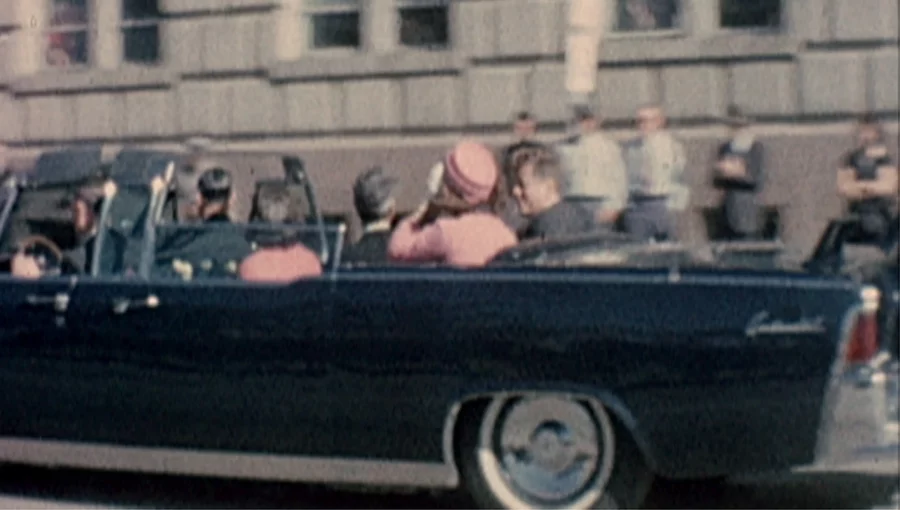
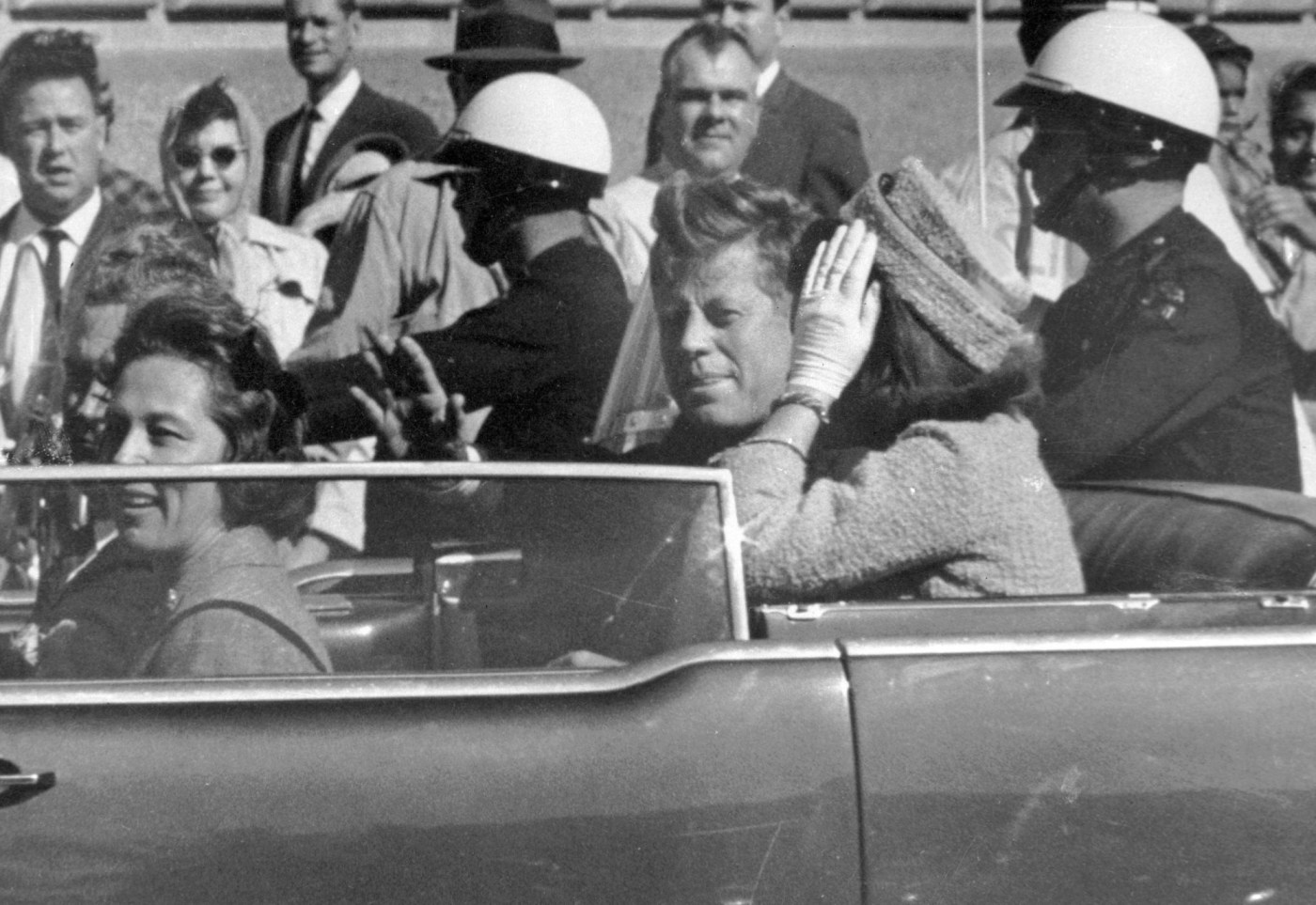
Kennedy was fatally shot by a hidden assassin armed with a high-powered rifle as he visited Dallas in November 1963 with first lady Jacqueline Kennedy. Shots rang out as the president’s motorcade rolled through Dealey Plaza in downtown Dallas.
Shock and relief cross party lines as past and present leaders react to shooting at Trump rally
Biden says ‘everybody must condemn’ attack on Trump, hopes to speak with ex-president soon
President Biden releases statement in regards to shooting at Pennsylvania Trump rally
Photos: The scene at rally shooting that left Trump injured, gunman and at least one attendee dead
Donald Trump whisked off stage in Pennsylvania after apparent gunshots rang through the crowd
Kennedy was rushed to Parkland Memorial Hospital, where he died soon after.
He was succeeded by Vice President Lyndon B. Johnson, who was sworn into office in a conference room aboard Air Force One. He is the only president to take the oath of office on an airplane.
Hours after the assassination, police arrested Lee Harvey Oswald after finding a sniper’s perch in a nearby building, the Texas School Book Depository.
Two days later, Oswald was being taken from police headquarters to the county jail when Dallas nightclub owner Jack Ruby rushed forward and fatally shot Oswald.
GERALD FORD, the 38th president
Ford faced two assassination attempts within weeks in 1975 and was not hurt in either incident.
In the first attempt, Ford was on his way to a meeting with California’s governor in Sacramento when Charles Manson disciple Lynette “Squeaky” Fromme pushed through a crowd on the street, drew a semi-automatic pistol and pointed it at Ford. The gun wasn’t fired.
FILE – President Ford ducks behind his limousine and is hustled into the vehicle after a shot was fired as he left the St. Francis Hotel in San Francisco, Sept. 22, 1975. The President was rushed to the airport to return to Washington. (AP Photo, File)
Fromme was sentenced to prison and released in 2009.
It was 17 days later when another woman, Sara Jane Moore, confronted Ford outside a hotel in San Francisco. Moore fired one shot and missed. A bystander grabbed her arm as a second shot was attempted.
Moore was sent to prison and released in 2007.
RONALD REAGAN, the 40th president
Reagan was leaving a speech in Washington, D.C., and walking to his motorcade when he was shot by John Hinckley Jr., who was in the crowd.
Reagan recovered from the March 1981 shooting. Three other people were shot, including his press secretary, James Brady, who was partially paralyzed as a result.
FILE – In this Monday, March 30, 1981 combination file photos, President Reagan waves, then looks up before being shoved into Presidential limousine by Secret Service agents after being shot outside a Washington hotel. (AP Photo/Ron Edmonds, File)
Hinckley was arrested and confined to a mental hospital after a jury found him not guilty by reason of insanity in shooting Reagan. In 2022, Hinckley was freed from court oversight after a judge determined he was “no longer a danger to himself or others.”
GEORGE W. BUSH, the 43rd president
Bush was attending a rally in Tbilisi in 2005 with Georgian President Mikhail Saakashvili when a hand grenade was thrown toward him.
Both men were behind a bulletproof barrier when the grenade, wrapped in cloth, landed about 100 feet away. The grenade did not explode, and no one was hurt.
Vladimir Arutyunian was convicted and sentenced to life in prison.
ROBERT F. KENNEDY, presidential candidate
Kennedy was seeking the Democratic presidential nomination when he was killed at a Los Angeles hotel — moments after giving his victory speech for winning the 1968 California primary.
Kennedy was a U.S. senator from New York and the brother of President John F. Kennedy, who was assassinated five years earlier.
FILE – In this June 5, 1968 file photo, Hotel busboy Juan Romero, right, comes to the aid of Senator Robert F. Kennedy, as he lies on the floor of the Ambassador hotel in Los Angeles moments after he was shot. Romero was a teenage busboy in June 1968 when Kennedy walked through the Ambassador Hotel kitchen after his victory in the California presidential primary and an assassin shot him in the head. He held the mortally wounded Kennedy as he lay on the ground, struggling to keep the senator’s bleeding head from hitting the floor. (Richard Drew/Pasadena Star News via AP, File)
Five other people were wounded in the shooting.
Sirhan Sirhan was convicted of first-degree murder and sentenced to death. That was commuted to life in prison, where Sirhan remains after his latest petition for release was denied last year.
GEORGE C. WALLACE, presidential candidate
Wallace was seeking the Democratic presidential nomination when he was shot during a campaign stop in Maryland in 1972, an incident that left him paralyzed from the waist down.
Wallace, the governor of Alabama, was known for his segregationist views, which he later renounced.
Arthur Bremer was convicted in the shooting and sentenced to prison. He was released in 2007.