From 2020 to 2025, the number of confirmed overdose deaths in Texas prisons rose from just four to at least 131. Despite this surge in fatalities, however, the Texas Department of Criminal Justice (TDCJ) did not request any additional funding to expand its drug rehabilitation programs in its recent proposed budget to the Texas Legislature ahead of next year’s session.
Instead, the agency asked lawmakers to “maintain current funding levels for rehabilitation and reentry programs such as chaplaincy, reentry transitional coordinators, substance use treatment programs, and the sex offender treatment program” for 2028-29. If that request is granted, funding for these programs would in fact effectively decline due to rising inflation. Further, the same programming is set to be affected by a mandated 3 percent reduction in spending across state departments, though TDCJ has asked for that cut to be reversed.
This appropriations request comes after contraband—which includes drugs—entering prisons topped the list of priorities for the Senate Committee on Criminal Justice to address in 2027 and after the Texas Observer published an investigative series showing the consequences of punishing drug possession without robustly funding treatment for incarcerated Texans.
In the request, prison officials did ask for millions of dollars in additional funding for new interdiction efforts—including drone detection technology and more drug-sniffing dogs—as part of a “multi-faceted approach by the agency to combat the introduction of narcotics and other dangerous materials to agency facilities,” as the agency wrote.
This follows a longstanding pattern. Funding for agency-led rehabilitation programs—which include mandatory classes for parole and specialized substance-abuse facilities—has not kept pace with inflation in the past decade, and TDCJ hasn’t asked lawmakers for the money to significantly expand these programs, even as need grows and the agency says it is trying to offer programming to more prisoners. (The agency has said it’s ramping up peer-led programs and online resources including a help line and educational videos.) Meanwhile, prisoners are racking up new criminal charges for using or dealing, which is having little apparent effect on the prevalence of drugs inside prisons. The agency is doubling down on punitive efforts, which sometimes include highly publicized inter-agency busts of smuggling rings involving both prisoners and prison staff.
“Funding drug interdiction alone is a misguided approach,” Senator Borris Miles told the Observer in October. “The state must also address the ongoing problem of addiction in our prison system through treatment and rehabilitation, in addition to prevention.”
Republican Committee Chair Pete Flores previously told the Observer he “support[s] both initiatives [punishment and treatment] and additional funding that will eliminate contraband in our prisons.” Flores did not reply to a request for comment on the agency’s appropriations request.
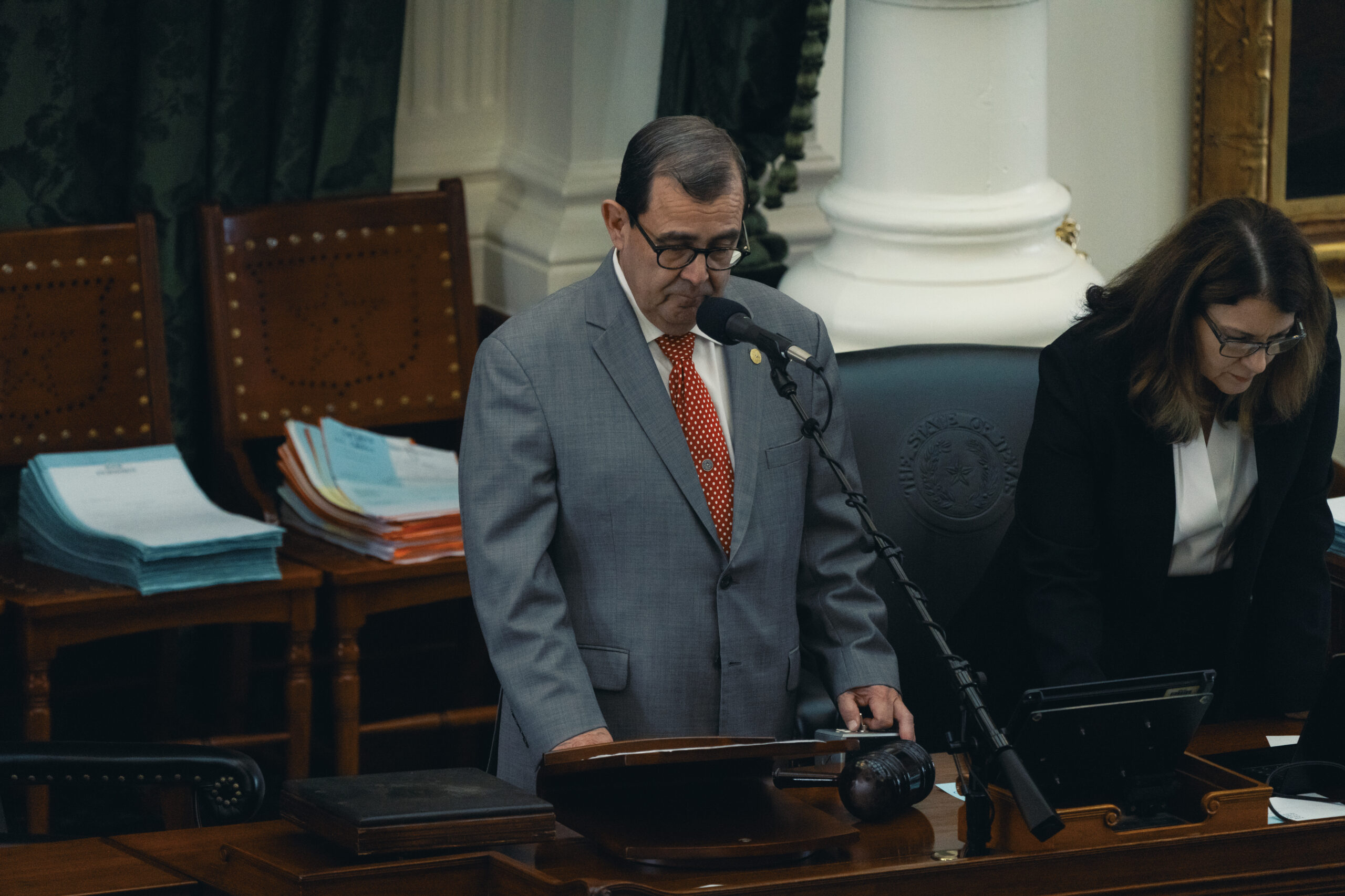
Pete Flores on the Senate floor in May 2025 (Jordan Vonderhaar for the Texas Observer)
In response to the Observer’s questions, TDCJ spokesperson Hannah Haney said the budget request “does reflect meaningful investments in rehabilitation,” saying funds were “redistributed to expand substance-use education” and other programs. When asked where this redistribution was represented in the budget, Haney did not respond.
As part of the request that the 3 percent across-the-board reduction be reversed, agency officials did warn in their budget proposal that reducing the allotment for salaries and wages would affect the programs prisons can provide.
“The cumulative effect of potential budget reductions eliminating or reducing educational, treatment, and other inmate-related activities would also impact security negatively by increasing idleness and decreasing opportunities for self-improvement,” the proposal reads.
The agency’s interdiction-related request includes about $40 million for drone technology and “contraband detection equipment”—including mail scanners, metal detectors, and chemical tests—as well as more employees for its contraband monitoring teams.
The investment in drone detection technology comes as the number of drone smuggling attempts detected by TDCJ has risen sharply in recent years—more than two dozen in 2025 compared to just three in 2023—but the aerial route still accounts for only a small fraction of drug smuggling.
Drugs are also brought in by visitors, occasionally ferried through the mail, and sometimes even tossed over prison yard fences at night. And a major source of the drug flow is TDCJ employees themselves: In the past six years, at least 220 TDCJ employees have been charged with contraband-related crimes like drug possession and engaging in organized criminal activity, the Observer previously found. Staffing woes have long plagued the agency, which has reported higher staffing levels in the past year following multiple years of Lege-approved pay bumps for employees.
Meanwhile, advocates outside fear the rising death toll in Texas prisons is a problem TDCJ’s current rehabilitation programs are ill-equipped to handle, stressing the importance of educating people on the dangers of the drugs that are inevitably making their way inside.
“We talk to people inside who are scared to help each other for fear of lockdown; the education on what is actually poisoning people is more important than the classes for people who survive,” said Maggie Luna, executive director of the Texas Harm Reduction Alliance, a nonprofit that provides direct services to people with addiction. “People are dying, and it is all preventable.”
The post Despite Surge in Prison Overdoses, State Agency Requests No New Treatment Funding appeared first on The Texas Observer.
Leave a Reply