St. Paul mayor proposes major changes to rent control, 8% tax levy increase

posted in: News | 0

Alarmed by a slowdown in housing construction in St. Paul, Mayor Melvin Carter will ask the city council to heavily amend the capital city’s rent control restrictions, enshrining them for housing built before 2004 while lifting rent limits permanently and entirely for residential construction that opened after that period.

The mayor said a variety of factors, including high interest rates, had worked against drawing new multi-family housing to St. Paul. “I don’t think you have to lay blame to take responsibility,” said Carter in a recent interview, noting the real estate development community had made it clear acquiring financing to build new apartments had proven difficult.

Carter hopes to see the city council vote on a major amendment to the city’s voter-approved rent stabilization ordinance by the end of the year, setting the stage for a series of housing initiatives and downtown investments he plans to enact in 2025. Among them, the mayor would push forward new tenant protections, $1 million toward waiving certain fee requirements for developers who convert downtown office buildings into housing, and the expansion of a Rondo-based homebuyer program known as the “Inheritance Fund” into the city’s West Side.

The mayor made his announcements Tuesday during his annual budget address, where he proposed a 7.9% increase to the city’s property tax levy, the sum total of property taxes collected throughout the city. Given shifting values among taxable properties, that would translate to an estimated $132 property tax increase next year for a median-value home, valued around $290,000 next year.

2025 proposed city budget

Overall, the city’s proposed 2025 budget would grow to $858 million, a $25 million increase over the present year, if the council approves Carter’s budget proposal without major changes. The proposal rolls in the equivalent of 35 new full-time employees — including six new firefighters — bringing total city staffing to 3,509 employees across departments.

While key COVID-relief resources from the federal American Rescue Plan face a fast-approaching spending deadline, the city relied on a handful of new or increased funding sources, including a 1% “Common Cent” sales tax approved by city voters in November to support parks and roads.

“This has been a challenging budget to put together, for a number of reasons,” Carter said. “We’ve had one-time funding that has helped us weather the storm the last few years.”

In an interview last week setting the stage for his budget address, Carter said more must be done to promote downtown St. Paul, as declining property values downtown could soon impact the entire city. Property owners, however, have yet to experience the full effect of a potential fiscal cliff. His budget includes increasing cameras, cleaning and police patrols downtown, an expanded Downtown Improvement District and a downtown project manager within the St. Paul Department of Planning and Economic Development.

Looking citywide, Carter said public safety, housing, downtown investments and climate change were top of mind on his agenda.

Among his proposed initiatives:

Community-First Public Safety investments: $4.5 million

Carter said his budget aims for “safer outcomes in every neighborhood across our city,” with $1.4 million in investments ranging from continuing free youth sports for kids ages 10 and up to the a gun diversion program run by the city attorney’s office.

The St. Paul Fire Department’s fire suppression staffing would grow by four firefighters. Some $560,000 allocated last year will add two firefighters and fund eight promotions. Other initiatives include staffing support for a victim/witness program, realigning staffing for a police forensic services unit and public safety initiatives downtown.

Another $3.1 million will support a St. Paul Police Academy, youth intervention and staffing through St. Paul Parks and Recreation, and “community-first infrastructure” in libraries, including enhancements at the Rondo Library, which has sometimes attracted large groups of young people.

All-In Housing framework: $7.4 million

The mayor proposed $5.3 million for homeowner and tenant supports, including expanded downtown assistance for homebuyers, new investment in a homeowner rehabilitation loan program, and a $500,000 investment in a low-income homeowner support program. Other initiatives include a home weatherization/electric improvement program, $1 million in rental assistance, a new tenant protections staffer and support for tenant services through the Home Line.

Another $1.4 million will be dedicated toward office-to-housing conversion fee waiver program downtown, and accelerating the permit review process for new housing. Another $1 million will be dedicated to homeless initiatives, including $500,000 to help Catholic Charities, which runs the downtown shelter campus known as Higher Ground/Dorothy Day, weather budget pressures amidst an uptick in demand for homeless services.

Carter said specific policy proposals around housing will include changes to rent stabilization, new tenant protections, a proposed charter amendment allowing the city council to create new administrative citations, and the expansion of the “Inheritance Fund” to descendants of residents displaced decades ago from the West Side Flats.

The mayor’s housing initiatives will be boosted by a projected $5 million from a metro-wide sales tax approved last year by the state Legislature, which is dedicated toward funding public transit and housing services across the Twin Cities.

Downtown vitality: $1.7 million

Initiatives downtown include increased sidewalk maintenance, event promotion, public art and banners, $275,000 toward increased downtown patrols, $200,000 toward a a downtown camera system and supports, $78,000 toward added downtown cleaning, a downtown project manager with Planning and Economic Development, a citywide grant program to support events and festivals, the expanded Downtown Improvement District, and an office-to-housing conversion study.

Climate change: $1.4 million

The mayor said the city would add two months — April and October — to an existing Xcel Energy franchise free that currently runs from May through September, generating $1.4 million to address the impacts of climate change. Initiatives include changes to snow plowing operations, a Right Track youth jobs program geared toward tree planting and maintenance in parks and right-of-way areas, a Climate Action coordinator, a project management technician and staff within the Department of Safety and Inspections to administer changes related to the updated state energy code.

Related Articles

Local News |


Brian Bonner: From my view in Kyiv, here’s what Ukraine needs from the U.S. The stakes are high

Local News |


Hastings man dies in single-vehicle crash on St. Paul’s U.S. 61

Local News |


Fire guts the former Ngon Bistro just before it was to reopen under a new restaurateur

Local News |


Metro Transit police chief on paid administrative leave

Local News |


Letters: Is it too much to ask the candidates how they plan to work toward what we agree on?
Best August smart locks for easy and secure access

posted in: News | 0

Which August smart locks are best?

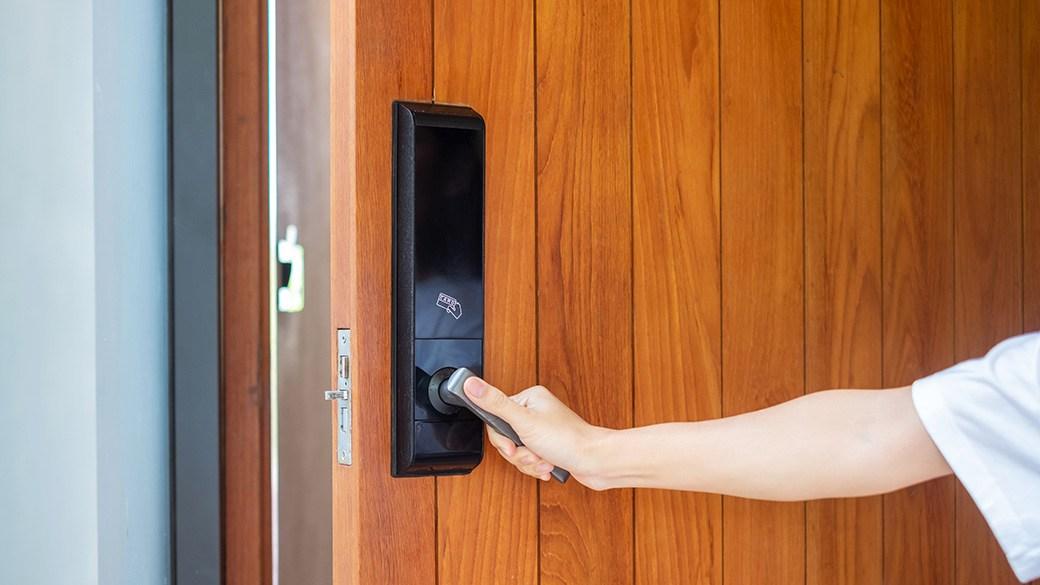
While there is nothing wrong with a traditional door lock and single deadbolt system, smart locks offer several advantages and features that will help secure your home while giving you and your loved ones peace of mind.

If you’re looking to upgrade your traditional door lock system to a smart lock, you can’t go wrong with an August smart lock. With the impressive August Smart Lock Pro +Connect (4th Gen.) at your disposal, you can protect your home with all the marvels of modern technology without breaking the bank.

What to know before you buy an August smart lock

Requirements

This may not come as a surprise to anyone who’s planning to integrate their new August smart lock into an existing Smart Home or security system, but there are a few steps you’ll need to take before installing an August smart lock. Not only will your new smart lock need to be wired with either 110 volts or 240 volts for it to work in the first place, you will also need to have a minimum of 2.4Ghz Wi-Fi and an iPhone or Android smartphone to make full use of it. Check out the full buying guide at BestReviews to learn more.

Security technology for homeowners and landlords

Thanks to an increasing number of porch pirates and the usefulness of security technologies like doorbell cameras, having the ability to both monitor and control who comes and goes from your property can be extremely useful. Thanks to August smart locks and their ability to provide 24/7 monitoring, you can keep track of anyone who is coming and going from your property as well as provide access as needed without having to replace your original keys. Furthermore, August smart locks can be incorporated into a wide range of apps for both personal and business use, making them well-suited for property owners of all kinds.

What to look for in a quality August smart lock

Effortless data review and security management from your smartphone

As anyone who has forgotten their keys and accidentally locked themselves out can attest, having the ability to wirelessly lock and unlock your door is much better than having to crawl through a window or needing to contact a locksmith. Thankfully, not only do August smart locks unlock automatically when you approach, they also lock automatically when you leave, so you never have to worry about accidentally leaving your door unlocked again.

Better still, you can control keyless entry, have a complete record of any activity at your door and send digital guest keys directly through the August app. Some models of August smart lock even allow you to link your smartphone’s biometric face recognition or fingerprint scanner for an additional level of security.

Installation and integration

Whether you are looking for a security upgrade that blends seamlessly with your existing smart home setup or want to manage access to your rental property with the touch of a button, August smart locks can provide an ideal solution. For example, an Alexa-connected smart lock can track overall battery levels and automatically order new ones once a certain threshold is reached. While most models of August smart locks come standard with Alexa integrated, the purchase of an August Connect Wi-Fi Bridge will allow you to connect your August smart lock to additional services and technologies, including Airbnb, Home Away Simplisafe, Google Assistant and many more.

DoorSense technology

If you happen to be someone who isn’t comfortable leaving home without double and triple checking that your door is secured, August smart locks have the perfect solution. All August smart locks come equipped with DoorSense, which allows you to know beyond a shadow of a doubt that your door has been locked and closed securely. Better yet, you can rest assured that in addition to knowing that your door is locked, it is backed up by a robust design that is capable of holding your door shut with 600 pounds of force.

How much you can expect to spend on an August smart lock

Depending on the features and the generation desired, an August smart lock can cost between $100-$200 and sometimes more with higher-end models.

Best August smart lock FAQ

Will I need any special tools to install the August smart lock?

A. Thankfully, an August smart lock should fit easily into the hole for your existing deadbolt, though you may want to double-check that there is enough room for the wing latches to attach properly.

How many devices can I use on multiple properties?

A. According to August’s website, there is technically no limit to the number of properties and individual keys that can be created and organized, though having all your eggs in one basket might be uncomfortable for some.

What’s the best August smart lock to buy?

Top August smart lock

August Smart Lock Pro +Connect (4th Gen.)

What you need to know: This is an excellent smart lock and connection hub bundle with impressive capabilities.

What you’ll love: Users can enable the Biometric Verification Opt-In to use their smartphone’s biometric security features as an additional verification feature. It’s also compatible with Alexa, HomeKit, Samsung SmartThings and both Apple and Android smartphones.

What you should consider: Users have reported issues with the door spontaneously unlocking and failing soon after purchase.

Top August smart lock for the money

August Smart Lock – Keyless Home Entry with Your Smartphone

What you need to know: This is a relatively inexpensive smart lock to upgrade your security while keeping your current keys.

What you’ll love: This unit attaches directly to your existing deadbolt while providing both keyed and keyless entry, sending wireless guest keys, connecting with many services (with purchasing a Wi-Fi bridge) and limiting access time down to the minute.

What you should consider: Users have reported issues with the Auto Lock function not working and issues after software updates.

Worth checking out

August Smart Lock, 2nd Generation, HomeKit enabled

What you need to know: This is a robust smart lock to upgrade your home or rental properties’ security system.

What you’ll love: This unit is fully compatible with Amazon Alexa for checking the lock status or operating the lock with your voice as well as offering both smart and manual tracking of your battery levels and automatic battery reordering.

What you should consider: Users have reported issues with app connectivity and the unit failing within months of installation.

Prices listed reflect time and date of publication and are subject to change.

Check out our Daily Deals for the best products at the best prices and sign up here to receive the BestReviews weekly newsletter full of shopping inspo and sales.

BestReviews spends thousands of hours researching, analyzing and testing products to recommend the best picks for most consumers. BestReviews and its newspaper partners may earn a commission if you purchase a product through one of our links.

What home shoppers need to know about the new buyer’s contracts

posted in: News | 0

By Holden Lewis | NerdWallet

When you buy a house on or after Aug. 17, you’ll do things differently than before. Rules will change on that date, due to the settlement of an antitrust lawsuit.

Unlike before, you will decide how much your real estate agent will be paid for representing you when you buy a home. And your agent won’t be paid by the seller’s agent. Instead, you’ll probably ask the home’s seller to pay your agent — a request that will be subject to negotiation.

In short: It won’t be the same purchasing process that your parents, siblings and friends went through when they bought their homes before the legal settlement with the National Association of Realtors.

Here’s how the new process will work.

You’ll sign an agreement before touring homes

You’re browsing real estate websites and you’ve spotted a house that you want to visit so you can see inside — this is known as a home tour. Before a real estate agent escorts you inside, you will be required to sign an agreement that defines what the agent will do for you.

The agreement can outline a lightweight and short-term relationship with the agent or it can be a longer-term contract — whatever you negotiate.

On the lightweight end of the spectrum, you could sign a touring agreement that lasts a day or a week or gives you access to just one or two houses. Think of it as giving the agent an unpaid audition. “I give them options. Option one is we could just sign the agreement just for today,” says Danielle Rownin, real estate agent with Keller Williams Realty in Connecticut. If the agent and client aren’t a good fit, she adds, the agreement expires at midnight “and we’re free to move on.”

You’ll sign an agreement even if the agent gives you a virtual tour, which is typically done by walking around the house with a cell phone camera. But you won’t have to sign a touring agreement to visit an open house. Likewise, you won’t have to sign an agreement for the seller’s agent to give you a tour of the home, because that agent is working for the seller and not for you.

You’ll sign an agreement when the search gets serious

At some point, you’ll officially hire a buyer’s agent. You’ll sign a wordier and longer-term contract that not only describes the agent’s responsibilities, but also how much the agent will be paid. It might be called a buyer agency agreement, a buyer-broker agreement or a buyer representation agreement. These agreements aren’t new; in fact, they’ve been required in some states. But now they’ll be required just about everywhere.

This could be the first contract you sign; you don’t have to use touring agreements. Or you might build a rapport with an agent during a touring agreement and convert it into a buyer agency contract.

It’s still possible to buy a house without hiring your own agent to represent you, but it’s discouraged.

You’ll negotiate the agent’s pay

The contract will spell out how much you will pay the agent for representing you. “It could be a flat fee — small or large — or it could be a percentage of the purchase price,” says Leo Pareja, CEO of eXp Realty.

Real estate brokerages will experiment with flat fees and other pay structures such as hourly rates. But for now, most buyer’s agents will charge commissions that are a percentage of the home’s price. Experienced agents might request higher percentages, and newbie agents might ask for less. You’ll have to put on your negotiating shoes and push for a commission that works for you.

If a buyer’s agent requests a 3% commission, “You should definitely say, ‘That seems high to me. Would you be willing to lower that figure?’ That’s all you have to say,” says Stephen Brobeck, senior fellow for the Consumer Federation of America.

Some agents might respond with a lower commission. Others might hold firm, telling you that you get what you pay for. This unyielding approach might impress you if you believe it means they’ll advocate zealously for you. Just keep in mind that there are plenty of agents who will compete for your business, and some might charge less. You don’t have to sign a contract with the first agent you negotiate with.

Percentages are abstract numbers, so doing the math to calculate the cost of the commission in dollars can help you understand what you’re committing yourself to. Take a $400,000 home, for example. A 3% commission would amount to $12,000, while a 2.5% commission would cost $10,000.

You’ll deal with contract elements besides pay

The duration of the contract is another thing you’ll negotiate. The agent might want to lock you in for 90 days, explaining that we’re in a seller’s market and it might take a while to make a successful offer. However, Brobeck says 90 days is too long. “You should not accept anything more than 60, and you should ask for 30,” he says, explaining that you can renew the contract when it expires (if you’re satisfied with your agent).

Read the contract thoroughly and ask the agent to explain anything that’s unclear. If you still feel confused, seek a lawyer’s advice — it might be worth the price.

Watch out for fees on top of the commission, said Wendy Gilch, deputy director of Consumer Advocates In American Real Estate. “Admin fees, brokerage fees, transaction fees, regulatory compliance fees are junk fees and buyers should negotiate them out,” she said in an email. “They’ve become rampant, with some brokerages charging $800 to buyers on top of commission collected.”

The contract can specify the geographic area it applies to. It can be one address, one or more ZIP codes, a city, a county — whatever you negotiate. Gilch recommends against letting the agreement cover the whole state because that’s asking too much.

You can ask the seller to pay your agent’s commission

When you make an offer on a house, you can ask the seller to pay your agent in what is called a seller’s concession.

Having the seller pay your agent will be a relief if you’re already stressing about how you’re going to afford the earnest money deposit, the down payment and the closing costs. Your agent’s commission will be thousands of dollars, and many buyers don’t have that kind of money lying around.

“The seller has the ability to pay the buyer’s agent,” says Courtney Johnson Rose, president of the National Association of Real Estate Brokers, an industry group for Black agents. “That’s the seller’s prerogative.”

Here’s an example of how it can work: You offer $400,000 for the house on the condition that the seller pays your agent 2.5%, or $10,000. That means the seller nets $390,000 before paying the listing agent, taxes and closing costs.

You might find that the seller already has indicated a willingness to pay a concession of, say, up to 3% of the purchase price to pay the buyer’s agent or contribute to closing costs. In such a case, the seller won’t object to your request for money to pay your agent.

Even if the seller hasn’t signaled a willingness to pay your agent, you can still ask. It might be in the seller’s interest to pay. “Sellers who choose to offer said compensation will attract more buyers, get the best price and sell more quickly,” Rownin said in an email.

In a welcome change in policy, VA borrowers — home buyers with loans guaranteed by the Department of Veterans Affairs — will be allowed to pay their agents directly or via seller concession.

How negotiating a better deal can land you a home

Finally, a word on the value of negotiating a lower commission with your agent. Look again at the example in which you offer $400,000 and ask the seller to pass along 2.5% of it, or $10,000, to your agent.

Now imagine a competing buyer who also offers $400,000 — but asks for 3%, or $12,000, to pay their agent.

Your offer lets the seller collect $2,000 more. The difference could tip the offer in your favor because you negotiated a better deal with your agent.

Holden Lewis writes for NerdWallet. Email: hlewis@nerdwallet.com. Twitter: @HoldenL.

AP Decision Notes: What to expect in Minnesota’s primaries

posted in: News | 0

Note: Minnesota’s 2024 primary election is today — Tuesday, Aug. 13. Voters will determine final matchups for the Nov. 5 general election in races for the U.S. Senate, U.S. House of Representatives, Minnesota House of Representatives, a Minnesota Senate special election and various local offices.

Information can be found at mnvotes.org or by calling 1-877-600-VOTE (8683).

Most polling places are open from 7 a.m. to 8 p.m.

WASHINGTON — After a tough summer of primaries, the progressive House members who call themselves “the Squad” are facing their final challenge on Tuesday in Minnesota.

Rep. Ilhan Omar is on the ballot in Minnesota’s 5th Congressional District on Tuesday, a week after fellow Squad member Rep. Cori Bush lost the Democratic nomination in Missouri. In June, Rep. Jamaal Bowman of New York, also part of the Squad, became the first Democratic House member of the cycle to lose his primary. The only other Squad member who hasn’t yet faced a primary is Ayanna Pressley of Massachusetts, and nobody is running against her.

Omar finds herself on stronger footing than Bowman or Bush, who both faced well-funded challengers and millions of dollars in spending by United Democracy Project, a super PAC affiliated with the American Israel Public Affairs Committee. United Democracy Project hasn’t aired ads against Omar in this race. Even more critically, Omar is better prepared on the eve of her 2024 primary than she was for her 2022 primary, when she narrowly defeated Don Samuels, who is once again her top challenger.

Omar has improved her fundraising significantly over the last two years. In her pre-primary financial disclosures that year, Omar reported spending $2.3 million for the cycle. In this year’s pre-primary financial report, she reported raising more than double that amount, about $6.2 million. Samuels has raised about $1.4 million.

Candidates for Ramsey, Washington, Dakota county board seats square off in Tuesday’s primary

In the general election, Democratic Rep. Angie Craig represents Minnesota’s most competitive House seat in the 2nd Congressional District. She faces nominal opposition in Tuesday’s primary.

On the Republican side, former federal prosecutor Joe Teirab is endorsed by former President Donald Trump and House Speaker Mike Johnson. His only opponent in Tuesday’s primary, defense attorney Tayler Rahm, announced in July that he was dropping out of the race, though he will still be in the ballot.

Rahm won the endorsement of the 2nd District Republican Party but he trailed Teirab in fundraising. Rahm said that he would instead serve as a senior adviser for Trump’s Minnesota campaign.

In the 7th Congressional District, Republican Rep. Michelle Fischbach faces Steve Boyd, an under-funded primary challenger. Boyd reported spending $170,000 on the race, while Fischbach has spent over $1 million. No candidate won enough support at the district convention to win the state party endorsement, but Fischbach has Trump’s endorsement.

In the Senate race, Democratic incumbent Amy Klobuchar is well-positioned to win her party’s nomination. She faces four challengers but none has raised campaign money, according to the Federal Elections Commission. Klobuchar has raised about $19 million.

Eight candidates are running in the Republican primary. The top fundraiser is Royce White, a former NBA player-turned mental health advocate who has since become an ally of conspiracy theorist Alex Jones and former Trump aide Steve Bannon. White shocked many political observers when he defeated Navy veteran Joe Fraser at the party convention. Neither candidate has raised significant money. White last reported raising $133,000 while Fraser has raised $68,000. No Republican groups have reserved television ads for the Senate race, according to AdImpact.

Here’s a look at what to expect on Tuesday.

Primary day

The Minnesota state primary will be held Tuesday. Polls close at 8 p.m. Central Time.

What’s on the ballot

The Associated Press will provide vote results and declare winners in 35 races, including the Republican and Democratic primaries for U.S. Senate. Minnesota is also holding primaries for the U.S. House, the state House, and one state Senate special election.

Who gets to vote

Minnesota has open primaries, meaning any registered voter may participate in any party’s primary. The state does not have political party registration.

Decision notes

The 2nd Congressional District includes Twin Cities suburbs and rural areas farther south. The most populous area of the district is in Dakota County, which leans Democratic.

The 7th Congressional District stretches along the western border and is largely rural. Boyd lives in Kensington in rural Douglas County.

The AP does not make projections and will declare a winner only when it’s determined there is no scenario that would allow the trailing candidates to close the gap. If a race has not been called, the AP will continue to cover any newsworthy developments, such as candidate concessions or declarations of victory. In doing so, the AP will make clear that it has not yet declared a winner and explain why.

A candidate may request a publicly funded recount if the margin is less than 0.25 percentage points in federal races and less than 0.5 percentage points in state legislative races. In races where less than 400 ballots are cast, recounts can also be requested if the margin is less than 10 votes.

If the margin falls outside of the criteria for requesting a publicly funded recount, a losing candidate may request and cover funding for a discretionary recount.

What do turnout and advance vote look like?

As of July 1, there were nearly 3.6 million registered voters in Minnesota.

In the 2024 presidential primary, 18% of votes were cast before election day. Turnout among 3,574,718 primary voters was 7% in the Democratic primary and 9% in the Republican primary.

In 2022, absentee ballots accounted for 20% of all votes. Turnout in the 7th District Republican primary was 14% of 427,502 registered voters. In the 5th District Democratic primary that year, turnout was 28% of 408,888 registered voters. In the 2022 primaries

As of Aug. 1, a total of 60,851 ballots had been cast before primary day.

How long does vote-counting usually take?

In the presidential primaries earlier this year, the AP first reported results at 8:09 p.m. Central Time, or nine minutes after polls closed. The election night tabulation ended at 1:38 a.m. Central Time, with more than 99% of total votes counted.

Related Articles

Politics |


Minnesota House candidate, wife charged over stolen campaign signs; DFL committee rescinds endorsement

Politics |


Minnesota running mates: Tim Walz joins Hubert Humphrey, Walter Mondale as candidates on presidential tickets

Politics |


Populist conservative and ex-NBA player Royce White shakes up US Senate primary race in Minnesota

Politics |


‘We’ve got it covered,’ local Secret Service office says as VP candidate Walz gets more security

Politics |


At Wisconsin rally, Democrats laud ‘folksy’ Tim Walz, hope his record will impress