In ‘You Must Stand Up,’ Amanda Becker captures the scramble after Dobbs

posted in: News | 0

Jason Dick | (TNS) CQ-Roll Call

WASHINGTON — It was hard to follow everything that happened when the Supreme Court handed down its ruling in Dobbs v. Jackson Women’s Health Organization.

“If you were a doctor in Louisiana trying to keep up, in just over a month, abortion went from legal, to illegal, to legal for now, to illegal for now, to legal again for now, to illegal pending the outcome of [an] underlying lawsuit,” writes Amanda Becker, a journalist with The 19th.

Becker offers an account of that chaotic time in her new book, “You Must Stand Up: The Fight for Abortion Rights in Post-Dobbs America.” She shadows doctors, activists and others around the country as they navigate the reversal of Roe v. Wade.

“This is a story that is going to keep going,” Becker said, describing a “major political realignment.”

She joined the Political Theater podcast this month to talk about what she saw on the ground and how abortion is shaping the current election cycle. This transcript has been edited and condensed. For the full conversation, listen here.

Q: How did this book come about?

A: Everyone who writes about abortion rights knew that Dobbs was coming. It was just a matter of time to see which case was going to be the one that overturned Roe.

And so I had started mentally preparing for that, because I not only thought it was going to be a huge story in terms of health care and the court and civil rights, but potentially the biggest political story of my career.

As we head into the first presidential election with no Roe v. Wade in 50 years, we’re seeing that. We just got some polling from New York Times/Siena College showing that abortion is starting to overtake other top issues among voters in swing states. And for women under 45, it’s already the most important issue.

Q: You spent time with an abortion clinic director in Alabama and a doctor in Arizona. What was that like?

A: Living in America right now, you’re living a very different life based on where you are, and your reality can change dramatically in terms of the type of health care you can access. And it’s not just abortion — when there are abortion bans in place, there’s a cascading effect.

I knew that in that first year, clinics and providers were going to be trying to take care of people in a situation where a lot of times they were uncertain even what type of care they could provide. I was just very aware that I didn’t want to be an added stress to them on top of everything else.

I started with the clinic in Tuscaloosa run by Robin Marty, and I had to ask them a few times before she was like, “OK, you can come on down.” And then she said, “You need to talk to Dr. Gabrielle Goodrick,” so I went out to Phoenix. And I consider those two settings and those two people to really be the heart of the book.

Q: Where else did you go?

A: I write about two women from Maryland who were trying to open an all-terms clinic, and there’s also a chapter in Massachusetts, a state where the vast majority of people support abortion rights, even more so than nationally. I wanted to show a place where people on the local and state level were getting really creative about how to protect abortion access.

In Wisconsin, I followed a medical student. How do you train to be an OB-GYN in a state where you’re prohibited from learning key parts of health care? People tend to practice in the areas where they train, and there are already maternal health care deserts in Wisconsin.

And Kentucky is the other one that comes to mind, where I followed everyday voters in a red state who were campaigning against a ballot measure. One of them had never done any sort of door-knocking before, and I wanted to see what that felt like on the ground, and what made them say, “I’ve had enough. I’m taking to the streets.”

Q: Every book has a deadline, but how did you know when to stop reporting?

A: In the afterword, I write about trying to end the book: “How could I leave readers with the most up-to-date information possible as abortion access continued to ebb and flow across the country, and any single court ruling or election could change everything in an instant?”

This is a story that is going to keep going. It’s a story that I think is turning into what could be a major political realignment in this country. You know, realignments are kind of hard to see when you’re at the beginning of them, and it’s only much later that scholars and political scientists look back and are like, “Oh, the great political realignment of whatever.”

I anticipate that the afterword for the paperback next year will be the election results from this year, and how that changed things.

Q: A number of abortion-related measures are on the ballot this year around the country. Beyond those, what else are you watching? What about congressional races?

A: I absolutely am going to Arizona to cover the Senate race between Ruben Gallego and Kari Lake, and I will be spending some time in Michigan.

I could potentially get back to Wisconsin by November. There’s not only the Senate race between Tammy Baldwin and Eric Hovde, but there’s also an OB-GYN [Kristin Lyerly] who’s running for the House out there in a district that has been red, but getting less red.

There are no women OB-GYNs in Congress right now, and I’d love to talk to her. Why does a doctor put aside their medical career because they feel like they need to run for office based on protecting the type of health care they were trained and have been providing to patients?

“ You Must Stand Up ” (Bloomsbury) is out Tuesday. Hear more from Becker at Politics and Prose on Friday and at People’s Book on Sept. 19.

___

©2024 CQ-Roll Call, Inc., All Rights Reserved. Visit cqrollcall.com. Distributed by Tribune Content Agency, LLC.

Heavy June rains put a damper on ruffed grouse hunting prospects

posted in: All news | 0

If there’s an underlying theme for Minnesota ruffed grouse hunters going into this year’s season opener, it’s this:

Charlotte Roy, grouse research scientist for the Minnesota Department of Natural Resources in Grand Rapids, holds a female spruce grouse. After a banner season in 2023, optimism was high, and strong spring drumming counts across most of Minnesota’s ruffed grouse range — the highest since 1972 — suggested hunters could be in for more of the same this year. Then came heavy rains in June that likely pummeled production for the ground-nesting birds. Minnesota’s season for ruffed grouse, sharp-tailed grouse, spruce grouse and Hungarian partridges opens Saturday, Sept. 14, 2024. (Charlotte Roy / Minnesota Department of Natural Resources)

Hunters should lower their expectations – and be willing to travel if the areas they normally hunt don’t produce birds.

Minnesota’s season for ruffed grouse, sharp-tailed grouse, spruce grouse and Hungarian partridges opens Saturday, Sept. 14.

After a banner season last fall, optimism was high, and strong spring drumming counts across most of Minnesota’s ruffed grouse range – the highest since 1972 – suggested hunters could be in for more of the same this year.

Biologists estimate spring ruffed grouse populations by following designated routes and listening for the drumming sound male birds make by rapidly beating their wings to attract a mate.

Then came June and heavy rains that likely pummeled production for the ground-nesting birds. Instead of broods of eight to 10 birds or more, wildlife managers in the hardest-hit areas have reported broods of two to three – if they see any at all.

“Our drumming survey data indicated the adult population was doing phenomenal this spring – just phenomenal,” said Charlotte Roy, grouse research scientist for the Minnesota Department of Natural Resources in Grand Rapids. “But the other piece of what hunters see in the fall is that production piece – those young birds – and they mainly see young birds in the fall. So when the production piece is not great, hunters are disappointed if their expectations are based solely on those drumming survey numbers.

“We really need to be paying more attention to that brood piece – and this year, we had a pretty tough June.”

Last year’s dry weather, by comparison, resulted in ideal nesting conditions and recruitment.

Roy early this week said she was just beginning to get August brood observations from wildlife managers across Minnesota’s ruffed grouse range so it’s difficult to make predictions going into the upcoming grouse opener.

“What I know so far is June reports were spotty,” Roy said. “In some areas that got hit heavy by the rains, brood numbers were not good, and in areas that managed to escape that round of heavy rains in June, numbers were a little bit more what we were expecting.

“Last year was a very good year, so a lot of people were excited and anticipating it might be another year like last year. And in some areas, you might get that kind of success. But I think people need to temper their expectations a little bit with the knowledge that we had a really rough brood-rearing season.”

Roy’s advice: Don’t be afraid to travel to find birds.

“If you’re willing to try a lot of different spots and focus on areas that didn’t get heavy June rains, you might have some success this season,” she said. “If you like to go to the same area you always go, and it got hit heavy by rains, I’d say you’re going to be pretty disappointed.”

Charlie Tucker, manager of Red Lake Wildlife Management Area at Norris Camp south of Roosevelt, Minn., said his outlook on brood success hasn’t changed since July, when he reported seeing hens with only one or two chicks.

“That doesn’t mean there aren’t more chicks in the bushes, but usually by now, you’d like to have some reports of folks seeing seven or eight chicks or a hen with up to 11 or something like that – and I haven’t heard any reports like that,” Tucker said. “We’re seeing some young birds that look almost mature, like you’d expect this time of year, and then we’re also seeing some birds that still look very young, which would indicate they hatched later and females had to renest.”

While spring drumming counts were high at Red Lake WMA, the DNR’s spring survey tallied a decline just to the west in the northwestern Minnesota survey area – only .66 drums per stop, down from 1.5 in 2023 and 2.9 in 2022.

Roy said the northwest grouse zone only has eight survey routes, and a couple of poor results from routes near Karlstad and Agassiz National Wildlife Refuge may have contributed to the drastic decline.

“I don’t have a fantastic reason for why it would be down in that region, based on what was going on just to the east, where things were phenomenal,” Roy said. “It’s a pretty small sample size and when you have small sample sizes, they’re very susceptible to big changes with just a few bad routes.

“I think about half of them were pretty bleak, and then the other half were fine.”

At Red Lake WMA and adjacent Beltrami Island State Forest, Tucker said conditions on the ground are finally improving after the wet start to summer.

That means hunters can expect decent trail conditions, barring heavy rains between now and then.

“I think we’re trending more toward average conditions after a real wet summer,” he said. “Things are drying out and feel normal. Out here in Beltrami (forest) and Red Lake WMA, it’s often wet boot country, and I think it’s going to be like that again this fall. But it’s not like folks are going to up to their knees (in water) on the trails.”

Related Articles

Outdoors |


St. Paul scouting troop to celebrate 100th anniversary with reunion

Outdoors |


Snorkeling in South Florida: Check out these 6 must-see spots

Outdoors |


Fall arts and entertainment guide: Get outside and stay creative with these fall festivals and family fun

Outdoors |


Skywatch: The delightful celestial dolphin

Outdoors |


Minnesota enters second archery deer season with crossbows for anyone

Today in History: September 14, Roosevelt becomes youngest US president

posted in: News | 0

Today is Saturday, Sept. 14, the 258th day of 2024. There are 108 days left in the year.

Today in history:

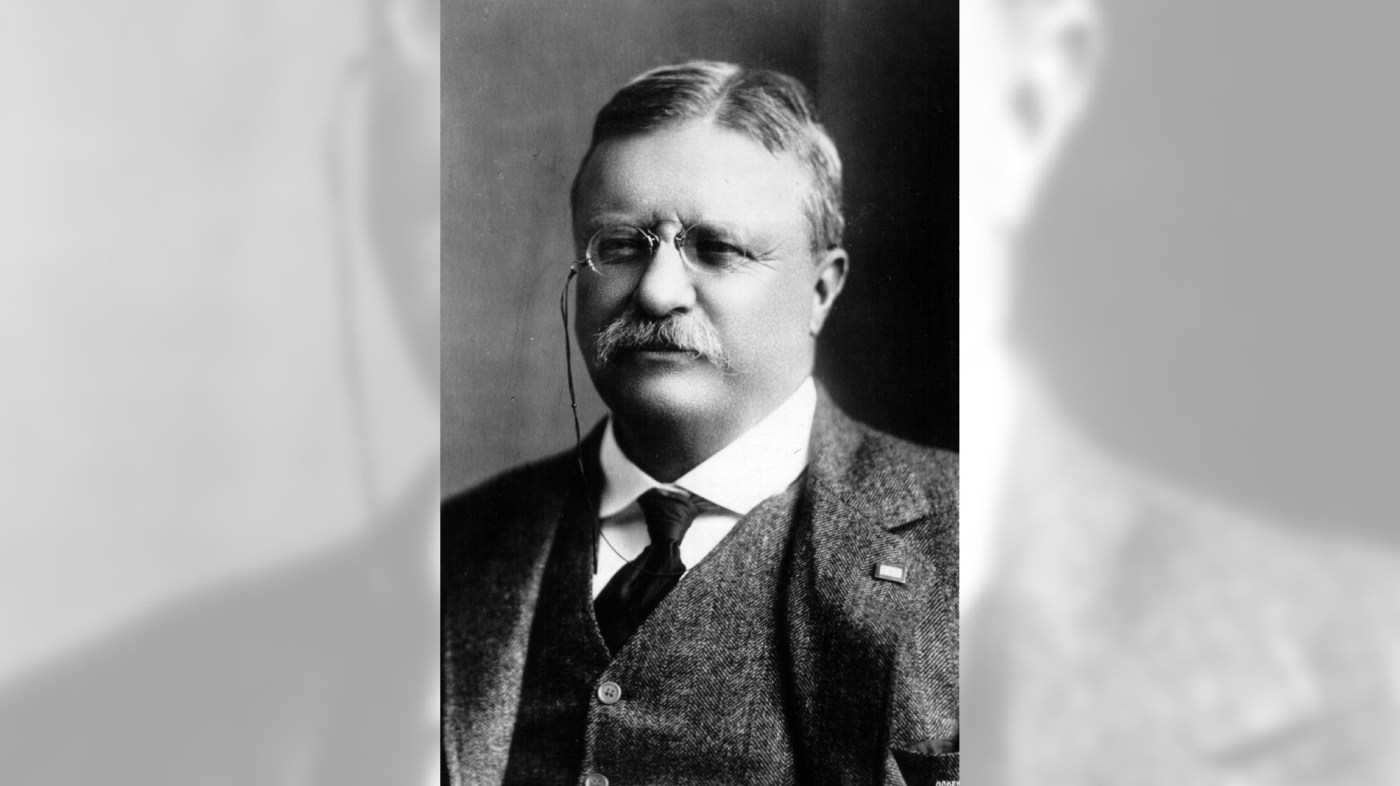
On Sept. 14, 1901, President William McKinley died in Buffalo, New York, of gunshot wounds inflicted by an assassin eight days prior; Vice President Theodore Roosevelt succeeded him, becoming the youngest-ever U.S. president at age 42.

Also on this date:

In 1847, during the Mexican-American War, U.S. forces under Gen. Winfield Scott took control of Mexico City.

Related Articles


Today in History: September 13, thousands rescued in wake of Hurricane Ike


Rob Lowe to emcee gala Friday as Hazelden Betty Ford marks 75 years


Today in History: September 12, Voyager 1 leaves the solar system


Today in History: September 11, al-Qaeda attacks the United States


JonBenét Ramsey TV series to feature Melissa McCarthy, Clive Owen on Paramount+

In 1861, the first naval engagement of the Civil War took place as the USS Colorado attacked and sank the Confederate private schooner Judah off the coast of Pensacola, Florida.

In 1927, modern dance pioneer Isadora Duncan died in Nice, France, when her scarf became entangled in a wheel of the sports car in which she was riding.

In 1982, Princess Grace of Monaco, formerly film star Grace Kelly, died at age 52 of injuries from a car crash the day before.

In 1991, the government of South Africa, the African National Congress and the Inkatha (in-KAH’-tah) Freedom Party signed a national peace pact.

In 1994, on the 34th day of a strike by players, Acting Baseball Commissioner Bud Selig announced the 1994 season was over.

In 2001, Americans packed churches and public squares on a day of remembrance for the victims of the Sept. 11 attacks. President George W. Bush prayed with his Cabinet and attended services at Washington National Cathedral, then flew to New York, where he waded into the ruins of the World Trade Center and addressed rescue workers in a show of resolve.

In 2012, fury over an anti-Muslim film ridiculing the Prophet Muhammad sparked violent clashes across the Muslim world.

Today’s Birthdays:

Actor Walter Koenig (KAY’-nihg) (“Star Trek”) is 88.
Architect Renzo Piano is 87.
Basketball Hall of Fame coach Larry Brown is 84.
Actor Sam Neill is 77.
Country singer John Berry is 65.
Actor Melissa Leo is 64.
Actor Faith Ford is 60.
Film director Bong Joon-Ho is 55.
Supreme Court justice Ketanji Brown Jackson is 54.
Actor Kimberly Williams-Paisley is 53.
Actor Andrew Lincoln is 51.
Rapper Nas is 51.
Olympic gold medal middle-distance runner Hicham El Guerrouj is 50.
Florida Governor Ron DeSantis is 46.
Chef/TV personality Katie Lee is 43.
Actor Jessica Brown Findlay is 37.
NBA All-Star Jimmy Butler is 35.
Golfer Tony Finau is 35.
Actor Emma Kenney is 25.

The best new hotels in Manhattan, from $300 to $900 a night

posted in: News | 0

Nikki Ekstein | (TNS) Bloomberg News

No matter what’s trending in fashion, the New York City uniform has remained constant — any cut, any style, but make it black. And the same has long been true of Manhattan hotels, with slick onyx, creamy white and neutral linens serving as reliable antidotes to the city’s sensory overload.

Not anymore.

“If you think about what the consumer wants today, they don’t want beige,” says Elizabeth Mullins, managing director of the Fifth Avenue Hotel and chief operating officer of its parent company, Flâneur Hospitality. “They want a hotel with soul.”

Mullins, a veteran of Ritz-Carlton and the Walt Disney Co., says this has been true ever since the pandemic left people wanting to reawaken their senses and “feel something” along their travels. Most commonly, they want to feel a sense of place. “But it’s hard to evoke much of anything when you’re beige.”

The good news is that with New York hotels suddenly awash in saturated hues, there’s no more room for a sleepy hotel stay. Here’s a look at the brightest, splashiest openings from Tribeca to Union Square and NoMad.

The Fifth Avenue Hotel

This former Gilded Age mansion on 28th Street and Fifth Avenue is a shockingly rare example of low-rise opulence smack in the middle of the NoMad neighborhood, just down the street from the Ned, Ace and Ritz-Carlton hotels. But this is less the preserved home of a turn-of-the-century tycoon and more of a fun-filled portal into Manhattan’s modern wonderland.

If you don’t like judging a book by its cover, don’t judge this hotel by its traditionally styled lobby, with its elegantly draped double-height windows and crystal chandeliers. But if you must, form your opinion from the contents of two vintage hutches against the back wall: The cheeky curiosities include a single goldfish cracker in a “plastic baggie” made from crystal.

That sense of humor is a through line for this kaleidoscopic hotel, fashioned with all sorts of winks and nods by the ever-whimsical designer Martin Brudnizki. In one hallway is a gallery wall of framed eyes — some painted, some drawn, some googly. Its 153 rooms feature martini carts piled high with full-size spirits and fresh-baked lemon cookies, all from chef Andrew Carmellini, who runs the excellent Café Carmellini restaurant downstairs. Mercury glass panels behind the headboards create a brilliant optical illusion: they reflect the twinkle of star-shaped ceiling lights, making each room feel twice its actual size.

Don’t miss a nightcap at the ground-floor Portrait Bar. Now that the Library Bar at the former NoMad hotel is a members-only space for the Ned, this is the neighborhood’s “it” spot for throwback glamour, complete with coffered ceilings and white-tuxedoed barkeeps. Rooms from $709

The Warren Street Hotel

Designer Kit Kemp is the OG preacher of “anything but beige,” and her third New York City property for Firmdale Hotels is every bit as hypersaturated and pattern-happy as its predecessors, the Whitby and Crosby Street. The lobby can cure jet lag with its bursts of mustard yellow, kelly green and royal blue. Yet the double-paned, floor-to-ceiling windows in the rooms — with spectacular downtown vantages toward One World Trade or Herzog & de Meuron’s “Jenga building” — make for pin-drop-quiet sleep when you need it.

For fans of the U.K.-based brand (and there are many), the overall look will be familiar: dramatically oversize headboards and upholstered dress forms in mix-and-match patterns are Kemp’s indispensable signatures. The same is growing true about other design tropes she’s adapted here, such as long displays of white porcelain pots adorned with mushrooms and fairies in glowing, red-painted nooks, or the color-block leather stools at the bar. If it’s slightly formulaic by now, there’s a reason for that: the effect is still mesmerizing.

But now, Kemp is adding her daughters’ stamps to the mix. The cheekiest rooms are the work of Minnie Kemp: They include throw pillows with a textile featuring strands of spaghetti threaded through the tines of a fork — a bright blue-and-yellow pattern with tiny red-sauce splotches. Tossed against a zany floral headboard, it’s as bold as design statements get. In true Firmdale fashion, it works spectacularly. Rooms from $745

Fouquet’s New York

Another Brudnizki special is this French-inflected 97-room gem on Greenwich Street, which has already earned two Michelin Keys and whose pink-and-green color palette was inspired by a dainty box of macarons. But that doesn’t mean the hotel is entirely demure. By one central staircase you’ll find a giant, bedazzled sculpture of a gorilla wearing a Team USA-inspired hat and holding the Eiffel Tower in its clenched fist. Custom toile wallpaper in the rooms sport New York street scenes interspersed with cheeky drawings of pigeons snatching croissants. (It’s a permanent installation by France-based contemporary sculptor Eddy Maniez.)

Thoughtful details abound, including green marble luggage benches built into little foyers. Ditto on the amenity side: The hotel has thought of all sorts of clever perks, such as a full cinema in the basement (with velvet chaise seats!) that can be used for kids’ movie screenings on rainy days.

Don’t miss a spritz on the frilly French rooftop space, Le Vaux, which is otherwise only accessible to locals who’ve joined Fouquet’s members club. And try to poke your head into the lobby speakeasy bar, which opens after 4 p.m. on days it’s not booked for private events. (Look between the gilded bookcases; the door looks like any of the other wooden wall panels at first glance.) Rooms from $900

Virgin Hotel NoMad

The most eye-catching space at the Virgin Hotel is hidden away on the third floor, around the corner from a coffee bar that feels almost as long as a football field. Do a little exploring, though, and you’ll wonder how Everdene restaurant has stayed a New York secret. The food is solid— mostly American classics with a twist, delicious if not exactly star-worthy — but the space itself feels like a rarefied haven. On one side, rainbowlike bookshelves dramatically arch from floor to ceiling, filled with tomes in bright corresponding colors; on the other are swooping blue banquettes that face walls of windows and two massive outdoor terraces. One floor up, in a separate oasis, is a rooftop pool decked out with black-and-white striped loungers, all with killer views of the Empire State Building.

That’s a lot of amenities for a hotel with shockingly well-priced rooms, though there are 460 of them — a big number by New York standards. Even the entry-level ones have separated, suitelike foyers, a brand standard designed to give solo female travelers extra privacy. (We love not having to say hi to room service staff while wearing a bathrobe.)

Also standard at all Virgin hotels are a handful of supersmart, space-saving design tricks. There’s always a very comfortable bed that includes a built-in cushion in one corner: You can sit against it if you want to work with your computer on your lap. In most rooms here the upholstered gray headboards stretch a few extra feet to one side, forming bench seating to go with a small round table — a functional dining space. Elsewhere, splashes of red abound; it’s the Richard Branson signature.

One more notable amenity: the Halo Salt Journey, which is a quick, 30-minute whirl in the Exhale spa’s Himalayan salt chamber. Staffers set you up with thigh-high Theragun compression boots and an LED face mask that stimulates collagen production while you recline in a zero-gravity chair; it’s a wellness boost that makes you feel like you’ve gone straight to outer space. Rooms from $305

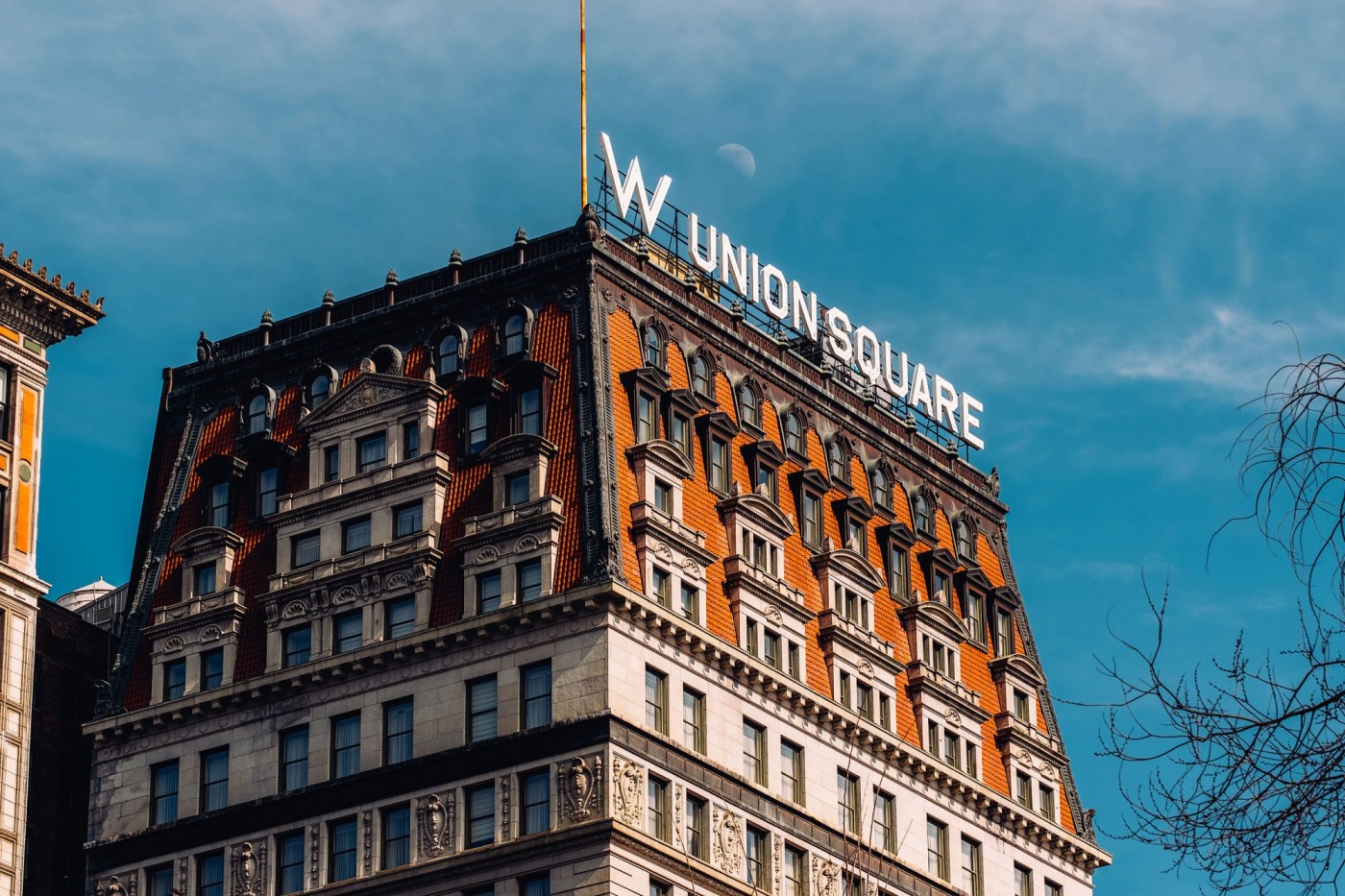
W Union Square

Nothing stays cool for 20 years, not even the original downtown New York location of the world’s first hip hotel brand. But as W’s devotees have grown older and more sophisticated, so, too, have its properties. Nowhere will that be more visible than at this fully redesigned global flagship, slated to wrap its four-year-long renovation in November after numerous lengthy delays. (The hotel has been open continuously throughout construction.)

“We’ve really moved from being this original lifestyle hospitality disrupter to being firmly rooted in the luxury lifestyle portfolio for Marriott,” says George Fleck, senior vice president and global brand leader for W Hotels. “But we don’t want to lose the playfulness and sense of style that we’ve been known for,” he says. “It’s an evolution, not a revolution.”

Part of that is simply shifting the colors to richer and more saturated tones, such as the forest green carpeting and orange leather headboards that stretch all the way to the ceiling in many of the hotel’s 256 rooms. Downstairs, a sizable gym with a Peloton “studio space” is done in minty green-and-yellow checkerboard tile; on the second floor, a Beaux Arts “Living Room” replete with ornamental plaster work gets a dose of fun from a mod, ochre-toned fireplace shaped like a giant rainbow (similar to the Virgin Hotel bookshelves). It’s refined and smart but with a cheeky edge— a little like New York itself. Rooms from $550

_____