‘License plate flippers’ help drivers evade police, tickets and tolls

posted in: Society | 0

Amanda Hernández | Stateline.org (TNS)

State and local legislators in Tennessee and Pennsylvania are cracking down on the use of “license plate flippers,” devices that allow drivers to obscure or conceal their license plates at the press of a button.

License plate flippers are commonly used for aesthetic purposes at auto shows, where they allow drivers to switch between custom or decorative plates. But across the country, thousands of drivers also flip or cover their license plates to evade detection — whether by law enforcement, toll systems or automated speed cameras.

Texas and Washington explicitly banned the devices in 2013. Nonetheless, it’s generally illegal across the United States to alter or obstruct a license plate, no matter the method.

In Tennessee, a law that went into effect in July bans the purchase, sale, possession of and manufacture of plate flippers. Lawmakers said they worried about drivers trying to evade law enforcement.

“We don’t have any toll roads today, but we do have criminals today,” Tennessee state Republican Rep. Greg Martin, who sponsored the legislation in the House, said in an interview. “This [measure] is to make sure that everyone is playing on the same playing field.”

Under the new law, anyone who purchases a license plate flipper could face up to six months in jail and a fine of up to $500. Those caught manufacturing or selling these devices could face up to 11 months and 29 days in jail, along with a fine of up to $2,500.

The Pennsylvania House passed, with bipartisan support, legislation that would ban license plate flippers and impose a $2,000 penalty on those caught using or selling them. The bill now goes to the Senate.

“With speed cams and red-light cams becoming more and more prevalent around, there are technologies that are coming out for people to evade safety on the roads,” Pennsylvania state Democratic Rep. Pat Gallagher, the bill’s lead sponsor in the House, said in an interview.

Cities take action

Some cities also are looking to crack down on these devices.

In April, Philadelphia Mayor Cherelle Parker, a Democrat, signed a bill into law banning the purchase, installation, possession of and sale of “manual, electric, or mechanical” license plate flippers, with violations punishable by a $2,000 fine.

“Tag flipping belongs in a James Bond movie, not on our city streets,” Philadelphia Councilmember Mike Driscoll, a Democrat, said in an interview with Stateline. “It’s not just a problem in the city of Philadelphia; this sense of entitlement and lawlessness is going on all over the country.

“Every municipality has got to take these things seriously,” Driscoll said.

In March, New York state and city officials launched a multi-agency task force dedicated to identifying and removing so-called “ghost cars” — vehicles that are untraceable by traffic cameras and toll readers due to their forged or altered license plates — from New York City streets.

In 2022, New York City Mayor Eric Adams, a Democrat, reached an agreement with Amazon to help search for and restrict the sale of smokescreen and tinted license plate covers to customers with a New York state address. This collaboration followed the passage of a city law earlier that year prohibiting the sale of products designed to conceal or obscure vehicle license plates to New York City residents.

Criminal activity and toll revenue

Recent discussions around license plate flippers have largely focused on their role in criminal activity and the loss of revenue from tolls and traffic tickets.

Obstructing license plates is a common violation, with some drivers using plate flippers, duct tape or bogus paper tags to avoid detection. In some cases, the obstruction may be unintentional, such as when bike racks partially block the plate.

Chad Bruckner, a retired police detective who is now the president of the private investigation firm Intercounty Investigations & Solutions, said that while he supports legislation banning tag flippers, it’s important to balance protecting citizens’ rights with providing law enforcement the tools needed to promote public safety.

“If you can’t identify a vehicle, you don’t have the legal tooth or authority to execute a stop or something,” Bruckner said in an interview. “There’s just no law and order. That’s not safe for people.”

License plate flippers are widely accessible online, with devices available for as little as $50 and as much as a few hundred dollars, though most typically sell for around $200.

Other devices, such as license plate covers that obscure letters and numbers from certain angles, are already illegal in most states. These covers, whether clear or tinted, can affect visibility for traffic and tolling cameras.

MTA TBTA conducts a license plate enforcement operation with NYPD, NYSP, and MTA Police on the Queens side of the Queens Midtown Tunnel on Monday, Mar 25, 2024. (Marc A. Hermann/Metropolitan Transportation Authority/TNS)

Most tolling agencies aren’t significantly affected by these violations financially because the majority of drivers comply with the law. But MTA Bridges and Tunnels in New York City, one of the busiest toll agencies in the United States, reported a loss of more than $21 million in 2023 due to obstructed plates, a more than 140% increase from 2020, according to Aaron Donovan, the agency’s deputy communications director.

The agency projects a slightly lower revenue loss of nearly $19 million for 2024, thanks to the new task force dedicated to cracking down on untraceable vehicles. The task force has seized over 2,100 vehicles and made more than 450 arrests since mid-March. Those arrests often reveal that evaders are involved in other criminal activities, such as possessing illegal firearms or driving stolen vehicles, according to MTA Bridges and Tunnels President Catherine Sheridan.

“This is a larger regional issue where these same people who are avoiding tolls are also not paying parking tickets. They’re violating school cameras, speed cameras,” Sheridan said in an interview. “We’re also finding that these folks are committing other crimes in our region.”

The losses represent less than 1% of the agency’s total toll revenue, but they’re still significant, she said, because they reduce the agency’s ability to subsidize mass transit in New York City, which in turn affects residents who rely on public transportation.

“Every dollar we don’t collect is $1 off of that subsidy,” Sheridan said. “This is about everyone paying their fair share.”

The Port Authority of New York and New Jersey, which manages several bridges and tunnels connecting the two states and is part of the multi-agency task force dedicated to cracking down on untraceable vehicles, lost about $40 million in toll revenue from obscured and missing plates in 2022, according to Lenis Valens, a public information officer with the agency.

Related Articles


Fearing the worst, schools deploy armed police to thwart gun violence


Charges: Man armed with AK-47 left bullet holes in Minneapolis apartment building, neighboring home


Naked burglar entered St. Paul home and teen’s closet before she awoke and ‘spooked’ him away, charges say


For killing wife during St. Paul Bible study, man gets 33-year prison sentence


St. Paul teen charged in daytime fatal shooting outside East Side tobacco shop

In that same year, the agency issued more than 2,300 summonses for obstructed, missing and fictitious license plates, and recovered more than $21 million in past-due tolls and fees. In 2023, the agency recovered over $25 million from toll evaders. During the first six months of 2024, it issued 4,836 summonses for toll-related violations, with the majority — 3,940, or 81% — for obstructed, missing or fictitious license plates.

On the Pennsylvania Turnpike, a major toll highway that connects western and eastern Pennsylvania, at least 3 in 10,000 people intentionally obstructed their license plates between April 2023 and March 2024, press secretary Marissa Orbanek wrote in an email.

“While the percentage of intentional plate obstruction on the turnpike is very, very small, we are grateful for any additional support and legislation that helps us address toll evasion,” Orbanek said. “It’s really a priority to ensure a fair and equitable toll road system.”

Stateline is part of States Newsroom, a national nonprofit news organization focused on state policy.

©2024 States Newsroom. Visit at stateline.org. Distributed by Tribune Content Agency, LLC.

Value investing vs. growth investing: Which is better in today’s market?

posted in: News | 0

James Royal, Ph.D. | Bankrate.com (TNS)

It’s the perennial question among stock investors: which is better — growth investing or value investing? Recently, there’s been little contest. Growth stocks, such as Apple and Nvidia, have handily outperformed value names. But it’s not always that way, and many investors think value will once again have its day — although they’ve been waiting on that day for quite some time.

Here’s what some top investing pros say about growth and value investing, and when we might see value investing begin to outperform again.

Differences between growth investing and value investing

Many see the distinction between growth and value as somewhat arbitrary, but it’s useful to lay out what might differ between the two approaches, even if it seems a bit like a stereotype.

Growth investing

Growth investors look for $100 stocks that could be worth $200 in a few years if the company continues to grow quickly. As such, the success of their investment relies on the expansion of the company and the market continuing to price growth stocks at a premium valuation, as measured by a P/E ratio maybe, in later years if the company continues to succeed.

Growth stocks are sometimes also called momentum stocks, because their strong upward rise leads to more and more investors piling into them. Sometimes that movement occurs regardless of the company’s fundamentals, as investors build “pie in the sky” expectations around the company. When those expectations aren’t realized as quickly as some investors expect, a growth stock can plunge, though it may later rise with renewed optimism.

Value investing

In contrast, value investors look for $50 stocks that are actually worth $100 today, not in a few years, if the company continues its business plan. These investors are typically buying stocks that are out of favor now and therefore have a low valuation. They’re betting on the market’s opinion becoming more favorable, pushing up the stock price.

“Value investing is based on the premise that paying less for a set of future cash flows is associated with a higher expected return,” says Wes Crill, senior investment director at Dimensional Fund Advisors in Austin, Texas. “That’s one of the most fundamental tenets of investing.”

Many of America’s most famous investors have been value investors, including Warren Buffett, Charlie Munger and Ben Graham, among many others. Still, plenty of very wealthy individuals own growth stocks, including Amazon’s founder Jeff Bezos and hedge fund billionaire Bill Ackman, and even Buffett has shifted his approach to become more growth-oriented these days.

Related Articles

Business |


My travel secret for not overpacking? The 10-$10 rule

Business |


Borrowing money from your home to pay for your child’s college

Business |


3 side gigs for full-time working moms

Business |


Act now: Two key student debt relief programs expire Sept. 30

Business |


Do this right now if your Social Security number was snared by hackers

But the difference between growth and value investors can sometimes be artificial, as many investors agree. There are times when growth stocks are undervalued and there are plenty of value stocks that grow.

Regardless of their style, investors are trying to buy a stock that’s worth more in the future than it is today. And both value companies and growth companies tend to expand at least a little over time and often significantly, making them some of the best long-term investments to buy. So the definitions of the terms are a bit slippery.

Typical investing wisdom might say that “when the markets are greedy, growth investors win and when they are fearful, value investors win,” says Blair Silverberg, CEO of Hum Capital, a funding company for early-stage firms based in New York City.

“The 2020s are a little different,” Silverberg says. “There are real tailwinds to technology companies and you can actually find value by buying great companies at fair prices.”

And sometimes the difference between the two investing styles may be largely psychological.

The market sometimes overlooks the “earnings growth potential in a company just because it has been bucketed as a value stock,” says Nathan Rex, chief investment officer at Eigenvector Capital in Stamford, Connecticut.

Which is better: Growth investing or value investing?

The question of which investing style is better depends on many factors, since each style can perform better in different economic climates. Growth stocks may do better when interest rates are low and expected to stay low, while many investors shift to value stocks as rates rise. Growth stocks have had a stronger run in the last decade and more, but value stocks have a good long-term record.

Growth stocks continue to outperform

Growth stocks have been having a nice go, with the last decade spent running up on the backs of large tech companies with massive opportunities. Tech stocks such as Meta Platforms, Alphabet, Amazon, Apple and Netflix — once named FAANG stocks — now dominate the market. As another trillion-dollar player, Microsoft has also been added to this mix.

The growth-y tech stocks — now rebranded as the Magnificent 7 — comprise a huge portion of key indexes such as the Standard & Poor’s 500 and the Nasdaq-100.

In the 10 years ending in April 2021, U.S. growth stocks outperformed U.S. value stocks by an average of 7.8% per year, according to Vanguard.

So what’s been driving growth stocks higher during this era?

“Investors have become so fearful of short-term events and a low-growth economy that they are willing to pay a higher premium for growth in future years,” says Rex.

“The driver for growth vs. value over the last decade has been the market’s grasp for anything that could demonstrate the ability to increase earnings in a low-growth, disinflationary environment,” says Jeff Weniger, head of equity strategy at WisdomTree Investments in Chicago.

Weniger points to tech and communications services stocks as winners on the growth side, while gesturing to energy and financials as stocks that struggle in this environment, “two sectors that tend to populate value indexes.” The pandemic exacerbated the disparity, as tech stocks may have thrived while old-line companies were hit harder, he says.

Low interest rates help make growth companies more attractive, too. Growth stocks tend to be less profitable, if they’re profitable at all, as the companies invest in operations. But in a low-rate environment investors overlook this lack of current profitability because the cost of money is low.

“The interest rate environment has been terrible for traditional banks,” says Norm Conley, CEO and CIO at JAG Capital Management in the St. Louis area, pointing to rates in the 2010s and early 2020s. A period with a flat yield curve in a low-rate environment crimped their earnings power, he says, and “the regulatory environment for banks has been anything but supportive since the Great Financial Crisis.”

Conley notes that many value indices are “heavily-weighted to ‘old economy,’ asset-intensive companies, during a period of massive technological growth and disruption.”

Of course, some of the growth vs. value dynamics shifted in 2022 and 2023, as the Federal Reserve rapidly raised interest rates to combat inflation. Higher interest rates led to investors fleeing growth stocks and becoming more welcoming to value stocks, at least for a while. But investors regained some of their risk appetite in late 2022 and then further as 2023 progressed with growth and tech stocks rebounding well into 2024.

Value investing tends to outperform over the long term

While growth stocks might win the short-term battle, value stocks are winning the long-term war, suggests Dr. Robert Johnson, finance professor at Creighton University and co-author of the book “Strategic Value Investing.”

“From 1927 through 2019, according to the data compiled by Nobel Prize laureate Eugene Fama and Dartmouth professor Kenneth French, over rolling 15-year time periods, value stocks have outperformed growth stocks 93% of the time,” he says.

But over a shorter period, value may outperform at a lower percentage. Johnson cites the same research showing that in annual periods value outperformed just 62% of the time.

But that’s not to say that value stocks as a whole will be winners when the market turns. It’s important to distinguish value stocks that have permanent problems from those that may be suffering temporary setbacks or those the market has soured on for the time being.

“Value investors have always run the risk of plowing capital into stocks that are cheap for a reason and ultimately continue to underperform,” says Conley.

Such stocks are called value traps, but the same phenomenon exists with growth stocks, and investors who buy into highly valued growth names may get burned, if the companies are unable to maintain the rapid expansion that Wall Street demands.

“Both value and growth investors run the risk of investing capital at prices that, in the fullness of time, will prove to have been too high,” says Conley.

When might value begin outperforming growth again?

The question that has been on the minds of many investors is when value stocks will outshine growth stocks. After a brief period of favor in 2022, value stocks are now less in favor again, as investors kissed and made up with growth stocks starting in late 2022. Experts point to a few factors to consider when thinking about how value again becomes the more favored approach.

One sign to watch out for: inflation. Weniger says that inflation helps value stocks more than it does growth stocks. Inflation reached its highest level in 40 years in 2022, though it’s been on the downswing since and sits at 2.9%, as of the July 2024 report.

Some traditional value sectors performed well as rising energy prices fueled inflation and increased investors’ expectations for higher interest rates. Those rises boosted energy and financial names in 2022, as investors priced in higher profits at these companies.

Value stocks are exactly where financial experts questioned in Bankrate’s fourth-quarter 2021 survey expected to see outperformance through December 2022 as interest rates rose. But Bankrate’s first-quarter 2023 survey saw them shift allegiance to growth stocks in the year ahead, as the Fed got some rein on inflation. And Bankrate’s second-quarter 2024 survey further reinforced the pros’ preference for growth stocks in the year ahead, as interest rates are moving lower.

Many investors point to long-term studies showing that eventually the market does re-rate value stocks.

“Our research shows that value investing continues to be a reliable way for investors to increase expected returns going forward,” says Crill. He suggests that the longer you stay invested, the more likely value is to outperform, since “history tells us value can show up in bunches.”

And a plain old “correction” in stocks or a bear market may return value stocks to favor. With lower expectations built into their prices, value stocks often don’t suffer the kind of downturn that higher-valued stocks do when the market sells off.

“Bull market leaders are often bear market laggards, so it could be that the market hitting a rough patch is what causes beleaguered value stocks to outperform, much as they did from 2000 to 2002, when that era’s go-go stocks came back to earth,” says Weniger.

Bottom line

The old debate of growth vs. value will live on, but the empirical evidence suggests that value stocks outperform over time, even if growth stocks steal the daily headlines. If they’re buying individual stocks, investors should stick to fundamental investing principles or otherwise consider buying a solid index fund that takes a lot of the risk out of individual stocks.

The best brokers for stock trading can help investors find the best funds with strong, long-term records of performance and low costs.

(Visit Bankrate online at bankrate.com.)

©2024 Bankrate.com. Distributed by Tribune Content Agency, LLC.

This California mom wrote the book on raising future voters

posted in: News | 0

Those signs around town, what do they say?

“It’s election season,” Mom said. “This fall, we get to vote for our mayor, school board members, and even our president!”

So begins the political education of kids Kayden and Emma, the main characters of “Voting With Mommy,” a children’s book written by Eastvale City Councilmember Jocelyn Yow and illustrated by Bonnie Lemaire.

The mother of a 4-year-old named Kayden, Yow, 29, hopes that her book released last month inspires families to talk with their children about civics in hopes they’ll vote as grown-ups.

“I would love for families, for parents to introduce the concept of voting, to talk about voting and what’s happening around them at home, starting at a young age,” Yow said.

Research shows the path to the ballot box starts at home.

Children whose mothers voted in the previous presidential election were 20.3% more likely to vote in their first election, according to research published by the Sandra Day O’Connor Institute for American Democracy.

“Parents have a tremendous influence on the interest people have in politics, the values they bring to politics, and the habits they have with regard to citizenship,” Stanford University political science professor Bruce E. Cain was quoted as saying in a 2016 New York Times article about the role parents play in whether their kids vote.

Statewide, voters ages 18 to 34 account for about a third of California’s adult population, but just 21% of likely voters, the Public Policy Institute of California reported this summer. By comparison, California voters 55 and older make up 35% of the state’s adult population but 50% of likely voters.

A Norco College political science professor and the first woman of color to be elected to the Eastvale City Council — she was also the youngest woman of color to become  a city’s mayor in California history — Yow said that while growing up she, “was taught that you never talk about politics at the dining table.”

That changed her freshman year in college, when she went to a friend’s house for dinner.

“My friend’s parents, they would ask me for my opinion about some political issues that were happening at that time,” Yow said.

“Because of that dinner and that experience, it really got me thinking and looking at things from a different perspective and how politics affects all of us, whether we like it or not.”

The idea for writing the book stems from taking her son to her polling place, Yow said.

“He’s like ‘What is that? What is that?’” she said. “If you’re ever around a toddler, they’re very curious. They will ask you, ‘What is this, what is this, what is this?’ … So I would have to explain everything to him and I’m like ‘Let me just start writing all these down.’”

It took four years for Yow to write the book, which is her first.

“It’s one thing to have an idea and then it’s another thing to put it in writing, and I would always get stuck,” she said.

Yow tried to think of “things that little kids would care about.”

“They care a lot about parks and playgrounds,” she said. “Then they don’t necessarily understand the concept of roads or streets or the city budget or public safety just yet. But kids, you don’t mess with their playgrounds and parks.”

As a professor, Yow said the Generation Z students — those born between 1997 and 2012 — she interacts with are “very involved” in politics.

“They have opinions. They are well aware of what’s going on.”

Yow said she’s concerned about where young people are getting their information from.

“I would rather be me talking to my kid about politics and what’s happening than him getting his information from social media or whatnot in a few years,” she said.

“And so it’s important … that we start this conversation at home, and that we guide them in showing them how to find how to source news. I think that’s something that we can start at home by talking about news (and) what’s happening, where can you find accurate information instead of relying on social media.”

Yow will sign copies of her book Saturday, Sept. 21, from 2 p.m. to 3 p.m. at the Harada Neighborhood Center, 13099 65th St., Eastvale. She’ll do the same Saturday, Sept. 28, from 10 a.m. to 1 p.m. at the Corona Public Library, 650 S. Main St.

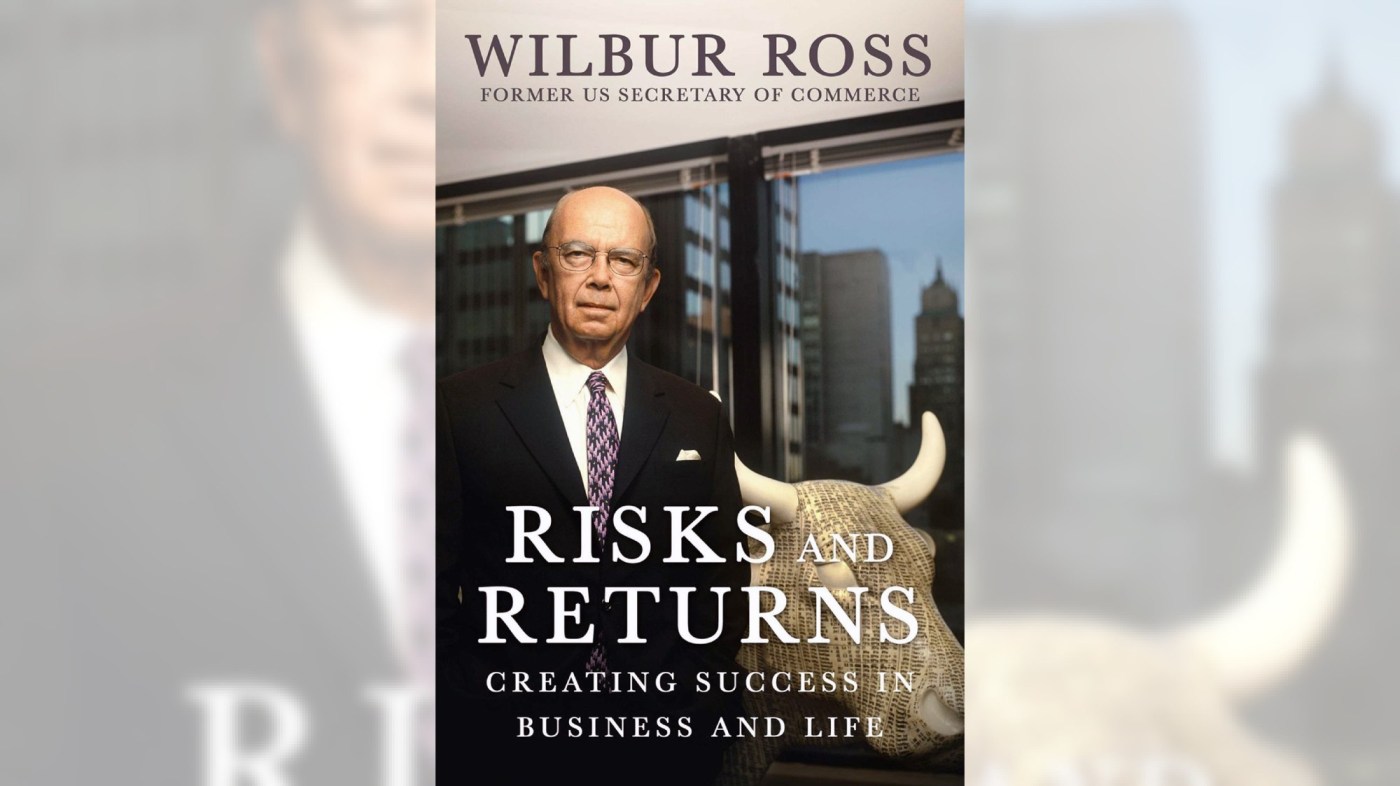
Mastering the game: Wilbur Ross on power, profit and perseverance

posted in: News | 0

Jim Alkon | (TNS) BookTrib.com

It was one of his earliest and most unforgettable moments in corporate life. Young Wilbur Ross was closing a real estate deal with the legendary Bill Zeckendorf at the real estate magnate’s panoramic and totally circular office. Catching Ross gawking at his surroundings, Zeckendorf comes up from behind, puts his arm around the young man, and says, “If you had been backed into a f__ing corner as often as I have, you would want a goddamn round office too.”

Not that Ross had been scratching and clawing his way out of adversity all his life, but, well, it comes with the territory of being a Wall Street legend, known as the “King of Bankruptcy.” Over a 55-year career, he helped structure more than $400 billion in assets, was named by Bloomberg as one of the 50 most influential people in global finance, and served — and survived — four tumultuous years as secretary of commerce under President Donald Trump.

That illustrious history and the many lessons learned with it make up the substance of his just-released memoir and life primer, “Risks and Returns” (Regnery, an imprint of Skyhorse Publishing Inc.).

The subtitle of the book, “Creating Success in Business and Life,” is not so much a roadmap for young financiers, but rather the path Ross took to reach the pinnacle of his profession. It is colored with fascinating anecdotes from his Harvard Business School days to his start on Wall Street to his counsel with some of the giants of business to his Cabinet position under Trump. The company names he worked with and for read like a Fortune 100 list, and as for the people, Ross finds himself rubbing elbows with names like Rothschild, Buffett, Icahn, Milken, Branson, King Charles, John Lennon.

Ross’s anecdotes do indeed paint a picture of financial life in the fast lane. For example, there’s the time that, during the Federated Department Stores hearings, a professor says, “Mr. Chairman, investment bankers are to the financial system what mud wrestlers are to the performing arts.” As Ross starts to refute, the room can hear the professor mutter, “Another goddamned mud wrestler.”

Or the time that Martin Shugrue, the only man ever to be the CEO of two airlines as they went into bankruptcy, says to Ross, ”You were educated at Yale and Harvard. Surely you can find more appropriate clients than the skirts who are stewardess and the thugs who are Teamsters. You should be ashamed. You have some nerve coming in to tell me how to run an airline.”

Ross was raised by parents who were Democrats but early in his adult life he switches to the Republican Party and eventually lands the Cabinet position under Trump. While he finds the role rewarding, he is also subject to the whims of the commander in chief. A 6:30 a.m. call from Trump demanding he go on TV to oppose the Fed’s decision to raise rates is nothing out of the ordinary.

And there’s the scrutiny from Congress and as well as the media. In a high political position, you give up a part of your life and your privacy.

Ross no doubt is a financial genius, but for readers of “Risks and Returns” fearing they will be caught up in theory and formulas, that is not the case. Ross is a convincing storyteller, with anecdote after anecdote told in layman’s terms for all to cherish, whether playing tennis at Carl Icahn’s oceanside house or hearing Donald Trump lament on how the Obama administration overspent for the ceremonial pens to sign documents into laws. You’ll find yourself savoring one story and then thirsting for the next.

You’ll also find some of the author’s ideas to improve the political system and our regulatory environment.

But as much as anything, “Risks and Returns” gives you insights into one of the financial titans of the last half century, through his actions, his philosophies and his thinking.

“No one will live a life free of difficulty … Lifestyle issues, boring jobs, dumb bosses, work pressures, low pay, political issues … Instead of concentrating on them … drop the self-pity and get on with an affirmative direction.”

“Do not be afraid of taking rational risks — I have found that accepting them as the essential ingredient to achieving high-level returns. Just make sure that you think them through.”

(BookTrib.com is the lifestyle destination for book lovers, where articles and books are paired together to create dynamic content that goes beyond traditional book reviews.)

©2024 BookTrib. Distributed by Tribune Content Agency, LLC.