UN rejects US resolution urging an end to the war in Ukraine without noting Russian aggression

posted in: Politics | 0

By EDITH M. LEDERER

UNITED NATIONS (AP) — In a win for Ukraine on the third anniversary of Russia’s invasion, the United States on Monday failed to get the U.N. General Assembly to approve its resolution urging an end to the war without mentioning Moscow’s aggression. And the assembly approved a dueling European-backed Ukrainian resolution demanding Russia immediately withdraw from Ukraine.

It marks a setback for the Trump administration in the 193-member world body, whose resolutions are not legally binding but are seen as a barometer of world opinion. But it also shows some diminished support for Ukraine, whose resolution passed 93-18, with 65 abstentions. That’s lower than previous votes, which saw over 140 nations condemn Russia’s aggression.

The United States had tried to pressure the Ukrainians to withdraw their resolution in favor of its proposal, according to a U.S. official and a European diplomat who spoke on the condition of anonymity because the talks were private. They refused, and then the assembly added language to the U.S. proposal making clear that Russia invaded its smaller neighbor in violation of the U.N. Charter.

The vote on the amended U.S. resolution was 93-8 with 73 abstentions, with Ukraine voting “yes,” the U.S. abstaining and Russia voting “no.”

Ukrainian Deputy Foreign Minister Mariana Betsa said her country is exercising its “inherent right to self-defense” following Russia’s invasion, which violates the U.N. Charter’s requirement that countries respect the sovereignty and territorial integrity of other nations.

“As we mark three years of this devastation — Russia’s full invasion against Ukraine — we call on all nations to stand firm and to take … the side of the Charter, the side of humanity and the side of just and lasting peace, peace through strength,” she said.

U.S. deputy ambassador Dorothy Shea, meanwhile, said multiple previous U.N. resolutions condemning Russia and demanding the withdrawal of Russian troops “have failed to stop the war,” which “has now dragged on for far too long and at far too terrible a cost to the people in Ukraine and Russia and beyond.”

“What we need is a resolution marking the commitment from all U.N. member states to bring a durable end to the war,” Shea said.

Related Articles

World News |


The biggest takeaways from Germany’s election, which will bring change to the EU’s leading power

World News |


Trump meets with French President Macron as uncertainty grows about US ties to Europe and Ukraine

World News |


Western leaders visit Kyiv and pledge military support against Russia on the war’s 3rd anniversary

World News |


Vatican announces daily evening prayers for the health of Pope Francis on St. Peter’s Square

World News |


Today in History: February 24, President Andrew Johnson impeached by US House

The dueling proposals reflect the tensions that have emerged between the U.S. and Ukraine after President Donald Trump suddenly opened negotiations with Russia in a bid to quickly resolve the conflict. It also underscores the strain in the transatlantic alliance with Europe over the Trump administration’s extraordinary turnaround on engagement with Moscow. European leaders were dismayed that they and Ukraine were left out of preliminary talks last week.

In escalating rhetoric, Trump has called Ukrainian President Volodymyr Zelenskyy a “dictator,” falsely accused Kyiv of starting the war and warned that he “better move fast” to negotiate an end to the conflict or risk not having a nation to lead. Zelenskyy responded by saying Trump was living in a Russian-made “disinformation space.”

Since then, the Trump administration not only declined to endorse Ukraine’s U.N. resolution, but at the last minute proposed its own competing resolution and pressed its allies to support that version instead. It comes as Trump plans to host French President Emmanuel Macron on Monday in Washington.

The U.S. also wanted a vote on its proposal in the more powerful U.N. Security Council. China, which holds the council presidency this month, has scheduled it for Monday afternoon.

The General Assembly has become the most important U.N. body on Ukraine because the 15-member Security Council, which is charged with maintaining international peace and security, has been paralyzed by Russia’s veto power.

There are no vetoes in the assembly, and the Ukraine resolution, which is co-sponsored by all 27 members of the European Union, is almost certain to be adopted. Its votes are closely watched as a barometer of world opinion, but the resolutions passed there are not legally binding, unlike those adopted by the Security Council.

Since Russia forces stormed across the border on Feb. 24, 2022, the General Assembly has approved half a dozen resolutions that have condemned Moscow’s invasion and demanded the immediate pullout of Russian troops.

The votes on the rival resolutions — which have sparked intense lobbying and arm-twisting, one European diplomat said — will be closely watched to see if that support has waned and to assess the backing for Trump’s effort to negotiate an end to the fighting.

The very brief U.S. draft resolution acknowledges “the tragic loss of life throughout the Russia-Ukraine conflict” and “implores a swift end to the conflict and further urges a lasting peace between Ukraine and Russia.” It never mentions Moscow’s invasion.

Russia’s U.N. ambassador, Vassily Nebenzia, told reporters last week that the U.S. resolution was “a good move.”

The Ukraine’s resolution, meanwhile, refers to “the full-scale invasion of Ukraine by the Russian Federation” and recalls the need to implement all previous assembly resolutions “adopted in response to the aggression against Ukraine.”

It singles out the assembly’s demand that Russia “immediately, completely and unconditionally withdraw all of its military forces from the territory of Ukraine within its internationally recognized borders.”

It stresses that any involvement of North Korean troops fighting alongside Russia’s forces “raises serious concerns regarding further escalation of this conflict.”

The resolution reaffirms the assembly’s commitment to Ukraine’s sovereignty and also “that no territorial acquisition resulting from the threat or use of force shall be recognized as legal.”

It calls for “a de-escalation, an early cessation of hostilities and a peaceful resolution of the war against Ukraine” and it reiterates “the urgent need to end the war this year.”

AP Diplomatic Writer Matthew Lee in Washington contributed to this report.

Fired federal workers hunt for new jobs but struggle to replace their old ones

posted in: News | 0

By MATT SEDENSKY, AP National Writer

NEW YORK (AP) — HIRING: Park ranger. SEEKING: Nuclear submarine engineer. WANTED: Sled dog musher.

If they seem unlikely postings, they probably are. But a laid-off federal worker can dream.

Axed from jobs not easily found outside government, thousands of federal workers caught in President Donald Trump’s cost-cutting efforts now face a difficult search for work.

“If you’re doing, say, vegetation sampling and prescribed fire as your main work, there aren’t many jobs,” says Eric Anderson, 48, of Chicago, who was fired Feb. 14 from his job as a biological science technician at Indiana Dunes National Park.

All the years of work Anderson put in — the master’s degree, the urban forestry classes, the wildfire deployments — seemed to disappear in a single email dismissing him.

He’s hoping there’s a chance he’s called back, but if he isn’t, he’s not sure what he’ll do next. He was so consumed with his firing that he broke a molar from grinding his teeth. But he knows he’s caught in something larger than himself, as the new administration unfurls its chaotic cost-cutting agenda.

“This is someone coming in and tossing a hand grenade and seeing what will happen,” he says.

The federal job cuts are the work of the Department of Government Efficiency, headed by billionaire Elon Musk, who has been tearing through agencies looking for suspected waste. No official tally of firings has been released, but the list stretches into the thousands and to nearly every part of the country. More than 80% of the federal government’s 2.4-million-person civilian workforce is based outside of the Washington area.

Cathy Nguyen, 51, of Honolulu, was laid off last month from her job at USAID, where she helped manage the PEPFAR program, which combats HIV/AIDS.

Her firing not only brought the turmoil of finding new health insurance, halting saving for retirement and her kids’ college education, and trimming spending for things like the family subscription to Disney Plus — it also has forced her to reconsider her career goals.

PEPFAR is a landmark effort that stretches across dozens of countries and is credited with saving some 26 million lives. Nothing rivals it. So where does a former PEPFAR worker go?

“It’s requiring me to rethink how I want to spend my professional life,” Nguyen says.

As specialized as Nguyen’s work has been, Mitch Flanigan may have her beat.

Flanigan, 40, was assigned to the sled dog kennels at Denali National Park and Preserve in Alaska until he was fired Feb. 14. It never brought a huge paycheck, but where else could he get to work as a dog musher against such a breathtaking panorama?

He has appealed his firing with the U.S. Merit Systems Protection Board.

“I still kind of want to fight for the job that I lost,” he says. “I’m not really making much money, it’s just fun and it’s a unique thing to be a part of.”

A November report from the Federal Salary Council, which advises on government pay, found that federal salaries were one-fourth lower than those in the private sector.

A Congressional Budget Office report released last year found pay disparities depended on workers’ education. Federal workers with a high school diploma or less outearned their private-sector counterparts with 17% higher wages, the CBO found. That edge disappeared among better-educated workers. Workers with bachelor’s degrees had wages 10% lower than the private sector and those with professional degrees or doctorates earned 29% less. Federal benefits were vastly better than the private sector for the lowest-educated workers, the CBO found, and about even for the highest-educated workers.

Many laid off from federal positions were drawn by stability, benefits and, more than anything, the opportunity to do work they might not be able to do anywhere else. Now, everyone from diplomats to public health workers are flooding the job market looking for suitable positions.

Gracie Lynne, a 32-year-old fellow at the Consumer Financial Protection Bureau, who lives in Eugene, Oregon, took a pay cut when she started her job four years ago.

Her parents lost their home during the Great Recession, which led to their divorce, years of financial angst, and Lynne’s own interest in financial regulation. She found herself following the nascent CFPB’s rulemaking and poring over 1,000-page bills on bank regulations. She wrote her master’s thesis on the bureau. She couldn’t pass up the job.

“This is a once-in-a-lifetime opportunity,” she told herself.

Plus, she thought, the benefits would come in handy when she and her husband decided to start a family. Now, six months pregnant, she finds herself jobless and scrambling to get insured.

She isn’t sure where she’ll land, or if she’ll find many employers rushing to hire someone about to become a mother. But she feels more committed than ever to the work she did.

“I feel even more compelled to stay in the public sector after this experience,” she says, noting the good work protecting consumers she was every day, “to stay in the fight.”

Luke Tobin, a 24-year-old forestry technician who worked for the U.S. Forest Service in Idaho’s Nez Perce National Forest, who was fired from his job Feb. 14, finds the accusations of waste by Musk and others laughable. He sees extreme understaffing and threadbare budgets.

He earned about $19 an hour and was furloughed for about half of the year but still relished a job that had him backpacking in remote areas for days at a time.

Scrambling to find a replacement job, he’s put in dozens of applications. He has pursued openings on tree farms, at tree-trimming companies and at nurseries, but so far, has only heard back from two employers on two minimum-wage jobs: one as an Amazon delivery person and the other as a line cook at a fried chicken restaurant.

“I need a job,” he says, “any job.”

Associated Press writer Mark Thiessen in Anchorage, Alaska, contributed to this report.

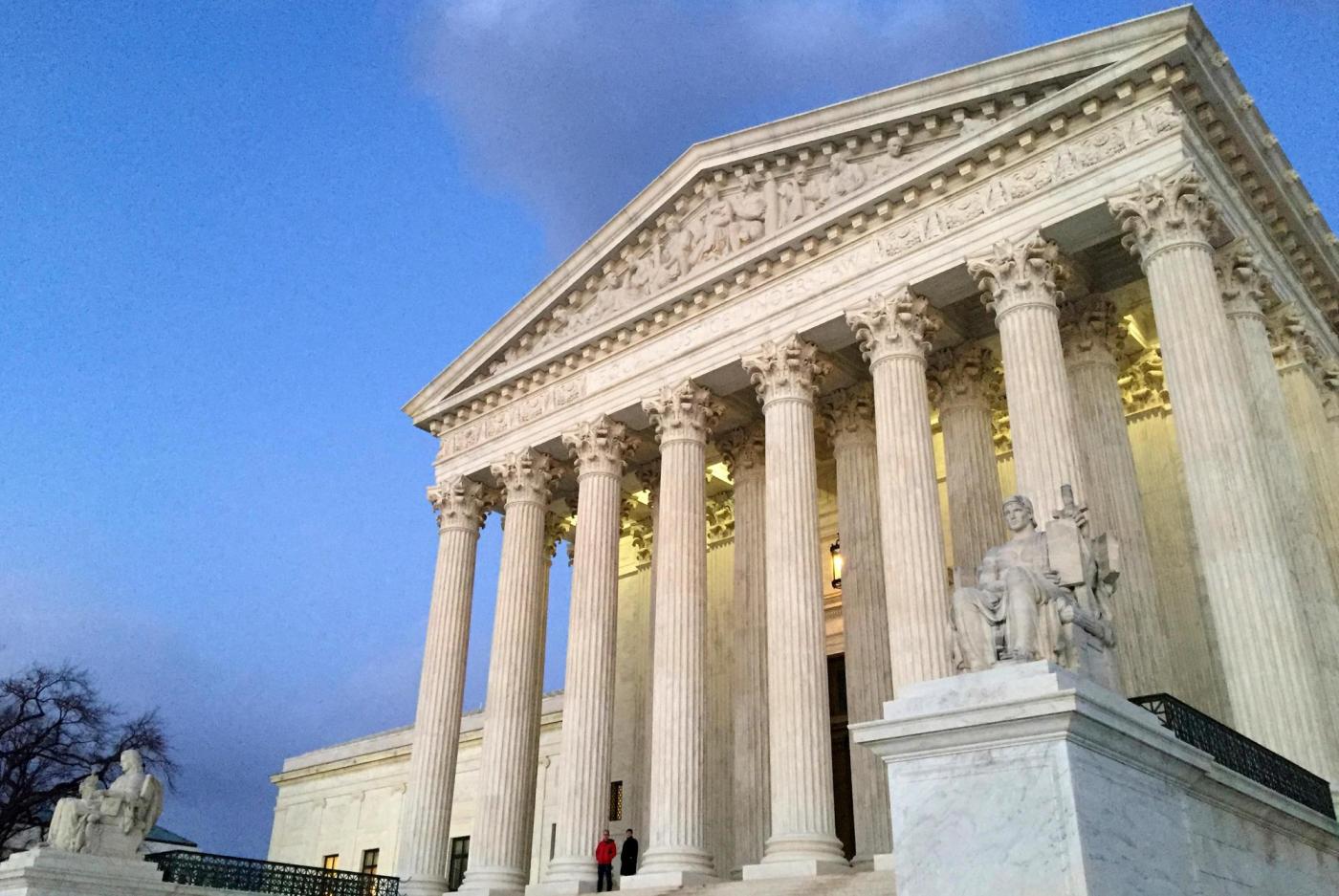
Supreme Court turns back challenges to laws keeping abortion opponents away from clinics, patients

posted in: Adventure | 0

By LINDSAY WHITEHURST, Associated Press

WASHINGTON (AP) — The Supreme Court refused Monday to hear a pair of cases from abortion opponents who say laws limiting anti-abortion demonstrations near clinics violate their First Amendment rights.

The majority did not explain their reasoning for turning down the appeals, as is typical, but two conservative justices, Samuel Alito and Clarence Thomas, disagreed.

The cities said the laws were passed to address disturbing behavior from protesters outside of health care clinics. But anti-abortion activists said the measures violate free-speech rights and should be on their “deathbed” after the justices overturned Roe v. Wade and the nationwide right to abortion.

One case comes from Carbondale, Illinois, which is located near the state’s southern border and passed an ordinance after becoming a destination for patients from nearby states with abortion bans. The measure was quickly challenged in court, and has never been enforced. The city argued the appeal should be tossed because the ordinance was repealed shortly before abortion opponents went to the Supreme Court.

The other case is from New Jersey, where activist Jeryl Turco says she has approached women in Englewood for years to try to convince them not to have abortions. She says an 8-foot demonstration-free zone the city passed in 2014 in response to an aggressive group of protesters also wrongly kept her from approaching women.

Englewood argues that Turco has still been able to share her message outside of the immediate area near clinic entrances. Lower courts have ultimately upheld the ordinance, finding it isn’t a major First Amendment burden.

Both challengers pointed out that the high court struck down a Massachusetts law creating 35-foot demonstration free “buffer zones” around clinic doors in 2014. They say the Illinois and New Jersey laws should meet the same fate.

But cities say their rules are in line with a different Supreme Court decision from 2000, when the high court allowed a Colorado law to stand. It barred people from getting within 8 feet of others without permission in a 100-foot “bubble zone” around clinics.

Thomas said that case, known as Hill v. Colorado, was wrongly decided. In a dissent from the decision to decline the Illinois case, he said that the court wrongly treated it differently than other First Amendment cases because abortion was involved. “Hill has been seriously undermined, if not completely eroded, and our refusal to provide clarity is an abdication of our judicial duty,” he wrote.

Roberta Flack, Grammy-winning singer known for ‘Killing Me Softly With His Song’ and other intimate hits, dies at 88

posted in: News | 0

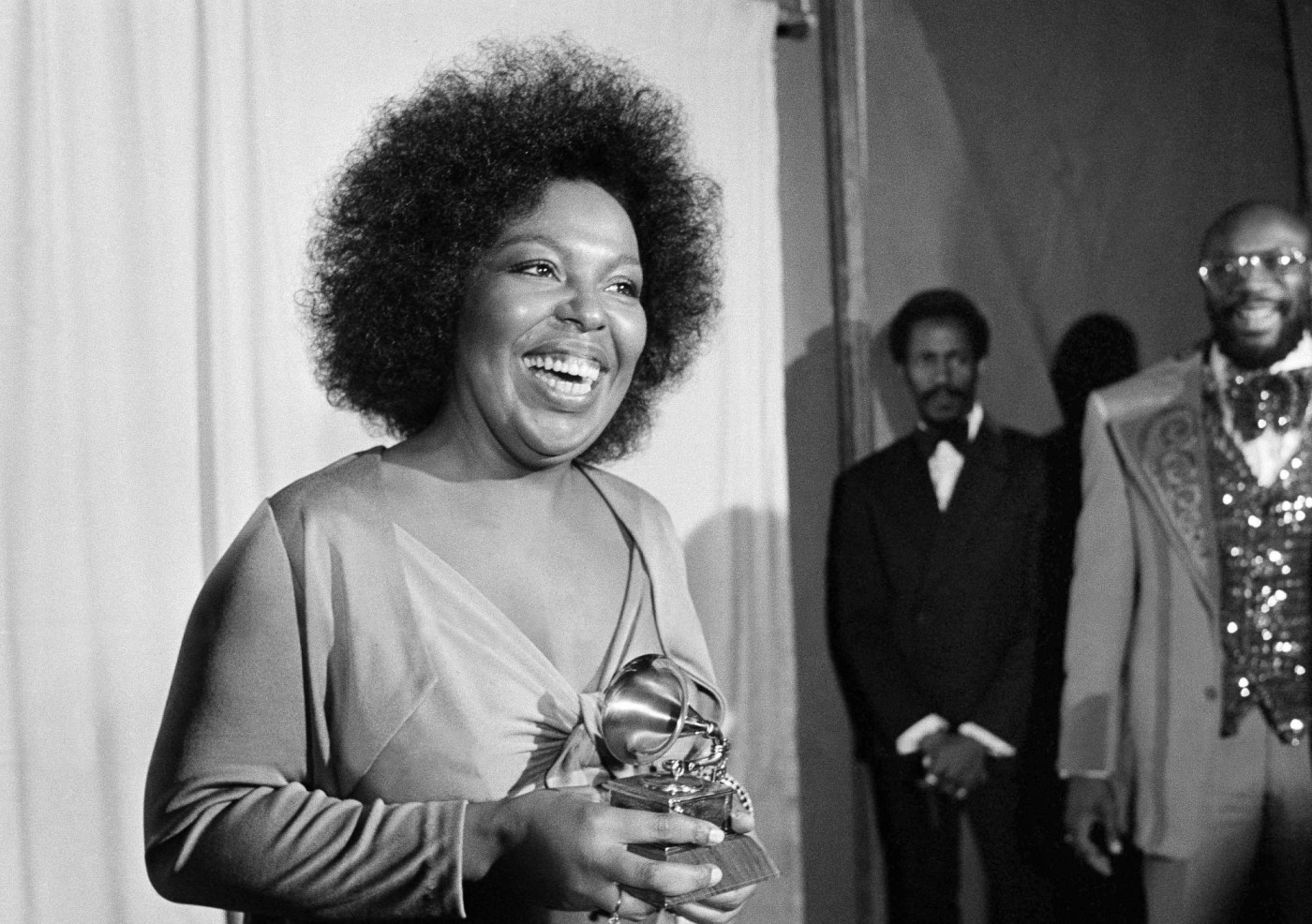
Roberta Flack, the Grammy-winning singer and pianist whose intimate vocal and musical style made her one of the top recordings artists of the 1970s and an influential performer long after, died Monday. She was 88.

Singer Roberta Flack poses for a portrait in New York on Oct. 10, 2018. (Photo by Matt Licari/Invision/Associated Press)

She died at home surrounded by her family, publicist Elaine Schock said in a statement. Flack announced in 2022 she had ALS, commonly known as Lou Gehrig’s disease, and could no longer sing.

Little known before her early 30s, Flack became an overnight star after Clint Eastwood used “The First Time I Ever Saw Your Face” as the soundtrack for one of cinema’s more memorable and explicit love scenes, between the actor and Donna Mills in his 1971 film “Play Misty for Me.” The hushed, hymn-like ballad, with Flack’s graceful soprano afloat on a bed of soft strings and piano, topped the Billboard pop chart in 1972 and received a Grammy for record of the year.

“The record label wanted to have it re-recorded with a faster tempo, but he said he wanted it exactly as it was,” Flack told The Associated Press in 2018. “With the song as a theme song for his movie, it gained a lot of popularity and then took off.”

In 1973, she matched both achievements with “Killing Me Softly With His Song,” becoming the first artist to win consecutive Grammys for best record.

She was a classically trained pianist discovered in the late 1960s by jazz musician Les McCann, who later wrote that “her voice touched, tapped, trapped, and kicked every emotion I’ve ever known.” Versatile enough to summon the up-tempo gospel passion of Aretha Franklin, Flack often favored a more reflective and measured approach.

For Flack’s many admirers, she was a sophisticated and bold new presence in the music world and in the social and civil rights movements of the time, her friends including the Rev. Jesse Jackson and Angela Davis, whom Flack visited in prison while Davis faced charges — for which she was acquitted — for murder and kidnapping. Flack sang at the funeral of Jackie Robinson, major league baseball’s first Black player, and was among the many guest performers on the feminist children’s entertainment project created by Marlo Thomas, “Free to Be … You and Me.”

Roberta Cleopatra Flack, the daughter of musicians, was born in Black Mountain, North Carolina, and raised in Arlington, Virginia. A gospel fan as a child, she was so talented a piano player that at age 15 she received a full scholarship to Howard, the historically Black university.

Flack’s other hits from the 1970s included the cozy “Feel Like Makin’ Love” and two duets with her close friend and former Howard University classmate Donny Hathaway, “Where Is the Love” and ”The Closer I Get to You” — a partnership that ended in tragedy. In 1979, she and Hathaway were working on an album of duets when he suffered a breakdown during recording and later that night fell to his death from his hotel room in Manhattan.

“We were deeply connected creatively,” Flack told Vibe in 2022, upon the 50th anniversary of the million-selling “Roberta Flack and Donny Hathaway” album. “He could play anything, sing anything. Our musical synergy was unlike (anything) I’d had before or since.”

She never matched her first run of success, although she did have a hit in the 1980s with the Peabo Bryson duet “Tonight, I Celebrate My Love” and in the 1990s with the Maxi Priest duet “Set the Night to Music.” In the mid-90s, Flack received new attention after the Fugees recorded a Grammy-winning cover of “Killing Me Softly,” which she eventually performed on stage with the hip-hop group.

Overall, she won five Grammys (three for “Killing Me Softly”), was nominated eight other times and was given a lifetime achievement Grammy in 2020, with John Legend and Ariana Grande among those praising her.

“I love that connection to other artists because we understand music, we live music, it’s our language,” Flack told songwriteruniverse.com in 2020. “Through music we understand what we are thinking and feeling. No matter what challenge life presents, I am at home with my piano, on a stage, with my band, in the studio, listening to music. I can find my way when I hear music.”

In 2022, Beyoncé placed Flack, Franklin and Diana Ross among others in a special pantheon of heroines name-checked in the Grammy-nominated “Queens Remix” of “Break My Soul.”

Flack was briefly married to Stephen Novosel, an interracial relationship that led to tension with each of their families, and earlier had a son, the singer and keyboardist Bernard Wright. For years, she lived in Manhattan’s Dakota apartment building, on the same floor as John Lennon and Yoko Ono, who became a close friend and provided liner notes for a Flack album of Beatles covers, “Let It Be Roberta.” She also devoted extensive time to the Roberta Flack School of Music, based in New York and attended mostly by students between ages 6 to 14.

Flack had taught music in D.C.-area junior high schools for several years in her 20s, while performing after hours in clubs. She sometimes backed other singers, but her own shows at Washington’s renowned Mr. Henry’s attracted such celebrity patrons as Burt Bacharach, Ramsey Lewis and Johnny Mathis. The club’s owner, Henry Yaffe, converted an apartment directly above into a private studio, the Roberta Flack Room.

“I wanted to be successful, a serious all-round musician,” she told The Telegraph in 2015. “I listened to a lot of Aretha, the Drifters, trying to do some of that myself, playing, teaching.”

Flack was signed to Atlantic Records and her debut album, “First Take,” a blend of gospel, soul, flamenco and jazz, came out in 1969. One track was a love song by the English folk artist Ewan MacColl: “The First Time Ever I Saw Your Face,” written in 1957 for his future wife, singer Peggy Seeger. Flack not only knew of the ballad, but used it while working with a glee club during her years as an educator.

“I was teaching at Banneker Junior High in Washington, D.C. It was part of the city where kids weren’t that privileged, but they were privileged enough to have music education. I really wanted them to read music. First, I’d get their attention. (Flack starts singing a Supremes hit) ‘Stop, in the name of love.’ Then I could teach them!” she told the Tampa Bay Times in 2012.

“You have to do all sorts of things when you’re dealing with kids in the inner-city,” she said. “I knew they’d like the part where (‘The First Time Ever I Saw Your Face’) goes ‘The first time ever I kissed your mouth.’ Ooh, ‘Kissed your mouth!’ Once the kids got past the giggles, we were good.”

Related Articles

National News |


Border Patrol agent killed in line of duty is buried at Fort Snelling cemetery

National News |


Ramsey County Judge Patrick Diamond, who ruled on Data Practices violations, transgender discrimination cases, dies at 64

National News |


Dan Endy Sr., co-founder of NFL Films and Twin Cities sports fixture, has died

National News |


Obituary: Artist and longtime Stillwater prison teacher William Murray, 76, transformed pain into painting

National News |


Hastings school board member, supper club co-owner Jenny Wiederholt-Pine dies at 44