Trump overstepped his constitutional authority in freezing Congress’ funding for USAID, judge says

posted in: All news | 0

By ELLEN KNICKMEYER

WASHINGTON (AP) — President Donald Trump overstepped his constitutional authority in freezing almost all spending on U.S. humanitarian and development work abroad, a federal judge ruled, saying the administration could no longer simply sit on the tens of billions of dollars that Congress has appropriated for foreign aid.

But Judge Amir H. Ali stopped short of ordering Trump officials to use the money to revive the thousands of contracts they have abruptly terminated for U.S. aid and development work around the world.

Ali’s ruling Monday evening came hours after Secretary of State Marco Rubio announced that the administration had finished what has been a six-week purge of programs of the six-decade-old U.S. Agency for International Development, cutting 83% of them. Rubio said he would move the remaining aid programs under the State Department.

Rubio made his announcement in a post on X, in one of his few public comments on what has been a historic shift away from U.S. foreign aid and development, executed by Trump political appointees at the State Department and Elon Musk’s Department of Government Efficiency teams.

Rubio in the post thanked DOGE and “our hardworking staff who worked very long hours to achieve this overdue and historic reform” in foreign aid.

Trump on Jan. 20 issued an executive order directing a freeze of foreign assistance funding and a review of all U.S. aid and development work abroad. Trump charged that much of foreign assistance was wasteful and advanced a liberal agenda.

Rubio’s social media post Monday said that review was now “officially ending,” with some 5,200 of USAID’s 6,200 programs eliminated. Those programs “spent tens of billions of dollars in ways that did not serve, (and in some cases even harmed), the core national interests of the United States,” Rubio wrote. About 1,000 remaining contracts would now be administered by the State Department, he said.

Democratic lawmakers and others call the shutdown of congressionally funded programs illegal, saying such a move requires Congress’ approval.

In his preliminary injunction Monday, Ali said Trump could not simply ignore most of what is roughly $60 billion in foreign assistance funding that was given to USAID and State by Congress, which under the U.S. Constitution has the authority to spend money.

“The constitutional power over whether to spend foreign aid is not the President’s own — and it is Congress’s own,” Ali wrote, adding elsewhere that Trump officials “offer an unbridled view of Executive power that the Supreme Court has consistently rejected.”

Related Articles

National Politics |


Trump doubles planned tariffs on Canadian steel and aluminum to 50% as trade war intensifies

National Politics |


How the White House hired Republican political firms to launch an anti-migrant ad campaign

National Politics |


Ukraine-US talks on ending war with Russia start in Saudi Arabia as Kyiv launches huge drone attack

National Politics |


Supreme Court seems intent on taking small steps in dealing with challenges to Trump’s agenda

National Politics |


Republicans are marching ahead with a government funding bill despite Democratic opposition

But Ali declined the request from nonprofit groups and businesses to revive the canceled contracts for foreign assistance work around the world, saying it was up to the administration to make decisions on specific contracts. The mass contract cancellations also were a separate matter than the funding freeze that two global health groups, the AIDS Vaccine Advocacy Coalition and the Global Health Council, had originally gone to court to challenge, he said.

Ali also ordered Trump officials to pay all of the roughly $2 billion it owed to aid groups and businesses up to mid-February, and ordered them to do it at a pace of at least 300 back payments a day.

Despite claims from the administration it was continuing to fund at least life-saving programs in its foreign aid freeze, USAID staffers and the agency’s nonprofit and business partners say all payments through USAID were cut off until recently, and that USAID’s payment system itself disabled by Musk’s DOGE.

Ali’s ruling came after the Supreme Court had rejected the Trump administration’s appeal in the case.

USAID supporters said the sweep of the cuts have made it difficult to tell what U.S. efforts abroad the Trump administration actually supports.

“The patterns that are emerging is the administration does not support democracy programs, they don’t support civil society … they don’t support NGO programs,” or health or emergency response, said Andrew Natsios, the USAID administrator for Republican former President George W. Bush.

“So what’s left”?” Natsios asked.

Republicans broadly have made clear they want foreign assistance that would promote a far narrower interpretation of U.S. national interests going forward.

The dismantling of USAID that followed Trump’s order upended decades of policy that humanitarian and development aid abroad advanced U.S. national security by stabilizing regions and economies, strengthening alliances and building goodwill.

The State Department said in a court filing earlier this month it was killing more than 90% of USAID programs. Rubio gave no explanation for why his number was lower.

In the weeks after Trump’s order, one of his appointees and transition team members, Pete Marocco, and Musk pulled USAID staff around the world off the job through forced leaves and firings, shut down USAID payments overnight and terminated aid and development contracts by the thousands.

The shutdown has left many USAID staffers and contractors and their families still overseas, many of them awaiting back payments and travel expenses to return home.

The Trump administration on Monday gave USAID staffers abroad until April 6 to move back to the United States if they want to do so on the government’s tab, according to a USAID email sent to staffers and seen by The Associated Press. Staffers say the deadline gives them scant time to pull children from school, sell homes or break leases, and, for many, find somewhere to live after years away from the United States.

Associate Press writer Lindsay Whitehurst contributed.
China’s shipbuilding dominance poses economic and national security risks for the US, a report says

posted in: All news | 0

By DIDI TANG, Associated Press

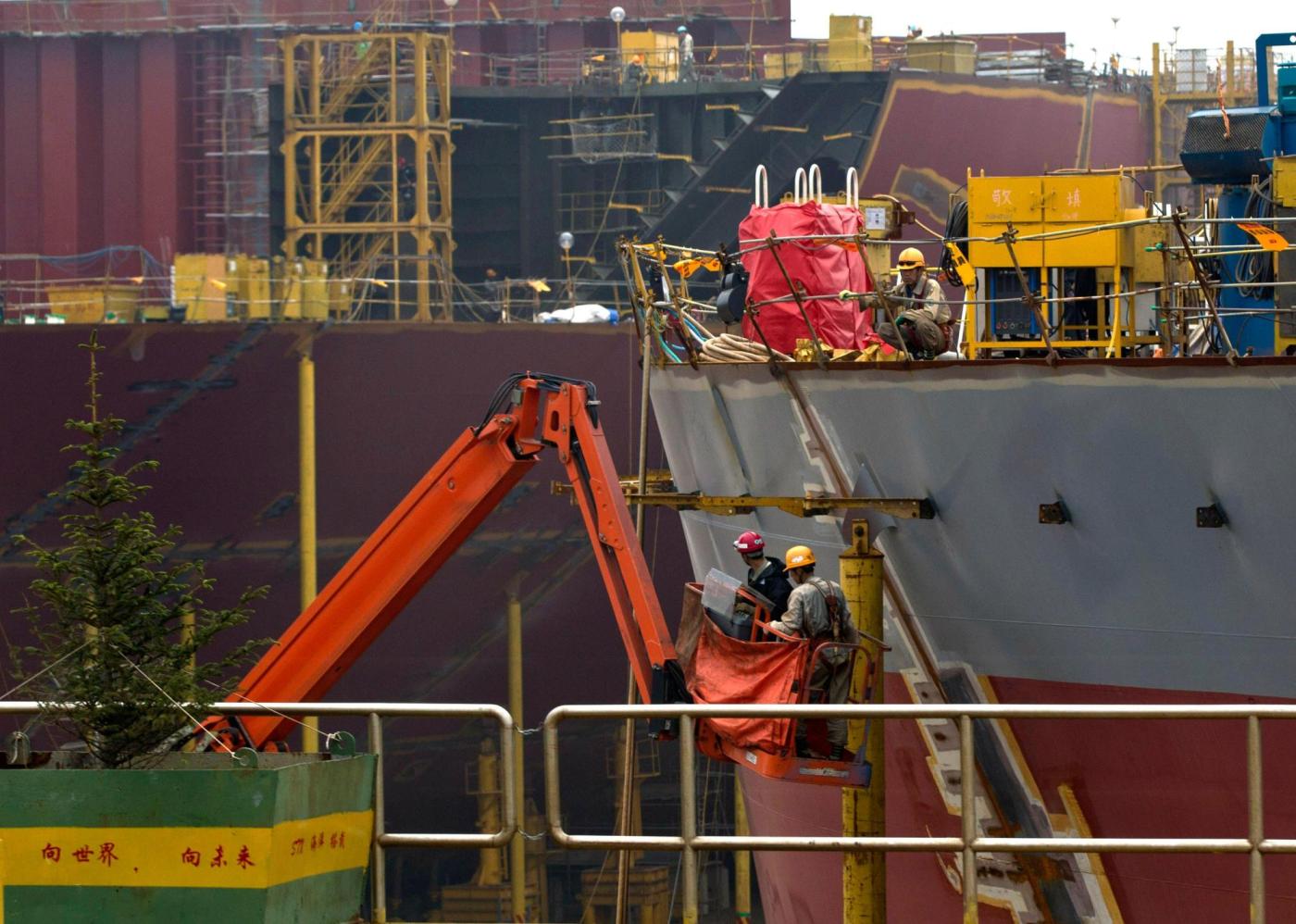
WASHINGTON (AP) — In only two decades, China has grown to be the dominant player in shipbuilding, claiming more than half of the world’s commercial shipbuilding market, while the U.S. share has fallen to just 0.1%, posing serious economic and national security challenges for the U.S. and its allies, according to a report released Tuesday by the Center for Strategic and International Studies.

In 2024 alone, one Chinese shipbuilder constructed more commercial vessels by tonnage than the entire U.S. shipbuilding industry has built since the end of World War II. China already has the world’s largest naval fleet, the Washington-based bipartisan think tank said in its 75-page report.

“The erosion of U.S. and allied shipbuilding capabilities poses an urgent threat to military readiness, reduces economic opportunities, and contributes to China’s global power-projection ambitions,” the report said.

Concerns about the poor state of U.S. shipbuilding have been growing in recent years, as the country faces rising challenges from China, which has the world’s second largest economy and has ambitions to reshape the world order. At a congressional hearing in December, senior officials and lawmakers urged action.

Last week, President Donald Trump told Congress that his Republican administration would “resurrect” the American shipbuilding industry, for commercial and military vessels, and he would create “a new office of shipbuilding in the White House.”

“We used to make so many ships,” Trump said. “We don’t make them anymore very much, but we’re going to make them very fast, very soon. It will have a huge impact.”

In February, the heads of four major labor unions called on Trump to boost American shipbuilding and enforce tariffs and other “strong penalties” against China for its increasing dominance in that sector.

“What we are seeing now is a recognition of the strategic significance of shipbuilding and port security, and the related challenges posed by China,” said Matthew Funaiole, a senior fellow in the China Power Project at CSIS and a co-author of the report. Funaiole said concerns over shipbuilding are “a fairly bipartisan issue.”

The report said that China’s shipbuilding sector went through “a striking metamorphosis” in the past two decades, transforming from a “peripheral player” to the dominant player on the global market, with efforts centered on one state-owned enterprise: China State Shipbuilding Corporation, or CSSC.

At the same time, China has greatly expanded its navy. Last year, a CSIS assessment found that China was operating 234 warships, compared with the U.S. Navy’s 219, although the U.S. continued to hold an advantage in guided missile cruisers and destroyers.

In developing recommendations for the U.S. to compete with China, the researchers zoomed in on the Chinese company’s use of Beijing’s “military-civil fusion” strategy, which blurs the lines between the country’s defense and commercial sectors.

They found that CSSC, which builds both commercial and military ships, sells three-quarters of its commercial production to buyers outside China, including to the U.S.-allied Denmark, France, Greece, Japan and South Korea. These foreign firms are thus funneling billions of dollars to Chinese shipyards that also make warships, advancing China’s modernization of its navy and providing Chinese defense contractors with key dual-use technology, the report said.

The CSIS researchers suggested that, as a long-term fix, the U.S. should invest in rebuilding its shipbuilding industry and work with allies to expand shipbuilding capacities outside China. For the near term, they recommended actions to level the playing field and “disrupt China’s murky dual-use ecosystem,” such as by charging docking fees on Chinese-made vessels and cutting U.S. financial and business ties with CSSC and its subsidiaries.

The Trump administration has proposed new fees on China-linked vessels calling on U.S. ports. A BlackRock-led consortium last week agreed to acquire stakes in 43 ports across the globe, including the two ports on either side of the Panama Canal, from a Hong Kong-based conglomerate.

UK police arrest a man on suspicion of manslaughter in the North Sea ship collision

posted in: All news | 0

By JILL LAWLESS

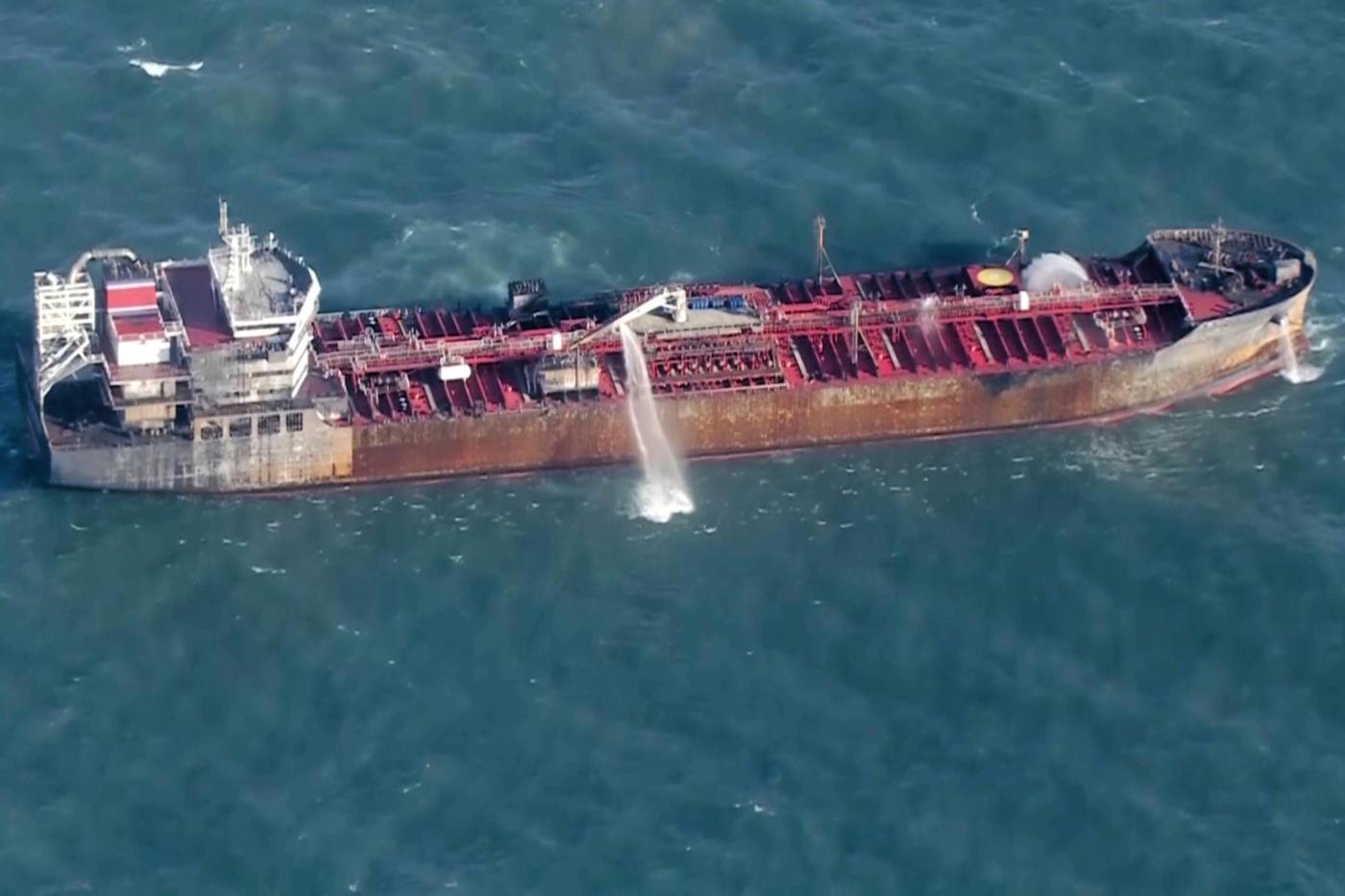
LONDON (AP) — British police arrested a man on suspicion of manslaughter as they searched for answers about why a cargo ship hit a tanker transporting jet fuel for the U.S. military off eastern England, setting both vessels ablaze. One sailor was presumed dead.

Humberside Police said the 59-year-old was detained “on suspicion of gross negligence manslaughter in connection with the collision.” The man, who was not named by police, has not been charged.

U.K. officials were watching for damage to birds and sea life after jet fuel from a ruptured tank poured into the North Sea when the Portugal-registered container ship Solong broadsided the U.S.-flagged tanker MV Stena Immaculate on Monday. The collision sparked explosions and fires that burned for more than 24 hours.

Footage filmed from a helicopter on Tuesday morning showed the fire appeared to largely be out on the tanker, which had a large gash on its port side.

The U.K. coast guard agency said Tuesday that “the Solong is still alight and the fire on board the Stena Immaculate has greatly diminished.” It said the cargo ship was drifting south, away from the tanker, and a 1 kilometer (around a ½ mile) exclusion zone had been put in place around both ships. The government said the cause of the collision was being investigated, but there was no indication of foul play.

“No sign of pollution from vessels is observed at this time,” Transport minister Mike Kane told lawmakers in the House of Commons. But he cautioned that it was a fast-changing situation, and said the cargo ship is likely to sink.

The government said air quality readings were normal and the risk to public health onshore was “very low.”

The collision triggered a major rescue operation by lifeboats, coast guard aircraft and commercial vessels in the foggy North Sea.

All but one of the 37 crew members from the two vessels were brought safely ashore in the port of Grimsby, about 150 miles (240 kilometers) north of London, with no major injuries. One crew member was missing, and the coast guards called off the search late Monday.

“Our working assumption is that, very sadly, the sailor is deceased.” Kane said.

Related Articles

World News |


Ukraine-US talks on ending war with Russia start in Saudi Arabia as Kyiv launches huge drone attack

World News |


With Trump and independence on their minds, Greenlanders vote in parliamentary elections

World News |


Today in History: March 11, massive earthquake and tsunami in Japan kill nearly 20,000

World News |


Former President Rodrigo Duterte arrested in the Philippines on an ICC warrant over drug killings

World News |


The cute whiskers are back on. Rare Mediterranean monk seals are cared for in a Greek rehab center

The U.K. Marine Accident Investigation Branch has begun gathering evidence of what caused the Solong, bound from Grangemouth, Scotland, to Rotterdam, Netherlands, to hit the stationary tanker, which was anchored about 10 miles (16 kilometers) off the English coast.

The investigation will be led by the U.S. and Portugal, the countries where the vessels are flagged.

The 183-meter (596-foot) Stena Immaculate was operating as part of the U.S. government’s Tanker Security Program, a group of commercial vessels that can be contracted to carry fuel for the military when needed. Its operator, U.S.-based maritime management firm Crowley, said that it was carrying 220,000 barrels of Jet-A1 fuel in 16 tanks, at least one of which was ruptured.

The company said that it was unclear how much fuel had leaked into the sea.

The owner of the Solong, shipping company Ernst Russ, said that contrary to earlier reports, the vessel wasn’t carrying containers of sodium cyanide, which can produce harmful gas when combined with water. It said that four empty containers had previously contained the chemical.

“Our team is actively engaged with all local authorities, and we will work with cleanup teams to ensure every effort is made to mitigate further impacts on the marine environment,” the company said in a statement.

Greenpeace U.K. said that it was too early to assess the extent of any environmental damage from the collision, which took place near busy fishing grounds and major seabird colonies.

Environmentalists said that oil and chemicals posed a risk to sea life, including whales and dolphins and to birds, including puffins, gannets and guillemots that live on coastal cliffs.

Tom Webb, senior lecturer in marine ecology and conservation at the University of Sheffield, said that wildlife along that stretch of coast “is of immense biological, cultural and economic importance.”

“In addition to the wealth of marine life that is present all year round, this time of the year is crucial for many migratory species,” he said.

Alex Lukyanov, who models oil spills at the University of Reading, said that the environmental impact would depend on multiple factors, including “the size of the spill, weather conditions, sea currents, water waves, wind patterns and the type of oil involved.”

“This particular incident is troubling because it appears to involve persistent oil, which breaks up slowly in water,” he said. “The environmental toll could be severe.”

Southwest Airlines breaks with another tradition and checked bags will cost you now

posted in: All news | 0

By MICHELLE CHAPMAN, Associated Press Business Writer

Southwest Airlines said Tuesday that it will begin charging customers a fee to check bags, abandoning a decades-long practice that executives had described last fall as key to differentiating the budget carrier from its rivals.

Southwest, which built years of advertising campaigns around its policy of letting passengers check up to bags for free, said people who haven’t either reached the upper tiers of its Rapid Rewards loyalty program, bought a business class ticket or hold the airline’s credit card will have to pay for checked bags.

The airline did not outline the fee schedule but said the new policy would start with May 28 bookings.

“We have tremendous opportunity to meet current and future customer needs, attract new customer segments we don’t compete for today, and return to the levels of profitability that both we and our shareholders expect,” Southwest Airlines CEO Bob Jordan said in a statement.

Less than a year ago, the Dallas-based airline announced it was doing away with another tradition, the open-boarding system it has used for more than 50 years. Southwest expects to begin operating flights with passengers in assigned seats next year.

Southwest has struggled recently and is under pressure from activist investors to boost profits and revenue. The airline reached a truce in October with hedge fund Elliott Investment Management to avoid a proxy fight, but Elliott won several seats on the Southwest board.

The airline announced last month that it was eliminating 1,750 jobs, or 15% of its corporate workforce, in the first major layoffs in the company’s 53-year history.

The job cuts, which were scheduled to be mostly completed by the end of June, are part of a plan to slash costs and transform the company into a “leaner, faster, and more agile organization,” Jordan said at the time.

Southwest’s stock rose more than 6% before the market open Tuesday.

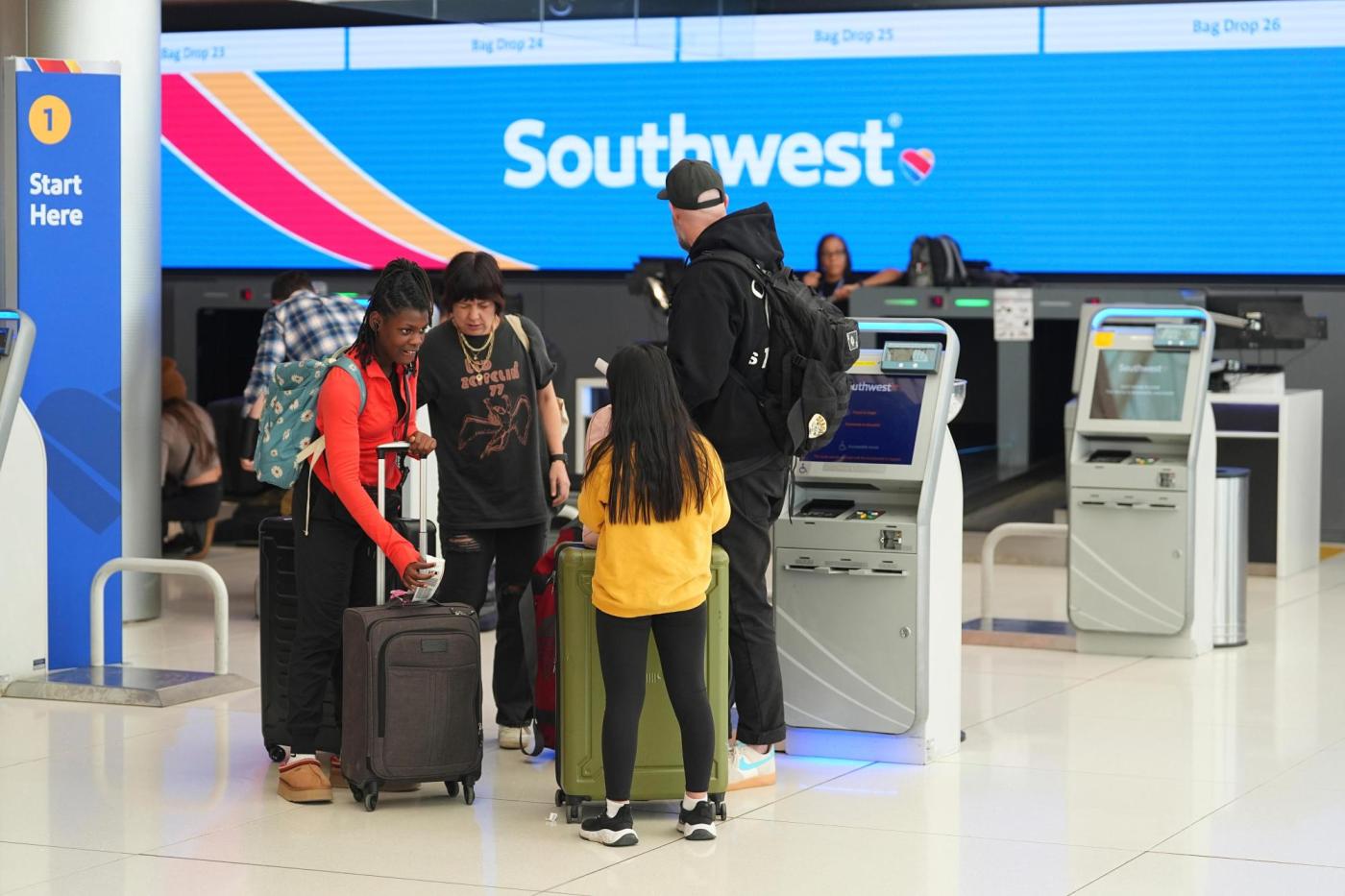
FILE – Travelers wait at the check-in counter for Southwest Airlines in Denver International Airport Thursday, Dec. 19, 2024, in Denver. (AP Photo/David Zalubowski, File)

As recently as Southwest’s investor day in late September, airline executives described the bags-fly-free as the most important feature in setting Southwest apart from rivals. All other leading U.S. airlines charge for checked luggage, and Wall Street has long argued that Southwest was leaving money behind.

The airline estimated in September that charging bag fees would bring in about $1.5 billion a year but cost the airline $1.8 billion in lost business from customers who chose to fly Southwest because of its generous baggage allowance.

Southwest said Tuesday that it would continue to offer two free checked bags to Rapid Rewards A-List preferred members and customers traveling on Business Select fares, and one free checked bag to A-List members and other select customers. Passengers with Rapid Rewards credit cards will receive a credit for one checked bag.

People who don’t qualify for those categories will get charged to check bags. The airline said that it also would roll out a new, basic fare on its lowest priced tickets when the change takes effect.

In a regulatory filing, Southwest disclosed that it now anticipates first-quarter revenue per available seat mile will be up 2% to 4%. Its prior forecast was for an increase of 5% to 7%. The airline said it expects capacity to be down about 2%.

The airline announced last year that along with giving passengers assigned seats, it would charge them extra for with more legroom and offer red-eye flights.