Mexico agrees to make more predictable water deliveries to the US

posted in: All news | 0

MEXICO CITY (AP) — Mexico and the United States said Tuesday that they had reached an agreement under which Mexico would send a minimum amount of water annually to the U.S.

President Donald Trump had threatened to raise tariffs by 5% on Mexican imports if it did not deliver more water. The countries have been negotiating the issue for months.

Related Articles


Wall Street drifts as gold rises back above $5,000


Washington Post says one-third of its staff across all departments is being laid off


Judge set to hear arguments as court gives Trump another shot at nixing hush money conviction


Today in History: February 4, Heiress Patricia Hearst kidnapped


PepsiCo plans price cuts as demand for its drinks and snacks slips

Under the new agreement, Mexico will send at least 350,000 acre-feet of water to the United States each year during the current five-year cycle. An acre-foot is the amount of water needed to cover 1 acre of land to a depth of 1 foot.

Mexico’s commitment to a minimum annual delivery amount is a change from what is required under the 1944 Water Treaty.

Under the existing treaty, Mexico must deliver 1.75 million acre-feet of water to the U.S. from six tributaries every five years. The average annual amount is 350,000 acre-feet, but the U.S. has complained that Mexico builds up a water debt in the first years of a cycle that hurts Texas farmers before eventually meeting the treaty requirement.

The United States, in return, gives Mexico even more water from other water sources farther west along their shared border.

The agreement reached between the governments would even out those deliveries from Mexico.

Mexico’s Foreign Affairs, Environmental and Agriculture ministries confirmed an agreement with the U.S. in a statement Tuesday, but without including the agreed to amount. “Mexico confirmed its willingness to guarantee the delivery of an annual minimum quantity agreed to by both countries,” the statement said.

While the U.S. government celebrated the agreement as a victory, it is a sensitive issue in Mexico, especially among farmers in northern states suffering drought conditions.

In the border state of Tamaulipas, across from Texas, farmers have said in recent weeks that the lack of water has led some to not plant crops.

The agreement followed a phone conversation last week between Trump and Mexican President Claudia Sheinbaum.

In December, Sheinbaum had said Mexico would be sending more water to cover the existing debt.

Is it chili? Is it mac and cheese? This slow cooker recipe combines the best of both

posted in: All news | 0

By BRITTANY MULLINS

When a friend mentioned that she serves chili over noodles, I was intrigued. We always serve our chili straight up with cornbread or tortilla chips on the side, but I had to try this new way, and the results were what inspired this chili mac from my cookbook “Mostly Veggies.”

Related Articles


Fare For All, an affordable pop-up grocery store, ending service to metro


With caviar McNuggets and heart-shaped pizza, fast food chains hope to win Valentine’s diners


Snack like a pro on Super Bowl Sunday with Panko-crusted chicken strips and game-changing sauce


3 Super Bowl recipes from esteemed chefs


Fresh find: Gluten-free waffles or pancakes from a box

Is it chili? Is it mac and cheese? It’s the best of both worlds, and it’s surprisingly healthy and packed with veggies!

I love my slow cooker! It’s so convenient to throw ingredients in the slow cooker in the morning and have a delicious, healthy meal ready to eat at the end of the day. You are more than welcome to cook dried beans from scratch, but that usually involves soaking and long cook times. For that reason, I’m a big fan of using canned beans for easy meals.

Slow Cooker Chili Mac

Servings: 6

Ingredients

1 medium yellow onion, chopped

2 cloves garlic, minced

1 red or orange bell pepper, seeded and chopped

1 (15-ounce) can pinto beans, drained and rinsed

1 (15-ounce) red kidney beans, drained and rinsed

1 cup frozen sweet corn kernels

1 (28-ounce) can diced tomatoes

2 cups vegetable broth

2 tablespoons chili powder

1 teaspoon ground cumin

1 teaspoon dried oregano

½ teaspoon fine sea salt

¼ teaspoon ground black pepper

1 (8-ounce) box chickpea elbow pasta noodles

1 cup shredded cheddar cheese, plus more for serving (plant-based, if needed)

Sliced green onions, for garnish

Directions

This image released by Voracious shows a recipe for chili combined with mac and cheese from Brittany Mullins’ cookbook “Mostly Veggies.” (Kristin Teig/Voracious via AP)

1. Add the onion, garlic, bell pepper, beans, corn, tomatoes and their juices, broth, and seasonings to a slow cooker. Stir to combine. Cover and cook on high for 3 to 4 hours or on low for 6 to 8 hours.

2. Add the pasta, cover, and continue cooking on low for 20 minutes, until the pasta is cooked through. Add the cheese and stir to combine.

3. Serve immediately. Evenly divide the chili mac into six bowls, top with more cheese and green onions. Or, to meal prep, evenly divide the chili mac into six meal prep containers. Store in the refrigerator for up to five days or in the freezer for up to three months. When ready to serve, reheat the chili mac in a saucepan over medium heat until warm throughout, 5 to 10 minutes, or in the microwave for 1 to 2 minutes. Serve topped with more cheese and green onions.

Nutrition Facts Per Serving: 1/6 recipe ‘ Calories: 424 ‘ Carbohydrates: 59g ‘ Protein: 25g ‘ Fat: 13g ‘ Fiber: 14g ‘ Sugar: 7g

This cookbook cover image released by Voracious shows “Mostly Veggies” by Brittany Mullins. (Kristin Teig/Voracious via AP)

Brittany Mullins is a recipe developer, photographer, and founder of Eating Bird Food, a website where she shares simple, nutrient-dense recipes. She has a marketing degree, a health coaching certification, and lives with her husband, two children and pup in Richmond, Virginia.

Excerpted from “Mostly Veggies” by Brittany Mullins. Copyright (copyright) 2023 by Brittany Mullins. Used with permission of Voracious, an imprint of Little, Brown and Company. New York, NY. All rights reserved.

Here’s how to support small businesses in Twin Cities impacted by ICE surge

posted in: All news | 0

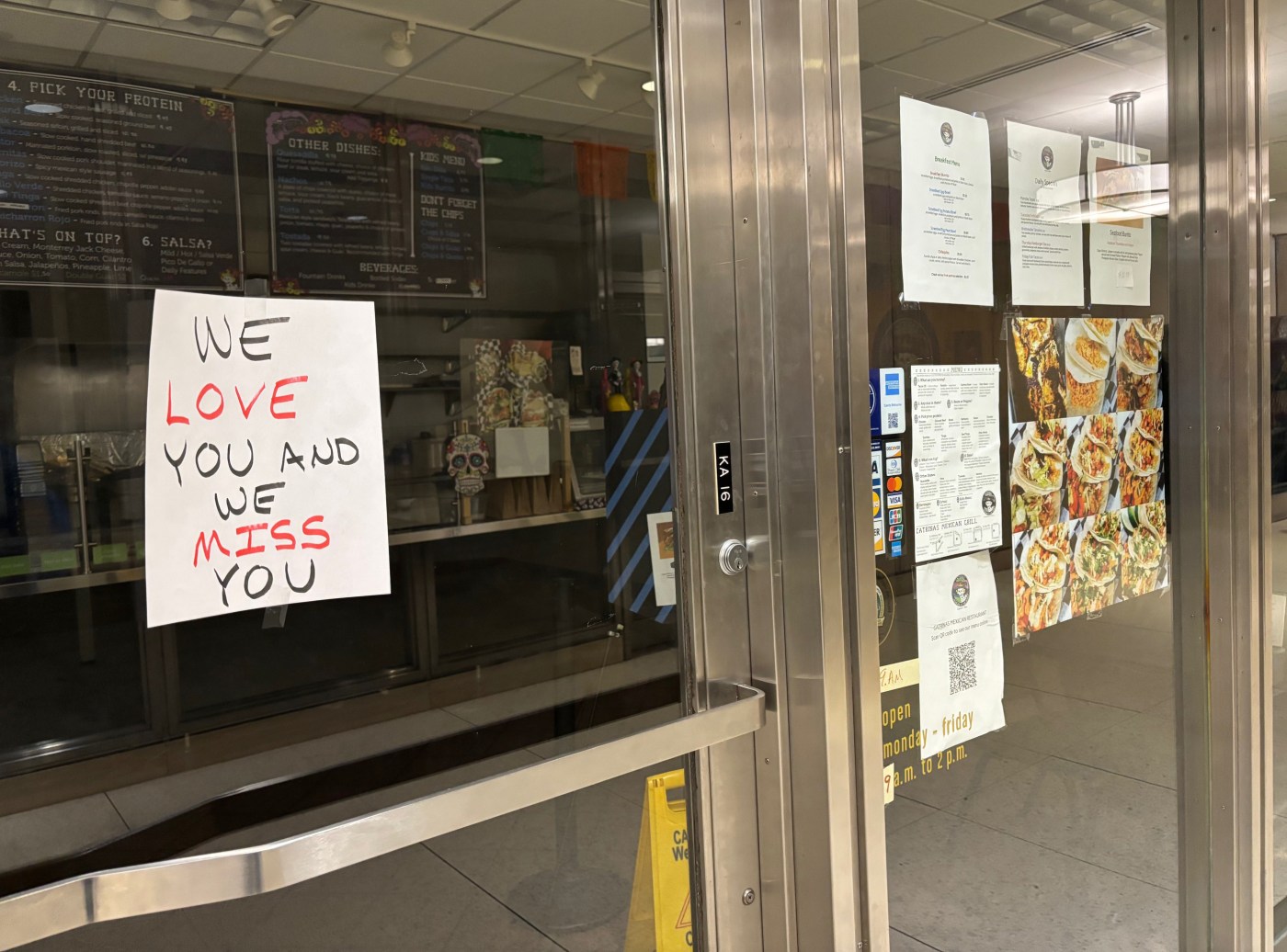
When the Latino Economic Development Center in St. Paul surveyed its members in January, it found 44% had temporarily closed. Fewer than 20% were operating normally, and 28% were open with limitations, such as shortened hours.

Some 40% of business owners said they would still be viable if they could count on outside support such as grants and donations. About a fourth said they were only viable after downsizing their staff, and 9% were considering “exit strategies,” or closing for good.

Alarmed by those and similar findings, the St. Paul Area Chamber, Minneapolis Regional Chamber and a dozen additional Twin Cities economic development organizations have assembled an online listing of organizations collecting donations to support small businesses during Operation Metro Surge.

The listing is online at WeLoveTC.com.

Among other resources, the website includes links to legal guidance for employers from Hospitality Minnesota and additional business coalitions.

In St. Paul, the Latino Economic Development Center is working with the East Side Funders Group to back immigrant-owned businesses on the city’s East Side with cash grants. The goal is to raise $2 million by March 1 for rent relief, payroll and loan debt service. More information is online at LEDCMN.org.

Additional organizations collecting donations for small business grants include the Constellation Immediate Response Fund, MainStreet Alliance’s Open for Tomorrow Small Business Fund and the Minneapolis Foundation’s Salt Cure Restaurant Recovery Fund.

GiveMn.org has assembled a “Community Response” webpage with listings of front-line community organizations throughout Minnesota assisting the public, including food shelves, nonprofit legal aids and social service providers.

Related Articles


‘Survival mode’: Campaign launched to help save immigrant-owned restaurants and businesses impacted by ICE


Fare For All, an affordable pop-up grocery store, ending service to metro


Driver arrested after police say he fatally struck pedestrian in St. Paul


Former leader of St. Paul faith-based nonprofit sentenced to probation for possessing child pornography


St. Paul man gets 7-year prison term for daytime carjacking and armed robbery

Do you need to control your cortisol? Probably not, doctors say

posted in: All news | 0

By DEVI SHASTRI

Cortisol, what is known as the stress hormone, is the talk of the internet.

Related Articles


Children’s Minnesota to pause some gender health care for minors


Doctors share the best ways to get the most from a bidet


2-month-olds see the world in a more complex way than scientists thought, study suggests


Planned Parenthood drops lawsuit against Trump administration’s Medicaid cuts


Woodbury man with rare skin condition ‘scared to go out’ after ICE detention

Wellness influencers warn about the various symptoms of chronically high cortisol: waking up at 3 a.m., swollen “cortisol face” and accumulating belly fat. And many offer diet and exercise routines that they claim will help.

But do you really need supplements and advice from influencers to control your cortisol? Doctors say it’s very unlikely.

Don’t be so quick to label this hormone as a villain, they say. And if you suspect something is off, talk to a professional.

Here’s what to know.

Cortisol keeps you alive and disorders are relatively rare

Cortisol is a hormone and you need it to survive. It comes from the adrenal glands, located above the kidneys, and is one of many hormones at play in times of stress. It can influence inflammation, the immune system, metabolism, blood pressure and many other bodily functions.

Cortisol is incredibly attuned to your body and environment. It fluctuates throughout the day, rising in the morning when you wake up and falling at night before you go to sleep. It also rises when you’re sick or in other times of stress, doctors say.

“Our cortisol level is regulated by the minute,” said Dr. Roberto Salvatori, a Johns Hopkins University endocrinologist. “It is very sensitive.”

It’s rare that people have a disorder where cortisol on its own is the cause. If a person’s cortisol level is chronically low, doctors would diagnose them with adrenal insufficiency. This includes an autoimmune condition called Addison’s disease, in which the immune system attacks the adrenal gland.

People with Cushing’s syndrome have cortisol levels that are too high. Among its causes are tumors, which are usually benign, in the adrenal or pituitary glands. It is treated with medication, surgery or both.

Talk to your doctor before ordering a cortisol test

The symptoms of either high or low cortisol are wide-ranging and can overlap with signs of other health issues.

Adrenal insufficiency can manifest as fatigue, unintentional weight loss, low blood pressure and loss of appetite. Cushing’s syndrome comes with weight gain, high blood pressure, brittle bones, weight gain around the face and belly, abnormal hair growth in women, sleep issues and more.

Diagnoses take time, multiple tests and an understanding of a patient’s overall health, doctors said. Cortisol can be measured through the patient’s saliva, blood or urine.

“There’s a lot of nuance to interpreting cortisol and that’s what makes me a little bit nervous about patients getting cortisol testing for themselves without having some kind of physician oversight,” said Dr. Katie Guttenberg, an endocrinologist at UTHealth Houston.

A one-off cortisol blood test won’t provide useful information for most people, she said, and could lead to unnecessary stress and medical follow-ups. For example, women who are on birth control will have falsely high cortisol blood results, because of how the medicine works in the body.

Be cautious of supplements that claim to lower cortisol

Endocrinologists say there are no proven over-the-counter treatments for high or low cortisol, despite claims that supplements like ashwagandha and magnesium are helpful in “lowering cortisol.”

Beyond Cushing’s syndrome, chronically high cortisol is a concern, said Dr. James Findling, an endocrinologist with the Medical College of Wisconsin, but more research into treatments is needed.

He worries about people taking unregulated supplements when it’s not always clear what’s in them.

“They’re not innocuous,” Findling warned.

Even in patients who have Cushing’s syndrome, the medications have to be carefully dosed, Salvatori said, because an overcorrection could drive cortisol levels too low and cause other health issues.

Managing stress is good for you, regardless of cortisol

Salvatori notes there is a condition called “pseudo Cushing’s syndrome,” which is often milder but causes some of the same physical effects despite the patient not having a tumor. It can be caused by alcoholism and other chronic issues.

It is generally treated by addressing the underlying cause, doctors said, like getting the patient to stop drinking.

Endocrinologists are learning new potential benefits for treating high cortisol, said Findling, who studies the condition. For example, it could potentially help diabetics who are on multiple drugs better control their blood sugar.

The doctors also acknowledged that stress is highly subjective and Cushing’s syndrome patients can go unheard and undiagnosed.

But their advice for the vast majority of people: Talk to a doctor if you are concerned.

For healthy people, rather than focusing in on one elusive hormone, the doctors recommended going back to the basics of stress management: Eat well, get enough sleep, move your body or go to therapy.

“Nothing new about any of that,” Findling said.

The Associated Press Health and Science Department receives support from the Howard Hughes Medical Institute’s Department of Science Education and the Robert Wood Johnson Foundation. The AP is solely responsible for all content.