Nonprofit groups sue Trump administration over election executive order, calling it unconstitutional

posted in: All news | 0

By ALI SWENSON

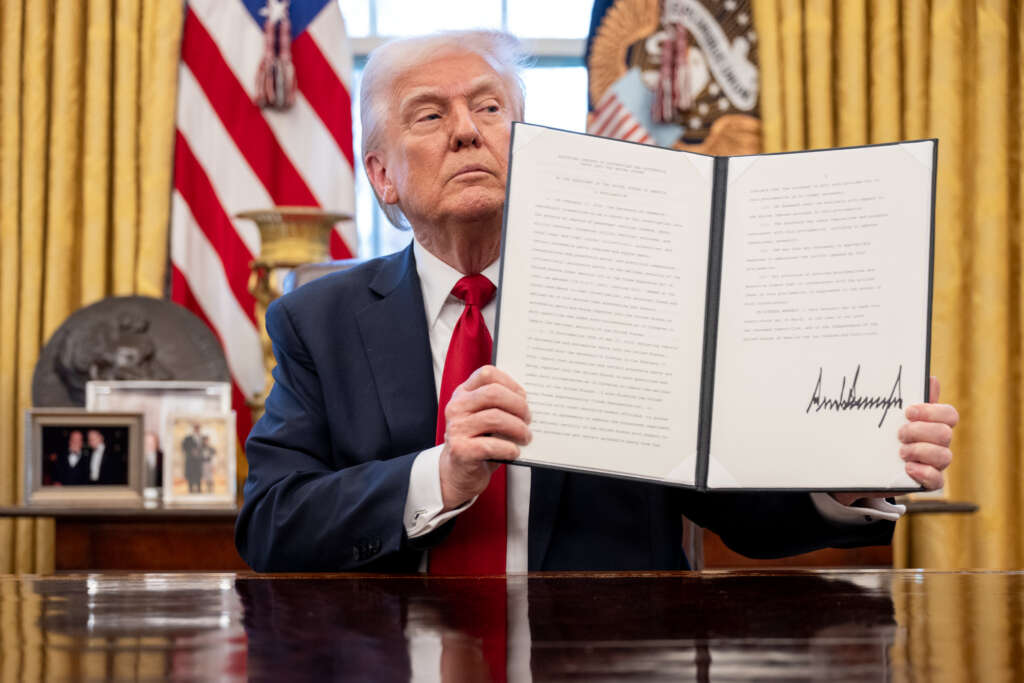
NEW YORK (AP) — Two election watchdog organizations sued President Donald Trump’s administration on Monday over his executive order seeking to overhaul the nation’s elections through a proof-of-citizenship requirement, new mail ballot deadline restrictions and other sweeping changes.

Related Articles


Trump task force to review Harvard’s funding after Columbia bows to federal demands


US immigration officials look to expand social media data collection


White House abruptly fires career Justice Department prosecutors in latest norm-shattering move


Trump has begun another trade war. Here’s a timeline of how we got here


Trump’s reciprocal tariffs will overturn decades of trade policy

The lawsuit, filed by the Campaign Legal Center and the State Democracy Defenders Fund in the U.S. District Court for the District of Columbia, asks the court to declare the order unconstitutional and stop it from being implemented.

It names three nonprofit voter advocacy organizations as plaintiffs that it alleges are harmed by the order: the League of United Latin American Citizens, the Secure Families Initiative and the Arizona Students’ Association.

“The president’s executive order is an unlawful action that threatens to uproot our tried-and-tested election systems and silence potentially millions of Americans,” said Danielle Lang, senior director of voting rights at the D.C.-based Campaign Legal Center. “It is simply not within the president’s authority to set election rules by executive decree, especially when they would restrict access to voting in this way.”

The White House didn’t immediately respond to a request for comment.

Monday’s lawsuit marks the first major legal challenge to last week’s executive order, which election lawyers have warned may violate the U.S. Constitution and asserts power they say the president does not have over an independent agency. That agency, the U.S. Election Assistance Commission, sets voluntary voting system guidelines and maintains the federal voter registration form.

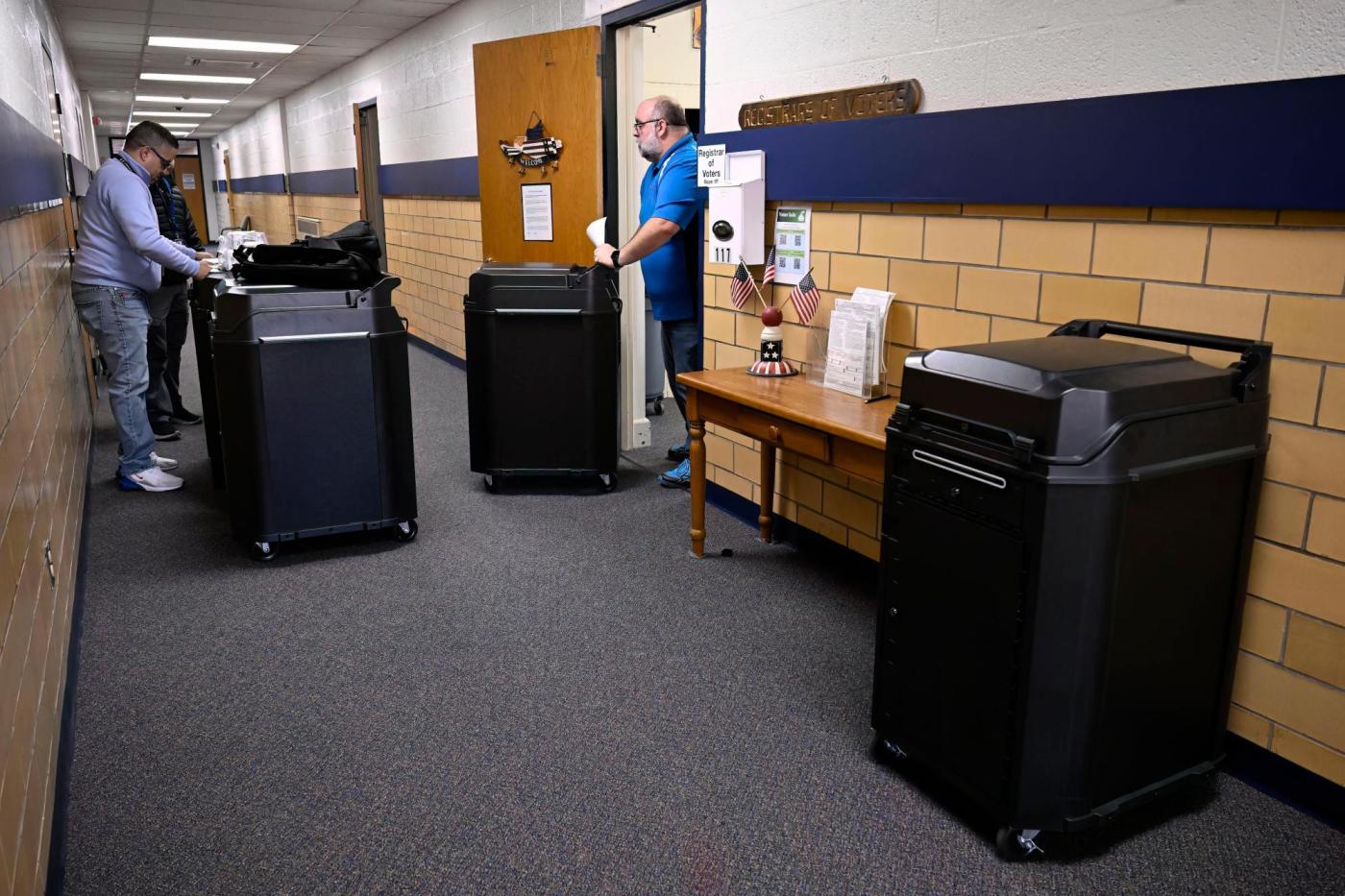
New voting tabulators are pictured at the Registrars of Voters Office, Thursday, March 27, 2025, in Vernon, Conn. (AP Photo/Jessica Hill)

It comes as Congress is considering codifying a proof-of-citizenship requirement for voter registration into law, and as Trump has promised more actions related to elections in the coming weeks.

The lawsuit draws attention to the Constitution’s “ Elections Clause,” which says states — not the president — get to decide the “times, places and manner” of how elections are run. That section of the Constitution also gives Congress the power to “make or alter” election regulations, at least for federal office, but it doesn’t mention any presidential authority over election administration.

“The Constitution is clear: States set their own rules of the road when it comes to elections, and only Congress has the power to override these laws with respect to federal elections,” said Lang, calling the executive order an “unconstitutional executive overreach.”

The lawsuit also argues the president’s order intrudes on Americans’ right to vote.

Trump, one of the top spreaders of election falsehoods, has argued this executive order will secure the vote against illegal voting by noncitizens. Multiple studies and investigations in individual states have shown that noncitizens casting ballots in federal elections, already a felony, is exceedingly rare.

Monday’s lawsuit against Trump’s elections order could be just the first of many challenges. Other voting rights advocates have said they’re considering legal action, including the American Civil Liberties Union and Democratic attorney Marc Elias. Several Democratic state attorneys general have said they are looking closely at the order and suspect it is illegal.

Meanwhile, Trump’s order has received praise from the top election officials in some Republican states who say it could inhibit instances of voter fraud and give them access to federal data to better maintain their voter rolls.

If courts determine the order can stand, the changes Trump is demanding are likely to cause some headaches for both election administrators and voters. State election officials, who already have lost some federal cybersecurity assistance, would have to spend time and money to comply with the order, including potentially buying new voting systems and educating voters of the rules.

The proof-of-citizenship requirement also could cause confusion or voter disenfranchisement because millions of eligible voting-age Americans do not have the proper documents readily available. In Kansas, which had a proof-of-citizenship requirement for three years before it was overturned, the state’s own expert estimated that almost all the roughly 30,000 people who were prevented from registering to vote during the time it was in effect were U.S. citizens who had been eligible.

Monday’s lawsuit is the latest of numerous efforts to fight the flurry of executive actions Trump has taken during the first months of his second term. Federal judges have partially or fully blocked many of them, including efforts to restrict birthright citizenship, ban transgender people from military service and curb diversity, equity and inclusion initiatives among federal contractors and grant recipients.

The Associated Press receives support from several private foundations to enhance its explanatory coverage of elections and democracy. See more about the AP’s democracy initiative here. The AP is solely responsible for all content.
ICE says a University of Minnesota student’s visa was revoked for drunk driving, not protests

posted in: All news | 0

MINNEAPOLIS — A University of Minnesota graduate student who was detained by Immigration and Customs Enforcement was taken into custody because of a drunken driving infraction, not for being involved in protests, federal officials said Monday.

“This is not related to student protests,” the Department of Homeland Security said in a statement. “The individual in question was arrested after a visa revocation by the State Dept. related to a prior criminal history for a DUI.”

News of the student’s detention — and the lack of an official explanation — sparked student protests and expressions of concern from university and political leaders. Gov. Tim Walz told reporters Monday that he spoke with Homeland Security Secretary Kristi Noem about it Friday and was still waiting for further details.

Meanwhile, officials at Minnesota State University Mankato said Monday that one of their students had been detained by ICE as well.

President Edward Inch said in a letter to the campus community that the student was detained Friday at an off-campus residence.

“No reason was given. The University has received no information from ICE, and they have not requested any information from us,” Inch wrote. “I have contacted our elected officials to share my concerns and ask for their help in stopping this activity within our community of learners.”

The Mankato school did not name the student, nor give the student’s nationality or field of study. ICE did not immediately respond to a request for details on that case.

“This is becoming a deeply concerning pattern, where ICE detains students with little to no explanation … and ignores their rights to due process,” U.S. Sen. Tina Smith said in a statement. “I will keep pressing the administration for answers about these arrests and work to get answers from federal immigration authorities about this case.”

The University of Minnesota has not named its student either.

That student, who was detained at an off-campus residence Thursday, was enrolled in the business school on the Minneapolis campus. University spokesperson Andria Waclawski said the school had no further updates Monday. She said earlier that they were following the lead of the student and respecting their request for privacy, while providing the student with legal aid and other supports.

The governor said Monday that, “A deep concern is, here, that no matter what the situation was, in this country, everyone has due process rights and our concern is whether those due process rights are being followed.”

The Trump administration has cited a seldom-invoked statute authorizing the secretary of state to revoke visas of noncitizens who could be considered a threat to foreign policy interests. More than half a dozen people with ties to universities are known to have been taken into custody or deported in recent weeks. Most of those detainees have shown support for Palestinian causes during campus protests over Israel’s war in Gaza.

PODCAST: ¿Qué opinan los estadounidenses de volver el inglés el idioma oficial del país?

posted in: All news | 0

“Las agencias tendrán flexibilidad para decidir cómo y cuándo ofrecer servicios en idiomas distintos al inglés para servir mejor al pueblo estadounidense y cumplir su misión”, dice la orden ejecutiva.

El presidente Donald Trump.

El presidente Donald Trump designó el inglés como idioma oficial de los Estados Unidos el 1 de marzo, como parte de su agenda America First (América primero).

Con esta orden ejecutiva la administración Trump revoca la orden ejecutiva firmada por el expresidente Bill Clinton en agosto de 2000 que obligaba a las agencias federales a prestar servicios a las personas con conocimientos limitados del inglés.

Si bien la orden de Trump no obliga a las agencias a dejar de ofrecer documentos traducidos y servicios de traducción; ahora dependerá de los directores de las agencias la decisión de prestar estos servicios o no.

“Las agencias tendrán flexibilidad para decidir cómo y cuándo ofrecer servicios en idiomas distintos al inglés para servir mejor al pueblo estadounidense y cumplir su misión”, dice la orden ejecutiva.

La orden supone una victoria para el English-only movement (movimiento sólo inglés) y organizaciones sin ánimo de lucro que forma parte de este movimiento como ProEnglish, que ha sido designada como grupo de odio por el Southern Poverty Law Center.

El 78 por ciento de las personas mayores de 5 años sólo hablan inglés en casa en los Estados Unidos, según cifras del Pew Research Center, y desde hace tiempo se exige a los inmigrantes que demuestren su dominio de la lengua antes de obtener la ciudadanía.

Si bien el Pew Research Center no encuestó directamente a los estadounidenses sobre la orden ejecutiva, una encuesta realizada antes de las elecciones de 2024 arroja luces al respecto. 

Cerca de la mitad (51 por ciento) de los estadounidenses dice que es extremadamente o muy importante hacer del inglés la lengua oficial. 

Algunos adultos estadounidenses son más propensos que otros a decir que el inglés debería ser la lengua nacional. El 73 por ciento de los republicanos encuestados por el PEW, por ejemplo, piensa que es supremamente importante. El 71 por ciento de las personas mayores de 65 años también cree que es muy importante.

Así que para hablar sobre las percepciones de los estadounidenses sobre la importancia del idioma inglés como idioma oficial del país, invitamos a Mark Hugo Lopez, coautor del artículo corto y director de investigación sobre raza y etnicidad en el Pew Research Center.

Más detalles en nuestra conversación a continuación.

Ciudad Sin Límites, el proyecto en español de City Limits, y El Diario de Nueva York se han unido para crear el pódcast “El Diario Sin Límites” para hablar sobre latinos y política. Para no perderse ningún episodio de nuestro pódcast “El Diario Sin Límites” síguenos en Spotify, Soundcloud, Apple Pódcast y Stitcher. Todos los episodios están allí. ¡Suscríbete!

The post PODCAST: ¿Qué opinan los estadounidenses de volver el inglés el idioma oficial del país? appeared first on City Limits.

March was good to Timberwolves

posted in: All news | 0

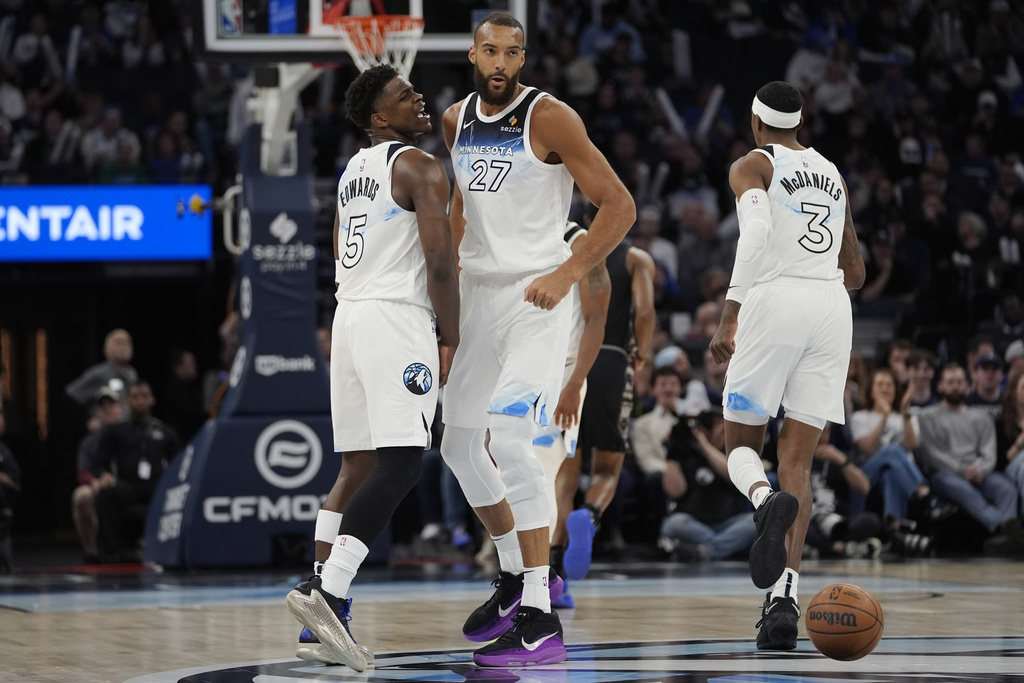
Sunday’s win over Detroit wrapped the Timberwolves’ most successful March in franchise history. Minnesota went 11-3 to set a new franchise mark for most wins in March.

On top of an eight-game winning streak, Minnesota also won its past two games of the month to move itself to the precipice of a top-six seed in the West, which would allow the Wolves to bypass the play-in tournament and go directly to the first round of the playoffs.

Minnesota posted the third-highest winning percentage in March across the NBA, trailing only Boston and Oklahoma City — the two betting favorites to appear in the NBA Finals. And not only did the Wolves win, they were dominant in doing so. They posted the fourth-best offensive rating (scoring 122 points per 100 possessions), the fourth-best defensive rating (110.1) and the third-best net rating (11.8).

Minnesota led the league in effective field goal percentage (59%), was sixth in rebounding percentage (51.4%) and eighth in assist-to-turnover ratio (2.20). There were no weak points.

As of Monday afternoon, the Wolves had four players in the top five in the NBA in plus-minus this month. The Wolves outscored opponents by 150 points over the course of the month when Mike Conley was on the floor, by 149 with Rudy Gobert and by 147 with Naz Reid and Jaden McDaniels.

Conley and Gobert were the best two-man pairing in the NBA after Gobert returned from his lower back injury on March 9. Minnesota outscored opponents by 26 points per 100 possessions in March with those two in tandem.

Some of Minnesota’s dominance can be attributed to a lighter schedule. The Wolves played just four games in March against teams with winning records and split them. But the ways in which Minnesota won often mirrored the team’s path to success a year ago.

Perhaps the road map to success has been rediscovered.  With fewer than two weeks remaining in the regular season, it couldn’t have happened at a better time.

Related Articles


Mike Conley, Rudy Gobert driving the bus on Timberwolves’ team success


Rudy Gobert’s production proving to be large indicator of Timberwolves’ success


Timberwolves’ Rob Dillingham wants to play, and believes he can help