Twins’ offense has to “adjust quick” after slow start

posted in: All news | 0

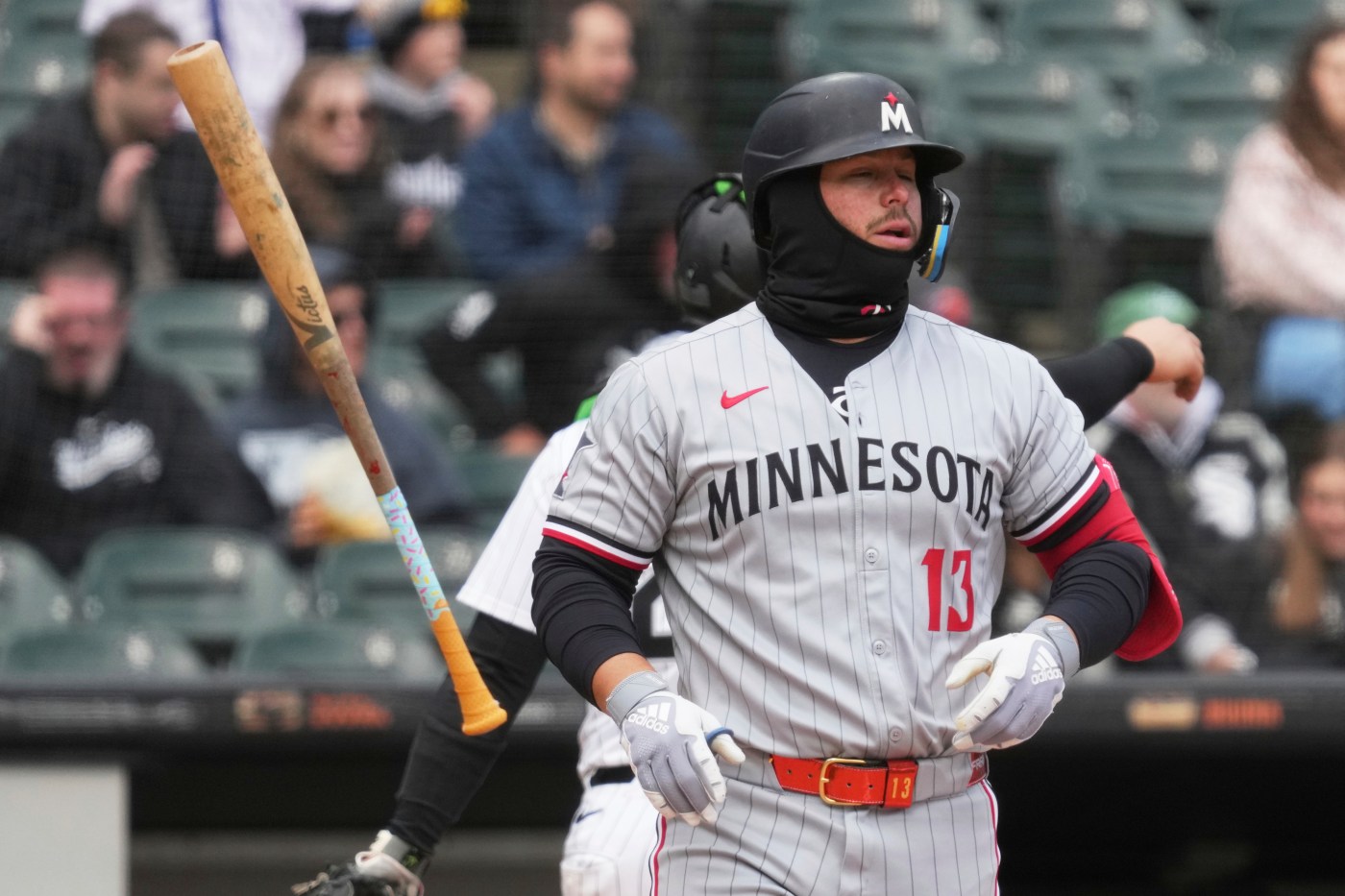
CHICAGO —  Four games into their season, the Twins are hitting a collective .143, have an MLB-worst on-base percentage (.206) .and OPS (.436) and reside near the bottom of the majors in most offensive categories.

They’ve scored just six runs in their first four games. Their run totals in those games? Three, one, two, zero.

There has been some bad luck, to be sure — they might have to sacrifice a live chicken to get Ty France a hit, manager Rocco Baldelli suggested — but overall, the at-bats haven’t been where they need to be.

“You’ve got to force the issue sometimes,” manager Rocco Baldelli said. “You can’t just keep saying, ‘We’re having pretty good at-bats.’ You’ve got to just take a game over at some point, just get a bunch of baserunners and bring them around.”

The Twins were no-hit into the seventh inning on Monday by Martín Pérez and a rookie reliever, finishing with just two hits, one of which did not leave the infield. A couple of days earlier, they managed just three.

Collectively, Carlos Correa said, they need to stay in the zone more and stop chasing.

“When hitters are searching and chasing hits, things like this happen,” said Correa, who is still without a hit despite plenty of hard contact. “You hit the ball right at people, and the next at-bat you want to put the ball in play and make something happen as opposed to (waiting) for that pitch you can drive and hit hard. Right now we’re getting caught up in that.”

The shortstop suggested it was an “easy adjustment,” but one that the team needs to be conscious of — and make quickly after dropping to 0-4.

“I’m very optimistic about the way our roster is constructed, and I think we’re going to be in a good spot. But we’ve got to adjust quick. We cannot keep dragging with the way we’ve been playing.”

Dobnak’s ‘reward’

Randy Dobnak’s “reward” for a job well done on Sunday wasn’t much of a prize: After throwing 5 1/3 innings in the series finale in St. Louis, Dobnak lost his job.

It was to be expected — the Twins needed a fresh arm for the bullpen after Dobnak’s performance, and his contract ($3 million) is such that the Twins can designate him for assignment without much fear of losing him. But it doesn’t make it any easier. Dobnak gave up only one run in his extended relief appearance, saving the bullpen after Bailey Ober’s shortened start.

“I wouldn’t say it’s ever easy ‘cause he did a really nice job,” manager Rocco Baldelli said. “Whenever guys go out there and do a really nice job and step up … you feel obligated to let them know. … I think this will be a situation where we see Randy Dobnak helping us many times throughout the year.”

In his place, the Twins selected the contract of reliever Darren McCaughan, who threw 2 2/3 scoreless innings in Monday’s loss.

Baldelli alters pregame routine

In the hours before Monday’s game, the Twins’ hitters met for their meeting. And as they dispersed, Baldelli was leading the crowd back into the clubhouse.

The manager has altered his pregame routine this year, sitting in on pregame hitters’ meetings, something that he said he has thought about doing over the years. Around the league, when managers do sit in on these meetings, it’s mostly as an observer rather than very vocal participant. That’s the case with Baldelli, as well.

“I probably won’t be in every single hitters’ meeting throughout the year, but I’d say being in more than not, just being able to just occasionally jump in with a message or backing up a particular message or something I feel strongly about, I think, is a nice thing,” Baldelli said.

Briefly

— Simeon Woods Richardson will start Tuesday’s game, looking to help the Twins’ snap their four-game losing streak. He will be opposed by Rule 5 draft pick Shane Smith, who will be making his major league debut.

— Tuesday marks the Twins’ first night game of the season.

— Correa and Byron Buxton were pulled early in the game with the score out of hand. That led to some interesting late-game defensive configurations. Edouard Julien appeared at shortstop, and Mickey Gasper played left field. Willi Castro, as he has done a handful of times, pitched.
St. Paul mayor declares state of emergency on trash collection

posted in: All news | 0

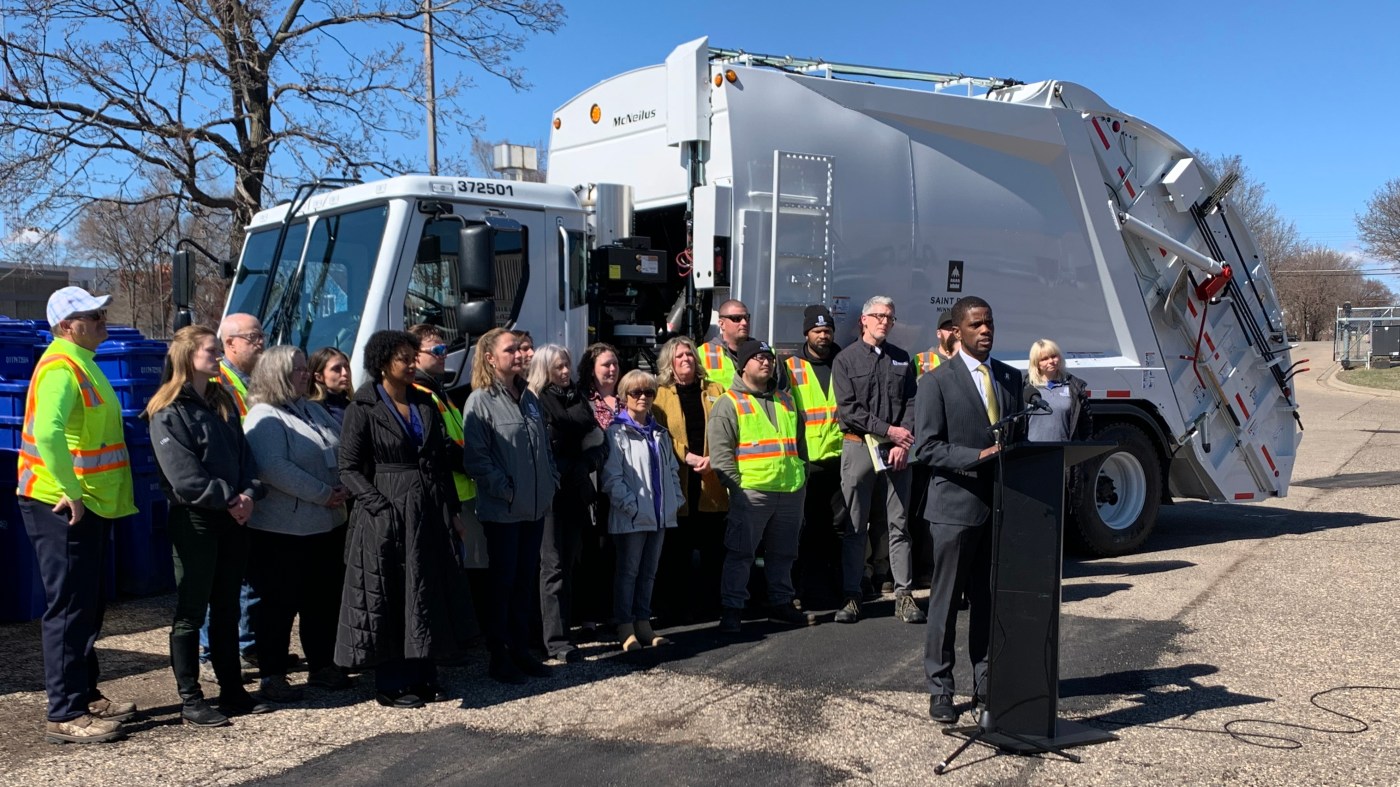
With the goal of launching citywide trash collection from a former Randolph Avenue tow lot, St. Paul Mayor Melvin Carter has declared a state of local emergency to take effect Tuesday morning. It will allow the city to temporarily suspend zoning regulations at the site and allow trash-hauling partner FCC Environmental to immediately commence service for more than 60,000 residential accounts.

Carter asked the city council to extend his three-day emergency declaration another 90 days when the council convenes Wednesday, which will grant the city additional time to work through zoning challenges the council previously supported.

Trash collection is “a basic public service that impacts the health and safety of every single person in our community,” said the mayor, who addressed reporters from a St. Paul Public Works facility in the North End on Monday. “State law and commonsense dictate that failure to pick up the trash would be unacceptable.”

The Randolph Avenue site is crucial to launch trash collection operations, according to the mayor’s staff. Finding another site in the city — with the right zoning and size — is more difficult than many assume, they said.

Trash collection

How Wednesday’s council vote on the extension will go is anyone’s guess.

At FCC Environmental’s request, city staff and the city Planning Commission determined this year that the existing “light industrial” zoning at 560 Randolph Ave. would indeed support privately-run garbage dispatch, cleaning and maintenance, as well as a compressed natural gas facility to be constructed down the line.

Siding instead with neighborhood residents, the council voted 5-0 two weeks ago in an appeal hearing brought by the West Seventh/Fort Road Federation against that zoning clarification, effectively freezing FCC Environmental’s trash operations out of the site.

Since then, council members have been deluged with calls and letters from the public, demanding to know if their trash collection was in jeopardy, as the mayor and Public Works officials have suggested.

Carter was joined Monday by Council Members Anika Bowie and Cheniqua Johnson, who called garbage collection an essential service that trumps zoning concerns, at least in the short term.

A council decision revisited

The council members also noted that the appeal hearing had asked them a narrow question: Would FCC Environmental’s privately-owned trash truck facility be comparable to that of a Public Works yard, which is allowed under light industrial or I-1 zoning? Following the lead of Council President Rebecca Noecker, who represents the neighborhood, the five council members voted to support the appeal on March 19. Johnson was absent at the time and the Ward 4 seat is vacant.

The mayor joined St. Paul Department of Safety and Inspections Director Angie Wiese on Monday in emphasizing that garbage collection meets the definition of “Public Works” under state law, an allowable use under the city’s “I-1” zoning.

Bowie on Monday said that neighborhood concerns about the volume of trash trucks — which could exceed 30 trucks, and eventually more than double that as FCC Environmental adds more municipal clients in the Twin Cities — had not fallen on deaf ears, and residents had raised legitimate questions about the impacts of a future compressed natural gas refueling station.

“Those concerns are still relevant today, but what’s even more dire or more relevant is that people have their trash collected,” Bowie said.

“The option of not doing a basic city service is not an option to take,” added Johnson. “Right now, the primary focus is on collecting the trash, and getting through this week.”

She said another council member had considered sponsoring an effort to reconsider, or overturn, the March 19 vote last week, but it was never entered into the public record.

Why so late?

Under FCC Environmental’s contract with the city, citywide trash collection has been scheduled to begin April 1, raising questions about how so many loose threads came undone or were never pinned down by Tuesday’s launch date.

Wiese, the DSI director, noted residents were within their right to appeal the zoning decision initially issued by city staff in January.

“The city values a public process,” she said.

After the March 19 council vote, Noecker said that the company had dragged its heels in securing a site, seeking the necessary zoning approvals and preparing a site plan for public scrutiny, and the city could not be blamed for FCC Environmental’s last-minute scramble.

The council president also noted that no matter how the March 19 vote went, a two-week build-out of the site at 560 Randolph Ave. was unrealistic. A call on Monday to a representative of FCC Environmental was not immediately returned.

The St. Paul Planning Commission’s zoning committee will review a site plan for FCC Environmental’s proposed $25 million trash truck facility on April 10, and the full Planning Commission will consider their recommendation a week later.

Since November, FCC Environmental has been using the 560 Randolph Ave. location to collect recycling at apartment buildings with five or more units, which Kershaw said is allowed under a separate part of the zoning code.

Seven-year contract

Despite the debacle over the contested trash truck hub, Carter and St. Paul Public Works Director Sean Kershaw on Monday emphasized the benefits of the seven-year contract with FCC Environmental, which will include pick up of one refrigerator-sized “bulky” item per month.

The city will eventually allow opt outs and cart-sharing for households who can prove they generate limited waste. City staff will handle billing and customer service calls, as well as 10% of the trash collection routes, generally the most difficult routes to maneuver come winter.

“FCC has been a great partner, and we’re really excited about the services,” Kershaw said.

After decades of allowing private trash haulers to compete for residential accounts across the city, St. Paul switched to organized trash collection in 2018, with private companies assigned to separate zones or districts. The goal, in part, was to limit the number of trucks traveling each alley, keep rates fair from neighborhood to neighborhood, reduce illegal dumping and protect smaller haulers.

The results have been mixed, with most smaller haulers selling their routes to larger companies like Waste Management anyway. Illegal dumping has continued, as have missed pick-ups on the

Last summer, Carter announced that St. Paul was going to ditch that system and enter into a contract with Houston-based FCC Environmental to service 90% of the city’s street and alley routes with some 60 private employees.

Related Articles


St. Paul City Council convenes but doesn’t appoint new Ward 4 member


Divided St. Paul City Council recommends new Ward 4 appointee for Friday vote


Jason Adkins: Measuring the economic impact of the Catholic Church in Minnesota


St. Paul mayor says council has ‘plunged the city into crisis’ by blocking garbage truck yard


Young, Fisher: One way to think about reinvention in downtown St. Paul

Opinion: Courageous Response Must Follow New York’s Latest Prison Death

posted in: All news | 0

“One concrete action—NY State Assembly Bill 2025-A767—would establish a Youth Justice Innovation Fund to make funds available to community-based organizations for services and programs with the purpose of preventing youth arrest and incarceration and promoting positive youth development.”

The Bronx Criminal Courthouse. Photo by Jarrett Murphy.

The vile, brutal beating death of 22-year-old Messiah Nantwi by officers at Mid-State Correctional Facility must catalyze a very different and courageous response, as opposed to the default response, which is more imprisonment in rhythm with election cycles.   

Commonly, after a high-profile tragedy involving young people, there’s a default button which leads to knee-jerk justice system legislation and policy, with little attention paid to the long game of positive outcomes.

Often short-sighted and costly—with human and financial tolls—those defaults neither solve nor sustain the needs of justice and public safety, and are inadequate responses to trauma, pain, and loss.

Those default responses put young people in harm’s way through more imprisonment, fewer parole opportunities, and harsher sentences for adolescents. When New York and the nation promoted these approaches beginning in the 1970s, it led to the disproportionate mass incarceration of Black and brown young people. It would be 30 years before we sought to reverse those trends. 

At age 16, Messiah Nantwi was a hopeful, soft-spoken, intelligent teenager who devoured books and had a sparkle in his eyes. He would come around and sit with his mentors at Youth Justice Network, a leading Harlem-based non-profit which breaks cycles of incarceration through individualized advocacy, mentorship, and youth development services.  

Messiah would talk about how he wanted to travel the world, and he would ask his YJN mentors for books to read. At one point he would ask why “[a kid] had to get in trouble to be able to get this program.” He once told his YJN teacher that, “Where I live, it’s easier to get a gun than a book.” 

At age 18, Messiah was arrested in a Bronx incident that started as a graffiti stop in which he was shot multiple times by police officers in the Bronx. As his case proceeded through the court system, he worked on his physical rehabilitation and recovery.  He worked hard to do well and try to get his life back on the right track. With support from his YJN mentors, he took coding classes, was admitted to college and filled out his financial aid forms.  

But by then the inequity in the justice system had done its job, and the joy in his eyes had faded, his mental health was severely compromised, and his pain was palpable. He ultimately pled guilty to criminal possession of a weapon and was sentenced to a five-year period of imprisonment that eventually brought him to Mid-State Correctional facility.  

At age 22, instead of getting a college diploma, he was beaten to death on March 1, 2025 in a New York State prison by correction officers. At the time, Messiah was also awaiting trial, indicted for the shooting death of two people, one of whom was only 19.  

We need to lift our communities and each other up by prioritizing young people’s safety and wellbeing through opportunity, access to support and services, and positive community networks.  

One concrete action—NY State Assembly Bill 2025-A767—would establish a Youth Justice Innovation Fund to make funds available to community-based organizations for services and programs with the purpose of preventing youth arrest and incarceration and promoting positive youth development. If appropriated, it would fund violence prevention services, diversion, alternatives to detention, placement and incarceration, post-release support, and education and employment for young people up to the age of 25.

Young people grow, gain a voice and can realize their power only when they can feel safe, cared for, learn, play, and experience a world outside themselves. We as a society must commit to leverage their promise before it turns to pain they cannot return from—as it did for Messiah Nantwi.  

Christine Pahigian is the executive director of the Youth Justice Network. Assemblywoman Michaelle C. Solages, is the deputy majority leader and chair of the New York State Black, Puerto Rican, Hispanic and Asian Legislative Caucus.   

The post Opinion: Courageous Response Must Follow New York’s Latest Prison Death appeared first on City Limits.

Trump targets ticket scalpers and high live event fees over price-gouging

posted in: All news | 0

By WILL WEISSERT

WASHINGTON (AP) — President Donald Trump was signing an executive order Monday that he says will help curb ticket scalping and bring “commonsense” changes to the way live entertainment events are priced.

Related Articles


Trump task force to review Harvard’s funding after Columbia bows to federal demands


US immigration officials look to expand social media data collection


White House abruptly fires career Justice Department prosecutors in latest norm-shattering move


Trump has begun another trade war. Here’s a timeline of how we got here


Trump’s reciprocal tariffs will overturn decades of trade policy

Designed to stop “price-gouging by middlemen,” the order directs Attorney General Pam Bondi and Treasury Secretary Scott Bessent to ensure that scalpers offering tickets at higher prices than their face value comply with all Internal Revenue Service rules, according to a fact sheet released by the White House.

It also orders the Federal Trade Commission to ensure “price transparency at all stages of the ticket-purchase process” and to “take enforcement action to prevent unfair, deceptive, and anti-competitive conduct in the secondary ticketing market,” which the Trump administration argues can restore sensibility and order to the ticket market.

“America’s live concert and entertainment industry has a total nationwide economic impact of $132.6 billion and supports 913,000 jobs,” the fact sheet said. “But it has become blighted by unscrupulous middle-men who impose egregious fees on fans with no benefit to artists.”

The push marks a rare instance of policy crossover with the administration of Democratic President Joe Biden, which used the FTC to target “ junk fees,” or levies tacked on at the end of the purchase process that can mask the full price of things like concert tickets, hotel rooms and utility bills.

Under Biden, the Justice Department also sued Ticketmaster and its parent company, Live Nation Entertainment, last year. It accused them of running an illegal monopoly over live events and asked a court to break up the system that squelches competition and drives up prices for fans.

Those companies have a history of clashing with major artists, including Bruce Springsteen and Taylor Swift. whose summer 2022 stadium tour was plagued by difficulty getting tickets. Country music star Zach Bryan even released a 2022 album titled “All My Homies Hate Ticketmaster.” A representative for Bryan said he had “nothing to add” when asked to comment on Monday’s executive action.

The Biden administration used such initiatives as a way to protect consumers from rising prices that were already inflated. Trump, meanwhile, campaigned on combating high ticket prices, calling them “very unfortunate.”

“Ticket scalpers use bots and other unfair means to acquire large quantities of face-value tickets, then re-sell them at an enormous markup on the secondary market, price-gouging consumers and depriving fans of the opportunity to see their favorite artists without incurring extraordinary expenses,” the White House face sheet said, adding, “By some reports, fans have paid as much as 70 times the face value of a ticket price to obtain a ticket.”

It also noted that higher prices don’t mean additional profits for artists but instead go “solely to the scalper and the ticketing agency.”

Trump’s order also directs federal officials and the FTC to deliver a report in six months “summarizing actions taken to address the issue of unfair practices in the live concert and entertainment industry and recommend additional regulations or legislation needed to protect consumers in this industry.”

Associated Press writer Maria Sherman contributed to this report from New York.