Housing costs are crippling many Americans. Here’s how the two parties propose to fix that

posted in: All news | 0

By Gavin J. Quinton, Los Angeles Times

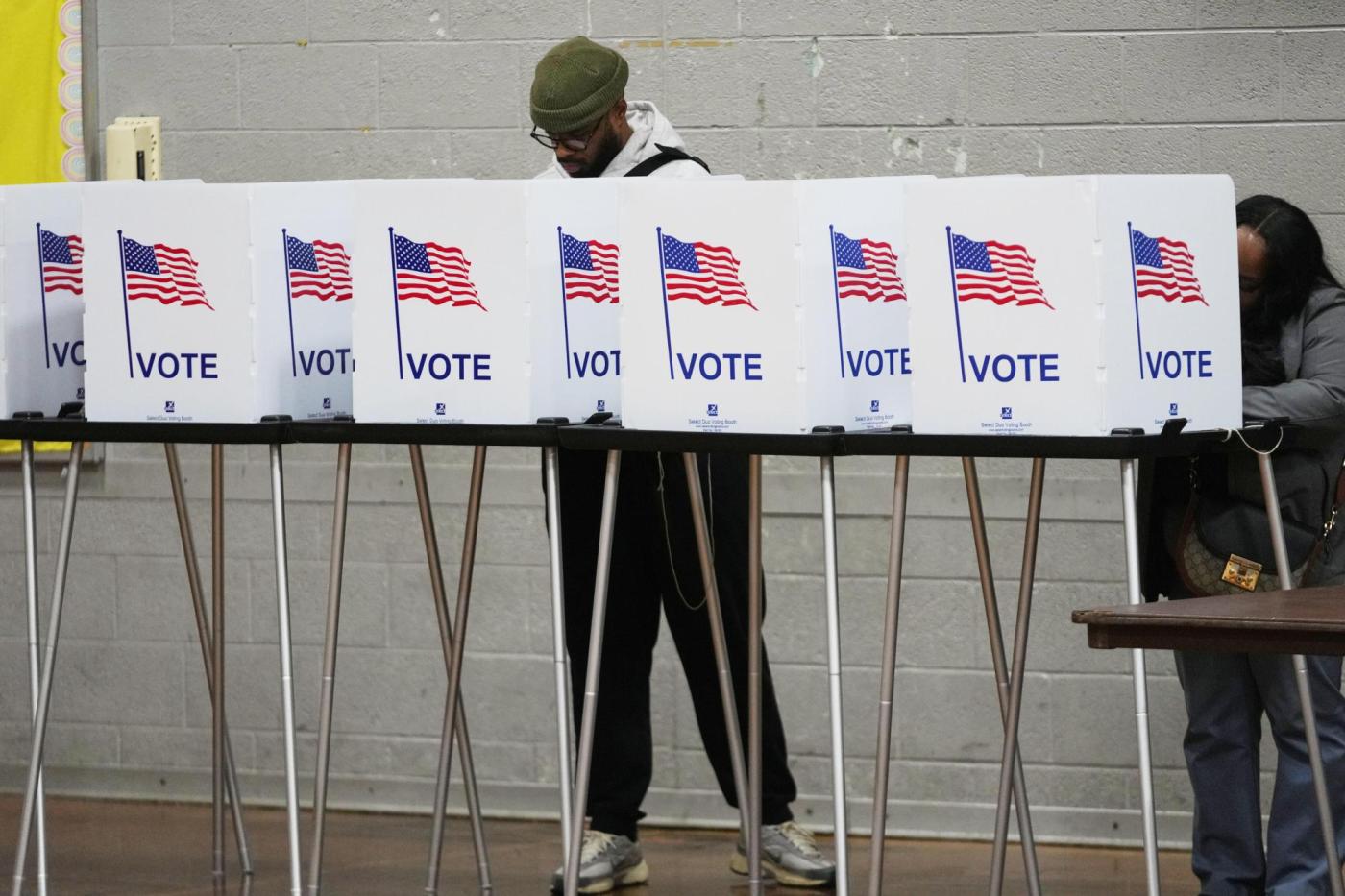
WASHINGTON — Donald Trump’s promises on affordability in 2024 helped propel him to a second term in the White House.

Since then, Trump says, the problem has been solved: He now calls affordability a hoax perpetrated by Democrats. Yet the high cost of living, especially housing, continues to weigh heavily on voters, and has dragged down the president’s approval ratings.

In a poll conducted this month by the New York Times and Siena University, 58% of respondents said they disapprove of the way the president is handling the economy.

How the economy fares in the coming months will play an outsize role in determining whether the Democrats can build on their electoral success in 2025 and seize control of one or both chambers of Congress.

With housing costs so central to voters’ perceptions about the economy, both parties have put forward proposals in recent weeks targeting affordability. Here is a closer look at their competing plans for expanding housing and reining in costs:

How bad is the affordability crisis?

Nationwide, wages have barely crept up over the last decade — rising by 21.24% between 2014 and 2024, according to the Federal Reserve. Over the same period, rent and home sale prices more than doubled, and healthcare and grocery costs rose 71.5% and 37.35%, respectively, according to the Fed.

National home price-to-income ratios are at an all-time high, and coastal states like California and Hawaii are the most extreme examples.

Housing costs in California are about twice the national average, according to the state Legislative Analyst’s Office, which said prices have increased at “historically rapid rates” in recent years. The median California home sold for $877,285 in 2024, according to the California Assn. of Realtors, compared with about $420,000 nationwide, per Federal Reserve economic data.

California needs to add 180,000 housing units annually to keep up with demand, according to the state Department of Housing. So far, California has fallen short of those goals and has just begun to see success in reducing its homeless population, which sat at 116,000 unsheltered people in 2025.

What do the polls say?

More than two-thirds of Americans surveyed in a Gallup poll last month said they felt the economy was getting worse, and 36% expressed approval for the president — the lowest total since his second term began.

The poll found that 47% of U.S. adults now describe current economic conditions as “poor,” up from 40% just a month prior and the highest since Trump took office. Just 21% said economic conditions were either “excellent” or “good,” while 31% described them as “only fair.”

An Associated Press poll found that only 16% of Republicans think Trump has helped “a lot” in fixing cost of living problems.

What have the Democrats proposed?

The party is pushing measures to expand the supply of housing, and cut down on what they call “restrictive” single-family zoning in favor of denser development.

Senate Minority Leader Chuck Schumer (D-N.Y.) said Democrats plan to “supercharge” construction through bills like California Sen. Adam Schiff’s Housing BOOM Act, which he introduced in December.

Schiff said the bill would lower prices by stimulating the development of “millions of affordable homes.” The proposal would expand low-income housing tax credits, set aside funds for rental assistance and homelessness, and provide $10 billion in housing subsidies for “middle-income” workers such as teachers, police officers and firefighters.

The measure has not been heard in committee, and faces long odds in the Republican-controlled body, though Schiff said inaction on the proposal could be used against opponents.

And the Republicans?

A group of 190 House Republicans this month unveiled a successor proposal to the “Big Beautiful Bill,” the sprawling tax and spending plan approved and signed into law by Trump in July.

The Republican Study Committee described the proposal as an affordability package aimed at lowering down payments, enacting mortgage reforms and creating more tax breaks.

Leaders of the group said it would reduce the budget deficit by $1 trillion and could pass with a simple majority.

“This blueprint … locks in President Trump’s deregulatory agenda through the only process Democrats can’t block: reconciliation,” said Rep. August Pfluger, R-Texas, who chairs the group. “We have 11 months of guaranteed majorities. We’re not wasting a single day.”

Though the proposal has not yet been introduced as legislation, Republicans said it would include a mechanism to revoke funding from blue states over rent control and immigration policy, which they calculated would save $48 billion.

President Trump has endorsed a $200-billion mortgage bond stimulus, which he said would drive down mortgage rates and monthly payments. And the White House, which oversees Fannie Mae and Freddie Mac — the two enterprises that back most U.S. mortgages — continues to push the idea of portable and assumable mortgages.

Trump said the move would allow buyers to keep their existing mortgage rate or enable new homeowners to assume a previous owner’s mortgage.

The Department of Justice, meanwhile, has launched a criminal investigation into Federal Reserve Chair Jerome Powell over the Fed’s renovation costs, as Trump bashed him over “his never ending quest to keep interest rates high.”

The president also vowed to revoke federal funding to states over a wealth of issues such as child care and immigration policy.

“This is not about any particular policy that they think is harmful,” California Democratic Rep. Laura Friedman said. “This is about Trump’s always trying to find a way to punish blue states.”

Is there any alignment?

The two parties are cooperating on companion measures in the House and Senate.

The bipartisan ROAD to Housing Act seeks to expand housing supply by easing regulatory barriers. It passed the Senate unanimously and has support from the White House, but House Republicans have balked, and it has yet to receive a floor vote.

A bipartisan proposal — the Housing in the 21st Century Act — was approved by the House Financial Services Committee by a 50-1 vote in December. It also has yet to receive a floor vote.

The bill is similar to its twin in the Senate, with Rep. French Hill (R-Ark.) working across the aisle with Rep. Maxine Waters (D-Los Angeles). If approved, it would cut permitting times, support manufactured-housing development and expand financing tools for low-income housing developers.

There was also a recent moment of unusual alignment between the president and California Gov. Gavin Newsom, who both promised to crack down on corporate home buying.

What do the experts say?

Housing experts recoiled at GOP proposals to bar housing dollars from sanctuary jurisdictions and cities that impose rent control.

“Any conditioning on HUD funding that sets up rules that explicitly carve out blue cities is going to be really catastrophic for California’s larger urban areas,” said David Garcia, deputy director of policy at UC Berkeley’s Terner Center for Housing Innovation.

More than 35 cities in California have rent control policies, according to the California Apartment Assn. The state passed its own rent stabilization law in 2019, and lawmakers approved a California sanctuary law in 2017 that prohibits state resources from aiding federal immigration enforcement.

The agenda comes on the heels of a series of HUD spending cuts, including a 30% cap on permanent housing investments and the end of a federal emergency housing voucher program that local homelessness officials estimate would put 14,500 people on the streets.

In Los Angeles County, HUD dollars make up about 28% of homelessness funding.

“It would undermine a lot of the bipartisan efforts that are happening in the House and the Senate to move evidence-backed policy to increase housing supply and stabilize rents and home prices,” Garcia said.

The president’s mortgage directives also prompted skepticism from some experts.

“Fannie Mae and Freddie Mac were pressed to get into the riskier parts of the mortgage market back in the housing bubble and that was a part of the problem,” said Eric McGhee, a researcher at the Public Policy Institute of California.

©2026 Los Angeles Times. Visit at latimes.com. Distributed by Tribune Content Agency, LLC.

Sick of fighting insurers, hospitals offer their own Medicare Advantage plans

posted in: All news | 0

By Susan Jaffe, KFF Health News

Ever since Larry Wilkewitz retired more than 20 years ago from a wood products company, he’s had a commercial Medicare Advantage plan from the insurer Humana.

But two years ago, he heard about Peak Health, a new Advantage plan started by the West Virginia University Health System, where his doctors practice. It was cheaper and offered more personal attention, plus extras such as an allowance for over-the-counter pharmacy items. Those benefits are more important than ever, he said, as he’s treated for cancer.

“I decided to give it a shot,” said Wilkewitz, 79. “If I didn’t like it, I could go back to Humana or whatever after a year.”

He’s sticking with Peak Health. Members of Medicare Advantage plans, a privately run alternative to the government’s Medicare program, can change plans through the end of March.

Now entering its third year, Peak Health has tripled its enrollment since last year, to “north of 10,000,” said Amos Ross, its president. It expanded from 20 counties to 49, he said, and moved into parts of western Pennsylvania for the first time.

Although hospital-owned plans are only a sliver of the Medicare Advantage market, their enrollment continues to grow, reflecting the overall increase in Advantage members. Of the 62.8 million Medicare beneficiaries eligible to join Advantage plans, 54% signed up last year, according to KFF, the health information nonprofit that includes KFF Health News. While the number of Advantage plans owned by hospital systems is relatively stable, Mass General Brigham in Boston and others are expanding their service areas and types of plan offerings.

Health systems have dabbled in the insurance business for years, but it’s not for everyone. MedStar Health, serving the greater Washington, D.C., area, said it closed its Medicare Advantage plan at the end of 2018, citing financial losses.

“It’s a ton of work,” said Ross, who spent more than a decade in the commercial health insurance industry.

Like any other health insurer, hospitals entering the business need a back-office infrastructure to enroll patients, sign up providers, fill prescriptions, process claims, hire staff, and — most importantly — assure state regulators they have a reserve of money to pay claims. Once they get a state insurance license, they need approval from the federal Centers for Medicare & Medicaid Services to sell Medicare Advantage policies. Some systems affiliate with or create an insurance subsidiary, and others do most of the job themselves.

Kaiser Permanente, the nation’s largest nonprofit health system by revenue, started an experimental Medicare plan in 1981 and now has nearly 2 million people enrolled in dozens of Advantage plans in eight states and the District of Columbia. The Justice Department announced Jan. 14 that KP had agreed to pay $556 million to settle accusations that its Advantage plans fraudulently billed the government for about $1 billion over a nine-year period.

Last year, UCLA Health introduced two Medicare Advantage plans in Los Angeles County, the most populous county in the United States. Other new hospital-owned plans have cropped up in less profitable rural areas.

“These are communities that have been very hard for insurers to move into,” said Molly Smith, group vice president for public policy at the American Hospital Association.

But Advantage plans offered by hospitals have a familiar, trusted name. They don’t have to move into town, because their owners — the hospitals — never left.

Bad Breakups

Medicare Advantage plans usually restrict their members to a network of doctors, hospitals, and other clinicians that have contracts with the plans to serve them. But if hospitals and plans can’t agree to renew those contracts, or when disputes flare up — often spurred by payment delays, denials, or burdensome prior authorization rules — the health care providers can drop out.

These breakups, plus planned terminations and service area cuts, forced more than 3.7 million Medicare Advantage enrollees to make a tough choice last year: find new insurance for 2026 that their doctors accept or, if possible, keep their plan but find new doctors.

About 1 million of these stranded patients had coverage from UnitedHealthcare, the country’s largest health insurer. In a July earnings update for financial analysts, chief financial officer John Rex blamed the company’s retreat on hospitals, where “most encounters are intensifying in services and costing more.”

The turbulence in the commercial insurance market has upset patients as well as their providers. Sometimes contract disputes have been fought out in the open, with anxious patients in the middle receiving warnings from each side blaming the other for the imminent end to coverage.

Related Articles


Trump policies at odds with emerging understanding of COVID’s long-term harm


4 people have died from eating death cap mushrooms as they spread in California after rains


US births dropped last year, suggesting the 2024 uptick was short-lived


Demand grows for doulas who can help moms with addiction


Fear in Minnesota’s Somali community deepens, hampering progress on measles vaccination

When Fred Neary, 88, learned his doctors in the Baylor Scott & White Health system in central and northern Texas would be leaving his Medicare Advantage plan, he was afraid the same thing could happen again if he joined a plan from another commercial insurer. Then he discovered that the 53-hospital system had its own Medicare Advantage plan. He enrolled in 2025 and is keeping the plan this year.

“It was very important to me that I would never have to worry about switching over to another plan because they would not accept my Baylor Scott & White doctors,” he said.

Eugene Rich, a senior fellow at Mathematica, a health policy research group, said hospital systems’ Medicare Advantage plans offer “a lot of stability for patients.”

“You’re not suddenly going to discover that your primary care physician or your cardiologist are no longer in the plan,” he said.

A Health Affairs study that Rich co-authored in July found that enrollment in Advantage plans owned by hospital systems grew faster than traditional Medicare enrollment for the first time in 2023, though not as rapidly as the overall rise in sign-ups for all Advantage plans.

The massive UCLA Health system introduced its two Medicare Advantage plans in Los Angeles County in January 2025, even though patients already had a list of more than 70 Advantage plans to choose from. Before rolling out the plan, the University of California Board of Regents discussed its merits at a November 2024 meeting. The meeting minutes offer rare insight into a conversation that private hospital systems would usually hold behind closed doors.

“As increasing numbers of Medicare-enrolled patients turn to new Medicare Advantage plans, UC Health’s experience with these new plans has not been good, either for patients or providers,” the minutes read, summarizing comments by David Rubin, executive vice president of UC Health.

The minutes also describe comments from Jonathon Arrington, CFO of UCLA Health. “Over the years, in order to care for Medicare Advantage patients, UCLA has entered numerous contracts with other payers, and these contracts have generally not worked out well,” the minutes read. “Every two or three years, UCLA has found itself terminating a contract and signing a new one. Patients have remained loyal to UCLA, some going through three iterations of cancelled contracts in order to remain with UCLA Health.”

Costs to Taxpayers

CMS pays Advantage plans a monthly fixed amount to care for each enrollee based on the member’s health condition and location. In 2024, the federal government paid Advantage plans an estimated $494 billion to care for patients, according to the Medicare Payment Advisory Commission, which monitors the program for Congress.

The commission said this month that it projects insurers in 2026 will be paid 14%, or about $76 billion, more than it would have cost government-run Medicare to care for similar patients.

Many Democratic lawmakers have criticized overpayments to Medicare Advantage insurers, though the program has bipartisan congressional support because of its increasing popularity with Medicare beneficiaries, who are often attracted by dental care and other coverage unavailable through traditional Medicare.

Whenever Congress threatens cuts, insurers claim these generous federal payments are essential to keep Medicare Advantage plans afloat. UCLA Health’s Advantage plans will need at least 15,000 members to be financially sustainable, according to the meeting minutes. CMS data indicates that 7,337 patients signed up in 2025.

A study published in JAMA Surgery in August compared patients in commercial Medicare Advantage who had major surgery with those covered by Medicare Advantage plans owned by their hospital. The latter group had fewer complications, said co-author Thomas Tsai, an associate professor in the Department of Health Policy and Management at the Harvard T.H. Chan School of Public Health.

Smith, of the American Hospital Association, isn’t surprised. When insurers and hospitals are not on opposite sides, she said, care delivery can be smoother. “There’s more flexibility to manage premium dollars to cover services that maybe wouldn’t otherwise be covered,” Smith said.

But Tsai warns seniors that hospital-owned Medicare Advantage plans operate under the same rules as those run by commercial health insurance companies. He said patients should consider whether the extra benefits of Advantage plans “are worth the trade-off of potentially narrow provider networks and more utilization management than they would get from traditional Medicare.”

In Texas, Neary hopes the closer relationship between his doctors and his insurance plan means there’s less of a chance that bills for his medical care will be kicked back.

“I don’t think I would run into a situation where they would not provide coverage if one of their own doctors recommended something,” he said.

©2026 Kaiser Health News. Visit khn.org. Distributed by Tribune Content Agency, LLC. ©2026 KFF Health News. Distributed by Tribune Content Agency, LLC.

Real World Economics: Warsh would inherit Powell’s dilemma

posted in: All news | 0

Edward Lotterman

Economic news had an upbeat ring this week, at least on first impressions.

President Donald’s Trump’s nomination of Kevin Warsh to chair the Federal Reserve Board was broadly characterized as “well, it could have been a whole lot worse!”

Then many economists, including me, greeted news of a continuing slide in the value of the U.S. dollar against virtually all other major currencies by saying, “well, it really isn’t as bad as many people think.”

As songwriter Harold Arlen advised us in the middle of a war that killed 70 million people, one should always “Ac-Cent-Tchu-Ate the Positive” regardless of how bad things get.

But it is also prudent to understand the full scope of these developments and how they affect us all.

So start with the Fed chair nomination. Warsh is not as highly-recognized an economist as Ben Bernanke and Janet Yellen were before they were named chair. But fame as an academic does not have a great track record.

Paul Volcker, a great American of the 20th century who, like Gen. George Catlett Marshall, combined high intelligence with tremendous resolve and moral courage, had an MA from Harvard and coursework at the London School of Economics, but no doctorate. Willian McChesney Martin, perhaps the greatest Fed chair ever, had a BA in English and Latin from Yale with some coursework in econ at Columbia, but no advanced degree.

At the other end of the scale, Arthur Burns, the near single-handed cause of the great inflation of the 1970s, was the most highly honored scholar to hold the Fed post. His election at age 39 as a fellow of the highly prestigious American Statistical Association was followed by identical elections to American Academy of Arts and Sciences and the American Philosophical Society. He was president of the American Economic Association and one of his students, Nobel Laureate Milton Friedman, said Burns was one of two professors who inspired him to become an economist. Yet despite all these accomplishments, Burns not only allowed inflation to gather momentum, but did so by colluding politically with the White House unlike any other Fed chair.

So the fact that Warsh has a mere JD from Harvard Law School should not be held against him. Moreover, he is experienced, including five prior years on the Board of Governors during the great financial crisis of 2007-09. His nomination to the Board at age 35 in 2006 was a minor scandal because at that time, he had virtually no obvious qualifications. It was openly acknowledged that his choice back then was prompted by a donation of at least $300,000 to the re-election campaign of President George W. Bush by Warsh’s in-laws, owners of the Estee Lauder cosmetics empire.

However, despite his thin background, when the financial crisis of that decade broke out, Warsh was by all accounts knowledgeable and effective in the Fed’s efforts to prevent a disastrous meltdown of financial markets. And after leaving the Fed he has requited himself in a number of scholarly, managerial and corporate directorship positions. He is now 55 and has a solid track record.

This contrasts with “the other Kevin,” as Trump deemed him, Kevin Hassett, who has gotten much more ink. Within the economics discipline, if not regarded as a buffoon for his slavish attachment to Trump, Hassett is seen as a lightweight whose career has included a lot of time at institutions funded by conservative plutocrats like the Koch Brothers; during Trump’s first term, many of Hassett’s policy assertions got harsh criticism outside of the administration.

Christopher Waller, a current Fed governor and Bemidji State B. grad with a Ph.D. from Washington State, probably has a more sound background than either of the Kevins. But while appointed to the Board by Trump in 2020 and supporting many actions Trump wants, Waller somehow did not have the same level of regard in Trump’s eyes as did Warsh. That can best be explained by the fact that the president has little real interest in the tradeoffs or long-run implications of policy issues. Trump reacts on a short-term basis driven by how outcomes will affect his personal status. Waller is too committed as a policy analyst for that.

But then, while Warsh is not a policy wonk, choosing him raises the question, “what the heck was Trump thinking?” Warsh may mesh personally with Trump or Treasury Secretary Scott Bessent. He may be viewed with favor by the Wall Street operators who fund Trump. But he is a harsh critic of the 21st century Fed that he, himself, helped create 20 years ago. In this he is right.

Yet not for reasons Trump would necessarily support.

By pumping far more money into the economy on an on-going basis, the contemporary Fed has gone far beyond what the congressional creators of the original system had in mind in 1913. It is far beyond what was envisioned when the Fed was overhauled in the 1930s with the creation of the seven-member Board of Governors and the 12-member policy-making Federal Open Market Committee. Warsh is far from alone in thinking that it needs to be reined in. I, myself, think that true.

The problem is that doing so necessarily would entail a harsh crimping down on the measured money supply specifically, and the broader level of liquidity generally. In other words, it would mean raising interest rates pretty much across the board, including on home mortgages and on what the U.S. Treasury has to pay on every new issue of its bills notes and bonds — the short-, medium- and long-term national debt.

However, this directly counters what Trump incessantly calls for — lower interest rates, “the lowest of any country in the world.” As Fed chair, Warsh would surely be pressured to do Trump’s bidding in the same way current Chair Jerome Powell has been, relentlessly. In other words, do exactly the opposite of what’s needed to rein the Fed in.

And therein lies the dilemma. Trump wants lower rates. But that would raise the market prices of houses, cryptocurrencies and publicly traded investment funds specializing in “private equity” and “private debt” sharply. The Donald would be outraged, not pleased.

And so, to the dollar.

By making interest earnings in our country greater, higher interest rates might also reverse the fall in the value of the dollar relative to other currencies. That might please the president, but it would also erase the benefits of a weaker dollar to farmers, U.S. car manufacturers and steel mills. A weaker dollar means U.S. products are cheaper to foreign buyers and foreign products more expensive to U.S. buyers. In effect, it functions as a tariff on imports and a subsidy to exports.

Agriculture, where the hangover from a four-year spree of bidding up land prices is coming home with a vengeance, is in particularly bad shape. Conditions are bound to get worse for a crucial MAGA-friendly voting bloc just as a pivotal midterm election nears. (But haven’t we seen Trump supporters voting against their own financial interests before? Don’t take anything in politics for granted.).

In other words, if Warsh were to succeed in persuading his colleagues on the Board and FOMC in slimming down the Fed — something not at all sure given the limited power of the Chair — there would be difficult tradeoffs. The president flees these tradeoffs as a matter of course and flip-flops unpredictably when pressures rise. So Warsh will not have an easy time. Neither will the rest of us.

Related Articles


Real World Economics: Follow the money down the river


Real World Economics: Venezuela is a lesson we’ve learned before


Real World Economics: How the Fed ends, with a whimper


Real World Economics: Geography, topography shaped our prosperity


Real World Economics: Tales of economic growth speak volumes

St. Paul economist and writer Edward Lotterman can be reached at stpaul@edlotterman.com.

Co-workers of different generations mentor each other to reduce workplace misunderstandings

posted in: All news | 0

By CATHY BUSSEWITZ, Wellness Writer

NEW YORK (AP) — Barbara Goldberg brings a stack of newspapers to the office every day. The CEO of a Florida public relations firm scours stories for developments relevant to her clients while relishing holding the pages in her hand. “I want to touch it, feel it, turn the page and see the photos,” Goldberg said.

Related Articles


Washington Post publisher Will Lewis says he’s stepping down, days after big layoffs at the paper


Working Strategies: To stress or not to stress? Some prespective


Renters use ‘rent now, pay later’ services to manage monthly payments, but fees raise concerns


Security concerns and skepticism are bursting the bubble of Moltbook, the viral AI social forum


Musk’s underground tunnels in Las Vegas face scrutiny over safety, environmental concerns

Generation Z employees at O’Connell & Goldberg don’t get her devotion to newsprint when so much information is available online and constantly updated, she said. They came of age with smartphones in hand. And they spot trends on TikTok or Instagram that baby boomers like Goldberg might miss, she said.

The staff’s disparate media consumption habits become clear at a weekly Monday staff meeting. It was originally intended to discuss how the news of the day might impact the firm’s clients, Goldberg said. But instead of news stories, the conversation often turns to the latest slang, digital tools and memes.

The first time it happened, she listened without judgment, and thought, “Shoot, this is actually really insightful. I need to know the trending audio and I need to know these influencers.” Of her younger colleagues, she said, “they know the cultural conversation that I wasn’t thinking about.”

With at least five generations participating in the U.S. workforce, co-workers can at times feel like they speak different languages. The ways people born decades apart approach tasks may create misunderstandings. But some workplaces are turning the natural divides between age groups into a competitive advantage through reverse mentoring programs that recognize the strengths each generation brings to work and uses them to build mutual skills and respect.

Unlike traditional mentorships that involve an older person sharing wisdom with a younger colleague, reverse mentoring affords less experienced staff members the opportunity to teach seasoned colleagues about new trends and technologies.

“The generational differences, to me, are something to leverage. It’s like a superpower,” Goldberg said. “It’s where the magic happens.”

Here are some ways to make the most of a multigenerational workplace.

Mentoring up

Beauty product company Estée Lauder began a reverse mentoring program globally a decade ago when its managers realized consumers were rapidly getting beauty tips from social media influencers instead of department stores, said Peri Izzo, an executive director who oversaw the initiative.

The voluntary program now has roughly 1,200 participants. The mentors are millennials, born 1981 to 1986, and Gen Zers, born starting in 1997. They’re paired with mentees who are part of the U.S. baby boom of 1946 to 1964, and members of Generation X, born 1965 to 1980, according to the generational definitions of the Pew Research Center.

At the start of a new mentoring relationship, participants do icebreaker activities like a Gen Z vocabulary quiz. The young mentors take phrases they use with friends in group chats and quiz older colleagues about what they mean, said Izzo, who at age 33 qualifies as a young millennial. For example, if a Gen Zer says something is “living rent-free in your head,” it refers to someone or something that constantly occupies your thoughts.

“Most of the mentees knew what it was, but then one mentee’s reaction was, ‘Oh I get it, my son lives rent-free in my house,’ and everyone thought it was so funny because they were like, ‘You really don’t understand the context that it’s being used on TikTok and amongst millennial and Gen Z,’” Izzo said.

Madison Reynolds, 26, a product manager on the technology team at Estée Lauder, is a Gen Zer and serves as a reverse mentor in the program. She and her contemporaries teach their older colleagues phrases such as “You ate it up,” which means you did a good job. When her manager tries out Gen Z phrases, Reynolds offers feedback, saying, “No, that’s not right,” or “You got it.”

Give and take

When 81-year-old hotelier Bruce Haines brought in athletes from Lehigh University’s wrestling team to participate in a mentorship program at the Historic Hotel Bethlehem in Pennsylvania, he taught them about entrepreneurship by having the students shadow managers in various departments. He also gained valuable marketing insights from the students, which he hadn’t anticipated.

“It’s been energizing for me. It’s almost reinvigorating,” Haines, the hotel’s managing partner, said. “We tended to be Facebook-focused. We’re a luxury destination hotel, so we tend to be an older crowd that we’re reaching. They enhanced our marketing by alerting us that we need to be on Instagram and YouTube and get out there and reach the younger people.”

The students also suggested offering prepackaged pints of ice cream to the hotel’s in-house parlor because their contemporaries didn’t want to wait around for cones. “We were really missing out, and it’s truly increased our ice cream sales and our profitability,” Haines said.

Old-fashioned people skills

Carson Celio, 26, is an account supervisor at the PR firm Goldberg leads. She’s part of the cohort that advises the CEO about what’s trending on TikTok and what’s over with. She says Goldberg has taught her how to successfully work a room and spark conversations that feel natural and organic.

Celio was a sophomore in college when COVID-19 hit, which pushed most of her classes online, including a public speaking course. “We have spent so much time online and conducting meetings over Zoom or Teams.” As a result, in-person networking can feel overwhelming to her generation, she said. “Learning the value of actually being face to face with people and building those connections — Barbara has helped me a lot with that.”

A text or a tome

At Harvard Medical Faculty Physicians, a medical group that employs 2,400 doctors in eastern Massachusetts, Dr. Alexa B. Kimball adapts her communication style to a range of age groups. Some mature clinicians send very long emails, which can be unproductive.

“When you have an email conversation that’s in its 15th response, that tells you you should pick up the phone,” Kimball, the group’s CEO, said. On the other extreme, some of the youngest trainees communicate with six-word texts, she said.

A reverse mentoring program that teachers doctors about different communication styles helped when the practice launched a new medical records system that required 14 hours of training. Following the training, Kimball paired workers with more tech-savvy colleagues, who tended to be younger, to provide support.

Phased retirement

Robert Poole, 62, is the only person at health care technology company Abbott who manages the laser used to create nearly microscopic components of a cardiovascular device. Since he’s approaching retirement, Abbott hired Shahad Almahania, 33, an equipment engineer, to work alongside him and absorb some of his decades of knowledge.

“The equipment is all custom, so it takes a long time to learn how to run it and keep it running,” Poole said.

Poole, who began working in the 1980s, said he also learns from Almahania. When Abbott removed landline telephones five years ago, he migrated to group chats like Slack, asking her for help deciphering the meaning of emojis.

“When you strip away all the generational stereotypes, … every age group, every person, is looking for some of the same things,” said Leena Rinne, vice president at online learning platform Skillsoft. “They want supportive leadership. They want the opportunity to grow and to contribute in their workplace. They want respect and clarity.”

Share your stories and questions about workplace wellness at cbussewitz@ap.org. Follow AP’s Be Well coverage, focusing on wellness, fitness, diet and mental health at https://apnews.com/hub/be-well