Lawmakers seek to rein in citizen ballot initiatives with new requirements for petitions

posted in: All news | 0

By DAVID A. LIEB, Associated Press

Citizen activists supporting a public vote on important issues could have to brush up on their reading, writing and arithmetic if they want to get their initiatives on next year’s ballot in some states.

A new Arkansas law will bar initiative ballot titles written above an eighth-grade reading level. And canvassers will have to verify that petition signers have either read the ballot title or had it read aloud to them.

Related Articles


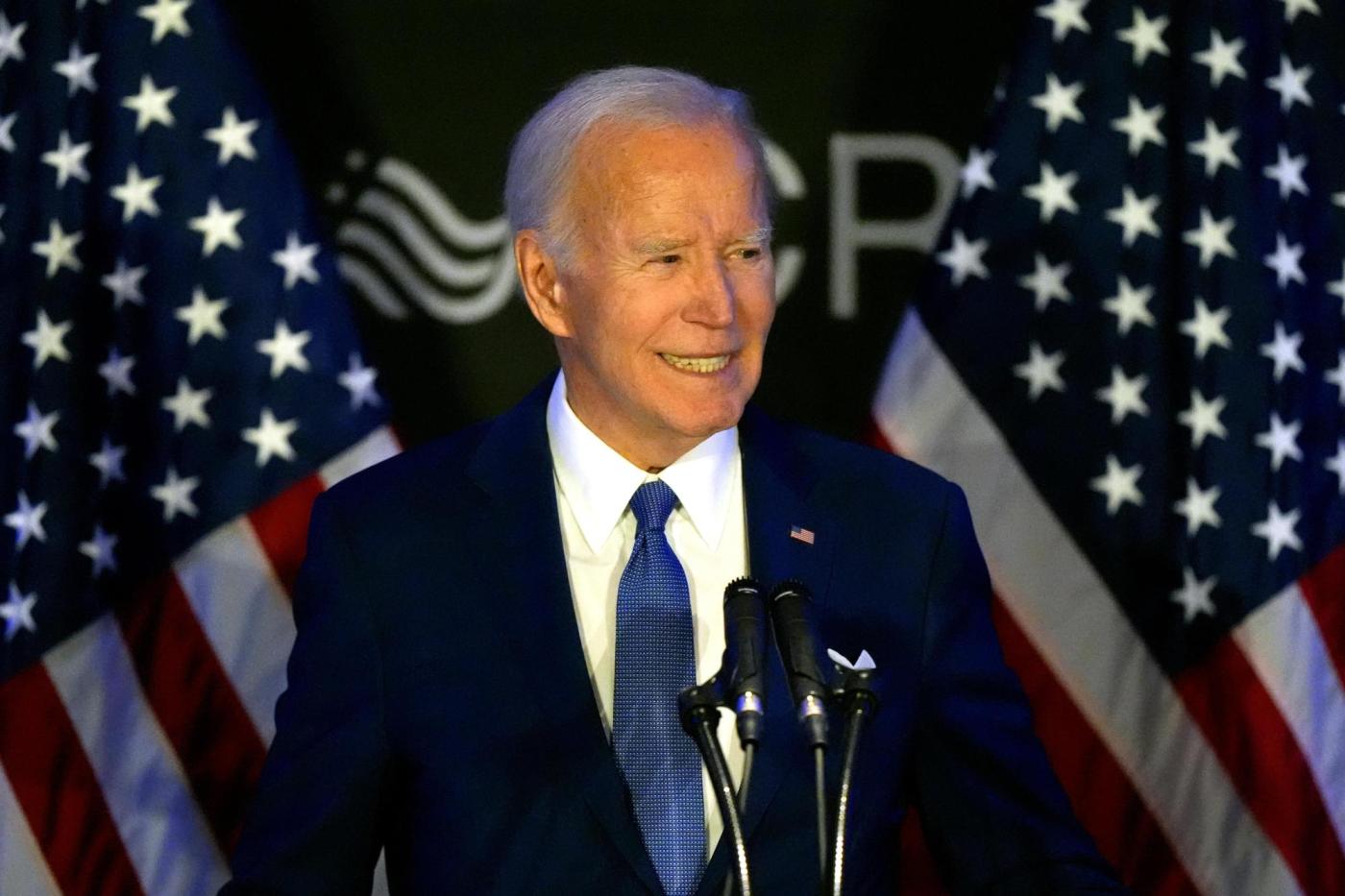
Biden calls Trump’s pressure on Ukraine ‘modern-day appeasement’ in 1st post-presidential interview


Minnesota libraries fear fallout of Trump administration’s cuts


Trump administration abruptly removes the vice chair of the National Transportation Safety Board


Trump plans to announce that the US will call the Persian Gulf the Arabian Gulf, officials say


Top US officials will meet with Chinese delegation in Switzerland in first major talks of trade war

In South Dakota, sponsors will need to make sure their petition titles appears in 14-point type on the front page and 16-point font on the back, where people typically sign.

And in Florida, volunteers will have to register with the state if they gather more than 25 petition signatures from outside their family or risk facing felony charges punishable by up to five years in prison.

Across about dozen states, roughly 40 bills restricting or revamping the citizen initiative process have passed at least one legislative chamber this year, according to a review by The Associated Press. Many already have been signed into law.

Some advocates for the initiative process are alarmed by the trend.

“Globally, as there’s movements to expand direct democracy. In the United States it’s contracting,” said Dane Waters, chair of the Initiative and Referendum Institute at the University of Southern California, who has advised ballot campaigns in over 20 nations.

Most of the new restrictions come from Republican lawmakers in states where petitions have been used to place abortion rights, marijuana legalization and other progressive initiatives on the ballot. GOP lawmakers contend their measures are shielding state constitutions from outside interests.

“This is not a bill to restrict. It is a bill to protect — to make sure that our constitutional system is one of integrity, and that it’s free of fraud,” said state Sen. Jennifer Bradley of Florida, where the new initiative requirements already have been challenged in court.

A right in some states, but not others

About half the U.S. states allow people to bypass their legislatures by gathering signatures to place proposed laws or constitutional amendments on the ballot.

Since Oregon voters first used the process in 1904, a total of 2,744 citizen initiatives have appeared on statewide ballots, with 42% wining approval, according to the Initiative and Referendum Institute.

But the process has long caused tension between voters and their elected representatives.

Lawmakers often perceive the initiative process as “an assault on their power and authority, and they want to limit it,” Waters said. “They view it, in my opinion, as a nuisance – a gnat that keeps bothering them.”

Restrictions on petition canvassers

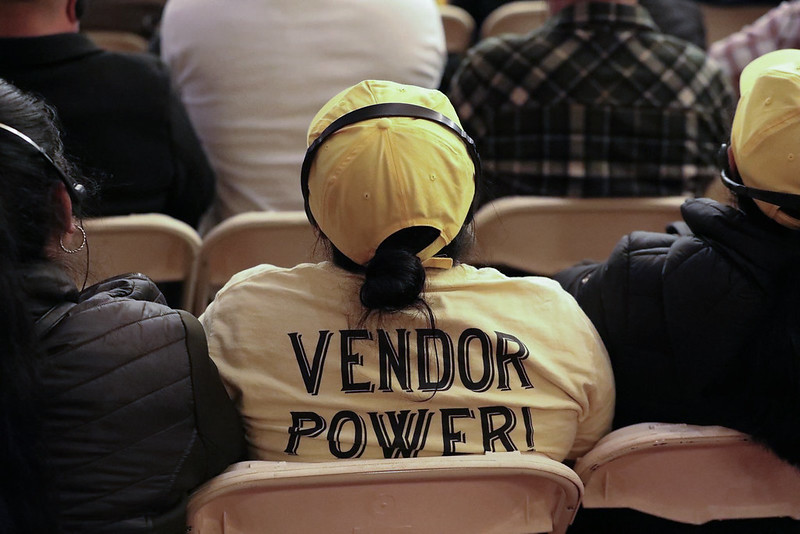
Because initiative petitions require thousands of signatures to qualify for the ballot, groups sponsoring them often pay people to solicit signatures outside shopping centers and public places. Some states now prohibit payments based on the number of signatures gathered.

States also are trying to restrict who can circulate petitions. A new Arkansas law requires paid petition canvassers to live in the state. And a new Montana law will make petition circulators wear badges displaying their name and home state.

The new Florida law expanding registration requirements for petition circulators also requires them to undergo state training and bars canvassers who are noncitizens, nonresidents or felons without their voting rights restored.

More requirements for petition signers

In addition to providing their name, address and birth date, people signing initiative petitions in Florida also will have to provide either their Florida driver’s license, state identification card or the last four digits of their Social Security number.

That information is not required in other states, said Kelly Hall, executive director of the Fairness Project, a progressive group that has backed dozens of ballot initiatives in states. Hall said people concerned about privacy might hesitate to sign petitions.

“I work in ballot measures, and I deeply support many of the things that folks have tried to put on the ballot in Florida, ” Hall said, “and I don’t know if I could bring myself to do that – that’s a very prohibitive requirement.”

Making the fine print larger

Many states already prescribe a particular format for initiative petitions. South Dakota’s new mandate for specific font sizes was prompted by allegations that some people got duped into signing a petition for abortion rights last year, said sponsoring state Sen. Amber Hulse, a Republican.

Printing the ballot title in large type “might make it harder for some issues to get on the ballot if people know what they’re signing. But that’s actually a good thing,” Hulse said.

More power for elected officials

Before they can collect signatures, petition sponsors must get approval from state officials. New measures in several states give those officials greater authority.

New Arkansas laws allow the attorney general to reject initiatives written above an eighth-grade reading level or which conflict with the U.S. Constitution or federal law. Utah’s lieutenant governor, who already can reject unconstitutional petitions, now also will be able to turn away petitions that are unlikely to provide adequate funding for their proposed laws.

A new Missouri law gives greater power to the secretary of state, instead of judges, to rewrite ballot summaries struck down as being insufficient or unfair.

A higher threshold for voter approval

Most states require only a majority vote to amend their constitutions, though Colorado requires 55% approval and Florida 60%.

Republican-led legislatures in North Dakota and South Dakota approved measures this year proposing a 60% public vote to approve future constitutional amendments, and Utah lawmakers backed a 60% threshold for tax measures. All three propositions still must go before voters, where they will need only a majority to pass.

Voters rejected similar proposals in Ohio, Arkansas and South Dakota in recent years, but they approved a 60% threshold for tax measures in Arizona.

Lawmakers contend the move has merit.

“Raising the threshold can help protect the constitution from being manipulated by special interest groups or out-of-state activists,” North Dakota House Majority Leader Mike Lefor said earlier this year.

Associated Press writers Jack Dura and Kate Payne contributed to this report.

Payne is a corps member for The Associated Press/Report for America Statehouse News Initiative. Report for America is a nonprofit national service program that places journalists in local newsrooms to report on undercovered issues.

Biden calls Trump’s pressure on Ukraine ‘modern-day appeasement’ in 1st post-presidential interview

posted in: All news | 0

LONDON (AP) — Joe Biden said in his first post-presidential interview that President Donald Trump’s pressure on Ukraine to give up territory to Russia amounts to “ modern-day appeasement,” a historically fraught term that refers to a failed effort to stop the Nazis from annexing land in Europe in the 1930s.

Biden told BBC Radio 4’s “Today” program in remarks aired Wednesday that Trump’s statements about acquiring Panama, Greenland and Canada have bred distrust of the United States in Europe.

Related Articles


Trump administration abruptly removes the vice chair of the National Transportation Safety Board


Trump plans to announce the US will call the Persian Gulf the Arabian Gulf, officials tell AP


Top US officials will meet with Chinese delegation in Switzerland in first major talks of trade war


Trump says only 21 hostages held by Hamas in Gaza now believed to be alive


Erwin Chemerinsky: Trump wants to topple the republic’s last line of defense

“What president ever talks like that?” Biden said. “That’s not who we are. We’re about freedom, democracy, opportunity — not about confiscation.”

He also said it was a “difficult decision” to leave the U.S. presidential race in 2024 four months from Election Day to allow former Vice President Kamala Harris to challenge Trump. But, he added, making that move earlier as some critics had suggested “would(n’t) have mattered.”

The term appeasement refers to former British Prime Minister Neville Chamberlain’s efforts in the 1930s to appease Adolf Hitler’s moves to annex land in Europe, which failed to prevent World War II.

Trump has long dismissed the war in Ukraine as a waste of lives and American taxpayer money. Early in his presidency, Trump ordered a pause in American aid to Ukraine — then resumed it. The two countries last week signed an agreement granting American access to Ukraine’s vast mineral resources — a return on investment, Trump suggested, that could pave the way for more U.S. aid.

He has also said that Crimea, a strategic peninsula along the Black Sea in southern Ukraine that was illegally annexed by Russia in 2014, “will stay with Russia.”

Biden said he worried that relations between the U.S. and Europe was eroding under Trump, with NATO member nations reconsidering whether they trust the U.S.

“Europe is going to lose confidence in the certainty of America and the leadership of America,” Biden told the BBC. The continent’s leaders, he added, were asking: “‘Can I rely on the United States? Are they going to be there?’”

Of special concern, Biden said, was the administration’s proposal to let Russia keep some Ukrainian territory in an effort to strike a peace deal that would put an end to fighting.

“It is modern-day appeasement,” Biden said.

Biden said Trump’s thrashing of Ukrainian President Volodymyr Zelenskyy in the Oval Office in February was “beneath America.”

“I don’t understand how they fail to understand that there’s strength in alliances,” Biden said of the Trump administration on Monday.

Asked about Trump’s triumphant celebration of his first 100 days in office, Biden replied that he’ll let history render the judgement.

“I don’t see anything that was triumphant,” he said.

Federal Reserve faces tough balancing act between fighting inflation and spurring economic growth

posted in: All news | 0

By CHRISTOPHER RUGABER, Associated Press Economics Writer

WASHINGTON (AP) — The Federal Reserve could keep its key rate unchanged for several more months as it evaluates the impact of President Donald Trump’s widespread tariffs on hiring and inflation, some economists say, even as the White House pushes for a rate cut.

The Fed is nearly certain to keep its rate unchanged when it concludes its latest policy meeting Wednesday. Chair Jerome Powell and other Fed officials have signaled that they want to see how the duties — including 145% on all imports from China — impact consumer prices and the economy.

The central bank’s caution could lead to more conflict between the Fed and the Trump administration. On Sunday, Trump again urged the Fed to cut rates in a television interview and said Powell “just doesn’t like me because I think he’s a total stiff.” With inflation not far from the Fed’s 2% target for now, Trump and Treasury Secretary Scott Bessent argue that the Fed could reduce its rate. The Fed pushed it higher in 2022 and 2023 to fight inflation.

If the Fed were to cut, it could lower other borrowing costs, such as for mortgages, auto loans, and credit cards, though that is not guaranteed.

Trump also said Sunday he wouldn’t fire Powell because the chair’s term ends next May and he will be able to appoint a new chair then. Yet if the economy stumbles in the coming months, Trump could renew his threats to remove Powell.

A big issue facing the Fed is how tariffs will impact inflation. Nearly all economists and Fed officials expect the import taxes will lift prices, but it’s not clear by how much or for how long. Tariffs typically cause a one-time increase in prices, but not necessarily ongoing inflation. Yet if Trump announces further tariffs — as he has threatened to do on pharmaceuticals, semiconductors, and copper — or if Americans worry that inflation will get worse, that could send prices higher in a more persistent way.

Kathy Bostjancic, chief economist at Nationwide, said this could keep the Fed on the sidelines until September.

“It’s hard for them to cut sooner because they’ve got to weigh, what’s the inflation impact?” Bostjancic said. “Is this going to be somewhat persistent and add to inflation expectations?”

Economists and the Fed are closely watching inflation expectations, which are essentially a measure of how much consumers are concerned that inflation will worsen. Higher inflation expectations can be self-fulfilling, because it Americans think prices will rise, they can take steps that push up costs, such as asking for higher wages.

For now, the U.S. economy is mostly in solid shape, and inflation has cooled considerably from its peak in 2022. Consumers are spending at a healthy pace, though some of that may reflect buying things like cars ahead of tariffs. Businesses are still adding workers at a steady pace, and unemployment is low.

Still, there are signs inflation will worsen in the coming months. Surveys of both manufacturing and services firms show that they are seeing higher prices from their suppliers. And a survey by the Federal Reserve’s Dallas branch found that nearly 55% of manufacturing firms expect to pass on the impact of tariff increases to their customers.

“The bottom line is that inflation will be rising significantly over the next six months,” Torsten Slok, chief economist at the Apollo Group, said in an email.

Yet the tariffs could also weigh heavily on the economy, particularly because of the uncertainty they have created. Huge tariffs on about 60 other nations, announced April 2, were then postponed until July 9, but could be reimposed. Business surveys show that firms are postponing investment decisions until they have greater clarity.

Ryan Sweet, chief U.S. economist at Oxford Economics, said the uncertainty surrounding trade policy gives him “night terrors.”

“The economics of uncertainty are absolutely suffocating,” Sweet said. “Businesses that don’t know the rules of the road, their knee-jerk reaction is to sit on their hands. And that’s what they’re doing.”

But if the uncertainty delays hiring, slows the economy and pushes up the unemployment rate, the Fed could quickly shift toward interest rate cuts. A sharp economic slowdown could eventually cool inflation by itself, economists say.

“If you felt like the economy was really slowing down, then I think that would probably take precedence (over inflation), because usually the way the committee thinks is that will also drag inflation somewhat with it,” said Jim Bullard, former president of the Federal Reserve’s St. Louis branch, and currently dean of Purdue University’s business school.

In March, the Fed signaled that it could cut rates twice this year. But since then, the Trump administration imposed duties that Powell said last month were larger and broader than the Fed expected.

The duties, Powell acknowledged, could both slow growth and lift prices, which puts the Fed in a tough spot. It would usually cut rates to boost growth and hiring, while it would raise them to cool spending and inflation. Powell signaled that if the two goals came into conflict, Fed officials would put more weight on inflation concerns.

“Without price stability, we cannot achieve the long periods of strong labor market conditions that benefit all Americans,” Powell said.

Spicy beef tostadas reinvigorate the Taco Tuesday tradition

posted in: All news | 0

When you need to throw something together for a fast and easy weeknight meal, tacos are often a busy cook’s first choice.

Related Articles


Recipe: Spicy beef tostadas reinvigorate the Taco Tuesday tradition


What’s cooking in that one pot? For these moms, it’s a new food world


Umami’s an old flavor but still a new concept for many cooks. Here’s what to know


Brunch on (gluten-free!) potato-crust quiche with spinach, feta and bacon


Five weeknight dishes we couldn’t stop eating

That’s because you can stuff almost anything inside a hard or soft tortilla — including leftovers — top it with some shredded lettuce and/or crunchy veggies, add a generous sprinkling of cheese and feel like a total winner.

Tostadas — flat and crispy (and sometimes bowl-shaped) tortilla shells piled high with meat, seafood or vegetables — are just as easy if you’re looking to change things up on Taco Tuesday, but still want to stick to a Mexican theme.

Why do we love this Mexican version of the open-faced sandwich? Like their crunchy folded cousins, tostadas are very versatile. They also can be assembled in 20 minutes or less, depending on the chosen protein and whether or not any veggies have to be cooked.

In other words, you don’t have to think too hard to make tostadas.

This recipe brings together ground beef that’s been spiced up (considerably) with chipotle peppers in adobo sauce and the traditional taco fixings of shredded iceberg lettuce, fresh tomato, chopped cilantro and crumbled Cotija cheese.

There’s also a layer of mashed refried beans to help the toppings stick to the fried tortilla.

Depending on how involved you want diners to be, you can either assemble the tostadas before serving or place the toppings in separate bowls and let everyone serve themselves. Some recipes call for frying the tostada shells in hot oil before adding the toppings to make them hot and extra crunchy, but I took the shortcut of simply warming them in the oven.

Tostadas can be eaten like a pizza slice with both hands, or on a plate using a fork and knife. Just note: The more toppings you pile on, the messier it will be.

Spicy Ground Beef Tostadas

INGREDIENTS

For meat layer:

2 tablespoons vegetable oil
1 pound ground beef
1 large yellow or white onion, chopped
2 garlic cloves, minced
2 chipotle peppers in adobo sauce, plus 2 tablespoons sauce, or to taste
1 teaspoon ground cumin
1 tablespoon chili powder
Kosher salt and black pepper, to taste
8-ounce can refried beans, warmed
8 tostadas (flat crisp shell)

For topping:

Handful of shredded iceberg lettuce
Handful of shredded red cabbage
1 cup halved cherry tomatoes
1/4 cup chopped red onion
Large handful fresh cilantro, chopped
1 cup crumbed Cotija cheese
1 avocado, peeled and cut into wedges
3 limes, divided
Salsa, optional

DIRECTIONS

Heat vegetable oil in a large skillet over medium-high heat. When it is sizzling, add ground beef and cook, stirring and breaking up the meat with a wooden spoon or rubber spatula until it is no longer pink.

Stir in onion, garlic, chipotle peppers and sauce, cumin and chili powder. Season to taste with salt and pepper. (If meat is too spicy, thin sauce with a little water.)

Empty refried beans into a small saucepan placed over low to medium heat. Stir frequently until the beans are heated through. Keep the beans on warm while you prepare the various toppings and warm the tostada shells, adding water as necessary to keep a creamy consistency.

Toss shredded lettuce with juice of 1 lime and add a pinch of salt and pepper. Cut 2 remaining limes into wedges.

Heat tostada shells in a preheated 350-degree oven until hot and crispy, about 3-4 minutes.

Assemble the tostadas. Divide the shells among plates and spread a thin layer of warmed refried bean on top. (This will act as a glue for the ground beef.)

Spoon the meat mixture on top of the beans. Top with shredded lettuce and cabbage, halved tomatoes, chopped onion, chopped cilantro, sliced avocado and crumbled cotija cheese, and serve immediately.

If desired, spoon on some jarred salsa. For additional heat, add a few slices of pickled jalapeno; to tone it down a notch, add a dollop of sour cream.

Serves 4.

— Gretchen McKay, Post-Gazette