Twins’ Matt Wallner’s return draws nearer, though results in Triple-A won’t hasten it

posted in: All news | 0

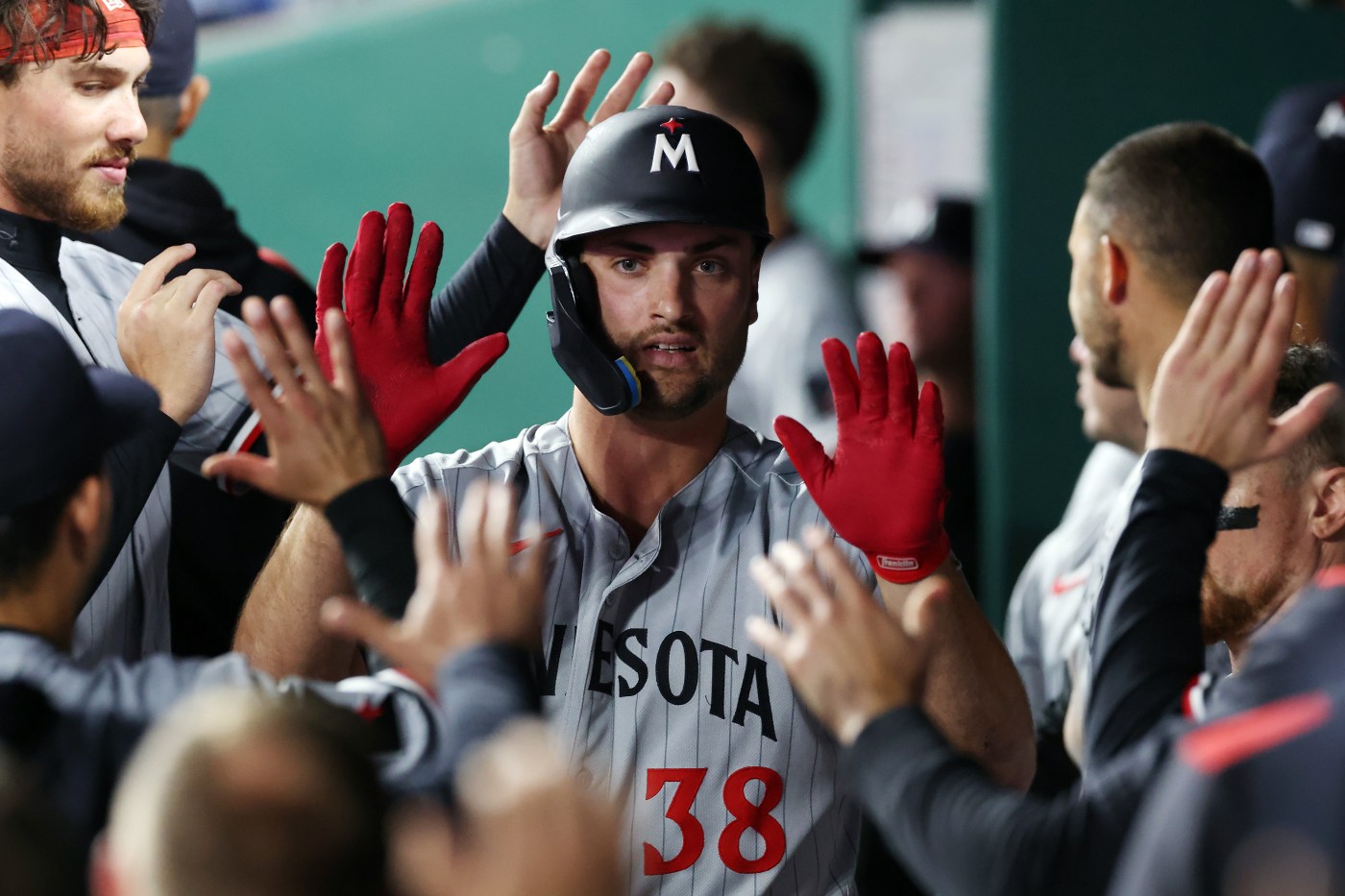
Matt Wallner may be tearing up Triple-A pitching, but don’t expect the Twins to tear up their carefully constructed plans for his rehab schedule to bring him back any sooner.

Wallner, who has been on the injured list with a strained hamstring since mid-April, hit two home runs on Thursday in his first rehab game and had another three hits and three RBIs on Friday. He played right field once and designated hitter the next day.

Saturday was a scheduled day off for him before he gets back into rehab action on Sunday. Wallner said he expected to play a couple games with the Saints next week, too, though he didn’t know how much longer his rehab assignment would last.

“We don’t change the medical staff’s plans because a guy has two or three hits in a few games,” Baldelli said. “When he comes back, he has to play. He’s going to have to be on his feet. … He’s going to have to play in the outfield, more than a couple days in a row. And you don’t just skip all of those steps and have guys do that in the big leagues. That’s how you end up back on the IL with further issues.”

Before his return, the Twins would like to see him play more in the outfield. After doing that once, Wallner said he felt a little more tired than he normally would, but otherwise good.

And he sure looks good at the plate.

“Just trying to feel somewhat decent at the plate is the goal, and then to be able to get results, that’s great,” Wallner said.

And while Carlos Correa returned Friday, Wallner is nearing a return and Byron Buxton, who is on the concussion injured list, is progressing towards one of his own, Baldelli isn’t yet allowing himself to imagine what it might be like to have his entire position player group healthy, which could happen for the first time all season fairly soon.

“If I thought it would help at all, then I would spend a lot of time thinking about it, but we get the players that are healthy and able to play, and we try to win with those guys,” Baldelli said. “I don’t spend too much time daydreaming.”

Fan reception “means a lot” to Lewis

In the hours before Saturday’s game, scores of fans waited outside the ballpark, hoping to get their hands on a Royce Lewis bobblehead. Lewis didn’t have any input on the figurine’s design, which depicts him in the Twins’ City Connect jersey, but he said the Twins did a good job incorporating two features that were important to him.

“I think it’s really cool,” he said. “I love the eye black, the goatee. That’s all I ask. I’m very basic. Those two things are a must and it was awesome.”

Though Lewis has had bobbleheads made of his likeness in the past, this, in a way, is his first in the majors because last year’s went only to season-ticket holders and was not passed to the larger audience. Even Lewis himself does not have one.

This time around, he had two boxes full of them and planned to give them to his mom, whom he said would disperse them to friends and family.

“It means a lot, just because these people really care about how I play the game and that means a lot,” Lewis said of fans waiting to get the bobblehead. “This game’s so hard so when you’re going through a tough stretch, it’s nice to see that people still care about you and they enjoy watching you play.”

Briefly

Hall of Famer Tony Oliva and Twins legend Kent Hrbek were both back at the ballpark on Saturday as the Twins held Stroke Awareness Day. Hrbek had a stroke after a knee surgery in April and Oliva suffered a “series of mini strokes.” It was the first time back at the ballpark for each. … Bailey Ober will start the series finale for the Twins on Sunday. His last start was cut short because of rain on Monday. … Correa was out of the starting lineup on Saturday a day after returning from the concussion injured list and collecting two hits. It was a planned day off as they ease him back in and he appeared later in the game, drawing a walk in the ninth inning.

Related Articles


Brooks Lee sends Twins to walk-off win, their second in as many days


Ty France’s walk-off home run sends Twins to victory over Royals


Carlos Correa returns after a week on concussion injured list


Who’s on first? Three of the newest additions to the Twins’ roster


Trio of Twins position players making progress towards their return
Alternatives to defunding: Who goes to help when police aren’t needed?

posted in: All news | 0

Rather than cancel contracts with police departments, some local governments have expanded street outreach through nonprofit partners or looked to other preventative efforts that work parallel to, if not hand in hand with law enforcement.

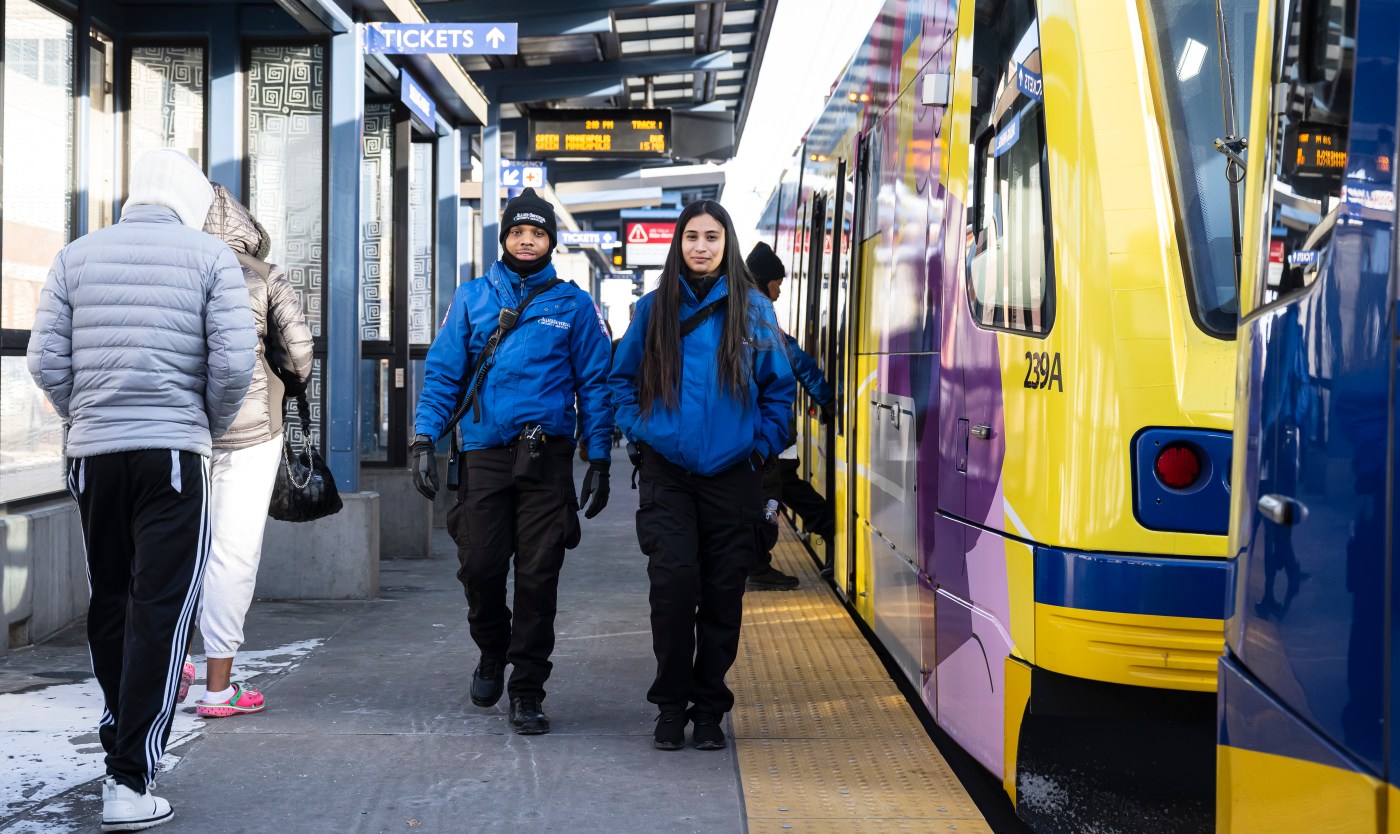
Metro Transit: Since 2023, the transit agency has employed civilian Transit Rider Investment Program (TRIP) agents to check fares, provide customers with information about transit schedules and social service programs, and issue administrative citations, which are non-criminal fines. The 60 TRIP agents — which could grow to 100 agents by the end of the year — supplement the work of the Metro Transit Police Department and its community service officers, who are officers-in-training.

In addition, the transit agency’s Homeless Action Team works with outreach staff from Mental Health Minnesota to offer services to passengers in crisis. Metro Transit plans to issue a request for proposals from more community-based outreach organizations later this year.

St. Paul: Under the direction of Mayor Melvin Carter’s office, the city launched the Office of Neighborhood Safety in 2022 to implement the mayor’s “Community First Public Safety” framework, which oversees grants and investments in “addressing the root causes of crime.” The office is run by director Brooke Blakey, former chief of staff to the Metro Transit police chief, and has funded violence intervention grant outreach and other prevention-based programs.

Last year, after ending a police unit dedicated to mental health follow-ups, the city launched a “Familiar Faces” initiative to target support services, including housing, to the few dozen most frequent users of emergency services.

St. Paul Downtown Improvement District: The St. Paul Downtown Alliance and the Downtown Improvement District employ about 35 street ambassadors who walk streets and skyways and are available to escort downtown workers to their cars at night. Some are assigned cleaning duties for litter and graffiti. About eight to 16 street ambassadors are deployed at a time, from 7 a.m. to 11 p.m., seven days a week. The improvement district also coordinates a Safety Communications Center, which supports communications between the street team, private building security teams and the city police department.

Ramsey County: Through a pilot program started in early 2024, four St. Paul-Ramsey County Public Health responders can be dispatched by the Ramsey County Emergency Communications Center to calls involving substance abuse that aren’t overdoses or medical emergencies. Participating cities include Little Canada, New Brighton, Falcon Heights, Maplewood, Mounds View, Shoreview, Vadnais Heights and White Bear Township.

St. Paul Public Schools: In June 2020, the school board voted to stop paying the police department to staff the public high schools with school resource officers. In their place are 40 unarmed school support liaisons trained and paid by the school district alone, who try to build relationships with students and head off problems before they escalate.

Related Articles


Joe Soucheray: George Floyd Square is an embarrassment to the man it’s supposed to honor


Ex-Minneapolis police chief recalls ‘absolutely gut-wrenching’ moment of seeing George Floyd video


George Floyd: Minneapolis, St. Paul events mark his death, community response


Justice Department moves to cancel Minneapolis police reform settlement


Minnesota Freedom Fund to stop bailing out jailed defendants

Brooks Lee sends Twins to walk-off win, their second in as many days

posted in: All news | 0

It took a little something from everyone on Saturday.

There was Ty France, Friday night’s hero, driving in a pair of runs to pull the Twins within a run after Harrison Bader had homered earlier in the fifth inning. There was Jorge Alcala, preserving a one-run deficit by throwing a shaky but scoreless sixth, retiring the heart of the Royals’ lineup. There was Kody Clemens, flipping his bat after connecting with a Michael Wacha fastball to the tie game up in the sixth. There was Jhoan Duran, stranding the bases loaded to in the ninth to preserve the tie.

And finally, there was Carlos Correa and Ryan Jeffers, both fresh off the bench, drawing walks in the ninth to set the stage for Brooks Lee, who made walk-off winners for the Twins for the second straight day. The Twins beat the Royals 5-4 on Saturday afternoon at Target Field, using a Lee single to capture their second win in as many days over their division foes.

“I just tried to get something out over the plate, stick with my approach and hopefully good things happen,” Lee said, “And it did. I mishit that ball, too, but I think with a good approach and a good swing, it took care of itself.”

Lee, called the day a “roller coaster,” starting it 0 for 2 at the plate. He said he kept reminding himself that he had a few more opportunities later on.

He did, and he made the most of them, finishing the game with hits in his last three at-bats. It was the first walk-off of his career.

“He’s really developing as a hitter in a lot of ways. Huge moment. I mean, that’s just beautiful,” manager Rocco Baldelli said. “Walk-offs, you know we’ve had two in a row here, but they don’t happen that often. And you remember every one of them. They’re very special to the players, as they should be. You win the game for your team out there, it feels really good.”

While Lee put the finishing touches on the Twins’ 16th win in their last 18 games, this one was a collective effort.

The Twins (29-22), who were quieted by Wacha for the first four innings of the game, finally broke through in the fifth. Bader’s home run got the Twins on the board, and after Willi Castro was hit by a pitch and Christian Vázquez singled, France brought them both home, making it 4-3 at the time.

Clemens pulled the Twins even with the Royals (28-25) an inning later with his fourth home run of the season.

“You’ve got to keep it close,” Baldelli said. “If you give yourself a chance by keeping it close, things can work out. And we’re confident offensively even if we’re not rolling, we still feel like we’re about to get rolling and that’s what we saw as the game went along.”

The Twins had fallen in a hole in the third when starter Zebby Matthews, making just his second major league start of the season, allowed a two-out single to Maikel Garcia with the bases loaded, scoring a pair of runs. Matthews struck out a career-high nine batters in his outing, which lasted four innings. He walked just one and while he said he needs to be more efficient to pitch deeper into starts, he called it a “good step” from his last start.

After his departure, he made way for Justin Topa, who gave up a pair of runs in the fifth inning. But after that, Twins pitchers shutout the Royals, allowing the offense to climb back in.

“We’re in every game. We’re down 4-0 early and it doesn’t feel like it,” Lee said. “Our offense is going to start clicking at some point during the game and we’re going to put up big numbers.”

And on Saturday, they did.

Related Articles


Ty France’s walk-off home run sends Twins to victory over Royals


Carlos Correa returns after a week on concussion injured list


Who’s on first? Three of the newest additions to the Twins’ roster


Trio of Twins position players making progress towards their return

Twins, Guardians finally play ball, splitting two games

From can’t play to can’t be stopped: How Chet Holmgren realized Larry Suggs’ vision

posted in: All news | 0

Larry Suggs, the father of NBA guard Jalen Suggs, remembers a man coming up to him during an AAU basketball practice for middle schoolers and asking him a peculiar question.

“Hey,” the man said, “where’s that awkward white kid that you always had on your basketball team?”

Suggs was confused.

“The kid that was not very good,” the man clarified.

Suggs pointed at one of the only white players in the gym.

“No, not that kid,” the man responded. “That kid over there is pretty good.”

“No, that’s Chet,” Suggs said. “It’s the same kid. He just grew taller, and now he can knock down 3s.”

The man was stunned.

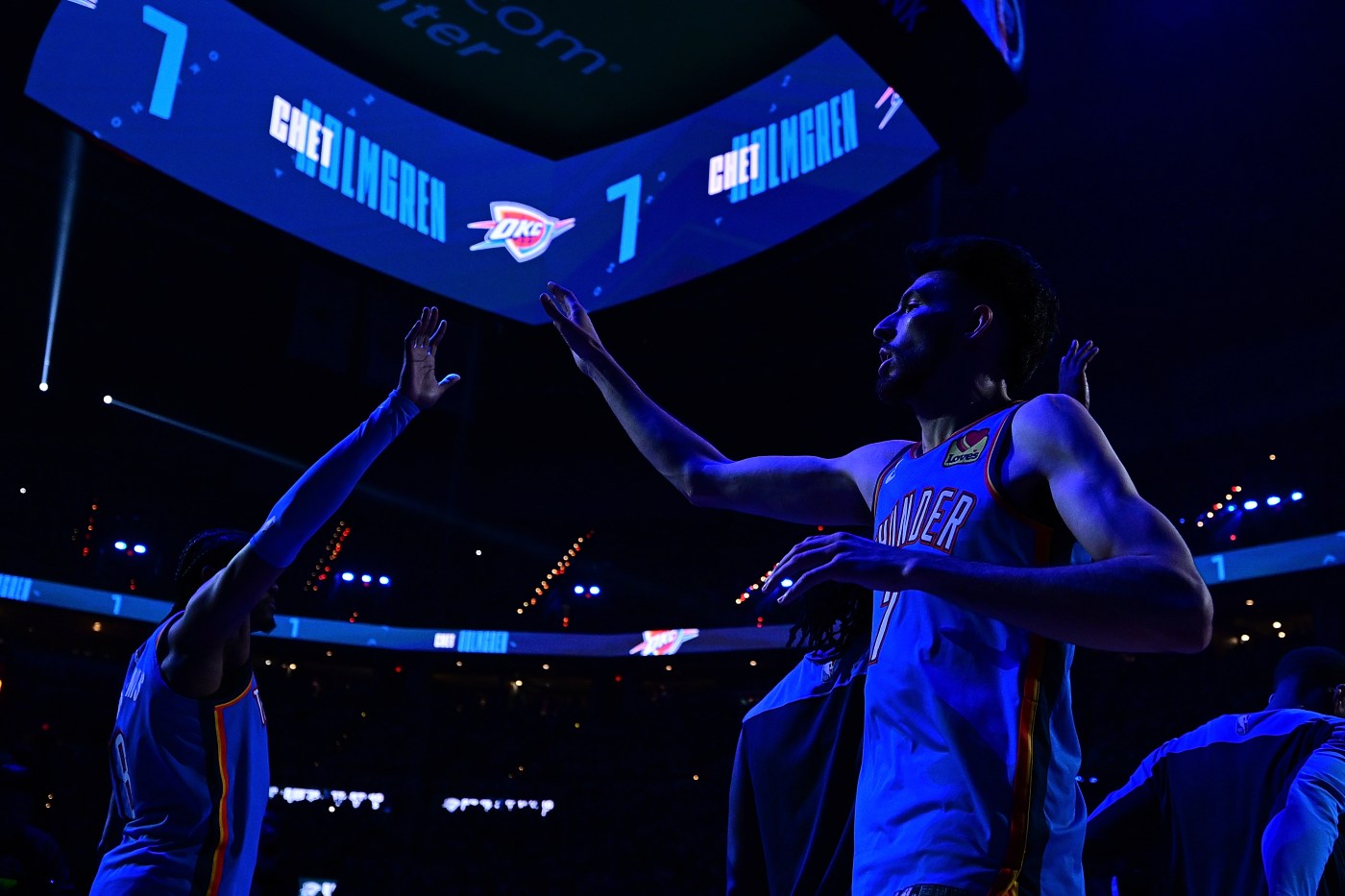
Years later, Chet Holmgren — that “awkward white kid” from Minneapolis who just turned 23 years old this month — is now the second- or third-best player on an Oklahoma City team heavily favored to win the NBA title, with a chance to secure a Finals trip by beating his hometown Timberwolves.

Quite a leap for a guy that current Orlando Magic guard Jalen Suggs once said came from “the bottom of the bottom.”

“He didn’t even know what basketball was,” Jalen joked.

Much less how to play it.

“I always tell people, ‘He was the worst kid in your classroom at basketball,’ ” Larry said.

Be like KD

Oklahoma City Thunder forward Chet Holmgren reacts after a play against the Minnesota Timberwolves during the second half of Game 2 of an NBA basketball Western Conference Finals playoff series Thursday, May 22, 2025, in Oklahoma City. (AP Photo/Nate Billings)

So, how did Holmgren end up on a youth team with future NBA guards like Jalen Suggs and Tyrell Terry, and a slew of other future Division I athletes?

Larry knew Chet’s father, Dave Holmgren, played for the Gophers. He appreciated Chet’s willingness to listen and learn in their early conversations and, truthfully, Suggs believed in his own abilities to teach the game. Holmgren was an intriguing piece of clay he was eager to mold.

But it was a process. Suggs’ team always played four-plus years above its age group. That was no issue for many of the players, but it made life difficult for Chet, who at this point was the same height as everyone else but still in the process of learning the game.

“A lot of people would come and say, ‘Hey, I just think you should cut him, because he’s slowing everybody down,’ ” Larry recalled. “But they didn’t know his progression.”

Only Suggs did. He set benchmarks he wanted Holmgren to reach by certain points, and the student was hitting them all, progressing even a little ahead of Suggs’ schedule. While having a great idea of how tall Holmgren may eventually become given his dad’s height, Suggs had Holmgren play guard.

Holmgren and Kerwin Walton, who just finished his senior season at Texas Tech, were each tasked with getting up 250 jumpers before every practice in an effort to improve their shots and make them legitimately helpful to the players around them.

Suggs only settled for proper form. Learning how to shoot correctly and efficiently required reps. Suggs believed if he could teach Holmgren the same things he taught Terry and his own son, the possibilities were endless for the future 7-footer.

Even as he began to grow, Suggs had Holmgren running off flare screens and firing up 3-pointers.

“I said, ‘I think I can make you like KD,’ ” Suggs said, in reference to Kevin Durant.

All grown up

For years, many of the boys on Suggs’ AAU team were roughly the same size, right around or just above 6 feet, Holmgren included. But Suggs remembers a period of about a month in which Holmgren shot up 4-plus inches. It was part of a year in which Holmgren said he grew 8 inches in total.

Everything changed. Suggs noted the newfound “big man” had dibs on shotgun during travel to games. No longer could Holmgren share a bed with teammates in hotels, because he had to sleep diagonally to fit in them.

Holmgren had to take intermittent breaks from the sport because of growing pains. When he’d return to action, adaptations were made that included no bending down to touch the line on sprint drills and more bike work. Holmgren did physical therapy to adjust his movements and solve strength issues. Eventually, his body caught up to his bones.

“I kept working on it and some athleticism came,” Holmgren said in 2020. “Then it kind of just complemented the skill really well.”

‘He’s tough’

Holmgren is not an exact replica of Kevin Durant, by any means. While he shot 38% from deep this season, his offensive skillset isn’t quite as smooth or deep — though his capabilities are incredibly impressive for someone his size.

What makes Holmgren so special is the combination of the offensive skills he does have and the defensive force he imposes. Holmgren is one of the game’s elite shot blockers; he swatted 2.2 shots per game this season, while altering countless others.

Holmgren patrols the paint like few can, even while still being far more slender than most other NBA players at his position. Holmgren is listed at 7-foot-1 … and just 208 pounds.

You may be able to overpower Holmgren on occasion. But bully him? Not a chance.

In Game 2 on Thursday, Holmgren threw down a dunk, then shouted in the face of Wolves guard Donte DiVincenzo, which incited a technical foul. Watching at home from his couch, Suggs immediately started laughing.

“That a boy,” he said.

“He just has that raw emotion like that. He’s just always been like that. I’ve never told him to hold it back,” Suggs said. “I said, ‘You have to show your emotions, because I don’t want anybody to ever take advantage of you. And anything down around this basket is yours.’ ”

And no opponent could take it from Holmgren, no matter what their strength or mass advantages may be. The credit for that, Suggs said, belongs solely to the player. Holmgren first walked into the gym with the same mentality he possesses today.

“Pain didn’t really phase him,” Suggs said. “And being in a different, stressful environment didn’t (either).”

Suggs noted Holmgren was always running around the Minneapolis with “a whole bunch of minorities,” kidding around and playing basketball. Holmgren and Spring Lake Park’s Cole Ewald were often the only white kids in the gym.

“They adapted very early to the physicality and to the different social and economic situations that a lot of us were in growing up in in the inner city,” Suggs said.

When Holmgren was in high school, a college coach called Suggs to ask if the big man was tough. Suggs’ response was, “He hangs out with a whole bunch of brothers in the inner city. What do you think?”

“Alright, I gotcha,” the coach said. “He’s tough.”

A new standard

Oklahoma City Thunder forward Chet Holmgren (7) shoots against Minnesota Timberwolves center Naz Reid (11) during the first half of Game 1 of an NBA basketball Western Conference Finals playoff series Tuesday, May 20, 2025, in Oklahoma City. (AP Photo/Nate Billings)

Holmgren has brought Suggs’ vision for the forward to life, and put it on display for all to witness on the game’s biggest stages.

When Holmgren was young, Suggs told the player the heights he believed he could reach: To be the best American-born white player since Larry Bird. At first, that seems like a bar too high to realistically hit.

But consider today’s NBA, where Holmgren is contending with the likes of guard Tyler Herro and Austin Reaves for that distinction (Cooper Flagg won’t join this discussion until he’s selected No. 1 overall in next month’s NBA Draft). And, if you were a franchise aiming to contend for a title, Holmgren would be your top choice of those three players.

“On U.S. soil, who’s the baddest white boy in the NBA?” Suggs asked. “It’s Chet Holmgren. He walks it, he talks it, he backs it up, he’s got the swagger, he’s funny. He’s got all the metrics.”

“And,” Suggs added, “he’s got a great chance to win the championship.”

Related Articles


With season on the line, do Timberwolves need to go small?


Frederick: The Timberwolves know how to respond. They’ve seen it firsthand.


Timberwolves blitzed again in third quarter to fall down 2-0 in West Finals


Jace Frederick: Will Anthony Edwards pull back if NBA fines continue?


Now the Timberwolves understand the challenge that is the Thunder