MLB players’ families grapple with rising online threats as sports betting surges

posted in: All news | 0

By KRISTIE RIEKEN, AP Sports Writer

HOUSTON (AP) — Soon after Lance McCullers Jr.’s family received online death threats following a tough start by the Houston Astros’ pitcher, his 5-year-old daughter, Ava, overheard wife Kara talking on the phone about it.

What followed was a painful conversation between McCullers and his little girl.

“She asked me when I came home: ‘Daddy like what is threats? Who wants to hurt us? Who wants to hurt me?’” McCullers told The Associated Press on Wednesday. “So, those conversations are tough to deal with.”

McCullers is one of two MLB pitchers whose families have received online death threats this month as internet abuse of players and their families is on the rise. Boston reliever Liam Hendriks took to social media soon after the incident with McCullers to call out people who were threatening his wife’s life and directing “vile” comments at him.

The Astros contacted MLB security and the Houston Police Department following the threats to McCullers. An police spokesperson said Thursday that it remains an ongoing investigation.

McCullers, who has two young daughters, took immediate action after the threats and hired 24-hour security for his family.

“You have to at that point,” he said.

Milwaukee Brewers’ Christian Yelich gestures after hitting a walk off grand slam during the 10th inning of a baseball game against the Boston Red Sox, Tuesday, May 27, 2025, in Milwaukee. (AP Photo/Aaron Gash)

Abuse increasing with rise in sports gambling

Players from around the league agree that online abuse has gotten progressively worse in recent years. Milwaukee’s Christian Yelich, a 13-year MLB veteran and the 2018 NL MVP, said receiving online abuse is “a nightly thing” for most players.

“I think over the last few years it’s definitely increased,” he said. “It’s increased to the point that you’re just: ‘All right, here we go.’ It doesn’t even really register on your radar anymore. I don’t know if that’s a good or a bad thing. You’re just so used to that on a day-to-day, night-to-night basis. It’s not just me. It’s everybody in here, based on performance.”

And many players believe it’s directly linked to the rise in legalized sports betting.

“You get a lot of DMs or stuff like that about you ruining someone’s bet or something ridiculous like that,” veteran Red Sox reliever Justin Wilson said. “I guess they should make better bets.”

Boston Red Sox pitcher Liam Hendriks celebrates after the final out of a baseball game against the Minnesota Twins at Fenway Park, Friday, May 2, 2025, in Boston. (AP Photo/Charles Krupa)

Hendriks has had enough

Hendriks, a 36-year-old reliever who previously battled non-Hodgkin lymphoma, said on Instagram that he and his wife received death threats after a loss to the Mets. He added that people left comments saying that they wished he would have died from cancer among other abusive comments.

He later discussed the issue and his decision to speak out about it.

“Enough is enough,” he said. “Like at some point, everyone just like sucking up and dealing with it isn’t accomplishing anything. And we pass along to security. We pass along to whoever we need to, but nothing ends up happening. And it happens again the next night. And so, at some point, someone has to make a stand. And it’s one of those things where the more eyes we get on it, the more voices we get talking about it. Hopefully it can push it in the right direction.”

What teams are doing

Both the Astros and the Red Sox are working with MLB security to take action against social media users who direct threats toward players and their families. Red Sox spokesperson Abby Murphy added that they’ve taken steps in recent years to make sure player’ families are safe during games. That includes security staff and Boston police stationed in the family section at home and dedicated security in the traveling party to monitor the family section on the road.

Murphy said identifying those who make anonymous threats online is difficult, but: “both the Red Sox and MLB have cyber programs and analysts dedicated to identifying and removing these accounts.”

The Astros have uniformed police officers stationed in the family section, a practice that was implemented well before the threats to McCullers and his family.

Abandoning social media

For some players, online abuse has gotten so bad that they’ve abandoned social media. Detroit All-Star outfielder Riley Greene is one of them, saying he got off because he received so many messages from people blaming him for failed bets.

“I deleted it,” he said of Instagram. “I’m off it. It sucks, but it’s the world we live in, and we can’t do anything about it. People would DM me and say nasty things, tell me how bad of a player I am, and say nasty stuff that we don’t want to hear.”

Criticism is part of the game, threats are not

The 31-year-old McCullers, who returned this year after missing two full seasons with injuries, said dealing with this has been the worst thing that’s happened in his career. He understands the passion of fans and knows that being criticized for a poor performance is part of the game. But he believes there’s a “moral line” that fans shouldn’t cross.

“People should want us to succeed,” he said. “We want to succeed, but it shouldn’t come at a cost to our families, the kids in our life, having to feel like they’re not safe where they live or where they sit at games.”

Related Articles


Twins option Carson McCusker, setting stage for bigger move Friday


Twins drop finale to Rays, have lost three of four


Twins’ hitters limited to six singles in 5-0 loss to Tampa Bay


Clemens homers again as Twins beat Rays


Hot Twins run into trouble against hotter Tampa Bay

Houston manager Joe Espada was livid when he learned about the threats to McCullers and his family and was visibly upset when he addressed what happened with reporters.

Espada added that the team has mental health professionals available to the players to talk about the toll such abuse takes on them and any other issues they may be dealing with.

“We are aware that when we step on the field, fans expect and we expect the best out of ourselves,” Espada said this week. “But when we are trying to do our best and things don’t go our way while we’re trying to give you everything we got and now you’re threatening our families and kids — now I do have a big issue with that, right? I just did not like it.”

Kansas City Royals designated hitter Salvador Perez, right, celebrates his RBI single against the Minnesota Twins during the fifth inning of baseball game Saturday, May 24, 2025, in Minneapolis. (AP Photo/Matt Krohn)

Kansas City’s Salvador Perez, a 14-year MLB veteran, hasn’t experienced online abuse but was appalled by what happened to McCullers. If something like that happened to him he said it would change the way he interacts with fans.

“Now some fans, real fans, they’re gonna pay for that, too,” he said. “Because if I was him, I wouldn’t take a picture or sign anything for noboby because of that one day.”

McCullers wouldn’t go that far but admitted it has changed his mindset.

“It does make you kind of shell up a little bit,” he said. “It does make you kind of not want to go places. I guess that’s just probably the human reaction to it.”

Houston Astros starting pitcher Lance McCullers Jr. reacts after Athletics’ Jacob Wilson’s home run during the fifth inning of a baseball game, Wednesday, May 28, 2025, in Houston. (AP Photo/Karen Warren)

Finding a solution

While most players have dealt with some level of online abuse in their careers, no one has a good idea of how to stop it.

“I’m thankful I’m not in a position where I have to find a solution to this,” Tigers’ pitcher Tyler Holton said. “But as a person who is involved in this, I wish this wasn’t a topic of conversation.”

White Sox outfielder Mike Tauchman is disheartened at how bad player abuse has gotten. While it’s mostly online, he added that he’s had teammates that have had racist and homophobic things yelled at them during games.

“Outside of just simply not having social media I really don’t see that getting better before it just continues to get worse,” he said. “I mean, I think it’s kind of the way things are now. Like, people just feel like they have the right to say whatever they want to whoever they want and it’s behind a keyboard and there’s really no repercussions, right?”

AP Baseball Writer Mike Fitzpatrick and AP Sports Writers Jimmy Golen, Kyle Hightower, Larry Lage and Steve Megargee contributed to this report.

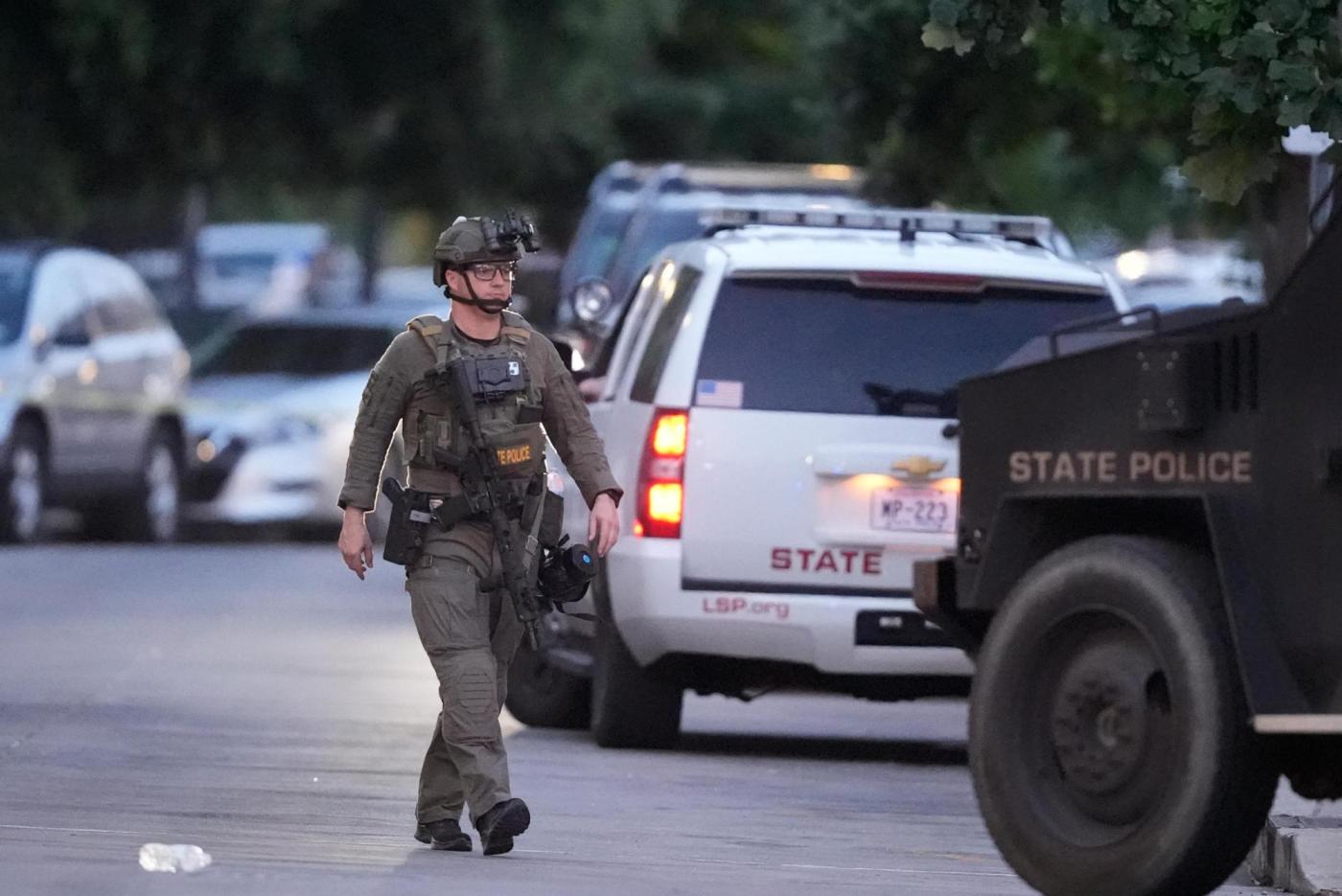
Bloodhounds hunting ‘Devil in the Ozarks’ fugitive are seen as key part of manhunt

posted in: All news | 0

By JEFF MARTIN, ANDREW DeMILLO and SAFIYAH RIDDLE

A bloodhound picked up the scent shortly after the “ Devil in the Ozarks ” escaped from a lockup in northern Arkansas. The hound didn’t have to go far to begin the hunt — it lives at the prison as part of a specialized unit that uses man’s best friend to help track fugitives.

Although the scent of convicted killer Grant Hardin was lost because of heavy rain, experts say that even days after Sunday’s escape, the animal’s highly developed sense of small can still pick up a fresh trail.

Bloodhounds are known for being tenacious trackers, said Brian Tierney, president of the National Police Bloodhound Association. They’re playing a key role in the search for Hardin, now in its sixth day.

They also save lives, as one young bloodhound did just two weeks ago in Maine. Millie, a 10-month-old hound tracked a 5-year-old girl with autism who went missing from her home on May 16, Maine State Police said. The dog found the girl waist-deep in water in a cedar swamp, the agency said. Authorities credited Millie’s dedication and “incredible nose” for saving the girl.

Heavy rain interrupted the search for Hardin

Bad weather confounded the hunt for Hardin, who was serving a 30-year sentence for murder when he escaped from the North Central Unit, a medium-security prison in Calico Rock, Arkansas.

The hound found – then lost – Hardin’s scent when heavy rains blew through the area, said state prison spokesman Rand Champion. Hardin was tracked for less than a quarter of a mile when the bloodhound lost the trail. The fugitive could have gone in any direction after that.

“That was one of the most frustrating things, that they were able to track him but then they lost him because of the rain,” Champion said.

Hardin took almost nothing with him and left behind plenty of clothes, bedsheets and other items that are used to familiarize the bloodhounds with his scent, Champion said. Those items are shared with the dogs to give them the initial scent of the person they are seeking, Tierney said. It’s a process that’s standard operating procedure for Arkansas’ prison dogs.

Who is Grant Hardin?

A former police chief in the small town of Gateway near the Arkansas-Missouri border, Hardin had been held at the Calico Rock prison since 2017 after pleading guilty to first-degree murder in a fatal shooting for which he was serving a 30-year sentence.

Hardin’s DNA was matched to the 1997 rape of a teacher at an elementary school in Rogers, north of Fayetteville. He was sentenced to 50 years in prison for that crime. Eventually, his notoriety led to a TV documentary, “Devil in the Ozarks.”

Champion said that someone should have checked Hardin’s identity before he was allowed to leave, describing the lack of verification as a “lapse” that is being investigated.

Bloodhounds live at Calico Rock prison

Authorities haven’t disclosed how many dogs are involved in the manhunt, but the Calico Rock prison is known for its bloodhounds that live in a kennel on prison property. The nearly one dozen dogs at the prison have helped many other agencies, including the Federal Bureau of Investigation, to track a variety of people over the years, according to a 2021 state audit report on the prison.

Related Articles


Sellers outnumber prospective homebuyers as high prices and mortgage rates skew the housing market


Oreo maker Mondelez sues Aldi, alleging grocery chain copies its packaging to confuse customers


Wall Street drifts toward the end of what may be its best month since 2023


US inflation gauge cools with little sign of tariff impact, so far


Today in History: May 30, Babe Ruth plays last major league game

Southern prisons have a long history of keeping bloodhounds around in case of escapes, like the one featured in country artist Blake Shelton’s song “Ol’ Red,” about a hound that hunts escaped inmates with “a nose that could smell a two-day trail.”

Dogs in Arkansas’ prison system have also been used to help other agencies find people who are not dangerous, such as missing children, people with special needs or elderly people, Champion said.

The bloodhounds tend to raise a ruckus when they find their mark. But the prison system uses other types of dogs in searching for children and vulnerable people who go missing, and those dogs tend to lick people and make friends with them when they are found, Champion said.

Fugitives use spices, other means to foil bloodhounds

Fugitives being hunted by bloodhounds have been known to take extreme steps to throw the dogs off their trail, Tierney said.

Two convicted killers who broke out of a maximum-security prison in upstate New York in 2015 collected dozens of containers of black and cayenne pepper before their escape. They had intended to use the pepper “to interfere with tracking dogs they assumed would be part of a manhunt for them after the escape,” a state investigation found. One of the men was shot and killed during the manhunt; another was also shot but survived and was captured.

Tierney said he’s heard of other methods used by fugitives to evade tracking dogs. Among them: Sleeping in trees could allow one’s scent to disperse before reaching the ground, he said.

Hardin has troubled past in law enforcement

In his first job as a police officer 35 years ago in the college town of Fayetteville, home of the University of Arkansas, Hardin struggled almost immediately, his supervisors said. “Other recruits do not like Grant,” one wrote in a performance review.

After a few months on the job, most shift supervisors concluded that he was “not suited for police work,” Fayetteville’s police chief at the time wrote to the director of the state commission on enforcement standards in the spring of 1991.

But after being dismissed by Fayetteville police, he kept getting hired for other law enforcement jobs in northwest Arkansas. In documents and interviews, other police leaders echoed what Fayetteville’s police chief had said — that Grant should not have become a police officer.

By the time he was the police chief in the small town of Gateway in 2016, “he was out chasing cars for no reason,” Cheryl Tillman, the town’s current mayor, recalled in the documentary “Devil in the Ozarks.”

He’s also been described by those who know him as a smart and cunning person who has learned many police tactics over the years and knows how law officers hunt fugitives.

“That individual probably watched the extended forecast before he went out,” Tierney said. “He would know that heavy rain is going to hinder the dogs.”

Associated Press Writer Hallie Golden in Seattle contributed.

Sellers outnumber prospective homebuyers as high prices and mortgage rates skew the housing market

posted in: All news | 0

By ALEX VEIGA, Associated Press Business Writer

LOS ANGELES (AP) — Homeowners eager to sell may have to wait a while before a buyer comes along.

As of April, the U.S. housing market had nearly 34% more sellers than buyers shopping for a home, according to an analysis by Redfin.

Aside from April 2020, when the pandemic brought the economy and home sales activity to a standstill, there haven’t been this few buyers in the market for a home before, based on records that date back to 2013.

The trend is good news for home shoppers — if they can afford to buy at current mortgage rates and prices, which are still rising nationally, albeit more slowly.

Fewer buyers means less competition for home listings and more pressure on sellers to dial back their asking price and make other concessions to help get a deal done. That’s a stark reversal from just a few years ago, when it wasn’t uncommon for homeowners to receive offers well above their asking price from multiple home shoppers.

Related Articles


Bloodhounds hunting ‘Devil in the Ozarks’ fugitive are seen as key part of manhunt


Oreo maker Mondelez sues Aldi, alleging grocery chain copies its packaging to confuse customers


Wall Street drifts toward the end of what may be its best month since 2023


US inflation gauge cools with little sign of tariff impact, so far


Today in History: May 30, Babe Ruth plays last major league game

“The balance of power in the U.S. housing market has shifted toward buyers, but a lot of sellers have yet to see or accept the writing on the wall,” said Asad Khan, a senior economist at Redfin.

The lopsided balance between buyers and sellers is reflected in home sales, which remain in a slump going back to 2022, when mortgage rates began to climb from the rock-bottom lows they reached during the pandemic. Last year, sales of previously occupied U.S. homes sank to their lowest level in nearly 30 years. Sales fell last month to the slowest pace for the month of April going back to 2009.

Sellers began outnumbering buyers in November 2023, when the average rate on a 30-year mortgage climbed to a 23-year high of nearly 8%, according to mortgage buyer Freddie Mac. The average rate reached 6.89% this week, its highest level since early February.

All told, there were 1.9 million sellers and 1.5 million prospective homebuyers in April, or 490,041 fewer people in the market for a home relative to sellers. A year ago, there were 6.5% more sellers than buyers. Two years ago, buyers outnumbered sellers by 5.3%.

Redfin based its estimate of the number of sellers in April on active listings, or the number of homes for sale at any point during the month. It estimated the pool of people in the market for a home by creating a model that takes several other data into account, including the typical time it takes for a someone to buy after taking a tour of a home.

Faced with a market with fewer potential buyers, some sellers have opted to lower prices or offer sales incentives, such as agreeing to pay for a buyer’s closing costs or other expenses. Nearly 1 in 5 home listings had their price reduced last month, according to Realtor.com.

The growing imbalance between buyers and sellers should pull U.S. home prices 1% lower by the end of this year, according to Redfin.

Prices have already begun to decline in select metro areas. In the four weeks ended April 20, home prices fell in 11 of the top 50 most populous U.S. metro areas, including Dallas, Oakland, California, and Jacksonville, Florida, according to Redfin.

The market with the biggest gap between buyers and sellers is Miami, where sellers outnumber buyers by about 3 to 1, according to Redfin. The strongest seller’s market is Newark, New Jersey, with 47.1% fewer sellers than buyers.

Despite tipping more in favor of buyers, the housing market is likely to remain unaffordable for many Americans. The median U.S. home sales price has jumped 53% over the past six years, far outpacing wage growth.

And while the inventory of previously occupied U.S. homes climbed last month to the highest level since September 2020, it’s still well below pre-pandemic era levels and short on properties that most Americans can afford.

Before the pandemic, households earning $75,000 a year could afford to buy nearly half of all homes on the market nationally. As of March, only 21.2% of home listings were affordable, according to a recent analysis by the National Association of Realtors. A home is considered affordable if monthly payments don’t exceed 30% of household monthly income.

“Without a significant boost in housing inventory at price points below $260,000, the path to homeownership will remain blocked for millions of Americans who are otherwise financially ready to buy,” according to the NAR report.

Supreme Court lets Trump end humanitarian parole for 500,000 people from 4 countries

posted in: All news | 0

By LINDSAY WHITEHURST, Associated Press

WASHINGTON (AP) — The Supreme Court on Friday again cleared the way for the Trump administration to strip temporary legal protections from hundreds of thousands of immigrants for now, pushing the total number of people who could be newly exposed to deportation to nearly 1 million.

The justices lifted a lower-court order that kept humanitarian parole protections in place for more than 500,000 migrants from four countries: Cuba, Haiti, Nicaragua and Venezuela. The court has also allowed the administration to revoke temporary legal status from about 350,000 Venezuelan migrants in another case.

Republican President Donald Trump promised on the campaign trail to deport millions of people, and in office has sought to dismantle Biden administration polices that created ways for migrants to live legally in the U.S. Trump amplified false rumors that Haitian immigrants in Ohio, including those with legal status under the humanitarian parole program, were abducting and eating pets during a debate with then-President Joe Biden, according to court documents.

His administration filed an emergency appeal to the Supreme Court after a federal judge in Boston blocked the administration’s push to end the program.

Justice Kentanji Brown Jackson wrote in dissent that the effect of the high court’s order is “to have the lives of half a million migrants unravel all around us before the courts decide their legal claims.” Justice Sonia Sotomayor joined the dissent.

Related Articles


Think your return to the office was rough? Musk faces some big challenges


Google, Justice Department face off in climactic showdown in search monopoly case


Trump has long warned of a government ‘deep state.’ Now in power, he’s under pressure to expose it


Trump’s big plans on trade and more run up against laws of political gravity, separation of powers


Elon Musk came to Washington wielding a chain saw. He leaves behind upheaval and unmet expectations

Jackson echoed what U.S. District Judge Indira Talwani wrote in ruling that ending the legal protections early would leave people with a stark choice: flee the country or risk losing everything. Talwani, an appointee of Democratic President Barack Obama, found that revocations of parole can be done, but on a case-by-case basis.

Her ruling came in mid-April, shortly before permits were due to be canceled. An appeals court refused to lift her order.

The Supreme Court’s order is not a final ruling, but it means the protections will not be in place while the case proceeds. It now returns to the 1st U.S. Circuit Court of Appeals in Boston.

The Justice Department argues that the protections were always meant to be temporary, and the Department of Homeland Security has the power to revoke them without court interference. The administration says Biden granted the parole en masse, and the law doesn’t require ending it on an individual basis.

Taking on each case individually would be a “gargantuan task,” and slow the government’s efforts to press for their removal, Solicitor General D. John Sauer argued.

Biden used humanitarian parole more than any other president, employing a special presidential authority in effect since 1952.

Beneficiaries included the 532,000 people who have come to the United States with financial sponsors since late 2022, leaving home countries fraught with “instability, dangers and deprivations,” as attorneys for the migrants said. They had to fly to the U.S. at their own expense and have a financial sponsor to qualify for the designation, which lasts for two years.

The Trump administration’s decision was the first-ever mass revocation of humanitarian parole, attorneys for the migrants said. They called the Trump administration’s moves “the largest mass illegalization event in modern American history.”

The case is the latest in a string of emergency appeals the administration has made to the Supreme Court, many of them related to immigration.

The court has sided against Trump in other cases, including slowing his efforts to swiftly deport Venezuelans accused of being gang members to a prison in El Salvador under an 18th century wartime law called the Alien Enemies Act.