Lisa Jarvis: The MAHA report’s errors are just the start of its problems

posted in: All news | 0

Health Secretary Robert F. Kennedy Jr.’s new Make America Healthy Again report offers a road to wellness for the nation’s children paved not with the gold-standard science he promised, but with pyrite.

The report, created by a MAHA commission that includes all of President Donald Trump’s cabinet members, mixes nuggets of truth— like the idea that it’s important to focus on kids’ health — with gross misrepresentations of scientific research. Some of the studies are even made up.

The nonprofit news organization Notus first reported that some of the commission’s findings relied on research that doesn’t exist. The document, released last week, includes seven fabricated studies related to kids’ mental health and the overprescribing of medications for ADHD, depression and asthma. The New York Times later identified several other fake citations.

White House Press Secretary Karoline Leavitt attributed the inclusion of phony publications to “formatting issues” that would be corrected. An updated report that omits those studies and cleans up bizarre errors in several others has since been uploaded to the White House website. That version contained fresh errors, Notus reported.

Many suspect that the fake citations are the product of AI. That alone should be disqualifying. Rather than the thoughtful, evidence-based assessment our kids deserve, the first major report on Kennedy’s cornerstone initiative was a slapped-together treatise.

But there’s a bigger problem.

If the MAHA team did rely on AI to generate supporting data — and it seems likely it did — it wasn’t just cutting corners. It confirms this project was never a good faith effort to begin with. The team was assembling evidence to reinforce conclusions that supported Kennedy’s well-known narrative.

That pattern is bolstered by the report’s interpretation of the real studies it cites. Data is conveniently twisted to fit Kennedy’s personal beliefs. A recurring tendency is to exaggerate the size of the current problem by minimizing the significance of those in the past.

For example, the report points to a fivefold rise in the rates of celiac disease since the 1980s but fails to acknowledge a dramatic increase in diagnosis and awareness of the autoimmune disorder. The same is true for the report’s discussions of inflammatory bowel disease, childhood cancer and autism.

None of this should be surprising. In nearly every interview he gives, Kennedy repeats the same inflated statistics to drive home the terrible state of our kids’ health. His goal seems to be to scare the public into acquiescence. If the problem is this bad, if our kids are this sick, if health agencies have failed them this profoundly, why not blindly follow his ideas for fixing it?

Something more insidious is at play with all of the half-baked or made-up statistics. He is using them to undermine the real experts, making it increasingly hard for Americans to understand whose advice to trust. And ultimately, his willfully misleading analysis provides cover while he dismantles longstanding norms for scientific research and health policy.

In just a few short months, the secretary has wielded his authority in unprecedented and dangerous ways.

For example, amid the largest measles outbreak in 30 years, instead of emphasizing vaccines — which can prevent the disease — he asked the Centers for Disease Control and Prevention to develop guidelines for treatments. There are no proven treatments for measles. At least three people have died, and nearly 1,100 cases of the disease have been reported.

In another disturbing move, Kennedy said he would unilaterally change the CDC’s COVID vaccine guidelines to preclude pregnant women and children from receiving shots. That upended the longstanding process that relies on outside experts’ careful analysis and open debate before making such decisions. Days later, the CDC amended its regulations to incorporate some, but not all of Kennedy’s proposed changes, leaving many confused not only about the actual policy but who sets it.

We should worry that his approach to measles and COVID is a preview of how he will treat the value of other routine shots. One of the most alarming sections of the report questions the evidence behind and safety of the childhood vaccine schedule and — without evidence — suggests it could be linked to chronic disease.

Kennedy has also used his platform to push policy changes on the use of fluoride in drinking water, which he has repeatedly linked to lower IQs (a tenuous claim that experts say is based on fluoride levels not used in the U.S). Fluoridation is regulated by state and local municipalities, but Kennedy said he would direct the CDC to stop recommending the practice and the Food and Drug Administration — also under his purview — later banned fluoride supplements based on unsubstantiated claims that they harm gut health.

His rhetoric on the topic appears to have emboldened the first two state bans on fluoride in public water. The MAHA report’s agenda suggests more changes are to come. Meanwhile, new research in JAMA found that removing fluoride from drinking water would result in 25 million more cavities in children at a cost of $9.8 billion to the U.S. healthcare system over five years.

Kennedy’s next move appears to be wresting control of health and science research altogether. “We’re probably going to stop publishing in the Lancet, New England Journal of Medicine, JAMA and those other journals because they’re all corrupt,” he said on a recent podcast with wellness influencer Gary Brecka.

Unless those top-tier journals “change dramatically,” health agencies will “create our own journals in-house,” he added. In other words, he’ll have a ready-made platform to showcase data that justifies whatever policy he wants to roll out next.

In another troubling sign of how data could be warped to fit a political agenda, President Donald Trump signed an executive order after the report was released directing a restoration of “gold standard science.”

The goal sounds reasonable enough: to ensure research is reproducible and reverse a decline in public trust in science and health agencies. But the language of the directive is concerning. It not only challenges the credibility of several agencies — including the CDC —  but suggests someone like Kennedy could exploit the language of research integrity to crack down on findings that don’t fit his personal agenda.

Kennedy has called the MAHA report “the diagnosis” and says he will “deliver the prescription” in the next 60 days. Given what we’ve seen over the last few months, we should worry what form that takes — and the far reaching consequences it could have on both American kids and the health infrastructure designed to protect them.

Lisa Jarvis is a Bloomberg Opinion columnist covering biotech, health care and the pharmaceutical industry. Previously, she was executive editor of Chemical & Engineering News.
Opinion: Pass the Affordable Waste Reduction Act

posted in: All news | 0

“The Affordable Waste Reduction Act ensures that businesses of all sizes, along with consumers, can play a role in reducing waste without facing exorbitant compliance costs.”

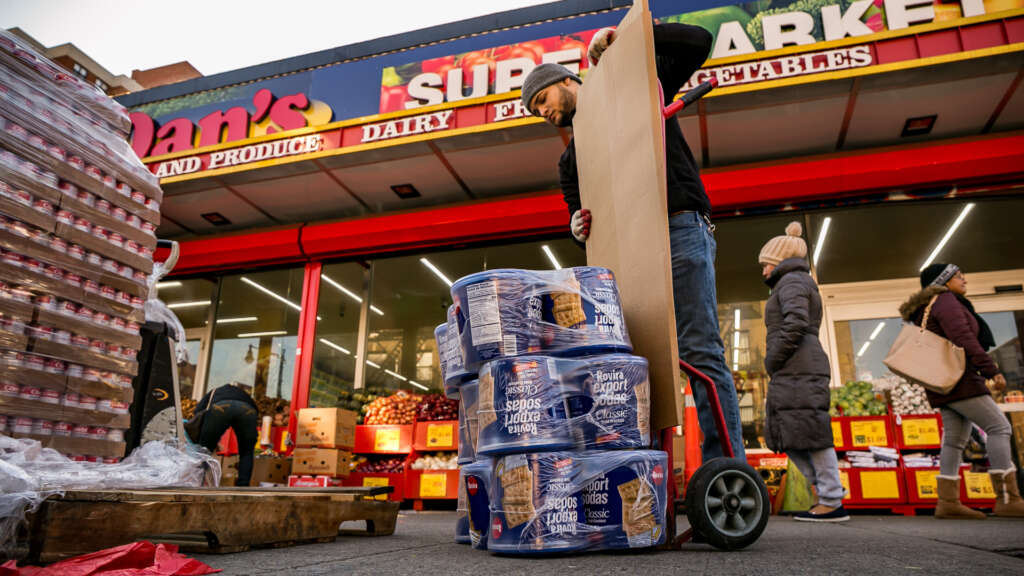
A supermarket in Inwood. (Photo by Adi Talwar)

New York for years has aimed to reduce packaging waste, and for good reason. A whole host of factors ranging from excess materials to outdated recycling infrastructure have resulted in packaging waste piling up in landfills and polluting our water.

Everyone recognizes this is a problem we need to solve. But previous attempts in the New York State Legislature to fix what’s broken have failed as they generated outrage from the hard-working families across New York who care about our environment, but who would have been forced to shoulder too great a burden. Thankfully, a new solution promises to change that.

In February, State Sen. Monica Martinez and Assemblymember Chantel Jackson introduced the Affordable Waste Reduction Act: a practical, effective path to achieving the state’s environmental goals while keeping costs manageable for working families and independent businesses alike. As owners of supermarkets on Long Island and across the five boroughs—and representatives of the National Supermarket Association, which serves independent grocers all across the state —we strongly support this legislation and urge lawmakers to pass it without delay.

For years, well-intentioned but flawed packaging reduction proposals have surfaced in Albany. They may promise to slash packaging waste, but they do so while threatening to drive up costs for consumers and force small businesses to navigate unrealistic mandates on even less realistic timelines.

What’s especially troubling is that many of our stores have a significant number of customers who participate in the SNAP program, and these misguided efforts would have an outsized impact on SNAP-eligible products and the families who rely on them. The Affordable Waste Reduction Act, by contrast, ensures that businesses of all sizes, along with consumers, can play a role in reducing waste without facing exorbitant compliance costs.

Our state needs smart, sustainable solutions—not policies that disproportionately harm those least able to afford them. New Yorkers are already struggling with the rising costs of groceries, housing, and everyday necessities. Independent supermarkets, many of which serve working-class and immigrant communities, are fighting to keep shelves stocked and workers employed amid ongoing supply chain challenges and inflationary pressures. An approach that shifts the financial burden of waste reduction onto businesses like ours, and by extension, our customers, is simply not viable.

The Affordable Waste Reduction Act offers a balanced approach by focusing on systemic improvements rather than punitive restrictions. One of the bill’s key provisions is its investment in upgrading recycling infrastructure across the state. New York’s current system—which can’t process most types of plastics, sending more waste to landfills and incinerators—is outdated, inefficient, and inadequate. This bill creates a new fund that will fuel public investment in infrastructure, ensuring that more packaging waste actually gets recycled, and creating jobs in the process.

Equally important, this legislation provides businesses with practical, achievable benchmarks for reducing waste. Unlike past proposals that would have effectively banned essential packaging materials without available alternatives, this bill takes a more reasonable approach, encouraging innovation and collaboration among manufacturers, retailers, and policymakers. It acknowledges the need for gradual adaptation rather than imposing abrupt, unrealistic mandates that could force businesses to discontinue popular products or pass exorbitant costs onto consumers.

New York has the opportunity to learn from other states that have successfully implemented similar policies. Minnesota’s recently enacted waste reduction law, which serves as a model for the Affordable Waste Reduction Act, garnered support from a broad coalition of environmental advocates, business leaders, and consumer groups.

That kind of consensus is rare in today’s political climate, and it speaks to the strength of this approach. We should follow Minnesota’s lead by enacting a law that fosters progress without imposing unnecessary economic strain.

Past legislative efforts to tackle packaging waste have repeatedly failed because they ignored the real challenges faced by consumers and small businesses. But the Affordable Waste Reduction Act succeeds where others fell short: it balances the urgent need to reduce packaging pollution with the economic realities of everyday New Yorkers. Lawmakers must recognize that meaningful environmental progress does not have to come at the expense of affordability and economic stability.

As local independent supermarkets, we care about our communities. While we are committed to sustainability, we also recognizing the need for practical, real-world solutions that work for our employees and our customers. We applaud and stand with the growing chorus of policymakers who understand that the path to a greener future must be paved with policies that consider the needs of all stakeholders.

The Affordable Waste Reduction Act represents a tremendous step in the right direction, and we urge lawmakers to seize this opportunity to enact real, lasting change for New York.

Jenny Jorge is the owner of Gala Fresh and Gala Foods on Long Island. Ivan Bueno is the owner of Marketplace in Brooklyn. Rafy Nunez is the owner of C-Town in the Bronx. Jorge Guillen is general manager at Cherry Valley Marketplace in Queens.

The post Opinion: Pass the Affordable Waste Reduction Act appeared first on City Limits.

Women’s sports bar The Sports Bra set to expand to four new cities

posted in: All news | 0

By ANNE M. PETERSON, Associated Press

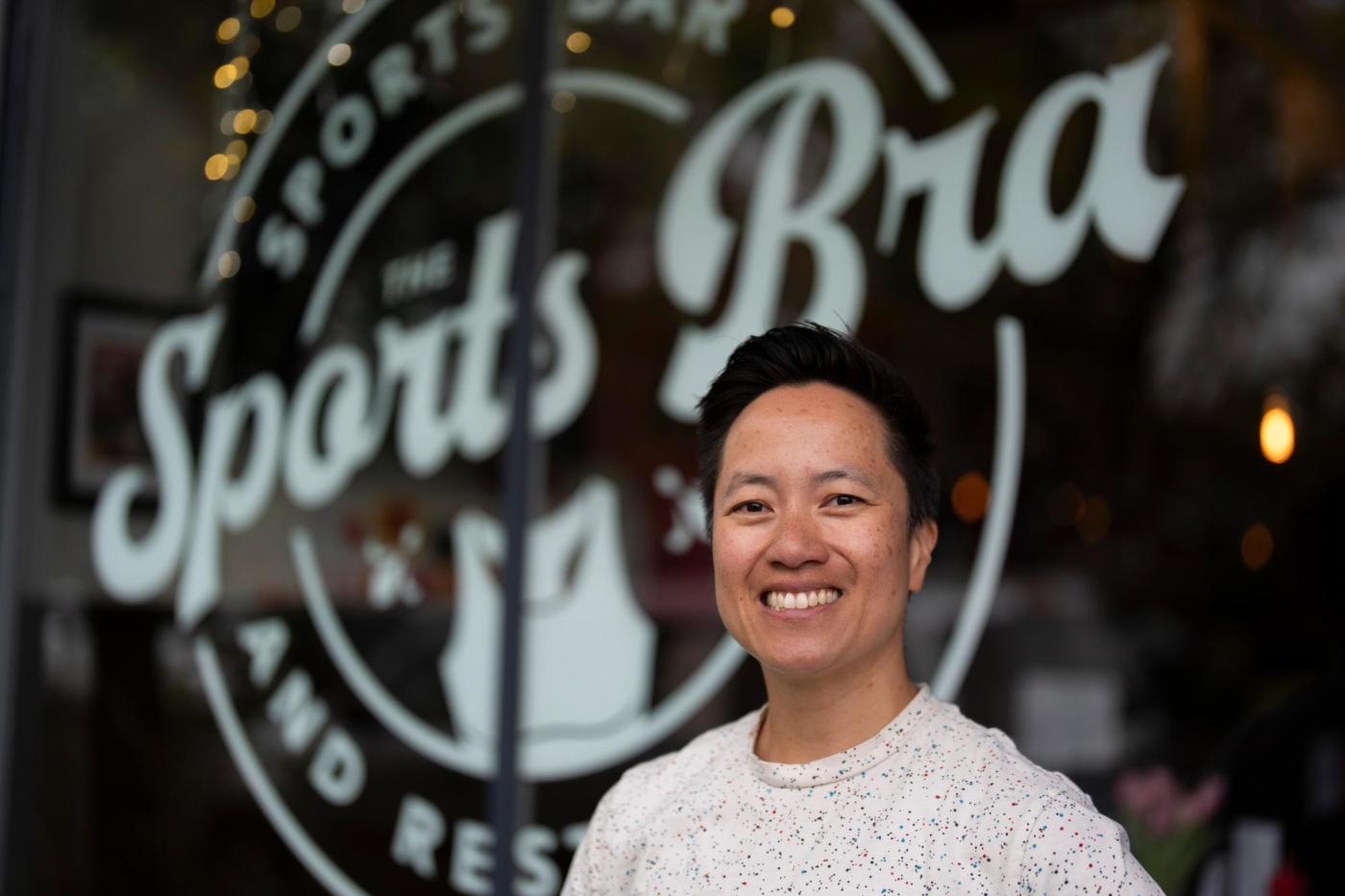
The Sports Bra, the nation’s first sports bar dedicated to women’s sports, is expanding to four new locations in Boston, Indianapolis, Las Vegas and St. Louis.

The original Sports Bra, which opened in Portland, Oregon, in April 2022, was the brainchild of entrepreneur Jenny Nguyen, who wanted to create a space that celebrated women and girls in sports.

FILE – A customer leaves The Sports Bra sports bar on April 24, 2024, in Portland, Ore. (AP Photo/Jenny Kane, File)

Other women’s-centered sports bars have sprung up across the country since then, including The 99ers Sports Bar in Denver, Rough & Tumble in Seattle and Title 9 Sports Grill in Phoenix.

“The first four franchises of The Sports Bra will join our OG Portland location to become the ‘Starting Five.’ Together, we’re serving fans nationwide who are hungry for spaces that not only champion women’s sports, but create a community where everyone feels like they belong. There is no better moment than this to open these places,” said Nguyen, the Sports Bra’s CEO.

FILE – Bartender M.J. Jones, left, and fellow employee Allison Clarke, right, react as an interview with The Sports Bra founder and CEO Jenny Nguyen, center, airs on a screen during their shift at the sports bar on April 24, 2024, in Portland, Ore. (AP Photo/Jenny Kane, File)

Last year Reddit co-founder Alexis Ohanian’s 776 Foundation invested in The Sports Bra with the intention of expanding through franchising. Potential investors were invited to apply for franchises in October.

All of the new locations will be locally owned and operated and will highlight local and women-owned beverage and food products.

Travel: What it’s like now inside beloved Notre-Dame de Paris cathedral

posted in: All news | 0

Millions watched on television in horror on April 15, 2019, as plumes of fire shot up from the Notre-Dame de Paris, one of the world’s oldest and most celebrated cathedrals. At first, the devastation seemed nearly total, with much of the roof and the iconic spire lost to flames. But, today, more than five years later, visitors once more pour into its sanctuary, eager to see how the $1 billion restoration work has progressed.

I was lucky enough to visit on Easter Sunday 2025, a day filled with masses and special events. Thousands of families — tourists and locals alike — stood patiently in hours-long lines to get inside, to attend a mass or just have a chance to see the remarkable restoration.

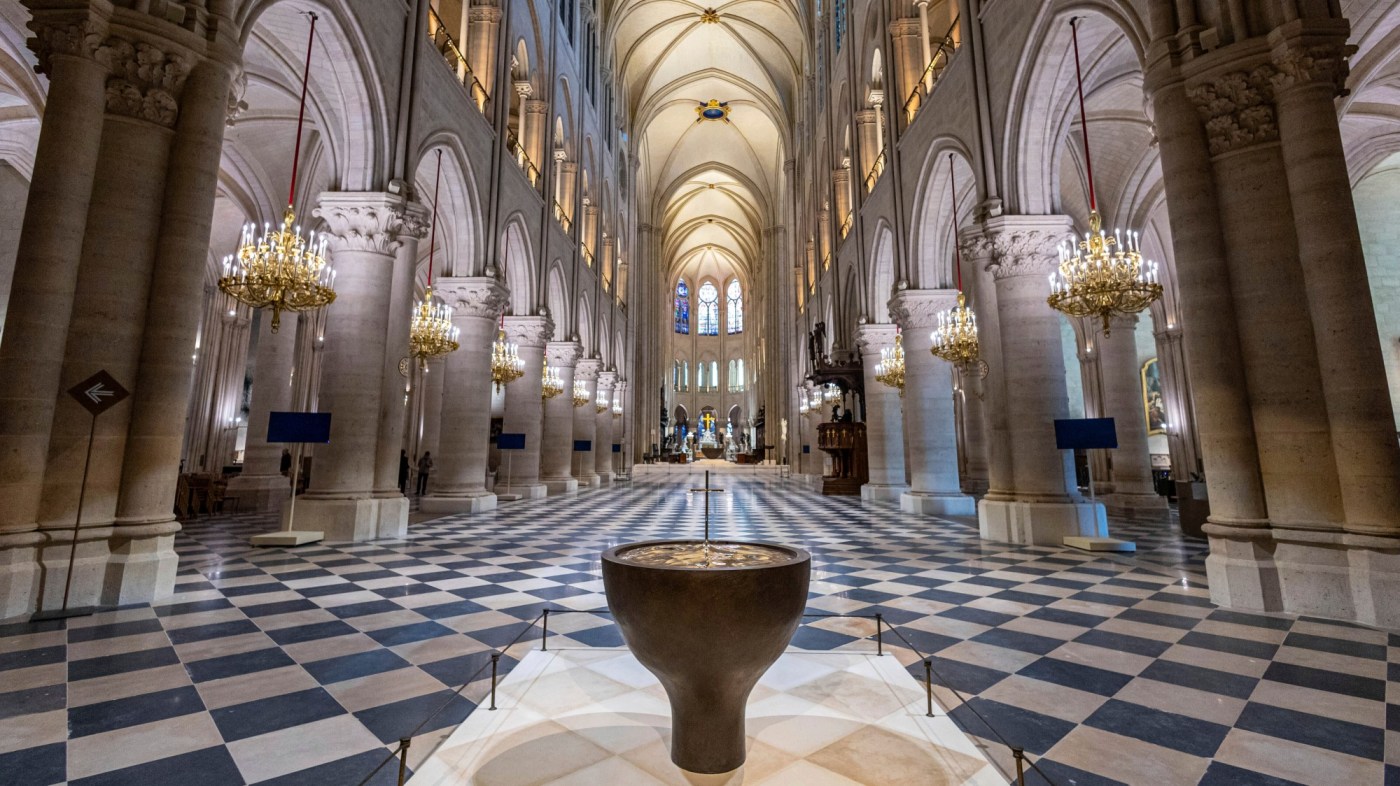
The interior of the cathedral reopened to the public on Dec.8, although much restoration work still remains to be done. Giant cranes still hang over the building, but thousands of people a day line up to see the rebuilt interior.

The altar and the heart, designed by French artist and designer Guillaume Bardet as French President Emmanuel Macron visits the restored interiors of the Notre-Dame de Paris cathedral, Friday, Nov. 29, 2024 in Paris. (Christophe Petit Tesson/Pool via AP)

Larger than a football field, the inside of the cathedral now glows with oatmeal-colored walls and cavernous vaulted ceilings, after the controversial decision to wash them with a latex solution, obscuring the old soot and candle smoke of the centuries. If you’re used to seeing gray, grimey walls in ancient buildings, you may be startled to walk in and see the light-filled interior.

The French government, which owns Notre-Dame, made the decision in 2019 to rebuild the cathedral as it was before the fire, and vowed to do it within five years — a deadline that was only exceeded by a few months. There have been some changes, including a modern bronze main altar, baptismal font and lectern. Some people would have preferred a more traditional style, but the new style is not jarring.

Fortunately for posterity, the cathedral’s three magnificent medieval rose windows, created in the 13th century, were saved from the inferno. The sanctuary is covered with stained glass, thanks to an architectural innovation of the time. The so-called flying buttresses pulled the weight of the roof outside the structure, meaning that the interior walls could be opened up for spectacular displays of leaded and stained glass. The ancient 8,000-pipe organ was also saved and restored, removing toxic dust that had settled there from the collapsed lead roof.

You could spend hours looking around at all the details, but I like to attend a service when I visit remarkable churches. That’s when they show their true selves, including the faith of the worshippers. If you can go to a high mass, also known as a Gregorian mass, you’ll see the worship at its finest.

Worshippers attend a mass inside Notre Dame cathedral on April 21, 2025 in Paris. (AP Photo/Nicolas Garriga)

No ancient European cathedral is complete without its holy relics, which are venerated by the faithful as sacred artifacts from various saints and the life of Jesus.

Notre-Dame offers its believers the following: The remnants of the “holy crown of thorns,” which Biblical accounts say was placed mockingly on Jesus’ head by Roman soldiers while he was being crucified.  Also, a piece of the cross used for the crucifixion, and a nail from the cross.

Paris Archbishop Laurent Ulrich holds the ancient relic that many Christians revere as Jesus Christ’s “Crown of Thorns” during a ceremony to mark Good Friday at Notre Dame cathedral, Friday, April 18, 2025 in Paris. (AP Photo/Michel Euler)

The relics were rescued from the 2019 fire in dramatic fashion, involving a chain of police and firefighters, and moved temporarily to the Louvre. They were recently returned to Notre- Dame with pomp and ceremony, to be displayed in a newly built reliquary. At this writing, the public can see them on the first Friday of every month.

One thing that surprised me on my visit: Even though the cathedral was absolutely jammed with people, it was relatively quiet.

The removation of Notre Dame cathedral in Paris is shown on Oct. 28, 2024. (Photo by Getty Images)

Visitors couldn’t help gasping when they entered and got their first looks, but otherwise seemed more solemn and respectful than is often the case.

Hopefully, they appreciated the five years of slavishly devoted work by some 2,000 sculptors, engineers, art restorers, stonemasons, carpenters, roofers, iron workers to bring this church back to life. And it still continues today.

The south side and new spire of Notre-Dame cathedral under construction are shown on May 26, 2024. (Photo by Getty Images)

Timeline of Notre-Dame de Paris:

1163: The cathedral was built between 1163 and 1260, in French Gothic style.
1789: During the French Revolution, many statues and decorative elements of the cathedral were destroyed and it was at one time used as a warehouse. The 28 statues of saints were beheaded, mistaken for French kings, and some of the bells were removed and melted down.
1804: Napoleon Bonaparte crowned himself emperor of France with the pope in attendance in Notre-Dame, and portions of the cathedral were restored. But the property continued to decay, and there was talk of demolishing it.
1831: “ The Hunchback of Notre Dame” by Victor Hugo is published and becomes a massive best-seller, sparking a campaign to restore the cathedral.
1844: King Luis Phillippe orders that the cathedral be restored. A grander spire than the one destroyed during the French Revolution is constructed.
1991: For the 800th anniversary of the cathedral, a 10-year-long restoration project repaired decorative elements that had fallen off, gargoyles, turrets, and sculptures. The stone exterior was also cleaned of centuries of pollution.
2019: On April 15, a fire broke out in the attic and spread across the roof and spire before firefighters were alerted. They prioritized saving the two towers, because their heavy bells could have destroyed the interior if they fell. But 750 tons of debris. including toxic lead dust, fell into the sanctuary from the roof and spire.
2021: Two years of cleaning up from the fire and shoring up the structure meant that reconstruction could finally begin. Because the church is owned by the French government, the decision was to rebuild it as it was before.
2024: The new roof is completed in March. In September, eight massive tower bells returned after cleaning, with three new bells added later. In December the church’s doors were symbolically reopened and the pipe organ’s 8,000 pipes could be heard for the first time since being covered with toxic dust, as the public ws allowed inside for the first ceremonies and masses.
2025: Construction continues on the massive project, hoped to be completed by 2027.

Construction workers dismantle scaffoldings as they operate to complete renovation of various parts of the Notre-Dame de Paris cathedral in Paris, on October 21, 2024. The cathedral was partially destroyed when a fire broke out beneath its roof on April 15, 2019. (Photo by Ludovic MARIN / AFP) (Photo by LUDOVIC MARIN/AFP via Getty Images)

Things to know:

English language website: notredamedeparis.fr/en/
Address: Notre-Dame Cathedral of Paris, 6 Parvis Notre-Dame, Place Jean-Paul II, 75004 Paris
The cathedral is open and free to visit, 7:50 a.m. to 7 p.m. Mondays-Fridays (until 10 p.m. on Thursdays); 8:15 a.m.-7:30 p.m. Saturdays-Sundays.
The famous “crown of thorns” is only on display intermittently, check the website.
Due to gruelingly long lines, it’s highly advisable to make an advance timed reservation at the above website. They can be made two days to several hours in advance. You don’t need to reserve to attend a mass; arrive 20 minutes early and find the special line. Here’s the mass schedule: notredamedeparis.fr/en/pray/services-masses/
If you’re disabled, talk directly to the staff at the far left of the cathedral for special entry.
Here’s the schedule of sacred music concerts (must buy tickets) billetterie-musiquesacree.mapado.com/en

Related Articles


No Wi-Fi, no problem: 8 family-friendly hike-in lodges for a digital detox


Does Epic Universe have the 2 best dark rides in the world?


Epic Universe: Know before you go


What do you want on a cruise? How private resorts are changing travel


Final boarding call for free bags at Southwest as airline abandons a cherished perk