
DOC commissioner asks for patience from Stillwater prison families, dismisses idea of reopening Appleton prison

posted in: All news | 0

Officials with the Minnesota Department of Corrections on Wednesday asked for patience from friends and family members of people who are incarcerated at the Minnesota Correctional Facility-Stillwater while they work out the details of the facility’s pending closure.

“The DOC is committed to ensuring a careful and thoughtful approach that takes the needs and wellbeing of incarcerated persons into consideration,” Commissioner Paul Schnell wrote in a memo posted online.

“This will be a complex process with many moving parts. It is unlike anything the DOC has undertaken before,” the memo continued. “We know you have lots of questions, and we ask for your patience as we navigate this enormous change.”

State leaders in May agreed to a phased closure of the Stillwater prison, citing safety and costly maintenance concerns at the 1914 facility. Plans call for the prison to be shuttered by June 30, 2029.

Reopen Appleton?

After the news of the closure broke, two state legislators sent a letter to Gov. Tim Walz and Schnell asking them to “seriously consider” reopening the Prairie Correctional Facility in Appleton “as a permanent part of our correctional system.” The medium-security private prison, owned by CoreCivic, closed in 2010.

“The facility has a capacity of 1,600 beds, the same as Stillwater, and could be brought back into use much more efficiently than building a new facility from the ground up,” Sen. Torrey Westrom, R-Alexandria, and Rep. Paul Anderson, R-Starbuck, wrote in their letter. “This would also result in significant cost savings for taxpayers, as the facility is already well maintained.”

Westrom and Anderson noted that state DOC officials could pursue a number of different options, including a state contract, a long-term lease or even purchasing the facility.

Schnell on Wednesday dismissed that idea, saying that the purchase and operation of the “long-vacant Appleton facility is not regarded as an effective or efficient use of state resources.”

“The phased closure of MCF-Stillwater recognizes the age and condition of the facility and the state’s current fiscal constraints,” Schnell said in a statement. “State and federal prison systems around the country are closing antiquated prisons and consolidating the number of prison sites to maximize efficiency and resource utilization.”

A DOC study conducted in 2017 focused on adding capacity at the Minnesota Correctional Facility-Faribault, “which is the most cost-effective option for adding modern correctional facility infrastructure in the future,” Schnell said.

“The Appleton facility presents a range of challenges, including the facility’s location relative to other DOC facilities, the ability to secure sufficient staffing and the cost of training an entirely new staff cadre, purchasing and updating the equipment and supplies needed for daily operations, and the logistical challenges of coordinating shared services across the state’s correctional system,” he concluded.

Mental health services

Westrom and Anderson also noted another option: Using the Appleton prison to expand mental health services should the state not require the full number of prison beds in the future.

“With increasing demand for mental health care across Minnesota, it’s worth exploring how the facility could serve both purposes,” they wrote. “That kind of dual use could help solve two problems at once.”

They also pitched Appleton, located in Swift County, as a great place to live.

Related Articles


Obituary: Col. Thomas Simonet helped lead I35W bridge collapse response — and umpire vintage ‘base ball’


Woodbury City Council announces new city administrator


‘Felt as though they were going to kill me,’ Mahtomedi man beaten and robbed of casino winnings says in court


New Bush Foundation Fellows include amputee, journalist, architect, more


Air quality alert extended to noon Wednesday throughout Minnesota

“For correctional staff who may choose to relocate, Appleton offers great outdoor recreation, a lower cost of living, and much more affordable housing than the Twin Cities,” they wrote. “This makes it a strong option for families and workers alike.”

The closure of the MCF–Stillwater, located in Bayport, is expected to be completed in two phases upon passage of the public-safety omnibus bill at the Legislature.

The first phase involves reducing operations and staffing over several months, moving inmates to other prisons, and conducting studies on logistics, closure impacts and the site’s long-term future. During the second phase, which is slated to begin in July 2027, the site will be vacated. Full closure is expected by June 30, 2029.

Obituary: Col. Thomas Simonet helped lead I35W bridge collapse response — and umpire vintage ‘base ball’

posted in: All news | 0

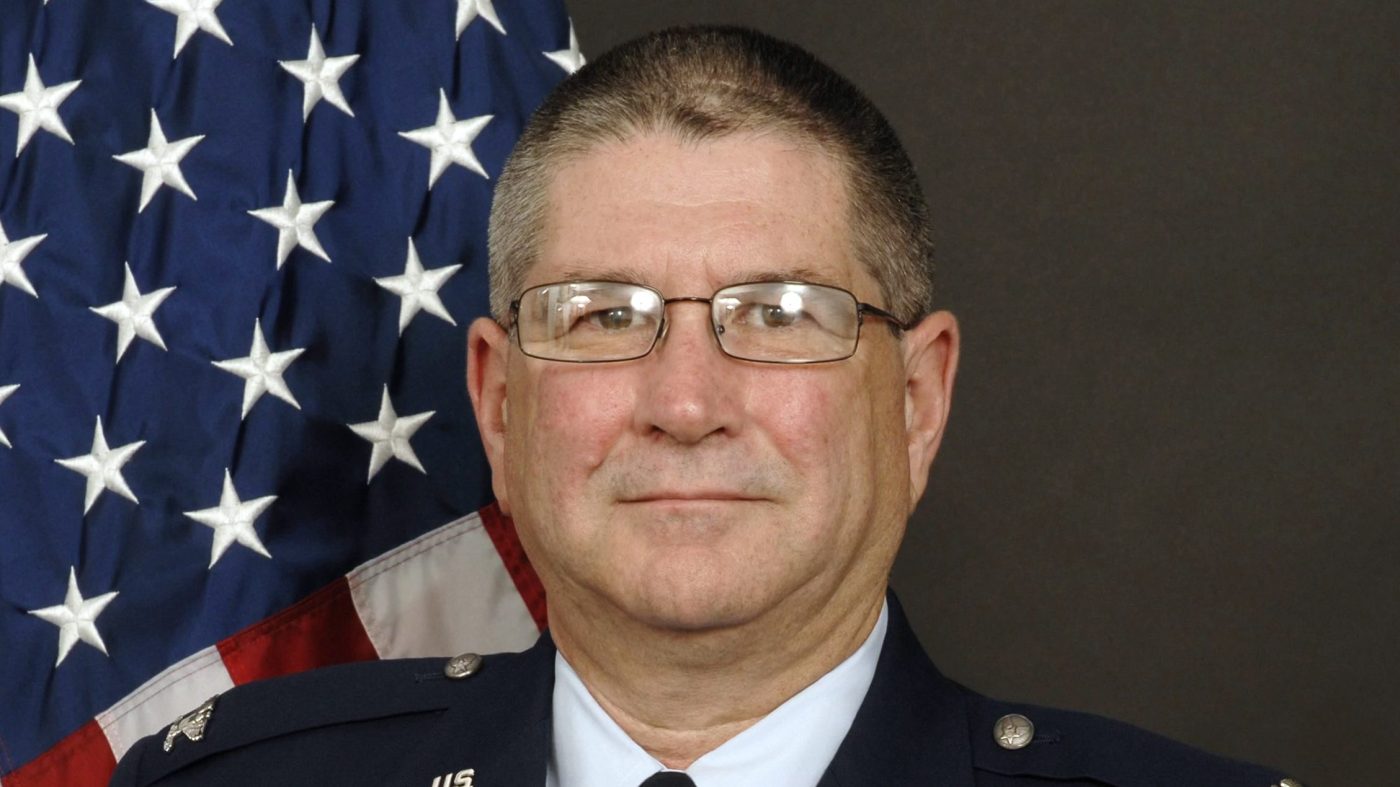
U.S. Air Force retired Col. Thomas Simonet lived a life of service on a global, national and local level.

During his 36-year tenure in the Air Force, Air National Guard and Air Force Reserves, Simonet served in places like Korea, England, Germany and Turkey.

U.S. Air Force retired Col. Thomas “Tom” Simonet died May 29, 2025, at 70. (Courtesy of the Simonet Family)

As the state’s emergency preparedness liaison officer for the Air Force, Simonet spent a decade supporting Homeland Security efforts during major natural disasters or events including the Interstate 35W bridge collapse, Hurricane Katrina, the 2008 Republican National Convention and the flooding of the Red River.

Simonet, of Stillwater, also helped out close to home, serving on the boards of the Washington County Historical Society, the Minnesota Air National Guard Historical Foundation, Knights of Columbus Council 1632 and the Stillwater Veterans Memorial.

Simonet died May 29, 2025, of complications related to pancreatic cancer at his house in the Croixwood neighborhood — the home where he grew up. He was 70.

Simonet, who served as treasurer of the Washington County Historical Society, was instrumental in the society’s efforts to create the Washington County Heritage Center, which opened in 2021, said Ryan Collins, who serves as the society’s vice president.

Simonet “did a lot of the behind-the-scenes work to get Heritage Center ready to go,” said Collins, who also serves on the Stillwater City Council. “There’s no doubt in my mind that without Tom, it would not have happened.”

Simonet, who spent 34 years with Norwest/Wells Fargo Bank before retiring in 2017 as a vice president for Institutional Retirement Trust Services, had a “unique ability to negotiate without negotiating,” said Brent Peterson, the society’s executive director.

“He was a guy who could steer a conversation in the right direction that would make everything good for everyone,” Peterson said. “If it wasn’t for Tom’s financial leadership, the Washington County Heritage Center would not exist. The citizens of Washington County owe him a lot because of that. He truly was one of the finest people I’ve ever known.”

Joined rather than be drafted

Simonet was born and raised in Stillwater and graduated in 1972 from Stillwater High School, where he competed on the school’s ski, cross-country and track teams. That same year, he enlisted in the U.S. Air Force, following in the footsteps of his older brother Jack, who was a a mechanic on C-124 Globemaster.

“He travelled the world,” Tom Simonet wrote in a self-published memoir. “I received letters from Jack telling me of his adventures from Southeast Asia to Europe. He was stationed at Hickam Air Force Base in Hawaii. To me, Hawaii was a distant and exotic land. … The draft was still in effect, and I wanted to go my direction and not have the government decide for me. I saw it as a good avenue to learn about myself and to learn a trade.”

Related Articles


Woodbury City Council announces new city administrator


Canadian wildfire smoke causes ‘very unhealthy’ conditions in American Midwest and reaches Europe


Ramsey County Board gets feedback on projects to be funded by Riverview Corridor money


Ground is broken for next phase projects at St. Paul’s Highland Bridge


New Bush Foundation Fellows include amputee, journalist, architect, more

After being released from active service in 1976, he served in the Minnesota Air National Guard, 133rd Airlift Wing, in St. Paul, where he served as an aircraft mechanic and advanced in rank and positions of Flight Squadron, Wing Inspector General, and Group Commander with the Minnesota Air National Guard until 2004.

In 1977, he married Susan Duden; she died in 2018. The couple had two daughters. In 2022, he married Sharon McNamara.

Simonet received a bachelor’s degree in business from Metropolitan State University in 1983. He later received a master’s degree in business administration from American Military University in 2014.

I-35W bridge collapse

Simonet finished his military career in 2014 as the state’s emergency preparedness liaison officer, coordinating with local and state emergency managers, the Federal Emergency Management Agency and the Department of Defense to aid local communities when their resources become overwhelmed.

One of his proudest accomplishments was helping coordinate the dive crews searching for victims after the I-35W bridge collapsed in the Mississippi River on Aug. 1, 2007, said Lisa Sjogren, his oldest daughter.

A few hours before the collapse, Simonet found himself stopped in traffic on the bridge as he drove from Roseville to meet former work colleagues in Minneapolis.

“Traffic was limited to a single lane as major construction occurred on the bridge deck,” he wrote in his memoir. “I remember stopping in the southbound traffic lane, waiting to move forward. I felt the car bouncing as the northbound traffic was moving. I was relieved to get off that bridge.”

Simonet and Sjogren were at Simonet’s brother’s house in St. Paul when they got the news.

“His phone just went insane,” said Sjogren, of Elk River. “He literally set up a command where we were. He was calling saying, ‘I need divers, I need this, I need these people. Do we have medical support? Where are we sending them to? We have trauma, right? What can we provide?’ All this stuff that an emergency comes with.”

Simonet helped coordinate the National Guard and Reserve flying units “to offload the diver’s equipment and transport it to a staging area near the fallen bridge,” he wrote. “The Hennepin County Sheriff requested a group of specialized U.S. Navy divers. He had told the Secretary of Transportation that his divers were going into areas beyond their capabilities, and a group of professional deep water divers was needed to continue the search. They were still looking for the missing 13 victims.

“As I look back on that day, I always think of the school bus full of children that ended up just behind the semi-trailer where the driver lost his life,” he wrote. “When the bridge collapsed, the school bus dropped. Once it was safe, all the children climbed over the guardrail. … They ended up during this disaster at the perfect spot. I am thankful they were not one second further in their travels. In my firm belief, the mighty hand of God helped on that terrible day.”

Simonet received the Legion of Merit, the Bronze Star and Meritorious Service Medal, among many other commendations. In 2024, he was recognized for his service and contributions by the Minnesota Air National Guard at the Flight of Honor Ceremony honoring those who have “demonstrated outstanding professional achievement, service and heroism and have left a lasting impact on the organization.”

March 25, 2025, was declared “Tom Simonet Day” in Stillwater in recognition of his “lifetime of community service.”

St. Croix Base Ball Club

Thomas Simonet umpires a baseball game for the St. Croix Base Ball Club. Simonet died May 29, 2025, at his home in Stillwater of complications related to pancreatic cancer. (Courtesy of the Washington County Historical Society)

One of Simonet’s great joys was serving as the umpire for the St. Croix Base Ball Club, which plays by 1860 rules, Sjogren said. The 19th-century rules include: no wearing of gloves; no balls or strikes called by the umpire; foul balls are not considered strikes; and base runners can be tagged out if they overrun first base.

As umpire, it was Simonet’s job to start each inning by calling “Striker to the line!” to bid the striker (batter) to the line – a line drawn through the center of the home base.

“He loved saying ‘Striker to the line,’ even when he got sick,” Sjogren said. “When he couldn’t be out at the base ball games, I took the phone and stuck the phone by the players, and then my dad just yelled into the phone, ‘Striker to the line!’”

Simonet also loved playing cribbage, boating on the St. Croix River and outsmarting claw machines.

Related Articles


Woodbury City Council announces new city administrator


‘Felt as though they were going to kill me,’ Mahtomedi man beaten and robbed of casino winnings says in court


New Bush Foundation Fellows include amputee, journalist, architect, more


Air quality alert extended to noon Wednesday throughout Minnesota


New MN measles cases confirmed, including Dakota County child who had not traveled

“He was the master of the claw machine that you would see at places like Perkins restaurants,” said Sarah Sederstrom, his youngest daughter. “He had master-level precision, and he always won. Anytime he did win, he’d give the prize to a kid nearby.”

“I am convinced he was a surgeon in a previous life because of his precision with those things,” Sjogren said.

In addition to his wife and daughters, Simonet is survived by two grandsons, a stepdaughter and two step-grandchildren.

Mass of Christian burial will be held at 11 a.m. on Monday at St. Mary’s Catholic Church in Stillwater, with visitation from 4-8 p.m. Sunday at Simonet Funeral Home in Stillwater.

Trump announces travel ban affecting a dozen countries set to go into effect Monday

posted in: All news | 0

By CHRIS MEGERIAN and FARNOUSH AMIRI, Associated Press

WASHINGTON (AP) — President Donald Trump is resurrecting the travel ban policy from his first term, signing a proclamation Wednesday night preventing people from a dozen countries from entering the United States.

The countries include Afghanistan, Burma, Chad, Republic of the Congo, Equatorial Guinea, Eritrea, Haiti, Iran, Libya, Somalia, Sudan and Yemen.

In addition to the ban, which takes effect at 12:01 a.m. Monday, there will be heightened restrictions on visitors from Burundi, Cuba, Laos, Sierra Leone, Togo, Turkmenistan and Venezuela.

“I must act to protect the national security and national interest of the United States and its people,” Trump said in his proclamation.

Related Articles


Congressional letter obtained by AP outlines drastic job cuts expected at Voice of America


Army leaders defend parade and border spending as Congress presses for answers


Justice Department sues Texas over in-state tuition for students without legal residency


House Oversight Committee expands inquiry into Biden’s mental condition and final acts in office


Judge says migrants sent to El Salvador prison must get a chance to challenge their removals

The list results from a Jan. 20 executive order Trump issued requiring the departments of State and Homeland Security and the Director of National Intelligence to compile a report on “hostile attitudes” toward the U.S. and whether entry from certain countries represented a national security risk.

During his first term, Trump issued an executive order in January 2017 banning travel to the U.S. by citizens of seven predominantly Muslim countries — Iraq, Syria, Iran, Sudan, Libya, Somalia and Yemen.

It was one of the most chaotic and confusing moments of his young presidency. Travelers from those nations were either barred from getting on their flights to the U.S. or detained at U.S. airports after they landed. They included students and faculty as well as businesspeople, tourists and people visiting friends and family.

The order, often referred to as the “Muslim ban” or the “travel ban,” was retooled amid legal challenges, until a version was upheld by the Supreme Court in 2018.

The ban affected various categories of travelers and immigrants from Iran, Somalia, Yemen, Syria and Libya, plus North Koreans and some Venezuelan government officials and their families.

Trump and others have defended the initial ban on national security grounds, arguing it was aimed at protecting the country and not founded on anti-Muslim bias. However, the president had called for an explicit ban on Muslims during his first campaign for the White House.

Amiri reported from the United Nations.

St. Paul’s Maxfield Elementary breaks ground on ‘community schoolyard’

posted in: All news | 0

The average time a child in the U.S. spends outside every day is just minutes compared to the hours behind a screen. It’s something that officials at the Trust for Public Land, a national nonprofit focused on connecting people with the outdoors, want to change, starting with places like St. Paul’s Maxfield Elementary, said Sophie Harris Vorhoff, Minnesota director with the Trust for Public Land.

“Every kid should be able to touch the earth, connect with nature, spend time under trees, have a great playground. So that starts in our schools,” she said.

A rendering of the community schoolyard at Maxfield Elementary in St. Paul, where ground was broken on Wednesday, June 4, 2025. (Courtesy of SWA Group)

Vorhoff, along with city and district officials and students at Maxfield Elementary, broke ground Wednesday on a project at the school, located at 380 N. Victoria St., that will become a 2.4-acre community space and schoolyard that includes walking paths, seating, a “micro forest” and pollinator garden alongside the school playground, which was updated last year. The site also will include shaded areas to be used as an outdoor classroom.

Providing community access to all public schoolyards during non-school hours would put a park or green space within a 10-minute walk of nearly 20 million people across the country, according to officials with the Trust for Public Land.

Once the project at Maxfield is completed, approximately 8,000 residents in the area will live within a 10-minute walk of the future green space, which will be open to the public during non-school hours. The school is located in the former Rondo neighborhood.

Gaps in park access

Those at the Trust for Public Land look at a variety of metrics in Minnesota schools to identify partners on projects like the one at Maxfield, examining equity metrics such as health data, where there are gaps in park access and opportunities for climate benefit and stormwater management, Vorhoff said.

As an urban district, many schools within the St. Paul Public Schools are located in areas that border freeways or lack green space, negatively impacting overall health, said SPPS Superintendent Stacie Stanley at Wednesday’s groundbreaking. Those impacts, along with climate change, disproportionately affect the most vulnerable communities, Stanley said.

“SPPS can help remedy these challenges by providing a network of outdoor spaces with playing fields and playgrounds and informal meeting spaces to support our communities,” she said.

The project follows a community-design process, working with students to design the schoolyard, as well as getting community input, said Anna Callahan, a senior program manager with the Trust for Public Land. For Maxfield’s future schoolyard, that means increased shade and seating, as well as addressing stormwater issues.

“And so some of the nature-based improvements, as well as the stormwater improvements, will help with mitigating some of the water movement on site and help with capturing that to prevent both large puddles in the spring and then also icy patches when we get those in the winter,” Callahan said.

Maxfield one of five schools chosen for model

Maxfield — which has been serving students for more than 130 years — is one of five schools in the state that are part of a first cohort where a community schoolyard model is being completed, Callahan said, making it one of the first in the state. The Trust for Public Land has created 350 community schoolyards in the country.

Total cost for the project is estimated to be $1.5 million, with fundraising for its second phase still underway.

Funding support comes from SPPS, Minnesota’s Environment and Natural Resources Trust Fund – as recommended by the Legislative-Citizen Commission on Minnesota Resources – the Hardenbergh Foundation, the Donna Herzog Foundation and Xcel Energy.

Related Articles


SPPS: New Superintendent Stacie Stanley begins first week with district


St. Paul Public Schools narrows achievement gap in 2024 graduation rates


St. Paul schools hit pre-COVID graduation levels, state reaches record high


Highland Park High students, MN Supreme Court justices hear arguments


St. Paul police: 2nd grader said he brought gun to school to show friends