Walmart delivers another quarter of impressive sales but offers a muted outlook

posted in: All news | 0

By ANNE D’INNOCENZIO, AP Retail Writer

NEW YORK (AP) — Walmart delivered another standout quarter as the promise of lower prices and speedy deliveries drew in a broader spectrum of Americans during the critical holiday shopping period, including wealthier households.

The outlook from the Bentonville, Arkansas, company, however, hinted at a volatile economic environment ahead on Thursday.

Shares dipped more than 3% before the opening bell.

Related Articles


World shares are mixed, while US futures advance following a Wall St rally led by Nvidia


Data center foes bring swelling opposition to Minnesota Capitol


Online seller eBay to buy secondhand fashion marketplace Depop from Etsy for $1.2B in cash


Fed minutes: Lower inflation needed before many officials will support rate cuts


Grandson of the inventor of Reese’s Peanut Butter Cups accuses Hershey of cutting corners

Walmart reported fourth quarter earnings of $4.24 billion, or 53 cents per share for the quarter ended Jan. 31. Adjusted per-share results were 74 cents, a penny better than Wall Street expected, according to FactSet.

Last year, the company reported net income of $5.25 billion, or 65 cents per share.

Sales rose 5.6% to $190.7 billion, from $180.6 billion, also edging out expectations.

Comparable sales at Walmart stores, including online sales, rose 4.6% after a 4.5% increase in the previous quarter. Sales were broadly stronger, particularly groceries, which have been an enormous generator of traffic for Walmart, the company said. And Walmart said. Speedier deliveries helped fuel the sales momentum, with expedited deliveries under three hours accounting for 35% of orders from stores, the company said.

U.S. e-commerce business increased 27% during the quarter, accounting for 23% of overall sales. Global e-commerce sales rose 24%.

It is the first quarter time in more than a decade that the retail giant is reporting quarterly earning under a new chief executive.

John Furner, 51, who headed the company’s U.S. operations, took over for Doug McMillon this month. McMillon had turned America’s largest retailer into a tech-powered giant and spearheaded an era of robust sales growth after being named Walmart’s CEO in 2014.

Walmart’s shares rose more than 25% since its last quarterly earnings report and earlier this month it became the first non-tech company to reach a valuation of more than a $1 trillion.

It has done so with many Americans carefully considering where they spend money because of inflation and how the company performs is considered a barometer of consumer spending given its vast customer base. More than 150 million customers are on its website or in its stores every week, according to Walmart.

While inflation has cooled, consumer prices have soared about 25% over the past five years. Many economists expect more companies will begin passing on higher costs from higher U.S. tariffs to their customers in coming months.

Walmart’s promise of lower prices has broadened its base to include wealthier shoppers in that environment, with the biggest gains in market share coming from households with annual income over $100,000.

Walmart has managed higher costs both by shifting what it offers on store shelves while absorbing some higher costs.

The company said that for the current quarter, it expects sales to increase anywhere from 3.5% to 4.5% and earnings per share to be in the range of 63 cents to 65 cents. For the year, it expects sales to reach $706.4 billion and earnings per share to be $2.64.

That is a little cooler than Wall Street had been projecting. Analysts polled by FactSet had been expecting per-share earnings of 68 cents in the first quarter. For the year, they have been projecting earnings of $2.64 per share on sales of $712.6 billion.

UK’s former Prince Andrew arrested: Read the police statement in full

posted in: All news | 0

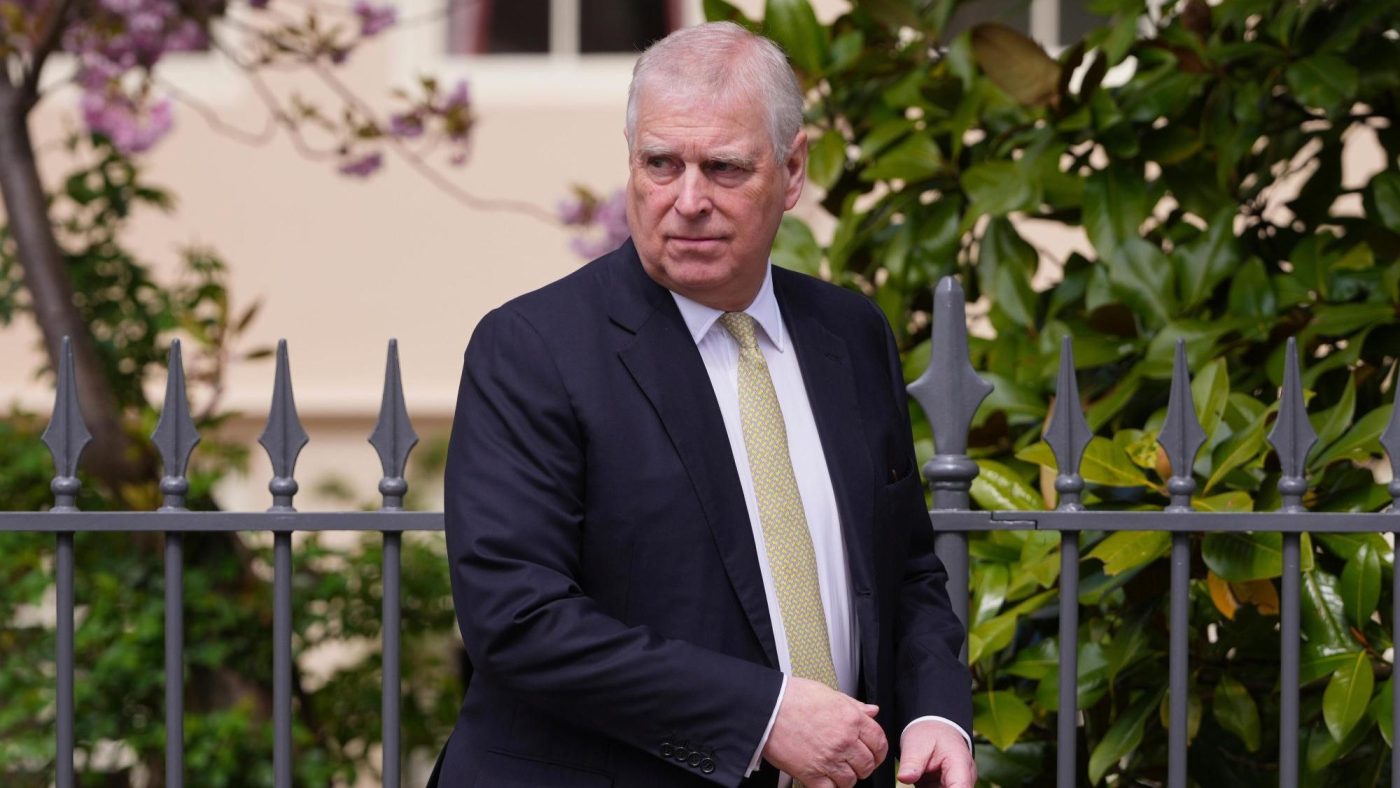
LONDON — U.K. police arrested Andrew Mountbatten-Windsor on Thursday on suspicion of misconduct in public office.

The police force did not name Mountbatten-Windsor, as is normal under U.K. law. But when asked if he had been arrested, the force pointed to a statement saying that they had arrested a man in his 60s. Mountbatten-Windsor, who is the former Prince Andrew, is 66.

Here’s the statement by the Thames Valley Police:

___

As part of the investigation, we have today (19/2) arrested a man in his sixties from Norfolk on suspicion of misconduct in public office and are carrying out searches at addresses in Berkshire and Norfolk.

The man remains in police custody at this time.

We will not be naming the arrested man, as per national guidance. Please also remember that this case is now active so care should be taken with any publication to avoid being in contempt of court.

Assistant Chief Constable Oliver Wright said: “Following a thorough assessment, we have now opened an investigation into this allegation of misconduct in public office.

“It is important that we protect the integrity and objectivity of our investigation as we work with our partners to investigate this alleged offence.

“We understand the significant public interest in this case, and we will provide updates at the appropriate time.”

Related Articles


Andrew Mountbatten-Windsor arrested on suspicion of misconduct in public office


Today in History: February 19, Edison issued a patent for the phonograph


Study finds warming world increases days when weather is prone to fires around the globe


Pope laments ‘ashes of international law’ left by today’s conflicts in Ash Wednesday liturgy


Fishermen in the eastern Caribbean fear for their lives following a deadly US strike

Jamelle Bouie: How Marco Rubio is failing Western Civ

posted in: All news | 0

Americans of the revolutionary generation did not think of themselves as direct heirs to “Western civilization,” a term that wouldn’t come into vogue until the 20th century. If anything, they saw their new nation as a break with the European past — a new civilization rooted in popular sovereignty and republican self-government.

“The Independence of America considered merely as separation from England, would have been a matter but of little importance,” Thomas Paine observed in the early 1790s, “had it not been accompanied by a revolution in the principles and practice of governments.”

In 1793, Nathaniel Chipman, a Vermont jurist and veteran of the Revolutionary War, put it a little differently: “The government of the United States exhibits a new scene in the political history of the world,” he wrote.

Jefferson, Lincoln and the difference

Among the major founders, Thomas Jefferson — his infatuation with France notwithstanding — was perhaps the most emphatic about the “ocean of fire” between the Old World and the New. “America,” he wrote in an 1823 letter to James Monroe, “has a set of interests distinct from those of Europe, and peculiarly her own. She should therefore have a system of her own, separate and apart from that of Europe. While the last is laboring to become the domicile of despotism, our endeavor should surely be to make our hemisphere that of freedom.”

Decades later, Abraham Lincoln — who claimed Jefferson as an intellectual forefather and often honored him for his foresight — would make this distinction in more abstract form in the Gettysburg Address, elevating the United States as the one place where humanity would learn whether “a new nation, conceived in liberty” could “long endure” or whether “government of the people, by the people, for the people” would “perish from the earth.”

In his second term, President Donald Trump has held both himself and his administration out as a bulwark in defense of Western civilization — the last, best hope for the grand heritage of the West against lawless incursion from foreign others.

“We cannot rebuild Western civilization, we cannot rebuild the United States of America or Europe, by letting millions and millions of unvetted illegal migrants come into our country,” Vice President JD Vance declared last February. During the 2024 presidential campaign, Stephen Miller, the architect of Trump’s immigration program, warned that reelecting Joe Biden would represent the “assisted suicide of Western civilization.” And in his eulogy for Charlie Kirk in September, Miller declared that the “legacy and lineage” of the MAGA movement “hails back to Athens, to Rome, to Philadelphia, to Monticello.”

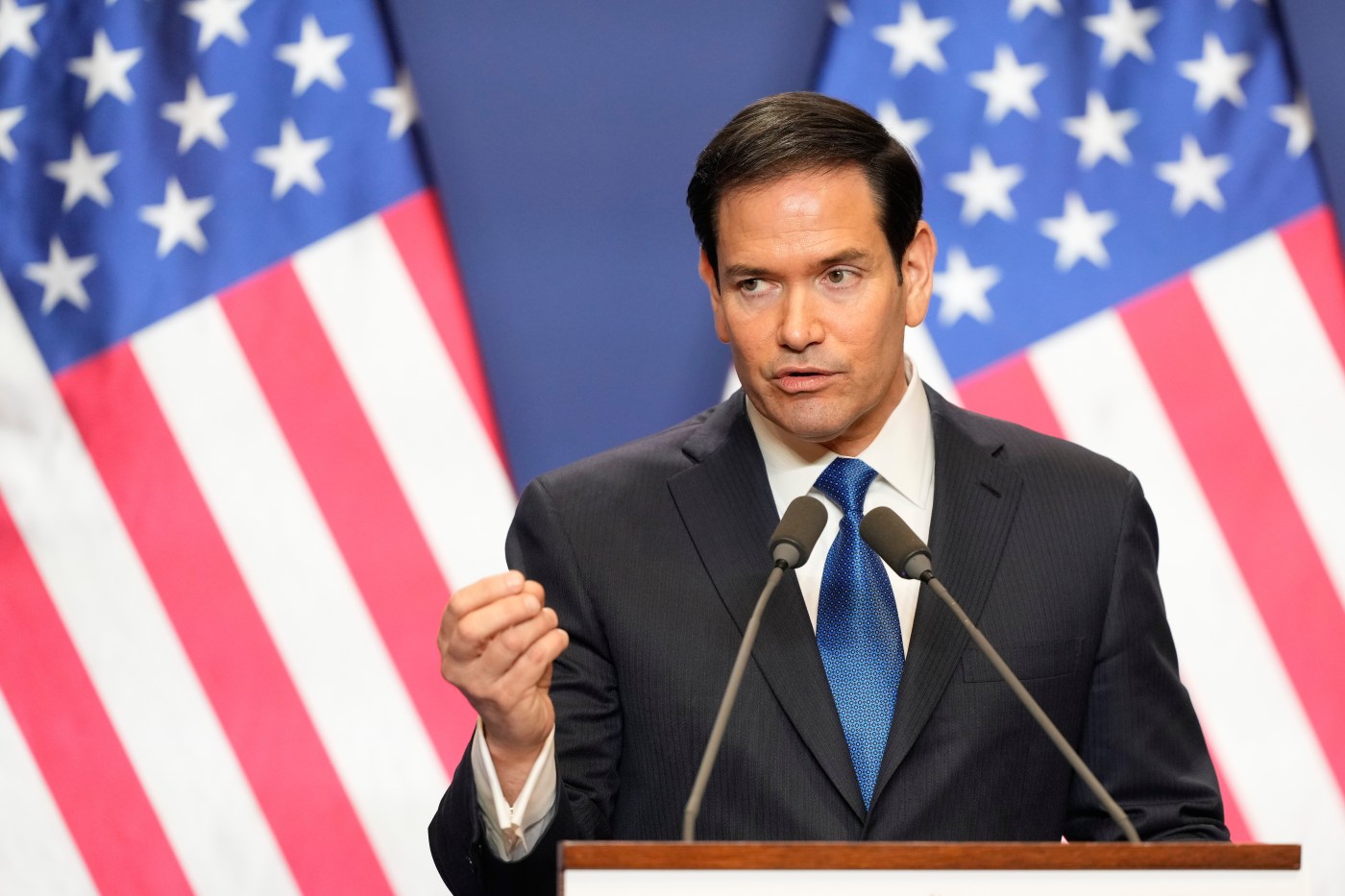
And this Western civilization, Marco Rubio explained in his address to the Munich Security Conference last week, rests on a pillar built on both ethnic and religious nationalism and a rigid sovereignty backed by hard borders and a jealous contempt for international cooperation. In his speech, the secretary of state decried “an unprecedented wave of mass migration that threatens the cohesion of our societies, the continuity of our culture and the future of our people.”

Inapt claims about the U.S., and Europe, especially

It should be said that this formulation makes no particular sense for the United States, a pluralistic, polyglot nation that has throughout its history sustained profound levels of immigration from countries around the world. In fact, Rubio’s formulation only begins to make real sense when you see that his idea of “our people” is narrow and exclusive. “We are bound to one another by the deepest bonds that nations could share,” Rubio said, “forged by centuries of shared history, Christian faith, culture, heritage, language, ancestry and the sacrifices our forefathers made together for the common civilization to which we have fallen heir.”

This, again, is a strange claim to make of either the United States or, especially, Europe, a region that’s home to dozens of cultures and languages, whose history is practically defined by centuries of catastrophic ethnic and religious conflict — whose divisions produced two of the most destructive wars in human history — and whose national and linguistic identities are relatively modern inventions dating back to the 17th, 18th and 19th centuries.

Nothing in Rubio’s account bears any relationship to the exceptional qualities emphasized by either the revolutionary generation of Americans or the Civil War generation or even those Americans who, during and after World War I, developed and deployed the idea of the study of “Western Civ” as part of an effort to improve “the citizenship, the intelligence, and the moral and spiritual life of the nation.”

But this vision of a singular Western heritage extending to the American present — of a civilization defined by a common tongue, shared belief and hierarchy of value — does bear an interesting relationship to the imagined feudal Europe that shaped the political imagination of Southern slave owners in the decades before the Civil War.

As political theorist Keidrick Roy shows in “American Dark Age: Racial Feudalism and the Rise of Black Liberalism,” antebellum Southern ideologues saw their society as an extension of an idealized medieval past. Both politicians and prominent public intellectuals “preached the importance of slavery and racial hierarchy vis-à-vis thin notions of feudal societies,” Roy writes. In publications like DeBow’s Review, they contended that their society “retains the genius of the medieval civilization, but rises superior to it by making ethnology the basis of social science” — which is to say, by defining inclusion and exclusion on the basis of race. For this class of slaveholders, Roy concludes, “the South positively reanimated the Old World feudal order on American soil.”

Rejecting the Declaration

Part of what this entailed, ideologically, was a rejection of the Declaration of Independence, both as a statement of equality and as a decisive break with the past.

John C. Calhoun, the South Carolina statesman who served briefly as secretary of state under John Tyler and was a pro-slavery political theorist, condemned Jefferson’s proposition that “all men are created equal” as a “hypothetical truism” and, in practice, “the most false and dangerous of all political errors.” The truth as he saw it was that American civilization extended out from the Old World, an inheritance reserved for those who could claim the mantle of whiteness.

It is here, in this antipathy toward the egalitarian and universalist elements of the American founding — which is to say those parts of our national heritage that we owe to the liberal values of the Enlightenment — that the connection between the antebellum feudal obsession and the Trump administration’s vision of sovereignty and Western civilization becomes clear, if not obvious.

Both are tied to a racial (and religious) conception of culture and bound up in notions of human hierarchy. The “one people” threatened by migrants in the United States and Europe, by Rubio and Trump’s account, are people of direct European descent, shorn of their particular histories and presented as a single, imagined whole. In other words, as white, first and foremost.

Attacking what’s best in the American tradition

And for the larger MAGA right, as it was for the slaveholder radicals, the Declaration of Independence and its powerful vision of human equality stands as one of the chief obstacles to its effort to consummate its vision of domination and exclusion.

Writing in 1859, Lincoln commented on those in his time who disparaged Jefferson’s words, accusing them of “supplanting the principles of free government” and restoring those of “classification” and “caste.” Today, we have a movement that sees as its aim the destruction of what is best in the American tradition — a movement that, as Lincoln put it, “would delight a convocation of crowned heads, plotting against the people.”

Jamelle Bouie writes a column for the New York Times.

Related Articles


Commentary: We celebrate civil rights heroes only after they stop making us uncomfortable


Barbara McQuade: How to safeguard the DOJ against the next Trump


Thomas Friedman: Netanyahu plays Trump and American Jews for fools — again


Maureen Dowd: Welcome to the voyage of the damned


Kathryn Anne Edwards: Dr. Oz is not the retirement guru America needs

Commentary: We celebrate civil rights heroes only after they stop making us uncomfortable

posted in: All news | 0

Every February, Black History Month invites Americans to honor the giants of the civil rights movement. We commemorate them in speeches and street names, reassuring ourselves that their struggles belong safely to the past. But history tells a less comforting story.

We tend to celebrate Black moral courage only after it has been stripped of urgency — after its disruptions have been neutralized and its challenges to power rendered harmless. The figures we now hold up as national icons were once dismissed as dangerous or destabilizing by moderates and institutions that claimed to support equality while resisting its consequences.

This pattern is not accidental. It is structural.

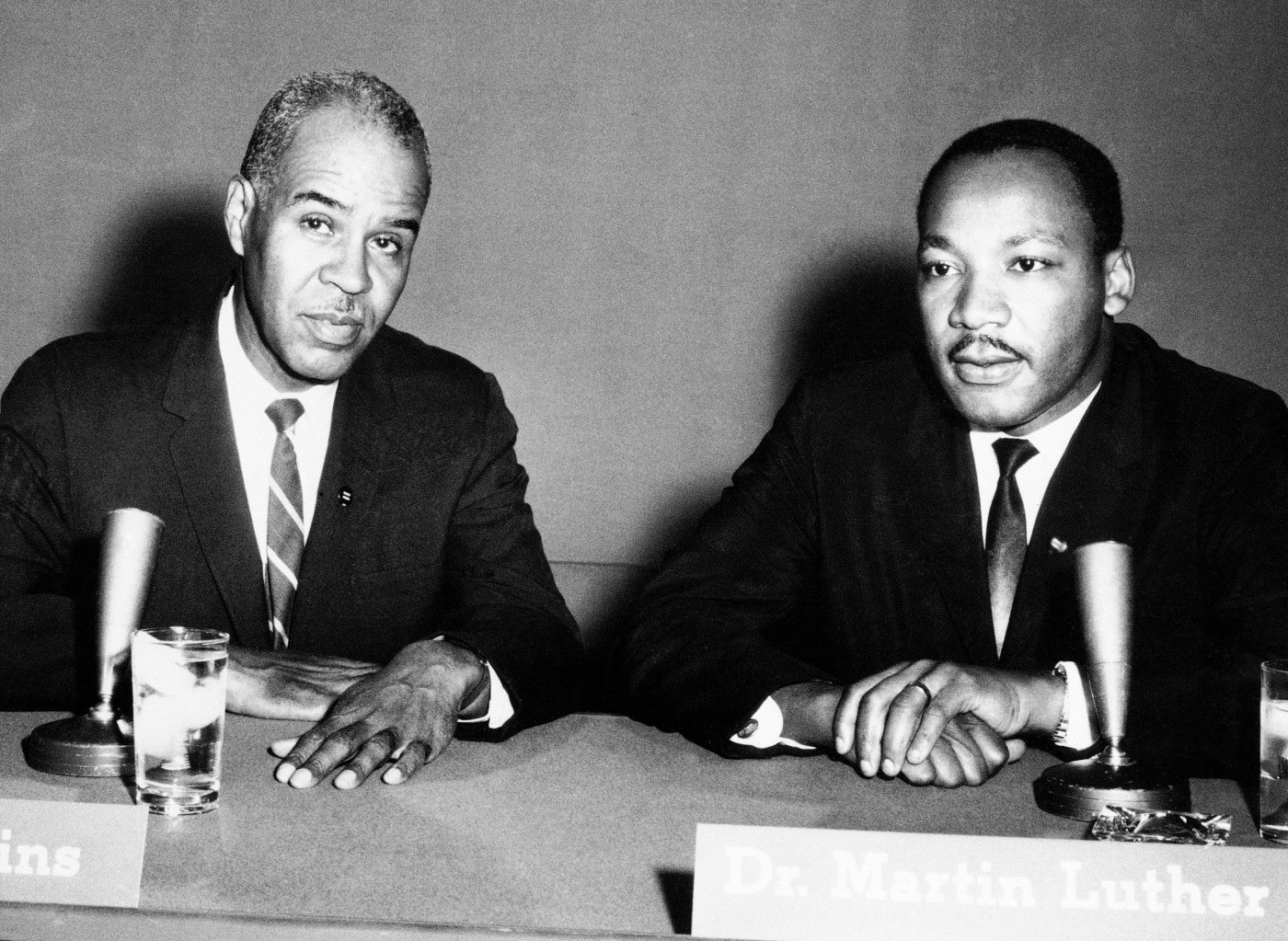
Today, Martin Luther King Jr. is remembered as a unifying voice and a moral prophet. In his lifetime, he was widely unpopular. Polls in the mid-1960s showed that most Americans viewed King unfavorably. He was surveilled by the federal government, criticized by major newspapers and condemned by politicians who warned that his protests were reckless and divisive.

What is often forgotten is that King’s sharpest criticism was aimed not only at overt racists, but at what he called the “white moderate” — those who preferred order to justice and who urged patience in the face of inequality. King understood that moderation, when it delays justice, becomes a form of complicity.

Many institutions that now proudly invoke King’s legacy insist that protest today be carefully managed and, above all, non-disruptive. Yet King’s campaigns were effective precisely because they disrupted daily life, strained political alliances and forced confrontations that polite consensus could not.

A similar dynamic shaped the life of Malcolm X, who remains widely misunderstood. He is often portrayed as King’s opposite — angry where King was conciliatory, divisive where King was unifying. That framing is convenient, but misleading.

Malcolm X offered a penetrating critique of liberal hypocrisy. He challenged the idea that symbolic inclusion could substitute for structural change. He warned that proximity to power often pacifies dissent rather than advancing justice. Late in his life, his views evolved, but his insistence on naming oppression directly never softened.

That insistence would almost certainly be labeled reckless in today’s political culture. Yet history suggests that moral clarity — not cautious moderation — is what most often forces societies to confront uncomfortable truths.

The same is true of Muhammad Ali, whose refusal to fight in the Vietnam War cost him his heavyweight title and years of his career. At the time, Ali was vilified as unpatriotic and selfish. He was not widely admired for following his conscience. That admiration came later, after the war itself became discredited.

His choice was not easy or universally applicable, but Ali argued that conscience matters, even when the law and public opinion disagree. Today, his words — that “there are only two kinds of men, those who compromise and those who take a stand” — are quoted approvingly by people who might have condemned him had they lived through the controversy.

What unites these figures is not that they were embraced in real time. It is that they were repeatedly told to be quieter, more patient, more respectful and accommodating of existing institutions. These men were warned that their methods threatened stability. They were accused of undermining their own cause. This pattern is not confined to the past.

In recent years, American institutions have enthusiastically adopted the language of racial justice while growing increasingly uneasy with its implications. Public statements of solidarity are common. Tolerance for sustained, disruptive dissent is not.

Protest that interferes with routine operations is often treated as illegitimate because it is inconvenient, rather than because it is unlawful. Speech that unsettles donors, boards or political alliances is reframed as a threat to community values. Neutrality is invoked as a procedural shield — a way of avoiding accountability while maintaining reputational control.

From university campuses to city halls to cultural institutions, leaders regularly invoke the legacy of civil rights while struggling with how to accommodate protest, disagreement and moral urgency in practice. The tension between symbolic inclusion and substantive change remains unresolved.

History suggests that this posture is familiar. It is how societies manage moral challenge while persuading themselves they are on the right side of it.

The irony is that the very qualities once condemned in civil rights leaders — their urgency and their willingness to unsettle and to insist that justice delayed is justice denied — are now celebrated in retrospect. We praise their courage after it no longer costs us anything.

Black History Month should prompt more than commemoration. It should force a harder question: whether we recognize the logic of the civil rights movement when it reappears — in contested spaces and inconvenient demands.

America has no shortage of heroes. What it struggles with is inheriting their courage before time makes it safe.

Faisal Kutty teaches at Southwestern Law School and is a contributing opinion writer for the Toronto Star and Newsweek. This column appeared in the Los Angeles Times.

Related Articles


Jamelle Bouie: How Marco Rubio is failing Western Civ


Barbara McQuade: How to safeguard the DOJ against the next Trump


Thomas Friedman: Netanyahu plays Trump and American Jews for fools — again


Maureen Dowd: Welcome to the voyage of the damned


Kathryn Anne Edwards: Dr. Oz is not the retirement guru America needs