The morning after a still-unnamed Immigration and Customs Enforcement (ICE) agent shot and killed 52-year-old Houston resident Lorenzo Salgado Araujo on Tuesday, July 7, investigators from the Harris County District Attorney’s Office were on the scene. They hadn’t received an invitation from the federal agency, which was slightly unusual, but this wasn’t an oversight. It was the beginning of weeks of stonewalling by federal officials.
For starters, when DA investigators were allowed on scene, it had already been cleared and all the key pieces of evidence—including Araujo’s body and van—and even the ICE agents involved had been whisked away.
“We realized this isn’t like other federal scenes before,” Courtney Fischer, spokesperson for Democratic Harris County DA Sean Teare, told the Texas Observer. The office investigates all officer-involved shootings in the county “parallel” to other departments’ investigations, and Fischer said that policy applies no matter what agency was involved.
But this jurisdiction didn’t look so clear-cut to the federal agencies. The Department of Homeland Security’s Office of Inspector General immediately took charge of investigating the shooting, while the FBI began looking into the allegation that Araujo had attempted to assault the ICE agent with his van. Residents and local leaders in Houston were quick to express distrust in the integrity of these federal probes, pushing the mayor’s office, city council, Houston Police Department, and DA’s office to conduct independent investigations of their own. The DA’s office quickly confirmed it was pursuing one—with the initially reluctant assistance of the city and HPD.
But in the weeks after the fatal shooting in Houston’s predominantly Hispanic east side, local authorities have struggled to stake their claim on an investigation into a killing within the most populous Texas city’s limits.
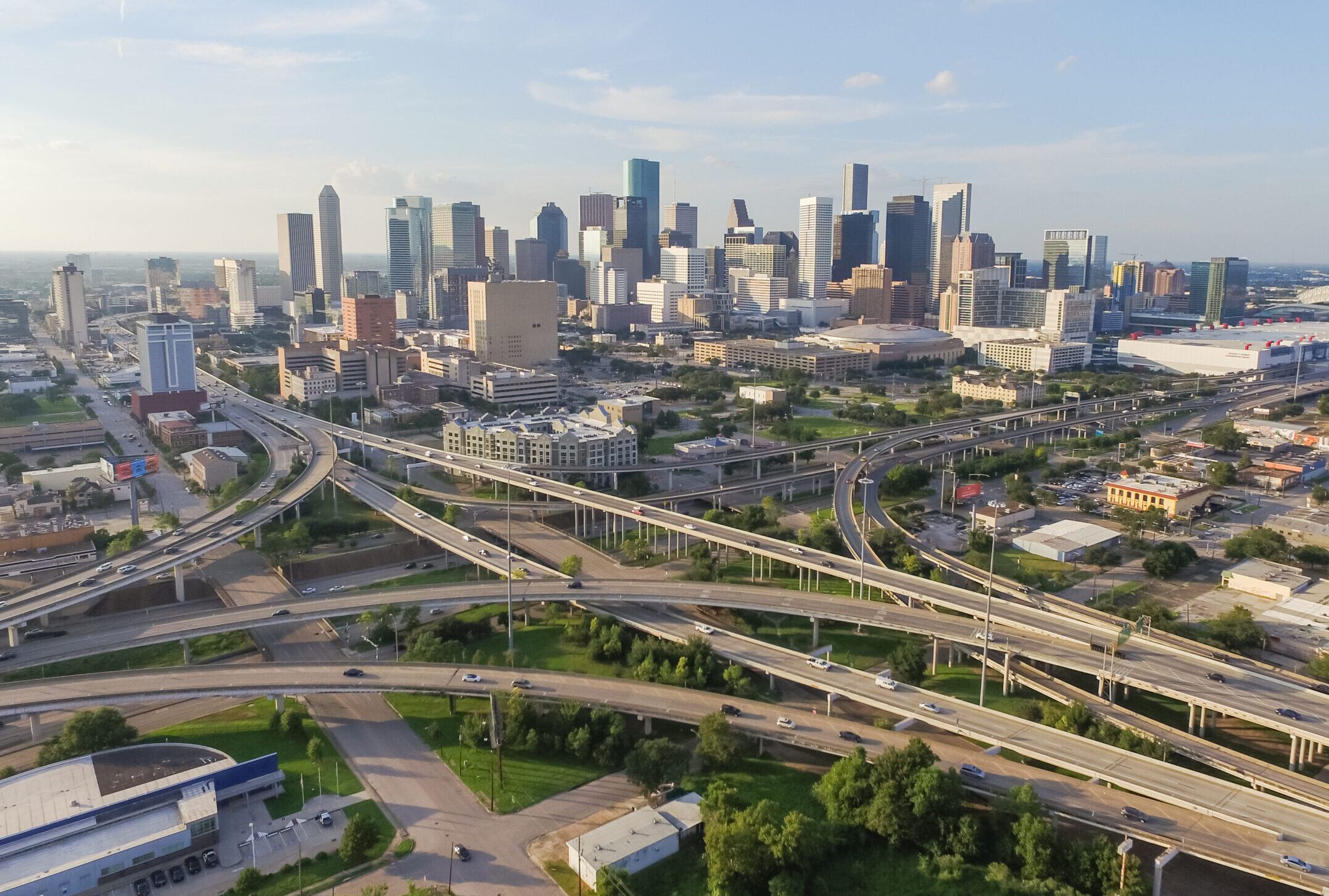
Houston (Shutterstock)
Teare said his office is investigating the potential that any number of crimes may have occurred, including murder, manslaughter, and tampering with evidence. If the office is able to build a case, Teare could present it to a Harris County grand jury, which would determine whether to charge the officer or officers involved. According to an article written by Bryna Godar, staff attorney with the University of Wisconsin Law School, states have a “mixed track record” when attempting to criminally prosecute federal agents for state crimes committed on the job, but there is precedent and there are some standards established by the U.S. Supreme Court.
A local DA can’t force a federal official to appear in court or share direct evidence. The office does have subpoena power (and Teare has reportedly issued dozens), but a former prosecutor told the Houston Chronicle these subpoenas are often ignored.
Teare, who’s in his second year in office, admits it could be a long, grueling process to build such a case. He told reporters at a July 13 press conference the investigation could take “many, many months, potentially years” to complete. This is in large part because they lack access: A week after the shooting, the DA’s office was receiving updates from DHS at the same time as the general public—via social media. Teare hinted his office may go to court if the federal agencies don’t cooperate with the local investigation.
The office was given some level of access in the second week of the investigation, but only after a federal warrant to search Araujo’s van was unsealed against protocol, making public investigators’ allegation that there were potentially drugs in the vehicle. Harris County DA investigators asked to be present for the execution of the warrant and to get access to the van afterward, which the FBI granted. Now, after the apparent attempted character smear already made headlines, the DA confirmed that tests on the suspected white powder proved they were not narcotics.
The issues began in the immediate aftermath of the shooting, though, when Houston leaders disagreed on whether they even had the authority to investigate.
Public outrage from Houston to Washington D.C. to Mexico’s Palacio Nacional was swift, but it seemed Houston Mayor John Whitmire wanted to distance the city from possible conflict with ICE. He stressed early on that HPD was not involved in the incident, and he erroneously stated that the department had no authority to investigate the shooting by a federal agent. A spokesperson from Whitmire’s office told the Observer he had been “advised” that the city lacked jurisdiction, but that he supported an independent investigation “from day one.”
University of Houston professor Brandon Rottinghaus told the Observer this shooting is “the most inflammatory that [Whitmire] has dealt with as mayor and maybe one of the most dramatic we’ve seen in recent history,” but that the mayor’s initial hesitation was less likely political and more likely an attempt to respect jurisdictions and chains of authority. (In April, Whitmire and the Houston City Council did bend to pressure from Governor Greg Abbott, who threatened to withhold millions in public safety funding after the city passed an ordinance limiting cooperation with ICE.)
HPD Chief Noe Diaz agreed with Whitmire’s initial assessment. The DA’s office, which has its own investigators, was the first local agency to act, but even Teare publicly demurred in the days immediately after the shooting, saying the federal agencies were “exclusively handling the case.”
Experts spoke up to quash the jurisdiction question, saying that federal officials can unequivocally be charged with state crimes. This wouldn’t be the first time the DA’s office undertook an investigation following a shooting by a federal agent. The DA brought the case against Gavin Lappe, an FBI agent who mistakenly shot and killed hostage Ulises Valladares in 2018, to a grand jury, which ultimately declined to indict him.
Fort Bend District Attorney Brian Middleton, president of the Texas District & County Attorneys Association, stressed that federal investigations aim to determine whether someone broke a federal law, while local investigations look into state law violations.
“Two completely different systems of laws, agencies, and prosecutors,” Middleton wrote in response to the Observer’s questions. Fort Bend County has not dealt with a shooting involving a federal officer, Middleton said, but: “No law prohibits such an investigation, though notice of and cooperation from the federal agency would be critical. Additionally, access to evidence and witnesses, or a lack thereof, could pose challenges.”
The Harris County DA’s office, with limited access to any crime-scene evidence, didn’t have much to go on: Immediately after the shooting, officials from DHS claimed Salgado Araujo had tried to use his car as a weapon when the agent fired in “self-defense.” This is a familiar refrain, but unlike in other cases, it wasn’t immediately disproven by cell phone or body camera footage. In fact, the officers weren’t wearing body cameras, and the only footage that has surfaced related to the incident comes from surrounding businesses, which caught snippets of the pursuit. DA investigators have been collecting photo, video, and eyewitness evidence from the public, but nothing revelatory has yet publicly come out.
“What is there for state or local investigators to investigate?” asked Julian Ramirez, Houston City Council member, in an interview with the Observer.
Teare has been speaking with Hennepin County Attorney Mary Moriarty in Minnesota, who is handling investigations into ICE agents involved in the shooting deaths of Renee Good and Alex Pretti in Minneapolis earlier this year. She too faced a federal agency unwilling to share evidence, which her office received six months after the shootings and after suing for access. She reportedly helped the Harris County DA make a plan.
Fischer, the Harris County DA spokesperson, said it’s been challenging to explain to potential witnesses that their investigation is completely separate from the feds’. The DA’s office launched a portal where residents could submit photos or videos of the incident, and Fischer said officials are not sharing that evidence with the federal agencies. Still, people are “terrified to come forward,” she said.
The Harris County DA’s office is assisting the other passengers who were present in the van when Araujo was shot get temporary visas to remain in the United States as witnesses to a crime.
On July 15, the Texas Rangers, the statewide police force that investigates high-profile crimes, announced they would conduct their own independent investigation at the request of Whitmire and Diaz. They have reportedly been given access to the federal evidence.
In response, Abbott said the Rangers are “well known not just in the state of Texas, but elsewhere for their independence in conducting investigations,” also saying that the Rangers would work “alongside federal officials.”
Despite Teare stepping out on a limb, Texas DAs in general may be wary of getting out ahead of the governor in clashing with ICE. State leaders including Abbott have repeatedly attacked local prosecutors’ authority in recent years, including with a 2023 law that threatens DAs with removal if they opt not to pursue certain crimes. Abbott has also signaled that he’ll continue to challenge DAs in the upcoming legislative session: He wants to establish a statewide prosecutor’s office with the power to usurp local cases.
The post Houston Is Testing Whether Trump’s ICE Is Above Texas Law appeared first on The Texas Observer.
Leave a Reply