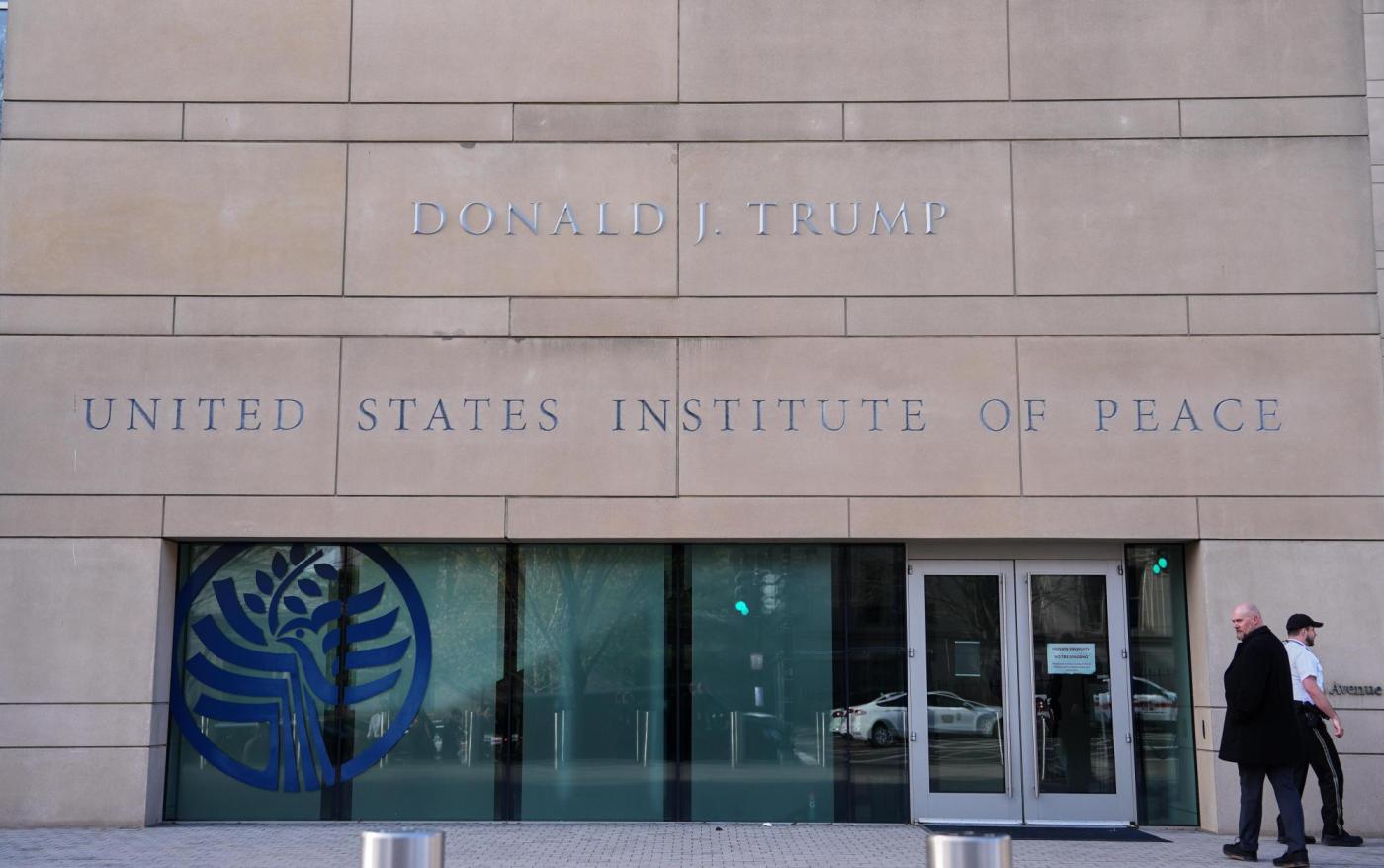
Genealogical sites have helped solve major crimes. Police in Nancy Guthrie’s case might turn to them

posted in: All news | 0

By ED WHITE

Authorities trying to solve the disappearance of Nancy Guthrie say they might tap DNA genealogy databases, the same step that police took to unravel a decades-old series of murders in California and the fatal stabbings of four college students in Idaho.

The strategy could be fruitful: If unidentified DNA evidence can be connected to someone — even a distant relative — in a common genealogical database, it would give investigators more information and possibly lead to a suspect in Guthrie’s kidnapping in Arizona.

Related Articles


Tariffs paid by midsized US firms tripled last year, new analysis from JPMorganChase Institute shows


An arts panel made up of Trump appointees unanimously approves his White House ballroom proposal


DC mayor declares emergency, asks President Trump for help on sewage spill on the Potomac


US applications for jobless aid fall to 206,000 last week as layoffs remain low


US trade deficit declined in 2025, but gap for goods hits a record despite Trump tariffs

“It’s a fantastic tool,” said Ruth Ballard, a geneticist in California who specializes in DNA and has testified in hundreds of court cases. “If it’s a good quality sample and they’re able to get a profile, they could find a hit on that fairly quickly.”

The sheriff’s department in Pima County, Arizona, said DNA collected so far in the investigation has not turned up any matches in a national criminal justice database known as CODIS, which has DNA profiles from convicted criminals and, in some states, people arrested for certain crimes.

“Investigators are currently looking into additional investigative genetic genealogy options for DNA evidence to check for matches. CODIS is one option of many databases that are available,” the sheriff’s department said Tuesday.

The department said Wednesday that biological evidence from Guthrie’s Tucson-area home was being examined and that DNA profiles were at a lab for analysis.

Guthrie, the mother of NBC “Today” co-anchor Savannah Guthrie, has been missing from her home since Feb. 1. The FBI said gloves found about 2 miles (3.2 kilometers) away appeared to match those worn by a masked suspect who was recorded on a porch camera.

Genealogical sites Ancestry, 23andMe and MyHeritage say they can be asked to comply with court orders seeking information. Another genealogical site, GEDmatch, said its policy is to ask users if they want to opt-in to allow police to look at their data. The Associated Press e-mailed the companies late Wednesday, asking if they have a role in the Guthrie investigation.

GEDmatch has been credited with helping solve the case of the so-called Golden State Killer. Police used DNA from crime scenes to find a distant relative and build a family tree that led to Joseph DeAngelo Jr. In 2020, he pleaded guilty to 13 killings and dozens of rapes in California in the 1970s and ’80s.

In Idaho, DNA from a knife sheath helped point to Bryan Kohberger in the killings of four University of Idaho students in 2022. Investigators used genealogical sites to build a family tree and pulled trash from the Pennsylvania home of Kohberger’s parents to make a connection. Kohberger pleaded guilty and was sentenced to life in prison.

Ballard said the source and quality of the DNA evidence held by police can be factors when trying to find matches on genealogical sites.

“It does require a much better sample than CODIS searching does,” she said.

And there can be other hurdles.

“There are a lot of unknowns when you go into these databases,” Ballard said. “The databases are not equal in terms of ethnic distribution. It’s comparatively easier to find a Caucasian because more have uploaded their data and there are more family trees to mine.”
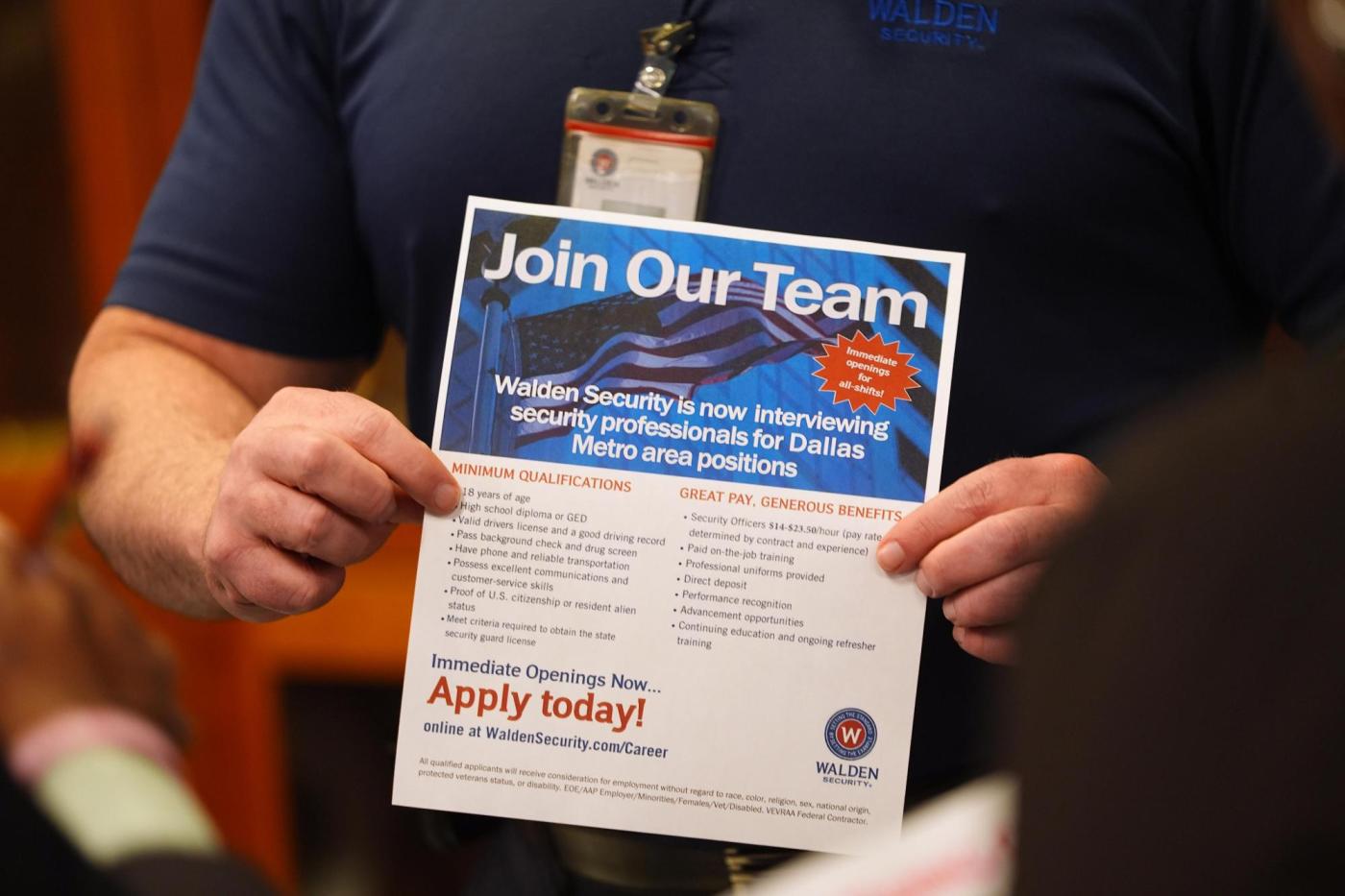

US applications for jobless aid fall to 206,000 last week as layoffs remain low

posted in: All news | 0

By MATT OTT, AP Business Writer

WASHINGTON (AP) — U.S. applications for unemployment benefits fell last week as layoffs remain at historically low levels.

The number of Americans filing for jobless aid for the week ending Feb. 14 fell by 23,000 to 206,000 from the previous week, the Labor Department reported Thursday. That’s significantly fewer than the 225,000 new applications that analysts surveyed by the data firm FactSet had forecast.

Related Articles


U.S. trade deficit slipped to $901 billion last year amid Trump tariffs


US futures retreat after Nvidia-led rally, oil prices rise on reports of potential US-Iran conflict


Walmart delivers another quarter of impressive sales but offers a muted outlook


Data center foes bring swelling opposition to Minnesota Capitol


Online seller eBay to buy secondhand fashion marketplace Depop from Etsy for $1.2B in cash

Filings for unemployment benefits are viewed as representative of U.S. layoffs and are close to a real-time indicator of the health of the job market.

Earlier this month, the Labor Department reported that U.S. employers added a surprisingly strong 130,000 jobs in January and the unemployment rate fell to 4.3% from 4.4%. However, government revisions cut 2024-2025 U.S. payrolls by hundreds of thousands, reducing the number of jobs created last year to just 181,000. That’s about one-third of the previously reported 584,000 and the weakest since the pandemic year of 2020.

While weekly layoffs have remained in a historically low range mostly between 200,000 and 250,000 for the past few years, a number of high-profile companies have announced job cuts recently, including UPS, Amazon, Dow and the Washington Post in recent weeks.

Mounting layoff announcements in the past year, combined with the government’s own sluggish labor market reports, have left Americans increasingly pessimistic about the economy, even though it is registering solid growth.

The Labor Department also recently reported that job openings fell in December to the lowest level in more than five years.

Data over the past year has broadly revealed a labor market in which hiring has clearly slowed, hobbled by uncertainty stoked by President Donald Trump’s tariffs and the lingering effects of the high interest rates the Fed engineered in 2022 and 2023 to tamp down a spike of pandemic-induced inflation.

Economists are conflicted about whether the stronger-than-expected January job gains are a one-off or possibly the first sign of a recovering labor market, which could lead the Fed to further delay more cuts to its key interest rate.

Some Fed officials have specifically argued that last year’s weak hiring shows that borrowing costs are weighing on growth and discouraging companies from expanding. A sustained pickup in hiring could undercut that theory.

The Labor Department’s report Thursday showed that the four-week moving average of jobless claims, which tempers some of the week-to-week volatility, decreased by 1,000 to 219,000.

The total number of Americans filing for jobless benefits for the previous week ending Feb. 7 increased to 1.87 million, up 17,000 from the previous week, the government said.

U.S. trade deficit slipped to $901 billion last year amid Trump tariffs

posted in: All news | 0

By PAUL WISEMAN, AP Economics Writer

WASHINGTON (AP) — The U.S. trade deficit slipped modestly in 2025, a year in which President Donald Trump upended global commerce by slapping double digit tariffs on imports from most countries.

Related Articles


US applications for jobless aid fall to 206,000 last week as layoffs remain low


US futures retreat after Nvidia-led rally, oil prices rise on reports of potential US-Iran conflict


Walmart delivers another quarter of impressive sales but offers a muted outlook


Data center foes bring swelling opposition to Minnesota Capitol


Online seller eBay to buy secondhand fashion marketplace Depop from Etsy for $1.2B in cash

The gap the between the goods and services the U.S. sells other countries and what it buys from them narrowed to just over $901 billion from $904 billion in 2024, the Commerce Department reported Thursday.

Exports rose 6% last year, and imports rose nearly 5%.

The trade gap surged from January-March as U.S. companies tried to import foreign goods ahead of Trump’s taxes, then narrowed most of the rest of the year.

Trump’s tariffs are a tax paid by U.S. importers and often passed along to their customers as higher prices. But they haven’t had as much impact on inflation as economists originally expected. Trump argues that the tariffs will protect U.S. industries, bringing manufacturing back to America and raise money for the U.S. Treasury.

Trump gathers members of Board of Peace for first meeting, with some US allies wary of new body

posted in: All news | 0

By AAMER MADHANI and MATTHEW LEE

WASHINGTON (AP) — President Donald Trump will gather Thursday with representatives from more than two dozen countries that have joined his Board of Peace — and several that have opted not to — for an inaugural meeting that will focus on reconstruction and building an international stabilization force for a war-battered Gaza, where a shaky ceasefire deal persists.

Trump announced ahead of the meeting that board members have pledged $5 billion for reconstruction, a fraction of the estimated $70 billion needed to rebuild the Palestinian territory decimated after two years of war. Members are expected to unveil commitments of thousands of personnel to international stabilization and police forces for the territory.

Related Articles


Air Force One will be repainted as Trump has hinted, US military says


Trump, weeks after backlash over racist post, hosts Black History Month reception


WH adviser Hassett urges ‘discipline’ for Fed economists over tariff study


FDA will drop two-study requirement for new drug approvals, aiming to speed access


NIH’s Bhattacharya will also run the CDC while Trump administration looks for a permanent director

“We have the greatest leaders in the world joining the Board of Peace,” Trump told reporters earlier this week. “I think it has the chance to be the most consequential board ever assembled of any kind.”

The board was initiated as part of Trump’s 20-point peace plan to end the conflict in Gaza. But since the October ceasefire, Trump’s vision for the board has morphed and he wants it to have an even more ambitious remit — one that will not only complete the Herculean task of bringing lasting peace between Israel and Hamas but will also help resolve conflicts around the globe.

But ahead of the board’s first gathering, the Gaza ceasefire deal remains fragile and Trump’s expanded vision for it has triggered fears the U.S. president is looking to create a rival to the United Nations. Trump earlier this week said he hoped the board would push the U.N. to “get on the ball.”

“The United Nations has great potential,” he said. “They haven’t lived up to the potential.”

Some US allies remain skeptical

More than 40 countries and the European Union have confirmed they will send officials to Thursday’s meeting, according to a senior administration official who was not authorized to comment publicly. Germany, Italy, Norway and Switzerland are among more than a dozen countries that have not joined the board but are expected to attend as observers, the official said.

US President Donald Trump walks on the podium after a signing ceremony of his Board of Peace initiative at the Annual Meeting of the World Economic Forum in Davos, Switzerland, Thursday, Jan. 22, 2026. (AP Photo/Markus Schreiber)

The U.N. Security Council held a high-level meeting Wednesday on the ceasefire deal and Israel’s efforts to expand control in the West Bank. The U.N. session in New York was originally scheduled for Thursday but was moved up after Trump announced the board’s meeting for the same date and it became clear that it would complicate travel plans for diplomats planning to attend both.

Vatican Secretary of State Cardinal Pietro Parolin told reporters earlier this week that “at the international level it should above all be the U.N. that manages these crisis situations.” The Trump administration on Wednesday pushed back on the Vatican’s concerns.

“This president has a very bold and ambitious plan and vision to rebuild and reconstruct Gaza, which is well underway because of the Board of Peace,” White House press secretary Karoline Leavitt said. “This is a legitimate organization where there are tens of member countries from around the world.”

Mike Waltz, the U.S. ambassador to the U.N., also pushed back on skeptical allies, saying the board is “not talking, it is doing.”

“We are hearing the chattering class criticizing the structure of the board, that it’s unconventional, that it’s unprecedented,” Waltz said. “Again, the old ways were not working.”

President Donald Trump speaks at the Board of Peace meeting, during the Annual Meeting of the World Economic Forum in Davos, Switzerland, Thursday, Jan. 22, 2026. (Gian Ehrenzeller/Keystone via AP)

Questions about disarming Hamas

Central to Thursday’s discussions will be creating an armed international stabilization force to keep security and ensure the disarming of Hamas, a key demand of Israel and a cornerstone of the ceasefire deal.

But thus far, only Indonesia has offered a firm commitment to Trump for the proposed force. And Hamas, which has been designated as a terrorist organization by the United States, Canada and the European Union, has provided little confidence that it is willing to move forward on disarmament. The administration is “under no illusions on the challenges regarding demilitarization” but has been encouraged by what mediators have reported back, according to a U.S. official who was not authorized to comment publicly and spoke on condition of anonymity.

Indonesian President Prabowo Subianto pledged to work closely with other leading Islamic countries invited by Trump to “join in the endeavors to try to achieve lasting peace in Palestine.”

“We recognize there are still obstacles to be overcome, but at least my position is at least we have to try, and we have to do our best,” he said at an event at the U.S. Chamber of Commerce on Wednesday, where he met with members of the business community.

On Thursday, updates are expected from the Gaza Executive Board, the operational arm of the board, about its efforts to create a functioning government system and services for the territory, according to the official who spoke on condition of anonymity to preview the broad outlines of the meeting.

In addition to Trump, the official said other speakers at the conference would include Secretary of State Marco Rubio, Trump’s special envoy Steve Witkoff, Trump’s son-in-law Jared Kushner, former British Prime Minister Tony Blair, the executive board’s high representative Nickolay Mladenov, and Waltz.

Michael Hanna, U.S. program director at the International Crisis Group, a nonprofit group focused on preventing conflicts, suggested the skepticism some U.S. allies are showing is not unwarranted.

“Without any clear authorization for the expansion of its mandate beyond Gaza, it is unsurprising that many U.S. allies and partners have chosen to decline Trump’s offer to join the board,” Hanna said. “Instead, many of the states most invested in Gaza’s future have signed up with the hope of focusing U.S. attention and encouraging Trump himself to use the influence and leverage he has with Israel.”

Associated Press writers Didi Tang in Washington, Farnoush Amiri at the United Nations and Nicole Winfield in Rome contributed reporting.