Los Angeles County seeks ordinance preventing law enforcement from concealing their identities

posted in: All news | 0

By CHRISTOPHER WEBER, Associated Press

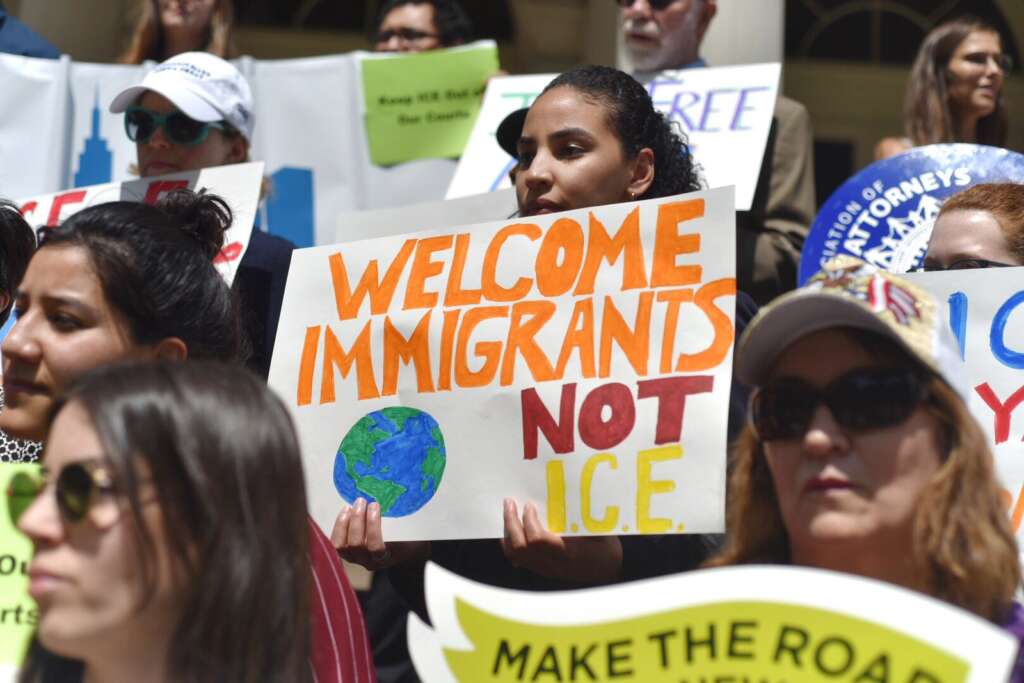
LOS ANGELES (AP) — Los Angeles County leaders want to prohibit law enforcement officers from concealing their identities while on duty, a response to recent immigration raids during which some federal agents refused to identify themselves or covered their faces.

The Board of Supervisors on Tuesday voted 4-0, with one abstention, to direct county counsel to draft an ordinance that bars officers, including federal agents, from wearing masks, with limited exceptions such as for medical protection or during undercover operations. Officers would also be required to visibly display identification and agency affiliation while out in public.

Since early June, immigration agents have swarmed Southern California, arresting hundreds of people and prompting protests against the federal raids and the subsequent deployment of the National Guard and Marines. About half the Guard troops and all the Marines were pulled out of LA in recent weeks.

Related Articles


Sean ‘Diddy’ Combs asks for release on a $50 million bond ahead of sentencing in October


Starbucks looks to protein drinks and other new products to turn around lagging US sales next year


NYC shooter was a high school football player in Southern California


Everything we know about the victims of the New York City shooting


What to know about the brain-eating amoeba that killed a boy swimming in a lake

Supervisor Janice Hahn, who co-authored the motion, said the raids carried out by the Trump administration have sparked fear and residents have a right to know who is stopping, questioning or detaining them.

“Across the county, people are being pulled out of their cars, beaten, and ripped from their families by men in tactical gear with balaclavas, no badges, and no names,” Hahn said. “That’s not how law enforcement in a democracy should operate.”

Hahn conceded that it is unclear if the county will be able to enforce the law when it comes to actions by U.S. Immigration and Customs Enforcement and other federal agencies. “Ultimately, it might have to be decided by a court,” she said.

Legal scholar Erwin Chemerinsky said Tuesday that a court could have to decide if the ordinance is interfering with the ability of officers to carry out their duties.

“They key is that it has to apply to all law enforcement. It can’t just apply to federal law enforcement,” said Chemerinsky, dean of the law school at the University of California, Berkeley.

Administration officials have defended the practice of officers wearing masks, saying immigration agents have faced harassment as they have gone about their enforcement. Officials said agents are hiding their identities for their safety to avoid things like death threats and doxing, where someone’s personal information is released without their permission on the internet.

FILE – Los Angeles County Supervisor Hilda Solis speaks during a news conference Wednesday, May 3, 2023, in Los Angeles. (Dean Musgrove/The Orange County Register via AP,File)

“I’m sorry if people are offended by them wearing masks, but I’m not going to let my officers and agents go out there and put their lives on the line, their family on the line because people don’t like what immigration enforcement is,” ICE acting director Todd Lyons said last month.

In the state legislature, a pending measure would ban local, state, and federal police from covering their faces while conducting operations in California. And a similar bill has been introduced into the U.S. Congress by Democratic senators Alex Padilla, of California, and Cory Booker, of New Jersey.

Chemerinsky said the advantage of federal legislation is that it would “clearly be constitutional” because Congress has the power to regulate how federal law enforcement operates.

County counsel has 60 days to submit the draft ordinance to the board for approval.

Supervisor Hilda Solis, the measure’s other co-author, said local officials must set expectations about how law enforcement should conduct themselves while in the county.

“The use of masks, tactical gear, and refusal to show identification is not only alarming and confusing, but erodes public trust and raises serious safety concerns,” Solis said.

Takeaways from Day 6 of Vikings training camp

posted in: All news | 0

There was a little bit of down time in the middle of practice earlier this week, so head coach Kevin O’Connell decided to keep his arm loose by tossing the ball around with star receiver Justin Jefferson.

Though he hasn’t participated in practice at TCO Performance Center since suffering a mild hamstring strain, Jefferson has still made it a point to be around his teammates.

All part of being a leader.

“That was my challenge to him,” O’Connell said. “There are a lot of ways that we can maximize this time.”

When he hasn’t been dancing around and serving as the ultimate hype man, Jefferson has been a sounding board for some of his teammates. Whether it’s veteran receiver Lucky Jackson or rookie receiver Tai Felton, they have been able to lean on Jefferson as they step into his role.

“He’ll be there every step of the way to help those guys,” O’Connell said. “There’s a reason why he is so beloved in this building. He’s the best in the world at what he does. He’s also a phenomenal teammate.”

It sounds like the Vikings are hoping to have Jefferson back in action sooner rather than later.

Maybe even at some point in training camp.

“The rehab is going really well,” O’Connell said. “He’s already progressing.”

Asked for more details on Jefferson’s recovery process, O’Connell downplayed the situation at hand, reiterating that he has no concerns about him being ready to suit up for the Vikings in Week 1 against the Chicago Bears.

“There’s a lot of time between now and then,” O’Connell said. “What does that look like? We’re going to be smart.”

Here are more takeaways from Day 6 of training camp:

How does McCarthy look?

There were some growing pains from McCarthy, especially in the red zone, as a number of his throws seemed to sail on him. As impressive as he has been when letting it rip downfield, McCarthy’s touch still needs some work in close quarters.

On the flip side, McCarthy had some very good stretches during 11-on-11 drills, including a perfectly place ball to receiver Jordan Addison over the middle. They have done a good job building chemistry in training camp, and it appears to be growing with each practice.

It was a lighter practice without pads, so there’s no need to overreact to anything that was put on film.

Who else stood out?

A lofted pass from backup quarterback Sam Howell was intercepted by cornerback Dwight McGlothern. It marked that second straight practice during which McGlothern has recorded an interception. After biding his time as a rookie, McGlothern is ready to take the next step in his career.

You ready for a deep cut? A sleeper worth keeping an eye on is rookie tight end Ben Yurosek. He had a contested catch in the end zone for a touchdown that stood as arguably the best play of practice. He has slowly but surely made a name for himself since signing as an undrafted free agent.

Quote of the day

“I always give I.P. a hard time, because I.P. is at his best when he can be a Tasmanian devil and go tackle everybody on the field. We don’t let him do that out here for the safety of not only our players, the safety of me, as well.”

— Head coach Kevin O’Connell, on linebacker Ivan Pace Jr.

Injury report

There were a good number of players that did not participate, including safety Harrison Smith, safety Josh Metellus, defensive tackle Jonathan Allen, defensive tackle Javon Hargrave and center Ryan Kelly.

None of those players were seen working with a trainer, so the assumption is the Vikings were trying to get them some rest.

As for cornerback Isaiah Rodgers, he’s working through some minor soreness and isn’t expected to miss an extended period of time.

What’s next?

There will be a more intense practice with pads Wednesday before the players get some rest Thursday.

Minnesota Vikings linebacker Ivan Pace Jr. (0) walks off the field from the first session during the team’s NFL football training camp Saturday, July 26, 2025, in Eagan, Minn. (AP Photo/Bruce Kluckhohn)

Related Articles


Takeaways from Day 5 of Vikings training camp


Who could step up at Vikings training camp with Justin Jefferson out?


Takeaways from Day 4 of Vikings training camp


Josh Metellus agrees to contract extension with Vikings


Takeaways from Day 3 of Vikings training camp

Opinion: New York Must Pass the Food Safety and Chemical Disclosure Act 

posted in: All news | 0

“New Yorkers have a right to know what’s in our food. This legislation is a step in that direction.”

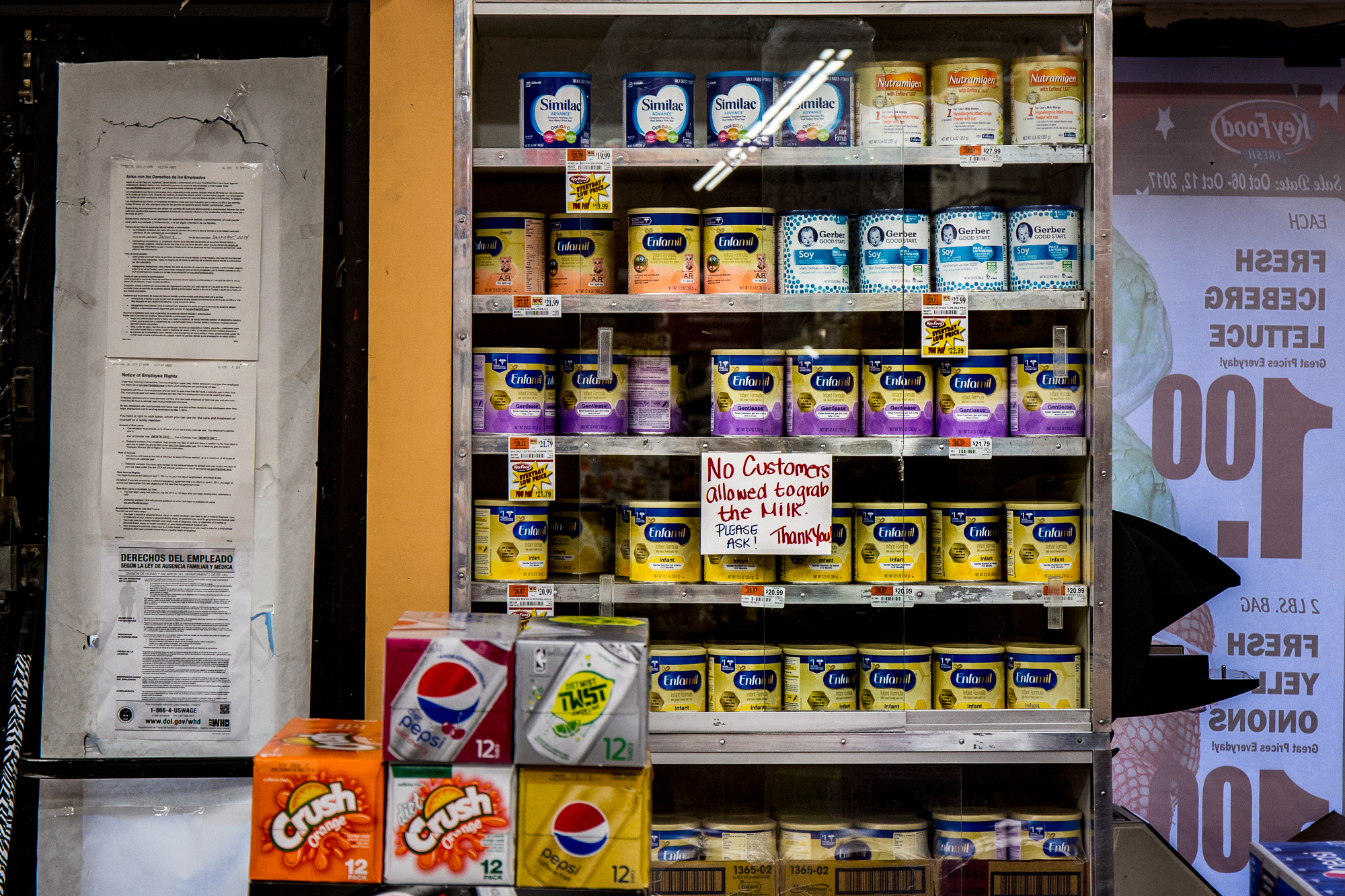
A supermarket in Inwood. (Adi Talwar/City Limits)

New York missed a crucial opportunity to prioritize public health and strengthen our food safety laws this year.

Like other states turning their attention to the dangers in our food supply, we had the Food Safety and Chemical Disclosure Act on our docket—a bill that would mandate new transparency requirements for chemicals used in foods sold statewide and ban three harmful food additives. But food industry giants have lobbied against it, saying that basic accountability will disrupt small businesses. 

In actuality, the bill costs us nothing and only demands transparency from large manufacturers, retailers, and suppliers. As president of the Bodega and Small Business Group (BSBG) and a lifelong Bronx bodega owner myself, I support this bill. Small businesses must get this legislation passed at the very next available opportunity, to make sure large companies aren’t putting unsafe products on our shelves. New York families deserve safe food options, and it’s time for the food industry to commit to fulfilling this promise. 

Our federal food safety laws remain dangerously outdated, leaving consumers in the dark about toxic chemicals in their food. Mega-corporations have capitalized on loopholes to bypass U.S. Food and Drug Administration oversight by secretly designating food chemicals as “generally recognized as safe,” or GRAS.

Historically, GRAS designation was reserved for common ingredients like vinegar and spices. But now, after skipping safety reviews altogether, large companies are self-certifying their products as GRAS and placing them on our shelves, making consumers purchase items without a clue about their hidden risks. 

Additives like Red No. 3, potassium bromate, and propylparaben are already banned or severely restricted in other nations because of their links to cancer, hormone disruption, and other serious conditions. But in America, these chemicals remain in countless household foods, including our cereals, beverages, candies, and popular treats for kids, who are already more susceptible to developmental delays

Sponsored by Senator Brian Kavanagh and Assemblymember Dr. Anna Kelles, this bill directly restricts these chemicals in foods, while introducing a simple, online disclosure requirement—strictly for large companies adding secret chemicals to products and circumventing FDA safety review. Once companies submit sufficient evidence, the State Department of Agriculture and Markets simply publicizes the chemicals for public health officials, including the FDA, to flag any harmful ones in use. 

This legislation doesn’t affect proven GRAS ingredients, packaging, or product labeling, and includes exemptions for small businesses with fewer than 100 employees and retailers. It’s a commonsense protection for children and families that helps restore trust and keep New Yorkers safe. So why aren’t we jumping at the opportunity? 

Big Food helped strike the bill down. We met with industry leaders and requested more details in order to join their opposition memo. They framed the bill as an expensive set of rules that would impact all food businesses, despite its exemptions. We received no further information; however, they added my business logo to their memo without my reconfirmation. 

I’m not alone. On one hand, industry assures us that their food is completely safe. On the other, they’re trying to convince us that it’ll be costly to show proof that their food is safe for us to sell, and even disrupt small businesses and low-income communities. This blatant double-dealing is the very epitome of the kind of secrecy and predatory business practices this bill would outlaw. 

As a South Bronx native who opened my first bodega at the age of 19, I know how many New Yorkers struggle to access fresh, healthy food. Our borough already faces the highest rates of food insecurity and chronic diet-related diseases in the state—in some neighborhoods bodegas even outnumber supermarkets 37 to 1. It’s why BSBG is doing our part to meet families where they are, working directly with community to increase healthy food options at corner stores through our Hunts Point Healthy Bodega Pilot.

After reviewing more details, we stand ready to support the bill and the health of our customers. Families already have enough on their plates when trying to provide safe, nutritious food for their households, without having to stress about secret toxins. Yet in the borough that ranked dead last in health outcomes—for the 17th consecutive year—some in the industry find it appropriate to ramp up a misinformation campaign when small business owners are ready to guarantee food transparency for our customers. 

We cannot compromise on the health of our children and families. Letting corporations claim that their food is safe without ever showing proof simply defies reason. 

New Yorkers have a right to know what’s in our food. This legislation is a step in that direction. Next year, Albany must do everything in its power to block out the noise and pass the Food Safety and Chemical Disclosure Act immediately.

Francisco Marte is the president of the New York Bodegas Association and founder of the Bodega and Small Business Group (BSBG).

The post Opinion: New York Must Pass the Food Safety and Chemical Disclosure Act  appeared first on City Limits.

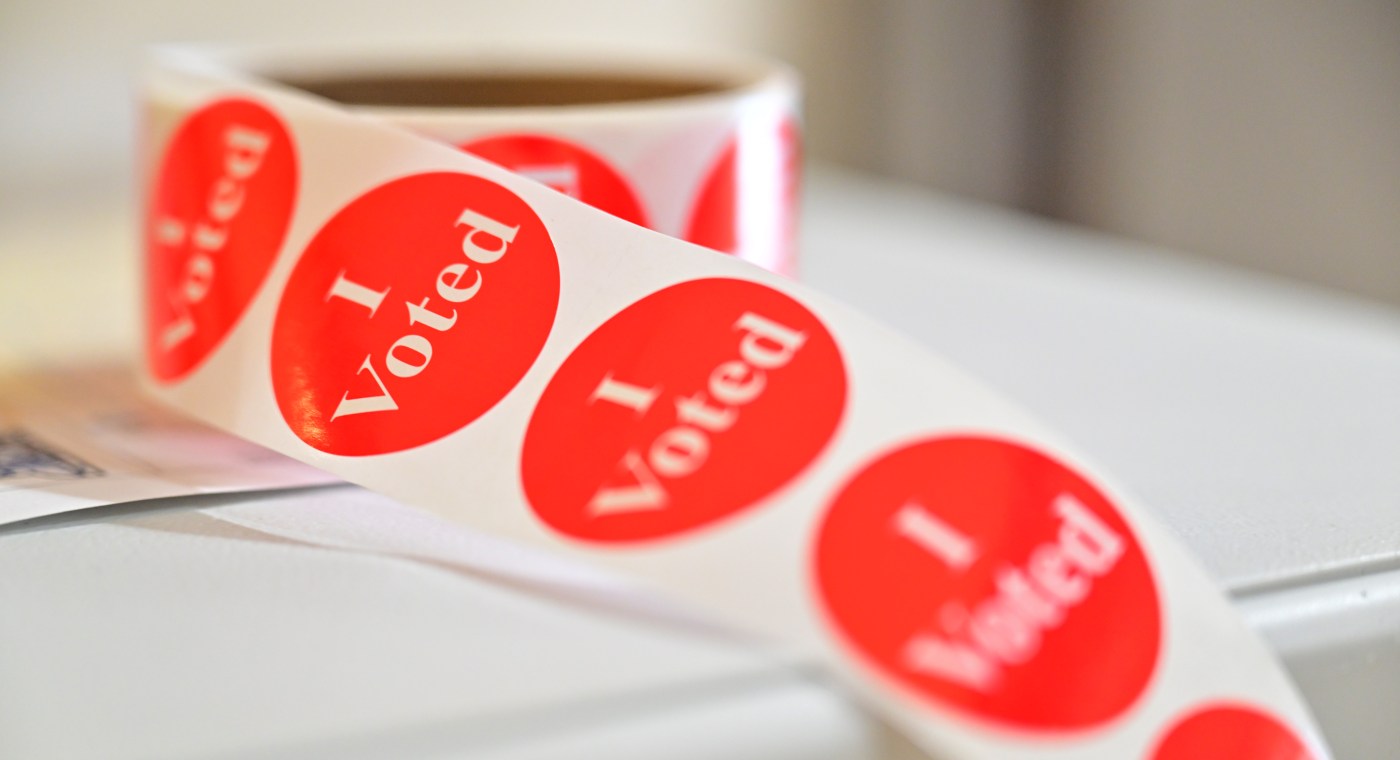
Democrats try again to revive the Voting Rights Act but face long odds

posted in: All news | 0

By MATT BROWN, Associated Press

WASHINGTON (AP) — Senate Democrats reintroduced a bill Tuesday to restore and expand protections enshrined in the Voting Rights Act of 1965, their latest long-shot attempt to revive the landmark law just days before its 60th anniversary and at a time of renewed debate over the future administration of American elections.

Sen. Raphael Warnock of Georgia unveiled the measure, titled the John R. Lewis Voting Rights Advancement Act, with the backing of Democratic leaders. The bill stands little chance of passage in the Republican-led Congress, but it provides the clearest articulation of Democrats’ agenda on voting rights and election reform.

The legislation would reestablish and expand the requirement that states and localities with a history of discrimination get federal approval before changing their voting laws. It would also require states to allow same-day voter registration, prevent voters from being purged from voter rolls if they miss elections and allow people who may have been disenfranchised at the ballot box to seek a legal remedy in the courts.

“Democracy is the very house in which we live. It is the framework in which we get to fight for the things that we care about,” Warnock said. “These last seven months have reminded us that we ought not take any of it for granted. We are literally in a fight for the life of the republic.”

Related Articles


Civil rights agency sued over handling of transgender worker discrimination complaints under Trump


New whistleblower emerges against Trump lawyer ahead of confirmation vote


22 Democratic-led states sue Trump administration over Planned Parenthood funding cuts


Trump administration wants Harvard to pay far more than Columbia as part of settlement


Trump says Epstein ‘stole’ young women from Mar-a-Lago spa, including Virginia Giuffre

Warnock was joined by Senate Minority Leader Chuck Schumer of New York and Sen. Dick Durbin, the top Democrat on the Judiciary Committee, as well as Sens. Richard Blumenthal of Connecticut, Cory Booker of New Jersey and Alex Padilla of California. The senators were flanked by dozens of activists, including voting rights advocates, environmental campaigners, faith leaders and union organizers.

The reintroduction comes at a precarious moment for the Voting Rights Act. The enforcement mechanisms of the law have been removed or hampered by two decades of court rulings and lapsed congressional reauthorizations. And an unusual push by Republicans in several states to redistrict congressional maps five years ahead of schedule has also raised questions about the effectiveness of the law in protecting voters.

State lawmakers have enacted dozens of laws in recent years that voting rights activists argue restrict access to the ballot, especially for people of color, poorer communities and people with disabilities.

Schumer promised that Democrats would “fight fire with fire” to protect voting rights.

And Warnock warned of “an authoritarian movement that is afoot right now in our country,” before denouncing a special session called by the Texas legislature to redistrict the state’s legislative and congressional maps. President Donald Trump and congressional Republicans are backing the effort, which they hope will net the GOP several seats in the House of Representatives and help them hold the House majority.

Democrats first introduced the updated Voting Rights Act in 2021, when the party had unified control of Congress. The bill came in response to several years of states enacting restrictive voting laws following the Supreme Court’s 2013 ruling in Shelby County v. Holder, which struck down the section of the Voting Rights Act that required some states to seek federal approval for legislative maps and election policies.

The bill passed the House twice in that Congress but failed to pass the 60-vote filibuster threshold in the Senate. Rep. Terri Sewell of Alabama reintroduced a House version in March.

The bill is named after John Lewis, the longtime Democratic congressman and civil rights activist who died in 2020. Warnock represents Lewis’ home state, while Sewell represents Selma, Alabama, the city where Lewis organized during the Civil Rights movement and was bludgeoned by state troopers during a peaceful protest on the Edmund Pettus Bridge, known as Bloody Sunday.

A picture of Lewis was positioned behind the senators as they spoke about the bill. Blumenthal, the Connecticut Democrat, said that Lewis’ “stare is unrelenting. He’s going to hold us accountable.”