Reports: Gov. Tim Walz to suspend reelection campaign amid pressure on fraud

posted in: All news | 0

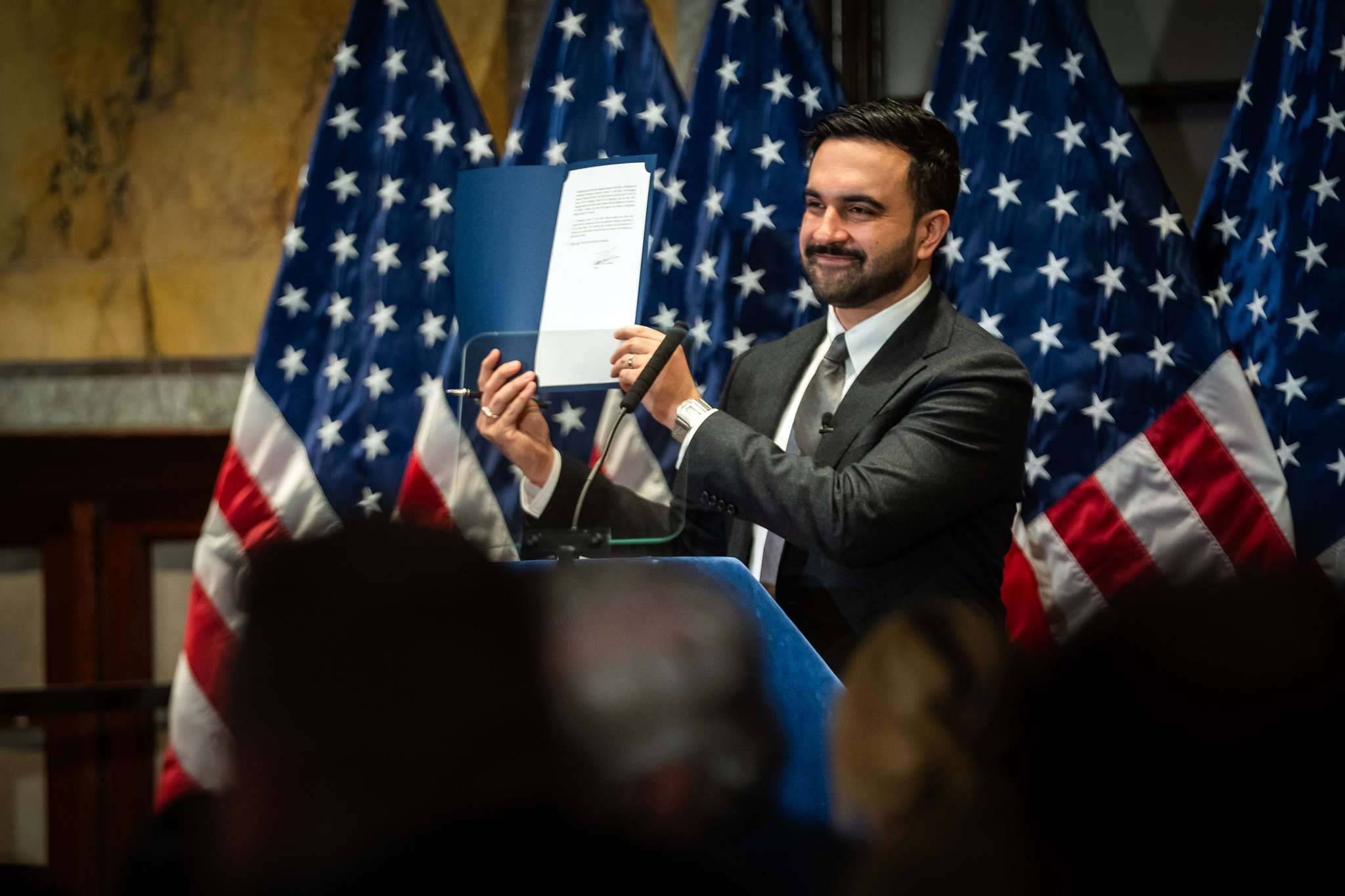
Minnesota Gov. Tim Walz is ending his bid for a third term in the state’s top office, according to numerous reports, amid increasing scrutiny over his handling of government fraud.

Walz is to address reporters at the state Capitol at 11 a.m. No other Democratic-Farmer-Labor candidate has entered the race for governor so far. Blois Olson, a state political analyst, and KARE-11 TV cited sources close to Walz who said the governor is expected to withdraw from the race.

The news comes as the federal government and state Republican lawmakers continue to press him for answers on how the state potentially lost billions of federal dollars to Medicaid fraud schemes and other alleged scams.

In December, Assistant U.S. Attorney Joe Thompson told reporters that the state could have lost $9 billion or more to fraud in 14 “high-risk” Medicaid-funded programs since 2018.

Federal fraud indictments continue to emerge in housing and autism programs after a federal investigation first became public in the summer of 2025. Thompson described Minnesota as having an “industrial-scale” fraud problem.

Walz has pointed to federal prosecutions in fraud cases such as Feeding Our Future, where more than 50 of the 78 charged have been convicted, as a sign that fraudsters are being held accountable.

He also paused payments and ordered a third-party audit in high-risk programs, appointed an official to devise a new fraud prevention plan, and last January directed the state Bureau of Criminal Apprehension to create a fraud prevention unit.

But critics say these moves are largely retroactive and performative and question whether any state officials have been held accountable for creating an environment where fraud could occur.

Walz was first elected in 2018 and won a second term in 2022. No governor has served three consecutive terms in Minnesota history.

His 2026 pitch to voters has focused largely on opposing the administration of President Donald Trump and enacting new gun control laws to prevent more school shootings in the wake of the Annunciation Catholic School shooting in Minneapolis.

Related Articles


Nearly 12,000 apply for Minnesota’s paid leave program in first days


Kaohly Her sworn in as St. Paul mayor


Minnesota families are rattled by threat to cut federal aid for child care


Minnesota Democrats, child care providers push back on federal freeze


An intense White House response from a single viral video

Republicans running for governor in 2026 include MyPillow CEO Mike Lindell, state House Speaker Lisa Demuth; 2022 gubernatorial candidate Scott Jensen, a doctor who rose to prominence for his criticism of state COVID policy; state Rep. Kristin Robbins; attorney Chris Madel ;2022 Republican endorsement contender Kendall Qualls, a former congressional candidate; and businessman Patrick Knight.

No Republican has won statewide office in Minnesota since 2006.

Check back for updates on this breaking story. 

Holocaust survivor Eva Schloss, stepsister of Anne Frank, dies at 96

posted in: All news | 0

By JILL LAWLESS, Associated Press

LONDON (AP) — Auschwitz survivor Eva Schloss, the stepsister of teenage diarist Anne Frank and a tireless educator about the horrors of the Holocaust, has died. She was 96.

FILE – Britain’s Camilla, Duchess of Cornwall, right, and Eva Schloss, step-sister of Anne Frank and Honorary President of the Anne Frank Trust UK, take part in a candle lighting ceremony during a reception for the Anne Frank Trust in London, Thursday Jan. 20, 2022. (Chris Jackson/Pool via AP, file)

The Anne Frank Trust UK, of which Schloss was honorary president, said she died Saturday in London, where she lived.

Britain’s King Charles III said he was “privileged and proud” to have known Schloss, who co-founded the charitable trust to help young people challenge prejudice.

“The horrors that she endured as a young woman are impossible to comprehend and yet she devoted the rest of her life to overcoming hatred and prejudice, promoting kindness, courage, understanding and resilience through her tireless work for the Anne Frank Trust UK and for Holocaust education across the world,” the king said.

Born Eva Geiringer in Vienna in 1929, Schloss fled with her family to Amsterdam after Nazi Germany annexed Austria. She became friends with another Jewish girl of the same age, Anne Frank, whose diary would become one of the most famous chronicles of the Holocaust.

Like the Franks, Eva’s family spent two years in hiding to avoid capture after the Nazis occupied the Netherlands. They were eventually betrayed, arrested and sent to the Auschwitz death camp.

Schloss and her mother Fritzi survived until the camp was liberated by Soviet troops in 1945. Her father Erich and brother Heinz died in Auschwitz.

After the war, Eva moved to Britain, married German Jewish refugee Zvi Schloss and settled in London.

In 1953, her mother married Frank’s father, Otto, the only member of his immediate family to survive. Anne Frank died of typhus in the Bergen-Belsen concentration camp at the age of 15, months before the end of the war.

Related Articles


US capture of Maduro divides a changed region, thrilling Trump’s allies and threatening his foes


Trump says that Ukraine didn’t target Putin residence in a drone strike as Kremlin claims


Maduro is taken to a US courthouse for his first appearance on drug trafficking charges


Today in History: January 5, ‘Rapper’s Delight’ hits Billboard Top 40


Maduro and his wife to be arraigned in Manhattan Federal Court

Schloss did not speak publicly about her experiences for decades, later saying that wartime trauma had made her withdrawn and unable to connect with others.

“I was silent for years, first because I wasn’t allowed to speak. Then I repressed it. I was angry with the world,” she told The Associated Press in 2004.

But after she addressed the opening of an Anne Frank exhibition in London in 1986, Schloss made it her mission to educate younger generations about the Nazi genocide. Over the following decades she spoke in schools and prisons, at international conferences and told her story in books including “Eva’s Story: A Survivor’s Tale by the Stepsister of Anne Frank.”

She kept campaigning into her 90s. In 2019, she traveled to Newport Beach, California to meet teenagers who were photographed making Nazi salutes at a high school party. The following year she was part of a campaign urging Facebook to remove Holocaust-denying material from the social networking site.

“We must never forget the terrible consequences of treating people as ‘other,’” Schloss said in 2024. “We need to respect everybody’s races and religions. We need to live together with our differences. The only way to achieve this is through education, and the younger we start the better.”

Schloss’ family remembered her as “a remarkable woman: an Auschwitz survivor, a devoted Holocaust educator, tireless in her work for remembrance, understanding and peace.”

“We hope her legacy will continue to inspire through the books, films and resources she leaves behind,” the family said in a statement.

Zvi Schloss died in 2016. Eva Schloss is survived by their three daughters, as well as grandchildren and great-grandchildren.

Man who broke windows at Vance’s Ohio home is detained, the Secret Service says

posted in: All news | 0

By ALANNA DURKIN RICHER and KATHY McCORMACK, Associated Press

CINCINNATI (AP) — A man who broke windows at Vice President JD Vance’s Ohio home and caused other property damage was detained early Monday, the U.S. Secret Service said.

Related Articles


Maduro is set to make his first appearance in a US courtroom on drug trafficking charges


Today in History: January 5, ‘Rapper’s Delight’ hits Billboard Top 40


Oil prices fall back after the US capture of Venezuelan leader Maduro


How Trump’s first year reshaped U.S. energy and climate policy


Delcy Rodríguez becomes Venezuela’s interim president after Maduro’s ouster

The man was detained shortly after midnight by Secret Service agents assigned to Vance’s home, east of downtown Cincinnati, agency spokesperson Anthony Guglielmi said in a statement emailed to The Associated Press. He has not been named.

The Secret Service heard a loud noise at the home around midnight and found a person who had broken a window with a hammer and was trying to get into the house, according to two law enforcement officials who were not publicly authorized to discuss the investigation and spoke on the condition of anonymity. The man had also vandalized a Secret Service vehicle on his way up the home’s driveway, one of the officials said.

The home, in the Walnut Hills neighborhood, was unoccupied at the time, and Vance and his family were not in Ohio, Guglielmi said.

The Secret Service is coordinating with the Cincinnati Police Department and the U.S. attorney’s office as charging decisions are reviewed, he said.

Vance’s office directed questions to the Secret Service and said his family was already back in Washington.

Walnut Hills is one of the city’s oldest neighborhoods and is home to historic sites, including the Harriet Beecher Stowe House.

Associated Press writers Mike Balsamo and Sarah Brumfield contributed to this report.

Trump’s plan to seize and revitalize Venezuela’s oil industry faces major hurdles

posted in: All news | 0

By JOSH FUNK, Associated Press Business Writer

President Donald Trump’s plan to take control of Venezuela’s oil industry and ask American companies to revitalize it after capturing President Nicolás Maduro in a raid isn’t likely to have a significant immediate impact on oil prices.

Venezuela’s oil industry is in disrepair after years of neglect and international sanctions, so it could take years and major investments before production can increase dramatically. But some analysts are optimistic that Venezuela could double or triple its current output of about 1.1 million barrels of oil a day to return to historic levels fairly quickly.

“While many are reporting Venezuela’s oil infrastructure was unharmed by U.S. military actions, it has been decaying for many many years and will take time to rebuild,” said Patrick De Haan, who is the lead petroleum analyst at gasoline price tracker GasBuddy.

Vehicles drive past the El Palito refinery in Puerto Cabello, Venezuela, Sunday, Dec. 21, 2025. (AP Photo/Matias Delacroix)

American oil companies will want a stable regime in the country before they are willing to invest heavily, and the political picture remained uncertain Saturday with Trump saying that the United States is in charge — while the current Venezuelan vice president argued, before Venezuela’s high court ordered her to assume the role of interim president, that Maduro should be restored to power.

“But if it seems like the U.S. is successful in running the country for the next 24 hours, I would say there would be a lot of optimism that U.S. energy companies could come in and revitalize the Venezuelan oil industry fairly quickly,” said Phil Flynn, a senior market analyst at the Price Futures Group.

And if Venezuela can grow into an oil production powerhouse, Flynn said “that could cement lower prices for the longer term” and put more pressure on Russia.

Speaking to reporters on Air Force One on Sunday, Trump said oil companies are “going to go in and rebuild this system.”

A major shift in oil prices wasn’t expected because Venezuela is a member of OPEC, so its production is already accounted for there. And there is currently a surplus of oil on the global market.

The price of U.S. crude oil lost 23 cents early Monday to $57.09 per barrel. Brent crude, the international standard, gave up 18 cents to $60.57 per barrel.

Proven reserves

Venezuela is known to have the world’s largest proven crude oil reserves of approximately 303 billion barrels, according to the U.S. Energy Information Administration. That accounts for roughly 17% of all global oil reserves.

Related Articles


This Jan. 6 plaque was made to honor law enforcement. It’s nowhere to be found at the Capitol


Maduro and his wife to be arraigned in Manhattan Federal Court


What we know about the U.S. operation in Venezuela


Cuba says 32 Cuban officers were killed in US operation in Venezuela


Iran, Venezuela found kinship in anti-American ideology, evading U.S. sanctions

So international oil companies have reason to be interested in Venezuela. Exxon Mobil didn’t immediately respond to a request for comment Saturday. ConocoPhillips spokesperson Dennis Nuss said by email that the company “is monitoring developments in Venezuela and their potential implications for global energy supply and stability. It would be premature to speculate on any future business activities or investments.”

Chevron is the only one with significant operations in Venezuela, where it produces about 250,000 barrels a day. Chevron, which first invested in Venezuela in the 1920s, does business in the country through joint ventures with the state-owned company Petróleos de Venezuela S.A., commonly known as PDVSA.

“Chevron remains focused on the safety and wellbeing of our employees, as well as the integrity of our assets. We continue to operate in full compliance with all relevant laws and regulations,” Chevron spokesman Bill Turenne said.

But even with those massive reserves, Venezuela has been producing less than 1% of the world’s crude oil supply. Corruption, mismanagement and U.S. economic sanctions saw production steadily decline from the 3.5 million barrels per day pumped in 1999 to today’s levels.

The problem isn’t finding the oil. It’s a question of the political environment and whether companies can count on the government to live up to their contracts. Back in 2007, then President Hugo Chávez nationalized much of the oil production and forced major players like ExxonMobil and ConocoPhillips out.

“The issue is not just that the infrastructure is in bad shape, but it’s mostly about how do you get foreign companies to start pouring money in before they have a clear perspective on the political stability, the contract situation and the like,” said Francisco Monaldi, who is the director of the Latin American energy program at Rice University.

But the infrastructure does need significant investment.

“The estimate is that in order for Venezuela to increase from one million barrels per day — that is what it produces today — to four million barrels, it will take about a decade and about a hundred billion dollars of investment,” Monaldi said.

Strong demand

Venezuela produces the kind of heavy crude oil that’s needed for diesel fuel, asphalt and other fuels for heavy equipment. Diesel is in short supply around the world because of the sanctions on oil from Venezuela and Russia and because America’s lighter crude oil can’t easily replace it.

Years ago, American refineries on the Gulf Coast were optimized to handle that kind of heavy crude at a time when U.S. oil production was falling and Venezuelan and Mexican crude was plentiful. So refineries would love to have more access to Venezuela’s crude because it would help them operate more efficiently, and it tends to be a little cheaper.

Boosting Venezuelan production could also make it easier to put pressure on Russia because Europe and the rest of the world could get more of the diesel and heavy oil they need from Venezuela and stop buying from Russia.

“There’s been a big benefit for Russia to see Venezuela’s oil industry collapse. And the reason is because they were a competitor on the global stage for that oil market,” Flynn said.

Complicated legal picture

But Matthew Waxman, a Columbia University law professor who was a national security official in the George W. Bush administration, said seizing control of Venezuela’s resources opens up additional legal issues.

“For example, a big issue will be who really owns Venezuela’s oil?” Waxman wrote in an email. “An occupying military power can’t enrich itself by taking another state’s resources, but the Trump administration will probably claim that the Venezuelan government never rightfully held them.”

But Waxman, who served in the State and Defense departments and on the National Security Council under Bush, noted that “we’ve seen the administration talk very dismissively about international law when it comes to Venezuela.”

Associated Press writers Matt O’Brien, Ben Finley, Darlene Superville and Rio Yamat contributed to this report.