Inflation rose more quickly than expected in December

posted in: All news | 0

By CHRISTOPHER RUGABER, AP Economics Writer

WASHINGTON (AP) — A key inflation gauge accelerated in December to the fastest pace in nearly a year, showing how prices are still rising more quickly than most Americans would prefer — and faster than the Federal Reserve’s target of 2% a year.

Prices rose 0.4% in December from the previous month, up from 0.2% in November, the Commerce Department said Friday in a report that was delayed by the six-week government shutdown last fall. The monthly increase was the highest since last February. Compared with a year ago, inflation rose 2.9% in December, up from 2.8% in November. That is the largest yearly increase since March 2024.

Related Articles


US economy grows at 1.4% rate in the fourth quarter, slower than economists expected


Social media companies face legal reckoning over mental health harms to children


World shares, US futures advance after AI fears drag Wall Street lower


St. Paul: Evereve clothing store on Grand Avenue calls it quits


US civil rights agency sues Coca-Cola distributor for excluding men from casino work trip

Core prices — which exclude the volatile food and energy categories — also rose 0.4% in December from the previous month, up from 0.2% in November. That is also the highest since last February. Core prices jumped 3% in December from a year ago, faster than November’s 2.8% increase.

The figures show that inflation remains elevated, though it’s down from a peak of near 7% in 2022. With many prices still rising more quickly than they did before the pandemic, the report points to a key reason that many Americans remain unhappy with the economy, even as unemployment remains low and growth is solid.

The report covers what is known as the personal consumption expenditures (PCE) price index, which the Federal Reserve prefers over the better-known consumer price index. The CPI cooled noticeably in January, the government said last week.

But the reason the PCE index is running higher than the consumer price index is because it puts much less weight on some areas where price growth has sharply cooled, such as apartment rents and car prices.

Friday’s report also showed that consumers kept spending at a solid clip in December, when spending rose 0.4% from the previous month, the same as in November.

In December, prices climbed for furniture, clothing, and groceries. Gas prices fell, but the cost of electricity rose and natural gas costs soared 3.7% just in December from the previous month.

The Fed’s interest-rate setting committee met in late January and agreed to keep its short-term rate unchanged at about 3.6% despite repeated demands from President Donald Trump to reduce it. According to minutes from the meeting released Wednesday, most officials want to see inflation fall closer to the Fed’s target before supporting further rate cuts.

Mexico and El Salvador make big cocaine seizures at sea as US continues lethal strikes

posted in: All news | 0

MEXICO CITY (AP) — The navies of El Salvador and Mexico announced drug seizures in the Pacific Ocean this week of more than 10 tonnes of cocaine, in contrast to deadly strikes by the U.S. government that just this week left 11 people dead on three boats suspected of carrying drugs in Latin American waters.

The latest announcement came Thursday, when Mexico said it had seized nearly four tonnes of suspected drugs and detained three people from a semisubmersible craft, 250 nautical miles  south of the port of Manzanillo.

Related Articles


Saudi Arabia may have uranium enrichment under proposed deal with US, arms control experts warn


Police search Mountbatten-Windsor’s former home a day after his arrest


Today in History: February 20, Thousands attend pro-Nazi rally at Madison Square Garden


Venezuela approves amnesty bill that could see release of hundreds detained for political reasons


US pays about $160 million of the nearly $4 billion it owes the United Nations

Mexican Security Secretary Omar García Harfuch said via X that the seizure from the sleek, low-riding boat with three visible motors brought the weekly total to nearly 10 tonnes, but he did not provide detail on the other seizures.

Mexican authorities said the seizure was made with intelligence shared U.S. Northern Command and the U.S. Joint Interagency Task Force South.

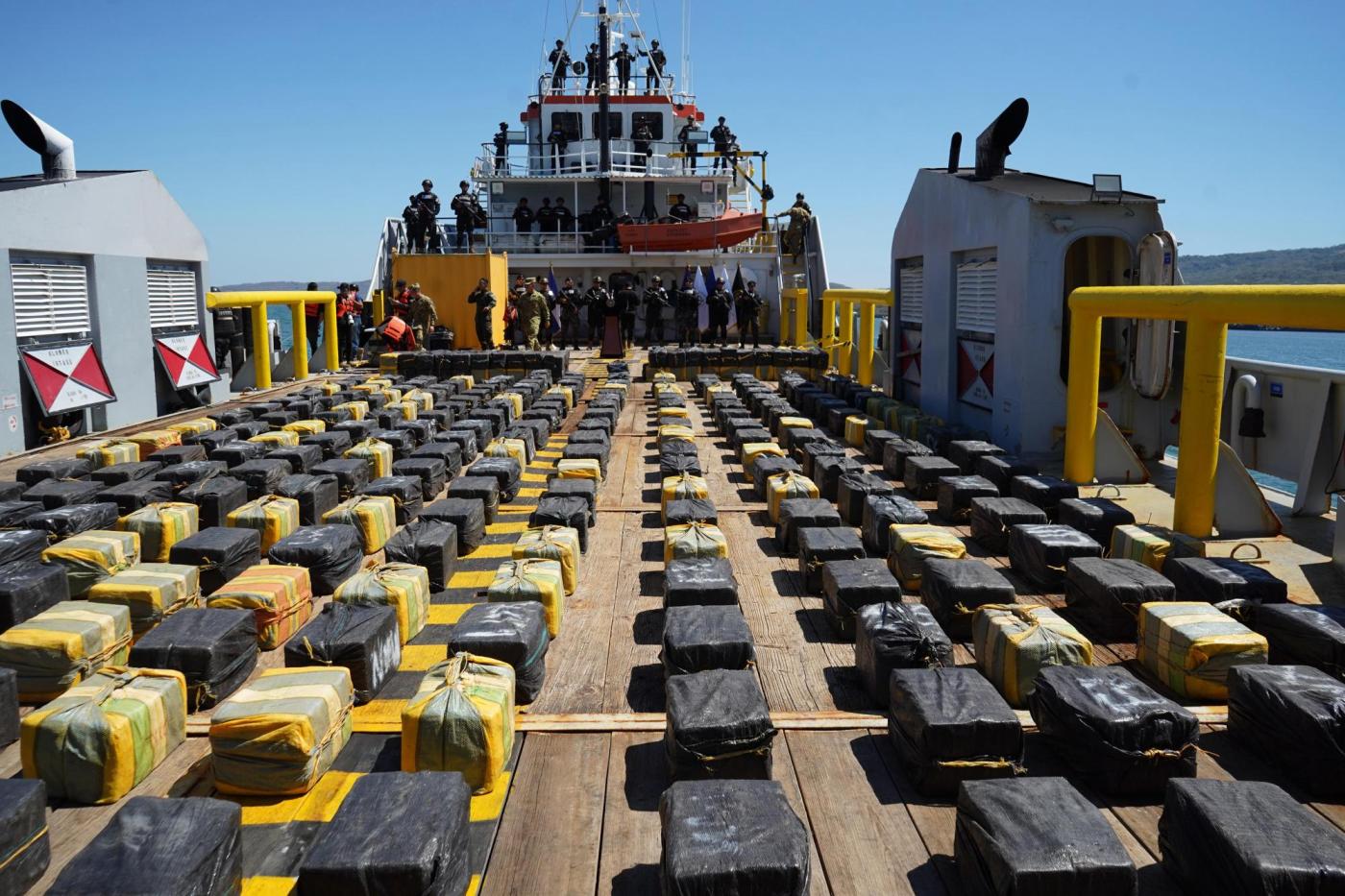
On Sunday, El Salvador’s navy announced the largest drug seizure in the country’s history of 6.6 tonnes of cocaine. The navy had intercepted a 180-foot boat registered to Tanzania, 380 miles (611 kilometers) southwest of the coast. Navy divers found 330 packages of cocaine hidden in the boat’s ballast tanks. Ten men were arrested from Colombia, Nicaragua, Panama and Ecuador.

On Thursday, Salvadoran authorities gave access to the seized ship FMS Eagle, which had just arrived in the port of La Union. More than 200 wrapped bundles were lined up on the deck.

The Trump administration has pressured Mexico to make more drug seizures over the past year. The trafficking of drugs like fentanyl was the president’s justification for tariffs on Mexican imports.

Mexican President Claudia Sheinbaum has responded with a more aggressive stance toward drug cartels than her predecessor, that has included sending dozens of drug trafficking prisoners to the United States for prosecution.

Sheinbaum has also expressed her disagreement with strikes by the U.S. military in the Caribbean Sea and Pacific Ocean against boats suspected of carrying drugs.

At least 145 people have been killed in those strikes since the U.S. government began targeting those it calls “narcoterrorists” last September.

The U.S. strikes this week included two vessels carrying four people each in the eastern Pacific Ocean and another boat in the Caribbean carrying three people. The administration provided images of the boats being destroyed, but not evidence they were carrying drugs.

How extreme cold is affecting Americans’ lives, according to a new poll

posted in: All news | 0

By ISABELLA O’MALLEY and AMELIA THOMSON-DEVEAUX

WASHINGTON (AP) — Millions in North America kicked off 2026 with bitterly cold temperatures, with many saying it’s been years since they’ve experienced such frigid winter weather.

“Pipes that never froze on me for 15 years froze,” said Chris Ferro, 58, from Brooklyn, New York, about the abnormally cold temperatures he experienced in January and February. Ferro owns several residential properties in Albany and said multiple days of below-freezing temperatures prevented him from doing repairs and renovations. He said he was thankful that none of the pipes burst and that this winter had the same bitter cold he remembers from when he was young, which contrasts with the relatively warmer winters he experienced in recent years.

Related Articles


Saudi Arabia may have uranium enrichment under proposed deal with US, arms control experts warn


World shares, US futures advance after AI fears drag Wall Street lower


Today in History: February 20, Thousands attend pro-Nazi rally at Madison Square Garden


Eric Dane, ‘Grey’s Anatomy’ star and ALS awareness advocate, dies at 53


Prosecutors stand by former Black Panther’s conviction but accuse judge of misconduct when he prosecuted the case

About 6 in 10 U.S. adults say they’ve been personally affected by severe cold weather or severe winter storms in the past five years, according to a new poll from The Associated Press-NORC Center for Public Affairs Research. That’s an increase from an AP-NORC poll conducted in February 2025, when about half of U.S. adults said they’d been affected by extreme cold.

The finding points to the growing prevalence of experiences with cold weather, or at least people’s perceptions of them, after a massive winter storm brought freezing temperatures to the East Coast and caused widespread power outages in the South.

In a warming world, people’s reactions to cold weather are subjective. Scientific research indicates the first quarter of the 21st century was unusually warm by historical standards — mostly due to human-induced climate change — and abnormally cold winters are happening less frequently in North America. Because this type of extreme cold occurs less frequently, experts say Americans are experiencing it more intensely now than they did in the past and prolonged cold spells are unfamiliar to many people, especially younger Americans.

In the summer of 2024, an AP-NORC poll found that about 7 in 10 U.S. adults had experienced extremely hot weather or extreme heat waves in the prior five years.

Higher electric bills, school and work cancellations, and more

The most recent survey found that just in the past year, Americans’ lives have been upended in multiple ways by cold weather.

About 7 in 10 Americans say that in the past year, their electricity or gas bills have been higher than usual because of winter storms or extreme cold. About 4 in 10 have experienced a work or school cancellation because of winter storms or extreme cold, roughly one-third have experienced a power outage, and about 3 in 10 have had a travel cancellation or delay.

Annie Braswell, 66, from Greenville, North Carolina, said January and February felt like “it hadn’t been that cold in 40 years” and that her utility bill doubled compared to normal. She said it was a dramatic change from the weather she experienced last summer when she endured many days at or above 100°F (38°C). “I just take life one day at a time, and I realize these are things that I can’t change,” Braswell said about how she copes with the extreme temperatures.

Heat waves and extreme cold require more heating and cooling to keep temperatures inside homes and buildings comfortable, which leads to higher utility bills. Electricity prices are rising in the U.S. and an AP-NORC poll from October 2025 found that nearly 4 in 10 U.S. adults say the cost of electricity is a “major source” of stress for them. Bill McKibben, a longtime climate activist, told The Associated Press in a separate interview that he thinks rising electricity prices will have a major political impact.

The effects of cold weather were felt across wide swathes of the country. About 6 in 10 Midwesterners, around half of Southerners, and about 4 in 10 Northeasterners say they’ve experienced work or school cancellation as a result of winter storms or extreme cold, compared to 15% of adults who live in the West.

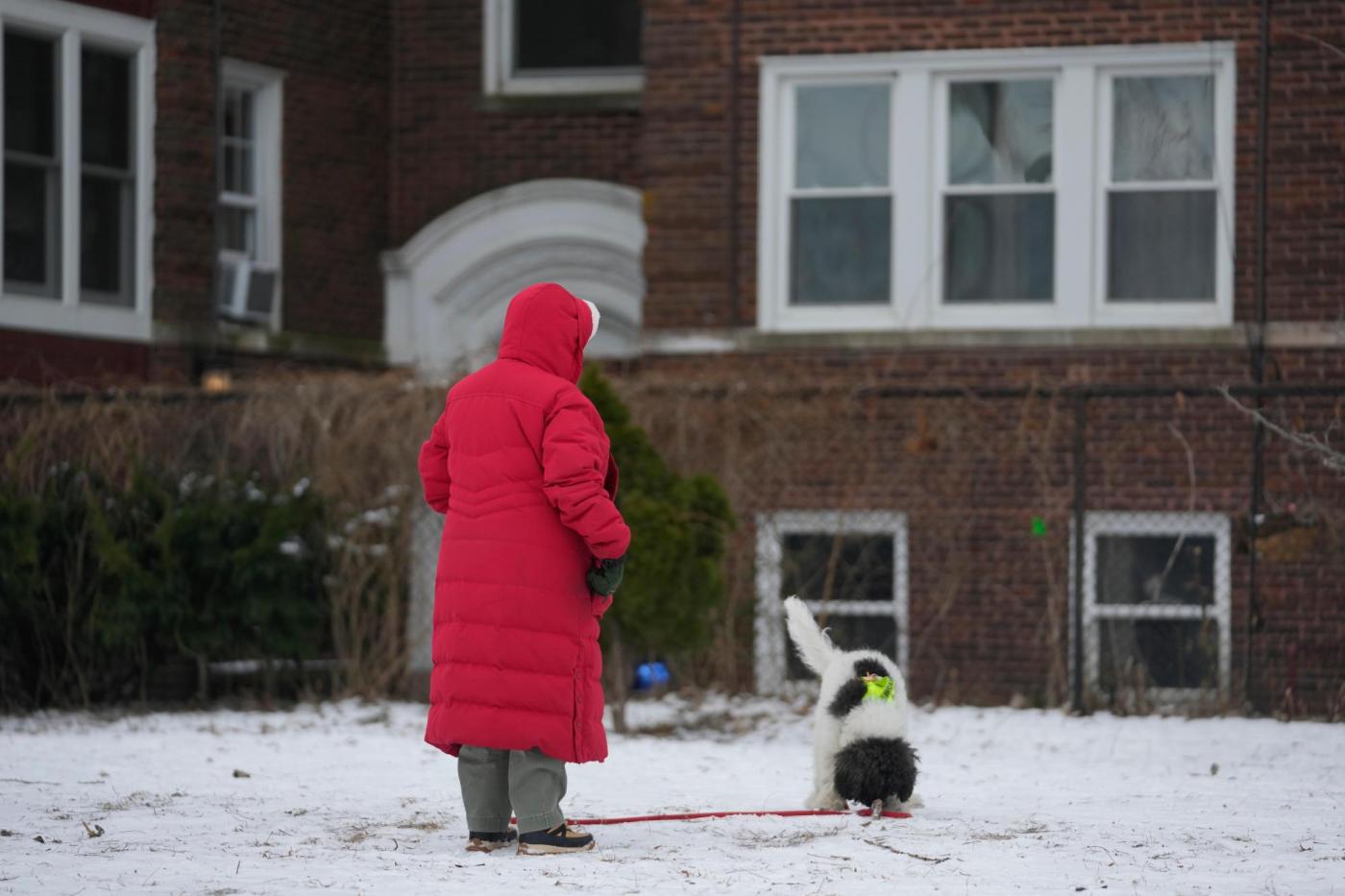
A person bundles up as she takes a walk during a cold weather day in the snow-covered sand at Lake Michigan in Chicago, Wednesday, Jan. 28, 2026. (AP Photo/Nam Y. Huh)

Linking extreme cold and climate change

Among all of the people who experienced some kind of severe weather event in the past few years – including extreme heat, extreme cold, major droughts or water shortages, hurricanes or severe tropical storms, major flooding, wildfires, tornadoes – about two-thirds believe climate change was a cause.

“I think climate change is a natural thing that happens … to some extent it’s sped up by some things,” such as pollutants released from factories and the shipping industry, said Joseph Bird, 21, a college student in Provo, Utah, who identifies as an independent. “I think it increases the frequency of extreme weather is how I’d see it,” said Bird.

Democrats and independents who experienced any kind of severe weather event are much likelier than Republicans to see climate change as a cause.

There’s a particularly large gap between conservative Republicans – only about 3 in 10 who experienced an extreme weather event think it was related to climate change – compared to liberal Democrats, the vast majority of whom think climate change was involved.

While rising atmospheric temperatures are a result of global warming, scientists say that extreme cold outbreaks across North America are a feature of climate change. The Arctic polar vortex, a swirling area of low pressure and cold air that is typically trapped over the North Pole throughout the year, can stretch down and infiltrate regions further south. Scientific research indicates such polar vortex disruptions are happening more frequently due to rapidly warming temperatures in the Arctic and shrinking Arctic sea ice.

A pedestrian bundles up as she crosses a street during a cold weather day in Evanston, Ill., Thursday, Jan. 22, 2026. (AP Photo/Nam Y. Huh)

Nearly all Americans have experienced some kind of extreme weather recently

Overall, the vast majority of U.S. adults, 80%, have experienced some kind of severe weather event in the past five years, although they are much likelier to report experiencing extremely hot weather or extreme heat waves and extreme cold in the past five years than any other kind of major weather events, including major droughts or water shortages, hurricanes or severe tropical storms, major flooding, wildfires, tornadoes, or other severe weather events or weather disasters.

There are no meaningful partisan differences in Americans’ experiences of extreme weather, but about 8 in 10 Democrats who experienced any of these extreme weather events said they were the result of climate change, compared to only about 4 in 10 Republicans.

O’Malley reported from Philadelphia.

The AP-NORC poll of 1,156 adults was conducted Feb. 5-8 using a sample drawn from NORC’s probability-based AmeriSpeak Panel, which is designed to be representative of the U.S. population. The margin of sampling error for adults overall is plus or minus 3.9 percentage points.

The Associated Press’ climate and environmental coverage receives financial support from multiple private foundations. AP is solely responsible for all content. Find AP’s standards for working with philanthropies, a list of supporters and funded coverage areas at AP.org.

Saudi Arabia may have uranium enrichment under proposed deal with US, arms control experts warn

posted in: All news | 0

By JON GAMBRELL

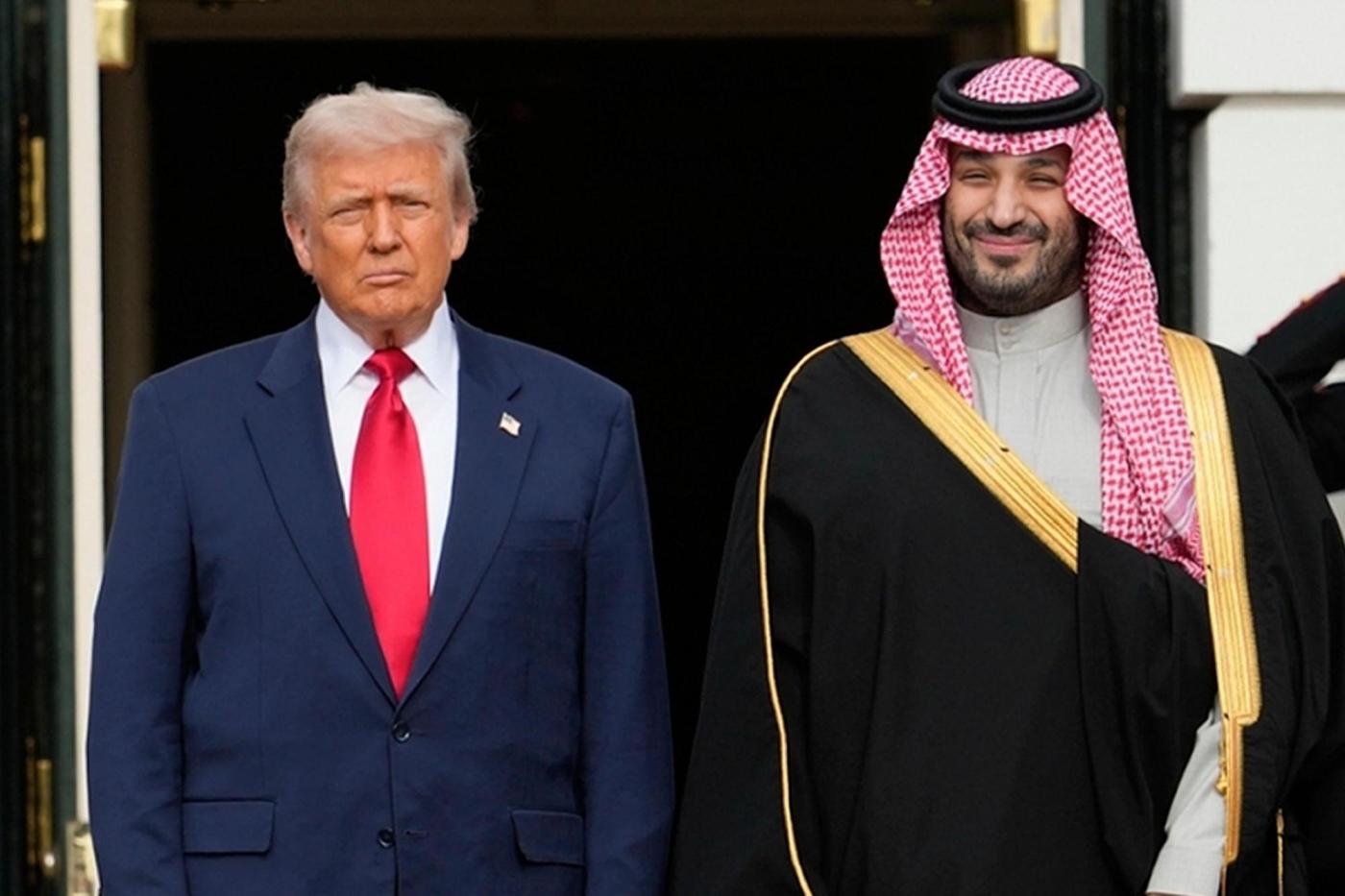
DUBAI, United Arab Emirates (AP) — Saudi Arabia could have some form of uranium enrichment within the kingdom under a proposed nuclear deal with the United States, congressional documents and an arms control group suggest, raising proliferation concerns as an atomic standoff between Iran and America continues.

U.S. Presidents Donald Trump and Joe Biden both tried to reach a nuclear deal with the kingdom to share American technology. Nonproliferation experts warn any spinning centrifuges within Saudi Arabia could open the door to a possible weapons program for the kingdom, something its assertive crown prince has suggested he could pursue if Tehran obtains an atomic bomb.

Related Articles


Police search Mountbatten-Windsor’s former home a day after his arrest


Today in History: February 20, Thousands attend pro-Nazi rally at Madison Square Garden


Venezuela approves amnesty bill that could see release of hundreds detained for political reasons


US pays about $160 million of the nearly $4 billion it owes the United Nations


Former South Korean president receives life sentence for imposing martial law in 2024

Already, Saudi Arabia and nuclear-armed Pakistan signed a mutual defense pact last year after Israel launched an attack on Qatar targeting Hamas officials. Pakistan’s defense minister then said his nation’s nuclear program “will be made available” to Saudi Arabia if needed, something seen as a warning for Israel, long believed to be the Middle East’s only nuclear-armed state.

“Nuclear cooperation can be a positive mechanism for upholding nonproliferation norms and increasing transparency, but the devil is in the details,” wrote Kelsey Davenport, the director for nonproliferation policy at the Washington-based Arms Control Association.

The documents raise “concerns that the Trump administration has not carefully considered the proliferation risks posed by its proposed nuclear cooperation agreement with Saudi Arabia or the precedent this agreement may set.”

Saudi Arabia did not immediately respond to questions Friday from The Associated Press

Congressional report outlines possible deal

The congressional document, also seen by the AP, shows the Trump administration aims to reach 20 nuclear business deals with nations around the world, including Saudi Arabia. The deal with Saudi Arabia could be worth billions of dollars, it adds.

The document contends that reaching a deal with the kingdom “will advance the national security interests of the United States, breaking with the failed policies of inaction and indecision that our competitors have capitalized on to disadvantage American industry and diminish the United States standing globally in this critical sector.” China, France, Russia and South Korea are among the leading nations that sell nuclear power plant technology abroad.

The draft deal would see America and Saudi Arabia enter safeguard deals with the International Atomic Energy Agency, the United Nations’ nuclear watchdog. That would include oversight of the “most proliferation-sensitive areas of potential nuclear cooperation,” it added. It listed enrichment, fuel fabrication and reprocessing as potential areas.

The IAEA, based in Vienna, did not immediately respond to questions. Saudi Arabia is a member state to the IAEA, which promotes peaceful nuclear work but also inspects nations to ensure they don’t have clandestine atomic weapons programs.

“This suggests that once the bilateral safeguards agreement is in place, it will open the door for Saudi Arabia to acquire uranium enrichment technology or capabilities — possibly even from the United States,” Davenport wrote. “Even with restrictions and limits, it seems likely that Saudi Arabia will have a path to some type of uranium enrichment or access to knowledge about enrichment.”

Enrichment isn’t an automatic path to a nuclear weapon — a nation also must master other steps including the use of synchronized high explosives, for instance. But it does open the door to weaponization, which has fueled the concerns of the West over Iran’s program.

The United Arab Emirates, a neighbor to Saudi Arabia, signed what is referred to as a “123 agreement” with the U.S. to build its Barakah nuclear power plant with South Korean assistance. But the UAE did so without seeking enrichment, something nonproliferation experts have held up as the “gold standard” for nations wanting atomic power.

Saudi-US proposal comes amid Iran tensions

The push for a Saudi-U.S. deal comes as Trump threatens military action against Iran if it doesn’t reach a deal over its nuclear program. The Trump military push follows nationwide protests in Iran that saw its theocratic government launch a bloody crackdown on dissent that killed thousands and saw tens of thousands more reportedly detained.

In Iran’s case, it long has insisted its nuclear enrichment program is peaceful. However, the West and the IAEA say Iran had an organized military nuclear program up until 2003. Tehran also had been enriching uranium up to 60% purity, a short, technical step from weapons-grade levels of 90% — making it the only country in the world to do so without a weapons program.

Iranian diplomats long have pointed to 86-year-old Supreme Leader Ayatollah Ali Khamenei’s comments as a binding fatwa, or religious edict, that Iran won’t build an atomic bomb. However, Iranian officials increasingly have made the threat they could seek the bomb as tensions have risen with the U.S.

Saudi Crown Prince Mohammed bin Salman, the kingdom’s day-to-day ruler, has said if Iran obtains the bomb, “we will have to get one.”

The Associated Press receives support for nuclear security coverage from the Carnegie Corporation of New York and Outrider Foundation. The AP is solely responsible for all content.