Trump orders colleges to prove they don’t consider race in admissions

posted in: All news | 0

By ANNIE MA and JOCELYN GECKER, Associated Press

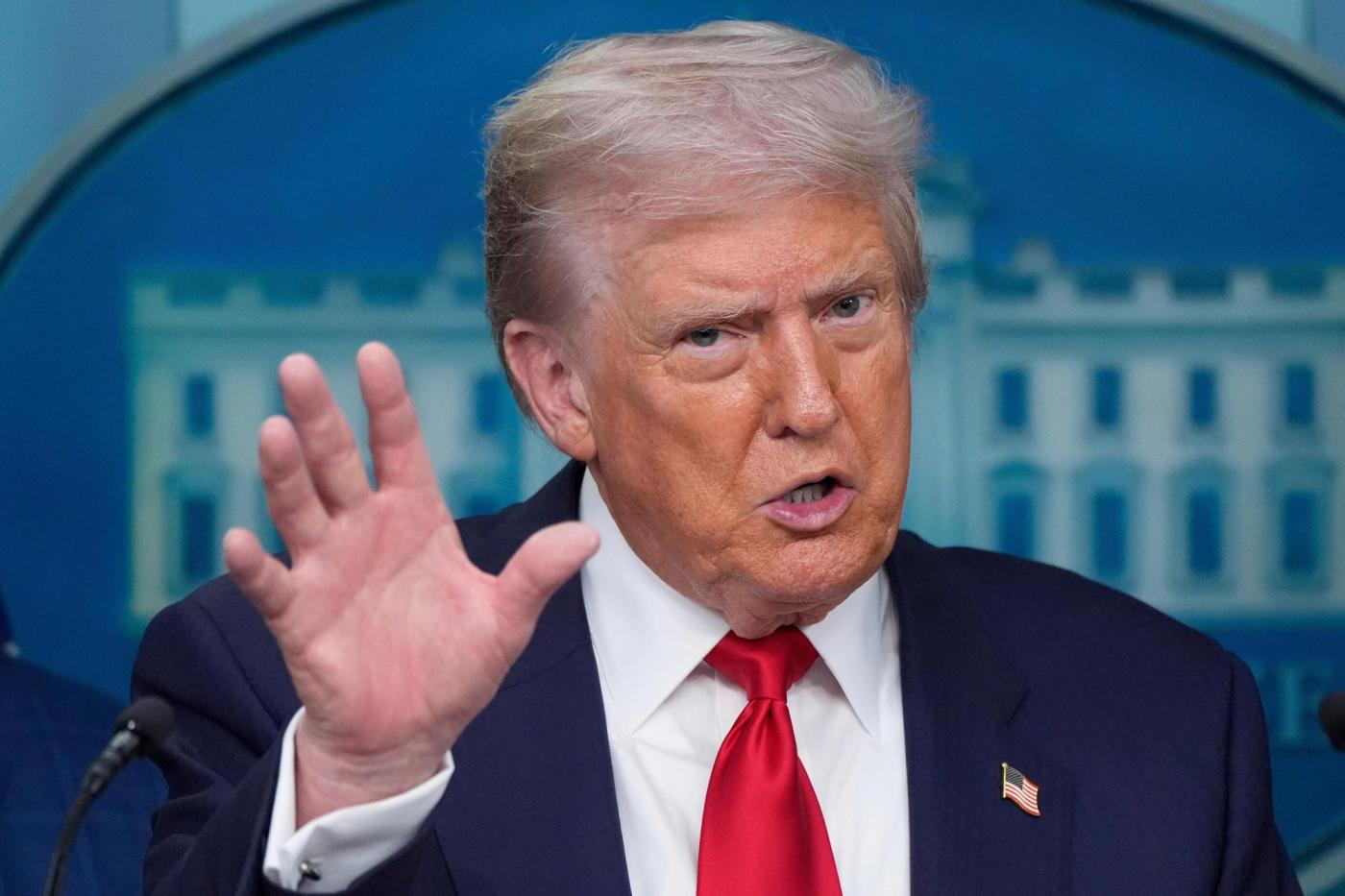
WASHINGTON (AP) — President Donald Trump on Thursday signed an executive order requiring colleges to submit data to prove they do not consider race in admissions.

In 2023, the Supreme Court ruled against the use of affirmative action in admissions but said colleges may still consider how race has shaped students’ lives if applicants share that information in their admissions essays.

Trump’s Republican administration is accusing colleges of using personal statements and other proxies to consider race, which conservatives view as illegal discrimination.

The role of race in admissions has featured in the administration’s battle against some of the nation’s most elite colleges — viewed by Republicans as liberal hotbeds. For example, the executive order is similar to parts of recent settlement agreements the government negotiated with Brown University and Columbia University, restoring their federal research money. The universities agreed to give the government data on the race, grade point average and standardized test scores of applicants, admitted students and enrolled students. The schools also agreed to an audit by the government and to release admissions statistics to the public.

Related Articles


Judge orders temporary halt to construction at Florida’s ‘Alligator Alcatraz’ detention center


EPA cancels $7 billion Biden-era grant program to boost solar energy


Texas Democrats plead for donations to extend their walkout and block Trump’s redistricting plan


Their deportation proceedings were closed for years. Trump officials are reviving them


Beauty queen accuses Rep. Cory Mills of threatening to release her nude videos

Conservatives have argued that despite the Supreme Court ruling, colleges have continued to consider race through proxy measures.

The executive order makes the same argument. “The lack of available admissions data from universities — paired with the rampant use of ‘diversity statements’ and other overt and hidden racial proxies — continues to raise concerns about whether race is actually used in admissions decisions in practice,” said a fact sheet shared by the White House ahead of the Thursday signing.

The first year of admissions data after the Supreme Court ruling showed no clear pattern in how colleges’ diversity changed. Results varied dramatically from one campus to the next.

Some schools, such as the Massachusetts Institute of Technology and Amherst College, saw steep drops in the percentage of Black students in their incoming classes. But at other elite, selective schools such as Yale, Princeton and the University of Virginia, the changes were less than a percentage point year to year.

Some colleges have added more essays or personal statements to their admissions process to get a better picture of an applicant’s background, a strategy the Supreme Court invited in its ruling.

“Nothing prohibits universities from considering an applicant’s discussion of how race affected the applicant’s life, so long as that discussion is concretely tied to a quality of character or unique ability that the particular applicant can contribute to the university,” Chief Justice John Roberts wrote in 2023 for the court’s conservative majority.

It is unclear what practical impact the executive order will have on colleges, which are prohibited by law from collecting information on race as part of admissions, says Jon Fansmith, senior vice president of government relations at the American Council on Education, an association of college presidents.

“Ultimately, will it mean anything? Probably not,” Fansmith said. “But it does continue this rhetoric from the administration that some students are being preferenced in the admission process at the expense of other students.”

Because of the Supreme Court ruling, schools are not allowed to ask the race of students who are applying. Once students enroll, the schools can ask about race, but students must be told they have a right not to answer. In this political climate, many students won’t report their race, Fansmith said. So when schools release data on student demographics, the figures often give only a partial picture of the campus makeup.

As an alternative to affirmative action, colleges for years have tried a range of strategies to achieve the diversity they say is essential to their campuses.

Many have given greater preference to low-income families. Others started admitting top students from every community in their state.

Prior to the ruling, nine states had banned affirmative action, starting with California in 1996. The University of California saw enrollment change after the statewide ban in 1996. Within two years, Black and Hispanic enrollments fell by half at the system’s two most selective campuses — Berkeley and UCLA. The system would go on to spend more than $500 million on programs aimed at low-income and first-generation college students.

The 10-campus University of California system also started a program that promises admission to the top 9% of students in each high school across the state, an attempt to reach strong students from all backgrounds. A similar promise in Texas has been credited for expanding racial diversity, and opponents of affirmative action cite it as a successful model.

In California, the promise drew students from a wider geographic area but did little to expand racial diversity, the system said in a brief to the Supreme Court. It had almost no impact at Berkeley and UCLA, where students compete against tens of thousands of other applicants.

Today at UCLA and Berkeley, Hispanic students make up 20% of undergraduates, higher than in 1996 but lower than their 53% share among California’s high school graduates. Black students, meanwhile, have a smaller presence than they did in 1996, accounting for 4% of undergraduates at Berkeley.

After Michigan voters rejected affirmative action in 2006, the University of Michigan shifted attention to low-income students.

The school sent graduates to work as counselors in low-income high schools and started offering college prep in Detroit and Grand Rapids. It offered full scholarships for low-income Michigan residents and, more recently, started accepting fewer early admission applications, which are more likely to come from white students.

Despite the University of Michigan’s efforts, the share of Black and Hispanic undergraduates hasn’t fully rebounded from a falloff after 2006. And while Hispanic enrollments have been increasing, Black enrollments continued to slide, going from 8% of undergraduates in 2006 to 4% in 2025.

The Associated Press’ education coverage receives financial support from multiple private foundations. The AP is solely responsible for all content. Find the AP’s standards for working with philanthropies, a list of supporters and funded coverage areas at AP.org.

Trump opens the door for private equity and crypto as 401(k) retirement plan options

posted in: All news | 0

By KEN SWEET, Associated Press

NEW YORK (AP) — Millions of Americans saving for retirement through 401(k) accounts could have the option of putting their money in higher-risk private equity and cryptocurrency investments, according to an executive order signed Thursday by President Donald Trump that could give those financial players long-sought access to a pool of funds worth trillions.

There is no immediate change in how people invest part of their work earnings. Federal agencies would need to rewrite rules and regulations to allow the expanded choices, and that would take months or more to complete. But once done, employers could offer a broader array of mutual funds and investments to workers, according to the White House. New plans could invest in alternative assets, particularly private equity, cryptocurrencies and real estate.

The Republican president’s order directs the Labor Department and other agencies to redefine what would be considered a qualified asset under 401(k) retirement rules.

President Donald Trump holds up the signed document after signing the GENIUS Act, a bill that regulates stablecoins, a type of cryptocurrency, in the East Room of the White House, Friday, July 18, 2025, in Washington. (AP Photo/Evan Vucci)

Americans’ retirement plans are governed by a law known as the Employee Retirement Income Security Act of 1974, better known as ERISA. Employers are required by law to offer retirement options that are in the best interest of their employees, not Wall Street. Most retirement plans for Americans are made up of stock and bond investments, and to a much lesser extent, cash and heavily traded commodities such as gold.

Trump’s move rewards both the $5 trillion private equity industry, which for decades has wanted to compete for a role in retirement plans, and the cryptocurrency industry, whose executives strongly supported Trump’s 2024 campaign as they aimed for more mainstream acceptance among Americans.

The price of bitcoin was up 2% on Thursday to $116,542 and has nearly doubled since Trump was elected.

Related Articles


Judge orders temporary halt to construction at Florida’s ‘Alligator Alcatraz’ detention center


EPA cancels $7 billion Biden-era grant program to boost solar energy


Texas Democrats plead for donations to extend their walkout and block Trump’s redistricting plan


Their deportation proceedings were closed for years. Trump officials are reviving them


Beauty queen accuses Rep. Cory Mills of threatening to release her nude videos

Under Democratic President Joe Biden, federal regulators were to treat cryptocurrency investments with “extreme care” because of the extreme volatility of crypto. It is not uncommon for bitcoin, ethereum and other big cryptocurrencies to move up or down 10% in a single day, whereas a 2% or 3% single-day move in the stock market would be considered historic.

For cryptocurrency companies, which donated millions to Trump’s campaign as well as his inauguration, one goal was to get their industry qualified under ERISA. Coinbase, one of the largest crypto companies in the United States, was also a major donor toward Trump’s military parade in Washington this summer. Under Trump, the Securities and Exchange Commission dropped its lawsuit against Coinbase where the Biden administration said crypto should be treated as a security.

Crypto is particularly popular among young Americans. While volatile, bitcoin has generally moved upward since it was created by an anonymous programmer nearly 20 years ago.

““It was inevitable that bitcoin would make its way into American 401(k)s,” said Cory Klippsten, the CEO of Swan Bitcoin. “As fiduciaries realize Bitcoin’s risk-adjusted upside over the long term, we’ll see growing allocations, especially from younger, tech-savvy workers who want hard money, not melting ice cubes.”

Private equity firms rely heavily on high-net worth individuals and state and private pension plans, which have extremely long investing timelines. But having access to Americans’ retirement assets would open up a deep pool of cash.

Blackstone CEO Steve Schwarzman has told investors going back to at least 2017 that it was a “dream” of his and the industry to be able to draw upon these retirement assets. Previous administrations, Republican and Democrat, have agreed that private equity investments, which can be riskier, more expensive and less liquid than traditional stock and bond market mutual funds, should not be included in 401(k) plans.

Judge orders temporary halt to construction at Florida’s ‘Alligator Alcatraz’ detention center

posted in: All news | 0

By DAVID FISCHER, Associated Press

MIAMI (AP) — A federal judge on Thursday ordered a temporary halt to construction at an immigration detention center — built in the middle of the Florida Everglades and dubbed “Alligator Alcatraz” — as attorneys argue whether it violates environmental laws.

The facility can continue to operate and hold detainees for U.S. Immigration and Customs Enforcement, but workers will be barred from adding any new filling, paving or infrastructure for the next 14 days. U.S. District Judge Kathleen Williams issued the ruling during a hearing and said she will issue a written order later Thursday.

Environmental groups and the Miccosukee Tribe have asked Williams to issue a preliminary injunction to halt operations and further construction. The suit claims the project threatens environmentally sensitive wetlands that are home to protected plants and animals and would reverse billions of dollars’ worth of environmental restoration.

Plaintiffs presented witnesses Wednesday and Thursday in support of the injunction, while attorneys for the state and federal government were scheduled to present next week.

Related Articles


Texas Democrats plead for donations to extend their walkout and block Trump’s redistricting plan


Their deportation proceedings were closed for years. Trump officials are reviving them


Beauty queen accuses Rep. Cory Mills of threatening to release her nude videos


Trump’s push for drilling, mining sharpens debate for Alaska Natives about land they view as sacred


What to know as Trump’s immigration crackdown strips tuition breaks from thousands of students

Following Thursday’s testimony, Paul Schwiep, an attorney for the environmental groups, asked Williams to issue a temporary restraining order that would at least prevent any new construction at the site while the preliminary injunction was argued.

Williams asked Florida attorney Jesse Panuccio if the state would agree to halt construction so that she wouldn’t need to issue the restraining order. She pointed out that anything built at the site would likely remain there permanently, regardless of how the case was ultimately decided.

Panuccio said he couldn’t guarantee that the state would stop all work.

This sparked an hour-long hearing about the temporary restraining order, which will be in place for the next two weeks while the still ongoing preliminary injunction hearing continues.

The crux of the plaintiffs’ argument is that the detention facility violates the National Environmental Policy Act, which requires federal agencies to assess the environmental effects of major construction projects.

Panuccio said during the hearing that although the detention center would be holding federal detainees, the construction and operation of the facility is entirely under the state of Florida, meaning the NEPA review wouldn’t apply.

Schwiep said the purpose of the facility is for immigration enforcement, which is exclusively a federal function. He said the facility wouldn’t exist if it wasn’t for the federal government’s desire for a facility to hold detainees.

Williams said Thursday that the detention facility was at a minimum a joint partnership between the state and federal government.

The lawsuit in Miami against federal and state authorities is one of two legal challenges to the South Florida detention center which was built more than a month ago by the state of Florida on an isolated airstrip owned by Miami-Dade County.

A second lawsuit brought by civil rights groups says detainees’ constitutional rights are being violated since they are barred from meeting lawyers, are being held without any charges, and a federal immigration court has canceled bond hearings. A hearing in that case is scheduled for Aug. 18.

Under the 55-year-old federal environmental law, federal agencies should have examined how the detention center’s construction would impact the environment, identified ways to minimize the impact and followed other procedural rules such as allowing public comment, according to the environmental groups and the tribe.

It makes no difference that the detention center holding hundreds of detainees was built by the state of Florida since federal agencies have authority over immigration, the suit said.

Attorneys for federal and state agencies last week asked Williams to dismiss or transfer the injunction request, saying the lawsuit was filed in the wrong jurisdiction. Even though the property is owned by Miami-Dade County, Florida’s southern district is the wrong venue for the lawsuit since the detention center is located in neighboring Collier County, which is in the state’s middle district, they said.

Williams had yet to rule on that argument.

The lawsuits were being heard as Florida Republican Gov. Ron DeSantis ′ administration apparently was preparing to build a second immigration detention center at a Florida National Guard training center in north Florida. At least one contract has been awarded for what’s labeled in state records as the “North Detention Facility.”

EPA cancels $7 billion Biden-era grant program to boost solar energy

posted in: All news | 0

By ALEXA ST. JOHN and MATTHEW DALY, Associated Press

WASHINGTON (AP) — The Environmental Protection Agency on Thursday terminated a $7 billion grant program that was intended to help pay for residential solar projects for more than 900,000 lower-income U.S. households.

Related Articles


Texas Democrats plead for donations to extend their walkout and block Trump’s redistricting plan


Their deportation proceedings were closed for years. Trump officials are reviving them


Beauty queen accuses Rep. Cory Mills of threatening to release her nude videos


Trump’s push for drilling, mining sharpens debate for Alaska Natives about land they view as sacred


What to know as Trump’s immigration crackdown strips tuition breaks from thousands of students

It’s the latest Trump administration move hindering the nation’s shift to cleaner energy.

The funding, part of Democratic President Joe Biden’s Solar for All program, was awarded to 60 recipients including states, tribes and regions for investments such as rooftop solar and community solar gardens.

Solar, a renewable energy, is widely regarded as a way to introduce cleaner power onto the electrical grid and lower energy bills for American consumers.