Texas Democrats plead for donations to extend their walkout and block Trump’s redistricting plan

posted in: All news | 0

By DAVID A. LIEB and JONATHAN J. COOPER

After leaving Texas for Illinois to prevent a legislative vote on a Republican redistricting plan, state House Democratic leader Gene Wu needed a means to project his voice — and viewpoints — to a national audience. So he tapped his campaign account to buy a microphone for news conferences.

Related Articles


Their deportation proceedings were closed for years. Trump officials are reviving them


Beauty queen accuses Rep. Cory Mills of threatening to release her nude videos


Trump’s push for drilling, mining sharpens debate for Alaska Natives about land they view as sacred


What to know as Trump’s immigration crackdown strips tuition breaks from thousands of students


Trump energizes conservative Christians with new religious policies

When it came to covering the hefty hotel bill for Wu and his roughly 50 colleagues, the lawmaker said he relied on money from his chamber’s Democratic Caucus.

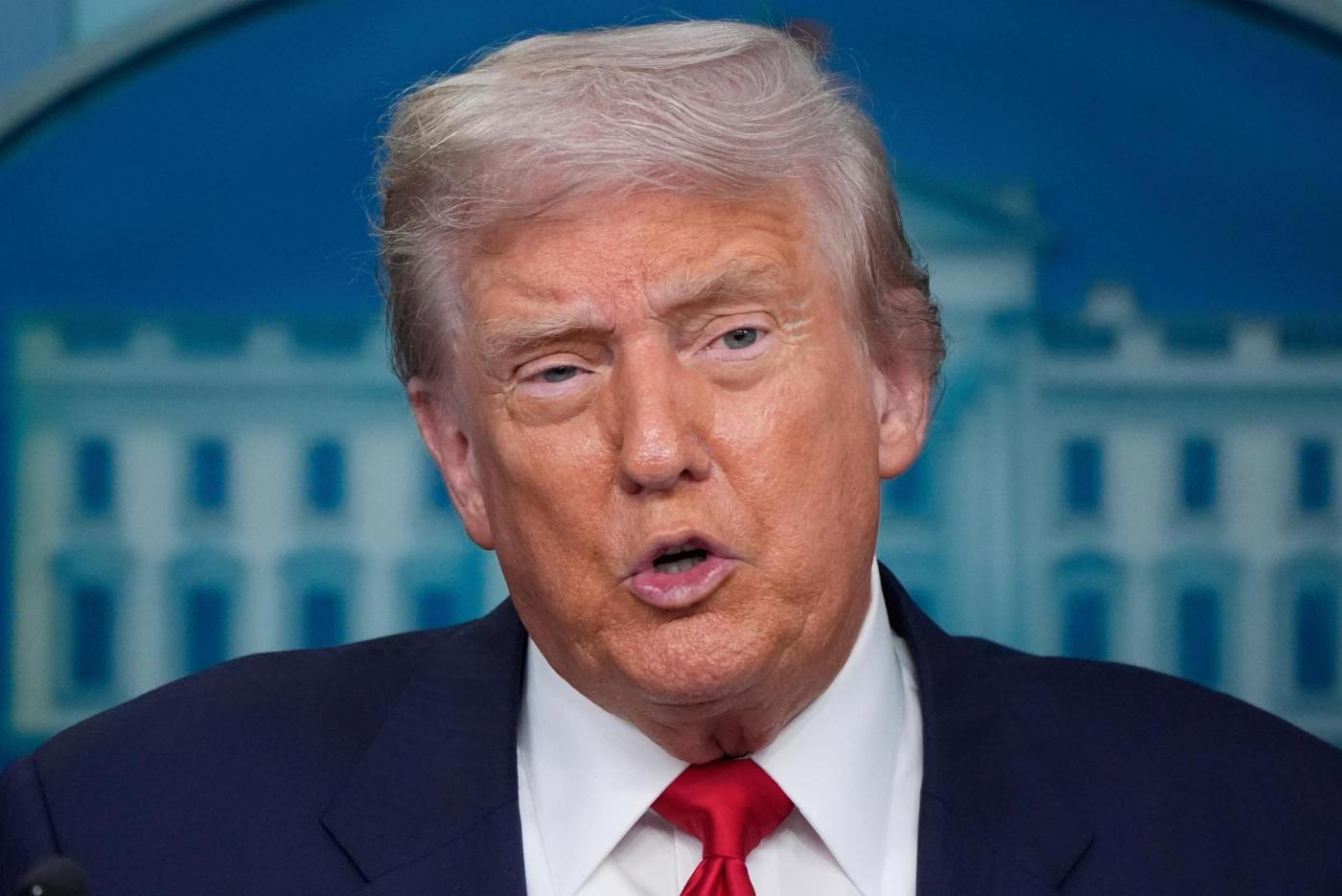
Now Texas Democrats are pleading for donations to help finance what could be a walkout of weeks — if not months — in a high-stakes attempt to prevent the Republican majority from passing a plan sought by President Donald Trump. The president is urging Texas and other GOP-controlled states to redraw their congressional districts to help Republicans maintain control of the U.S. House in next year’s midterm elections.

“We’re getting a lot of small-dollar donations,” Wu told The Associated Press, “and that’s going to be used to help keep this thing going.”

A political group led by Beto O’Rourke, a former Texas congressman who ran unsuccessfully for governor and Senate, gave money to the Texas House Democratic Caucus to help cover the up-front costs, according to a spokesperson for the group, Powered by People. O’Rourke this week has been holding events in red states to fire up Democrats and encourage donations.

Powered by People has not disclosed how much it contributed. Texas Attorney General Ken Paxton, a Republican, said Wednesday he’s launching an investigation into whether O’Rourke’s group has committed bribery by a “financial influence scheme” benefiting Democrats who left Texas.

In response, O’Rourke said he would be undeterred by the threat of an investigation and used it as a fundraising opportunity.

Democratic state lawmakers from across the U.S. and their supporters protest outside the Massachusetts State House on Wednesday, Aug. 6, 2025 in Boston. (AP Photo/Leah Willingham)

Lawmakers face travel costs and potentially huge fines

By departing the state, Democratic lawmakers have prevented Republicans from obtaining the quorum needed to conduct business. Democrats hope to run out the clock on a special legislative session that ends Aug. 19. But Republican Gov. Greg Abbott could immediately call another session, raising the prospect of a prolonged and an expensive holdout.

Not only could Texas Democrats face thousands of dollars in out-of-state lodging and dining costs, they also could eventually face fines of $500 for each day they are absent, which under House rules cannot be paid from their office budgets or political contributions.

Texas has a part-time Legislature where lawmakers receive $600 a month, plus an additional $221 for expenses each day they are in session.

On Wednesday, state Sen. Jose Menendez joined Democrats from other states at a rally in Boston, where he noted that the potential daily fine for quorum-breaking lawmakers is nearly as large as their entire monthly legislative salary.

“They need your prayers, they need your thoughts and they need you to get behind them,” he said.

Some Democrats in the Texas Senate have traveled out of state this week to support their House colleagues, but lawmakers in that chamber are not leaving the state to hold up legislative business.

Empty chairs belonging to House Democrats remain empty during a session convocation in the State Capitol, Tuesday, Aug. 5, 2025, in Austin, Texas. (AP Photo/Rodolfo Gonzalez)

‘This fight is for the people’

Illinois Gov. JB Pritzker, a Democrat and billionaire, has welcomed the Texas lawmakers to his state but said he has not financially supported them. Texas state Rep. James Talarico, who has built a national following in recent weeks, said the lawmakers told Pritzker they didn’t want him to fund their trip.

“We’ve already been inundated with donations from across the state of Texas, from across the country, just regular people donating $5, $10, $15,” Talarico said this week. “And that’s appropriate, because this fight is for the people and it should be funded by the people. We don’t have billionaires who are funding this operation.”

The House Democratic Caucus has set up a website seeking donations of between $25 and $2,500 — with a default amount of $250.

Earlier this week, Abbott asked the state’s highest court to remove Wu from office and ordered the Texas Rangers to investigate possible bribery charges related to how Democrats are paying for the walkout, alleging anyone who financially helped them could be culpable.

Wu, a former prosecutor from Houston, said the bribery suggestion is “monstrously stupid.”

“No member is leaving because they might get a campaign contribution that might restore some of the money that they’re spending,” he said.

How left-leaning groups are helping

Before Democrats decided to leave Texas, Wu said he called potential allies for assurance “that there would be resources that would come to our assistance.” But he said that’s no different from an aspiring candidate asking others for support before officially launching a campaign.

Wu, who is chair of the Texas House Democratic Caucus, said he has participated in online sessions with representatives of dozens of Democratic, progressive and redistricting-oriented groups. Not all are financial supporters. Some are providing help in other ways, such as by coordinating publicity.

The Democratic National Committee has helped with communications and organizing, as well as providing help from a data analytics team, Chair Ken Martin said.

Texas Democrats aren’t worried that they’ll be forced to return home in the near future because of a lack of money, said Luke Warford, founder of Agave Democratic Infrastructure Fund, a Texas fundraising and organizing group. He said longtime Democratic funders understand the high cost of competing in tougher U.S. House races if Republicans succeed in redrawing the map.

“Of course having most of the delegation out of the state is going to rack up a bill,” Warford said. But “when you think about it in the context of what Donald Trump has to gain and what Democrats might lose in the short term, it’s just not even close to the cost of trying to win back either these races or a bunch of other races in the country.”

The Democratic lawmakers have been holed up at a hotel and conference center outside Chicago that was evacuated Wednesday after an unfounded bomb threat. Many lawmakers have been dining and meeting together, and are prepared to keep doing so.

Democratic state Rep. John Bucy III, speaking by phone from the hotel, said he isn’t concerned about how the costs ultimately get covered.

“There’s too much at stake here to be worried about those things,” Bucy said. “Our hotel bills seem so minor compared to what we’re trying to do — to protect democracy.”

Associated Press writers Joey Cappelletti in Washington, Holly Ramer in Concord, New Hampshire, John O’Connor in Springfield, Illinois, and Leah Willingham in Boston contributed to this report.

Their deportation proceedings were closed for years. Trump officials are reviving them

posted in: All news | 0

By Melissa Gomez, Dakota Smith and Rachel Uranga, Los Angeles Times

LOS ANGELES — A decade ago, Jesus Adan Rico breathed a big sigh of relief. That was when the Chino High School student, a Dreamer, learned an immigration judge had effectively shelved his deportation proceedings. Maria Torres, who came to the U.S. at 2 years old, also had her deportation proceedings paused by an immigration judge because she recently married a U.S. citizen.

Related Articles


Texas Democrats plead for donations to extend their walkout and block Trump’s redistricting plan


Beauty queen accuses Rep. Cory Mills of threatening to release her nude videos


Trump’s push for drilling, mining sharpens debate for Alaska Natives about land they view as sacred


What to know as Trump’s immigration crackdown strips tuition breaks from thousands of students


Trump energizes conservative Christians with new religious policies

Yet just eight weeks ago, Adan Rico — now 29, married with a new child — discovered that the Trump administration had revived his deportation case, even though he has renewed his DACA status at least four times. Torres learned the government wants to bring back her case just as she was preparing for her green card interview.

“No matter what we do, no matter how far we go in school, in our jobs and with our families, it doesn’t matter. It is all hanging by a thread,” he said.

Adan Rico and Torres are among thousands of immigrants who have built lives around the assumption they are safe from being detained and deported. Now they face that threat at the hands of the Department of Homeland Security, which is giving new life to administratively closed cases in a bid to step up immigration enforcement.

Some lawyers have received dozens of motions to recalendar — the first step to reopen old cases. If lawyers don’t succeed in opposing those motions, the immigrants could wind up back in courthouses that in recent months have become a hub for arrests.

“It has been 10 years,” Adan Rico said. “And all of a sudden our lives are on hold again, at the mercy of these people that think I have no right to be here.”

When asked about the government’s push to restart old proceedings, Homeland Security spokesperson Tricia McLaughlin declined to address questions about the administration’s change in policy or respond to attorneys’ complaints about the process. She released a statement similar to others she has offered to the media on immigration inquiries.

“Biden chose to release millions of illegal aliens, including criminals, into the country and used prosecutorial discretion to indefinitely delay their cases and allow them to illegally remain in the United States,” she said. “Now, President Trump and Secretary Noem are following the law and resuming these illegal aliens’ removal proceedings and ensuring their cases are heard by a judge.”

Attorneys handling these proceedings say the government is overwhelming the courts and immigration lawyers by dredging up cases, many of which are a decade or more old. In several of these, clients or their original lawyers have died. In other cases, immigrants have received legal status and were surprised to learn the government was attempting to revive deportation proceedings against them.

Since the 1970s, immigration judges have administratively closed deportation proceedings in order to ease the massive backlog on their dockets and prioritize more urgent cases. The maneuver essentially deferred a case, but didn’t completely dismiss it, giving both the court and the immigrant wiggle room. The idea was that immigrants could pursue other forms of relief such as a hardship waiver or deferred status. The government could reopen the case if needed.

Across the country, immigration attorneys have received a flurry of requests by Homeland Security’s Office of Principal Legal Advisor to revive cases. The motions, attorneys say, appear similar in language, and lack analysis or reference to a change that prompted the decision. In their motions, Trump administration lawyers argue that the targeted immigrants have not been granted green cards and therefore do not have legal status to be here.

The motions urge immigration judges to use their discretion to revive cases and consider whether a person has been detained or the pending application’s “ultimate outcome or likelihood of success.”

What distinguishes immigration proceedings from cases in federal or state courts is that both the lawyers and the judges are part of the executive branch, not the judiciary branch. They answer to Secretary Kristi Noem and Attorney General Pam Bondi, respectively.

Attorneys and clients are racing against the clock to submit opposition to these motions. Many have become in essence private investigators, tracking down clients they haven’t seen in years. Other attorneys, who have retired, are looking to other immigration attorneys to pick up their client’s case.

“The court is drowning in these motions because we’re trying to resist these,” said David L. Wilson, an immigration attorney at Wilson Law Group in Minneapolis. He first received a batch of 25 government motions at the end of May — and then they kept coming every few weeks. One case involved a client from El Salvador who had been granted Temporary Protected Status, and whose case was administratively closed in 2006.

Adan Rico, a new father who is studying to be an HVAC technician in the Inland Empire, was stunned that the government was seeking to revive deportation proceedings.

The attorney who originally represented him has since died. “If it wasn’t for his daughter calling, I would have never found out my case was reopened,” he said. “The Department of Homeland Security never sent me anything.”

His new attorney, Patricia Corrales, said Adan Rico’s Deferred Action for Childhood Arrivals status doesn’t come up for renewal until 2027 and it defers deportation proceedings. But Corrales, who has received about a dozen motions, said it appears the government isn’t even checking whether the individuals are alive, much less their immigration status.

One of her cases is that of construction worker Helario Romero Arciniega. Seven years ago, a judge administratively closed deportation proceedings for Romero Arciniega, after he was severely beaten with a metal sprinkler head and had qualified for a visa for crime victims.

Attorney Patricia M. Corrales speaks at the Coalition for Humane Immigrant Rights Los Angeles office in April. (Allen J. Schaben/The Los Angeles Times/TNS)

This year, government officials filed a motion to bring back the deportation proceedings against the construction worker, even though he had died six months ago.

“They don’t do their homework,” Corrales said of the government lawyers. “They’re very negligent in the manner in which they’re handling these motions to re-calendar.”

Some attorneys have reported delays in their ability to file their opposition motions because the court is so overwhelmed.

When asked about the backlog, Kathryn Mattingly, a spokesperson for the federal immigration court known as the Executive Office for Immigration Review, confirmed that the court “must receive the underlying initial motion before it can accept a response to that motion.”

Some immigrants now in legal limbo were just steps away from finalizing their green card applications.

Maria Torres, an L.A. County resident and mother of two, said she was only 2 years old when she was brought to the U.S. by her family. She grew up undocumented, and when the Deferred Action for Childhood Arrivals program became available, applied to gain work authorization.

But in 2019, at 21, she was arrested on suspicion of a misdemeanor DUI, which put her into deportation proceedings. She took the classes and paid her ticket. With deportation proceedings open against her, she was able to get her case closed in 2022 while she sought a visa through her husband, a U.S. citizen.

Her visa was approved, and with just one interview appointment left, Torres felt blindsided when she received a call from her attorney’s office, saying the government wanted to restart deportation proceedings against her.

“I just felt my heart sink and I started crying,” she said. Her attorney submitted a motion opposing the recalendaring of the case, and they are waiting to hear how a judge will rule. In the meantime, she said, she’s hopeful she’ll have her final interview for her approved visa before then.

Mariela Caravetta, an immigration attorney in Van Nuys, said that, since early June, about 30 of her clients have been targeted with government motions to reopen their cases.

“People aren’ t getting due process,” said attorney Mariela Caravetta.“ It’ s very unfair to the client because these cases have been sleeping for 10 years.”. (Carlin Stiehl/The Los Angeles Times/TNS)

By law, she has to reply in 10 days. That means she has to track down the client, who may have moved out of state.

“It’s bad faith doing it like that,” said Caravetta, who accused the federal government of flooding the immigration courts in an effort to meet its deportation quotas.

“People aren’t getting due process,” she said. “It’s very unfair to the client because these cases have been sleeping for 10 years.”

Caravetta has convinced some judges to deny the government motions because the clients are seeking ways to legally stay in the country. In a handful of cases, she hasn’t been able to reach her clients.

The government isn’t making an effort to reach out to attorneys to discuss the cases, as is required, she added. “That would save a lot of time for everybody,” she said. Her clients may have U-visas, which give relief to migrants who have been victims of crime and who help investigators or prosecutors. But the government’s motions say, “These people have not done anything to legalize their status, we need a final resolution.”

Matt O’Brien, a former federal immigration judge and deputy executive director of FAIR, which advocates for stricter immigration laws, said the Trump administration is “enforcing the Immigration and Nationality Act the way that Congress wrote it.”

He questioned why attorneys are complaining about cases being recalendared, saying “it’s akin to a motion of reopening a case in any other court.”

Yet for many immigrants whose cases are being revived, the risks are high. Judges have discretion to deny motions to reopen cases, and have done so in some situations, attorneys say. But judges have also approved the government’s request if there is no opposition from the immigrant or their attorney.

At that point, cases are put on the calendar. If it gets scheduled, and the immigrants do not show up to court, they could eventually be ruled “in absentia,” which would make them vulnerable to immediate deportation and bar them from entering the country legally for years.

It all fits with the Trump administration’s goal of increasing deportation numbers, say many immigration lawyers and former officials.

“They are getting the largest pool possible of people that they can remove, and removing them from the country,” said Jason Hauser, the former chief of staff of Immigration and Customs Enforcement. “And what stands in the way from that is a working due process of an immigration system.”

In April, Sirce E. Owen, acting director of the Executive Office for Immigration Review, issued a memo criticizing the use of administrative closure, referring to it as “a de facto amnesty program with benefits” because it offers work authorization and deportation protections. Owen, a former immigration judge, rescinded previous Biden administration guidance that offered a more proactive approach to administrative closures.

Owen stated that, as of April, about 379,000 cases were still administratively closed in immigration court and cited them as a contributing factor to the court system’s backlog of 4 million cases.

In immigration courts in Los Angeles and San Diego, attorneys are already seeing these cases come before immigration judges. Many clients have expressed shock and despair at being dragged back into court.

Sherman Oaks attorney Edgardo Quintanilla has seen about 40 cases recently, including some dating back to the 2010s. Clients, he said, are alarmed not only by the government’s legal maneuvers but by the prospect of entering a federal building these days.

“There is always the fear that they may be arrested when they go to the court,” he said. “With everything going on, it is a reasonable fear.”

©2025 Los Angeles Times. Visit at latimes.com. Distributed by Tribune Content Agency, LLC.

Bronx Youth Organize Around Housing, Climate Justice

posted in: All news | 0

The symposium, hosted by Nos Quedamos, focused on the environmental challenges that many low-income and Black and brown communities face, such as pollution, lack of affordable housing and gentrification, and ways that young people can be part of the solution.

Young attendees listen as the Nos Quedamos symposium kicks off on the Bronx campus of the Metropolitan College in late July. (Photo by Dylan Hernandez for City Limits)

This story was produced by student reporters in City Limits’ youth journalism training program (CLARIFY): Vanessa Garcia, Alexis Frye, Daren McEachin, Dylan Hernandez, Ryan Grullon, Hajara Issa, Lyne Aici, Mia Pinto, Hellen Morales, Carla Rojas Gonzalez, Carlos Medina, Sirahi Drame, Caleb Chambers, Derrinique Mack, Elijah Shepard Brown, and Quinta Zhu. With instruction and editing by Michael Clancy and Isabella Mason.

The Bronx campus of the Metropolitan College of New York buzzed with purpose, planning and laughter on a recent July afternoon as about 50 teenagers and community leaders gathered to explore organizing strategies, the power of art in activism and how young people can maintain hope amid a world in crisis.

“There are those who are voiceless, not by choice, but by oppression,” said Dr. Mark Gonzalez, deputy director of Nos Quedamos, who opened the Second Annual Youth-Led Symposium on Environmental & Housing Justice on July 24 by encouraging young people to make their voices heard. 

Through a mix of youth-led presentations, workshops, and musical celebration, the South Bronx-based community development corporation, founded in 1993 in resistance to displacement and gentrification, looked to demonstrate how youth voices aren’t just part of the conversation—they are the conversation.

“I am Bronx-bred, abuela-fed, and God-led,” said Dr. Mark
Gonzalez of Nos Quedamos, kicking off the event.
(Photo by Daren McEachin for City Limits)

In a world of growing digital discourse, Nancy Ortiz Surún, the founder of La Finca del Sur, a community garden on 138th Street, stressed the importance of having physical spaces where people can gather to focus, regroup and plan.

“Episodes force us to come together,” said Surún. “Our hubs welcome us together.” 

One workshop explored how activists can harness the power of GIS, or Geographic Information Systems, to create “story maps,” a platform that can function as a slideshow, document or interactive map, providing flexibility for telling stories.

But no matter what tools activists use, they should always remember to center people in their storytelling, said Elia Machado, an associate professor of geography and geospatial sciences. 

“Stories and emotions are more memorable than numbers,” said Machado, of Lehman College in the Bronx. 

Students listen as Nancy Ortiz Surún shares the lessons learned when founding La Finca del Sur, a community garden on 138th Street. (Photo by Dylan Hernandez for City Limits)

Members of the Nos Quedamos youth team emphasized community engagement with “art as a tool for justice” workshops, exploring how to tap into their creativity to deliver a message. The symposium also focused on the environmental challenges that many low-income and Black and brown communities face, such as pollution, lack of affordable housing and gentrification, and ways that young people can be part of the solution.

“I think it’s all about finding resources,” said Sonali Govind, of the Association for Neighborhood & Housing Development, which advocates for housing and racial justice across the city. “And asking yourself ‘What can I do to help?’”

To reach the editor, contact Jeanmarie@citylimits.org

The post Bronx Youth Organize Around Housing, Climate Justice appeared first on City Limits.

How India ended up facing steep US tariffs despite its strategic partnership

posted in: All news | 0

NEW DELHI (AP) — U.S. President Donald Trump has vowed additional 25% tariff on India for its purchases of Russian oil, bringing the combined tariffs imposed by the United States on its ally to 50%. India has called the additional tariffs “unfortunate.”

Trump’s Wednesday announcement came as India and the U.S. are still negotiating a trade deal that has faced roadblocks after it was first announced when Indian Prime Minister Narendra Modi met Trump in Washington earlier this year.

It also comes at a time when ties between India and the U.S. appear to have taken a hit even as Modi and Trump share a warm relationship.

Here is how India, a strategic partner of the U.S. in Asia, ended up facing steep tariffs:

February

Trump imposes tariffs on Canada, Mexico and China. He initially spares India, despite repeatedly calling the country a “tariff king,” but threatens that high tariffs are coming.

February 14

Modi meets Trump in Washington in an effort to resolve trade concerns. Trump again warns of higher U.S. tariffs on Indian goods.

India and the U.S. agree to work on a trade deal and expand bilateral trade to $500 billion by 2030. They don’t share details as to how the target would be achieved.

Modi says he expects a deal to be completed later this year.

March 3

India’s trade minister, Piyush Goyal, visits Washington and meets his counterparts to initiate negotiations for the bilateral trade agreement.

April 21

U.S. Vice President JD Vance meets Modi in New Delhi and says both sides are making progress on trade talks.

India and the U.S. also finalize the terms of reference for the trade negotiation, bringing them a step closer to an agreement.

May 10

Trump says he stopped military hostilities between India and Pakistan by offering possible trade concessions to both. India is angered by Trump’s claims and disputes them.

May 17

Trade minister Goyal leads a team of senior Indian officials to Washington for more negotiations. India’s commerce secretary says the proposed bilateral trade agreement is progressing “very well.”

Related Articles


Japan deploys its first F-35B fighter jets to bolster defenses in the south


Israel is weighing its options in Gaza. Here are 4 scenarios for where things may be heading


Great Barrier Reef records largest annual coral loss in 39 years


Toyota reports a 37% drop in profit, cuts its forecast due to Trump’s tariffs


South Korea, US militaries will stage large-scale drills this month to address North Korean threats

June 27

Trump signals a deal may be close. “We’re having some great deals. We have one coming up, maybe with India, a very big one, where we’re going to open up India,” he says.

July

An Indian trade delegation visits Washington for another round of discussions, which end without reaching a breakthrough.

July

Goyal says India is ready to make trade deals in “the national interest,” but not just to meet deadlines.

July 31

Trump imposes 25% tariffs on Indian imports. He warns of further penalties for India because of its buying of Russian oil, and calls its economy “dead.”

August 6

Trump vows an additional 25% import taxes on India to punish the country for its purchases of Russian oil, bringing combined tariffs to 50%. The tariffs are set to go into effect after 21 days.