People often miscalculate climate choices, a study says. One surprise is owning a dog

posted in: All news | 0

By CALEIGH WELLS

It turns out many Americans aren’t great at identifying which personal decisions contribute most to climate change.

Related Articles


FEMA abruptly disbands youth advisory council, but students say their climate advocacy won’t stop


New draft of global plastic pollution treaty would not limit plastic production


Groups seek to influence plastic pollution treaty talks at the UN as negotiations wind down


Parts of Europe burn as millions are facing record heat


Colorado has a wild horse problem. Could its expanded birth control darting program be a model for the West?

A study recently published by the National Academy of Sciences found that when asked to rank actions, such as swapping a car that uses gasoline for an electric one, carpooling or reducing food waste, participants weren’t very accurate when assessing how much those actions contributed to climate change, which is caused mostly by the release of greenhouse gases that happen when fuels like gasoline, oil and coal are burned.

“People over-assign impact to actually pretty low-impact actions such as recycling, and underestimate the actual carbon impact of behaviors much more carbon intensive, like flying or eating meat,” said Madalina Vlasceanu, report co-author and professor of environmental social sciences at Stanford University.

The top three individual actions that help the climate, including avoiding plane flights, choosing not to get a dog and using renewable electricity, were also the three that participants underestimated the most. Meanwhile, the lowest-impact actions were changing to more efficient appliances and swapping out light bulbs, recycling, and using less energy on washing clothes. Those were three of the top four overestimated actions in the report.

There are many reasons people get it wrong

Vlasceanu said marketing focuses more on recycling and using energy-efficient light bulbs than on why flights or dog adoption are relatively bad for the climate, so participants were more likely to give those actions more weight.

How the human brain is wired also plays a role.

“You can see the bottle being recycled. That’s visible. Whereas carbon emissions, that’s invisible to the human eye. So that’s why we don’t associate emissions with flying,” said Jiaying Zhao, who teaches psychology and sustainability at the University of British Columbia.

Zhao added it’s easier to bring actions to mind that we do more often. “Recycling is an almost daily action, whereas flying is less frequent. It’s less discussed,” she said. “As a result, people give a higher psychological weight to recycling.”

Of course, there is also a lot of misleading information. For example, some companies tout the recycling they do while not telling the public about pollution that comes from their overall operations.

“There has been a lot of deliberate confusion out there to support policies that are really out of date,” said Brenda Ekwurzel, a climate scientist with the Union of Concerned Scientists, a nonprofit.

Why dogs have a big climate impact

Dogs are big meat eaters, and meat is a significant contributor to climate change. That is because many of the farm animals, which will become food, release methane, a greenhouse gas that contributes to climate change. Beef is especially impactful, in part because around the world cattle are often raised on land that was illegally deforested. Since trees absorb carbon dioxide, the most abundant greenhouse gas, cutting them to then raise cattle is a double whammy.

FILE – A woman walks her dog along the beach as the sun rises in Port Aransas, Aug. 12, 2025. (AP Photo/Eric Gay, File)

“People just don’t associate pets with carbon emissions. That link is not clear in people’s minds,” Zhao said.

Not all pets are the same, however. Zhao owns a dog and three rabbits.

“I can adopt 100 bunnies that will not be close to the emissions of a dog, because my dog is a carnivore,” she said.

The owner of a meat-eating pet can lower their impact by looking for food made from sources other than beef. Zhao, for example, tries to minimize her dog’s carbon footprint by feeding her less carbon-intensive protein sources, including seafood and turkey.

Pollution from air travel

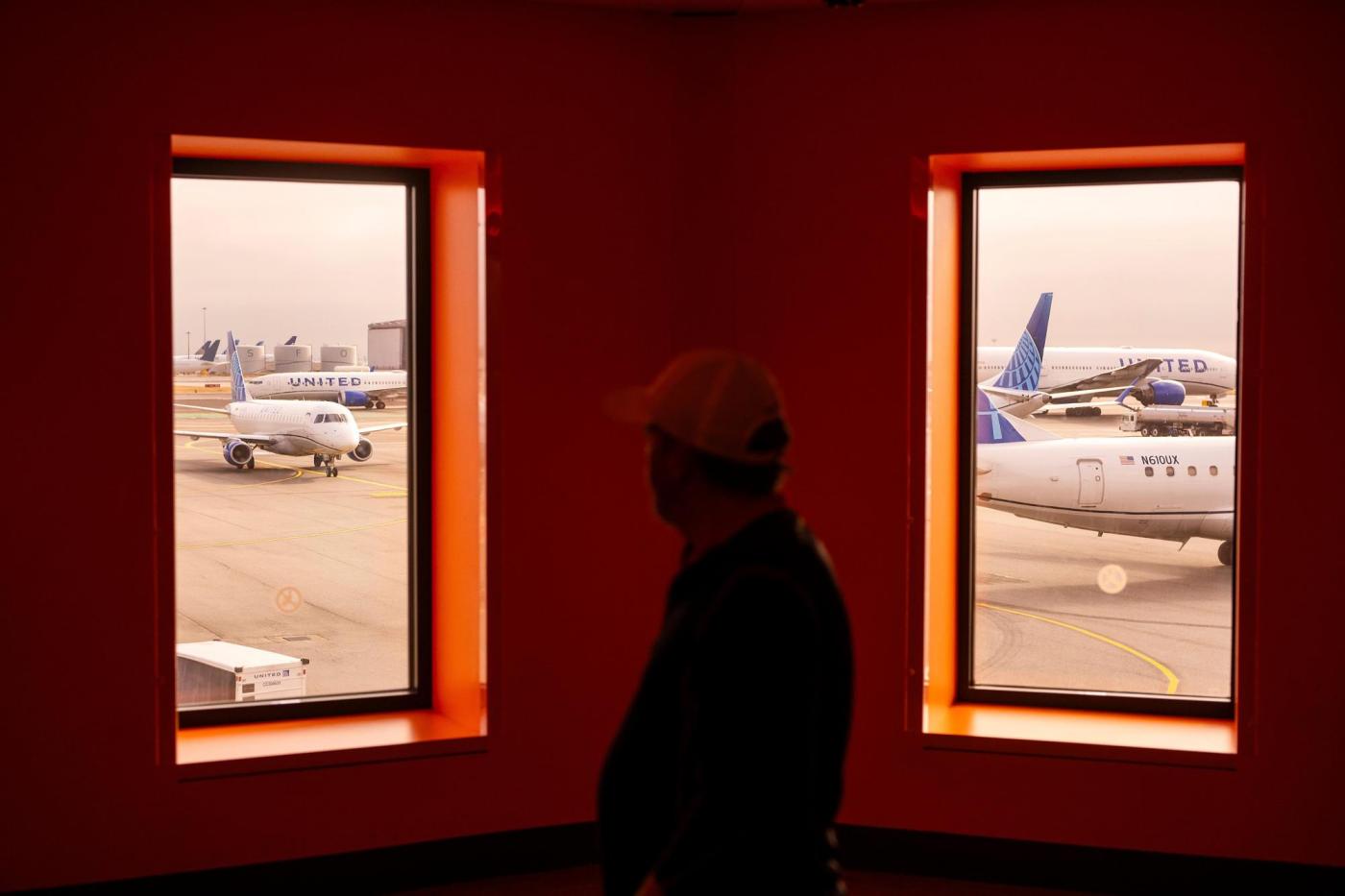
Planes emit a lot of carbon dioxide and nitrogen oxides, also greenhouse gases. Additionally, planes emit contrails, or vapor trails that prevent planet-warming gases from escaping into space. A round-trip economy-class flight on a 737 from New York to Los Angeles produces more than 1,300 pounds of emissions per passenger, according to the International Civil Aviation Organization, a United Nations agency.

Skipping that single flight saves about as much carbon as swearing off eating all types of meat a year, or living without a car for more than three months, according to U.N. estimates.

Other decisions, both impactful and minor

Switching to energy that comes from renewable sources, such as solar and wind, has a large positive impact because such sources don’t emit greenhouse gases. Some of the biggest climate decisions individuals can make include how they heat and cool their homes and the types of transportation they use. Switching to renewable energy minimizes the impact of both.

Recycling is effective at reducing waste headed for landfill, but its climate impact is relatively small because transporting, processing and repurposing recyclables typically relies on fossil fuels. Plus, less than 10% of plastics actually get recycled, according to the Environmental Protection Agency.

Other decisions with overestimated impact, including washing clothes in cold water and switching to more efficient light bulbs, are relatively less important. That is because those appliances have a relatively small impact compared to other things, such plane flights and dogs, so improving on them, while beneficial, has a much more limited influence.

Experts say the best way to combat the human tendency to miscalculate climate-related decisions is with more readily available information. Zhao said that people are already more accurate in their estimations than they would have been 10 or 20 years ago because it’s easier to learn.

The study backs up that hypothesis. After participants finished ranking actions, the researchers corrected their mistakes, and they changed which actions they said they’d take to help the planet.

“People do learn from these interventions,” Vlasceanu said. “After learning, they are more willing to commit to actually more impactful actions.”

The Associated Press’ climate and environmental coverage receives financial support from multiple private foundations. AP is solely responsible for all content. Find AP’s standards for working with philanthropies, a list of supporters and funded coverage areas at AP.org.
Don’t scan QR codes on unsolicited packages delivered to your house, FBI warns

posted in: All news | 0

The FBI is warning people of a new scam involving fake packages with QR codes designed to steal data.

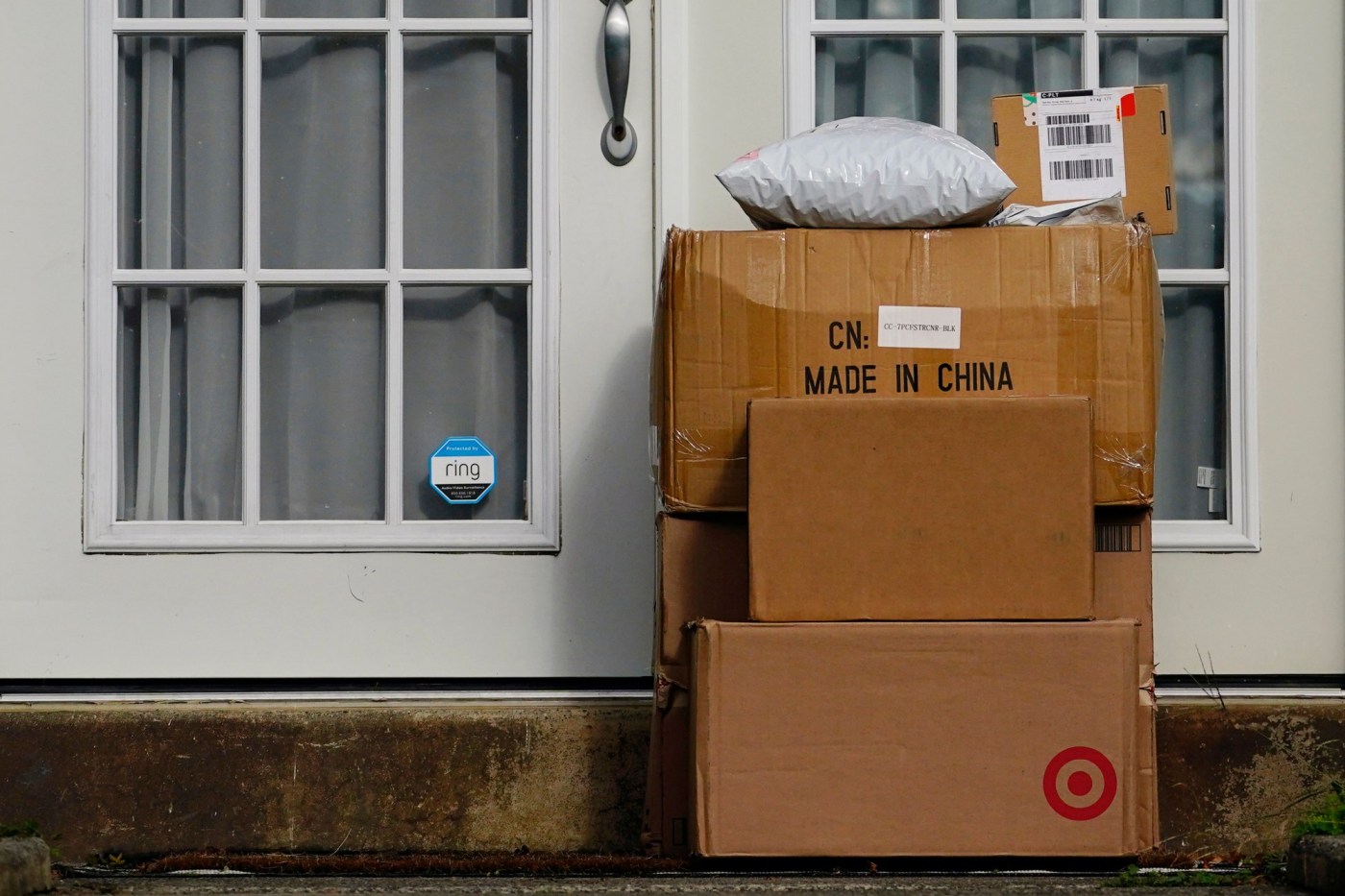
If people scan the code on a package they were not expecting, it prompts them to provide personal and financial information. They also might download malicious software that steals data from their phones, according to an FBI scam alert issued late last month. The criminals often ship the package without sender information to entice the victims to scan the code.

The fake packages, while not widespread, are a variation of a “brushing scam,” which is used by online vendors to increase ratings of their products. In a traditional brushing scam, online vendors send merchandise to an unsolicited recipient and then use the recipient’s information to post a positive review of the product. In this variation, scammers have used QR codes on packages to facilitate financial fraud activities, the FBI reported.

People should not accept packages they are not expecting from unknown sources and should not use their phones to scan QR codes provided by unknown sources.

Related Articles


Woman, 21, dies in Arden Hills crash; passengers injured


With upcoming closure of Stillwater prison, inmates’ legal documents at risk, group says


FACT FOCUS: Trump exaggerates, misstates facts on Washington crime


State fire marshal speaks on lengthy Lutsen Lodge fire investigation


12-year-old critically injured in accidental St. Paul shooting, police say

The FBI asks the public to report the fraudulent packages at www.ic3.gov and to include the name of the person or company that contacted them, the methods of communication used, any apps downloaded or any permissions provided on electronic devices.

Anyone older than 60 may call the U.S. Department of Justice elder hotline at (833) 372-8311.

South Korean president will meet Japanese leader ahead of summit with Trump

posted in: All news | 0

By KIM TONG-HYUNG

SEOUL, South Korea (AP) — South Korean President Lee Jae Myung will meet Japanese Prime Minister Shigeru Ishiba in Tokyo next week before flying to Washington for a summit with President Donald Trump, underscoring how Trump’s push to reset global trade is drawing the often-feuding neighbors closer.

Related Articles


McDonald’s Japan’s Pokemon card Happy Meals promotion comes to an unhappy end


New draft of global plastic pollution treaty would not limit plastic production


Britain, France and Germany threaten to reimpose sanctions on Iran as nuclear program deadline nears


Israeli gunfire kills at least 25 in Gaza as Netanyahu says he will allow Palestinians to leave


French president says Trump wants to achieve ceasefire at upcoming Alaska summit

Lee’s two-day visit to Japan Aug. 23–24 will be an opportunity to deepen personal ties with Ishiba and put bilateral relations on firmer ground. Their talks will center on strengthening trilateral cooperation with Washington, promoting “regional peace and stability,” and addressing other international issues, presidential spokesperson Kang Yu-jung said Wednesday.

Their meeting will come weeks after South Korea and Japan secured trade deals with Washington that shielded their trade-dependent economies from Trump’s highest tariffs. The separate agreements negotiated their rates of reciprocal duties down to 15% from the originally proposed 25%, but only after pledging hundreds of billions of dollars in U.S. investments.

Japan’s Foreign Ministry said it hopes Lee’s visit will promote the “stable development” of bilateral ties as their countries work together on international challenges. It said the two governments plan to maintain close communication, including utilizing the “shuttle diplomacy” of regular leadership summits used in the past.

After meeting Ishiba, Lee will travel to Washington for an Aug. 25 summit with Trump, which his office said will focus on trade and defense cooperation.

Relations between the two U.S. allies often have been strained in recent years over grievances stemming from Japan’s brutal colonization of the Korean Peninsula before the end of World War II.

Lee and Ishiba previously met on the sidelines of the June G7 meetings in Canada, where they called for building a future-oriented relationship and agreed to cooperate closely on various issues including trade and countering North Korea’s nuclear and missile programs.

Lee’s meeting with Ishiba is clearly intended as preparation for the tougher challenge of the summit with Trump, who has unsettled allies and partners with tariff hikes and demands to reduce reliance on the U.S. while paying more for their defense.

Lee could seek tips from Ishiba, who already has met Trump, and their governments may feel an urgent need to cooperate and respond jointly to challenges posed by Washington, said Park Won Gon, a professor at Seoul’s Ewha University.

A South Korean protester wearing a mask of U.S. President Donald Trump attends a rally to oppose the planned joint military exercises called Ulchi Freedom Shield, or UFS, between the U.S. and South Korea, near the U.S. Embassy in Seoul, South Korea, Monday, Aug. 11, 2025. The signs at bottom read, “There is no need for such an alliance.” (AP Photo/Ahn Young-joon)

The setup also may help revive the trilateral summits initiated under former President Joe Biden, which would make more sense than dealing with Trump separately, Park said, noting South Korea and Japan share strategic interests.

“They are the only countries that have signed special measures agreements on sharing defense costs with the United States,” Park said. “Both depend on U.S. extended deterrence to cope with North Korean threats. With U.S. forces stationed both in South Korea and Japan, they are partners who need to be ready to respond to crisis situations, like one in the Taiwan Strait.”

Some 80,000 U.S. troops are stationed in South Korea and Japan to combat possible North Korean provocations and deal with regional challenges including those posed by China.

Ties between Seoul and Tokyo were rocky during Trump’s first term, marked by a trade dispute and clashes over wartime history. Washington largely took a hands-off approach as its two allies aired their feud in public.

The standoff eased as the Biden administration pressured the countries to repair ties, aiming to strengthen their trilateral security cooperation against North Korean threats and counter China’s growing influence.

Biden’s push was supported by South Korea’s previous conservative president, Yoon Suk Yeol, who took significant steps to improve ties with Tokyo, including a major compromise on compensation issues related to Korean victims of Japanese wartime slavery that sparked backlash at home.

But Yoon’s presidency was cut short by his brief imposition of martial law in December, which led to his ouster and imprisonment, leaving uncertainty over Seoul-Tokyo relations under Lee, who has long accused Japan of clinging to its imperialist past and hindering cooperation.

Since taking office in June after winning the early presidential election, Lee has avoided thorny remarks about Japan, instead promoting pragmatism in foreign policy and pledging to strengthen Seoul’s alliance with Washington and trilateral cooperation with Tokyo. There also have been calls in South Korea to boost collaboration with Japan in responding to Trump’s policies.

Lee’s meeting with Trump will come against the backdrop of concerns in Seoul that the Trump administration could shake up the decades-old alliance by demanding higher payments for the U.S. troop presence in South Korea and possibly move to reduce it as Washington shifts more focus on China.

Mari Yamaguchi contributed from Tokyo.

US briefly deploys 2 warships to a disputed South China Sea shoal after Chinese collision

posted in: All news | 0

By JIM GOMEZ

MANILA, Philippines (AP) — The U.S. deployed two warships Wednesday in a disputed South China Sea shoal where two Chinese ships collided earlier in the week while trying to drive away a smaller Philippine ship in a high-seas accident that raised alarms about maritime safety.

Related Articles


McDonald’s Japan’s Pokemon card Happy Meals promotion comes to an unhappy end


New draft of global plastic pollution treaty would not limit plastic production


Britain, France and Germany threaten to reimpose sanctions on Iran as nuclear program deadline nears


Israeli gunfire kills at least 25 in Gaza as Netanyahu says he will allow Palestinians to leave


French president says Trump wants to achieve ceasefire at upcoming Alaska summit

Both China and the Philippines claim Scarborough Shoal and other outcroppings in the South China Sea. Vietnam, Malaysia, Brunei and Taiwan also lay overlapping claims in the contested waters.

The USS Higgins, a guided missile destroyer, and USS Cincinnati, a littoral combat ship, were shadowed by a Chinese navy ship while sailing about 30 nautical miles from the Scarborough Shoal. There were no reports of any untoward incident, Philippine coast guard Commodore Jay Tarriela said, citing information from U.S. officials and a Philippine surveillance flight.

The U.S. Navy has staged what it calls freedom-of-navigation voyages and overflights in the South China Sea for years to challenge China’s restrictions and its demand for entry notifications in virtually the entire stretch of the disputed waters that it claims. That has angered China and its forces have had close runs-in with U.S. warships and aircraft on such patrols in international waters and airspace.

The deployment happened after Washington’s ambassador to Manila, MaryKay Carlson, on Tuesday condemned “the latest reckless action by China directed against a Philippine vessel” in Scarborough. The rich fishing atoll off the northwestern Philippines has been the scene of increasingly tense confrontations between the Chinese and Philippine coast guard, fishing and other ships in recent years.

The Philippines is the oldest treaty ally of the U.S. in Asia. Washington has repeatedly warned that it’s obligated to defend the Philippines if Filipino forces come under an armed attack, including in the South China Sea.

In this photo, provided by the Philippine Coast Guard, United States Navy USS Cincinnati (LCS 20) conduct freedom of navigation operations (FONOP) at the South China Sea on Wednesday Aug. 13, 2025. (Philippine Coast Guard via AP)

On Monday, a Chinese navy destroyer and a Chinese coast guard ship accidentally collided while trying to block and drive away a smaller Philippine coast guard ship, the BRP Suluan, about 10.5 nautical miles from Scarborough. Video footages made public by the Philippine coast guard show the Chinese coast guard ship blasting its powerful water cannon and a number of Chinese personnel standing at the bow shortly before that section was hit by the fast-turning Chinese navy ship.

Shortly after the collision, the video shows the heavily shattered bow of the Chinese coast guard ship without the Chinese personnel, who were standing on deck before the crash. The Chinese navy ship sustained deep dents and what appeared to be linear gushes on its hull.

Japan, Australia and New Zealand expressed alarm on Wednesday over the dangerous maneuvers that led to the collision in the busy waters, a key global trade route.

“Japan upholds the rule of law and opposes any actions which increase tensions. Our concern goes to the repeated actions in the South China Sea,” Japanese Ambassador to Manila Endo Kazuya said in a post on X.

The Australian Embassy in Manila expressed concern “by the dangerous and unprofessional conduct of Chinese vessels near Scarborough Shoal involving the Philippine Coast Guard,” saying in a statement the incident “highlights the need for de-escalation, restraint and respect for international law.”

“This is a learning experience for the People’s Republic of China,” Tarriela, the Philippine coast guard commodore, told a news conference in Manila. “For so many years, we have been reminding them to stop dangerous maneuvers, to stop risky blockings, to adhere to the (anti-)collision regulations because if there is a very high chance of miscalculation, this kind of collision incident would happen.”

Tarriela spoke a few hours after a Chinese fighter jet flew as close as 500 feet to try to drive away a Philippine coast guard plane on a surveillance flight on Wednesday over the Scarborough with invited journalists on board. The Chinese jet carried out dangerous maneuvers for about 20 minutes, including flying about 200 feet above the small Philippine aircraft, Tarriela said.

Associated Press writers Joeal Calupitan and Aaron Favila in Manila, Philippines, contributed to this report.