As US cities heighten security, Iran’s history of reprisal points to murder-for-hire plots

posted in: All news | 0

By ERIC TUCKER

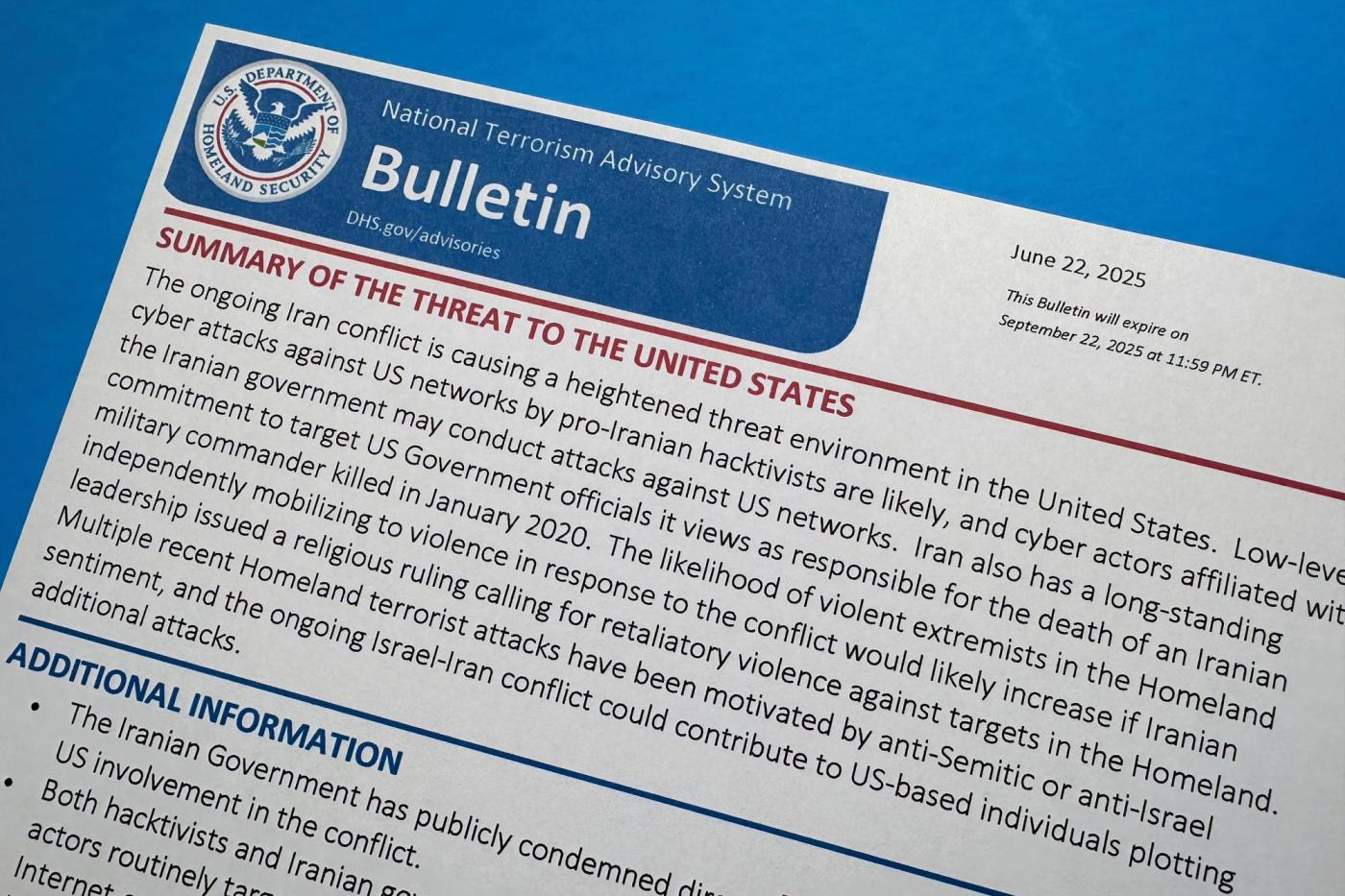
WASHINGTON (AP) — The Department of Homeland Security is warning of a “heightened threat environment” following U.S. strikes on Iranian nuclear sites and the deputy FBI director says the bureau’s “assets are fully engaged” to prevent retaliatory violence, while local law enforcement agencies in major cities like New York say they’re on high alert.

Related Articles


Today in History: June 24, Sally Ride completes historic space shuttle mission


Supreme Court will hear case of Rastafarian whose dreadlocks were shaved by Louisiana prison guards


Early-season heat dome brings highest temperatures in years to parts of Eastern US


Weekend tornadoes kill 6 in North Dakota and New York, toss trees and train cars


Search continues for 1 person still missing after 7 killed when boat capsized on Lake Tahoe

No credible threats to the homeland have surfaced publicly in the days since the stealth American attack. It’s also unclear what bearing a potential ceasefire announced Monday by the U.S. between Israel and Iran might have on potential threats or how lasting such an arrangement might be.

But the potential for reprisal is no idle concern given the steps Iran is accused of having taken in recent years to target political figures on U.S. soil. Iranian-backed hackers have also launched cyberattacks against U.S. targets in recent years.

The U.S. has alleged that Iran’s most common tactic over the past decade, rather than planning mass violence, has been murder-for-hire plots in which government officials recruit operatives — including reputed Russian mobsters and other non-Iranians — to kill public officials and dissidents. The plots, which Tehran has repeatedly denied engineering, have been consistently stymied and exposed by the FBI and Justice Department.

“You run into this problem that it’s not like there’s this one sleeper cell that’s connected directly to command central in Iran. There’s a lot of cut-outs and middlemen,” said Ilan Berman, a senior vice president of the Washington-based American Foreign Policy Council. “The competence erodes three layers down.”

Whether Iran intends to resort to that familiar method or has the capacity or ambition to successfully carry off a large-scale attack is unclear, but the government may feel a need to demonstrate to its people that it has not surrendered, said Jon Alterman, a Middle East expert at the Center for Strategic and International Studies.

“The capability to execute successfully is different from the capability to try,” he said. “Showing you’re not afraid to do this may be 90% part of the goal.”

Hours after the attack on Saturday evening U.S. time, FBI and DHS officials convened a call with local law enforcement to update them on the threat landscape, said Michael Masters, who participated in it as founding director of Secure Community Network, a Jewish security organization that tracks Iranian threats.

The DHS bulletin released over the weekend warned that several foreign terror organizations have called for violence against U.S. assets and personnel in the Middle East. It also warned of an increased likelihood that a “supporter of the Iranian regime is inspired to commit an act of violence in the Homeland.”

“The amount of material that we’re tracking online is at such a fever pitch at the moment,” Masters said.

A plot against President Donald Trump

The Justice Department in November disclosed that it had disrupted a plot to kill Donald Trump before the 2024 election, a reflection of the regime’s long-running outrage over a 2020 strike that killed Iranian Gen. Qassim Soleimani.

The scheme was revealed to law enforcement by an accused Iranian government asset who spent time in American prisons for robbery and who is alleged to maintain a network of criminal associates enlisted by Tehran for surveillance and murder-for-hire plots.

The man, Farhad Shakeri, told the FBI that a contact in Iran’s paramilitary Revolutionary Guard instructed him last September to set aside other work he was doing and assemble a plan within seven days to surveil and ultimately kill Trump, authorities have said.

He said the official told him if he could not put together a plan within that timeframe, then the plot would be paused until after the election because the official assumed Trump would lose and that it would be easier to kill him then, according to a criminal complaint.

Shakeri disclosed some of the details of the alleged plots in a series of recorded telephone interviews with FBI agents while in Iran, the complaint said. The stated reason for his cooperation, he told investigators, was to try to get a reduced prison sentence for an associate behind bars in the U.S. Shakeri is at large and has not been apprehended.

A plot against John Bolton

John Bolton was ousted from his position as Trump’s national security adviser months before the Soleimani strike, but he nonetheless found himself targeted in a plot that U.S. officials say was orchestrated by a member of the Revolutionary Guard and involved a $300,000 offer for an assassination.

Unbeknownst to the operative behind the plot, the man he thought he was hiring to carry out the killing was actually a confidential informant who was secretly working with the FBI.

The Justice Department filed criminal charges in August 2022 even as the operative, Shahram Poursafi, remained at large.

A plot against Masih Alinejad

Sometimes the intended target is not a U.S. government official but rather a dissident or critic of the Iranian government.

That was the case with Masih Alinejad, a prominent Iranian American journalist and activist in New York who was targeted by Iran for her online campaigns encouraging women there to record videos of themselves exposing their hair in violation of edicts requiring they cover it in public.

Two purported crime bosses in the Russian mob were convicted in March of plotting to assassinate her at her home in New York City in a murder-for-hire scheme that prosecutors said was financed by Iran’s government.

Prosecutors said Iranian intelligence officials first plotted in 2020 and 2021 to kidnap her in the U.S. and move her to Iran to silence her criticism.

When that failed, Iran offered $500,000 for Alinejad to be killed in July 2022 after efforts to harass, smear and intimidate her failed, prosecutors said.

A plot against a Saudi ambassador

Underscoring the longstanding nature of the threat, federal prosecutors in 2011 accused two suspected Iranian agents of trying to murder the Saudi ambassador to the United States.

The planned bomb attack was to be carried out while envoy Adel Al-Jubeir dined at his favorite restaurant in Washington.

And as is common in such plots, the person approached for the job was not an Iranian but rather someone who was thought to be an associate of a Mexican drug trafficking cartel who was actually an informant for the Drug Enforcement Administration.

Oil prices drop sharply, and stocks rally worldwide after announcement of Israel-Iran ceasefire

posted in: All news | 0

NEW YORK (AP) — Oil prices are dropping further, and stocks are rallying worldwide Tuesday on hopes that Israel’s war with Iran will not damage the global flow of crude, even if a tentative truce seemed to fray under fire in the morning.

The S&P 500 was 0.7% higher in early trading, following up on even bigger gains for stocks across Europe and Asia, after President Donald Trump said late Monday that Israel and Iran had agreed to a “complete and total ceasefire.” The Dow Jones Industrial Average was up 289 points, or 0.7%, as of 9:31 a.m. Eastern time, and the Nasdaq composite was 0.9% higher.

The strongest action was again in the oil market, where a barrel of benchmark U.S. oil fell 4.9% to $65.12. Brent crude, the international standard, dropped 4.8% to $67.14.

The fear throughout the Israel-Iran conflict has been that it could squeeze the world’s supply of oil, which would pump up prices for gasoline and hurt the global economy. Iran is a major producer of crude, and it could also try to block the Strait of Hormuz off its coast, through which 20% of the world’s daily oil needs passes on ships.

But oil prices began falling sharply on Monday after Iran launched what appeared to be a limited retaliatory strike that did not target the production or movement of oil. They kept falling even after attacks continued past a deadline to stop hostilities early Tuesday. Trump would later said that the ceasefire was “in effect.”

Oil prices have dropped so much in the last two days that they’re below where they were before the fighting began nearly two weeks ago.

With the global oil market well supplied and the OPEC+ alliance of producing countries steadily increasing production, oil prices could be headed even lower as long as the ceasefire holds and a lasting peace solution can be found, said Carsten Fritsch, commodities analyst at Commerzbank.

Falling oil prices should take some pressure off inflation, and that in turn could give the Federal Reserve more leeway to cut interest rates.

Wall Street loves lower rates because they can give the economy a boost by making it cheaper for U.S. households and businesses to borrow money to buy a car or build a factory. But they could also give inflation more fuel. That latter threat is why the Fed has been hesitant to cut rates this year after lowering them through the end of last year.

The Fed has been saying repeatedly that it wants to wait and see how much Trump’s tariffs will hurt the economy and raise inflation before it commits to its next move.

Trump, though, has been pushing for more cuts to rates. And two of his appointees to the Fed have said in the last week that they may consider cutting rates as soon as the Fed’s next meeting next month.

Related Articles


Federal Reserve’s Bowman says rate cut should be on table in July


Compass files lawsuit against Zillow over private home listings policy


Why target-date funds are great IRA investments


With its stock in sharp decline, Trump’s media company will buy $400 million of its own shares


May home sales barely move as high mortgage rates, prices, weigh on housing market

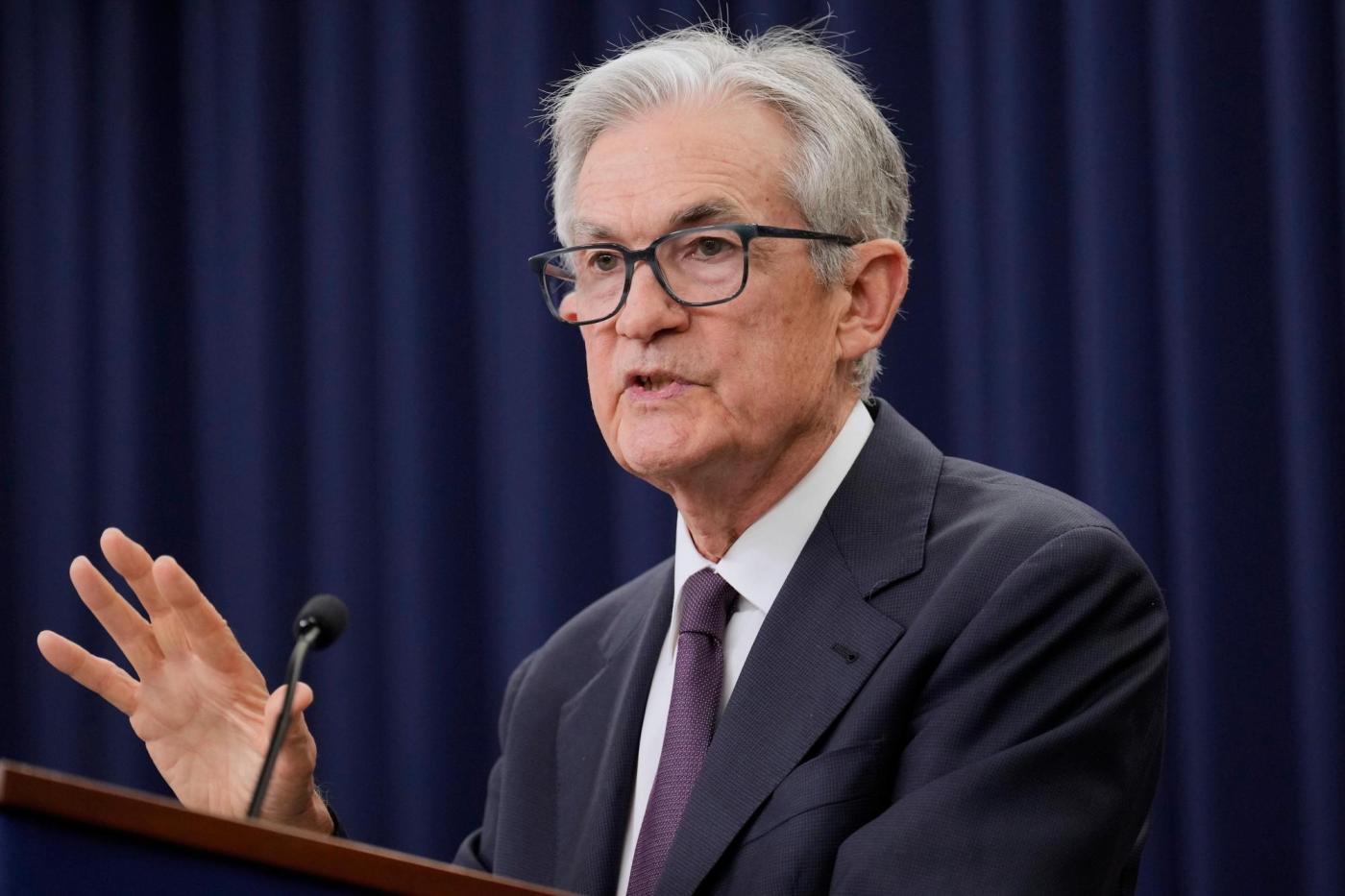
Fed Chair Jerome Powell remains more cautious. He said again in prepared testimony set to be delivered to Congress later in the morning that the Fed is “well positioned to wait to learn more about the likely course of the economy before considering any adjustments to our policy stance.”

Such mixed messages had Treasury yields swiveling up and down in the bond market, but not moving all that much ultimately. The yield on the 10-year Treasury edged up to 4.35% from 4.34% late Monday.

The two-year Treasury yield, which more closely tracks expectations for Fed action, edged up to 3.85% from 3.84%.

In stock markets abroad, indexes rallied more than 1% everywhere from France to Germany to Japan following the announcement of the Israel-Iran ceasefire. Hong Kong’s jump of 2.1% and South Korea’s leap of 3% were two of the strongest moves.

Powell says Fed can wait to reduce interest rates as Trump demands cuts

posted in: All news | 0

By CHRIS RUGABER, AP Economics Writer

WASHINGTON (AP) — The Federal Reserve will continue to wait and see how the economy evolves before deciding whether to reduce its key interest rate, Chair Jerome Powell said Tuesday, a stance directly at odds with President Donald Trump’s calls for immediate cuts.

“For the time being, we are well positioned to wait to learn more about the likely course of the economy before considering any adjustments to our policy stance,” Powell said in prepared remarks he will deliver Tuesday before the House Financial Services Committee.

Powell is facing two days of what could be tough grilling on Capitol Hill, as Trump has repeatedly urged the Fed to reduce borrowing costs. Powell has often received a positive reception before House and Senate committees that oversee the Fed, or at least muted criticism. Powell has also often cited his support in Congress as a bulwark against Trump’s attacks, but that support could wane under the president’s ongoing assaults.

Trump lashed out again early Tuesday, posting on his social media site: “I hope Congress really works this very dumb, hardheaded person, over. We will be paying for his incompetence for many years to come.”

In February, the last time Powell appeared before Congress, Rep. French Hill, the Arkansas Republican who chairs the financial services committee, urged Powell to ensure inflation returned to the Fed’s target of 2%, which typically requires keeping rates elevated.

Powell said in his written testimony that “ increases in tariffs this year are likely to push up prices and weigh on economic activity.”

He said the bump to inflation from tariffs could be temporary, or it could lead to a more persistent bout of inflation.

The Fed’s “obligation,” Powell said, “is … to prevent a one-time increase in the price level from becoming an ongoing inflation problem.”

The Fed’s 19-member interest rate setting committee, led by the chair, decides whether to cut or raise borrowing costs. They typically increase rates to cool the economy to fight or prevent inflation, and lower rates when the economy is weak to boost borrowing and spending.

The Fed’s committee voted unanimously last week to keep its key rate unchanged, though the Fed also released forecasts of future rate cuts that revealed emerging divisions among the policymakers. Seven projected no rate cuts at all this year, two just one, while 10 forecast at least two reductions.

At a news conference last week, Powell suggested the Fed would monitor how the economy evolves over the summer in response to Trump’s tariffs and other policies before deciding whether to cut rates. His comments suggested a rate reduction wouldn’t occur until September.

Yet two high-profile members of the Fed’s governing board, Michelle Bowman and Christopher Waller, have since suggested the central bank could cut its rate as early as its next meeting in July. Both officials were appointed by Trump during his first term and Waller is often mentioned as a potential replacement for Powell when his term ends next May. Powell was also appointed by Trump in late 2017.

Trump is urging the Fed to cut rates to save the U.S. government money on its interest payments affixed to the vast national debt. Yet the Fed has long resisted considering the government’s financing costs when making interest rate decisions, preferring instead to focus on the health of the economy and inflation.

Related Articles


Federal Reserve’s Bowman says rate cut should be on table in July


Compass files lawsuit against Zillow over private home listings policy


Why target-date funds are great IRA investments


With its stock in sharp decline, Trump’s media company will buy $400 million of its own shares


May home sales barely move as high mortgage rates, prices, weigh on housing market

Waller, in a television interview Friday, said that lowering the government’s borrowing costs is “not our job” and added that it was up to Congress and the White House to reduce the budget deficit.

Trump meanwhile, on social media Tuesday repeated his claim that the European Central Bank has cut its key rate ten times, while the Fed has not cut at all. In fact, in the last 12 months the ECB has reduced its rate eight times and the Fed has done so three times, all late last year.

The Fed’s cuts last year lowered its rate to about 4.3%. Yet since then it has put reductions on pause out of concern that Trump’s tariffs could push up inflation. The president has slapped a 10% duty on all imports, along with an additional 30% levy on goods from China, 50% on steel and aluminum, and 25% on autos.

Yet inflation has steadily cooled this year despite widespread concerns among economists about the impact of tariffs. The consumer price index ticked up just 0.1% from April to May, the government said last week, a sign that price pressures are muted.

Prices for some goods rose last month, but the cost for many services such as air fares and hotels fell, offsetting any tariff impact. Compared with a year ago, prices rose 2.4% in May, up from 2.3% in April.

Trump says Israel-Iran ceasefire is in effect after deal initially faltered

posted in: All news | 0

By SAM MEDNICK, JON GAMBRELL and MELANIE LIDMAN

BEERSHEBA, Israel (AP) — U.S. President Donald Trump said a ceasefire between Iran and Israel was in effect Tuesday after the deal initially faltered and the American leader expressed deep frustration with both sides.

Israel had earlier accused Iran of launching missiles into its airspace after the truce was supposed to take effect and the Israeli finance minister vowed “Tehran will tremble.”

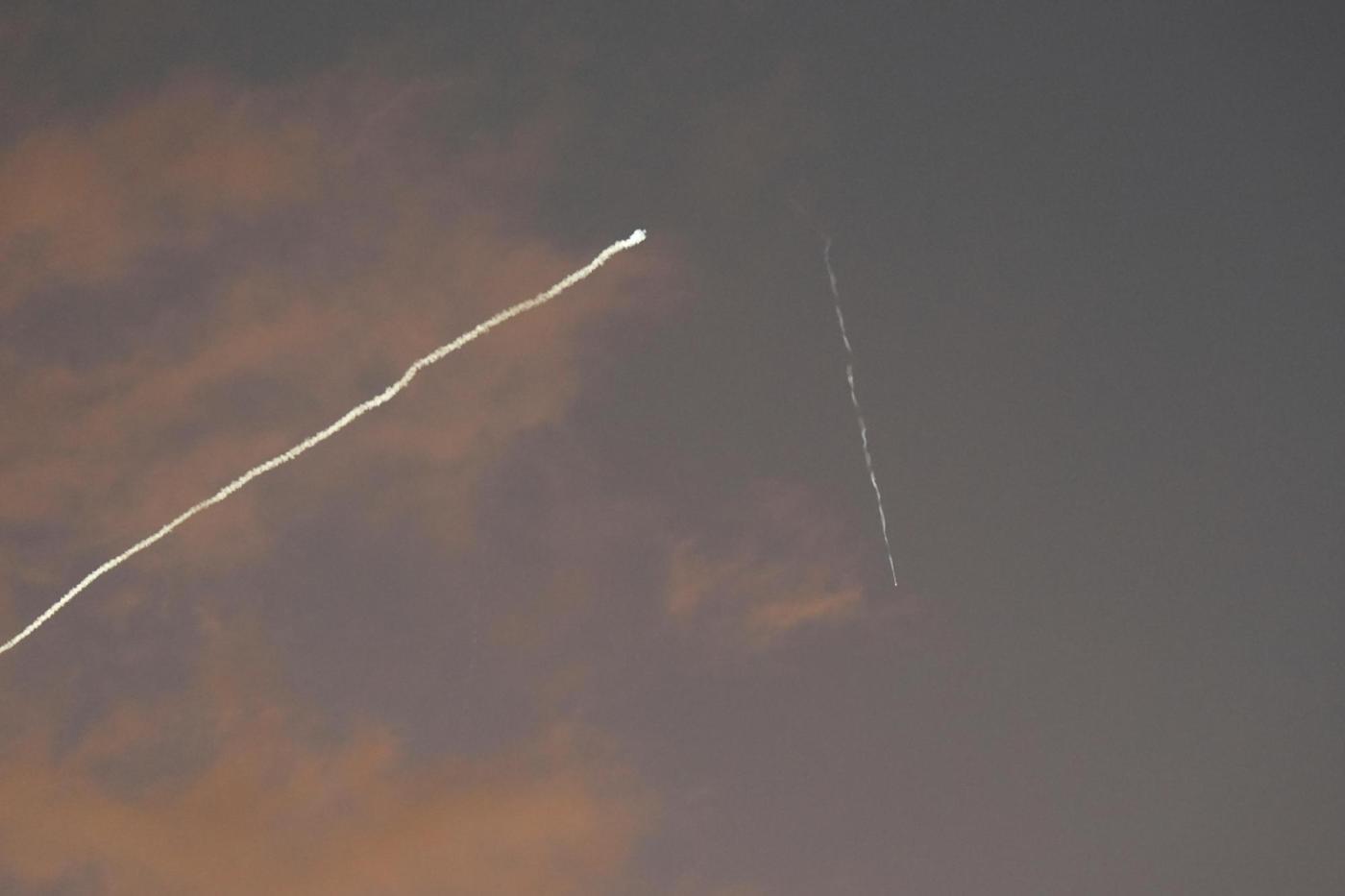
Iran’s military denied firing on Israel, state media reported — but explosions boomed and sirens sounded across northern Israel midmorning, and an Israeli military official said two Iranian missiles were intercepted.

Trump told reporters at the White House before departing for a NATO summit that in his view, both sides had violated the nascent agreement. He had particularly strong words for Israel, a close ally, while suggesting Iran may have fired on the country by mistake.

But later he said the deal was saved.

“ISRAEL is not going to attack Iran. All planes will turn around and head home, while doing a friendly “Plane Wave” to Iran. Nobody will be hurt, the Ceasefire is in effect!” Trump said in his Truth Social post.

Indeed, Israeli Prime Minister Benjamin Netanyahu’s office said he held off on tougher strike against Iran after speaking to Trump.

The conflict, now in its 12th day, began with Israel targeting Iranian nuclear and military sites, saying it could not allow Tehran to develop atomic weapons — and that it feared the Islamic Republic was close. Iran has long maintained that its program is peaceful.

Many worried the war might widen after the U.S. joined the attacks by dropping bunker-buster bombs over the weekend and Israel expanded the kinds of targets it was hitting.

But after Tehran launched a limited retaliatory strike on a U.S. military base in Qatar on Monday, Trump announced the ceasefire.

Israel accuses Iran of violating the truce. Iran denies that

The deal got off to a rocky start.

An Israeli military official who spoke on the condition of anonymity in line with military regulations said Iran launched two missiles at Israel hours into the tenuous ceasefire. Both were intercepted, the official said.

Iranian state television reported that the military denied firing missiles after the start of the ceasefire — while accusing Israel of conducting strikes.

As Trump spoke to reporters at the White House before departing for the NATO summit, he expressed disappointment with both sides.

Iran “violated it but Israel violated it too,” Trump said. ”I’m not happy with Israel.”

Trump’s frustration was palpable, using an expletive to hammer home his point.

“We basically have two countries that have been fighting so long and so hard that they don’t know what the f—- they’re doing,” he said.

Later, however, he announced that Israel had backed off its threat to attack Tehran and would turn its jets around.

Netanyahu’s office said Israel struck an Iranian radar in response to the Iranian missile attack early Tuesday — but held off on something bigger.

“Following President Trump’s conversation with Prime Minister Netanyahu, Israel refrained from additional attacks,” Netanyahu’s office said.

Breakthrough announced after hostilities spread

Netanyahu said Israel had agreed to a bilateral ceasefire with Iran, in coordination with Trump, after the country achieved all of its war goals, including removing the threat of Iran’s nuclear and ballistic missile programs.

Iranian Foreign Minister Abbas Araghchi said that his country would not fire at Israel if it was not fired upon, but that a “final decision on the cessation of our military operations will be made later.”

It’s unclear what role Ayatollah Ali Khamenei, Iran’s leader, played in the talks. He said earlier on social media that he would not surrender.

Trump said Tuesday that he wasn’t seeking regime change in Iran, two days after first floating the idea.

“Regime change takes chaos,” Trump told reporters on Air Force One.

Related Articles


Trump says Israel-Iran ceasefire ‘is in effect’ and Israeli planes won’t attack anymore


Today in History: June 24, Sally Ride completes historic space shuttle mission


US strikes on Iran add to global travel disruptions and flight cancellations


Trump says Israel, Iran agree to ‘complete and total ceasefire’ to be phased in over 24 hours


A look at Al Udeid Air Base, the US military site that Iran attacked

Over the weekend, he mused on his social media account that “if the current Iranian Regime is unable to MAKE IRAN GREAT AGAIN, why wouldn’t there be a Regime change???”

The ceasefire came after hostilities spread further across the region.

Israel’s military said Iran launched 20 missiles toward Israel before the ceasefire began on Tuesday morning. Police said they damaged at least three densely packed residential buildings in the city of Beersheba. First responders said they retrieved four bodies from one building and were searching for more. Earlier, the Fire and Rescue service said five bodies were found before revising the number downward. At least 20 people were injured.

Outside, the shells of burned out cars littered the streets. Broken glass and rubble covered the area. Police said some people were injured while inside their apartments’ reinforced safe rooms, which are meant to withstand rockets but not direct hits from ballistic missiles.

Iran launched a limited missile attack Monday on a U.S. military base in Qatar, retaliating for earlier American bombing of its nuclear sites. The U.S. was warned by Iran in advance, and there were no casualties.

Drones attacked military bases in Iraq overnight, including some housing U.S. troops, the Iraqi army and a US military official said Tuesday.

A senior U.S. military official, who spoke on condition of anonymity because he was not authorized to comment publicly, said U.S. forces had shot down drones attacking Ain al-Assad in the desert in western Iraq and at a base next to the Baghdad airport, while another one crashed.

No casualties were reported and no group claimed responsibility for the attacks in Iraq. Some Iran-backed Iraqi militias had previously threatened to target U.S. bases if the U.S. attacked Iran.

Conflict has killed hundreds

In Israel, at least 28 people have been killed and more than 1,000 wounded in the war. Israeli strikes on Iran have killed at least 974 people and wounded 3,458 others, according to the Washington-based group Human Rights Activists.

The group, which has provided detailed casualty figures from Iranian unrest, said of those killed, it identified 387 civilians and 268 security force personnel.

The U.S. has evacuated some 250 American citizens and their immediate family members from Israel by government, military and charter flights that began over the weekend, a State Department official said.

There are roughly 700,000 American citizens, most of them dual U.S.-Israeli citizens, believed to be in Israel.

Gambrell reported from Dubai, United Arab Emirates, and Lidman reported from Tel Aviv, Israel. Associated Press writers David Rising in Dubai, United Arab Emirates, Josef Federman in Jerusalem, Amir Vahdat in Iran, Darlene Superville in Washington and Seung Min Kim in Noordwijkerhout, Netherlands, contributed to this report.