
Opinion: Why Arts, Libraries, and Summer Youth Employment Must Be Central to NYC’s Workforce Strategy

posted in: All news | 0

“New York City is investing billions in workforce development, yet continues to overlook three of its most powerful, scalable, and community-rooted workforce engines.”

An adult education class at the St. Agnes branch of the New York Public Library in January 2020. (Adi Talwar/City Limits)

New York City is investing billions in workforce development, yet continues to overlook three of its most powerful, scalable, and community-rooted workforce engines: the arts, public libraries, and the Summer Youth Employment Program (SYEP).

Each of these systems already trains, supports, and connects tens of thousands of New Yorkers to opportunity, often more equitably and effectively than traditional pipelines. But all remain structurally excluded from policy frameworks, underfunded in city budgets, and siloed from one another.

To build an inclusive, future-ready workforce system, New York must stop treating these pillars as ancillary and instead embed them as core infrastructure.

The arts as economic infrastructure

The arts are rarely treated as a serious industry, even though they generate over $10.5 billion in economic output and support more than 72,000 jobs each year across performance, design, education, and media. These jobs build transferable skills in communication, project management, and digital production, feeding sectors from tourism to technology.

And yet the institutions that train and sustain this talent, like community arts groups, public schools, and nonprofit cultural hubs, remain chronically underfunded and excluded from workforce strategies.

This exclusion is inefficient. Arts organizations are often the first employers for young creatives and anchor institutions in local economies. But they face late payments, unstable contracts, and a lack of multi-year funding that undermines job quality and limits growth. Recent federal cuts to the National Endowment for the Arts and Institute of Museum and Library Services (IMLS) have deepened the crisis, forcing programs to shut down and jobs to disappear. Every dollar lost in the arts weakens not just cultural jobs but also adjacent sectors like hospitality, education, and media.

The Workforce Development Agenda for New York offers a policy path forward: integrate the arts into education, economic mobility, and sector strategies. That means recognizing teaching artists as part of the youth workforce ecosystem, placing young people in SYEP jobs within the arts tied to credentials, and including cultural organizations in digital equity and infrastructure planning.

The arts already contribute to workforce development, it’s time for policy to catch up.

Libraries: public access points to economic opportunity

Public libraries are the most accessible, trusted, and cost-effective workforce entry points in New York City. They offer free internet, resume help, digital skills training, job search tools, and credentialing, without eligibility requirements, stigma, or gatekeeping. For many New Yorkers, libraries are the only doorway into the labor market.

Yet libraries are still misclassified as cultural luxuries. Budget cuts have slashed hours, delayed repairs, and reduced staff, even as demand for their workforce services rises. The loss of federal IMLS funds threatens to eliminate programs that support adult literacy, job training, and digital equity, services that directly advance the city’s economic development goals.

Libraries fill in the systemic gaps. They act as navigators in a fragmented workforce system, helping residents access services across agencies, nonprofits, and programs. The Workforce Development Agenda calls for expanding decentralized Economic Mobility Hubs. Libraries are already doing this work. But without recognition in funding formulas or workforce plans, their impact is capped.

Designating libraries as workforce infrastructure would unlock powerful new outcomes. With modest investment, they could integrate into data systems that track credentialing, job placement, and wage growth. They can also serve as anchors for underrepresented adult job seekers, providing wraparound services in spaces people trust. Libraries are essential, and the city must treat them that way.

Reimagining SYEP as a career pathway

Each year, the Summer Youth Employment Program invests over $240 million to serve more than 90,000 young people—the largest publicly funded youth employment initiative in the country. SYEP is politically resilient, wildly popular, and proven to deliver short-term gains. A 2022 U.S. Department of Labor study found youth selected through SYEP’s lottery earned three times more than peers during the program and were 54 percentage points more likely to be employed that summer.

But by five and nine years later, the benefits vanished. Why? Because SYEP is designed as a summer-only experience, not a structured career pathway. Participants enter, work, and exit—without continued support, credentialing, or connections to longer-term employment.

This approach contradicts the city’s stated goals of building pathways to high-quality, sustainable jobs. The Workforce Development Agenda emphasizes structured choice, longitudinal data, and integration with high-demand sectors. SYEP should be a launchpad, not an island. We must evolve it into a year-round pathway with fall mentorship, winter upskilling, and spring transition support tied to education, apprenticeships, or unsubsidized work. It should align with other youth initiatives like CUNY Reconnect and Career Ready NYC and track long-term outcomes like wage growth, retention, and advancement, not just participation.

In a city where over a quarter of young adults are underemployed or disconnected, we cannot afford a workforce strategy that stops in August. Summer jobs are the beginning, not the end, of career development.

A connected vision for economic mobility

What ties these three systems—arts, libraries, and SYEP—together is not just their scale, but their unique position at the intersection of community, equity, and workforce access. Each reaches people that traditional systems don’t. Each builds real-world skills that are transferable across industries. And each is underleveraged by current policy and funding mechanisms.

We need a more coordinated, data-informed, and equity-centered system. That requires treating the arts as a real industry, libraries as essential infrastructure, and SYEP as a structured pipeline.

These are foundational pillars of a 21st-century workforce strategy. New York City already has the talent, the tools, and the networks. Now it needs the political will and the policy framework to bring them together.

Gregory J. Morris is CEO of the New York City Employment and Training Coalition (NYCETC), the nation’s largest city-based workforce development coalition, representing over 220 organizations.

The post Opinion: Why Arts, Libraries, and Summer Youth Employment Must Be Central to NYC’s Workforce Strategy appeared first on City Limits.

Union says Air Canada flight attendants won’t return to work despite strike being declared illegal

posted in: All news | 0

By ROB GILLIES

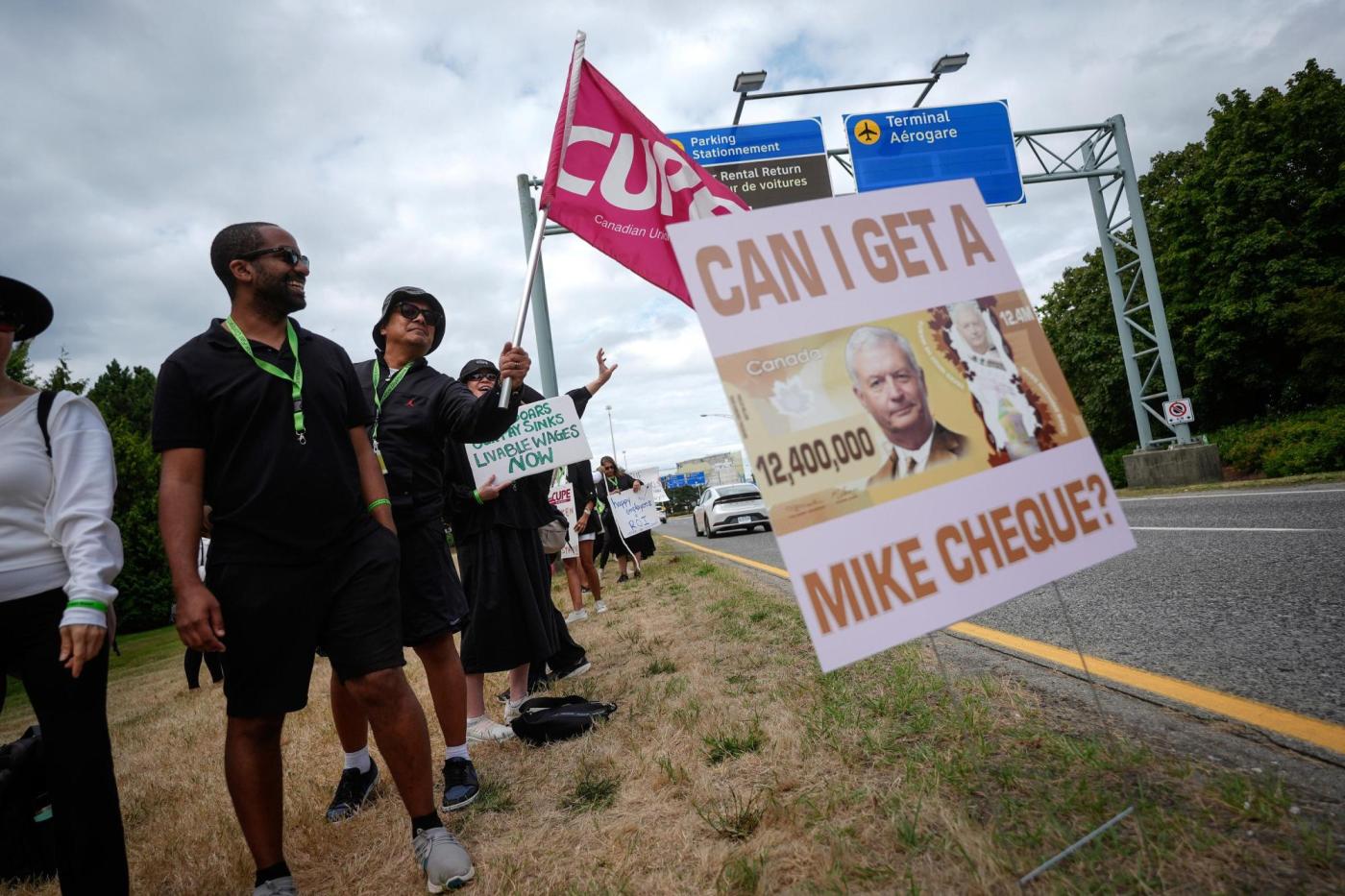
TORONTO (AP) — The union for 10,000 striking Air Canada flight attendants said Monday they won’t return to work even though the strike, now in its third day, has been declared illegal. The strike at Canada’s largest airline is affecting about 130,000 travelers a day at the peak of the summer travel season, and the two sides remain far apart on pay and other issues.

Related Articles


South Korean and US militaries begin annual summertime drills to cope with North Korean threats


Over 150 people are still missing after devastating flooding in northwest Pakistan


US envoy to discuss long-term ceasefire with Israel after Lebanon commits to disarming Hezbollah


Google to pay $36M fine for anticompetitive deals with Australia’s largest telcos


Cambridge Dictionary adds ‘skibidi’ and ‘tradwife’ among 6,000 new words

Air Canada said rolling cancelations now extend to Tuesday afternoon after the union defied a second return-to-work order. The airline had said earlier that operations would resume on Monday evening but the union president said that won’t happen.

“If Air Canada thinks that planes will be flying this afternoon they are sorely mistaken. That won’t be happening today,” said Mark Hancock, national president for Canadian Union of Public Employees, or CUPE, which also represents some non-public sectors.

“We will not be returning to the skies,” he said.

Defying a second return to work order

The Canada Industrial Relations Board had declared the strike illegal earlier on Monday and ordered the striking flight attendants back on the job. But the union said it will defy this second return to work order, after an earlier one had been ignored. The earlier one also ordered the union to submit to arbitration.

The board, an independent administrative tribunal that interprets and applies Canada’s labor laws, had said the union needed to provide written notice to all of its members by noon Monday that they must resume their duties.

“If it means folks like me going to jail than so be it. If it means our union being fined than so be it,” Hancock said, “We’re looking for a solution here. Our members want a solution here but solution has to be found at the bargaining table.”

It was not immediately clear what recourse the board or the government have if the union continues to refuse.

Air Canada flight attendants and supporters picket outside Montreal-Pierre Elliott Trudeau International Airport in Dorval, Quebec, Monday, Aug. 18, 2025. (Christinne Muschi/The Canadian Press via AP)

Labor leaders are objecting to the government’s repeated use of a law that cuts off workers right to strike and force them into arbitration, as the government has already done in recent years with workers at ports, railways and elsewhere.

“We are in a situation where literally hundreds of thousands of Canadians and visitors to our country are being disrupted by this action,” Canada’s Prime Minister Mark Carney said. “I urge both parties to resolve this as quickly as possible.”

Carney said his jobs minister would have more to say later and added that it was disappointing that the talks have not led to a deal. He stressed it is important that flight attendants are compensated fairly at all times.

The labor board previously ordered airline staff back to work by 2 p.m. Sunday and for the union to enter arbitration, after the government intervened. Air Canada then said it planned to resume flights Sunday evening. But when the workers refused, the airline said it would resume flights Monday evening instead. However, there was no sign CUPE would relent.

Air Canada operates around 700 flights per day. The airline estimates 50,000 customers will be disrupted.

Air Canada chief executive Michael Rousseau said he’s still looking for a quick resolution.

“We’re obviously hoping we can go tomorrow, but we’ll make that decision later today,” Rousseau said on BNN Bloomberg shortly after the union announced it would continue with the strike.

Disrupted tourists, stranded passengers

Tourists John and Lois Alderman said Air Canada has told them they could be stranded in Toronto for another four to five days while they wait for a flight back home to Manchester, United Kingdom.

“I’m a diabetic and I’m going to run out of insulin in about four days,” John said at Pearson International Airport. “That’s going to cause a problem.”

Flight attendants walked off the job around 1 a.m. EDT on Saturday, after turning down the airline’s request to enter into government-directed arbitration, which allows a third-party mediator to decide the terms of a new contract.

Air Canada and CUPE have been in contract talks for about eight months, but remain far apart on the issue of pay and the unpaid work that flight attendants do when planes aren’t in the air.

The airline’s latest offer included a 38% increase in total compensation, including benefits and pensions, over four years, that it said “would have made our flight attendants the best compensated in Canada.”

But the union pushed back, saying the proposed 8% raise in the first year didn’t go far enough because of inflation.

Passengers whose flights are impacted will be eligible to request a full refund on the airline’s website or mobile app, according to Air Canada.

Judge issues injunction preventing Trump’s FTC from investigating watchdog Media Matters

posted in: All news | 0

WASHINGTON (AP) — A federal judge has issued an injunction preventing the Trump administration’s Federal Trade Commission from investigating Media Matters for America, the liberal media watchdog group that had alleged the spread of hate speech on X since Elon Musk acquired the social media platform.

Related Articles


Trump vows to change how elections are run. The US Constitution doesn’t give him that power


Justice Department to begin giving Congress files from Jeffrey Epstein investigation, lawmaker says


20 states and DC sue DOJ to stop immigration requirements on victim funds


Mississippi becomes fourth state to send National Guard troops to DC in expanding federal crackdown


What to know about redistricting fights as Texas Democrats return and California starts work

U.S. District Court Judge Sparkle L. Sooknanan ruled Friday that the FTC’s probe of Media Matters, “purportedly to investigate an advertiser boycott concerning social media platforms,” represents a clear violation of the group’s freedom of speech.

“It should alarm all Americans when the government retaliates against individuals or organizations for engaging in constitutionally protected public debate,” Sooknanan wrote.

Even before the FTC got involved, Media Matters has been defending itself against a lawsuit by Musk following the organization’s November 2023 story that, following Musk’s purchase of the social media site once known as Twitter, antisemitic posts and other offensive content were appearing next to advertisements there.

Sooknanan said the injunction halting any FTC probe was merited because Media Matters is likely to succeed on its claim that the FTC is being used to retaliate against it for a critical article on a Trump supporter.

“The court’s ruling demonstrates the importance of fighting over folding, which far too many are doing when confronted with intimidation from the Trump administration,” said Angelo Carusone, chairman and president of Media Matters.

There was no immediate comment from an FTC spokesman.

Trump vows to change how elections are run. The US Constitution doesn’t give him that power

posted in: All news | 0

By NICHOLAS RICCARDI and ALI SWENSON

President Donald Trump on Monday vowed more changes to the way elections are conducted in the U.S., but based on the Constitution there is little to nothing he can do on his own.

Related Articles


Judge issues injunction preventing Trump’s FTC from investigating watchdog Media Matters


Justice Department to begin giving Congress files from Jeffrey Epstein investigation, lawmaker says


20 states and DC sue DOJ to stop immigration requirements on victim funds


Mississippi becomes fourth state to send National Guard troops to DC in expanding federal crackdown


What to know about redistricting fights as Texas Democrats return and California starts work

Relying on false information and conspiracy theories that he’s regularly used to explain away his 2020 election loss, Trump pledged on his social media site that he would do away with both mail voting — which remains popular and is used by about one-third of all voters — and voting machines — some form of which are used in almost all of the country’s thousands of election jurisdictions. These are the same systems that enabled Trump to win the 2024 election and Republicans to gain control of Congress.

Trump’s post marks an escalation even in his normally overheated election rhetoric. He issued a wide-ranging executive order earlier this year that, among other changes, would have required documented proof-of-citizenship before registering to vote. His Monday post promised another election executive order to “help bring HONESTY to the 2026 Midterm elections.”

The same post also pushed falsehoods about voting. He claimed the U.S. is the only country to use mail voting, when it’s actually used by dozens, including Germany, Switzerland and the United Kingdom.

Similar complaints to Trump’s, when aired on conservative networks such as Newsmax and Fox News, have led to multimillion dollar defamation settlements, including one announced Monday, because they are full of false information and the outlets have not been able to present any evidence to support them.

Trump’s post came after the president told Fox News that Russian President Vladimir Putin, in their Friday meeting in Alaska, echoed his grievances about mail voting and the 2020 election. Trump continued his attack on mail voting and voting machines in the Oval Office on Monday, during a meeting with Ukrainian President Volodymyr Zelenskyy.

President Donald Trump greets Russia’s President Vladimir Putin Friday, Aug. 15, 2025, at Joint Base Elmendorf-Richardson, Alaska. (AP Photo/Julia Demaree Nikhinson)

The announcement signals yet another way that Trump intends to stack the cards in his favor in the 2026 midterm elections, after he already has directed his attorney general to investigate a Democratic fundraising platform and urged states to redraw their congressional districts to help the GOP maintain its majority in the House of Representatives.

Here’s a breakdown of Trump’s latest election post and why Congress is the one entity that can implement national election rules.

Trump’s post

Trump for years has promoted false information about voting, and Monday was no exception.

He claimed there is “MASSIVE FRAUD” due to mail voting, when in fact voting fraud in the U.S. is rare. As an example, an Associated Press review after the 2020 election found fewer than 475 cases of potential fraud in the six battleground states where he disputed his loss, far too few to tip that election to Trump.

Washington and Oregon, which conduct elections entirely by mail, have sued to challenge Trump’s earlier executive order — which sought to require that all ballots must be received by Election Day and not just postmarked by then. The states argue that the president has no such authority, and they are seeking a declaration from a federal judge in Seattle that their postmark deadlines do not conflict with federal law setting the date of U.S. elections.

Trump also alleged that voting machines are more expensive than “Watermark Paper.” That’s a little-used system that has gained favor and investments among some voting conspiracy theorists who believe it would help prevent fraudulent ballots from being introduced into the vote count. Watermarks would not provide a way to count ballots, so they would not on their own replace vote tabulating machines.

FILE – A person votes at a polling site for the presidential primary election March 12, 2024, in Atlanta. (AP Photo/Brynn Anderson, File)

While some jurisdictions still have voters use electronic ballot-marking devices to cast their votes, the vast majority of voters in the U.S. already vote on paper ballots, creating an auditable record of votes that provides an extra safeguard for election security.

In his post, Trump also claimed that states “are merely an ‘agent’ for the Federal Government in counting and tabulating the votes” and must do what the federal government “as represented by the President of the United States” tells them to do.

Election lawyers said that’s a misrepresentation of the U.S. Constitution. It also flies in the face of what had been a core Republican Party value of prioritizing states’ rights.

Thousands of elections, none under presidential control

Unlike in most countries, elections in the U.S. are run by the states. But it gets more complicated — each state then allows smaller jurisdictions, such as counties, cities or townships, to run their own elections. Election officials estimate there are as many as 10,000 different election jurisdictions across the country.

A frequent complaint of Trump and other election conspiracy theorists is that the U.S. doesn’t run its election like France, which hand counts presidential ballots and usually has a national result on election night. But that’s because France is only running that single election, and every jurisdiction has the same ballot with no other races.

A ballot in the U.S. might contain dozens of races, from president on down to city council and including state and local ballot measures.

The Constitution makes the states the entities that determine the “time, place and manner” of elections, but does allow Congress to “make” or “alter” rules for federal elections.

Congress can change the way states run congressional and presidential elections but has no say in the way a state runs its own elections. The president is not mentioned at all in the Constitution’s list of entities with powers over elections.

“The president has very limited to zero authority over things related to the conduct of elections,” said Rick Hasen, an election law professor at the University of California, Los Angeles.

Courts have agreed — no presidential involvement

Parts of Trump’s earlier executive order on elections were swiftly blocked by the courts, on the grounds that Congress, and not the president, sets federal election rules.

It’s unclear what Trump plans to do now, but the only path to change federal election rules is through Congress.

Although Republicans control Congress, it’s unclear that even his party would want to eliminate voting machines nationwide, possibly delaying vote tallies in their own races by weeks or months. Even if they did, legislation would likely be unable to pass because Democrats could filibuster it in the U.S. Senate.

Mail voting had bipartisan support before Trump turned against it during the COVID-19 pandemic and the 2020 election, but it’s still widely used in Republican-leaning states, including several he won last November — Arizona, Florida and Utah. It’s also how members of the military stationed overseas cast their ballots, and fully eliminating it would disenfranchise those GOP-leaning voters.

The main significance of Trump’s Monday statement is that it signals his continuing obsession with trying to change how elections are run.

“These kinds of claims could provide a kind of excuse for him to try to meddle,” Hasen said. “Very concerned about that.”

Associated Press writer Eugene Johnson in Seattle contributed to this report.