‘Ketamine Queen’ accused of selling fatal dose to Matthew Perry agrees to plead guilty

posted in: All news | 0

By ANDREW DALTON

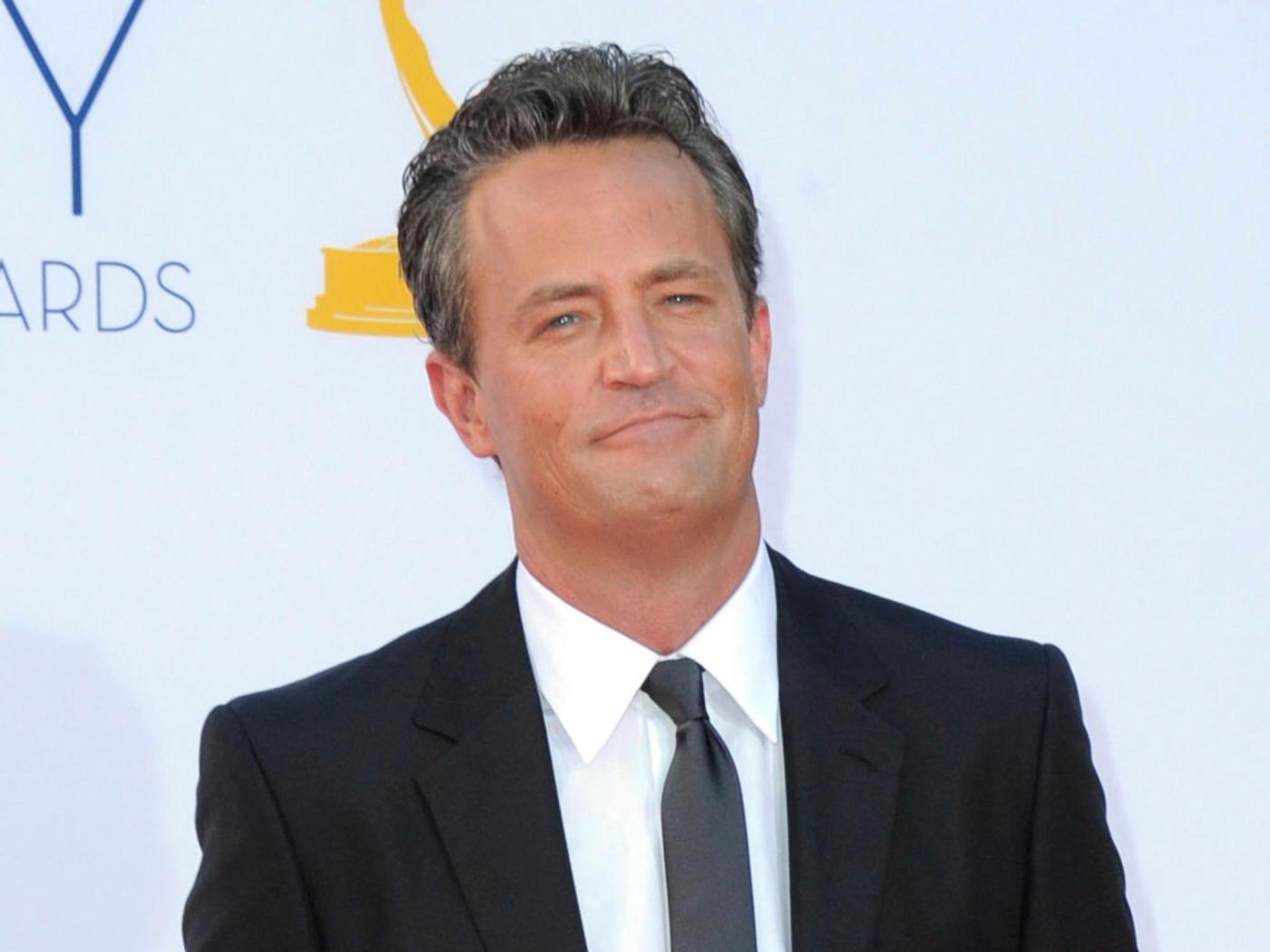
LOS ANGELES (AP) — A woman known as the “Ketamine Queen,” charged with selling Matthew Perry the drug that killed him, agreed to plead guilty Monday.

Related Articles


What to know about powerful Hurricane Erin as it heads toward the US East Coast


Mississippi becomes fourth state to send National Guard troops to DC in expanding federal crackdown


Texas declares measles outbreak over


Conservative network Newsmax agrees to pay $67M in defamation case over bogus 2020 election claims


Hijacked satellites and orbiting space weapons: In the 21st century, space is the new battlefield

Jasveen Sangha becomes the fifth and final defendant charged in the overdose death of the “Friends” star to strike a plea agreement with federal prosecutors. Having initially pleaded not guilty, her change of plea means she’ll avoid a trial that had been planned for August.

Prosecutors had cast Sangha as a prolific drug dealer who was known to her customers as the “Ketamine Queen,” using the term often in press releases and court documents and even including it in the official name of the case.

A federal indictment charged Sangha with one count of conspiracy to distribute ketamine, one count of maintaining a drug-involved premises, one count of possession with intent to distribute methamphetamine, one count of possession with intent to distribute ketamine and five counts of distribution of ketamine.

She and Dr. Salvador Plasencia, who signed his own plea deal June 16, had been the primary targets of the investigation. Three other defendants — Dr. Mark Chavez, Kenneth Iwamasa and Erik Fleming — agreed to plead guilty last year in exchange for their cooperation, which included statements implicating Sangha and Plasencia.

Perry was found dead in his Los Angeles home by Iwamasa, his assistant, on Oct. 28, 2023. The medical examiner ruled that ketamine, typically used as a surgical anesthetic, was the primary cause of death.

The actor had been using the drug through his regular doctor as a legal, but off-label, treatment for depression, which has become increasingly common. Perry, 54, sought more ketamine than his doctor would give him. He began getting it from Plasencia about a month before his death, then started getting still more from Sangha about two weeks before his death, prosecutors said.

Perry and Iwamasa found Sangha through Perry’s friend Fleming. In their plea agreements, both men described the subsequent deals in detail.

Fleming messaged Iwamasa saying Sangha’s ketamine was “unmarked but it’s amazing,” according to court documents. Fleming texted Iwamasa that she only deals “with high end and celebs. If it were not great stuff she’d lose her business.”

With the two men acting as middlemen, Perry bought large amounts of ketamine from Sangha, including 25 vials for $6,000 in cash four days before his death. That purchase included the doses that killed Perry, prosecutors said.

On the day of Perry’s death, Sangha told Fleming they should delete all the messages they had sent each other, according to her indictment.

Her home in North Hollywood, California, was raided in March 2024 by Drug Enforcement Administration agents who found large amounts of methamphetamines and ketamine, according to an affidavit from an agent. She was indicted that June, arrested that August and has been held in jail since.

None of the defendants has yet been sentenced.

Perry struggled with addiction for years, dating back to his time on “Friends,” when he became one of the biggest stars of his generation as Chandler Bing. He starred alongside Jennifer Aniston, Courteney Cox, Lisa Kudrow, Matt LeBlanc and David Schwimmer for 10 seasons from 1994 to 2004 on NBC’s megahit series.


Theater review: Dark & Stormy unseals a time capsule with ‘Come Back, Little Sheba’

posted in: All news | 0

With recent commemorations of the 80th anniversary of the end of World War II, it may be interesting to note that the celebrations and relief at war’s end soon gave way to a period of reflection that often led American artists to dark places. One of those artists was William Inge.

Encouraged to pursue playwriting by his contemporary, Tennessee Williams, Inge often populated his plays with people embittered by their life choices who didn’t transform over the course of the story, but rather came to some sort of acceptance about themselves. It was a style that fit the post-war Broadway zeitgeist, giving unhappy Midwesterners a voice onstage alongside Williams’ delusional Southerners and Arthur Miller’s angst-riddled New Yorkers.

The play that put Inge on the map was 1950’s “Come Back, Little Sheba,” a slice-of-life drama that takes us into the household of a Midwest chiropractor and his lonely, unfulfilled wife. It’s realism with a capital R, and that’s what you’ll find in Dark & Stormy Productions’ expertly executed production at St. Paul’s intimate Gremlin Theatre. What could be a musty museum piece in some hands is instead an involving trip in the theatrical time machine, propelled by powerful performances and transporting technical choices.

Dark & Stormy rarely tackles a work as old as “Come Back, Little Sheba,” but it does keep with the company’s customary focus on works with well-written women. In this case, Inge created such a vivid character in Lola Delaney that it’s easy to see why Shirley Booth won both a Tony and an Oscar for her portrayal.

While ostensibly cheerful, Lola clearly perceives something missing in her life, and it’s not just the prodigal dog of the title. She and husband Doc have taken in a boarder, a young woman college student for whom he feels protective while Lola enjoys observing her flirtations with a classmate and engaging in some of her own with the mailman and milkman.

As in several of Tennessee Williams’ plays of the same period, alcoholism is an issue, but Inge’s characters don’t romanticize addiction or wax poetic about their almost certainly unattainable hopes. His characters talk like real people, and this production brings them to bracing life, particularly through the performances of Sara Marsh as Lola and Peter Christian Hansen as Doc. Gremlin’s small space allows audiences to observe at close range the complex layers of Marsh’s conflicted Lola and Hansen’s tortured Doc. Their portrayals draw you in ever deeper, making an explosive second-act reckoning all the more jarring and effective.

Director Brian Joyce has clearly encouraged his eight-member cast to make their characters as realistic as possible, and each actor comes through with a solid performance, right down to Jack Bechard finding nuance within a libido-driven college boy and Katherine Kupiecki summoning up palpable compassion from a neighbor who at first seems merely the necessary ear for Lola’s monologues.

They’re all aided greatly by Bobbie Smith’s period-perfect set, Shannon Elliott’s creative lighting scheme and the sound design of Aaron Newman. The latter becomes something of a character of its own, using what comes out of the household radio to shape the mood, be it to spark nostalgic escapism or underline the sense of loss that permeates this very well done production.

Rob Hubbard can be reached at wordhub@yahoo.com.

Dark & Stormy Productions’ ‘Come Back, Little Sheba’

When: Through Sept. 7

Where: Gremlin Theatre, 550 Vandalia St., St. Paul

Tickets: $49-$45, available at darkstormy.org

Capsule: Full of fine acting, it’s impressively faithful to 1950.

Related Articles


Theater review: Brave New Workshop’s latest is funniest at the federal level


Review: Orpheum Theatre hosts a beauty of a ‘Beauty and the Beast’


Fringe review: ‘What I Should Have Said’ is a good concept with very rocky execution


Fringe review: Historical drama ‘Tompkins Squares’ is stiff and underwhelming


Fringe review: ‘Breach,’ ferocious, thrilling and shrewd, is simply stunning theater

Foul play not suspected in death of woman, 70, found in St. Paul senior living fire

posted in: All news | 0

Foul play is not suspected in the death of a 70-year-old woman who firefighters found during a fire at her St. Paul senior living community apartment Friday, the police department said Monday.

The Ramsey County Medical Examiner’s Office identified the woman as Cecilia A. O’Keefe.

On Friday, the St. Paul Fire Department responded about 3:45 a.m. to a report of smoke in the first-floor hallway of Como by the Lake Senior Apartments at 901 E. Como Blvd. Crews discovered moderate smoke coming from O’Keefe’s apartment in the senior living community for ages 55 and older.

Fire crews extinguished the fire and found O’Keefe dead inside the unit during a search.

O’Keefe’s cause of death remains under investigation, said Alyssa Arcand, a St. Paul police spokeswoman.

The cause of the fire, which was contained to the one unit, is undetermined, said Deputy Fire Chief Jamie Smith.

Related Articles


Coast Guard helicopter rescues 4 kids stranded on Lake Superior rock


Almost a dozen North Dakota children, teens have disappeared in 17 days


FDA’s new expert panels are rife with financial conflicts and fringe views


St. Paul man, 68, dies in single-vehicle crash in Chisago County


Fatal explosion at U.S. Steel’s plant raises questions about its future, despite heavy investment

20 states and DC sue DOJ to stop immigration requirements on victim funds

posted in: All news | 0

By CLAUDIA LAUER and MIKE CATALINI

A coalition of attorneys general from 20 states and Washington, D.C., is asking a federal judge to stop the U.S. Department of Justice from withholding federal funds earmarked for crime victims if states don’t cooperate with the Trump administration’s immigration enforcement efforts.

Related Articles


Mississippi becomes fourth state to send National Guard troops to DC in expanding federal crackdown


What to know about redistricting fights as Texas Democrats return and California starts work


US envoy to discuss long-term ceasefire with Israel after Lebanon commits to disarming Hezbollah


Conservative network Newsmax agrees to pay $67M in defamation case over bogus 2020 election claims


FDA’s new expert panels are rife with financial conflicts and fringe views

The lawsuit filed Monday in Rhode Island federal court seeks to block the Justice Department from enforcing conditions that would cut funding to a state or subgrantee if it refuses to honor civil immigration enforcement requests, denies U.S. Immigration and Customs Enforcement officers access to facilities or fails to provide advance notice of release dates of individuals possibly wanted by U.S. Immigration and Customs Enforcement because of their immigration status.

The lawsuit asks that the conditions be thrown out, arguing that the administration and the agency are overstepping their constitutional and administrative authority.

The lawsuit also argues that the requirements are not permitted or outlined in the Victims of Crime Act, known as VOCA, and would interfere with policies created to ensure victims and witnesses report crimes without fear of deportation.

“These people did not ask for this status as a crime victim. They don’t breakdown neatly across partisan lines, but they share one common trait, which is that they’ve suffered an unimaginable trauma,” New Jersey Attorney General Matthew J. Platkin said during a video news conference Monday, calling the administration’s threat to withhold funds “the most heinous act” he’s seen in politics.

The federal conditions were placed on VOCA funding, which provides more than a billion dollars annually to states for victims compensation programs and grants that fund victims assistance organizations. VOCA funding comes entirely from fines and penalties in federal court cases, not from tax dollars.

Every state and territory has a victims compensation program that follows federal guidelines, but largely is set up under state law to provide financial help to crime victims, including medical expense reimbursement, paying for crime scene cleanup, counseling or helping with funeral costs for homicide victims. VOCA covers the cost of about 75% of state compensation program awards.

The funds are also used to pay for other services, including testing rape kits, funding grants to domestic violence recovery organizations, trauma recovery centers and more.

Advocates and others argue that the system needs to protect victims regardless of their immigration status and ensure that reporting a crime does not lead to deportation threats. They also say that marginalized communities, such as newly arrived immigrants, are more likely to be crime targets.

“The federal government is attempting to use crime victim funds as a bargaining chip to force states into doing its bidding on immigration enforcement,” New York Attorney General Letitia James, who also joined the lawsuit, said in a statement Monday. “These grants were created to help survivors heal and recover, and we will fight to ensure they continue to serve that purpose … We will not be bullied into abandoning any of our residents.”

The Associated Press left a message seeking comment from a DOJ spokesperson Monday afternoon.

President Donald Trump’s administration has sought to withhold or pull back other federal funding or grant funding midstream, saying awardees and programs no longer agree with its priorities. In April, it canceled about $800 million in DOJ grants, some of which were awarded to victims service and survivor organizations.

And in June, states filed a lawsuit over added requirements in Violence Against Women Act funding that mandated applicants agree not to promote “gender ideology,” or run diversity, equity and inclusion programs or prioritize people in the country illegally.

Several attorneys general said the VOCA conditions appear to be another way the administration is targeting so-called sanctuary jurisdictions that limit cooperation with federal immigration authorities, though there is no clear definition of what a sanctuary state or city is.

The Trump administration earlier this month released an updated list of states, cities and counties it considers sanctuary jurisdictions. U.S. Attorney General Pam Bondi said in the August announcement that the department would “continue bringing litigation against sanctuary jurisdictions and work closely with the Department of Homeland Security to eradicate these harmful policies around the country.”

As of Monday afternoon attorneys general from California, Colorado, Connecticut, Delaware, District of Columbia, Hawaii, Illinois, Maine, Maryland, Massachusetts, Michigan, Minnesota, Nevada, New Jersey, New Mexico, New York, Oregon, Rhode Island, Vermont, Washington and Wisconsin — all Democrats — had signed on to the lawsuit.