
Kennedy’s new vaccine advisers meet for first time

posted in: All news | 0

By MIKE STOBBE and LAURAN NEERGAARD

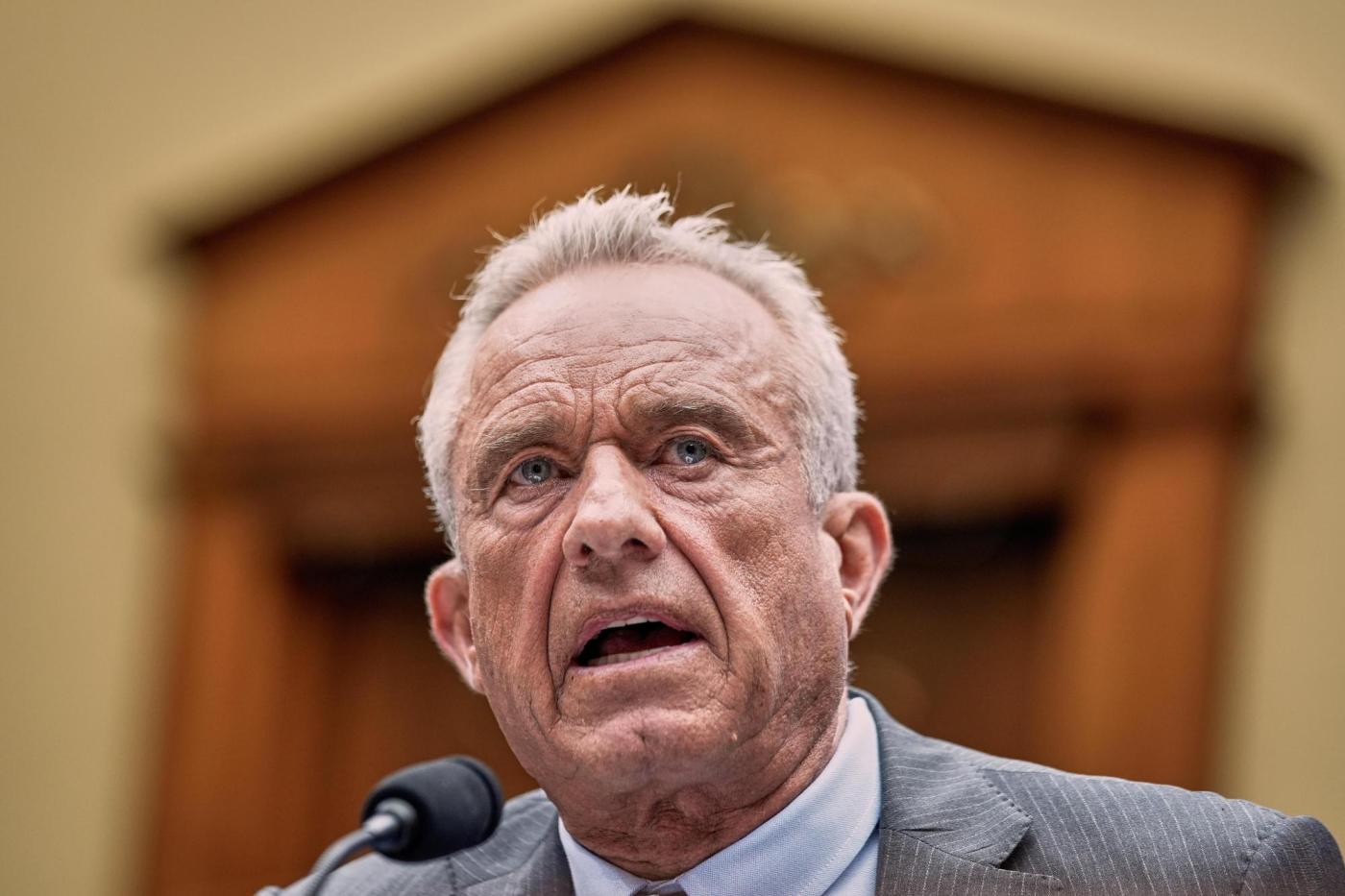
ATLANTA (AP) — U.S. Health Secretary Robert F. Kennedy Jr.’s new vaccine advisers began their first meeting Wednesday under intense scrutiny from medical experts worried about Americans’ access to lifesaving shots.

First on the agenda is an awkward scenario: Kennedy already announced COVID-19 vaccines will no longer be recommended for healthy children or pregnant women, and his new advisers aren’t scheduled to vote on whether they agree. Yet government scientists prepared meeting materials calling vaccination “the best protection” during pregnancy — and said most children hospitalized for COVID-19 over the past year were unvaccinated.

COVID-19 remains a public health threat, resulting in 32,000 to 51,000 U.S. deaths and more than 250,000 hospitalizations since last fall, according to the Centers for Disease Control and Prevention. Most at risk for hospitalization are seniors and children under 2 — especially infants under 6 months who could have some protection if their mom got vaccinated during pregnancy, according to the CDC’s presentation.

It’s one signal that this week’s two-day meeting of the Advisory Committee on Immunization Practices isn’t business as usual.

Another sign: Shortly before the meeting, a Virginia-based obstetrician and gynecologist stepped down from the committee, bringing the panel’s number to just seven. The Trump administration said Dr. Michael Ross withdrew during a customary review of members’ financial holdings.

The meeting opened as the American Academy of Pediatrics announced that it will continue publishing its own vaccine schedule for children but now will do so independently of the ACIP, calling it “no longer a credible process.”

The panel, created more than 60 years ago, helps the CDC determine who should be vaccinated against a long list of diseases, and when. Those recommendations have a big impact on whether insurance covers vaccinations and where they’re available, such as at pharmacies.

Earlier this month, Kennedy abruptly dismissed the existing 17-member expert panel and handpicked eight replacements, including several anti-vaccine voices. And a number of the CDC’s top vaccine scientists — including some who lead the reporting of data and the vetting of presentations at ACIP meetings — have resigned or been moved out of previous positions.

The highly unusual moves prompted a last-minute plea from a prominent Republican senator to delay this week’s meeting. Sen. Bill Cassidy of Louisiana, a physician who chairs the chamber’s health committee, said Monday that many of Kennedy’s chosen panelists lack the required expertise and “may even have a preconceived bias” against new vaccine technologies.

In a House hearing Tuesday, Kennedy defended his purge, saying the old panel had been “a template for medical malpractice.”

Rep. Kim Schrier, a pediatrician and Democrat from Washington state, told Kennedy: “I will lay all responsibility for every death from a vaccine-preventable illness at your feet.”

Committee will vote on RSV protections

The two-day meeting’s agenda on was abruptly changed last week.

Discussion of COVID-19 shots will open the session on Wednesday. Later in the day, the committee will take up RSV, with votes expected. On Thursday, the committee will vote on fall flu vaccinations and on the use of a preservative in certain flu shots.

Related Articles


Minnesota hospitals report slight uptick in ‘adverse health events’


Lilly’s experimental obesity pill holds up to scrutiny in trial


‘Problematic’ MAHA report minimizes success of lifesaving asthma medicines, doctors say


AI is influencing women’s health in new ways, from fertility to menopause


The number of abortions kept rising in 2024 because of telehealth prescriptions, report finds

RSV, or respiratory syncytial virus, is a common cause of cold-like symptoms that can be dangerous for infants.

In 2023, U.S. health officials began recommending two new measures to protect infants — a lab-made antibody for newborns and a vaccine for pregnant women — that experts say likely drove an improvement in infant mortality.

The committee will discuss another company’s newly approved antibody shot, but the exact language for the vote was not released prior to the meeting.

“I think there may be a theme of soft-pedaling or withdrawing recommendations for healthy pregnant women and healthy children,” even though they are at risk from vaccine-preventable diseases, said Lawrence Gostin, a public health law expert at Georgetown University who co-authored a recent medical journal commentary criticizing the COVID-19 vaccination decision.

Flu shot recommendations to be debated

At its June meetings, the committee usually refreshes guidance for Americans 6 month and older to get a flu shot, and helps greenlight the annual fall vaccination campaign.

But given the recent changes to the committee and federal public health leadership, it’s unclear how routine topics will be treated, said Jason Schwartz, a Yale University health policy researcher who has studied the committee.

Thursday also promises controversy. The advisory panel is set to consider a preservative in a subset of flu shots that Kennedy and some antivaccine groups have falsely contended is tied to autism. In preparation, the CDC posted a new report confirming that research shows no link between the preservative, thimerosal, and autism or any other neurodevelopmental disorders.

Gostin said the agenda appears to be “a combination of what we would normally expect ACIP to cover along with a mixture of potential conspiracy theories,” he said. “We clearly are in a new normal that’s highly skeptical of vaccine science.”

The committee’s recommendations traditionally go to the Centers for Disease Control and Prevention director. Historically, nearly all are accepted and then used by insurance companies in deciding what vaccines to cover.

But the CDC currently has no director, so the committee’s recommendations have been going to Kennedy, and he has yet to act on a couple recommendations ACIP made in April.

The CDC director nominee, Susan Monarez, is slated to go before a Senate committee on Wednesday.

Neergaard reported from Washington.

The Associated Press Health and Science Department receives support from the Howard Hughes Medical Institute’s Department of Science Education and the Robert Wood Johnson Foundation. The AP is solely responsible for all content.


How ChatGPT and other AI tools are changing the teaching profession

posted in: All news | 0

By JOCELYN GECKER, AP Education Writer

For her 6th grade honors class, math teacher Ana Sepúlveda wanted to make geometry fun. She figured her students “who live and breathe soccer” would be interested to learn how mathematical concepts apply to the sport. She asked ChatGPT for help.

Within seconds, the chatbot delivered a five-page lesson plan, even offering a theme: “Geometry is everywhere in soccer — on the field, in the ball, and even in the design of stadiums!”

It explained the place of shapes and angles on a soccer field. It suggested classroom conversation starters: Why are those shapes important to the game? It proposed a project for students to design their own soccer field or stadium using rulers and protractors.

“Using AI has been a game changer for me,” said Sepúlveda, who teaches at a dual language school in Dallas and has ChatGPT translate everything into Spanish. “It’s helping me with lesson planning, communicating with parents and increasing student engagement.”

Across the country, artificial intelligence tools are changing the teaching profession as educators use them to help write quizzes and worksheets, design lessons, assist with grading and reduce paperwork. By freeing up their time, many say the technology has made them better at their jobs.

A poll released Wednesday by Gallup and the Walton Family Foundation found 6 in 10 U.S. teachers working in K-12 public schools used AI tools for their work over the past school year, with heavier use among high school educators and early-career teachers. It surveyed more than 2,000 teachers nationwide in April.

Respondents who use AI tools weekly estimate they save them about six hours a week, suggesting the technology could help alleviate teacher burnout, said Gallup research consultant Andrea Malek Ash, who authored the report.

States are issuing guidelines for using AI tools in classrooms

As schools navigate concerns over student abuse of the technology, some are also are introducing guidelines and training for educators so teachers are aware of avoiding shortcuts that shortchange students.

About two dozen states have state-level AI guidance for schools, but the extent to which it is applied by schools and teachers is uneven, says Maya Israel, an associate professor of educational technology and computer science education at the University of Florida.

“We want to make sure that AI isn’t replacing the judgment of a teacher,” Israel said.

Related Articles


Court blocks Louisiana law requiring schools to post Ten Commandments in classrooms


Construction begins on 6 schools in Washington County. Here’s a look at what’s planned.


UMN hikes tuition 6.5%, makes program cuts at all campuses


Justice Department challenges Kentucky regulation allowing in-state tuition for undocumented students


Photos: Park Cottage Grove Class of 2025 graduation

If teachers are using chatbots for grading they should be aware the tools are good for “low-level” grading like multiple choice tests but less effective when nuance is required. There should be a way for students to alert teachers if the grading is too harsh or inconsistent, and the final grading decision needs to remain with the educator, she said.

About 8 in 10 teachers who use AI tools say it saves them time on work tasks like making worksheets, assessments, quizzes or on administrative work. And about 6 in 10 teachers who use AI tools said they are improving the quality of their work when it comes to modifying student materials, or giving student feedback.

“AI has transformed how I teach. It’s also transformed my weekends and given me a better work-life balance,” said Mary McCarthy, a high school social studies teacher in the Houston area who has used AI tools for help with lesson plans and other tasks.

McCarthy said training she received from her school district on AI tools has helped her model proper use for her students.

“If I’m on the soapbox of, ‘AI is bad and kids are going to get dumb,’ well yeah if we don’t teach them how to use the tool,” said McCarthy. “It feels like my responsibility as the adult in the room to help them figure out how to navigate this future.”

Teachers say the technology is best used sparingly

Views on the role of artificial intelligence in education have shifted dramatically since ChatGPT launched in late 2022. Schools around the country initially banned it, but since then many have sought ways to incorporate it into classrooms. Concerns about student overuse and misuse are still prevalent: About half of teachers worry that student use of AI will decrease teens’ ability to think critically and independently or to have persistence when problem solving, according to the study.

One benefit teachers see in becoming more familiar with artificial intelligence is the ability to spot when students are overusing it.

Clues that assignments are written by AI tools include an absence of grammatical errors and complex phrases in writing, said Colorado high school English teacher Darren Barkett. He said he relies on ChatGPT himself to create lesson plans and grade multiple choice tests and essays.

In suburban Chicago, middle school art teacher Lindsay Johnson said she uses only AI programs vetted by her school and deemed safe to use with minors, for data privacy and other concerns. To ensure students feel confident in their skills, she said she brings the technology in only for later stages of projects.

For her 8th graders’ final assessment, Johnson asked them to make a portrait of an influential person in their lives. After students put final touches on their subject’s face, Johnson introduced generative AI for those who wanted help designing the background. She used an AI tool within Canva, after checking with her district’s IT department that the design software passed its privacy screener.

“As an art teacher my goal is to let them know the different tools that are out there and to teach them how those tools work,” she said. Some students weren’t interested in the help. “Half the class said, ‘I’ve got a vision, and am going to keep going with it.’”

The Associated Press’ education coverage receives financial support from multiple private foundations. AP is solely responsible for all content. Find AP’s standards for working with philanthropies, a list of supporters and funded coverage areas at AP.org.
Trump administration wants to reopen logging in Superior National Forest

posted in: All news | 0

DULUTH — The Trump administration said Monday it wants to reopen logging on about 59 million acres of national forest land throughout the country, including 62,000 acres of the Superior National Forest, much of it adjacent to the Boundary Waters Canoe Area Wilderness.

U.S. Secretary of Agriculture Brooke Rollins said the so-called “roadless rule,” which prohibits timber harvesting and the construction of roads to access timber stands, was burdensome.

“Once again, President Trump is removing absurd obstacles to common sense management of our natural resources by rescinding the overly restrictive roadless rule,” Rollins said in a news release.

The roadless rule was established in 2001 during the final days of the Clinton administration and covers just 2.2% of all national forest land in Minnesota. The Chippewa National Forest does not have any land covered by the rule.

Out west, the rule covers far more land — about 30% of the 190-acre national forest system.

The roadless rule is not the same as official federal wilderness, and, despite its name, the areas may have roads that predate the 2001 rule. Instead, it prohibits new roads and logging but allows motorized recreation, such as snowmobiles and ATVs. It also allows mining.

Rollins said reversing the rule “opens a new era of consistency and sustainability for our nation’s forests.”

“It is abundantly clear that properly managing our forests preserves them from devastating fires and allows future generations of Americans to enjoy and reap the benefits of this great land,” Rollins said.

But Randi Spivak, public lands policy director at the Center for Biological Diversity, said the roadless rule already included flexibility that allowed for wildfire mitigation in those areas, like the removal of small-diameter trees, as long as new roads weren’t built.

“It’s a handout to the timber industry,” Spivak told the News Tribune. “(Trump) has no regard for ecology, natural areas, or the fact that they may be critically important to our water supplies, and recreation, and even sustainable communities. No, he just sees our national forests and other public lands as places to exploit so industry can turn a profit — there’s no mystery there.”

Ray Higgins, executive vice president of Minnesota Timber Producers, said that while more wood on the market is good for the industry, “it’s not going to make a ton of difference.”

“There’s a reason these are roadless areas. … They’re hard to access. They’re not close to any forest products mill like a paper mill or a big sawmill,” Higgins told the News Tribune.

“So it’s not like we’ve been knocking on the door trying to get the timber,” Higgins said, “because it is hard to access.”

But, he said, it could “give the Forest Service another tool in the toolbox” to take wildfire mitigation steps, like removing balsam fir left dead or dying by the spruce budworm outbreak, which contributed to last month’s wildfires near Brimson.

Spivak, however, said additional roads in these areas could lead to more fires since people start most wildfires.

A timeline on when the rule could be reversed was not provided by the USDA. A potentially lengthy process must play out first.

Spivak said if the Trump administration wants to reverse the rule, it will have to justify its actions and have the change go up for public comment.

“They’re going to have a very, very steep hill to climb to overturn the roadless rule,” Spivak said. “It’s incredibly popular, justified by science, held up in the court numerous times.”

The George W. Bush administration attempted to reverse the rule, only to have a federal judge restore it in 2006.

Later, in 2012, the U.S. Supreme Court did not consider an appeal challenging the rule, which kept it in place.

Related Articles


Minnesota hospitals report slight uptick in ‘adverse health events’


Walz visits Bemidji, surveys damage from hurricane-strength windstorm


Motorist charged with hitting maintenance scissor lift inside North Shore highway tunnel


Thousands still without power, cleanup continues after severe storms in northern Minnesota


Dangerous heat lingers, with highest temps moving from Midwest to East


Bezos arrives in Venice as protesters say his star-studded wedding highlights growing inequality

posted in: All news | 0

By COLLEEN BARRY and LUCA BRUNO

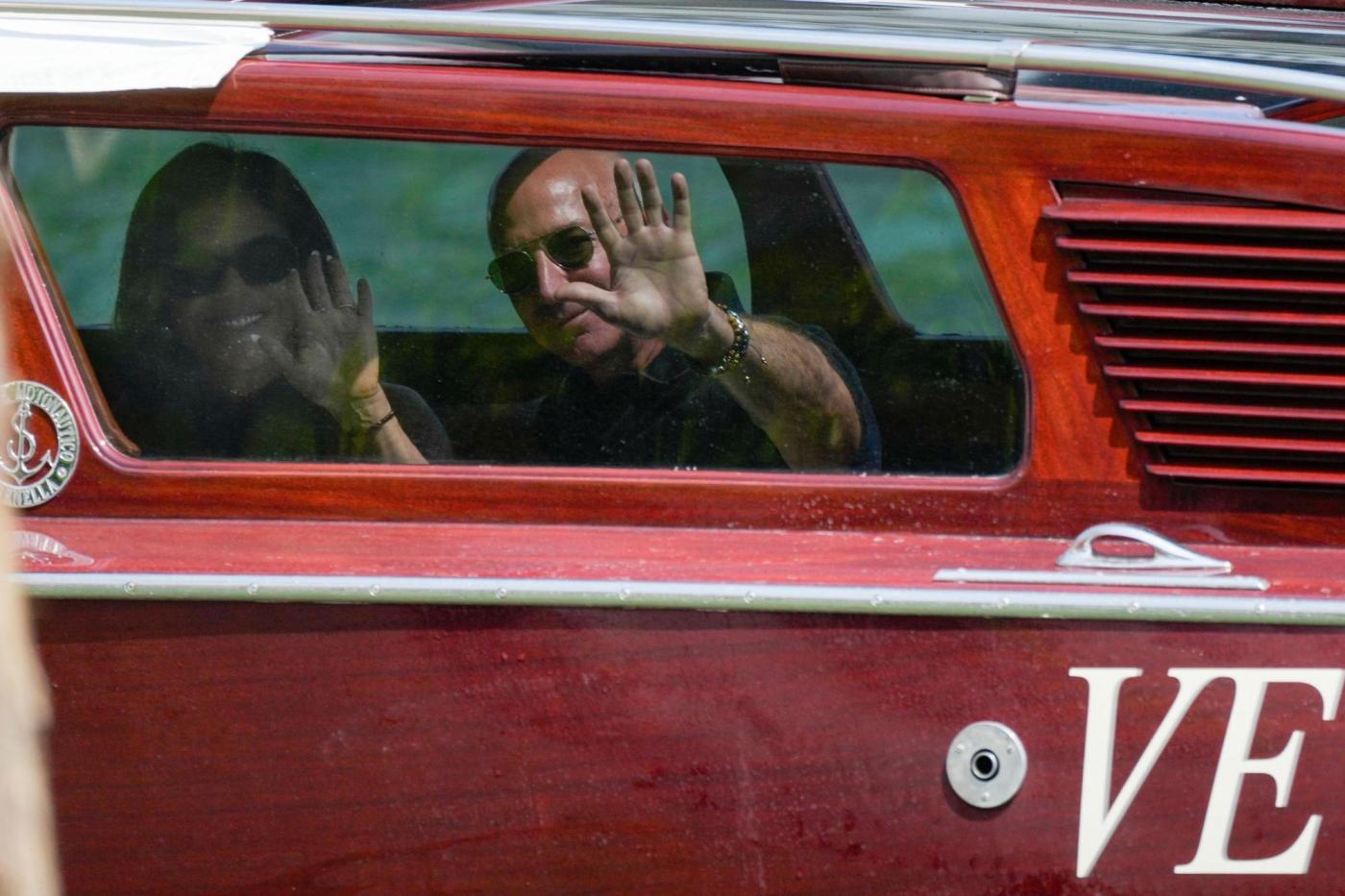
VENICE, Italy (AP) — Multi-billionaire Amazon founder Jeff Bezos and Lauren Sanchez arrived in Venice on Wednesday ahead of their star-studded weekend wedding, an event that has galvanized a wide assortment of activist groups protesting it.

Bezos waved from a water taxi as he and Sanchez arrived at the dock of the Aman Hotel, a five-star hotel on the Grand Canal, with two security boats in tow.

The event has drawn protests by groups who view it as a sign of the growing disparity between the haves and have-nots, while residents complain it exemplifies the way their needs are disregarded in the era of mass tourism to the historic lagoon city.

About a dozen Venetian organizations — including housing advocates, anti-cruise ship campaigners and university groups — have united to protest the multi-day event under the banner “No Space for Bezos,” a play on words also referring to the bride’s recent space flight.

They have staged small-scale protests, unfurling anti-Bezos banners on iconic Venetian sites. They were joined Monday by Greenpeace and the British group “Everyone Hates Elon,” which has smashed Teslas to protest Elon Musk, to unfurl a giant banner in St. Mark’s Square protesting purported tax breaks for billionaires.

On Wednesday, other activists launched a float down the Grand Canal featuring a mannequin of Bezos clinging onto an Amazon box, his fists full of fake dollars. The British publicity firm that announced the stunt said it wasn’t a protest of the wedding “but against unchecked wealth, media control, and the growing privatisation of public spaces.”

There has been no comment from Bezos’ representatives on the protests.

The local activists had planned a more organized protest for Saturday, aiming to obstruct access to canals with boats to prevent guests from reaching a wedding venue. They modified the protest to a march from the train station after claiming a victory, asserting that their pressure forced organizers to change the venue to the Arsenale, a more easily secured site beyond Venice’s congested center.

“It will be a strong, decisive protest, but peaceful,’’ said Federica Toninello, an activist with the Social Housing Assembly network. “We want it to be like a party, with music, to make clear what we want our Venice to look like.”

Among the 200 guests confirmed to be attending the wedding are Mick Jagger, Ivanka Trump, Oprah Winfrey, Katy Perry and Leonardo DiCaprio.

Venice, renowned for its romantic canal vistas, hosts hundreds of weddings each year, not infrequently those of the rich and famous. Previous celebrity weddings, like that of George Clooney to human rights lawyer Amal Alamuddin in 2014, were embraced by the public. Hundreds turned out to wish the couple well at City Hall.

Bezos has a different political and business profile, said Tommaso Cacciari, a prominent figure in the movement that successfully pushed for a ban on cruise ships over 25,000 tons traveling through the Giudecca Canal in central Venice.

“Bezos is not a Hollywood actor,’’ Cacciari said. “He is an ultra-billionaire who sat next to Donald Trump during the inauguration, who contributed to his re-election and is contributing in a direct and heavy way to this new global obscurantism.’’

Related Articles


Trump defends US strikes on Iran as intel assessment stirs debate


Trump says US and Iranian officials will talk next week with war over


NATO leaders agree to hike military spending and restate ‘ironclad commitment’ to collective defense


Today in History: June 25, former White House counsel begins testifying on Watergate scandal


Royal upgrade: Trump will stay at the Dutch king’s palace during his NATO visit

Critics cite Amazon’s labor practices, ongoing tax disputes with European governments and Bezos’ political associations as reasons for concern.

Activists also argue that the Bezos wedding exemplifies broader failures in municipal governance, particularly the prioritization of tourism over residents’ needs. They cite measures such as the day-tripper tax — which critics argue reinforces Venice’s image as a theme park — as ineffective. Chief among their concerns is the lack of investment in affordable housing and essential services.

City officials have defended the wedding. Mayor Luigi Brugnaro called the event an honor for Venice, and the city denied the wedding would cause disruptions.

“Venice once again reveals itself to be a global stage,’’ Brugnaro told The Associated Press, adding he hoped to meet Bezos while he was in town.

Meanwhile, a Venetian environmental research association, Corila, issued a statement saying Bezos’ Earth Fund was supporting its work with an “important donation.”

Corila, which unites university scholars and Italy’s main national research council in researching Venetian protection strategies, wouldn’t say how much Bezos was donating but said contact began in April, well before the protests started.