Senate struggle over Medicaid cuts threatens progress on Trump’s big bill

posted in: All news | 0

By LISA MASCARO

WASHINGTON (AP) — One key unsettled issue stalling progress on President Donald Trump’s big bill in Congress is particularly daunting: How to cut billions from health care without harming Americans or the hospitals and others who provide care?

Related Articles


Federal judge orders US Labor Department to keep Job Corps running during lawsuit


Faith leaders and families sue to block Texas’ new Ten Commandments in schools law


A judge resisted Trump’s order on gender identity. The EEOC just fired her


Trump gets ‘golden share’ power in US Steel buyout. US agencies will get it under future presidents


Trump representative Kari Lake on Voice of America’s fate: ‘Scrap the whole thing and start over’

Republicans are struggling to devise a solution to the health care problem their package has created. Already, estimates say 10.9 million more people would be without health coverage under the House-passed version of the bill. GOP senators have proposed steeper reductions, which some say go too far.

“The Senate cuts in Medicaid are far deeper than the House cuts, and I think that’s problematic,” said GOP Sen. Susan Collins of Maine.

Senators have been meeting behind closed doors and with Trump administration officials as they rush to finish up the big bill ahead of the president’s Fourth of July deadline. Much of the package, with its tax breaks and bolstered border security spending, is essentially drafted. But the size and scope of healthcare cuts are among the toughest remaining issues.

It’s reminiscent of the summer during Trump’s first term, in 2017, when Republicans struggled to keep their campaign promise to “repeal and replace” the Affordable Care Act, or Obamacare, only to see the GOP splinter over the prospect of Americans losing health coverage. That legislation collapsed when then-Sen. John McCain famously cast a thumbs-down vote.

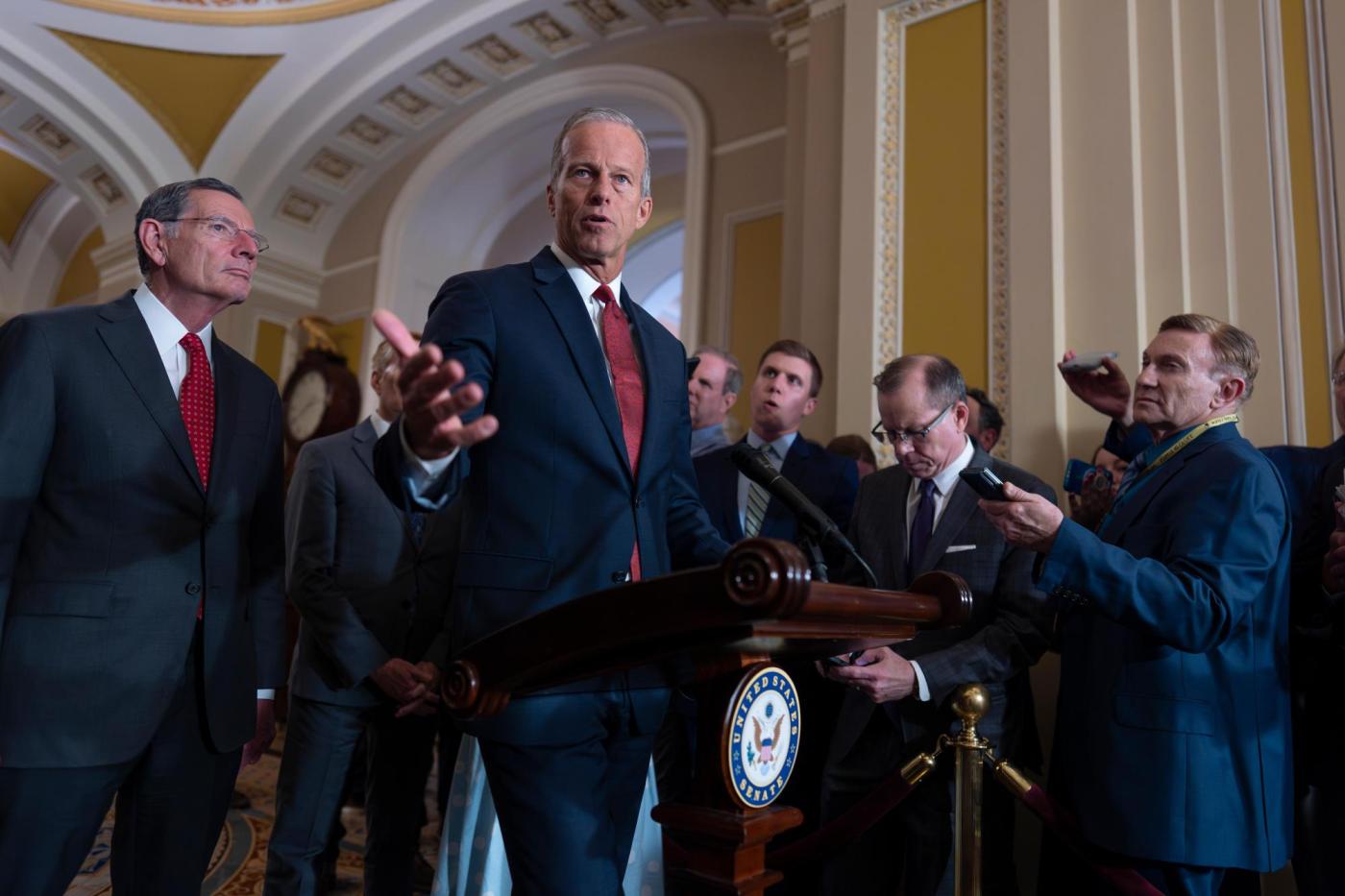
Senate Majority Leader John Thune is determined to avoid that outcome, sticking to the schedule and pressing ahead with voting expected by the end of the week.

“This is a good bill and it’s going to be great for our country,” Thune said, championing its potential to unleash economic growth and put money in people’s pockets.

The changes to the federal health care programs, particularly Medicaid, were always expected to become a centerpiece of the GOP package, a way to offset the costs of providing tax breaks for millions of Americans. Without action from Congress, taxes would go up next year when current tax law expires.

The House-passed bill achieved some $1.5 trillion in savings overall, a large part of it coming from changes to health care. The Medicaid program has dramatically expanded in the 15 years since Obamacare became law and now serves some 80 million Americans. Republicans say that’s far too high, and they want to shrink the program back to a smaller size covering mainly poorer women and children.

House Democratic Leader Hakeem Jeffries said Republicans are “trying to take away healthcare from tens of millions of Americans.” Democrats are uniformly opposed to what they call the “big, ugly bill.”

Much of the health care cost savings would come from new 80-hour-a-month work requirements on those who receive Medicaid benefits, even as most recipients already work.

But another provision, the so-called provider tax that almost all the states impose to some degree on hospitals and others that serve Medicaid patients, is drawing particular concern for potential cuts to rural hospitals.

Sen. Josh Hawley, R-Mo., said several senators spoke up Wednesday during a private meeting indicating they were not yet ready to start voting. “That’ll depend if we land the plane on rural hospitals,” he said.

States impose the taxes as a way to help fund Medicaid, largely by boosting the reimbursements they receive from the federal government. Critics decry the system as type of “laundering” but almost every state except Alaska uses it to help provide the health care coverage.

The House-passed bill would freeze the provider taxes at current levels, while the Senate proposal goes deeper by reducing the tax that some states are able to impose.

“I know the states are addicted to it,” said Sen. Roger Marshall, R-Kan. But he added, “Obviously the provider tax needs to go away.”

But a number of GOP senators, and the hospitals and other medical providers in their states, are raising steep concerns the provider tax changes would decimate rural hospitals.

In a plea to lawmakers, the American Hospital Association said the cuts won’t just affect those who get health coverage through Medicaid, but would further strain emergency rooms “as they become the family doctor to millions of newly uninsured people.”

“And worse, some hospitals, especially those in rural communities, may be forced to close altogether,” said Rick Pollack, president and CEO of the hospital group.

The Catholic Health Association of the United States noted in its own letter that Medicaid provides health insurance coverage for one in five people and nearly half of all children.

“The proposed changes to Medicaid would have devastating consequences, particularly for those in small towns and rural communities, where Medicaid is often the primary source of health care coverage,” said Sister Mary Haddad, the group’s president and CEO.

Trying to engineer a fix to the problem, senators are considering creating a rural hospital fund to help offset the lost Medicaid money.

GOP senators circulated a proposal to pour $15 billion to establish a new rural hospital fund. But several senators said that’s too high, while others said it’s insufficient. Collins has proposed the fund be set at $100 billion.

“It won’t be that big, but there will be a fund,” Thune said.

Hawley, who has been among those most outspoken about the health care cuts, said he’s interested in the rural hospital fund but needs to hear more about how it would work.

“Getting the fund is good. That’s important, a step forward,” Hawley said. But he asked: “How does the fund actually distribute the money? Who will get it to hospitals? … Or is this just going to be something that exists on paper?”

He has also raised concerns about a new $35 per service co-pay that could be charged to those with Medicaid that is in both the House and Senate versions of the bill.

Associated Press writers Kevin Freking, Mary Clare Jalonick and Joey Cappelletti contributed to this story.

A judge resisted Trump’s order on gender identity. The EEOC just fired her

posted in: All news | 0

By CLAIRE SAVAGE

The federal agency charged with protecting workers’ civil rights has terminated a New York administrative judge who opposed White House directives, including President Donald Trump’s executive order decreeing male and female as two “immutable” sexes.

Related Articles


Federal judge orders US Labor Department to keep Job Corps running during lawsuit


Faith leaders and families sue to block Texas’ new Ten Commandments in schools law


Senate struggle over Medicaid cuts threatens progress on Trump’s big bill


Trump gets ‘golden share’ power in US Steel buyout. US agencies will get it under future presidents


Trump representative Kari Lake on Voice of America’s fate: ‘Scrap the whole thing and start over’

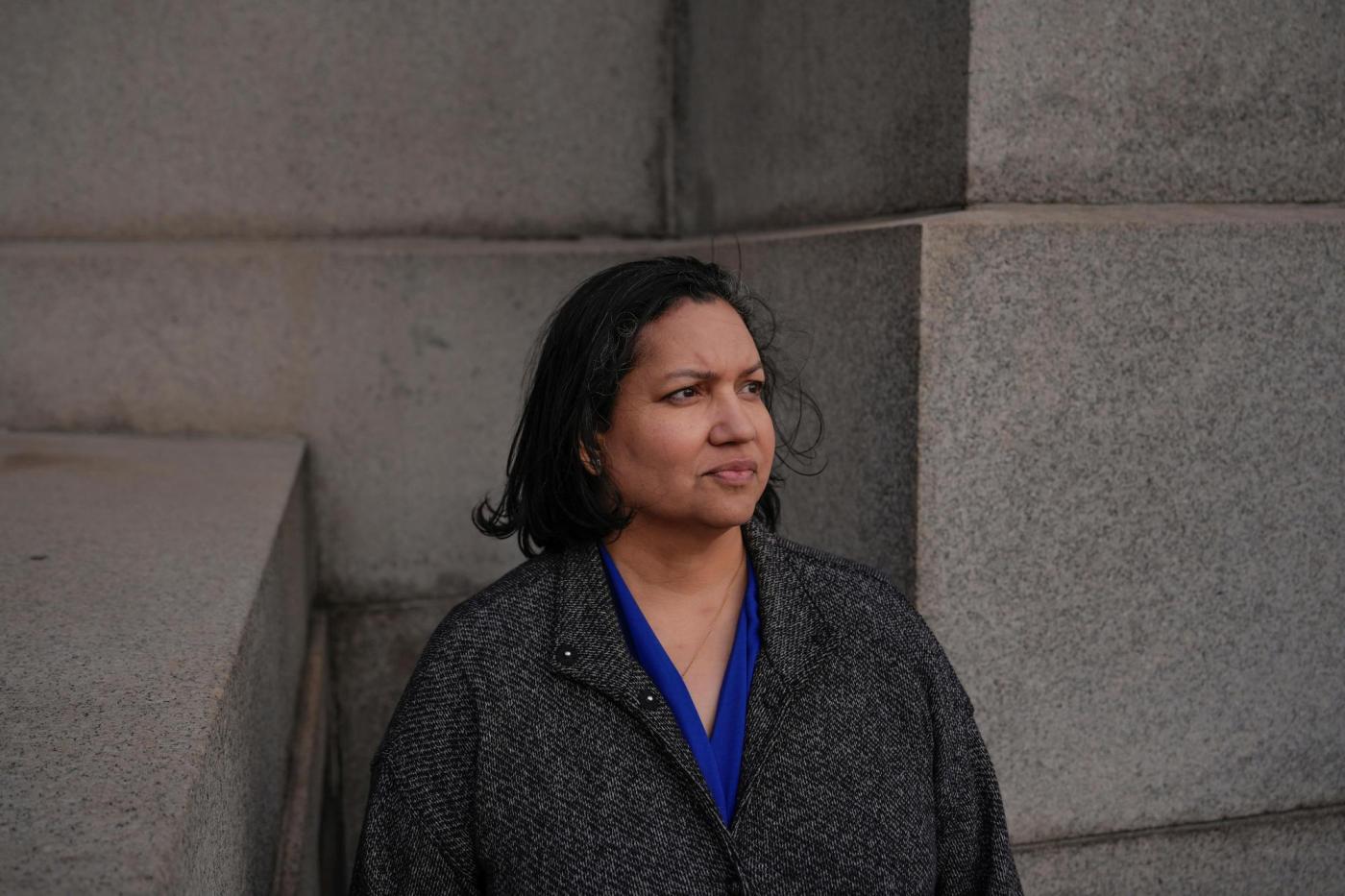
In February, Administrative Judge Karen Ortiz, who worked in the U.S. Equal Employment Opportunity Commission’s New York office, called Trump’s order “unethical” and criticized Acting Chair Andrea Lucas — Trump’s pick to lead the agency — for complying with it by pausing work on legal cases involving discrimination claims from transgender workers. In an email copied to more than 1,000 colleagues, Ortiz pressed Lucas to resign.

Ortiz was fired on Tuesday after being placed on administrative leave last month. The EEOC declined Wednesday to comment on the termination, saying it does not comment on personnel matters.

In response to the president’s order declaring two unchangeable sexes, the EEOC moved to drop at least seven of its pending legal cases on behalf of transgender workers who filed discrimination complaints. The agency, which enforces U.S. workplace anti-discrimination laws, also is classifying all new gender identity-related cases as its lowest priority.

The actions signaled a major departure from the EEOC’s prior interpretation of civil rights law.

In her mass February email criticizing the agency’s efforts to comply with Trump’s order, Ortiz told Lucas, “You are not fit to be our chair much less hold a license to practice law.” The letter was leaked on Reddit, where it gained more than 10,000 “upvotes.” Many users cheered its author.

The EEOC subsequently revoked her email privileges for about a week and issued her a written reprimand for “discourteous conduct.”

Ortiz said she continued to “raise the alarm” about the agency’s treatment of transgender and gender nonconforming complainants, and convey her opposition to the agency’s actions. She sent an April 24 email to Lucas and several other internal email groups with the subject line, “If You’re Seeking Power, Here’s Power” and a link to Tears for Fears’ 1985 hit “Everybody Wants to Rule the World.”

She contested her proposed termination earlier this month, arguing in a document submitted by a union representative that she was adhering to her oath of office by calling out behavior she believes is illegal.

Ortiz “views the Agency’s actions regarding LGBTQIA+ complainants to have made the EEOC a hostile environment for LGBTQIA+ workers,” and believes that leadership has “abandoned the EEOC’s core mission,” the document says.

The judge was hired to work at the EEOC during the first Trump administration, and while she disagreed with some policies then, “she did not take any action because there was no ostensible illegality which compelled her to do so,” the document stated. “What is happening under the current administration is unprecedented.”

The letter requested the withdrawal of Ortiz’s proposed termination, the removal of all disciplinary documents from her personnel file, and that Ortiz be allowed “to continue doing her job.”

The six-page termination notice came anyway. In it, Chief Administrative Judge Regina Stephens called Ortiz’ actions “distasteful and unprofessional,” and concluded that Ortiz’s “work performance is affected” by her disagreements with the current executive orders and direction of EEOC leadership.

The notice also alleged that media circulation of Ortiz’s emails had “affected the reputation and credibility of the Agency.” It cited an Associated Press article that quoted Ortiz saying she stood by her email statements as evidence that her behavior would not change with ”rehabilitation.”

In a Wednesday phone interview with The Associated Press, Ortiz said the news of her termination is “very sad,” although not surprising. “I think the agency has now become something that, I don’t know if I’d even really want to work there anymore. They’ve lost their way,” she said.

Lucas defended her decision to drop lawsuits on behalf of transgender workers during her confirmation hearing before a Senate committee last week. She acknowledged that transgender workers are protected under civil rights laws but said her agency is not independent and must comply with presidential orders.

Ortiz said she traveled from New York to Washington “on my own dime, on my own time” to attend the hearing. “I needed to be there,” she said, adding that she left thank-you notes for Senators who “put Andrea Lucas’ feet to the fire.”

Ortiz said she isn’t sure what comes next for her, only that it will involve fighting for civil rights. And in the short-term, picking up more volunteer dog walking shifts. “I will keep fighting for the LGBTQ community in whatever way I can,” she told AP.

She added: “It takes courage to take a stand, and be willing to be fired, and lose a six-figure job, and health insurance, and the prestige of the title of ‘judge,’ but I think it’ll also serve an example to future lawyers and young lawyers out there that a job title isn’t everything, and it’s more important to stay true to your values.”

The Associated Press’ women in the workforce and state government coverage receives financial support from Pivotal Ventures. AP is solely responsible for all content. Find AP’s standards for working with philanthropies, a list of supporters and funded coverage areas at AP.org.

Twins pitching staff searching for answers amid tough stretch

posted in: All news | 0

After watching his pitchers give up a combined 46 runs in the past four games, Twins pitching coach Pete Maki convened a meeting of the group before Tuesday night’s game. It seemed like the right time for it.

The Twins entered Wednesday night’s game against Seattle losers of 11 of their past 12 games. They had a league-worst 6.73 earned-run average in the month of June — by almost a run and a half. They’re searching for answers.

Sure, they lost their ace Pablo López to a shoulder injury early in the month; that certainly has not helped matters. But the issues run far deeper than just López’s absence.

“We have very talented guys in the bullpen and rotation. This is part of any season,” Maki said. “Has it been bad? Yeah, it’s been bad, man. The run getting to fourth base has been a little insane. The way to really evaluate is each outing. What led to it today? What do you want back?”

It’s been a little different on a nightly basis, but a big culprit has been free bases. Jhoan Duran, for example, hit a pair of batters on Tuesday night in the ninth inning of a tied game, leading to a Mariners run in the Twins’ one-run loss.

And the Twins’ strikeout-to-walk ratio, once tops in the majors, has plummeted. Heading into Wednesday, the 76 walks the pitching staff has issued in June was tied for sixth in the majors. In May, a month during which they had a collective 3.11 earned-run average, they walked just 60 batters, tied for first in the majors.

“The past month we’re kind of the opposite of No. 1,” Maki said. “So, what’s leading to that? We’re walking a few too many guys.”

Yes, walks have been a problem, but really there is no easy answer to what has ailed the pitching staff as a whole, which carried the team earlier in the season, considering it varies pitcher to pitcher, day to day.

The pitchers meeting on Tuesday focused heavily on checking back in on the goals they had set for themselves as a group during spring training and assessing where they were at with those, starter Chris Paddack said. Manager Rocco Baldelli said another focus was on controlling what they could control and starting from there, calling it a “good reminder for everyone in the room.”

Paddack, Baldelli said, was one of the guys who stepped up to address the group and “spoke from the heart,” delivering what the manager described as an emotional message to the pitching staff.

“Obviously, whenever you’re going through a tough stretch, you need to have each other’s backs and try to support one another whenever we’re going through hard times like we have been the last couple weeks,” starter Bailey Ober said. “Just being able to come together as a group and support each other, it always means a lot. It was a good, successful meeting. I thought it was well needed, and hopefully we come out of that and kind of turn the script.”

Briefly

The Twins have Friday’s starter against Detroit listed as TBA. That would be David Festa’s day to start. Baldelli said it’s possible that Festa starts that game or it’s possible they use an opener, as they did during Festa’s last turn through the rotation. … Simeon Woods Richardson is scheduled to start the series finale against the Seattle Mariners on Thursday afternoon.

Related Articles


Twins battle back but fall yet again to Mariners


Report: Twins pick up option on manager Rocco Baldelli’s contract for 2026


Twins blown out yet again — this time by Mariners


Twins say selling at deadline ‘not at all our focus’


Coulombe used as opener against Brewers

Trump gets ‘golden share’ power in US Steel buyout. US agencies will get it under future presidents

posted in: All news | 0

By MARC LEVY

HARRISBURG, Pa. (AP) — President Donald Trump will control the so-called “golden share” that’s part of the national security agreement under which he allowed Japan-based Nippon Steel to buy out iconic American steelmaker U.S. Steel, according to disclosures with the U.S. Securities and Exchange Commission.

Related Articles


Trump representative Kari Lake on Voice of America’s fate: ‘Scrap the whole thing and start over’


Democrats fret about national fallout after Mamdani stuns in New York City


Who is Zohran Mamdani? State lawmaker seeks to become NYC’s first Muslim and Indian American mayor


Fannie Mae, Freddie Mac ordered to consider crypto as an asset when buying mortgages


Trump voters cheer his move against Iran. MAGA leaders had warned the bombing could backfire

The provision gives the president the power to appoint a board member and have a say in company decisions that affect domestic steel production and competition with overseas producers.

Under the provision, Trump — or someone he designates — controls that decision-making power while he is president. However, control over those powers reverts to the Treasury Department and the Commerce Department when anyone else is president, according to the filings.

The White House didn’t immediately respond to questions Wednesday about why Trump will directly control the decision-making and why it goes to the Treasury and Commerce departments under future presidents.

Nippon Steel’s nearly $15 billion buyout of Pittsburgh-based U.S. Steel became final last week, making U.S. Steel a wholly owned subsidiary.

Trump has sought to characterize the acquisition as a “partnership” between the two companies after he at first vowed to block the deal — as former President Joe Biden did on his way out of the White House — before changing his mind after he became president.

The national security agreement became effective June 13 and is between Nippon Steel, as well as its American subsidiary, and the federal government, represented by the departments of Commerce and Treasury, according to the disclosures.

The complete national security agreement hasn’t been published publicly, although aspects of it have been outlined in statements and securities filings made by the companies, U.S. Steel said Wednesday.

The pursuit by Nippon Steel dragged on for a year and-a-half, weighed down by national security concerns, opposition by the United Steelworkers and presidential politics in the premier battleground state of Pennsylvania, where U.S. Steel is headquartered.

The combined company will become the world’s fourth-largest steelmaker in an industry dominated by Chinese companies, and bring what analysts say is Nippon Steel’s top-notch technology to U.S. Steel’s antiquated steelmaking processes, plus a commitment to invest $11 billion to upgrade U.S. Steel facilities.

The potential that the deal could be permanently blocked forced Nippon Steel to sweeten the deal.

That included upping its capital commitments in U.S. Steel facilities and adding the golden share provision, giving Trump the right to appoint an independent director and veto power on specific matters.

Those matters include reductions in Nippon Steel’s capital commitments in the national security agreement; changing U.S. Steel’s name and headquarters; closing or idling U.S. Steel’s plants; transferring production or jobs outside of the U.S.; buying competing businesses in the U.S.; and certain decisions on trade, labor and sourcing outside the U.S.

Follow Marc Levy on X at: https://x.com/timelywriter.