Opinion: Trump’s Pipelines Will Endanger New Yorkers’ Health and Safety

posted in: All news | 0

“Short-term mistakes have long-term consequences. Once built, pipelines operate for decades, undermining renewable investments and perpetuating environmental injustice.”

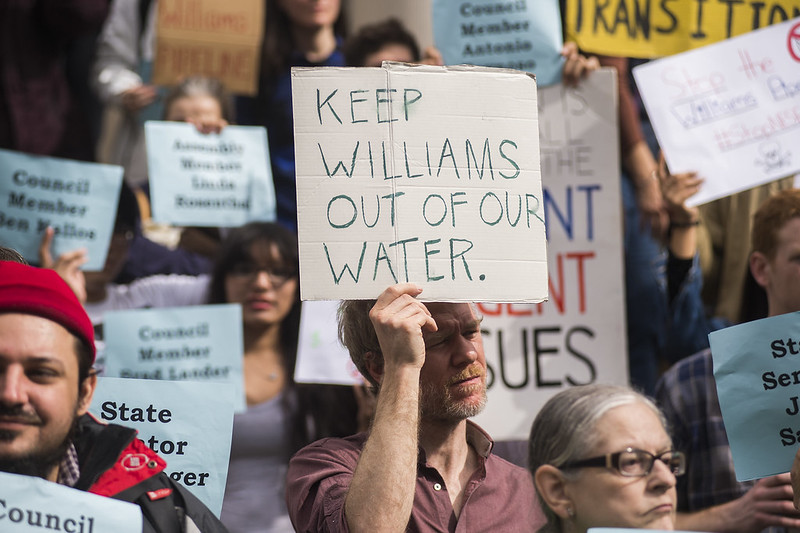
A rally against a proposed Williams pipeline on the steps of City Hall in March 2019. Two of the company’s previously rejected projects are getting new consideration under the Trump administration, to the dismay of environmentalists. (Jeff Reed/NYC Council)

New York is once again under siege from the fossil fuel industry, and this time, they’ve got President Donald Trump and his enforcer, U.S. Environmental Protection Agency director Lee Zeldin, on board.

Two fracked gas pipelines, the Northeast Supply Enhancement (NESE) and Constitution projects, have resurfaced after being repeatedly shot down by state regulators—and NESE is being rushed through the permitting process. Our state must reject these projects once again, and draw a clear line: no new gas pipelines in New York.

Both pipelines were blocked by the state’s Department of Environmental Conservation (DEC) for good reason: they endanger our water quality, violate our climate mandates, and work against our clean air goals. But emboldened by the Trump administration, corporate proponents have brought the projects back and are trying to make an end run around the law. Unless Gov. Kathy Hochul stands up for New Yorkers’ rights and pocketbooks, we’ll have more expensive, polluting energy boondoggles running through our state.

Every new pipeline locks New York into a fossil-fuel future that we cannot afford. The stakes couldn’t be higher. Harmful air pollution, irreparable damage to our water resources, a boost in harmful emissions as the climate crisis escalates—these all come with a new pipeline. Pipelines would ratchet up greenhouse gas emissions and entrench fracked‑gas infrastructure for decades, making it even harder for New York to meet the emissions reduction goals required by law under the 2019 Climate Leadership & Community Protection Act (CLCPA).

They would also be environmentally ruinous. The Constitution project would impact at least 250 New York waterways and wetlands, spanning 85 trout streams and nearly 500 acres of forest. Courts agreed the state’s denial was based on sound science. NESE, similarly, was denied in 2020 based in part on its underwater impact in New York Harbor.

RELATED READING: Trump Lifts Pause on NY Offshore Wind Project, But Does it Come at a Price?

The governor says we need to explore all energy sources in the short term to ensure energy reliability. “All of the above” makes for a good soundbite, but it’s lousy policy. We need to focus on those energy sources that are cost-effective, advance our climate goals, and prepare us for the future.

Short-term mistakes have long-term consequences. Once built, pipelines operate for decades, undermining renewable investments and perpetuating environmental injustice. And then, when clean energy eventually becomes the standard, as it will, they will be left to rot in communities that already bear the brunt of misguided energy policy.

And it’s utility customers who will pay. National Grid estimates that its customers in New York City and Long Island will see a 3.5 percent increase in costs to pay for construction of NESE. Fossil fuel development is not only dirty, it’s economically indefensible.

Already more than 120 organizations are on record demanding that the governor reject any revival of NESE. Hundreds of Environmental Advocates NY’s own members have submitted comments. They say our climate and public health needs, not the interests of fossil fuel lobbyists, must drive energy policy.

There are far cleaner, cheaper, and faster ways to create more energy: public and private wind and solar build‑outs, geothermal, efficiency upgrades. That’s what New York’s renewable mandates demand, not doubling down on fossil infrastructure that locks in energy costs and carbon emissions for generations. 

To Gov. Hochul and Albany leaders: honor our climate commitments under the CLCPA, which mandates emissions reductions, and reflects our determination to protect our rights, communities, and climate future. Don’t cave to federal pressure or industry lobbying. Don’t gamble with clean water, public health, or climate leadership. Don’t ignore the communities who have to live with dirty air and water.

And when it comes to projects like NESE and Constitution, just say no. Instead, invest in the energy solutions of the future that New Yorkers need and deserve. It’s long past time to put people ahead of fossil fuels.

Katherine Nadeau is deputy executive director of policy and programs at Environmental Advocates NY.

The post Opinion: Trump’s Pipelines Will Endanger New Yorkers’ Health and Safety appeared first on City Limits.

St. Paul City Council OKs rezoning for housing at former Hamm’s brewery

posted in: All news | 0

St. Paul City Council has given its final approval for a plan to rezone parts of the former Hamm’s brewery to make way for new housing development — despite earlier concerns from the city’s planning commission about illegal zoning and a lawsuit challenging changes at the site.

Council members voted 6-0 at a Wednesday meeting to approve an ordinance that will switch multiple parcels of land at the Hamm’s site from industrial into traditional neighborhood zones to accommodate affordable housing.

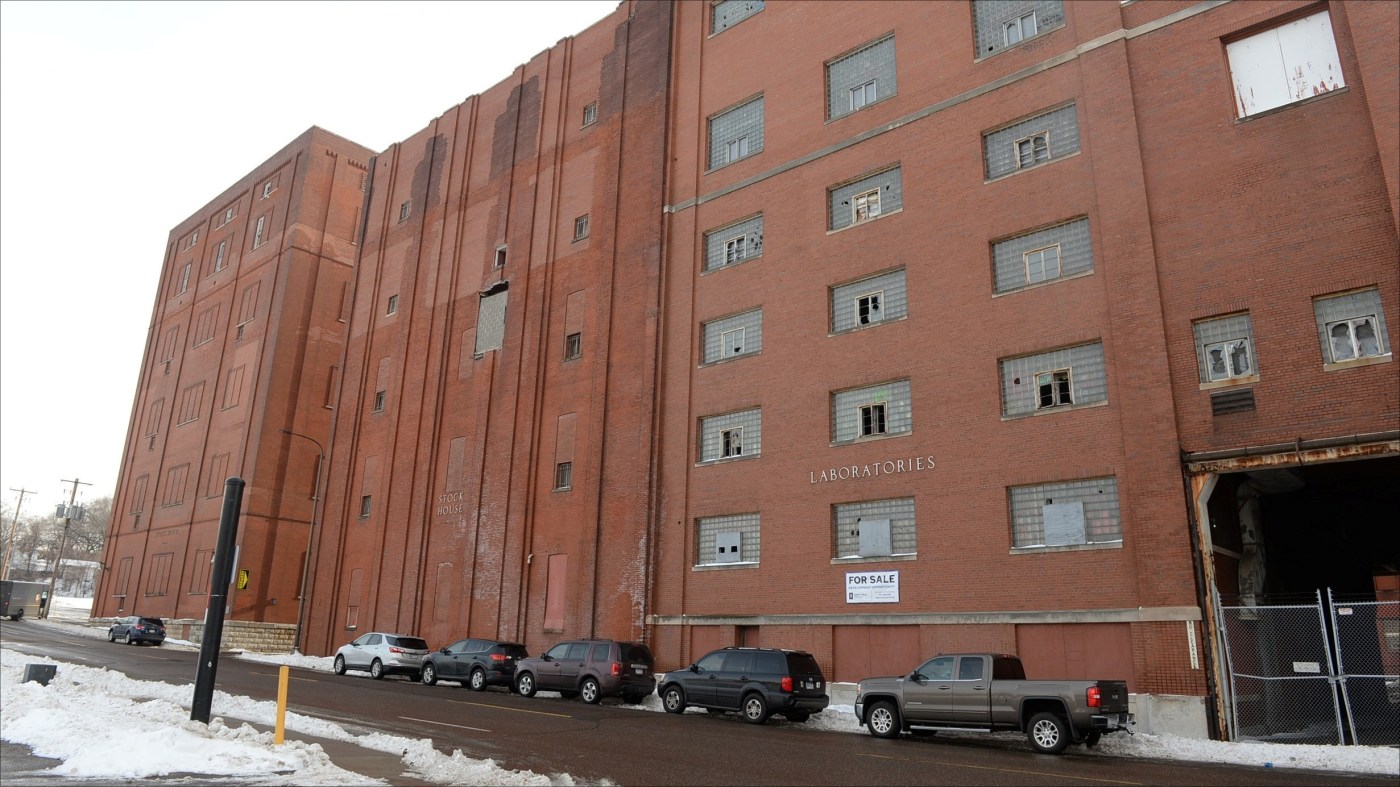
If the rezoning survives a legal challenge, it will allow the city and developer to begin work on building a new apartment building and lofts on land owned by the city Housing and Redevelopment Authority at the 19th-century Hamm’s Brewery campus off Payne and Minnehaha avenues on St. Paul’s East Side.

Supporters argue that St. Paul needs more housing, and the former Hamm’s brewery, which closed in 1997, is seen as an ideal location for development. Council Member Cheniqua Johnson, who chairs the HRA, said converting space to housing will help the city collect more tax revenue from what she called unused space.

“It will create needed affordable housing in our city. It will redevelop the use of the land that has sat vacant for 30 years,” she said, envisioning a future “walkable and transit-oriented neighborhood.”

Businesses at Hamm’s site

Businesses have already developed large parts of the Hamm’s site after the HRA started selling off parcels in 2012. After major recent expansions, they worry that new housing construction will eliminate parking spaces in the area — which they say the HRA promised when it sold off property.

St. Paul Brewing owner Rob Clapp has said he doesn’t oppose turning a brewery building across the parking lot from his business into housing, but worries a new building in a 148-stall surface parking lot could hurt the businesses at the site.

Clapp, who also owns Dark Horse Bar & Eatery in Lowertown and Can Can Wonderland in Hamline-Midway, acquired property on the Hamm’s site in 2021.

Since acquiring Hamm’s property four years ago, his businesses have expanded. St. Paul Brewing now has a sprawling patio, and there are plans to open a cocktail lounge tied to the 11Wells distillery in another building on the site. Clapp has started a fabrication shop where artists build new works for display at his businesses.

Lawsuit

In anticipation of a council vote that would eliminate parking and potentially interfere with his access to spots around the Hamm’s site, Clapp filed a lawsuit against the city last week. He’s asking a judge to block the rezoning and ensure he keeps parking rights and other easements on the site.

The patio at St. Paul Brewing is surrounded by the historic walls of the original Hamm’s Brewery. (Courtesy of St. Paul Brewing)

Clapp’s argument? The city sold off property at the Hamm’s site years ago with the promise that businesses would have access to parking, which he says is vital to the continued health and survival of the brewery, distillery and other future expansions.

Parking isn’t the only issue. In a 9-2 May vote, the City Planning Commission found that two of the five parcels the city planned to rezone constituted illegal “spot zoning,” a practice where a city reclassifies a small part of a land parcel to allow a project to go forward.

One of those two spots is the parking lot, and is one of the things Clapp is hoping a judge will stop. The Minnesota Supreme Court has ruled against spot zoning in the past.

Despite the Planning Commission’s ruling, Nicolle Newton, director of the city’s Department of Planning and Economic Development that the city attorney’s office disagreed.

Housing plans

St. Paul Developer JB Vang has developed plans for housing at the Hamm’s site, something the mayor’s office has backed as well. Original plans called for 259 affordable housing units and a two-level indoor marketplace.

The brewhouse building would hold the marketplace and 84 artist lofts. The east parking lot would have been turned into 11 rowhomes and 164 rental apartments.

Rowhome plans are no longer moving forward, and JB Vang cut the number of proposed units from 164 to 110 to allow for a parking lot with 70 spots.

But Clapp says that still won’t allow for enough parking at the complex. His lawsuit claims that if fully developed, the area could require as many as 450 parking spaces under the parking minimum requirements the city repealed in 2021.

The Dayton’s Bluff Community Council and Payne-Phalen Community Council support the change, arguing the area has a high rate of evictions and needs more affordable housing.

Related Articles


St. Paul mayor’s race begins in earnest, Kaohly Her launches campaign


Man fatally shot in St. Paul ID’d as 26-year-old from Minneapolis


MN Court of Appeals reverses murder conviction in St. Paul alley shooting


Foul play not suspected in death of woman, 70, found in St. Paul senior living fire


Victim of deadly tire iron assault in St. Paul identified

Parents of kids swept away in Texas floods beg lawmakers to protect future campers

posted in: All news | 0

By HEATHER HOLLINGSWORTH

When floodwaters rushed through a girl’s summer camp nestled in the Texas Hill Country, Michael McCown’s 8-year-old daughter was among 27 campers and counselors swept to their deaths.

Related Articles


Microsoft employee protests lead to arrests as company reviews its work with Israel’s military


Man charged with killing an ‘American Idol’ exec and husband will undergo mental evaluation


FTC sues LA Fitness operators for ‘exceedingly difficult’ gym cancellation policies


US attorney will no longer bring felony charges against people for carrying rifles or shotguns in DC


What to know about the Menendez brothers’ parole hearings

On Wednesday, McCown joined other Camp Mystic parents, some wearing buttons memorializing “Heaven’s 27,” in demanding that Texas lawmakers pass a bill that would boost camp safety, including generally keeping cabins out of flood plains, instituting new requirements for emergency plans and mandating weather radios.

“It will hurt my family forever that, for reasons I still do not know, these protections were not in place nor thought out thoroughly for my daughter and the rest of the girls here,” he said. “Please pass this bill, protect our kids and do not let their deaths be in vain.”

McCown’s middle child, Linnie, was sandwiched between two brothers. She was sometimes a pest to her 11-year-old brother. But to the youngest, just 3, she was mother figure, making him cereal on weekends so her parents could catch a few minutes of sleep.

“To everyone else she was a joy,” her father told lawmakers. “She hugged her teachers, was a friend to everybody and spread an infectious giggle everywhere she went.”

Then came the floods.

Just before daybreak on the Fourth of July, destructive, fast-moving waters rose 26 feet on the Guadalupe River, washing away homes and vehicles. All told, at least 136 people died, raising questions about how things went so terribly wrong.

FILE – A building at Camp Mystic is reflected in water after a flash flood swept through the area, on July 7, 2025, in Hunt, Texas. (AP Photo/Eli Hartman, File)

County leaders were asleep or out of town. The head of Camp Mystic had been tracking the weather beforehand, but it’s now unclear whether he saw an urgent warning from the National Weather Service that had triggered an emergency alert to phones in the area, a spokesperson for camp’s operators said in the immediate aftermath.

Some of the camp’s buildings — which flooded — were in what the Federal Emergency Management Agency considered a 100-year flood plain. But in response to an appeal, FEMA in 2013 amended the county’s flood map to remove 15 of the camp’s buildings from the hazard area.

Upon learning of the flooding, McCown rushed to the town of Kerrville to pick up Linnie, receiving an email en route that if parents hadn’t been personally contacted, then their daughters are accounted for.

“I felt a wave of relief, which was quickly shattered about 30 minutes later when my wife called incredibly distraught to say that Linnie is missing,” he recalled.

He joined the search downstream from the camp and found the body of a deceased girl. He also made two trips to a funeral home to identify bodies. One was not Linnie; the other, he believed, was. He later provided authorities with a DNA swab.

He’s haunted by questions.

Camp Mystic flood victim photos are seen on a lawmaker’s desk as families testify in front of the Senate Disaster Preparedness and Flooding committee at the Texas Capitol in Austin, Wednesday, Aug. 20, 2025. (Mikala Compton/Austin American-Statesman via AP)

“How,” he asked, “could these girls vanish into the night without anyone having eyes on them while cabins literally just 20 yards away had no casualties? So what went wrong?”

Cici Williams Steward said assurances that her daughter, Cile Steward, would be safe were betrayed and protocols that should have been in place were ignored. Today, the body of the 8-year-old “remains somewhere in the devastation of the Guadalupe River,” the only Camp Mystic camper still missing.

“We are suspended in endless anguish, unable to move forward, unable to find peace,” a tearful Steward said. “We ask you, please pass SB1 so no parent sends their child to camp believing they are safe only to face this nightmare. And just as urgently, please do not stop the search for Cile Steward. Please do not give up on our girl.”

Sen. Charles Perry, R-Lubbock, speaks before Camp Mystic families who lost their daughters in the July 4 flooding testify in front of the Senate Disaster Preparedness and Flooding committee at the Texas Capitol in Austin, Wednesday, Aug. 20, 2025. (Mikala Compton/Austin American-Statesman via AP)

Texas State Sen. Charles Perry described the proposed legislation as a “legacy to the loss” and an answer to what has been learned during hours of public testimony. He said it’s dubbed the “Heaven’s 27 Camp Safety Act.”

“It’s only appropriate,” Perry said, “to memorialize the 27 little girls that lost their lives at Camp Mystic in this way.”

Here’s how to get to the State Fair

posted in: All news | 0

It can take some planning to get to the State Fair.

Here’s what you need to know about transit and parking options.

Park-and-ride, Express Bus options

There are 34 free park-and-ride options offered during the Fair.

Buses run from 8 a.m. to 11:30 p.m. (9:30 p.m. on Labor Day). The last bus to the Fair runs at 8 p.m. (6 p.m. on Labor Day) and the last one leaves the Fair to return to a park-and-ride lot at 11:30 p.m. (9:30 p.m. on Labor Day). Times vary based on traffic and crowds. Grandstand shows typically end between 10 p.m. and 11 p.m., with the last show on Labor Day ending at 4 p.m.

Metro Transit park-and-ride locations can be found in Blaine, Maplewood, Minnetonka, Bloomington, Cottage Grove and Maple Grove, with Maple Grove service only available on weekends and Labor Day.

For more information go to mnstatefair.org/get-here/free-park-and-ride.

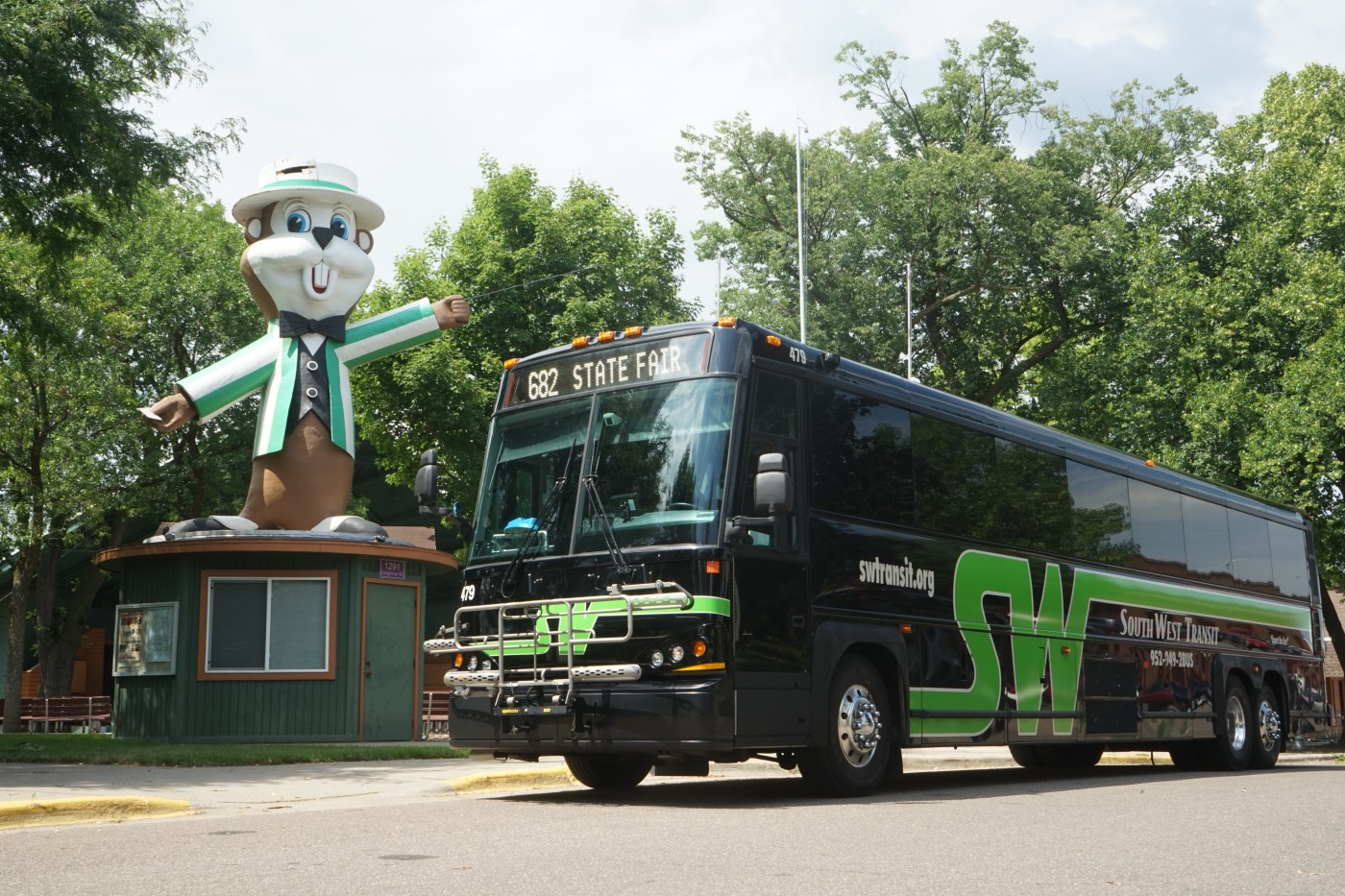
There’s also service from Express Bus provided by Metro Transit as well as Minnesota Valley Transit Authority and SouthWest Transit. All Express service is wheelchair accessible.

For information on these options go to mnstatefair.org/get-here/metro-transit/.

New this year — service begins at 7 a.m. from all three Minnesota Valley Authority Express Bus Service stations.

Bus fare through Metro Transit app, parking updates

Those purchasing tickets through the Metro Transit app can get a small discount. A round-trip ticket costs $5 through the app or their website and $6 at boarding locations.

For real-time updates, such as on parking lot capacity, visit Metro Transit’s social media on Facebook and its alerts-only feed on X, formerly known as Twitter.

Falcon Heights street parking

The Falcon Heights City Council voted in May to create temporary paid parking zones during the Fair, making around 1,000 parking spots near the Fairgrounds available for a fee.

The pay-by-mobile parking program turns select city streets east of Snelling Avenue into paid parking zones and charges $25 per day for vehicles to park between 8 a.m. and 8 p.m. during the 12 days of the Fair. Trained ambassadors hired by the city will be available to give directions, answer questions and enforce parking.

The streets north of Larpenteur Avenue include: Asbury, Arona, Simpson, Pascal, Holton, Albert, Ruggles and Crawford. Avenues to the south of Larpenteur include: California, Idaho and Iowa.

Fair attendees can pay via website, app or automated pay-by-phone line and enforcement is tied to license plate information. See how to pay and other Falcon Heights parking information at falconheights.org/residents/parking/state-fair-parking.

Parking violations are $100 from Aug. 15 to Sept. 15.

Residents living on streets designated as a parking zone received one free parking pass in the mail starting in July, with additional passes available by request.

Road work wrapped up

Meanwhile, recent road work that closed portions of Interstate 94 from Interstate 35W to Minnesota Highway 280 in recent days has wrapped up.

Work is expected to resume after Labor Day and the end of the Fair.

Bikes and scooters

Those riding a non-licensed bike or scooter to the Fair can park in one of three free corrals on Fairgrounds. The corrals are located at the Loop Gate on Como Avenue, the North End Gate, and the Randall Avenue-Buford Gate. The corrals are open from 6 a.m. to 11:30 p.m. (9 p.m. on Labor Day).

Bikes or scooters with license plates must park in the Motorcycle Lot ($15 each) or in the general parking lots on the Fairgrounds ($25). Attendees may also park and lock bicycles at Express Bus lots and ride a bus to and from the Fair.

Related Articles


Photos: Beehive of activity at Minnesota State Fair


Minnesota State Fair 2025: A look at this year’s Grandstand offerings


Here’s your full day-by-day guide to free fun at the 2025 Minnesota State Fair


‘Monopoly: St. Paul Edition’ hits the landmarks, nails the Minnesota-isms in Thursday debut


Minnesota State Fair 2025: What’s new, what’s changing, and what’s gone from the Fairgrounds