Bryan Kohberger to plead guilty to murder in Idaho student stabbings to avoid death penalty

posted in: All news | 0

By REBECCA BOONE and GENE JOHNSON

BOISE, Idaho (AP) — Bryan Kohberger has agreed to plead guilty to murdering four University of Idaho students as part of a deal to avoid the death penalty, an attorney for one victim’s family said.

Related Articles


AI ghosts: Researchers explore planning for death with new technology


‘An American tradition’: Strong demand for fireworks locally, nationally


‘A retail apocalypse’: Big box and chain retailers undergo wave of closures


Televangelist Jimmy Swaggart, whose ministry was toppled by prostitution scandals, dies at 90


Jury deliberating at Sean ‘Diddy’ Combs’ sex trafficking trial asks to review Cassie’s testimony

Shanon Gray, an attorney representing the family of Kaylee Goncalves, confirmed Monday that prosecutors informed the families of the deal by email and letter earlier in the day, and that his clients were upset about it.

“We are beyond furious at the State of Idaho,” Goncalves’ family wrote in a Facebook post. “They have failed us. Please give us some time. This was very unexpected.”

They spoke with the prosecution on Friday about the idea of a plea deal and they explained they were firmly against it, the family wrote in another post. By Sunday, they received an email that “sent us scrambling,” and met with the prosecution again on Monday to explain their views about pushing for the death penalty.

“Unfortunately all of our efforts did not matter. We DID OUR BEST! We fought harder then anyone could EVER imagine,” the family wrote.

A change of plea hearing was set for Wednesday, but the family has asked prosecutors to delay it to give them more time to travel to Boise, Gray said. Kohberger’s trial was set for August in Boise, where it was moved following pretrial publicity in rural northern Idaho.

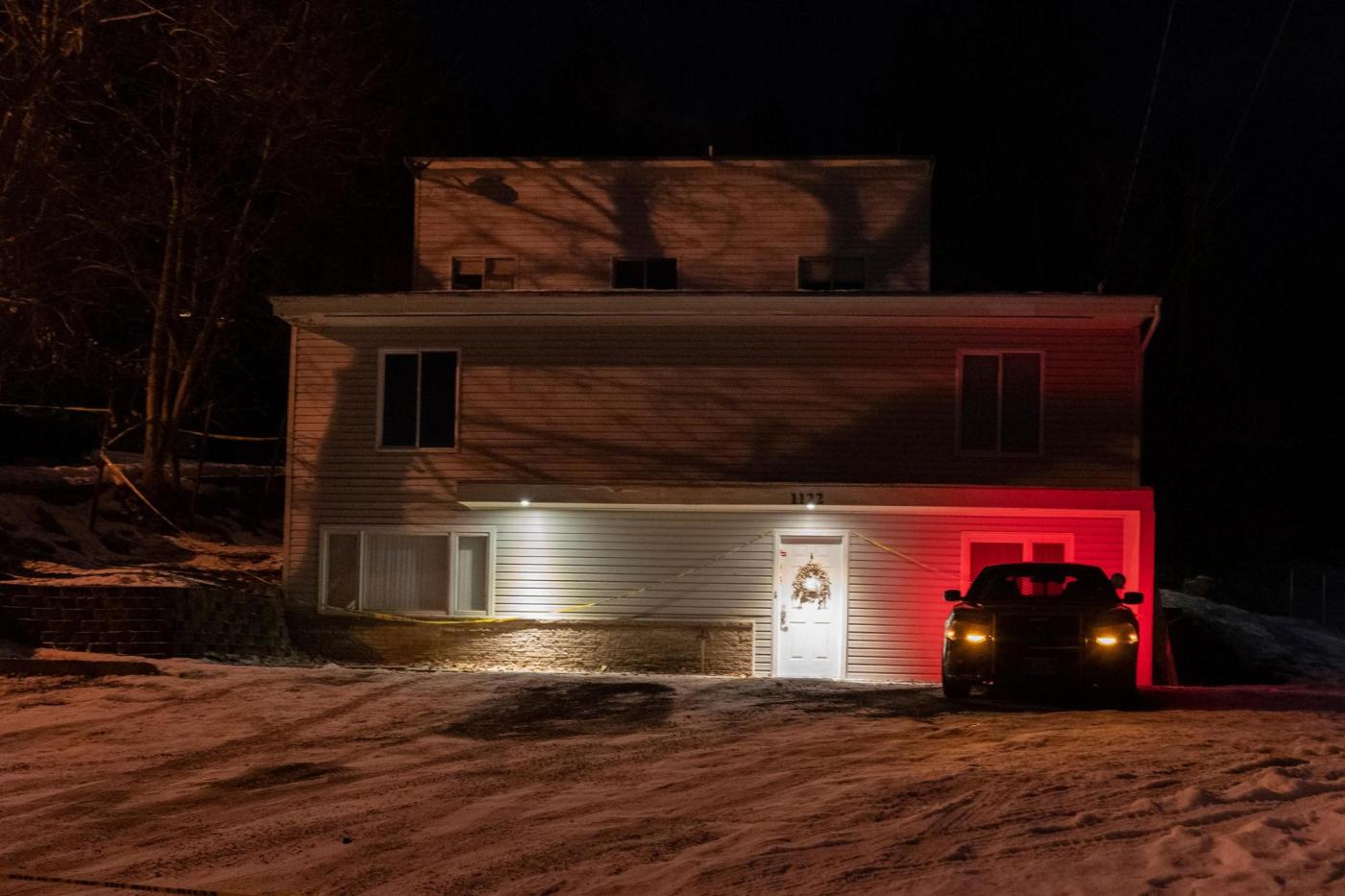
Kohberger, 30, is accused in the stabbing deaths of Goncalves, Ethan Chapin, Xana Kernodle and Madison Mogen at a rental home near campus in Moscow, Idaho, early on Nov. 13, 2022. Autopsies showed the four were all likely asleep when they were attacked, some had defensive wounds and each was stabbed multiple times.

At the time, Kohberger was a criminal justice graduate student at Washington State University, about 9 miles west of the University of Idaho. He was arrested in Pennsylvania, where his parents lived, weeks later. Investigators said they matched his DNA to genetic material recovered from a knife sheath found at the crime scene.

No motive has emerged for the killings, nor is it clear why the attacker spared two roommates who were in the home. Authorities have said cellphone data and surveillance video shows that Kohberger visited the victims’ neighborhood at least a dozen times before the killings.

The murders shocked the small farming community of about 25,000 people, which hadn’t had a homicide in about five years, and prompted a massive hunt for the perpetrator. That included an elaborate effort to track down a white sedan that was seen on surveillance cameras repeatedly driving by the rental home, to identify Kohberger as a possible suspect through the use of genetic genealogy and to pinpoint his movements the night of the killings through cellphone data.

In a court filing, Kohberger’s lawyers said he was on a long drive by himself around the time the four were killed.

In the letter to families, obtained by ABC News, prosecutors said Kohberger’s lawyers approached them seeking to reach a plea deal. The defense team had previously made unsuccessful efforts to have the death penalty stricken as a possible punishment, including arguing that Kohberger’s autism diagnosis made him less culpable.

The prosecutors said they met with available family members last week before deciding to make Kohberger an offer.

“This resolution is our sincere attempt to seek justice for your family,” the letter said. “This agreement ensures that the defendant will be convicted, will spend the rest of his life in prison, and will not be able to put you and the other families through the uncertainty of decades of post-conviction, appeals. Your viewpoints weighed heavily in our decision-making process, and we hope that you may come to appreciate why we believe this resolution is in the best interest of justice.”

In a Facebook post, the Goncalves family wrote that Kaylee’s 18-year-old sister, Aubrie, had been unable to attend the meeting with prosecutors. But she shared her concerns in a written statement.

“Bryan Kohberger facing a life in prison means he would still get to speak, form relationships, and engage with the world,” Aubrie Goncalves wrote. “Meanwhile, our loved ones have been silenced forever. That reality stings more deeply when it feels like the system is protecting his future more than honoring the victims’ pasts.”

In Idaho, judges may reject plea agreements, though such moves are rare. If a judge rejects a plea agreement, the defendant is allowed to withdraw the guilty plea.

Earlier Monday, a Pennsylvania judge had ordered that three people whose testimony was requested by defense attorneys would have to travel to Idaho to appear at Kohberger’s trial.

The defense subpoenas were granted regarding a boxing trainer who knew Kohberger as a teenager, a childhood acquaintance of Kohberger’s and a third man whose significance was not explained.

A gag order has largely kept attorneys, investigators and others from speaking publicly about the investigation or trial.

Johnson reported from Seattle. Associated Press reporter Mark Scolforo contributed from Stroudsburg, Pennsylvania.

Columbia Heights teen found deceased weeks after he went missing

posted in: All news | 0

A teenager missing for about seven weeks was found deceased over the weekend, the Anoka County Sheriff’s Office said Tuesday.

Public safety officials found a body Saturday afternoon, and DNA testing confirmed it was 16-year-old Jordan “Manny” Collins Jr., of Columbia Heights. Collins was last seen May 8 near the 4900 block of University Avenue in Columbia Heights.

Anoka County Sheriff Brad Wise said video evidence led authorities to believe Collins’ body went from a dumpster in Columbia Heights to the Elk River Landfill.

They began checking the landfill June 4, and the FBI brought in landfill search experts from Virginia to help coordinate the investigation. After nearly four weeks of searching, Collins’ body was found at the waste management facility.

The circumstances of Collins’ death remain under investigation. Law enforcement has identified a person of interest in the case, but has not publicly identified that person. No one has been arrested or charged.

“We are going to continue to work until we are able to seek justice for Manny’s mom,” Wise said.

If people have information about Collins or his habits in the past several months, Wise asked them to contact the Minnesota Bureau of Criminal Apprehension tip line at 877-996-6222 or bca.tips@state.mn.us.

Related Articles


Anoka sex offender sentenced to prison for asking fellow inmate to drug accuser


Minneapolis woman gets nearly 24 years for driving SUV into crowd, killing Fridley teen


Sen. John Hoffman, wife say daughter alerted police to politically motivated shootings


Man gets 5-year prison term for fatally stabbing his mother’s boyfriend in Coon Rapids


Man charged with aiding an offender in teen’s killing at Northtown Mall has an open manslaughter case

St. Paul: Grants aim to support Arcade Street businesses during road work

posted in: All news | 0

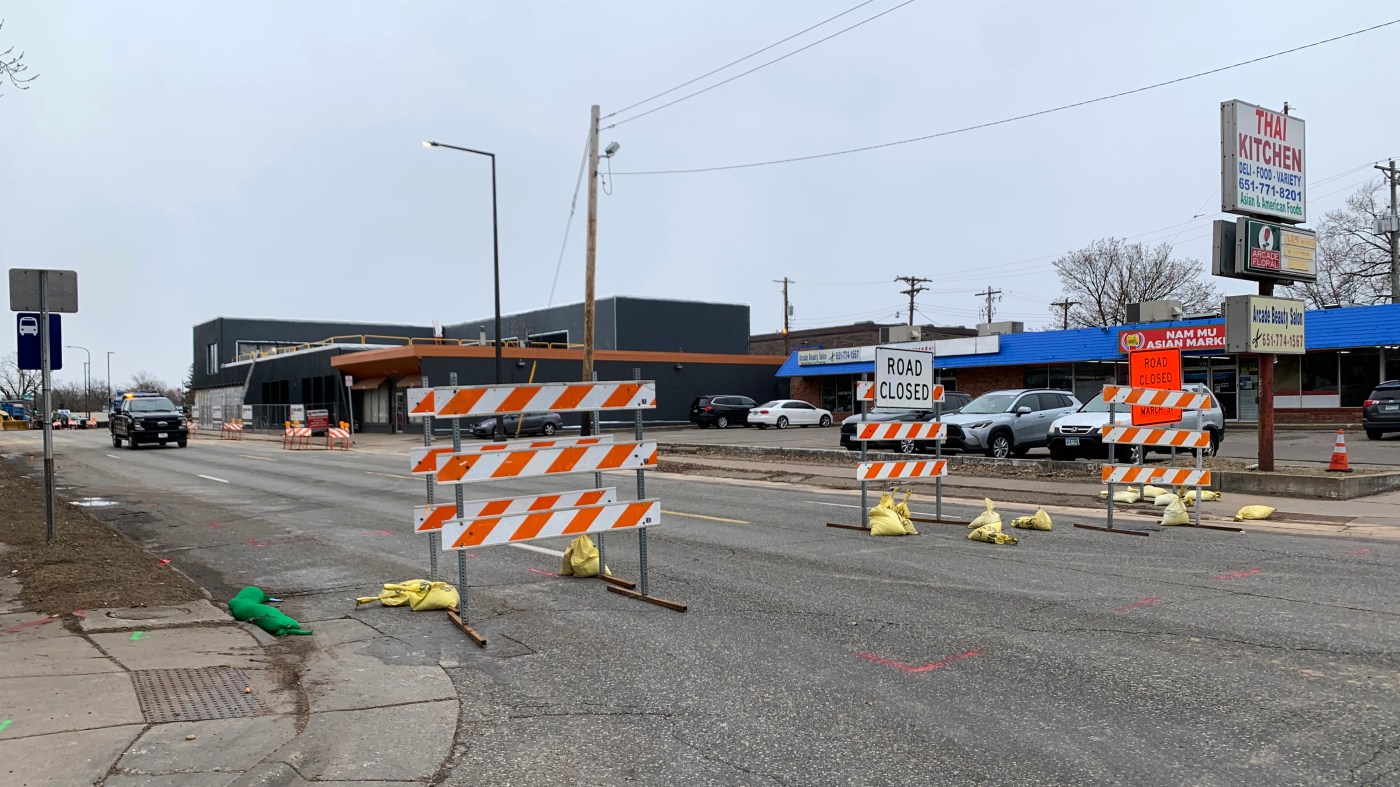
Over the course of the recent construction season, major state road work along Arcade Street has alarmed businessowners, some of whom were unaware long swathes of the corridor would be closed in both directions for months at a time.

Even those shop owners who attempted to keep track of road closures were surprised to discover last March that the Minnesota Department of Transportation had rolled out multiple phases of construction at once, limiting business access almost entirely to side streets.

Working with state lawmakers, three East Side business and neighborhood organizations successfully advocated during the recent legislative session for grant funds to help small businessowners through construction.

Sen. Foung Hawj, DFL-St. Paul.

Leaders of the East Side Area Business Association, East Side Neighborhood Development Company and Payne-Phalen Community Council said state Sen. Foung Hawj, St. Paul-DFL, was instrumental in helping to secure the $250,000 in business mitigation grants for businesses along Arcade Street, which is also a state highway — Minnesota 61.

“This will help the hardest hit businesses,” said Paris Dunning, executive director of the East Side Area Business Association.

Organizers hope to support up to 50 small businesses with grants of up to $5,000, which will be geared toward businesses with fewer than 25 employees located within the active construction zone. Details of the grant program are still being fleshed out, but the East Side Neighborhood Development Company is expected to review applications and handle distribution.

In a legislative session that otherwise involved few perks for the capital city, lawmakers called the funds a rare win.

“This legislative milestone was built on recognizing the economic impact of state-led infrastructure projects on neighborhood corridors,” said Hawj, in a written statement. “We fought hard for our community to get this relief. And it took persistent optimism at every stage of the process.”

The MnDOT began a two-year road reconstruction project in March along both East Seventh Street and Arcade Street, between Interstate 94 in St. Paul and Roselawn Avenue in Maplewood.

Some of that work, initially planned in back-to-back segments, has rolled out concurrently. State transportation officials have said coordinating with utility companies for underground utility replacements — including lead pipe removal — required shifting schedules around, and information about the new schedule had been shared at a community meeting in March.

Through early fall, construction will limit business access along Arcade Street from Wheelock Parkway to Maryland Avenue, from Maryland Avenue to York Avenue, from York Avenue to Frost Avenue, and between Magnolia Avenue and Sims Avenue.

Most of the work along East Seventh Street will take place in 2026.

More information on the project is available at: dot.mn.gov/metro/projects/e7th-arcade/index.html.

Related Articles


Lane splitting, filtering become legal for MN motorcyclists Tuesday. Here’s what to know.


Eastbound I-94 closing Friday-Monday from MN 280 to I-35E


Expect traffic headaches Saturday with protest, sports, music, I-94 closure


I-94 closing this weekend near Minneapolis-St. Paul boundary


Aging Jackson Street bridge in St. Paul’s North End is closed for repairs

Televangelist Jimmy Swaggart, whose ministry was toppled by prostitution scandals, dies at 90

posted in: All news | 0

BATON ROUGE, La. (AP) — Televangelist Jimmy Swaggart, whose multimillion-dollar ministry and huge audience dwindled following his prostitution scandals, has died. He was 90.

Swaggart death was announced Tuesday on his public Facebook page. A cause wasn’t immediately given, though Swaggart had been in ill health.

The Louisiana native was best known for being a captivating Pentecostal preacher with a massive following before being caught on camera with a prostitute in New Orleans in 1988, one of a string of successful TV preachers brought down in the 1980s and ’90s by sex scandals. He continued preaching for decades, but with a reduced audience.

Swaggart encapsulated his downfall in a tearful 1988 sermon, in which he wept and apologized but made no reference to his connection to a prostitute.

“I have sinned against you,” Swaggart told parishioners nationwide. “I beg you to forgive me.”

He announced his resignation from the Assemblies of God later that year, shortly after the church said it was defrocking him for rejecting punishment it had ordered for “moral failure.” The church had wanted him to undergo a two-year rehabilitation program, including not preaching for a full year.

Swaggart said at the time that he knew dismissal was inevitable but insisted he had no choice but to separate from the church to save his ministry and Bible college.

From poverty and oil fields to a household name

Swaggart grew up poor, the son of a preacher, in a music-rich family. He excelled at piano and gospel music, playing and singing with talented cousins who took different paths: rock-‘n’-roller Jerry Lee Lewis and country singer Mickey Gilley.

In his hometown of Ferriday, Louisiana, Swaggart said he first heard the call of God at age 8. The voice gave him goose bumps and made his hair tingle, he said.

“Everything seemed different after that day in front of the Arcade Theater,” he said in a 1985 interview with the Jacksonville Journal-Courier in Illinois. “I felt better inside. Almost like taking a bath.”

He preached and worked part time in oil fields until he was 23. He then moved entirely into his ministry: preaching, playing piano and singing gospel songs with the barrelhouse fervor of cousin Lewis at Assemblies of God revivals and camp meetings.

Related Articles


Jury returns to deliberate for a second day at Sean ‘Diddy’ Combs’ sex trafficking trial


The man accused of killing 2 Idaho firefighters had once aspired to be one


Mystery surrounds the Jeffrey Epstein files after Bondi claims ‘tens of thousands’ of videos


Today in History: July 1, Judge Clarence Thomas nominated to the Supreme Court


US brings charges in North Korean remote worker scheme that officials say funds weapons program

Swaggart started a radio show, a magazine, and then moved into television, with outspoken views.

He called Roman Catholicism “a false religion. It is not the Christian way,” and claimed that Jews suffered for thousands of years “because of their rejection of Christ.”

“If you don’t like what I say, talk to my boss,” he once shouted as he strode in front of his congregation at his Family Worship Center in Baton Rouge, where his sermons moved listeners to speak in tongues and stand up as if possessed by the Holy Spirit.

Swaggart’s messages stirred thousands of congregants and millions of TV viewers, making him a household name by the late 1980s. Contributors built Jimmy Swaggart Ministries into a business that made an estimated $142 million in 1986.

His Baton Rouge complex still includes a worship center and broadcasting and recording facilities.

The scandals that led to Swaggart’s ruin

Swaggart’s downfall came in the late 1980s as other prominent preachers faced similar scandals. Swaggart said publicly that his earnings were hurt in 1987 by the sex scandal surrounding rival televangelist Jim Bakker and a former church secretary at Bakker’s PTL ministry organization.

The following year, Swaggart was photographed at a hotel with Debra Murphree, an admitted prostitute who told reporters that the two did not have sex but that the preacher had paid her to pose nude.

She later repeated the claim — and posed nude — for Penthouse magazine.

The surveillance photos that crippled Swaggart’s career apparently stemmed from his rivalry with preacher Marvin Gorman, whom Swaggart had accused of sexual misdeeds. Gorman hired the photographer who captured Swaggart and Murphree on film. Swaggart later paid Gorman $1.8 million to settle a lawsuit over the sexual allegations against Gorman.

More trouble came in 1991, when police in California detained Swaggart with another prostitute. The evangelist was charged with driving on the wrong side of the road and driving an unregistered Jaguar. His companion, Rosemary Garcia, said Swaggart became nervous when he saw the police car and weaved when he tried to stuff pornographic magazines under a car seat.

Swaggart was later mocked by the late TV comic Phil Hartman, who impersonated him on NBC’s “Saturday Night Live.”

Out of the public eye but still in the pulpit

The evangelist largely stayed out of the news in later years but remained in the pulpit at Jimmy Swaggart Ministries, often joined by his son, Donnie, a fellow preacher. His radio station broadcast church services and gospel music to 21 states, and Swaggart’s ministry boasted a worldwide audience on the internet.

The preacher caused another brief stir in 2004 with remarks about being “looked at” amorously by a gay man.

“And I’m going to be blunt and plain: If one ever looks at me like that, I’m going to kill him and tell God he died,” Swaggart said, to laughter from the congregation. He later apologized.

Swaggart made few public appearances outside his church, save for singing “Amazing Grace” at the 2005 funeral of Louisiana Secretary of State Fox McKeithen, a prominent name in state politics for decades.

In 2022, he shared memories at the memorial service for Lewis, his cousin and rock ‘n’ roll pioneer. The pair had released “The Boys From Ferriday,” a gospel album, earlier that year.