Lynx lay an egg, fall to Indiana in Commissioner’s Cup final

posted in: All news | 0

On the day the calendar turned to July, the Minnesota Lynx had probably their coldest offensive game of the season Tuesday night, and on their biggest stage so far.

Against the Caitlin Clark-less Indiana Fever, Minnesota scored its fewest points this season, shot a season-worst 34.9% and committed 20 turnovers.

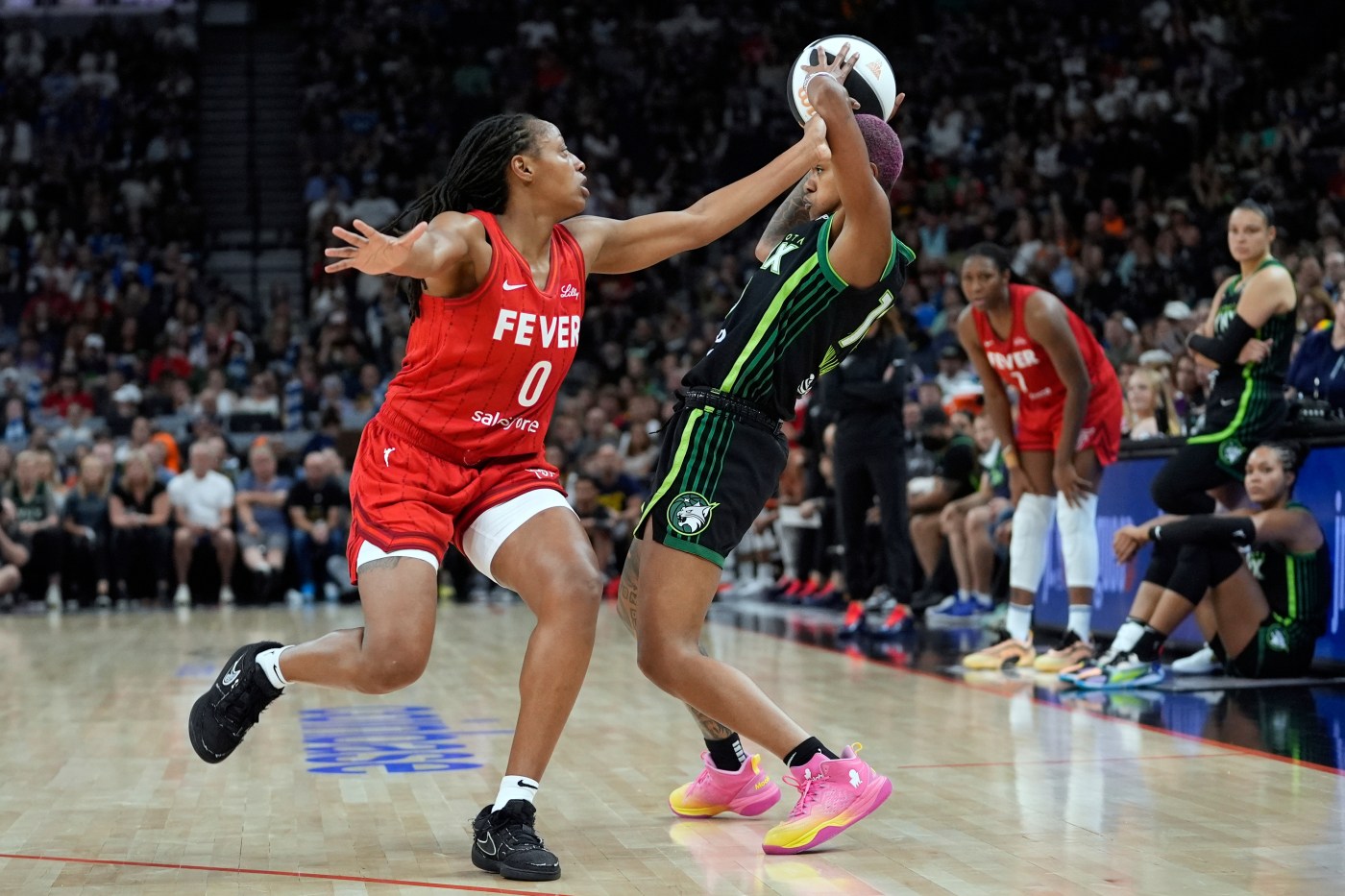
It means Indiana took down the WNBA’s top team 74-59 in the Commissioner’s Cup Championship before a largely stunned 12,778 fans inside Target Center.

Alanna Smith led the Lynx with 15 points. Napheesa Collier was an uncharacteristic 6 for 18 for 12 points and grabbed eight rebounds. Courtney Williams had 11 points but turned the ball over six times.

With Clark missing her third straight game with a groin strain, the Fever used a balancing scoring attack with five players in double figures, including 16 from Natasha Howard.

Not only does the hardware for winning the league’s midseason tournament go back to Indianapolis, so does some sizable cash from the $500,000 prize pool that is part of the championship game.

On the bright side, at least the game doesn’t count in the league standings.

Still, it was a chance for Minnesota to make another statement that they are the best team in the WNBA.

It was a far different story than a year ago, when league-wide expectations were not high for Lynx at the start of last season. But winning last year’s Commissioner’s Cup left no doubt about a club that ultimately reached Game 5 of the WNBA Finals.

Now, one year later?

“We have expectations of ourselves, so this game is that. We have an expectation of success. And anything short of that for us is disappointing,” coach Cheryl Reeve said pregame. “The idea of adding more hardware for the franchise is exciting … and a chance for (the players) to earn a little bit of money and build their brands and extend all the things that come from something like this.”

Things started well enough with Minnesota scoring 20 points in the first quarter for an eight-point lead. The Lynx had just 22 points combined in the next two quarters — on 6-for-29 shooting with nine turnovers — to begin the final 10 minutes down by 10 points.

The Lynx led by 13 early in the second quarter but did not score in the final 8 minutes and 13 seconds, missing nine shots and committing five turnovers. Indiana used an 18-0 run for a 32-27 halftime lead.

The Lynx’s seven points in the quarter are a season low, and the halftime total tied the team’s fewest points in a half.

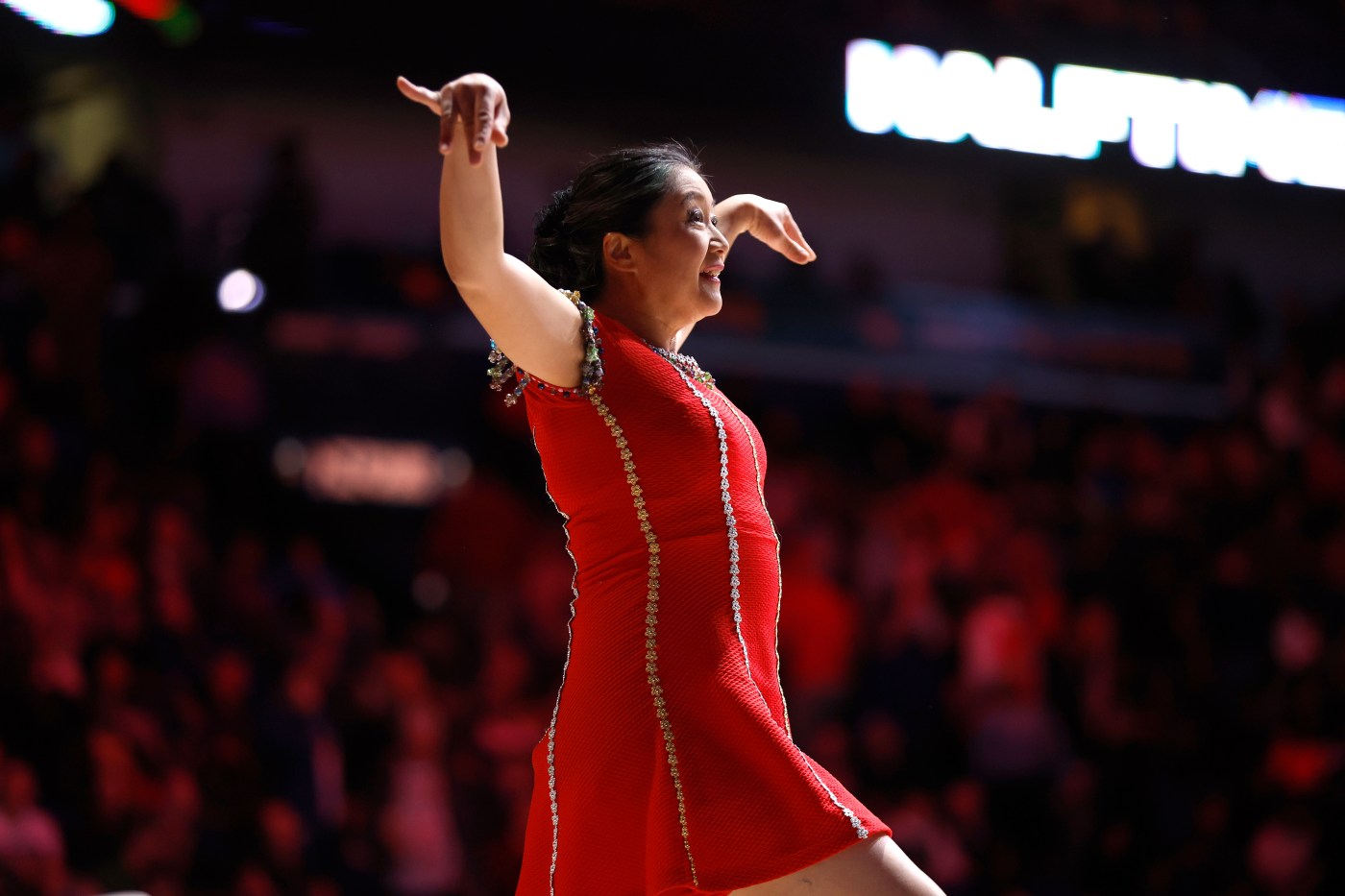
Bad luck carried over to halftime when the popular acrobat Red Panda fell early in her performance, hurting her wrist. But she was ultimately wheeled to the back in a wheelchair.

Minnesota Lynx forward Napheesa Collier (24) reacts after not receiving a foul call during the first half of the WNBA Commissioner’s Cup championship basketball game against the Indiana Fever, Tuesday, July 1, 2025, in Minneapolis. (AP Photo/Abbie Parr)

Mizutani: GOAT halftime performer Red Panda shockingly injured at Lynx game

posted in: All news | 0

A lengthy scoring drought from the Lynx on Tuesday night at Target Center left the home crowd in desperate need of an injection of life.

Luckily for everybody in attendance, the GOAT halftime performer Red Panda was on deck.

She emerged from the tunnel, climbed up a ladder, and hopped on her signature unicycle, ready to flip metal bowls from her feet to her head like she’s done so many times throughout her career.

Then the unthinkable happened. Red Panda fell.

After losing her balance in the opening seconds of her act, she plummeted nearly 10 feet to the floor. Those smart enough to stay in their seats at halftime were shocked by what they had just witnessed. As they should’ve been.

This stuff doesn’t happen to Chinese acrobat Rong Niu. She’s widely regarded as the GOAT halftime performer for a reason.

Just a couple of months ago, Red Panda was flawless on the same floor, wowing the home crowd at a playoff game between the Timberwolves and the Golden State Warriors.

Though she was able to walk off under her own power in the immediate aftermath of her fall, she appeared to be in a lot of pain as she clutched her left wrist. She paused for a few minutes near the baseline before the medical staff brought out a wheelchair to assist her to the back.

The vibes didn’t get any better from there as the Lynx completely laid an egg in a 74-59 loss to the Indiana Fever in the final of the WNBA Commissioner’s Cup.

Related Articles


Wild bring back Nico Sturm in quiet free agency opener


Tarasenko seeks a fresh start following trade to Wild


Twins welcome Royce Lewis back from injured list


Here are some of the top golfers committed to the 3M Open


Timberwolves agree to one-year deal to bring back Joe Ingles as Nickeil Alexander-Walker and Luka Garza depart

Marlins blank Twins, extend winning streak to eight

posted in: All news | 0

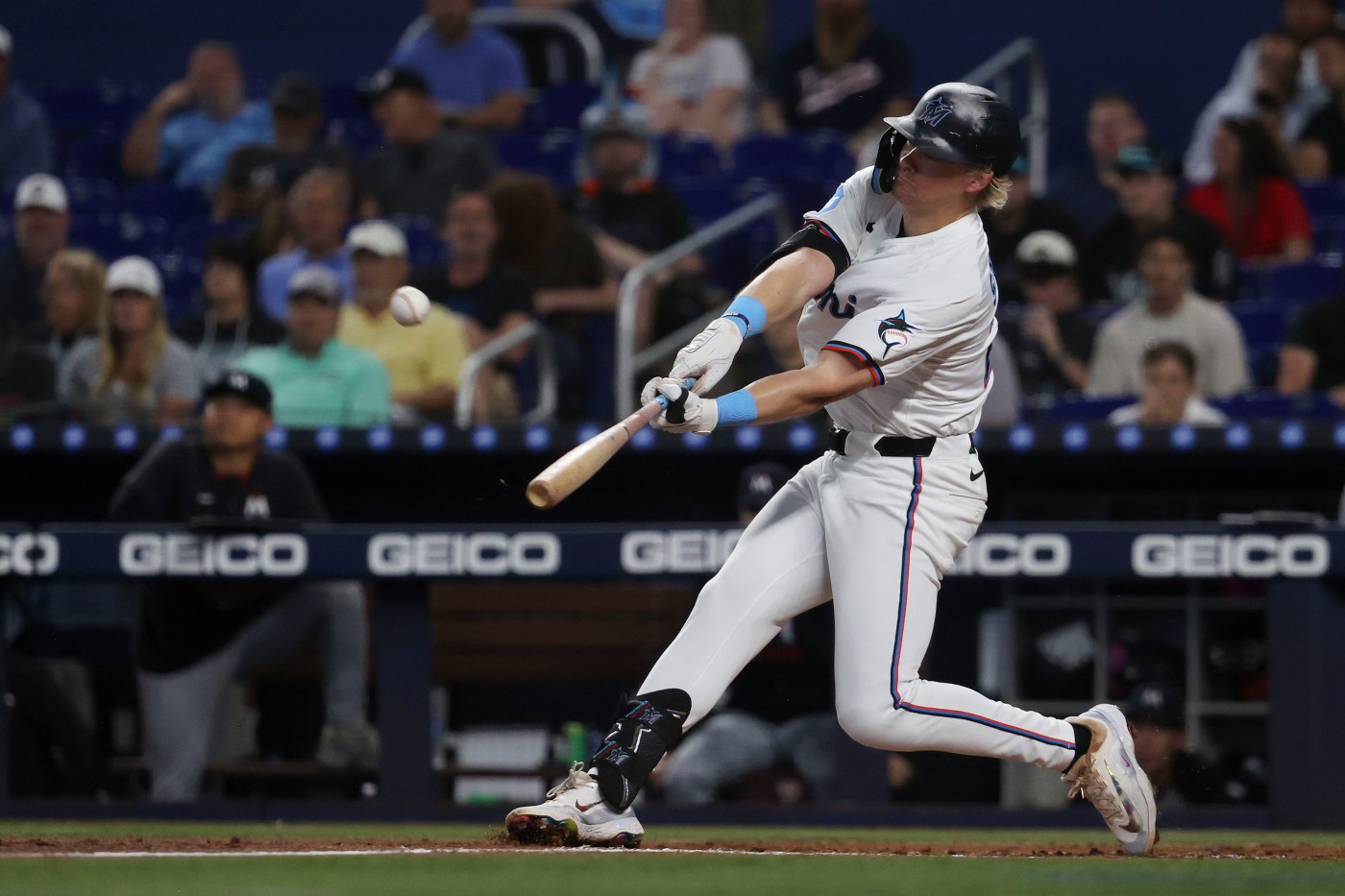
MIAMI — Kyle Stowers homered and the Miami Marlins stretched their winning streak to eight, one shy of the club record set in 2008, with a 2-0 win over the Twins on Tuesday night.

The Twins, who were shut out by the Tigers on Sunday, were blanked for the seventh time this season.

Edward Cabrera (3-2) struck out six and only allowed two hits and one walk in seven innings, the longest start of the season by a Marlins pitcher. He struck out Byron Buxton to end the third for his 400th career strikeout, becoming the third-fastest to reach the mark in franchise history.

Stowers gave Miami a 1-0 lead in the second inning with his 14th home run of the season. He initially took first base after appearing to get hit by a pitch. But Minnesota challenged and the call was overturned.

Anthony Bender pitched a perfect eighth, and Ronny Henriquez struck out back-to-back batters to begin the ninth to help secure his fourth save.

Minnesota starter Joe Ryan (8-4) also went seven innings, allowing just one earned run on five hits.

Key moment

Miami added an insurance run in the eighth. Jesús Sánchez sent a shot to deep center field and Buxton made a leaping attempt at the wall to keep the ball in play. Sánchez hustled to third and a review showed it was not a home run.

Otto Lopez was intentionally walked to put runners on first and third but Nick Fortes hit a single down the left-field line for a two-run lead.

Key stat

The win was Miami’s fifth shutout of the season.

Up next

RHP Janson Junk (2-0, 3.73 ERA) is set to face the Twins for the first time in his career on Wednesday night against RHP Simeon Woods Richardson (3-4, 4.63).

Willi Castro #50 of the Minnesota Twins steals second base against Xavier Edwards #9 of the Miami Marlins during the seventh inning against the Miami Marlins at loanDepot park on July 1, 2025 in Miami, Florida. (Photo by Leonardo Fernandez/Getty Images)
Joe Ryan #41 of the Minnesota Twins pitches during the first inning against the Miami Marlins at loanDepot park on July 1, 2025 in Miami, Florida. (Photo by Leonardo Fernandez/Getty Images)

Stephen L. Carter: The Supreme Court is right to respect parents’ faith

posted in: All news | 0

Here’s why I think the Supreme Court might be on to something in its Friday decision allowing a group of Muslim and Christian parents to opt their young children out of public-school lessons that feature “LGBTQ+-inclusive texts”: my wife and I sent our kids to private school.

How does B lead to A? Let me explain.

The case before the court, Mahmoud v. Taylor, arose from Montgomery County, Maryland, generally described as the most religiously diverse county in the United States. Part of that rich diversity will include a variety of views on gender and sexuality. When the school board realized that LGBTQ+ issues (and characters) were under-represented in the curriculum, it took a series of measures to present students with a richer spectrum of images and ideas.

So far, so good.

The original proposal included a provision under which parents harboring religious objections to the new materials could opt their children out. In the end, however, the opt-out was abandoned. The suit was filed on behalf of elementary school children by Muslim and Christian parents whose views on gender and sexuality skew traditionally religious.

The parents didn’t ask that the texts in question be banned. They asked that their kids might be excused. The school board responded that the materials did no more than expose the children to new ideas, and that in any case nobody was being coerced.

The Supreme Court, by the now-familiar 6-3 vote, sided with the parents.

Justice Samuel Alito’s opinion for the majority goes on at length about the contents of the materials — “at any point in our lives, we can choose to identify with one gender, multiple genders, or neither gender” one discussion guide explains; in another story the prince rejects the “many ladies” who might rule beside him, and in the end falls in love with a (male) knight — but although I think the court reaches the right decision in the end, I wonder whether this long recital isn’t wide of the point. The majority’s view is that the lessons, in the end, violate the free exercise clause of the First Amendment because the students are coerced; they have no choice but to view and listen to and discuss materials to which their parents have religious objections.

I’m not at all sure, however, that coercion is the right First Amendment test, or, for that matter, that exposure equals coercion.

But I’m equally unpersuaded by the argument that pooh-poohs parental fears, in which families struggling to preserve their own religions against the overweening tides of post-modernity are reduced to something like Kipling’s “lesser breeds without the law,” ignorant savages whose children the school must civilize. The right test is surely the extent to which the ability to raise children in one’s chosen religion is burdened. And there our instinct under the Free Exercise Clause should in most cases be one of deference to the parents.

In her dissent, Justice Sonia Sotomayor presented what lawyers call a parade of horribles — possible bad consequences of the majority’s rule — many of which were drawn from a brief written by people I know and admire. But friends may disagree.

“Teachers will need to adjust homework assignments to exclude objectionable material and develop bespoke exams for students subject to different opt-out preferences,” she writes. “Schools will have to divert resources and staff to supervising students during opt-out periods, too, which could become a significant drain on funding and staffing that is already stretched thin.”

Moreover, she continues, “the majority’s new rule will have serious chilling effects on public school curricula. Few school districts will be able to afford costly litigation over opt-out rights or to divert resources to administering impracticable notice and opt-out systems for individual students. The foreseeable result is that some school districts may strip their curricula of content that risks generating religious objections.”

Let us concede that these consequences are undesirable. But will they all happen? An attractive possibility is that parental objections will turn out to be few, and easily managed; another is that reasonable people, working together, will find reasonable compromises. But if those possibilities seem like so much pie in the sky, we have a much bigger problem than the headaches of administrators charged with running the opt-out program. Because at that point, if parents will in fact seek exemptions willy-nilly for their children, we will have to admit that, at least in the eyes of many families, the public-school project has failed.

And let’s be clear about what that job is. It’s educating the young, but it isn’t just educating the young. It’s working with families to help them raise their children. Schools shouldn’t be competing with parents; they should be collaborating with them. This is particularly true when children are in elementary school, often taking their first steps into the world beyond the one their families have created.

The Supreme Court’s new test, with its implicit suggestion that coercion is found in exposure to materials that go against central tenets of parental religion, is more sledgehammer than scalpel. But if the instrument the majority wields is too blunt, the problem it’s trying to solve is real.

I quite recognize that we live at a time when advances on issues of gender and sexuality are not only under threat but, in some cases, being actively rolled back. But those battles should be fought on their own terms; when it comes to raising children, parental freedom is entitled to a wide berth.

Which brings us back to how B leads to A.

When our children reached school age, we decided on private rather than public education, even though the public schools in our community were top-notch academically. But we wanted more than academics. We wanted them to have an education that would reinforce rather than do battle with the values we sought to teach them at home.

Related Articles


David French: A reckless judicial nomination puts the Senate to the test


Llewellyn King: DOGE kids’ crude cuts to research undermine American strength


Ronald Brownstein: The GOP is still trying to repeal Obamacare


Raihala: Meet the Minnesotan who coined the term ‘gay pride’ and tossed a pie in Anita Bryant’s face


Letters: Iran should be a warning against authoritarian control

Not everybody can afford those choices; but the public schools should do their best to find ways to accommodate those who wish they could. And, no, my wife and I had no problem with Heather Has Two Mommies, back when that now quaint-seeming book was the big cultural battleground. But I’ve been writing about religious freedom for four decades, and I’m not about to argue that the parents should win only if I agree with them.

Stephen L. Carter is a Bloomberg Opinion columnist, a professor of law at Yale University and author of “Invisible: The Story of the Black Woman Lawyer Who Took Down America’s Most Powerful Mobster.”